Never Ignore These Chewed Tomato Leaves In Your Pennsylvania Garden
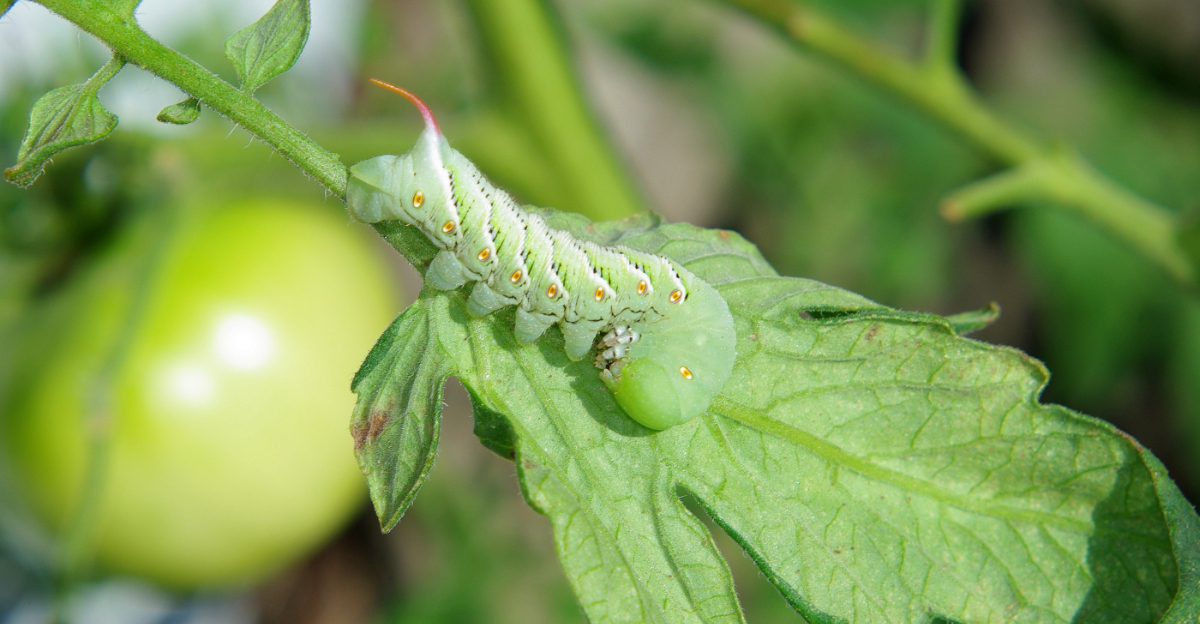
Yesterday your tomato leaves looked full and green. This morning they’re lace, punched through with holes that spread wider by the hour.
Pennsylvania’s warm, humid summers bring a steady parade of leaf-eating insects to backyard gardens. Tomato hornworms, flea beetles, and cutworms all treat your plants as an easy target.
Waiting even a few days lets the culprit multiply and move on to nearby crops. Quick action in that first week often means the gap between a full harvest and a wrecked, struggling plant.
Identifying the exact pest changes your entire approach, from handpicking at dusk to targeted treatments. Here’s how to spot the signs, name the suspects, and protect your tomatoes before the damage spreads further.
Tomato Hornworms Are Likely Behind The Damage You’re Seeing
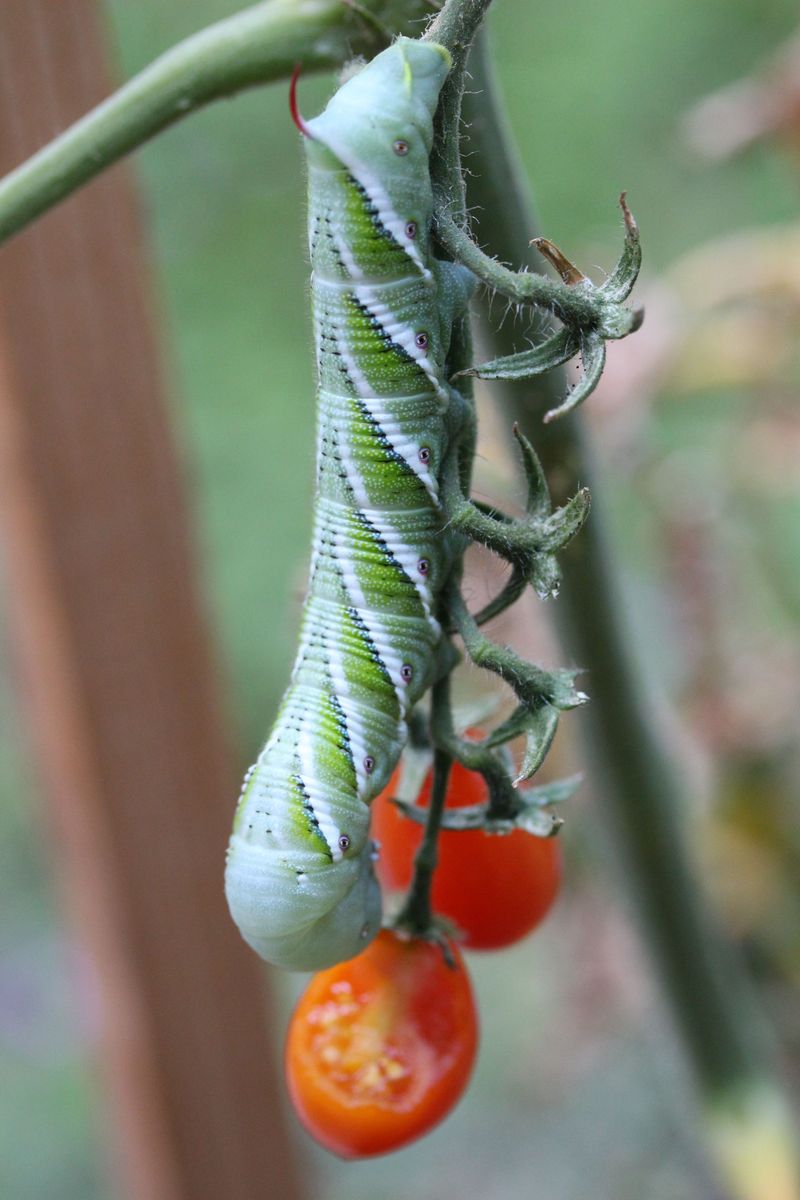
Something ate half your plant overnight. That level of damage usually points to one suspect: the tomato hornworm.
These caterpillars are massive, often reaching four inches long. They blend into green stems so perfectly that most gardeners walk right past them.
Hornworms feed aggressively once they settle in, stripping entire branches clean within days. A single caterpillar can cause alarming damage within 24 hours.
Look for dark green droppings on the soil beneath your plants. Those small pellets are a clear giveaway that a hornworm is feeding somewhere above.
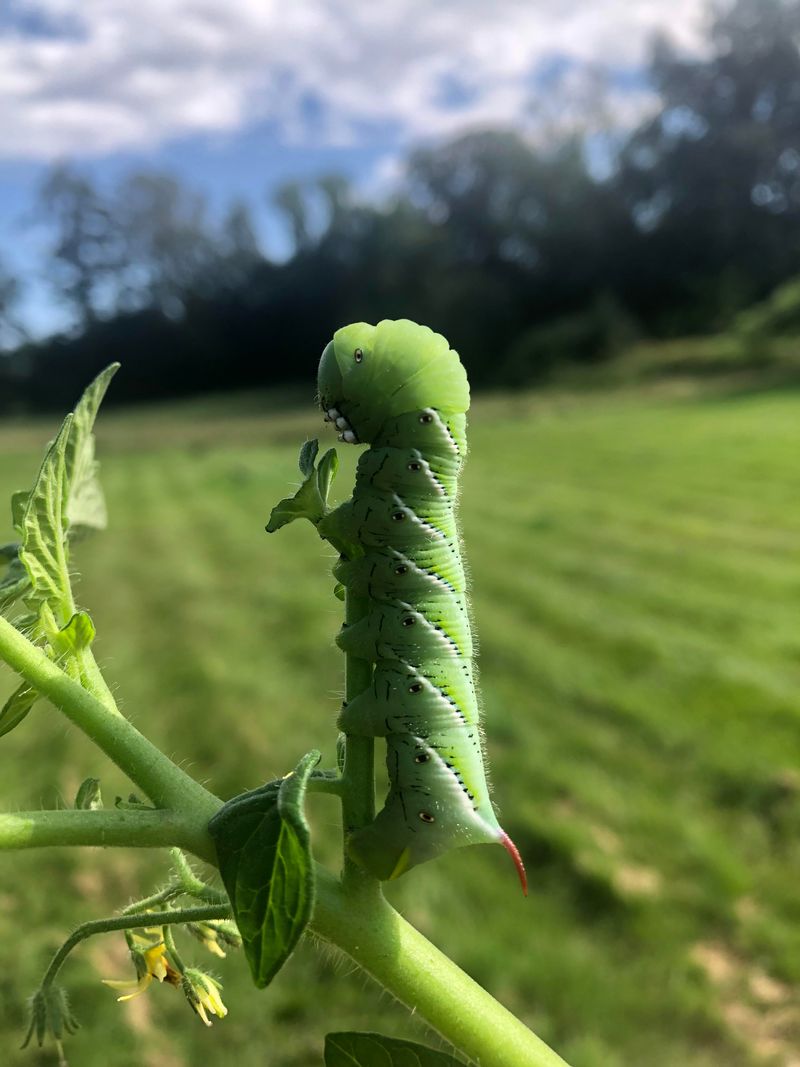
The caterpillar itself is bright green with white diagonal stripes along its sides. A curved horn sticks out from its rear end, which is how it earned its name.
Hornworms are the larval stage of the five-spotted hawk moth. That moth lays eggs on tomato foliage during warm Pennsylvania evenings in June and July.
Each female moth can lay hundreds of eggs across a single season. That means one ignored moth can produce a serious infestation on your plants.
The eggs hatch within a week, and tiny caterpillars begin feeding immediately. They grow fast, doubling in size every few days as they consume more foliage.
Early detection is everything with these pests. Spotting the damage quickly gives you the best chance of saving your tomato crop before the season slips away.
Spotting These Caterpillars Hiding On Your Plants
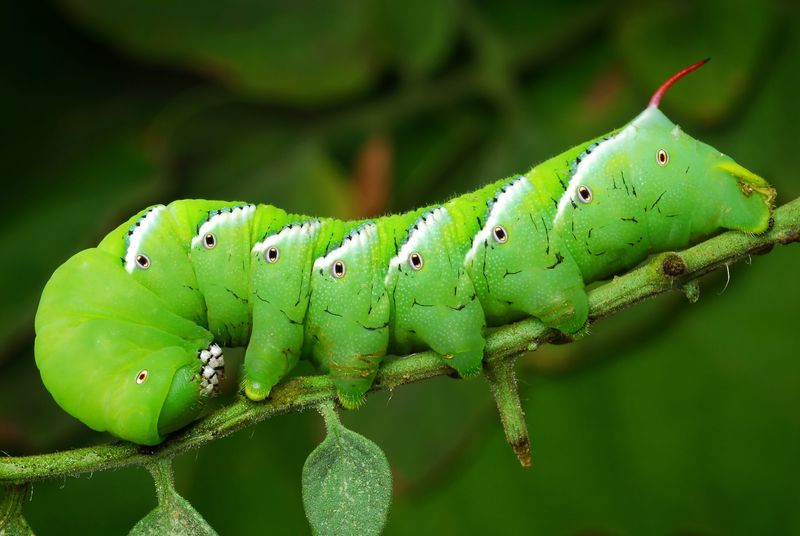
Finding a hornworm feels like solving a puzzle. These caterpillars are expert hiders, and most gardeners miss them on the first pass.
Start your search early in the morning or just before sunset. Hornworms tend to feed more actively during cooler parts of the day.
Work your way from the bottom of the plant upward. Caterpillars often start feeding on lower leaves and climb as food sources get depleted.
Run your fingers along each stem carefully. You are feeling for a thick, rubbery body that does not belong among the branches.
Ragged, torn foliage almost always means a hornworm is feeding nearby. Follow the damage trail and you will eventually find the caterpillar responsible.
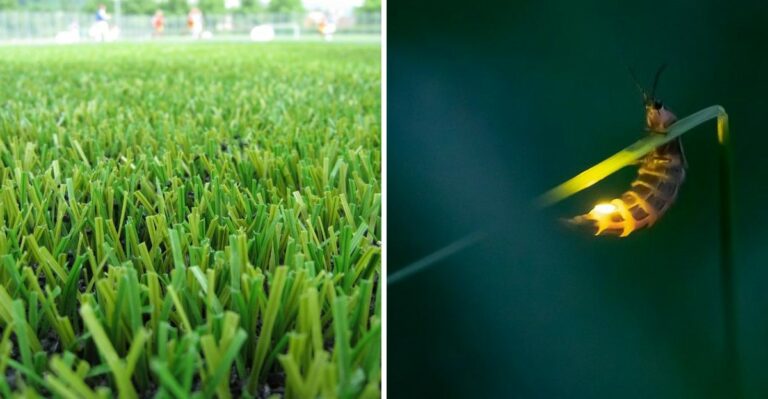
Try using a blacklight flashlight after dark for a surprising trick. Hornworms glow bright blue-green under ultraviolet light, making them much easier to spot at night.
Your Pennsylvania Garden Changes Every Week. Your Plan Should Too.
Gardening in Pennsylvania changes quickly throughout the season. Every Friday you’ll receive a simple weekly plan showing exactly what to plant, prune, fertilize, harvest, and protect so you never miss the right timing.
Check the undersides of leaves too, especially near the top of the plant. Younger caterpillars often hide on leaf backs before moving to thicker stems.
Their droppings are your most reliable clue. Fresh, dark green pellets directly below a branch almost always mean a hornworm is sitting just above.
Once you find one caterpillar, keep searching. Where there is one hornworm, there are often several more hiding just a few inches away on the same plant.
Chewed Leaves Can Spread Fast If Left Unchecked
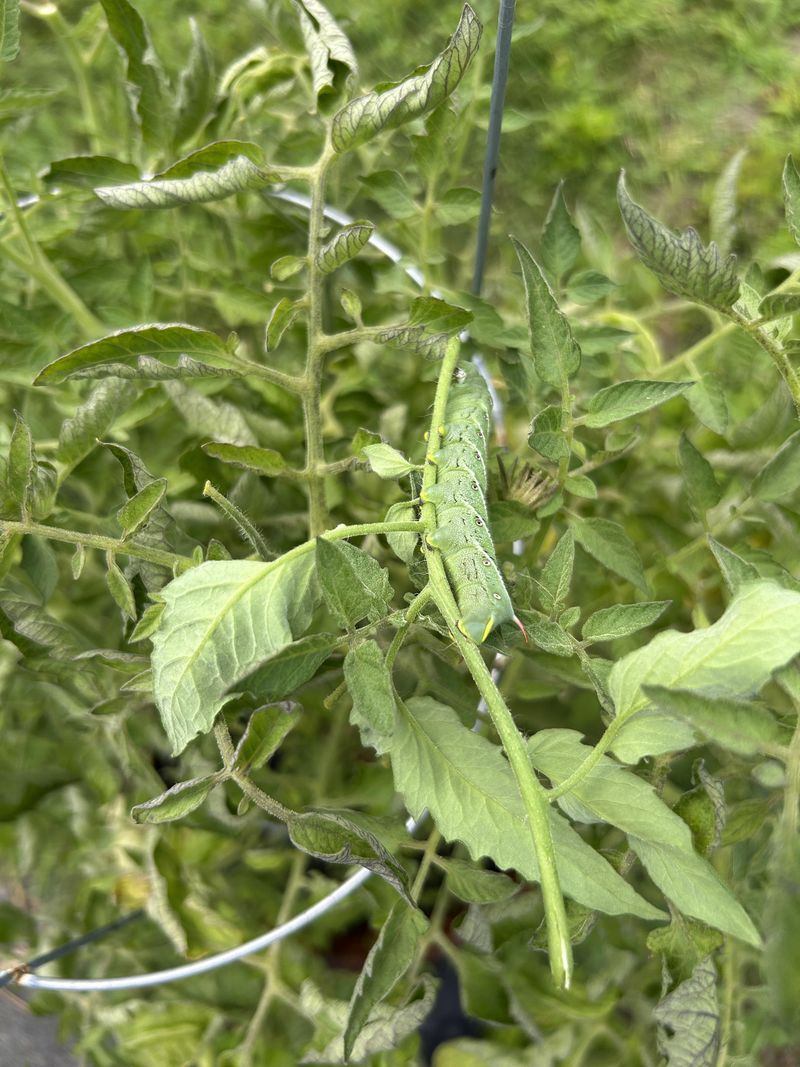
One chewed leaf might seem minor. Two days later, you could be staring at a completely bare plant if you do not act.
Hornworms eat constantly and grow rapidly. A small caterpillar becomes a full-sized feeding machine within just one week of hatching.
As the caterpillar grows, its appetite grows with it. A mature hornworm eats several times more foliage each day than a younger one does.
Stripped foliage weakens the entire plant over time. Without enough foliage, the plant cannot produce the energy needed to ripen fruit.
Sunscald becomes a real problem when leaf cover disappears. Exposed tomatoes get bleached and damaged by direct sunlight, making them inedible or prone to cracking.
Multiple hornworms on one plant can strip it bare within just a few days. That kind of rapid damage is almost impossible to recover from mid-season.
Neighboring plants are also at risk once populations grow. Moths lay eggs across entire garden rows, not just on a single isolated plant.
Ignoring the early signs of damage gives hornworms time to mature and lay the next generation. One overlooked pest can become dozens within a single growing season.
Catching a small problem early is far easier than dealing with a massive outbreak later.
Natural Ways To Remove Hornworms Without Chemicals
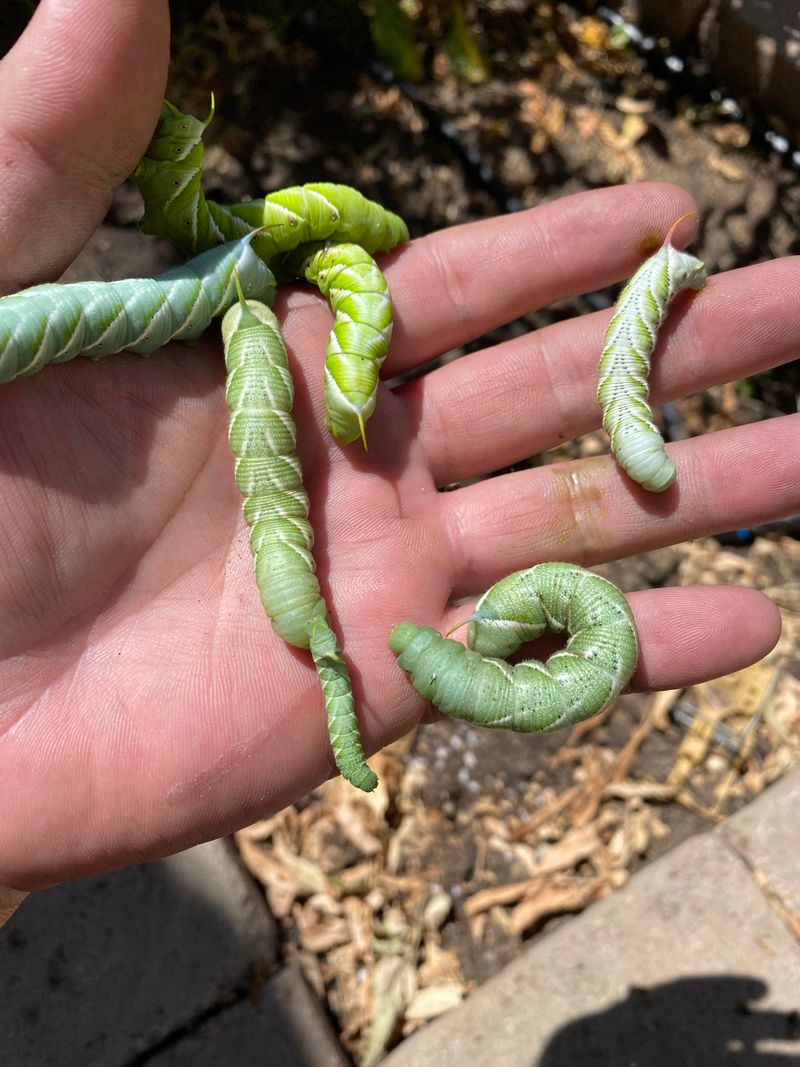
You do not need a single chemical to deal with hornworms effectively. Nature and a little patience give you powerful tools right in your own garden.
Handpicking is the most straightforward method available. Put on garden gloves, grab the caterpillar firmly, and drop it into a bucket of soapy water.
Go out at night with a blacklight and collect every glowing caterpillar you spot. This method works surprisingly well and feels oddly satisfying once you get the hang of it.
Bacillus thuringiensis, commonly called Bt, is a naturally occurring soil bacteria. It is sprayed directly onto foliage and causes caterpillars to stop feeding within hours of contact.
Bt is safe for people, pets, and beneficial insects when applied correctly. It breaks down quickly in sunlight, so reapplication after rain is sometimes needed.
Neem oil is another organic option worth keeping in your garden shed. It disrupts the hormonal system of young caterpillars and discourages egg-laying by adult moths.
Mix neem oil with water and a small amount of dish soap for a simple spray. Apply it in the early evening to avoid harming pollinators active during the day.
Companion planting also helps naturally. Basil planted near tomatoes is believed to confuse and deter the moths that lay hornworm eggs on your foliage.
These natural approaches protect your harvest without introducing harsh substances into your food garden. Staying consistent with them makes a real difference all season long.
Preventing Future Infestations Through Garden Habits
Prevention almost always beats reaction in the garden. Building smarter habits now saves you from scrambling to fix damage later in the season.
Tilling your soil in early spring disrupts overwintering pupae hiding just below the surface. Hornworm moths spend the winter as buried pupae before emerging in late spring.
Exposing those pupae to cold air and birds during spring tilling reduces the number of moths that emerge. Fewer moths means fewer eggs and far fewer caterpillars on your plants.
Rotate your tomato plants to a different bed each year. This simple step prevents pest populations from building up in one concentrated spot season after season.
Remove old plant debris from your Pennsylvania garden at the end of each growing season. Leftover stems and roots can harbor eggs and pupae waiting for next year.
Attract natural predators to your yard by planting flowering herbs nearby. Wasps, lacewings, and parasitic flies all feed on hornworm eggs and small caterpillars.
Row covers placed over young plants can physically block egg-laying moths. Remove the covers once flowers appear so pollinators can still reach your blooms.
Check your plants on a consistent schedule rather than waiting for visible damage. Spotting the damage early is the foundation of good prevention.
Small, consistent actions add up to a healthier garden over time. The more proactive you are, the less firefighting you will need to do mid-season.
Bringing In Extra Help For Bigger Outbreaks
Sometimes the infestation grows faster than one gardener can handle alone. When that happens, bringing in extra allies is the smartest move you can make.
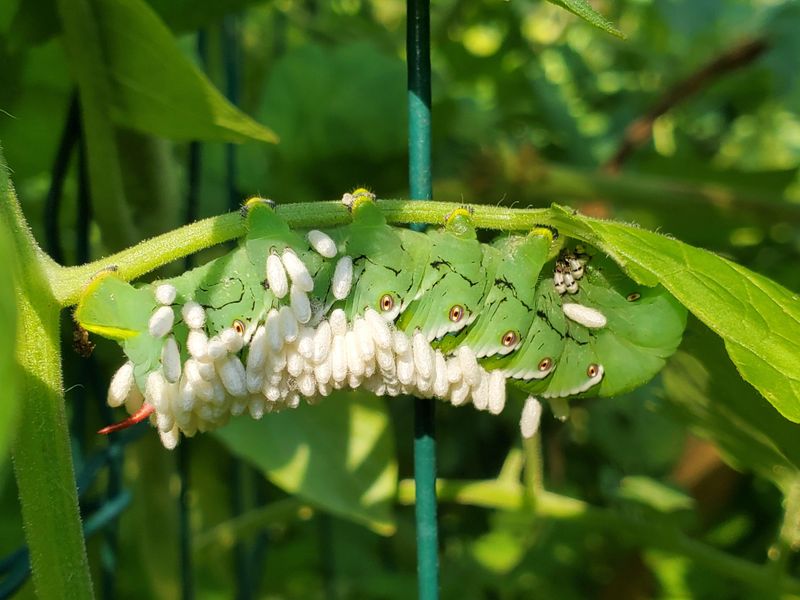
Parasitic wasps are your best natural allies against a large hornworm population. Braconid wasps lay their eggs directly inside the caterpillar’s body, and the larvae feed on the host.
You may spot a hornworm covered in tiny white oval cocoons attached to its back. Those cocoons belong to braconid wasp larvae, and that caterpillar is already done causing harm.
Leave those parasitized caterpillars alone on the plant. Removing them would destroy the wasp larvae developing inside, which are your future allies against future outbreaks.
Attract more beneficial wasps by planting dill, fennel, and parsley near your tomatoes. These flowering plants provide nectar that adult parasitic wasps need to survive and reproduce.
Birds are another strong ally against hornworm outbreaks. Chickens, if you keep them, will eagerly scratch through garden beds searching for caterpillars and pupae.
Wild birds like robins and mockingbirds also hunt caterpillars actively. Installing a birdbath near your garden encourages them to stick around and keep watch over your plants.
For severe outbreaks, a licensed extension agent through Penn State can offer region-specific advice. They understand local pest patterns and can recommend treatments suited to your exact situation.
Torn-up foliage does not have to mean a lost harvest. With the right help, your plants can bounce back stronger than you might expect.