October as a Possible Seasonal Cue for Watering Established Low-Desert Citrus
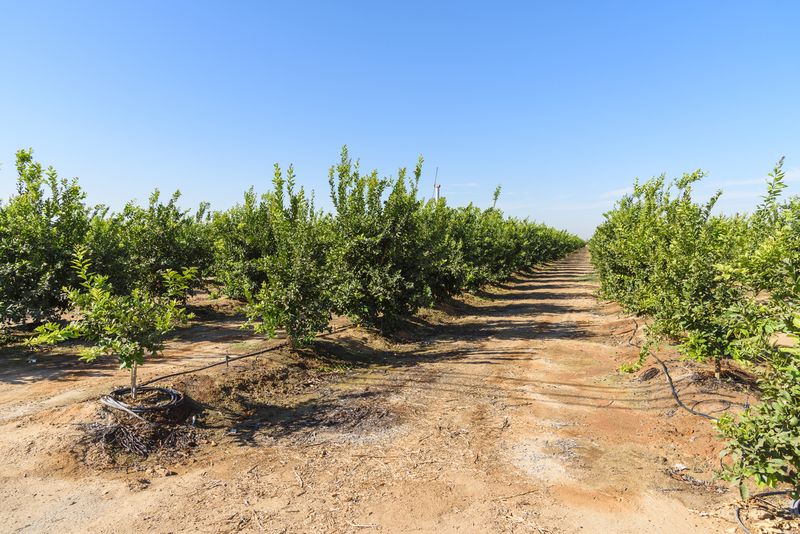
Your citrus tree does not drink the same way in October as it did in July. As the low desert cools off, the soil stays damp longer, and a summer routine can start to waste water.
Many Arizona homeowners want to save water without leaving a mature tree thirsty. A few simple checks can help you find the middle ground.
October can be a cue to stretch the interval
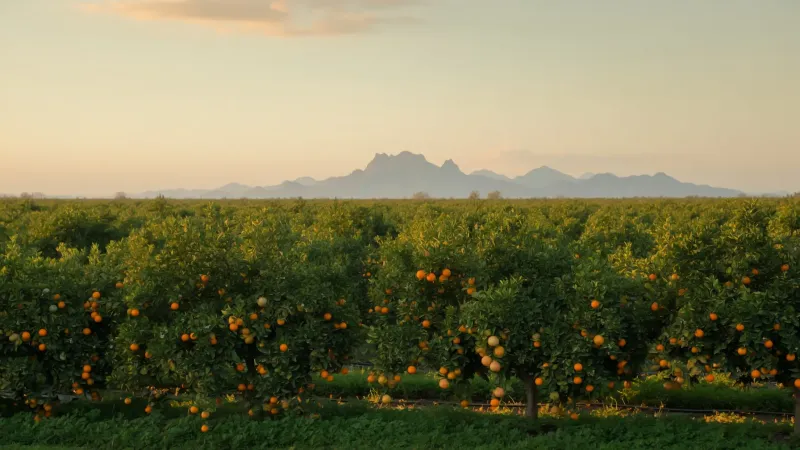
Fall brings a shift for established, in-ground citrus in the low desert. The University of Arizona’s October gardening guide for Pima County suggests adjusting irrigation frequency as temperatures ease.
In practice, that can mean watering less often than you did through the summer.
Notice the word often. The change is about the gap between waterings, and each watering still needs to soak down into the root zone.
A tree that gets a light sprinkle every few days stays shallow-rooted, while one that gets a deep soak and a rest period grows a sturdier root system.
Keep the limits in mind. That monthly guide was written for Pima County, so it is not a statewide rule, and the citrus irrigation publication notes that climate affects how much water a tree needs.
Your yard may be warmer, cooler, sandier, or shadier than the example. There is no single date when every tree needs a new schedule, so treat October as a prompt to look at your own setup.
Match the interval to the irrigation method
How you deliver the water matters as much as the month. The University of Arizona’s citrus irrigation table, found in its PDF guide, lists separate October to November intervals for different tree ages and systems.
For citrus at least three years old that are watered by basin or flood, the guide gives 14 to 21 days between irrigations. Mature trees on drip or microsprinklers are handled differently.
A footnote sends readers to the 4-month-to-1-year schedule, which lists 5 to 10 days for October and November.
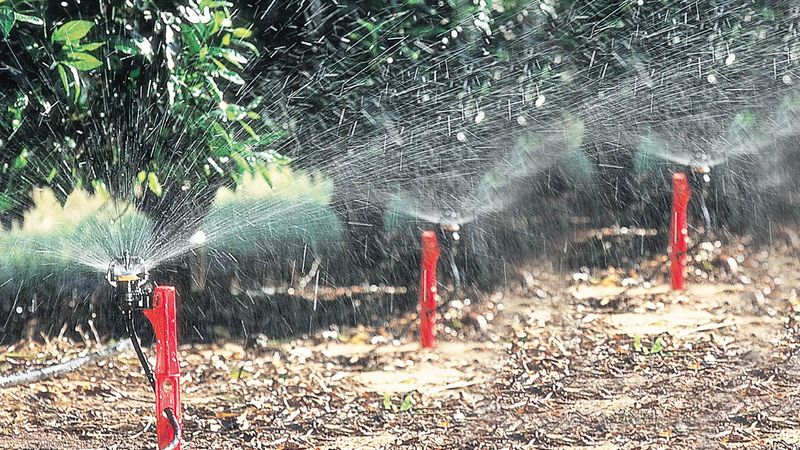
Keep those two numbers apart. A flood-irrigated tree and a drip-irrigated tree are not interchangeable, because drip and microsprinklers apply water slowly and in smaller amounts, so they need shorter gaps.
Think of each range as a starting point. The publication itself says local soil, weather, and irrigation method should modify the intervals.
Pick the range that matches your system, try a spot near the middle, and adjust from there after checking the soil.
Water deeply, then check the soil
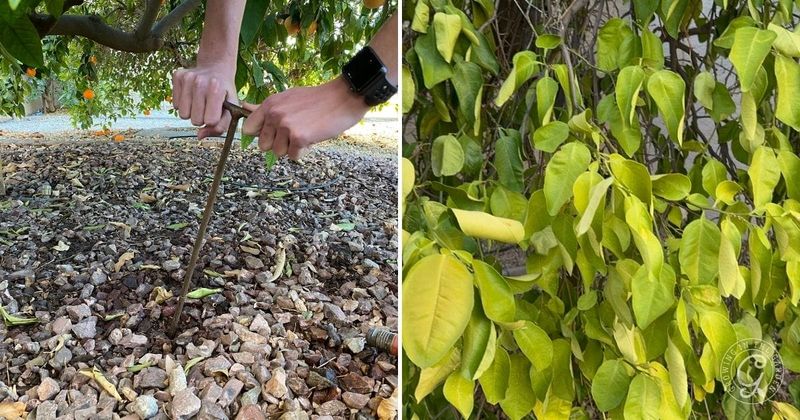
Longer gaps do not mean shorter sessions. If you stretch the interval and also cut the run time, the water may never reach the roots that matter.
Citrus guidance in the University of Arizona publication calls for wetting the root zone at least two feet deep.
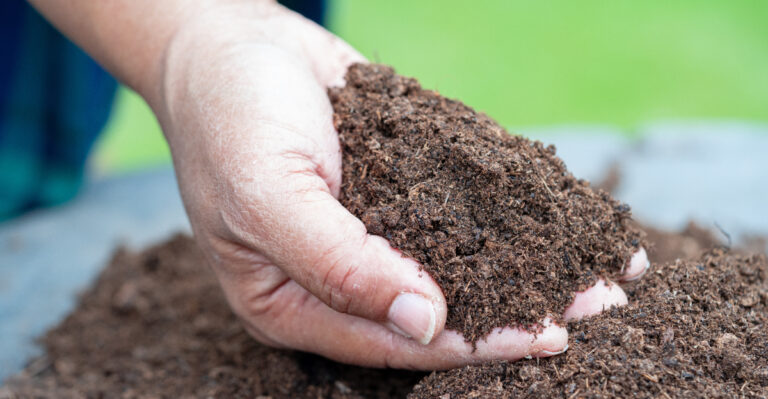
Before you water again, let the soil dry out to about six inches down. A quick dig with a trowel or a push with a screwdriver will tell you whether it is still damp.
A soil probe makes this easier. Push it in a few hours after an irrigation, and it slides through wet soil and stops where the moisture ends.
Your Arizona Garden Changes Every Week. Your Plan Should Too.
Gardening in Arizona changes quickly throughout the season. Every Friday you’ll receive a simple weekly plan showing exactly what to plant, prune, fertilize, harvest, and protect so you never miss the right timing.
Arizona’s tree watering advice describes this check and gives a typical root-zone depth of 18 to 36 inches for trees in general.
If the probe goes far below the roots, you are likely running the water too long. Water that sinks past the root zone is simply lost.
Place water across the root zone
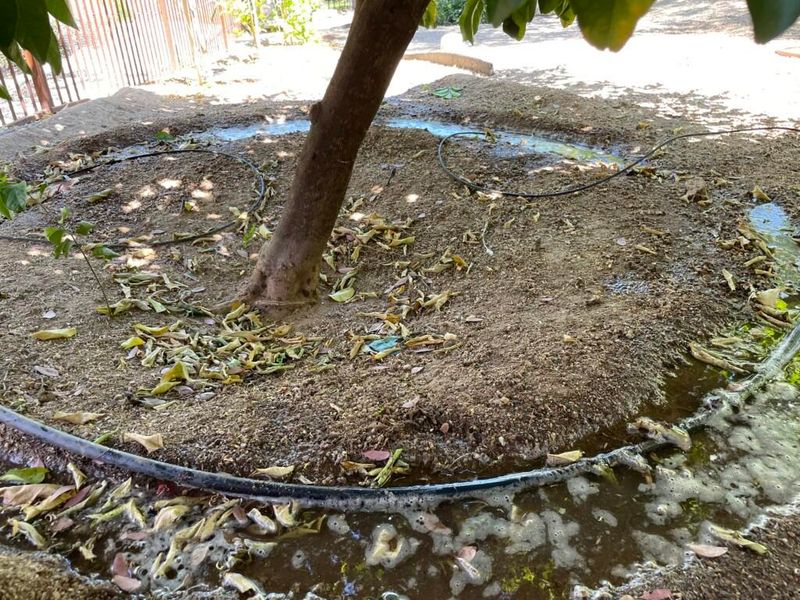
Where the water lands is a quiet part of the plan. Many people soak the soil right at the trunk, but the roots that take up most of the water spread out well beyond it.
Standing water against the trunk is also not what you want.
The University of Arizona’s citrus irrigation guidance recommends wetting the ground from the trunk out to just beyond the canopy’s drip line. The drip line is the circle on the ground below the tips of the outer branches.
If you use a basin, build the berm about a foot past the canopy. That gives the water room to spread over the full root area.
Drip users can follow the same idea. Instead of a single emitter near the trunk, move emitters outward or add a ring of them.
A tree that has grown since you installed the system may need the lines extended.
Let soil and weather refine the schedule
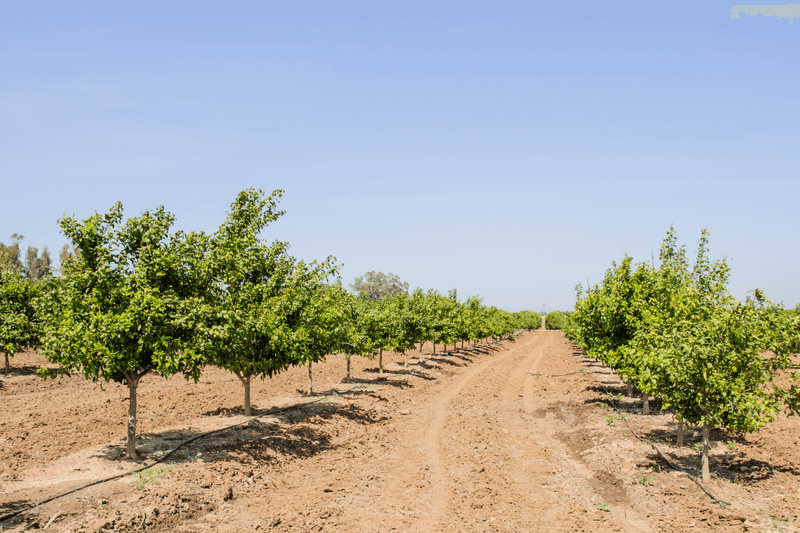
Published intervals are a starting line. Your soil and the week’s weather decide where you land inside the range.
Sandy or gravelly soil drains fast, so lean toward the shorter end of the interval. Heavier soil holds water longer, so the longer end usually fits better.
The same goes for the weather, and the University of Arizona citrus publication suggests watering more often during unusually hot spells and less often when it is cooler or after plentiful rain.
Picture a warm spell in mid-October with a dry wind. A tree in sandy soil may want water sooner than the calendar says.
After a soaking storm, you can skip a round and let the soil dry back to six inches.
Your system plays a part too. Drip and microsprinkler setups generally need shorter intervals than basins, because they put water down at a lower rate.
Young trees and curled leaves need extra care
Everything above applies to established trees. Newly planted and younger citrus need more frequent watering, so do not borrow the mature-tree October intervals for them.
Their roots are small and sit in a limited patch of soil, which dries out faster. The citrus irrigation publication lists tighter schedules for these trees.
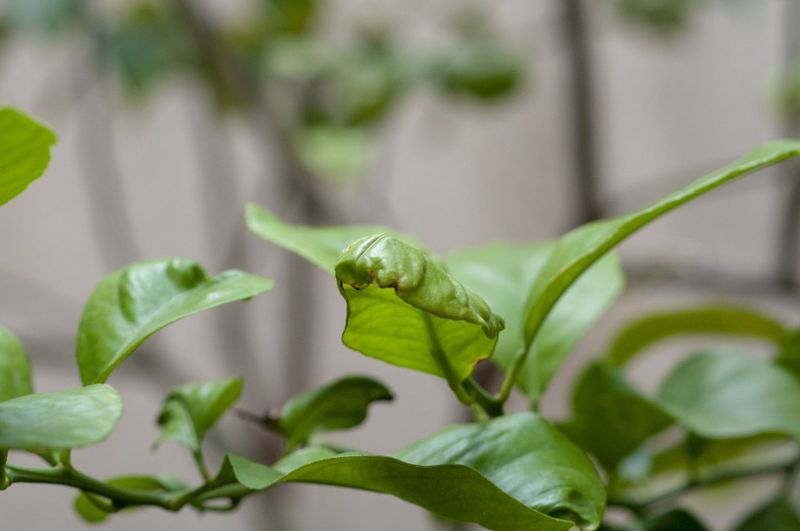
Leaf curl is another place to slow down. Curled leaves can signal moisture stress, but they do not tell you why the tree is stressed.
A clogged emitter, water that never gets deep, or too much water can all show up in similar ways.
Before making a big change, dig down and feel the soil, then watch an irrigation run to see where the water goes. Arizona’s tree watering advice also describes signs linked to overwatering, so more water is not always the fix.
Make a measured October adjustment
Start with two facts: how old your tree is and how it gets its water. Then find the matching range in the University of Arizona table and treat it as a guide.
Check the soil six inches down before each watering, and make sure the water reaches at least two feet, as the citrus guidance advises. Adjust for your soil and weather as the weeks go by.
A calendar can start the conversation, but the soil gets the final word.