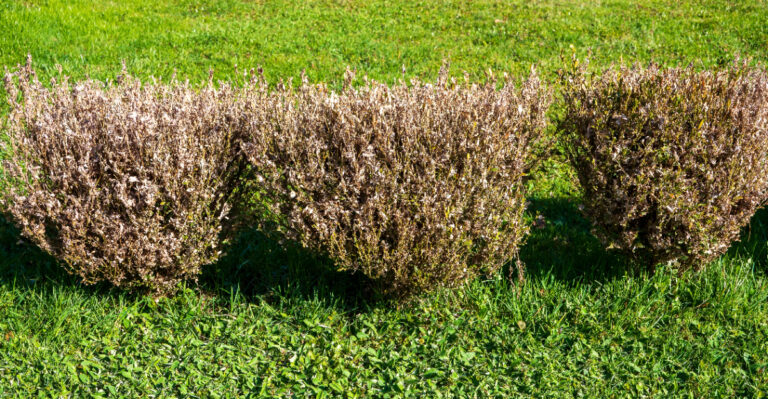
Ohio Blueberries That Fruit Poorly Almost Always Have This One Correctable Soil Problem
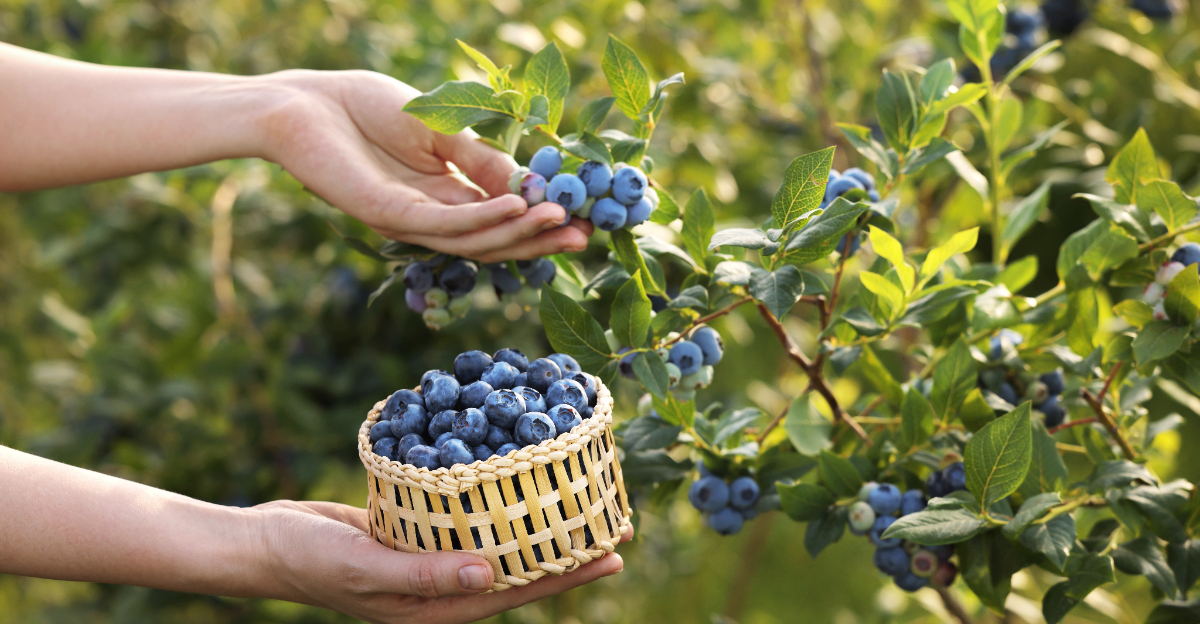
Healthy-looking blueberry bush. Barely any fruit. You water it, fertilize it, give it full sun. It looks fine. It just does not produce.
This is one of the most frustrating situations in the Ohio garden, and the answer is almost never found by looking at the plant itself.
It is underground, invisible, and has probably been working against you since the first season you planted.
Ohio soil has a specific tendency that blueberries simply cannot work around without help. Many gardeners never figure out what it is. They keep adjusting the variables they can see, and the harvest stays thin. Season after season, the same result.
Luckily, the fix is real, it is not expensive, and once you understand what is actually happening in the soil, the whole frustrating pattern starts to make sense.
The berries you have been expecting are still possible. They are just waiting on one correction you have not made yet. Want to know what it is?
1. Soil That Is Too Alkaline
A thin, disappointing harvest can teach you more than a good one, if you know where to look.
When Ohio blueberry growers pull in a bucket that should be overflowing but holds just a sad layer of small fruit, the answer is usually in the ground before it is ever in the bush.
Ohio soils tend to run neutral to slightly alkaline, sitting comfortably in a pH range that works fine for tomatoes, beans, and most vegetables. For blueberries, that same range is a slow and steady problem.
Blueberries evolved in naturally acidic forest soils along the East Coast and upper Midwest. They need a very specific soil environment to pull nutrients through their roots efficiently.
When pH climbs too high, the plant cannot absorb iron, manganese, or zinc properly, even when those minerals are sitting right there in the soil at adequate levels. The bush looks confused because it essentially is.
Ohio’s glacial history left behind soils rich in calcium and magnesium carbonates, which push pH upward over time.
Limestone bedrock, alkaline irrigation water, and even concrete near garden beds quietly make the problem worse without anyone noticing.
Many growers add fertilizer year after year wondering why nothing changes. The fertilizer is not the issue.
The soil chemistry is blocking it at the door. Fixing alkaline soil is the first and most important step, and nothing else you do for your blueberries will work reliably until that step is addressed directly.
The berries were never the problem. The ground underneath them was. That is actually good news, because ground you can fix.
You have probably been a perfectly competent blueberry gardener this whole time. The soil just was not cooperating.
2. Notice Yellow Leaves And Weak Fruit
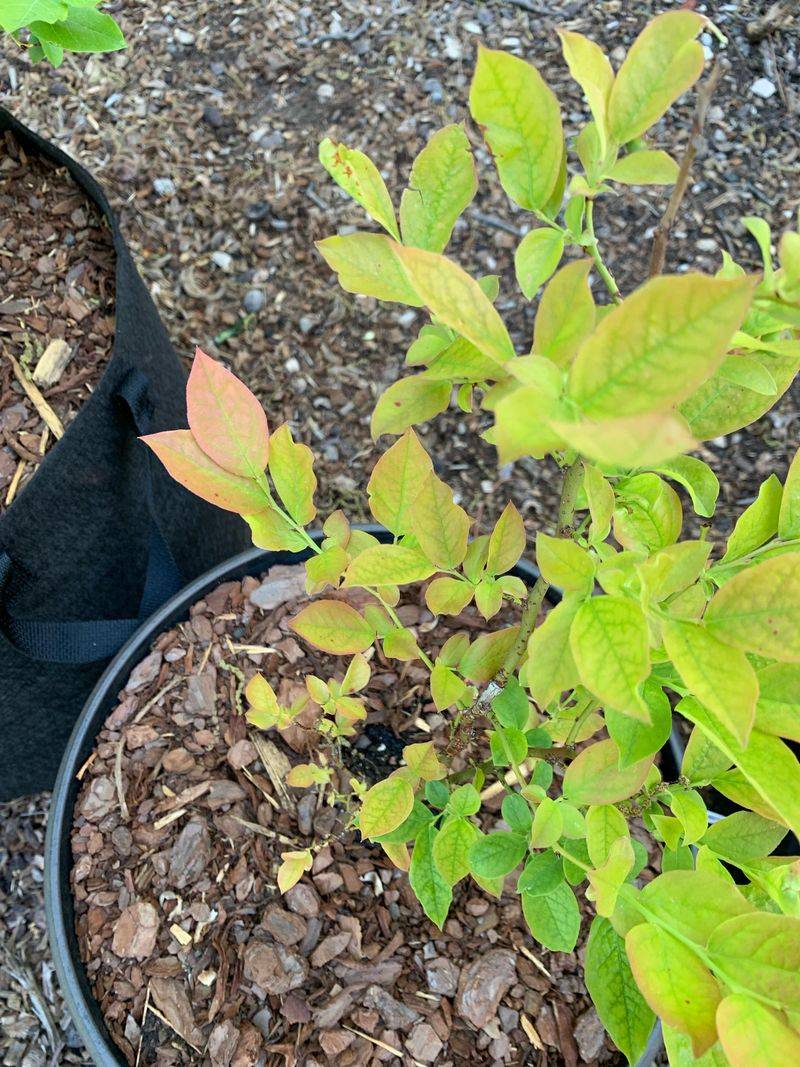
Yellowing leaves on a blueberry bush are one of the clearest signals your soil pH is out of range, and the pattern is specific enough to be genuinely diagnostic.
The leaf veins stay green while the tissue between them turns pale yellow or nearly white.
Your Ohio Garden Changes Every Week. Your Plan Should Too.
Gardening in Ohio changes quickly throughout the season. Every Friday you’ll receive a simple weekly plan showing exactly what to plant, prune, fertilize, harvest, and protect so you never miss the right timing.
This condition is called interveinal chlorosis, and it happens because high pH locks iron in the soil in a form the plant cannot access. Without enough iron, the leaves lose their ability to produce chlorophyll properly.
Weak fruit follows naturally. A bush that cannot photosynthesize well does not have the energy to develop full, plump berries.
Flowers drop early. Berries stay small and sour. Clusters ripen unevenly. Some growers spend an entire season chasing a pest problem or adjusting watering schedules while the soil pH sits unchanged, quietly causing everything they are seeing.
Leaf color is the bush communicating directly. In Ohio, where soils trend alkaline, this kind of chlorosis shows up more often than most people expect.
It can develop even in bushes that were planted correctly, especially as soil pH gradually drifts upward over several seasons without anyone testing it.
Noticing chlorosis early gives a real advantage. You can test, correct, and get ahead of the problem before it costs another full season of fruit.
Yellow leaves on a blueberry are not just an eyesore. They are a practical clue pointing straight at the soil beneath the plant.
The bush has been trying to tell you something. Interveinal chlorosis is blueberry for “please check the pH.” It is one of the more polite ways a plant can flag a problem, all things considered.
3. Test pH Before Adding Anything
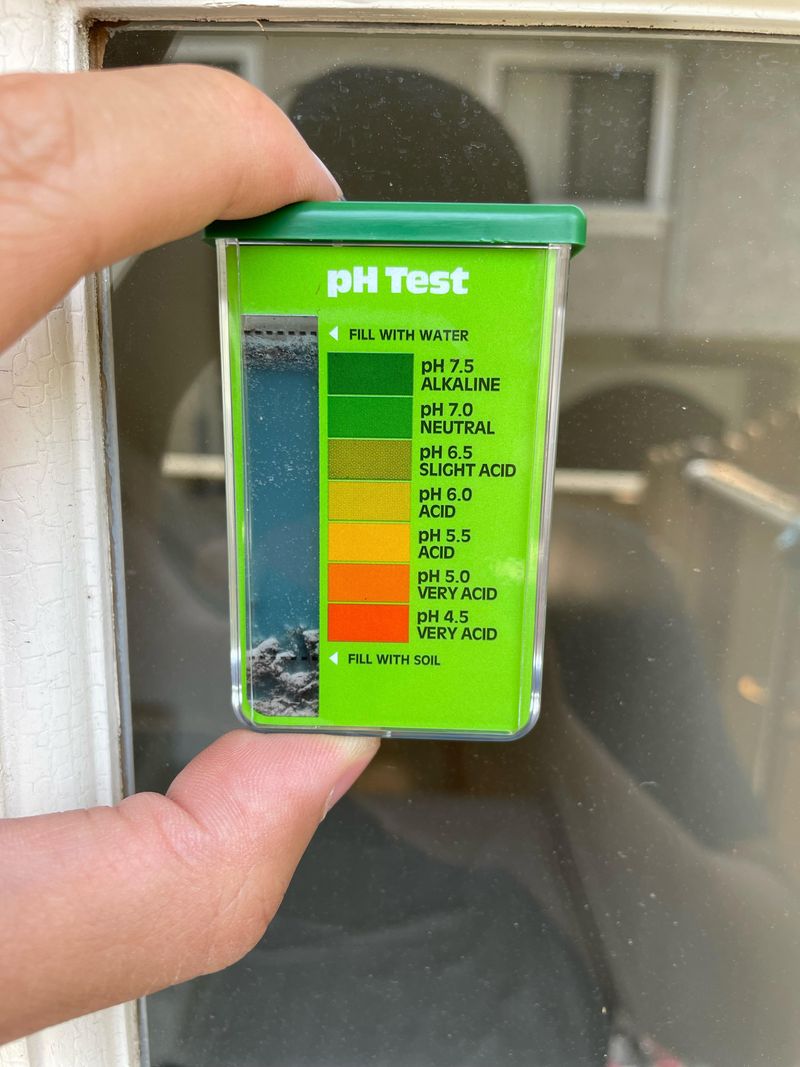
Reaching for a bag of sulfur or peat moss before you know your actual pH number is one of the most common and costly mistakes Ohio blueberry growers make.
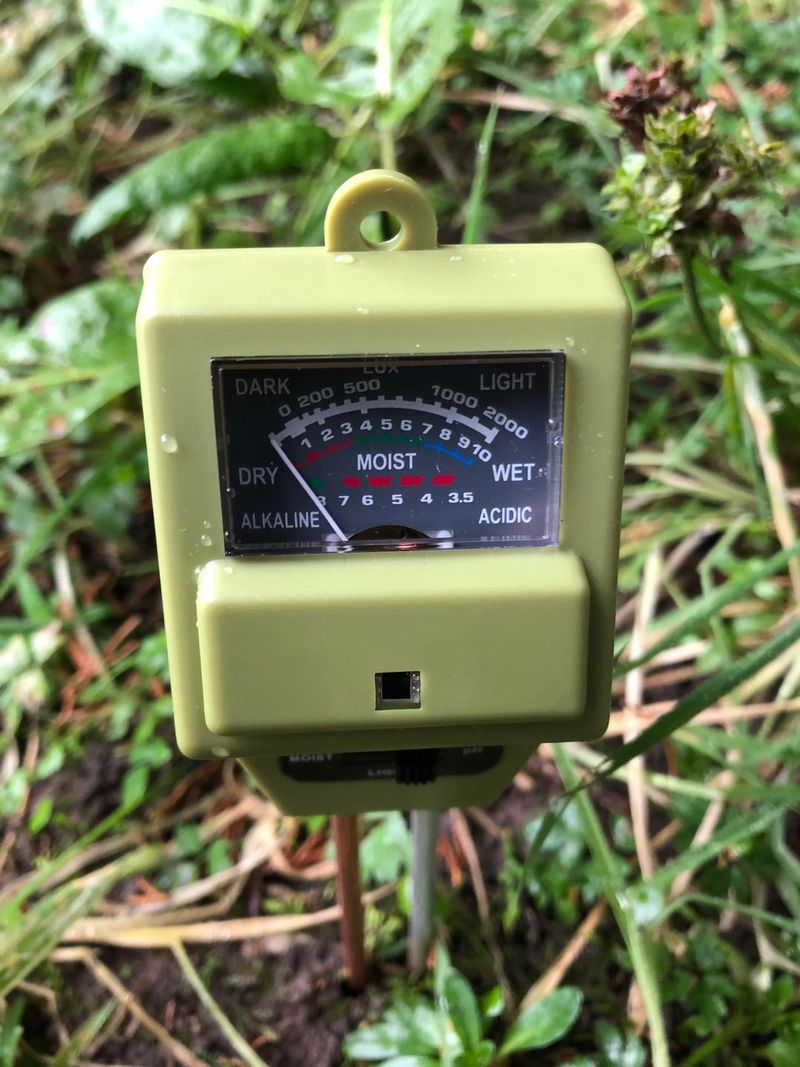
Soil testing is fast, affordable, and gives you the exact information you need to make corrections that actually work.
Without a test, every amendment is a guess, and guesses in soil chemistry often create new problems while solving nothing.
Several good options exist. County extension offices in Ohio offer soil testing services at a reasonable cost, and the results come with specific recommendations tailored to Ohio soils.
Home test kits from a garden center can give a quick ballpark reading, though they are less precise than a lab test.
For blueberries, precision matters more than it does for most crops. A lab test is worth the small extra cost when significant corrections are on the table.
Collect soil samples from several spots around each bush and mix them together for a composite reading. Take samples from roughly four to six inches down, where the roots are actively feeding.
Avoid sampling right after fertilizing or heavy rain, since both can temporarily skew results in ways that lead to the wrong correction plan.
Once you have your pH number, you know exactly how far you need to move it and can follow a targeted plan.
Testing first is not a formality for serious blueberry growers. It is the entire starting point. Everything after it is just execution.
Sending a soil sample to a lab costs less than one bag of fertilizer. It also saves you from buying five more bags of the wrong thing. That math works out very clearly in favor of testing first.
4. Aim For 4.5 To 5.5
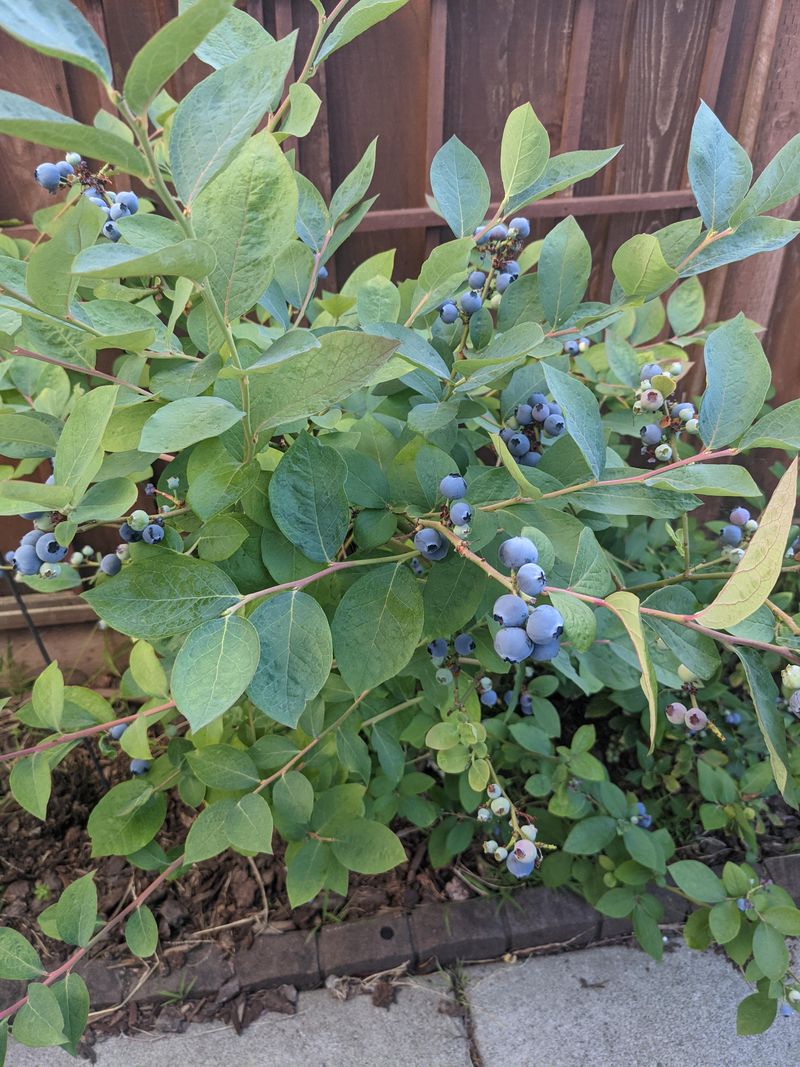
Blueberries are not just acid-tolerant. They need acidic soil to function well, and that distinction matters.
The target range is pH 4.5 to 5.5, with 4.8 to 5.2 being where most highbush varieties grown in Ohio perform their best.
That range probably sounds extreme if you are accustomed to growing vegetables, which generally prefer something close to neutral.
For blueberries, that acidity is not a quirk. It is a biological requirement built into the plant’s entire nutrient uptake system.
At a pH below 4.5, the soil can become problematic in a different direction. Aluminum and manganese become too available in very acidic conditions, and the plant can suffer from nutrient overload rather than nutrient shortage.
Going too low is just as damaging as staying too high. This is precisely why testing before amending matters so much. The goal is a specific window, not just “more acidic.”
Highbush varieties like Bluecrop, Jersey, and Patriot are all well-suited to Ohio and were bred for performance in acidic soil.
When pH climbs above 5.5, their nutrient uptake starts declining noticeably. Above 6.0, chlorosis and poor fruiting are likely.
Above 6.5, even healthy-looking bushes will struggle to produce a meaningful crop regardless of how well everything else is managed.
Knowing your target range before you start amending gives every correction a clear goal. It also keeps you from overshooting in either direction, which is a genuinely easy mistake to make when chasing a number without a defined destination.
4.5 to 5.5. That is the window. Everything else in blueberry soil management is just working to get there and stay there. Narrow target, very worthwhile payoff.
5. Use Elemental Sulfur Carefully
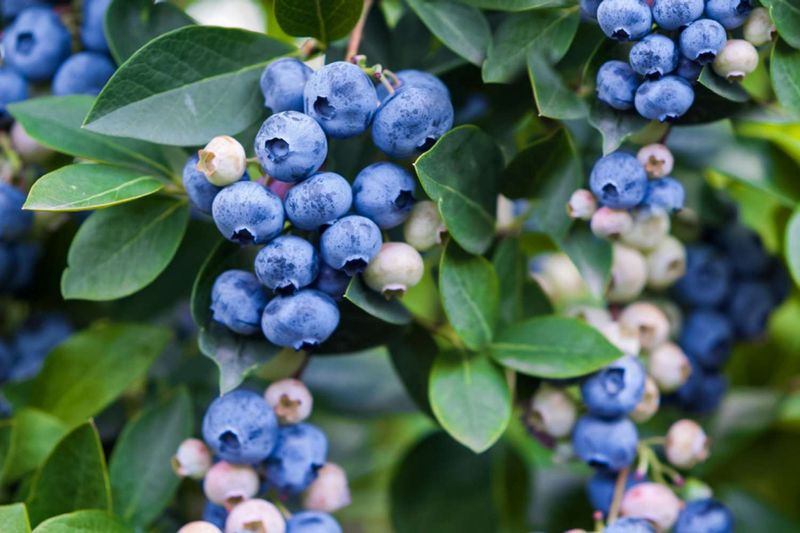
Elemental sulfur is the most widely recommended tool for lowering soil pH around blueberries, and it works well when treated as the slow, deliberate process it actually is.
Soil bacteria convert elemental sulfur into sulfuric acid over time, gradually lowering pH in the surrounding soil.
The key word in that sentence is gradually. This is not a quick fix, and treating it like one is where things go sideways.
In Ohio, the process can take several months, especially in cooler soil temperatures during spring and fall.
Applying sulfur well before planting, ideally six months to a year ahead, gives the pH time to shift before roots are established.
For existing bushes, surface applications worked lightly into the top few inches of soil are safer than deep incorporation, which can disturb established roots and set the plant back at the same time you are trying to help it.
Always follow the rate from your soil test report rather than estimating from the bag label. Applying too much sulfur too fast can drop pH below the safe range and stress the plant in a new direction.
Clay soils common in western Ohio require more sulfur to shift pH than sandier soils elsewhere in the state. The same product, the same label, different soil types, different outcomes.
Ammonium sulfate fertilizer can be used alongside elemental sulfur because it acidifies the soil slightly while providing nitrogen.
It should not replace a targeted sulfur correction, though. It is a useful complement, not a substitute. Read product labels carefully, since application rates vary significantly by product and existing soil conditions.
Elemental sulfur works. It just works on its own timeline, not yours. Start it early, apply it correctly, and let the soil bacteria do the chemistry. They are surprisingly good at their jobs when given the chance.
6. Build Raised Beds In Heavy Soil
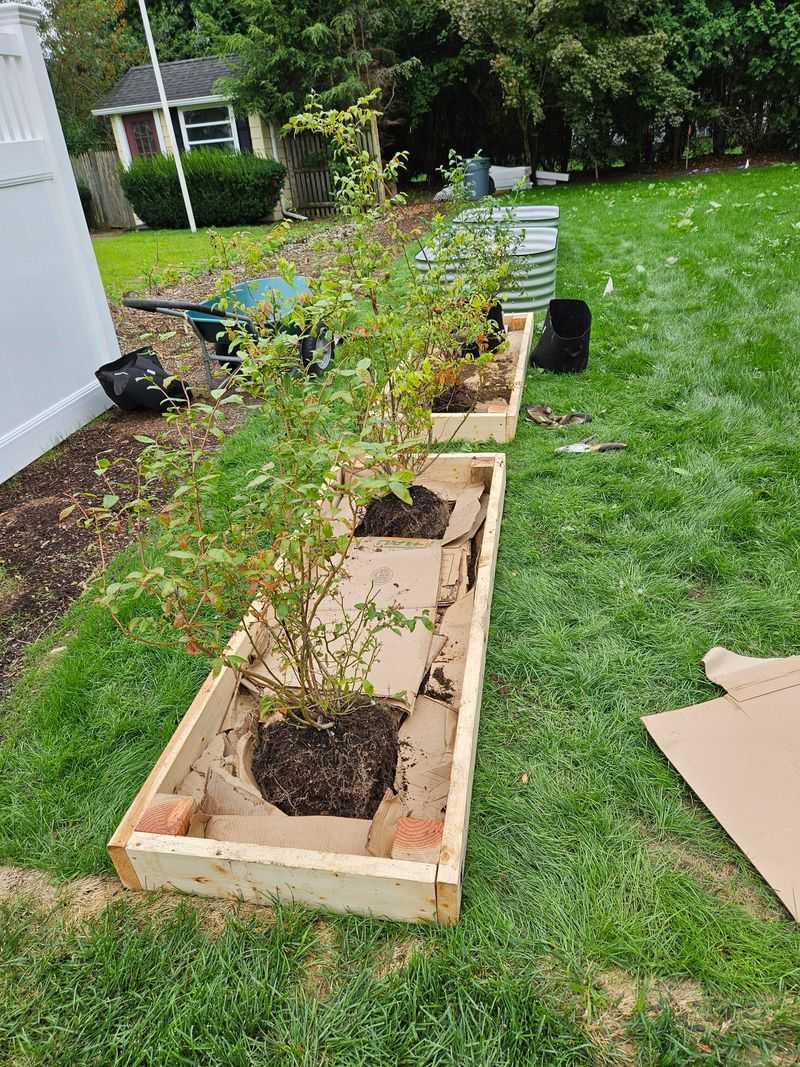
Heavy clay soil presents a specific double challenge for blueberry growers in Ohio.
It drains poorly, which blueberries strongly dislike, and it holds onto alkalinity even after amendments are applied.
Both problems compound each other in ways that make in-ground correction slow and frustrating. Raised beds offer a practical way around both at the same time, and growers who switch to them often see a dramatic difference within one or two seasons.
A raised bed for blueberries should be at least twelve to eighteen inches deep and wide enough to accommodate mature root spread, which can extend two to three feet in an established highbush plant.
Fill it with a mix designed for acid-loving plants: roughly half sphagnum peat moss combined with pine bark fines and a small amount of native topsoil.
This blend starts at a naturally lower pH and drains the way blueberry roots need without requiring years of amendment work first.
Raised beds also make ongoing pH management significantly more predictable. You are working with a smaller, contained volume of soil, so amendments take effect faster and more consistently.
The variables are controlled in a way that open ground simply cannot match in Ohio clay.
Mulching with pine bark or pine needle mulch helps maintain acidity over time and keeps moisture levels steady, both of which blueberries appreciate.
The investment in lumber or stone edging pays off in berry production faster than most growers expect. It is one of the most reliable structural fixes available when the native soil is genuinely working against you.
Building up instead of fighting down is sometimes the smartest move in gardening.
Ohio clay is very good at being Ohio clay. Raised beds let you stop arguing with it and start growing blueberries in conditions that actually suit them.
7. Add Acid Loving Organic Matter
Organic matter does more than feed soil life.
For blueberries, the right kind actively helps maintain the acidic conditions the plants depend on, while the wrong kind quietly works against you.
Not all organic amendments are equal in this context, and the distinction matters more than most people realize when they are standing in the garden center trying to decide what to buy.
Wood ash or compost made from grass clippings and kitchen scraps can actually raise pH over time, which is the opposite of what blueberries need.
Sphagnum peat moss is the most commonly used acidifying amendment for this purpose. It has a naturally low pH, typically between 3.5 and 4.5, and improves soil structure by increasing both water retention and aeration at the same time.
Pine bark fines and aged pine needle mulch are also excellent choices that slowly release mild acidity as they break down.
These materials mimic the forest floor conditions where blueberries naturally thrive.
Mixing two to four inches of peat moss into the top eight to ten inches of soil before planting is standard practice for Ohio blueberry beds.
For established plants, topdressing with pine bark mulch each spring keeps organic matter levels up without disturbing roots.
Over several seasons, this practice builds a soil structure that holds moisture, supports beneficial fungi that help blueberry roots absorb nutrients, and buffers pH naturally.
Organic matter is not a one-time fix. Each layer you add works through the season, making the soil incrementally more hospitable for the berries you are trying to grow.
The right organic matter is essentially a slow, ongoing investment in the soil environment blueberries want to live in.
The wrong organic matter is a slow, ongoing argument with the plants about what they need. Peat moss and pine bark are very much on your side in this situation.