This Is The Underrated Michigan Native That Makes Backyard Gardens Less Mosquito-Friendly
Summer evenings in Michigan have a specific kind of cruelty. The light is golden, the air finally cools down, and then the mosquitoes show up and ruin everything.
Many people grab a spray and move on, never once looking at their garden as part of the problem or the solution.
But there is a native Michigan wildflower that has been growing along roadsides and meadow edges for centuries, doing something that most ornamental plants never bother with.
It will not solve everything on its own. Nothing does. But paired with a few smart yard habits, it shifts the balance in your favor in a way that is genuinely satisfying.
It supports pollinators, thrives in tough conditions, smells incredible, and looks like something you would spend real money on at a nursery.
Michigan gardeners who have discovered it tend to wonder why it took them so long. So before you light another citronella candle and hope for the best, maybe you should know this.
1. Spotted Beebalm Is The Native Plant Worth Knowing First
A plant that looks like it belongs in a fairy tale garden, grows wild across Michigan roadsides, and has been doing important ecological work for centuries.
That is spotted beebalm, scientifically known as Monarda punctata, and it is one of the most underrated native plants in the entire Great Lakes region.
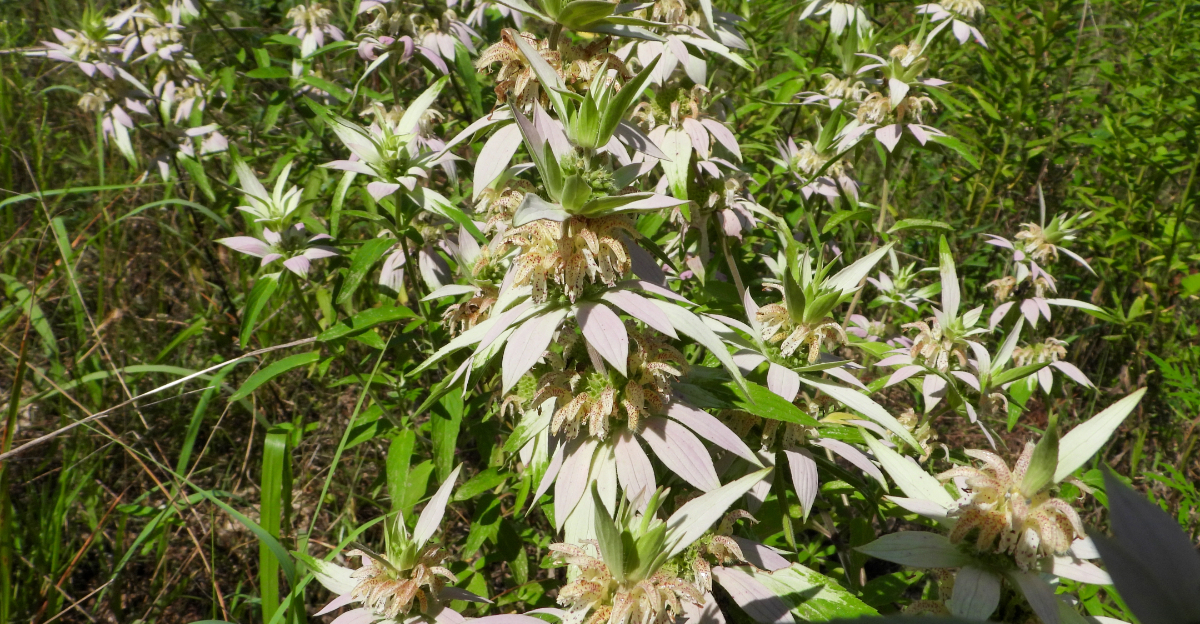
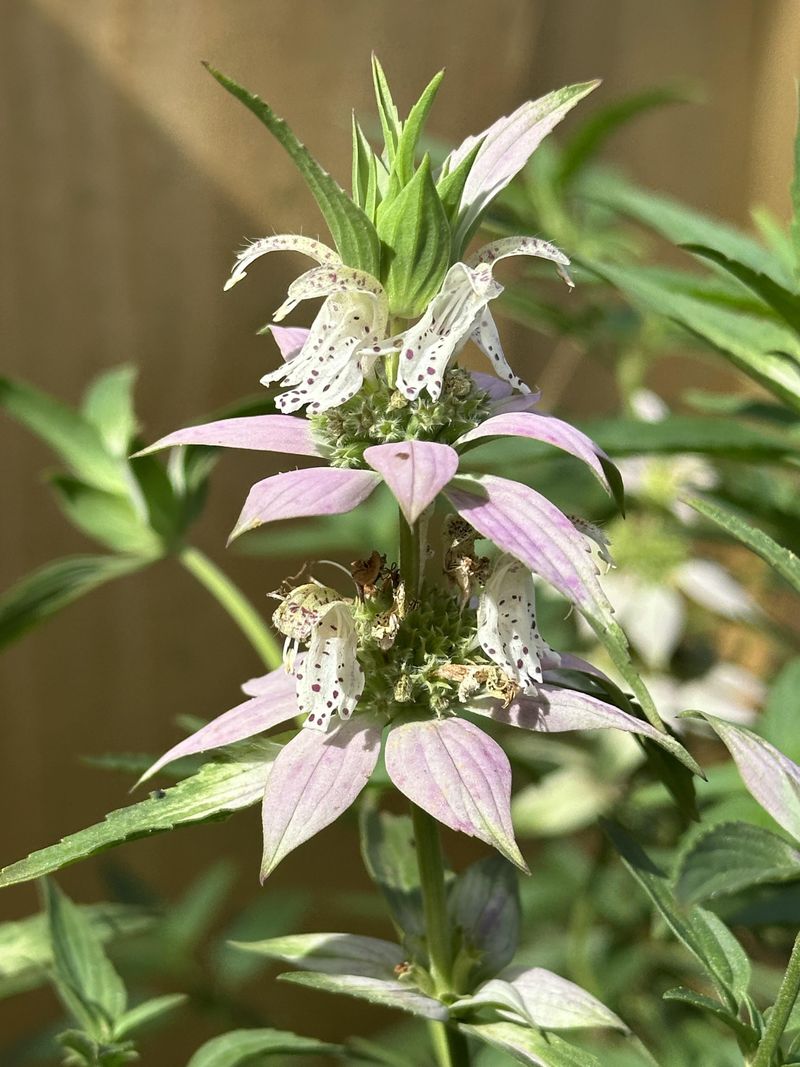
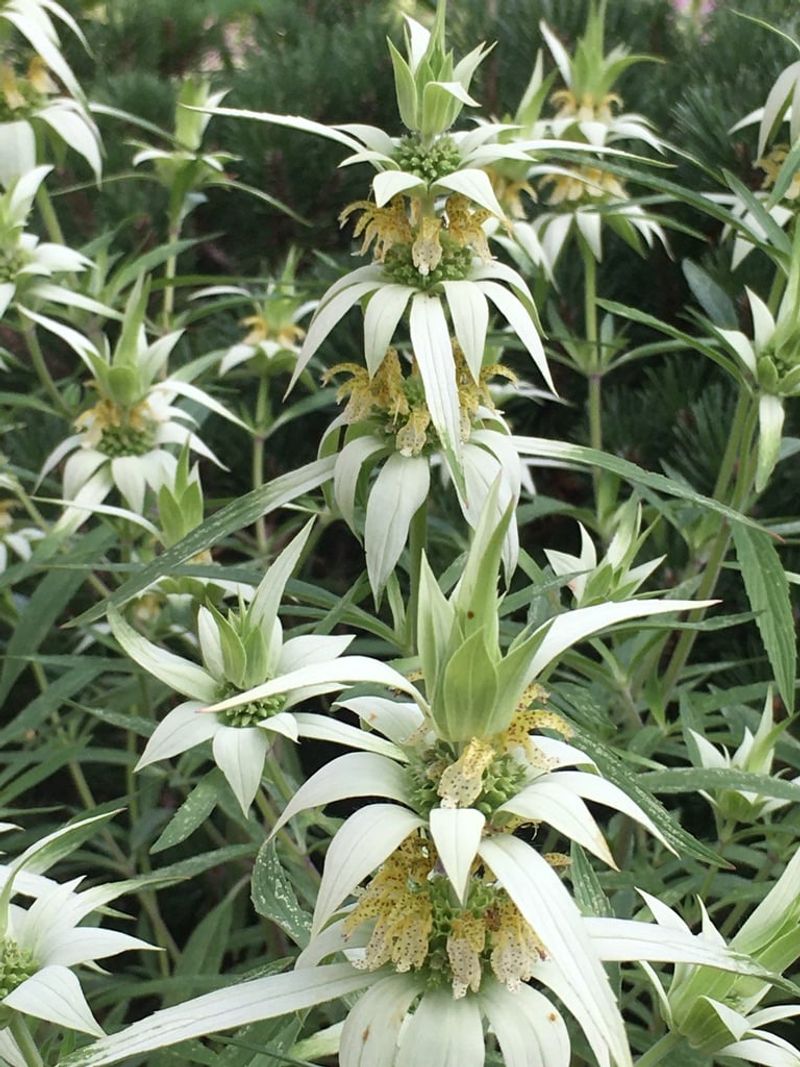
Sometimes called horsemint, this cheerful wildflower produces stacked layers of pale yellow, purple-spotted tubular flowers surrounded by showy pinkish-to-lavender bracts that look almost like petals.
The whole bloom structure has a tiered, architectural quality that makes it stand out in any garden bed. It is the kind of plant that makes visitors stop and ask what it is, which is always a good sign.
Spotted beebalm belongs to the mint family, which means it carries a pleasant herbal fragrance when its leaves are brushed or crushed.
That scent comes from natural aromatic compounds including thymol, the same compound used in some commercial products today. On a warm afternoon, the fragrance is strong enough to notice without being overwhelming.
This plant typically blooms from mid to late summer, exactly when Michigan gardens need the most help attracting beneficial insects.
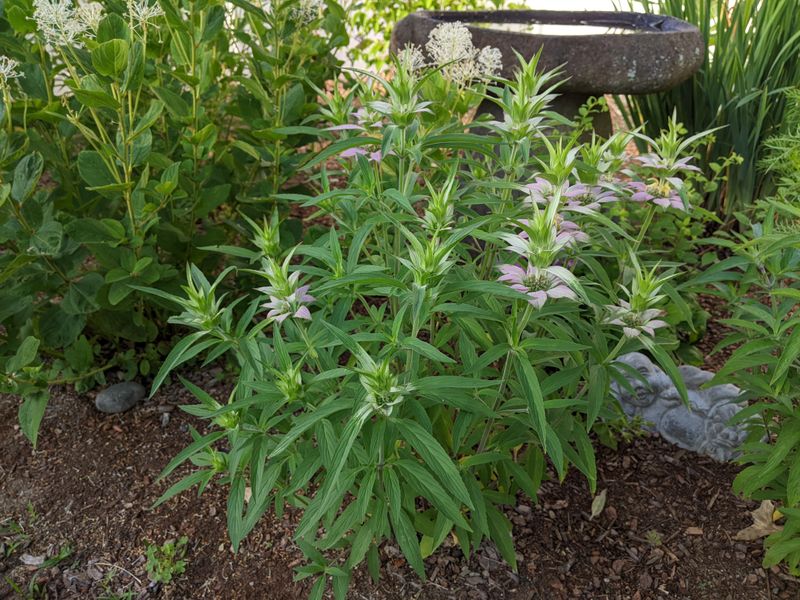
It reaches about one to three feet tall, spreads gradually by self-seeding, and creates a loose, airy presence in the garden.
Native to Michigan and much of the eastern United States, it has deep roots in both natural landscapes and traditional ecological relationships that gardeners are only starting to fully appreciate.
For a low-fuss native that earns its keep all season long, spotted beebalm is a genuinely exciting place to start.
2. The Real Benefit Starts With Pollinators, Not Mosquito Magic
Let’s get one thing straight right away: spotted beebalm is not a mosquito repellent in the way a spray can is. It does not create an invisible force field around your patio. No plant does.
What spotted beebalm actually does is more interesting and more useful in the long run. Its aromatic compounds, including thymol and carvacrol, are present in the plant’s leaves and stems.
Your Michigan Garden Changes Every Week. Your Plan Should Too.
Gardening in Michigan changes quickly throughout the season. Every Friday you’ll receive a simple weekly plan showing exactly what to plant, prune, fertilize, harvest, and protect so you never miss the right timing.
When those leaves are disturbed or bruised, they release fragrance compounds that some studies suggest mosquitoes find unappealing.
The key word there is disturbed. A plant sitting quietly in a bed does not pump out constant repellent. But placed along walkways or in spots where people brush past it regularly, the effect becomes more practical.
This is where the gardener’s role matters. Placing spotted beebalm near seating areas, along garden paths, or beside frequently used doors puts the aromatic compounds where they can actually do something.
Brush a few stems as you walk past and the scent activates. It is a subtle layer of deterrence, not a guarantee.
The real bonus is what the plant attracts at the same time. Bumblebees, native bees, and beneficial wasps arrive in numbers when spotted beebalm blooms.
Some of those insects are natural predators of mosquito larvae and other garden pests. So while the plant itself is not magic, the ecosystem it supports starts pulling the situation in a better direction.
That is a more honest kind of garden success.
3. Beneficial Insects Are Where This Plant Really Shines
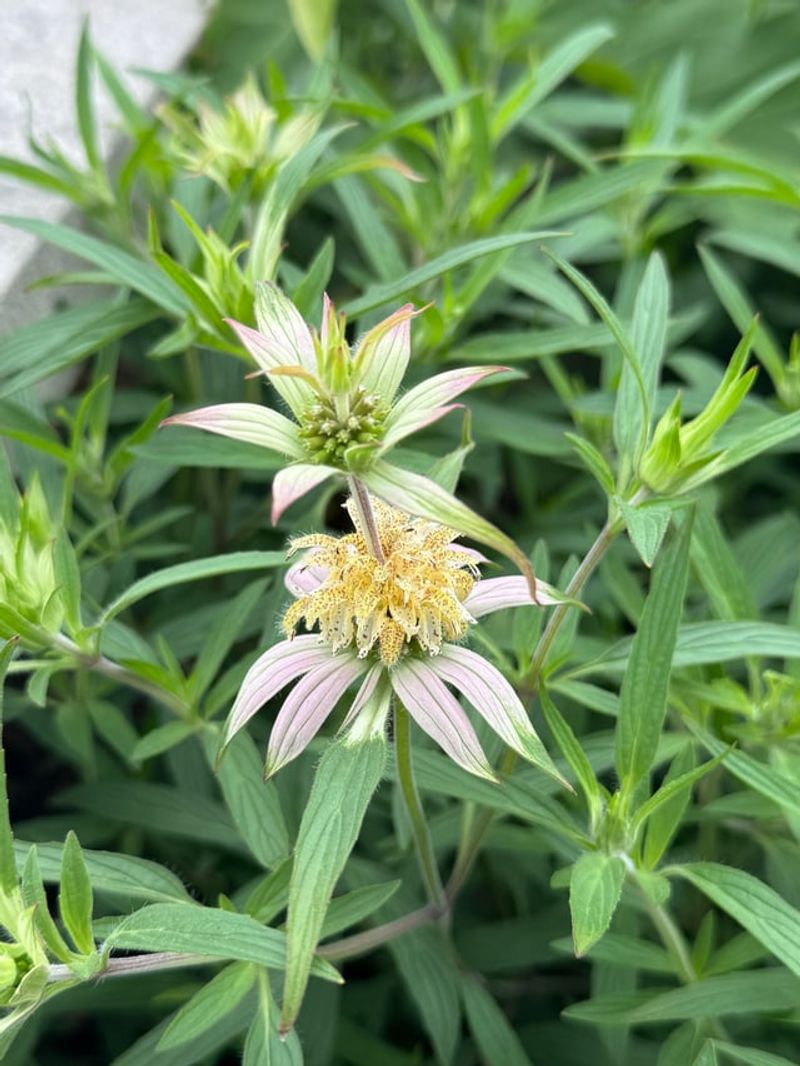
Spotted beebalm in full bloom looks like a pollinator party that forgot to send out invitations to anyone unwanted.
Bumblebees, native bees, parasitic wasps, and hoverflies all show up in impressive numbers, and that traffic matters more than most gardeners realize.
Parasitic wasps are one of the most useful groups that spotted beebalm consistently attracts. These small, non-stinging wasps prey on caterpillars, aphids, and the larvae of various garden pests.
They need nectar-rich flowers to fuel their activity, and spotted beebalm provides exactly that during mid to late summer when many other native plants have finished blooming.
Hoverflies are another valuable visitor. Adult hoverflies feed on nectar and pollen, but their larvae actively consume aphids and other soft-bodied pests in large numbers.
A garden that attracts hoverflies throughout summer ends up with considerably fewer pest problems overall. Spotted beebalm is one of the better native plants for drawing them in reliably.
Beyond pest management, the sheer pollinator activity around spotted beebalm creates a more biodiverse garden environment.
More species of insects means more complex food webs, more natural checks on pest populations, and a garden that functions more like a healthy ecosystem rather than a maintenance project.
Plant spotted beebalm in a visible spot where you can actually watch the activity during bloom. Sitting near it on a sunny afternoon is surprisingly entertaining, which is not something most plants can honestly claim.
4. Sunny, Dry Soil Is Where Spotted Beebalm Feels Most At Home
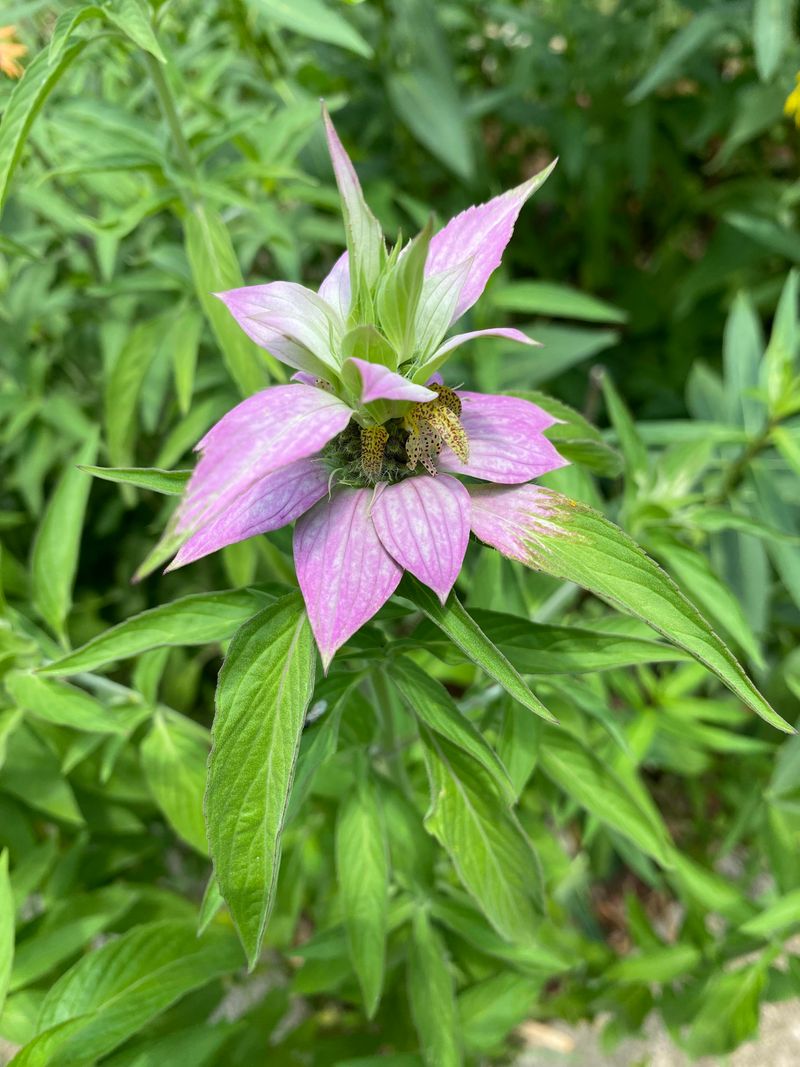
Spotted beebalm is a plant that rewards neglect more than it rewards fussing.
It comes from dry, open habitats across Michigan, roadsides, sandy fields, and sunny meadow edges where the soil is lean and drainage is sharp.
Recreate those conditions in your garden and it thrives. Try to improve on them too much and it struggles.
Full sun is non-negotiable for best performance. Spotted beebalm grown in too much shade becomes leggy, produces fewer blooms, and loses the compact structure that makes it so attractive.
A spot that gets at least six hours of direct sun daily is the minimum. Eight or more hours is even better, especially in cooler northern Michigan gardens.
Soil type matters just as much as sun exposure. Spotted beebalm prefers dry to moderately dry, well-drained soil.
Sandy or loamy soil suits it perfectly. Heavy clay that holds moisture after rain creates conditions where the plant underperforms and becomes more vulnerable to fungal issues.
If your soil is on the heavier side, amend the planting area with coarse sand or grit to improve drainage before putting plants in the ground.
Once established, this plant needs very little supplemental watering. In fact, overwatering is one of the most common ways gardeners accidentally undermine it.
Water new plants through their first season to help roots settle, then step back and let Michigan’s natural rainfall do the rest.
Lean soil, full sun, and good drainage. Spotted beebalm basically wrote its own care instructions, and they are refreshingly short.
5. Standing Water Nearby Can Undo A Lot Of Your Progress
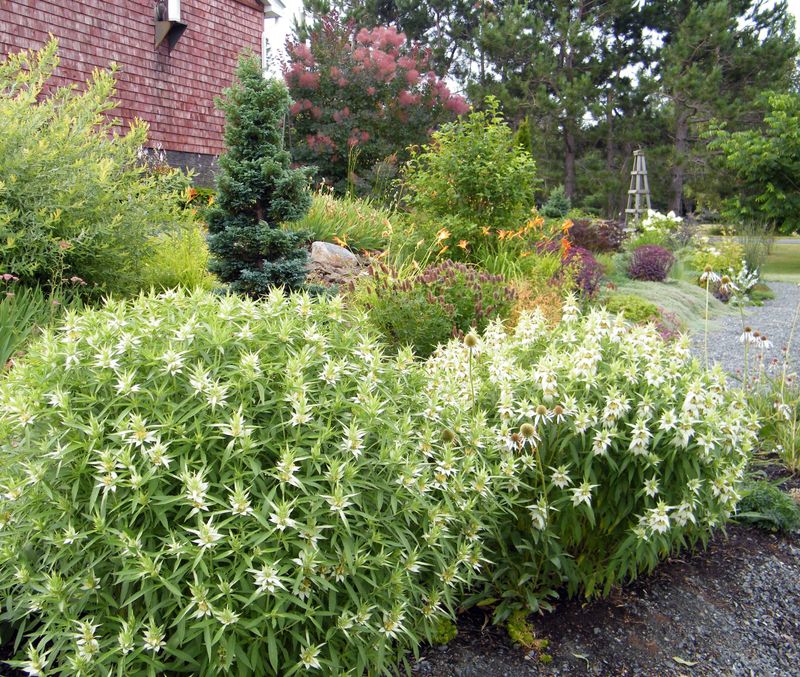
Spotted beebalm can do a lot of good things for your backyard mosquito situation, but it cannot do much about the birdbath that has not been emptied in two weeks.
Mosquitoes breed in standing water, and that part of the equation sits entirely outside what any plant can solve.
A female mosquito needs as little as a bottle cap of standing water to lay eggs.
That means birdbaths, clogged gutters, low spots in the lawn, plant saucers, old containers, and tarps that collect rain are all potential breeding sites.
Even a small amount of stagnant water near a garden bed offsets whatever deterrent effect your plantings are providing. It is a bit like mopping the floor with the faucet still running.
The good news is that managing standing water is straightforward.
Empty and refill birdbaths every two to three days. Clear debris from gutters after rain. Turn over or store containers that collect water. Fill in low spots in the lawn that pool after storms.
These simple steps reduce mosquito breeding far more effectively than any single plant ever could.
Spotted beebalm works best as part of a strategy, not a standalone fix. Pair it with consistent standing water management and the results are noticeably better than either approach on its own.
Address the breeding sites first, then let the garden do its supporting role. The combination is genuinely effective in a way that feels satisfying rather than like a constant battle.
6. Good Airflow Makes The Whole Garden Less Mosquito-Friendly
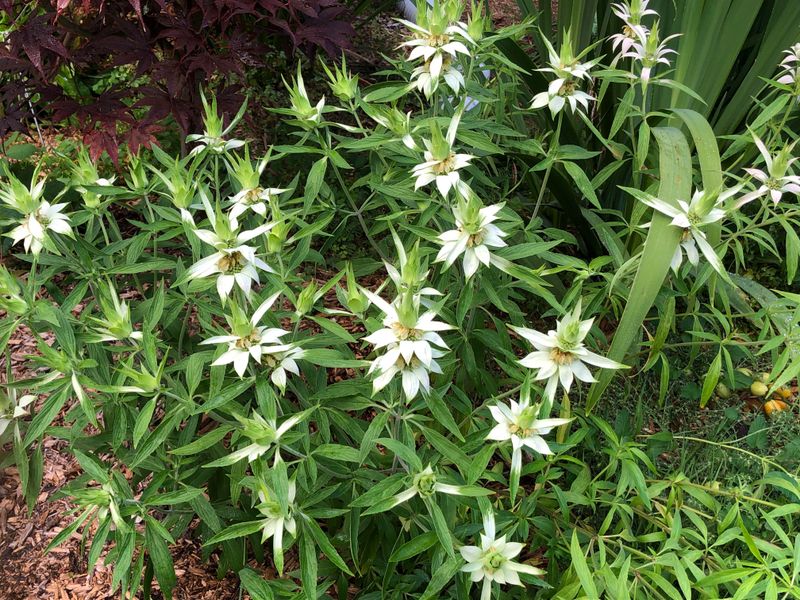
Good airflow in a garden bed is usually a conversation about plant health, but it also plays role in making outdoor spaces less comfortable for mosquitoes.
Mosquitoes are weak fliers. They prefer calm, sheltered spots with high humidity close to the ground. A garden bed with dense, overcrowded plantings and poor airflow gives them exactly that.
Spotted beebalm has a naturally open, airy growth habit that works in your favor here.
Its upright stems and loose structure do not create the kind of dense, stagnant microclimate that some ground-hugging plants produce.
Planting it alongside other upright natives rather than dense low-growing spreaders helps maintain the airflow that makes mosquitoes less inclined to linger.
Spacing matters more than most gardeners give it credit for. Spotted beebalm planted at the right distance, roughly eighteen to twenty-four inches between plants, allows air to move through the bed freely.
Crowding plants together might look lush faster, but it creates the humid, sheltered conditions that mosquitoes actively seek out during the heat of the day.
Pruning out any overcrowded stems in midsummer also helps. Spotted beebalm can get a little floppy in its second and third year as it spreads.
Cutting back a few stems to open up the canopy takes five minutes and makes a real difference to how the bed feels and functions.
A well-aired garden bed is a more pleasant place for people and a less pleasant place for mosquitoes, which is a trade worth making every single season.
7. Dense, Wet Corners Are Still Mosquito Territory
Mosquitoes have preferences, and dense, shaded, consistently moist corners of the yard rank among their favorites.
These are the spots where air barely moves, humidity stays high close to the ground, and vegetation provides cover during the brightest part of the day.
Spotted beebalm does not belong in those spots, and honestly, neither does your outdoor seating.
Wet, shaded corners are worth addressing directly if mosquito pressure is a consistent problem in your yard.
Native plants that tolerate wet shade, like blue flag iris or swamp milkweed, can be planted there to improve the ecological function of the space, but they will not reduce mosquito activity the way drier, sunnier plantings do.
The corner stays humid regardless of what grows in it.
The strategy worth pursuing is to make the rest of your yard as inhospitable to mosquitoes as possible while keeping those problem corners in check through water management.
Spotted beebalm placed in the sunny, dry areas near where you actually spend time works alongside that strategy rather than against it.
Michigan yards often have a mix of conditions, wet low spots near downspouts, dry sunny strips along fences, shaded patches under mature trees.
Working with those microclimates rather than fighting them gives every plant a better chance and makes the overall yard function more smoothly.
Put spotted beebalm in the spots it loves, address the wet corners separately, and you end up with a yard that is doing far more work for you than it was before.
Not bad for a wildflower that was growing on roadsides the whole time.