Ohio Plants That Attract Dragonflies And Reduce Mosquito Activity
If mosquitoes are running your backyard pond area this summer, here’s a fun fact that might change everything: dragonflies eat hundreds of mosquitoes a day. Hundreds.
They are basically the most effective pest control solution you never had to call anyone to install. The trick is giving them a reason to stick around, and that comes down to plants.
The right native aquatic and moist-site plants create the kind of habitat dragonflies are genuinely drawn to, from egg laying to hunting to just hanging out looking incredible in the afternoon sun.
Ohio’s pond edges, rain gardens, and soggy landscape spots are actually perfect for this.
A few smart plant choices can quietly shift the whole backyard ecosystem in your favor. Less mosquitoes, more dragonflies, and a whole lot more going on out there than you might expect.
1. Pickerelweed Supports Busy Pond Edges
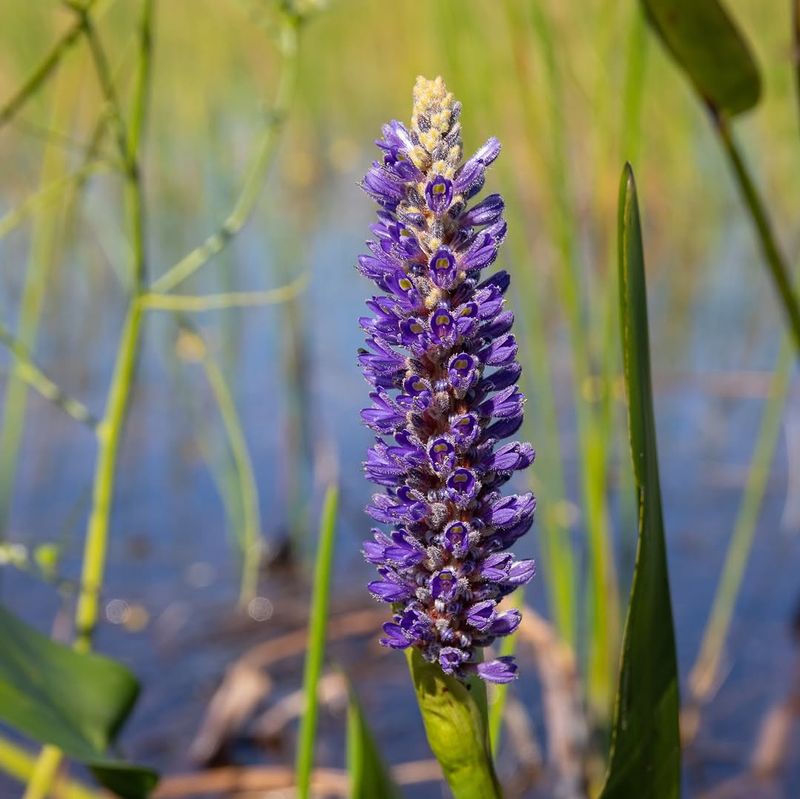
Standing at the edge of a sunny Ohio pond, pickerelweed is hard to miss. Its upright stems and bright purple flower spikes rise confidently above the waterline, creating a bold visual presence from late spring through early fall.
It is one of those plants that earns its place quickly once you get it established.
Pickerelweed grows in shallow water or saturated soil, making it a natural fit for pond margins, rain garden edges, and slow-moving shoreline areas. It tends to spread gradually, filling in gaps along a pond edge in a way that feels natural rather than crowded.
Dragonflies appreciate the upright stems as resting and perching spots, which is an important part of their daily activity near water.
The dense foliage near the waterline also provides cover for aquatic insects, which supports the broader food web that dragonflies depend on.
In Ohio landscapes, pickerelweed pairs nicely with other native emergent plants and can handle the fluctuating water levels that come with seasonal rain.
It is a reliable, low-maintenance choice for anyone wanting to add structure, color, and wildlife value to a backyard water feature or naturalized pond edge.
2. White Water-Lily Adds Floating Cover
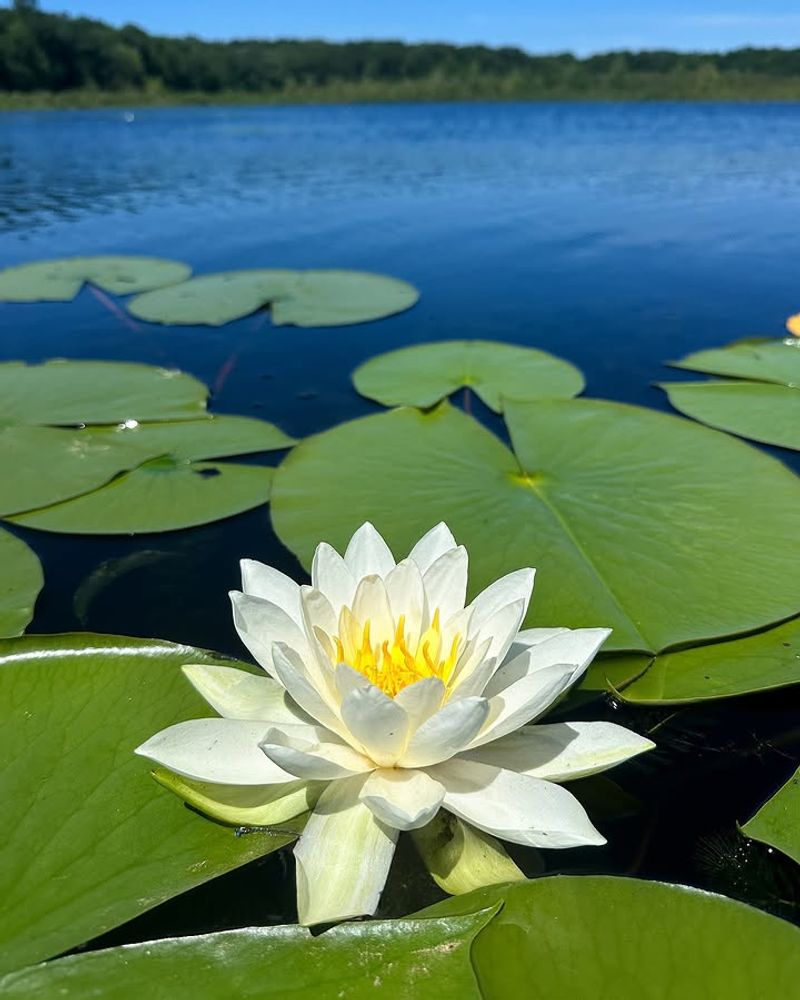
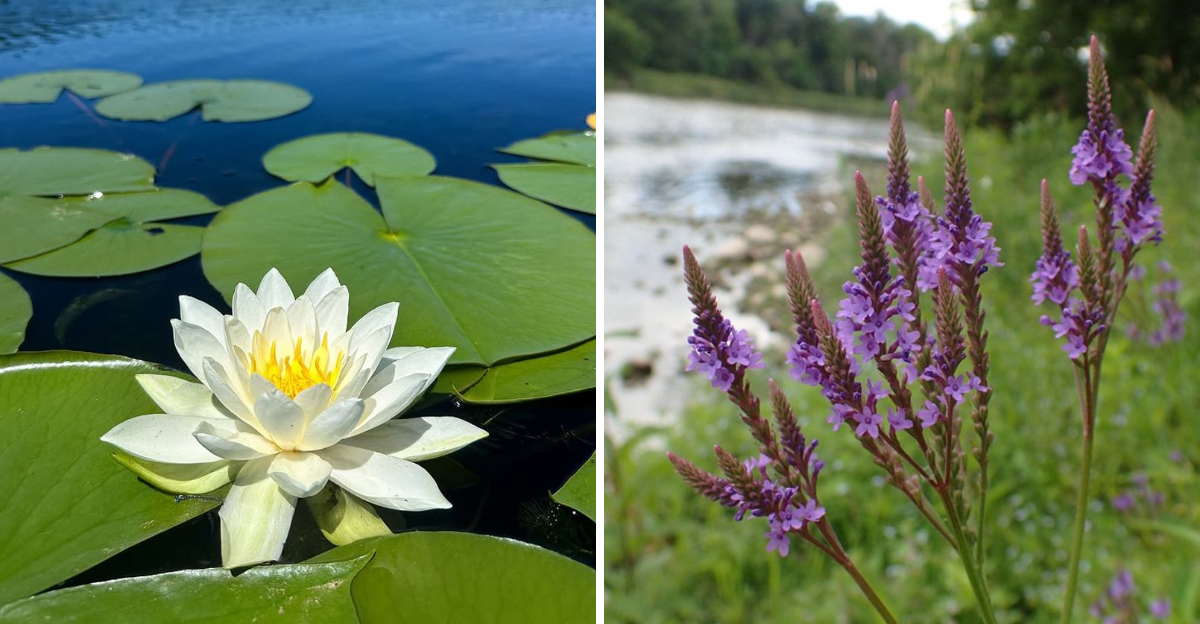
Few sights are as calming as white water-lily blooms drifting across a still pond on a warm Ohio morning.
The broad, round floating leaves create a natural canopy over the water surface, offering shade and cover that many aquatic creatures rely on throughout the growing season.
That layered habitat is part of what makes this plant so valuable beyond its obvious beauty.
Water-lilies grow from rhizomes anchored in the muddy bottom of ponds or water garden containers, with leaves and flowers floating at the surface. In Ohio backyard ponds, they are a practical choice for reducing open water while adding ornamental appeal.
Dragonflies use the flat lily pads as convenient resting platforms, and the shaded water beneath the leaves supports a more complex aquatic environment.
The floating leaves can also help moderate water temperature during hot summers, which benefits the overall health of the pond. Water-lilies need full sun and still or slow-moving water to perform well.
Your Ohio Garden Changes Every Week. Your Plan Should Too.
Gardening in Ohio changes quickly throughout the season. Every Friday you’ll receive a simple weekly plan showing exactly what to plant, prune, fertilize, harvest, and protect so you never miss the right timing.
They are not suited to fast-moving streams or very shallow rain gardens, but in a well-established ornamental pond, they offer a combination of habitat value and visual interest that is genuinely hard to match with any other single aquatic plant.
3. Spatterdock Creates Helpful Water Habitat
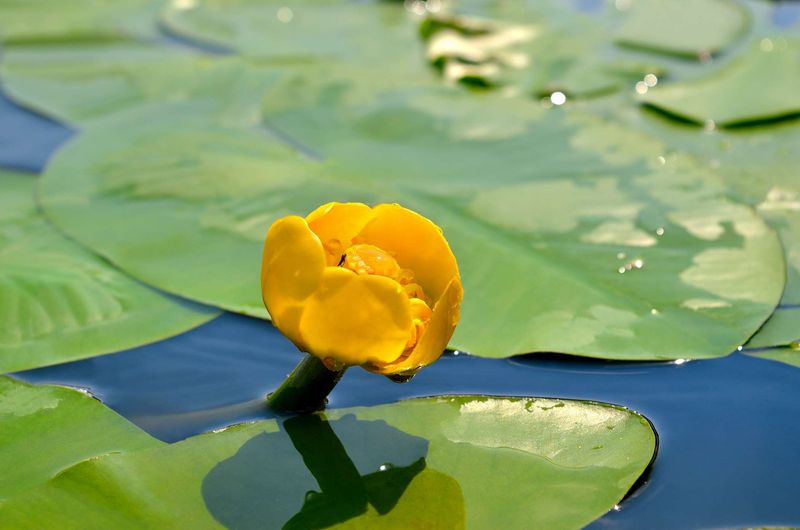
Not every water plant needs to be showy to be useful, and spatterdock is a great example of that idea in action.
Sometimes called yellow pond-lily, this native aquatic plant produces globe-shaped yellow flowers and large, heart-shaped leaves that float or stand slightly above the water surface.
It has a sturdy, no-fuss character that suits Ohio ponds and naturalized wet areas well.
Spatterdock thrives in shallow to moderately deep water, rooting in muddy substrate along pond edges and slow-moving waterways.
Its broad leaves provide resting surfaces for dragonflies, and the plant’s overall structure adds a layer of complexity to the aquatic environment that supports a range of beneficial insects and small aquatic organisms.
That kind of layered habitat is exactly what dragonflies need to complete their life cycle near water.
In Ohio backyard ponds and rain garden overflow areas, spatterdock can fill in nicely alongside emergent plants like pickerelweed or arrowhead.
It is a more vigorous spreader than water-lily, so giving it enough room to expand without crowding other plants is worth considering during the planning stage.
For naturalized pond edges where a wilder look is welcome, spatterdock brings reliable seasonal interest and genuine ecological value to the water’s edge.
4. Common Arrowhead Supports Wetland Edges
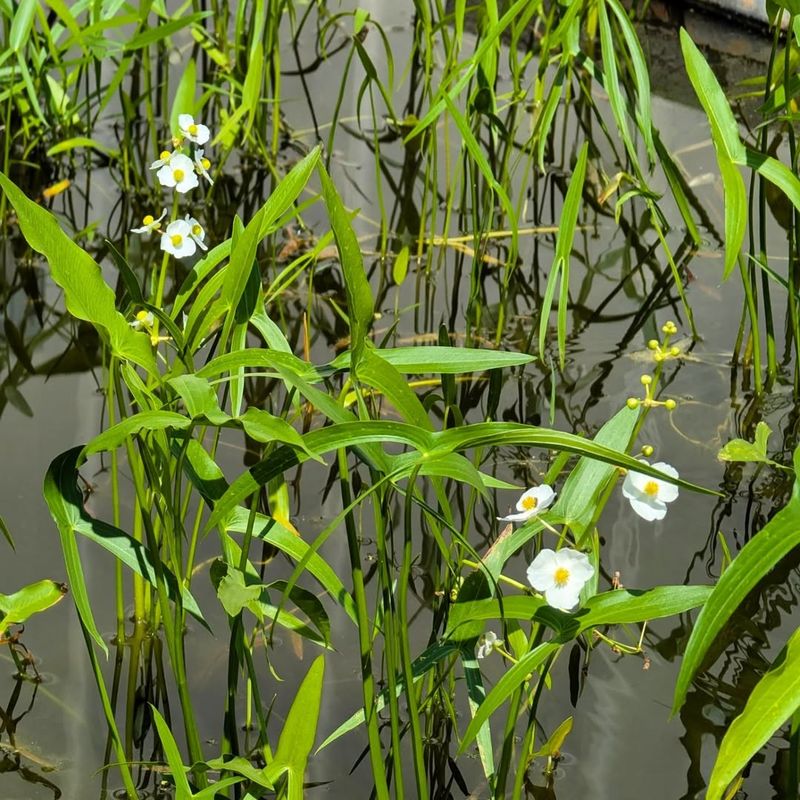
Walk along almost any Ohio wetland edge in midsummer and you are likely to spot common arrowhead growing in the shallows.
Its arrow-shaped leaves are unmistakable, rising cleanly above the waterline with a confident, architectural quality that stands out among other emergent plants.
The small white flowers that appear in summer add a delicate contrast to the bold foliage.
Common arrowhead grows in shallow water or consistently wet soil, making it suitable for pond margins, rain garden wet zones, and naturalized shoreline plantings.
It spreads through tubers and can colonize an area gradually, creating a dense stand that provides excellent cover and structure near the water.
Dragonflies benefit from that kind of layered vegetation, using stems and leaves as perching spots and hunting grounds.
The plant’s root system also helps stabilize shoreline soil, which is a practical bonus for pond owners dealing with erosion along sloped edges.
Common arrowhead is adaptable across a range of Ohio growing conditions and tends to be easy to establish once it finds the right wet spot.
Pairing it with taller emergent plants or shrubby species like buttonbush can create a more diverse and visually interesting shoreline planting that supports a broader range of beneficial wildlife throughout the season.
5. Common Bur-Reed Adds Structure Near Water
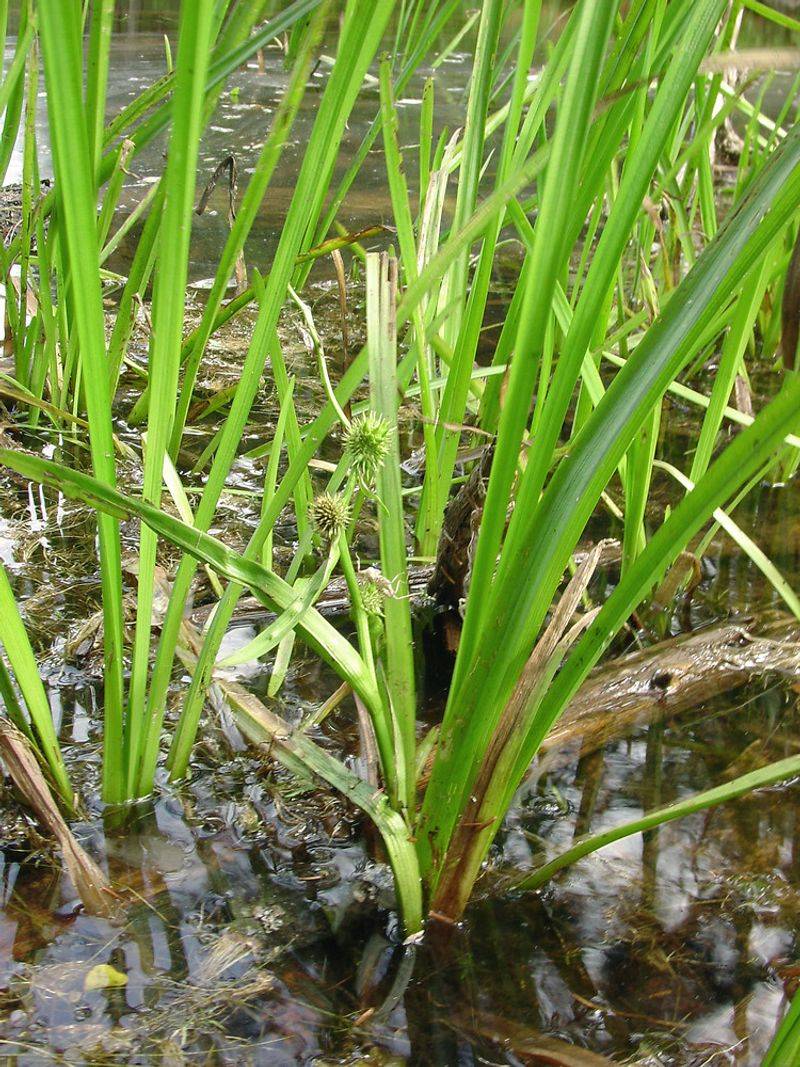
There is something almost sculptural about common bur-reed when it is in full growth along an Ohio pond edge.
The long, strap-like leaves rise in dense clusters, and the round, spiky seed heads that develop in late summer give the plant a texture that stands apart from softer-looking emergent species.
It is a plant that earns attention through structure rather than flashy color.
Common bur-reed grows in shallow water or saturated soil, and it can handle the kind of fluctuating water levels that are common along Ohio pond edges and rain garden overflow areas.
Its upright growth habit creates vertical structure that dragonflies use for perching and patrolling, which is a key part of how these insects hunt and rest near water.
The dense stems also provide cover for aquatic insects that make up an important part of the food web.
From a gardening perspective, bur-reed works well in naturalized plantings where a wilder aesthetic is acceptable. It spreads through rhizomes and can fill in a wet area steadily over a few seasons.
For homeowners managing an Ohio backyard pond or moist rain garden edge, it pairs naturally with arrowhead and pickerelweed to create a layered, habitat-rich shoreline.
Best of all, it supports dragonflies and other beneficial wildlife without requiring much ongoing attention.
6. Buttonbush Brings Shrubby Shoreline Shelter
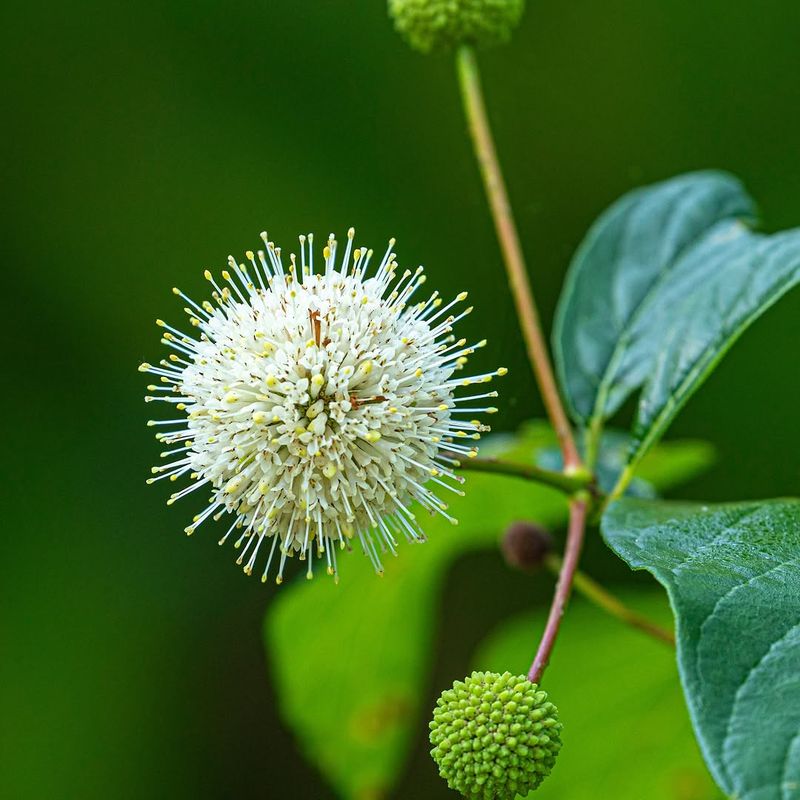
Buttonbush has a way of stopping people in their tracks when it blooms in midsummer. The round, creamy-white flower clusters look almost like something out of a botanical illustration, and they appear reliably each season on this sturdy Ohio native shrub.
Beyond the visual appeal, buttonbush brings a level of structural complexity to shoreline plantings that purely herbaceous plants simply cannot provide.
This shrub thrives in wet to seasonally flooded soils and is commonly found along pond edges, stream banks, and rain garden borders.
It can handle standing water for extended periods, which makes it one of the more reliable woody plants for truly wet Ohio landscape spots.
Dragonflies are drawn to its branching structure, using the twigs and stems as elevated perches from which they can survey the surrounding area.
The flowers attract pollinators as well, adding another layer of ecological activity to the planting area.
Buttonbush grows to a moderate size, typically reaching six to ten feet in favorable conditions, so it works well as a background plant behind shorter emergent species.
In Ohio landscapes where a naturalized, layered shoreline is the goal, buttonbush provides year-round structure, seasonal flower interest, and genuine habitat value that supports both dragonflies and a wide range of other beneficial insects and birds.
7. Swamp Milkweed Brightens Moist Garden Spots
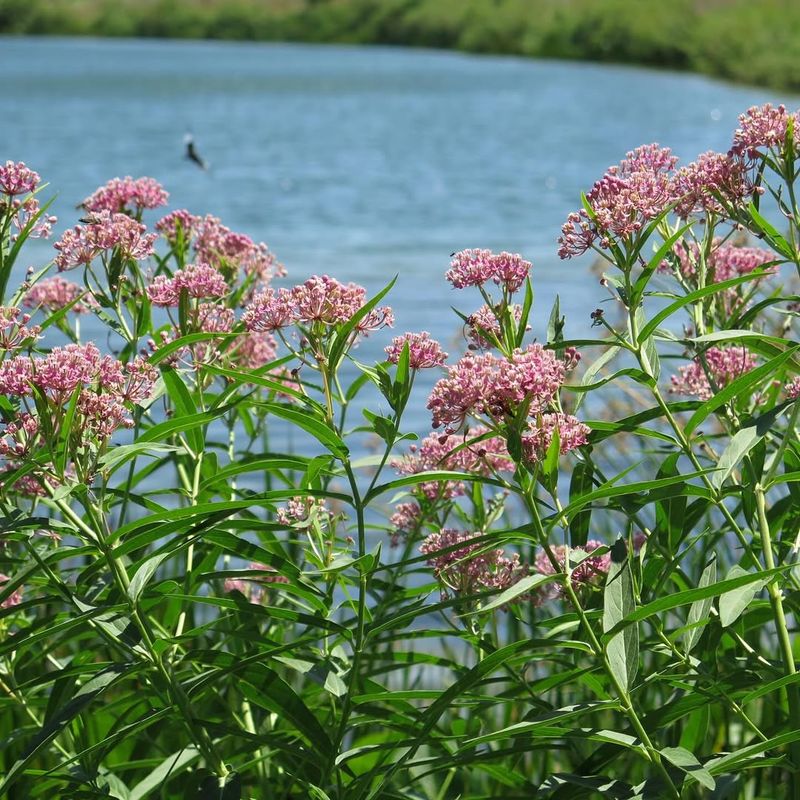
Rosy pink flower clusters and a preference for wet feet make swamp milkweed one of the most appealing native plants for Ohio rain gardens and moist landscape beds.
Unlike its dry-site relatives, swamp milkweed is fully at home in consistently moist or periodically wet soil, which opens up planting options along pond edges, rain garden margins, and low-lying yard areas that stay damp through much of the growing season.
Swamp milkweed grows upright to about three to four feet, producing flower clusters that bloom from midsummer into early fall.
Pollinators of all kinds visit the blooms regularly, and the overall activity those flowers generate creates a lively, insect-rich environment.
Dragonflies are drawn to areas with high insect activity, since that is where they find food, so a planting that supports a diverse insect community indirectly supports dragonfly presence as well.
The plant is also well known for supporting monarch butterflies, which gives it an extra layer of conservation value in Ohio landscapes. Swamp milkweed fits naturally into mixed native plantings alongside blue vervain, cardinal flower, and other moist-site species.
It is a relatively easy plant to establish from nursery stock and tends to spread gradually through both seed and root offshoots, filling in a moist garden area with minimal fuss over a few growing seasons.
8. Cardinal Flower Adds Color Near Wet Areas
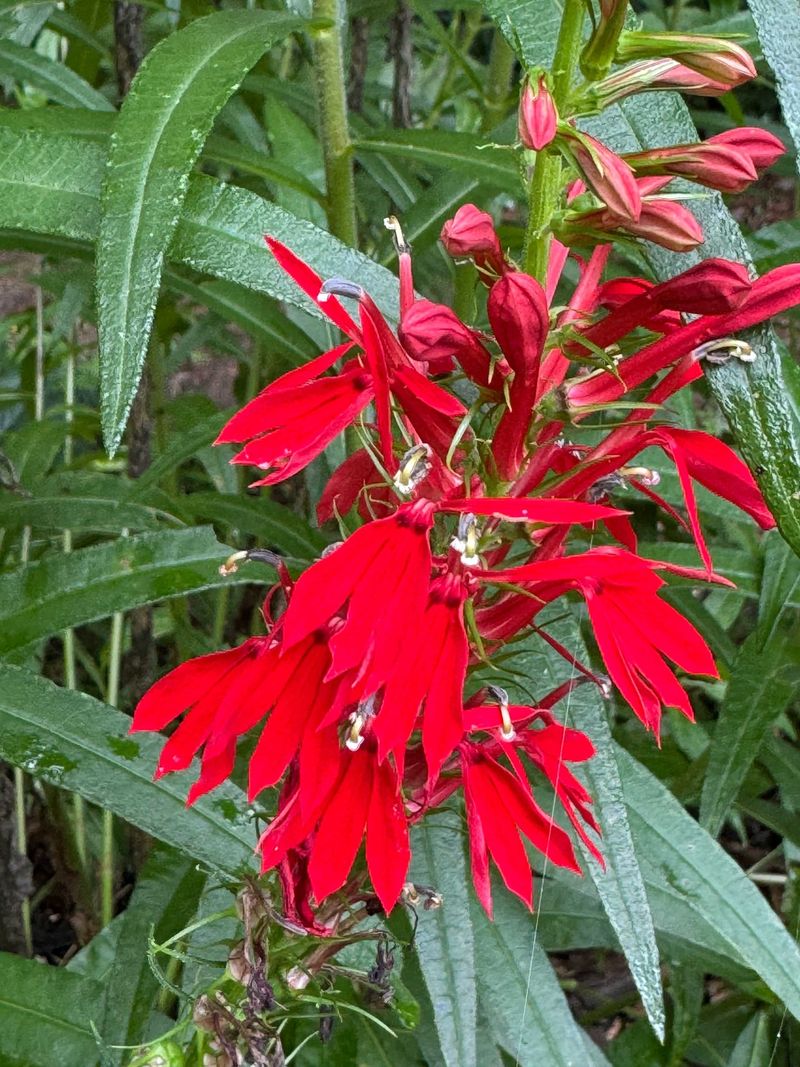
Brilliant red flower spikes rising from a moist Ohio garden bed have a way of drawing the eye immediately, and cardinal flower delivers exactly that kind of visual impact from midsummer through early fall.
The intensity of the color is almost surprising in a native plant, and it tends to become a favorite once gardeners experience it in the right moist-site setting for the first time.
Cardinal flower grows best in consistently moist to wet soil and performs well along pond edges, rain garden borders, and low spots in the yard that hold moisture after rain.
It reaches about two to four feet tall and produces vertical flower spikes that stand out clearly in a mixed planting.
Dragonflies use taller vertical plants as elevated hunting and resting perches, and the surrounding insect activity that cardinal flower attracts contributes to a habitat-rich environment near water.
Hummingbirds are also strongly attracted to the red blooms, adding another layer of wildlife interest to the planting area.
Cardinal flower tends to be short-lived as an individual plant but self-seeds readily, so a well-established planting will continue to renew itself naturally over time.
In Ohio rain gardens and moist native beds, it pairs well with swamp milkweed, blue vervain, and arrowhead to create a diverse and visually striking wet-site planting with genuine ecological value.
9. Blue Vervain Supports Moist Native Plantings
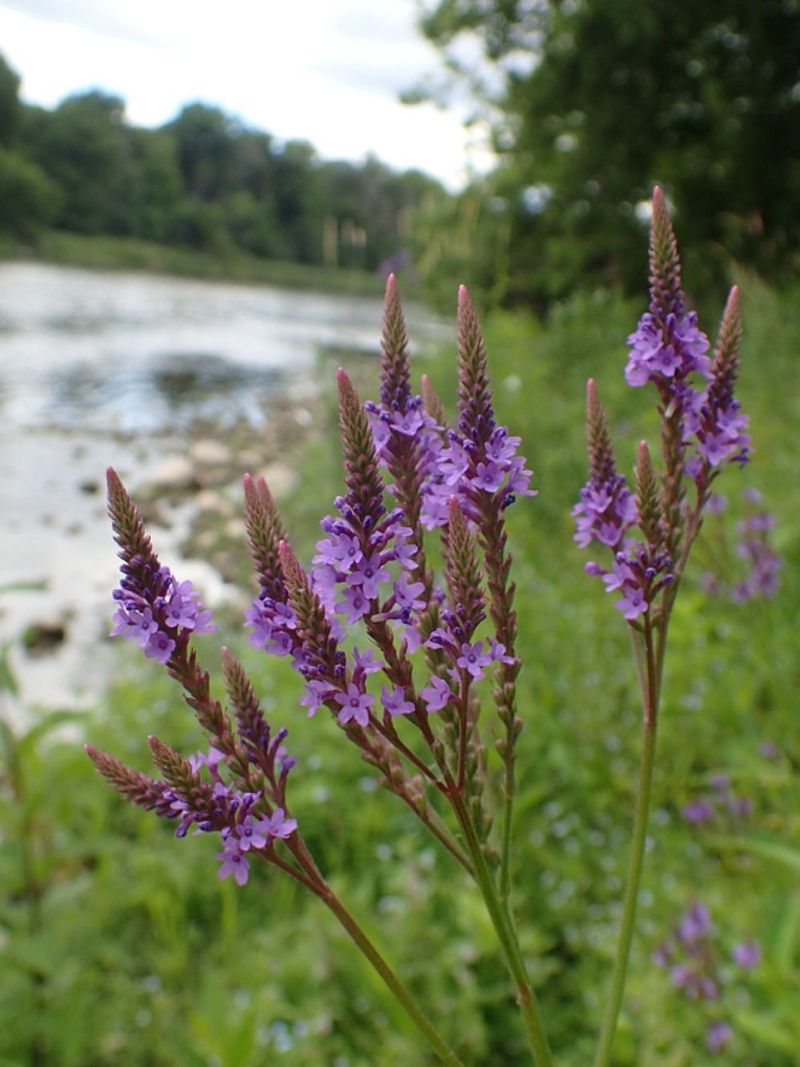
Slender spikes of purple-blue flowers branching upward in late summer give blue vervain a look that is both understated and genuinely attractive in a moist Ohio garden setting.
It tends to bloom when many other native plants are winding down, which makes it a useful addition to any planting where extended seasonal interest matters.
The flowers are small but numerous, and they attract a consistent stream of native bees, wasps, and other beneficial insects throughout their bloom period.
Blue vervain grows well in moist to wet soil and fits naturally into rain gardens, pond borders, wet meadow edges, and low-lying native plantings across Ohio.
It reaches about three to five feet tall, producing a branching, candelabra-like flower structure that adds vertical interest to a mixed planting.
The upright stems also serve as useful perching spots for dragonflies, particularly in areas where taller emergent plants are not present to provide that kind of structure.
The plant establishes readily from nursery transplants and often self-seeds into nearby moist areas, gradually naturalizing in a way that feels effortless.
Combining blue vervain with swamp milkweed, cardinal flower, and buttonbush creates a layered, habitat-rich moist garden that supports dragonflies, pollinators, and other beneficial wildlife.
Once the planting matures, it delivers that kind of impact from spring through late fall with very little hands-on maintenance required.