8 Oregon Garden Plants That Thrive When You Leave Them Alone
There is a certain type of Oregon gardener who barely touches their yard and somehow ends up with the most beautiful property on the street.
No weekly trimming sessions. No constant fertilizer applications. No aggressive pruning schedules that take up entire Saturdays.
The garden just looks good, season after season, with what appears from the outside to be very little effort. The secret is not a trick or a shortcut. It is plant selection.
Oregon’s climate is genuinely demanding. Wet winters, dry summers, variable soil, and everything in between.
Many plants from a standard garden center are not built for that combination. They need constant support to survive conditions they were never designed for.
Do you know which plants were designed for exactly these conditions?
They evolved here. They know what Oregon rain feels like, what summer drought feels like, and what it means to share soil with Oregon’s specific ecosystem. Put them in the right spot and step back.
The results look like effort. They are not.
1. Oregon Columbine Rewards Minimal Care
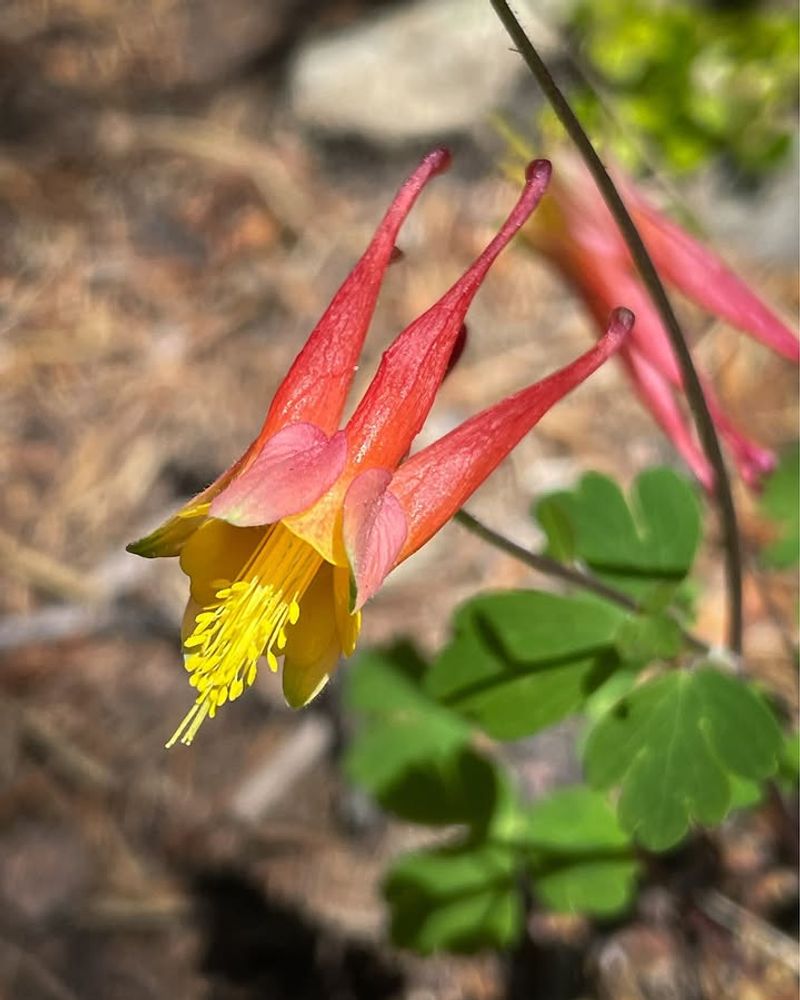
Oregon Columbine is the plant that makes a shady corner look intentional without requiring much from the person who planted it.
Aquilegia formosa is native to the Pacific Northwest and produces nodding red and yellow blooms from spring through early summer.
Hummingbirds find it quickly and return throughout the season. The ferny blue-green foliage looks attractive even when nothing is in flower, which covers a lot of the calendar.
It wants partial to full shade and well-drained moist soil. After that, your main job is restraint. Overwatering and heavy fertilizing work against this plant rather than for it.
The instinct to help it along is understandable and largely counterproductive.
Oregon Columbine self-seeds naturally and multiplies quietly on its own over seasons. A spot under a large tree or along a woodland path suits it well.
Plant it once and it handles the rest of its own expansion on a timeline that suits the garden rather than a schedule that suits you.
Deer tend to avoid it, which matters considerably in rural and suburban Oregon yards where deer pressure makes consistent performance from other plants unreliable.
Oregon’s rainy winters do not bother it. The dry summers do not defeat it. It reappears each April as scheduled, without a reminder from anyone.
This is the plant equivalent of a colleague who completes all their work without needing to be checked on. Does your garden have enough of those?
2. Western Trillium Fills Shady Spots
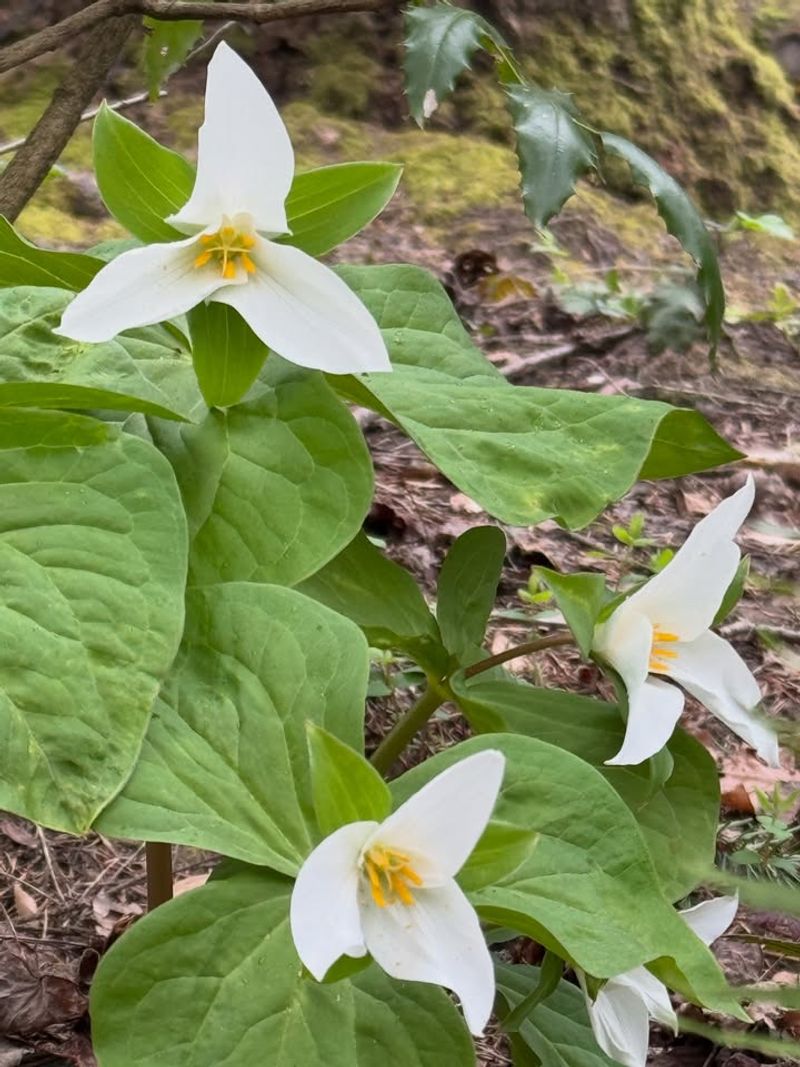
Western Trillium is not a plant that performs for immediate gratification. It is a plant that builds toward something genuinely beautiful over several seasons, and once it arrives, it stays.
Trillium ovatum brings the atmosphere of an Oregon forest floor directly into shaded garden beds. Three crisp white petals above three broad leaves create a visual that looks curated rather than planted.
Establishment from seed takes time, but the patience involved is the least demanding kind. You plant it, you leave it alone, and it returns faithfully every spring without pruning, fertilizing, or any particular attention from you.
Your Oregon Garden Changes Every Week. Your Plan Should Too.
Gardening in Oregon changes quickly throughout the season. Every Friday you’ll receive a simple weekly plan showing exactly what to plant, prune, fertilize, harvest, and protect so you never miss the right timing.
Deep to partial shade suits it best. Rich, moist, well-drained soil that mirrors a forest floor gives it what it needs.
Adding leaf mulch around the base retains moisture and keeps roots cool through Oregon’s dry summers, which is about the most intervention this plant ever asks for.
One important note worth taking seriously: do not pick the flowers or leaves. Removing any part of the plant significantly weakens it and can set it back for years.
The correct approach is to let it do exactly what it was doing before you arrived.
Over time, a single plant forms a small colony and fills shaded gaps beautifully. The blooms age from white to soft pink before fading, which is a seasonal transition very few plants manage gracefully.
Western Trillium is slow, unbothered, and completely committed to the long game.
3. Oregon Grape Adds Evergreen Structure
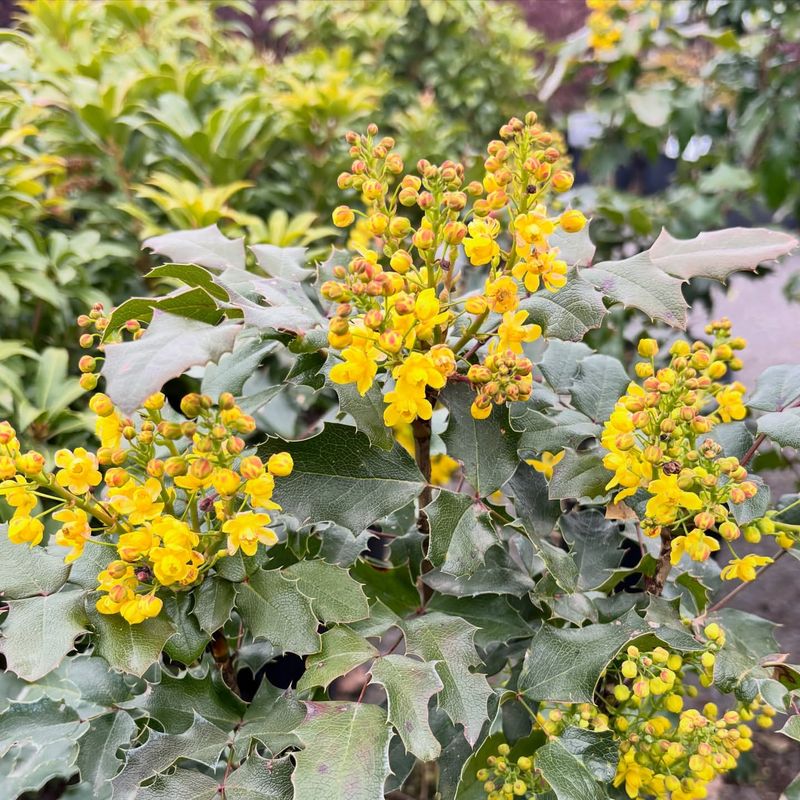
Oregon Grape earned its status as the state flower by being exactly what Oregon’s conditions produce best.
Mahonia aquifolium is bold, architectural, and completely unbothered by neglect in a way that makes every other shrub in the garden look a little high-maintenance by comparison.
The spiky, holly-like leaves stay glossy green through the year, giving the garden structure during January’s dreariest weeks when everything else has retreated.
Late winter into early spring brings clusters of bright yellow flowers with a light honey-like fragrance. By summer, dusty blue-purple berries appear, which birds work through reliably until they are gone.
Plant it anywhere from full sun to deep shade. Average to rocky soil is fine. Water it through the first season and then step back.
After that, it manages its own growth, its own seasonal transitions, and its own relationship with whatever wildlife finds it useful.
Oregon Grape grows three to six feet tall and spreads steadily, making it practical for slopes, hedgerows, and spots under large trees where other shrubs have historically underperformed.
Pruning is optional. A light trim after blooming keeps things tidy if that matters to you.
It handles Oregon’s clay soils without complaint. It resists most common pests. It looks intentional and structured in every season.
For a shrub that contributes this consistently to this many aspects of a garden, the maintenance requirements are almost embarrassingly low.
What other plant offers year-round structure, fragrance, wildlife support, and complete indifference to being ignored?
4. Red Flowering Currant Shines With Little Effort
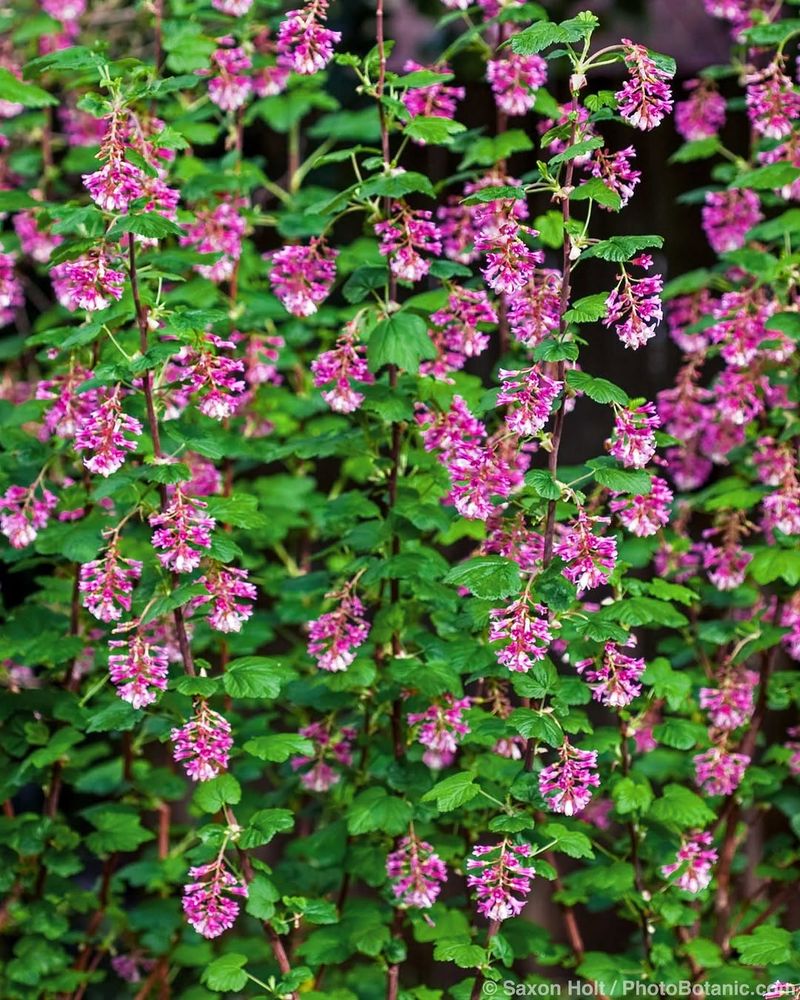
Red Flowering Currant has a very specific timing advantage that most Oregon gardeners eventually come to appreciate on a deep level.
It blooms in late February or March, on bare branches, before the majority of other shrubs have registered that winter is ending.
Ribes sanguineum produces cascading clusters of deep pink to red flowers at exactly the moment hummingbirds are migrating through Oregon.
The timing is not coincidental. These two species have a long relationship, and the garden benefits from both sides of it.
By summer, small blue-black berries develop and feed birds through the warmer months. The deciduous leaves are lobed, slightly fragrant when crushed, and turn warm tones in fall before dropping cleanly.
The plant does not need any of that seasonal interest to justify its space, but the variety across four seasons is genuinely useful in a landscape context.
Full sun to partial shade works well. Average, well-drained soil suits it. Drought tolerance builds solidly once established, which aligns naturally with Oregon’s dry summer pattern.
Pruning is not necessary for strong bloom production, though removing older canes every few years maintains tidiness if that is a priority.
It grows six to twelve feet tall and wide, so giving it adequate room from the start avoids management issues later.
Red Flowering Currant handles the seasons on its own schedule. It blooms in February without being asked. Most plants are still deciding whether to wake up.
5. Sword Fern Spreads Gracefully In Shade
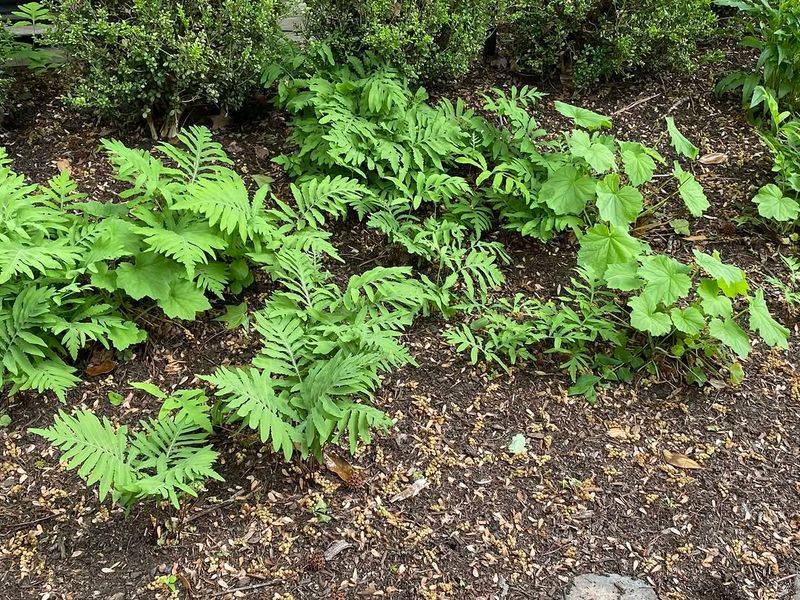
Walk through almost any forest in western Oregon and Sword Fern is already there, carpeting the ground in deep, sweeping arcs of green.
Polystichum munitum did not need a gardener to establish itself in those conditions. It does not particularly need one in your garden either.
For shaded spots where other plants have repeatedly underperformed, Sword Fern is the practical answer. Under trees, along north-facing fences, in any corner where sunlight is genuinely scarce, this fern arrives and stays.
It thrives in moist, well-drained, humus-rich soil but tolerates compacted or rocky ground once established. Water it through the first growing season and then let Oregon’s natural rainfall handle the rest.
The fronds reach three to four feet long, forming bold arching clumps that expand gradually over years.
Maintenance involves removing old brown fronds in late winter before new growth pushes through. That is genuinely the full list of requirements. No fertilizer, no pest management, no seasonal anxiety.
It is also deer-resistant, which adds meaningful practical value in neighborhoods where deer pressure makes consistent performance from other plants unreliable.
A single plant expands over time into a wide, sweeping clump that fills bare areas with exactly the kind of effortless presence the shaded garden needs most.
Sword Fern makes the gardener look skilled. The amount of effort required to achieve that effect is something neither party needs to discuss.
6. Bleeding Heart Creates Gentle Woodland Color
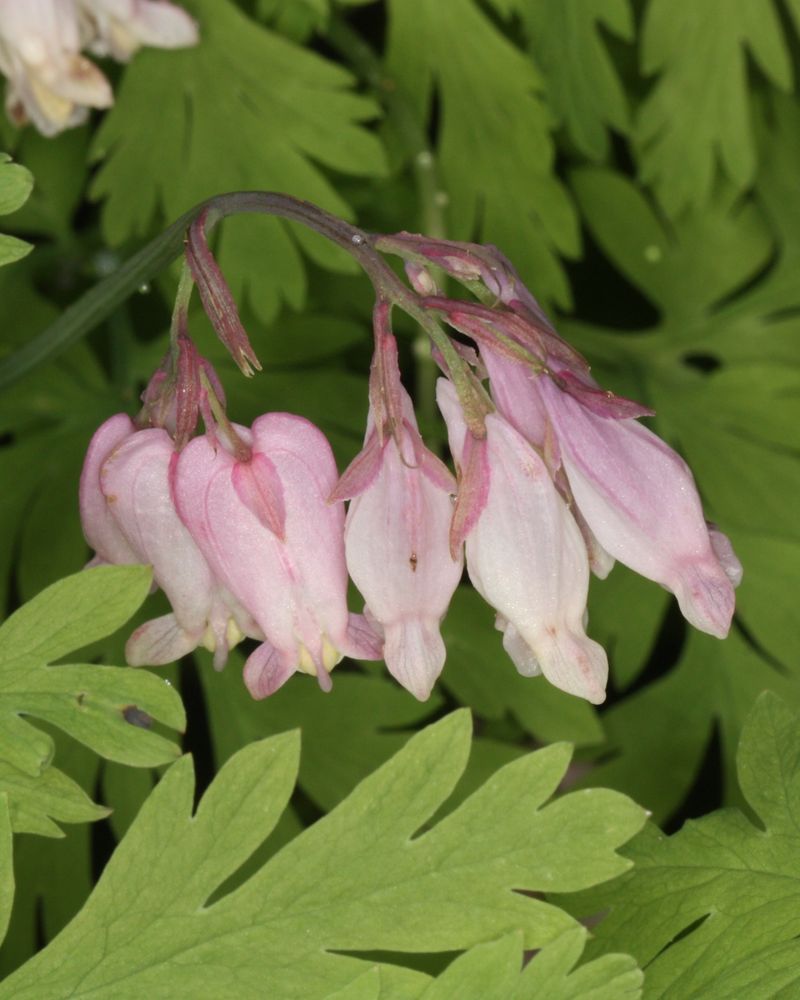
Pacific Bleeding Heart has a visual quality that stops people in their tracks.
Those tiny heart-shaped pink blooms dangling from arching stems produce an effect that looks considerably more deliberate than the plant’s actual care requirements would suggest.
Dicentra formosa is the native Oregon version, softer and more relaxed than its Asian relatives, and it spreads gently through shaded beds without the aggressive tendencies that make some spreading plants complicated to manage.
It blooms from spring into early summer. In cooler, moister conditions it continues longer than that. The ferny blue-green foliage provides texture and visual interest throughout the season independent of whether flowers are present.
Partial to full shade with moist, humus-rich soil is the right setup. It naturalizes well under deciduous trees where filtered light and leaf mulch create conditions close to what it prefers naturally.
Supplemental watering through dry summers helps it stay active. In shadier spots it often goes dormant in late summer, which is a normal response rather than a sign of stress. It returns the following spring without any intervention.
No trimming is needed. It self-seeds lightly and gradually fills in bare patches on its own timeline. Native bees and bumblebees visit the blooms consistently throughout the flowering period.
For quiet, reliable color in a shaded corner with genuine minimum effort, this plant makes a very strong case for itself.
The blooms look delicate. The plant is not.
7. Cascade Oregon Iris Pops Without Fuss
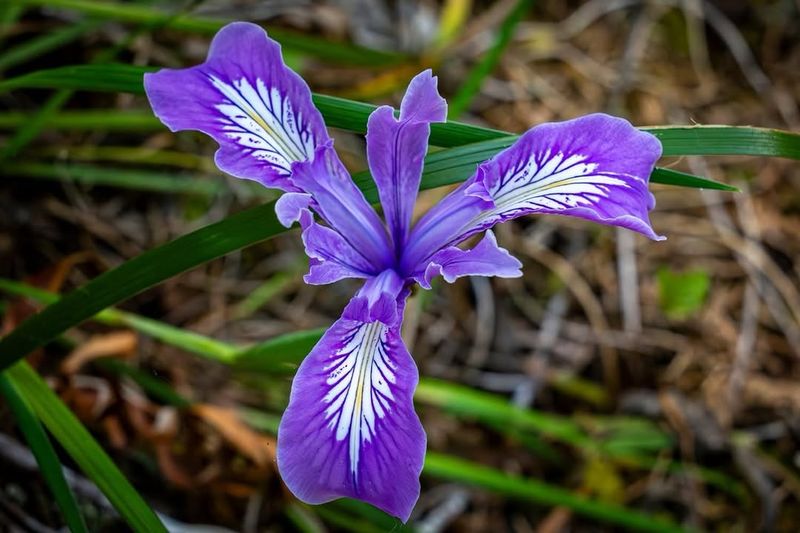
Oregon Iris looks like a specialty plant from an expensive nursery. It grows wild along Oregon roadsides without any assistance from anyone.
That gap between appearance and actual care requirements is one of the better deals available in Pacific Northwest gardening.
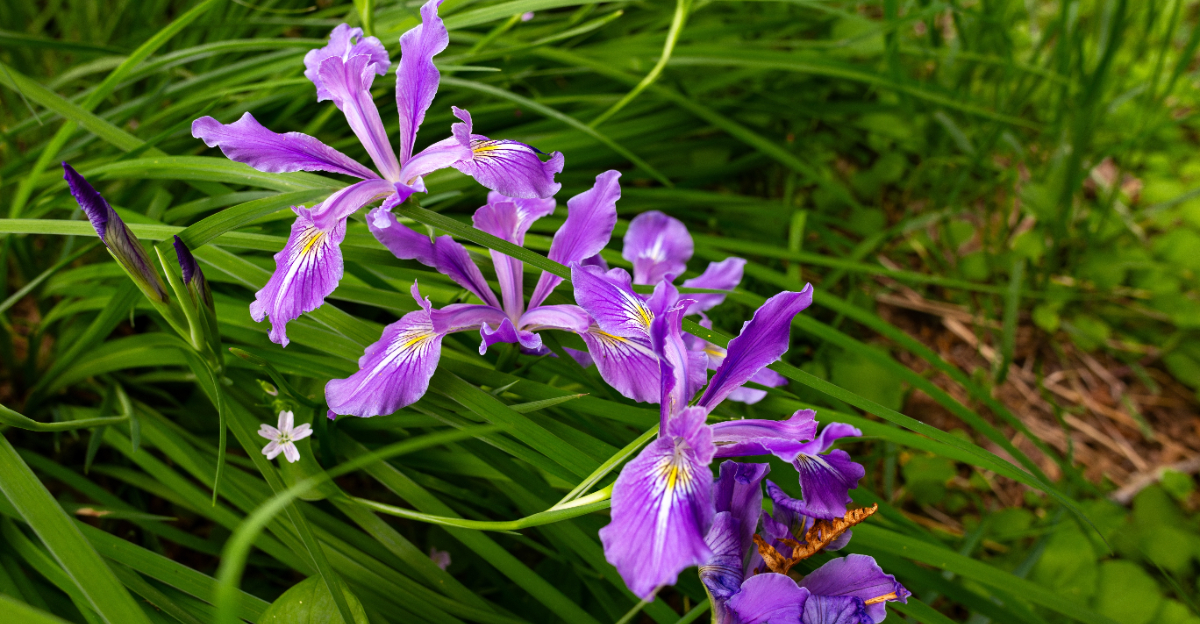
Iris tenax, sometimes called the Tough-Leaf Iris, produces stunning lavender to deep purple blooms with intricate veining and yellow-white markings at the center. The visual quality is genuinely impressive. The maintenance requirements are not.
Plant it in full sun to light shade in well-drained soil. It establishes quickly and blooms reliably each spring. Oregon’s heavy winter rains do not cause rot. The dry summer months do not set it back once roots are settled.
The slender, grass-like foliage stays tidy and attractive through the entire year, which means it earns its garden space even during months when it is not flowering.
Dividing clumps every few years keeps bloom production vigorous, but many gardeners never bother and still get strong flowers year after year.
It is deer-resistant and drought-tolerant once established. It works well in native plant borders, rock gardens, and naturalized areas.
For a plant that looks like it requires careful tending and actually requires almost none, Oregon Iris is a particularly satisfying discovery.
You plant it once. It blooms reliably for years. The neighbors assume you know something they do not.
You do. You just read it here.
8. Salal Forms A Lush Green Groundcover
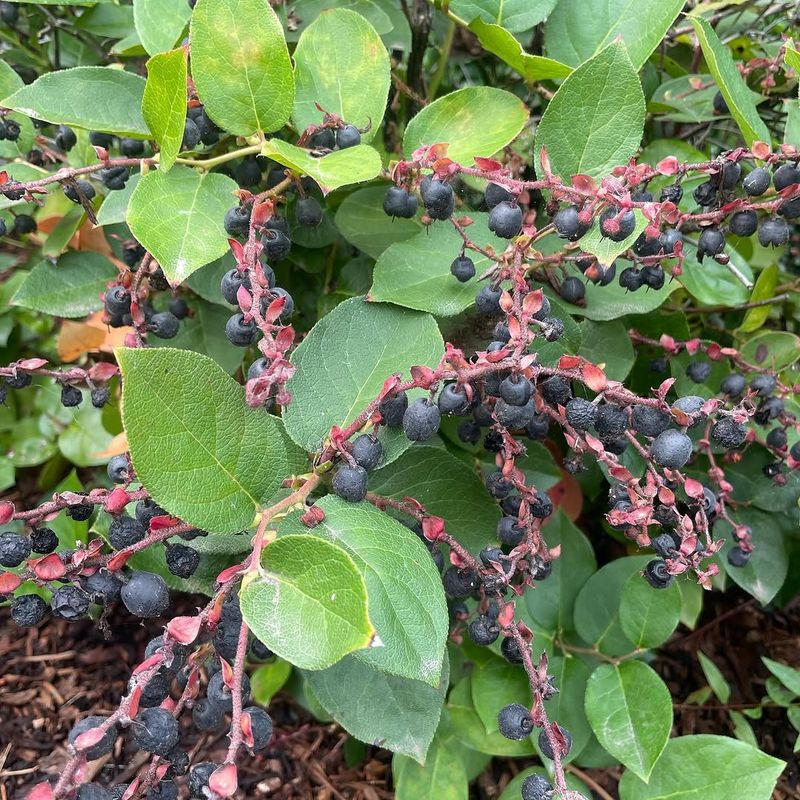
If you have ever received flowers from a Pacific Northwest florist, Salal was almost certainly in the arrangement.
Gaultheria shallon’s glossy deep green leaves have become one of the most recognizable elements of regional floral design. In the garden, the plant contributes something considerably more functional than decoration.
Salal spreads by underground rhizomes, forming a dense weed-suppressing mat that reaches two to five feet tall depending on available light.
In deep shade it stays lower and more compact. In partial sun it grows fuller and produces more of its small urn-shaped white to pink flowers in spring.
Those blooms give way to dark purple berries in late summer that birds and wildlife work through enthusiastically.
The plant has cultural significance beyond the garden. Indigenous peoples of the Pacific Northwest used the berries as a food source, which places Salal among the region’s most historically meaningful native plants.
Partial to full shade with moist, acidic, well-drained soil suits it well. It performs naturally under Oregon’s conifers and big-leaf maples, where it can spread without competing against conditions it was not designed for.
Water it through the first season. After that, leave it alone. It does not need fertilizing and rarely encounters serious pest problems.
For slopes, woodland edges, and shaded areas where other groundcovers have repeatedly failed to establish, Salal is in a category by itself.
It has been covering Pacific Northwest forest floors for centuries without any help. Your garden is a straightforward assignment by comparison.