These Native Georgia Shrubs Are Replacing Burning Bush In More Yards
Plant choices rarely stay popular forever. What homeowners wanted from a landscape twenty years ago is not always the same as what they want today.
As new plants become available and landscaping goals change, older favorites often start losing some of the attention they once received.
Native plants have become a much bigger part of that conversation in Georgia. Interest continues growing as more people look for shrubs that fit local conditions and bring additional benefits to the landscape.
Many gardeners are paying closer attention to plants that feel like a natural fit for the region rather than relying on the same choices that dominated yards for decades.
One shrub that is gradually losing ground is burning bush.
While it was once a common sight in many landscapes, a growing number of native alternatives are beginning to take its place in yards throughout the state.
1. American Beautyberry Offers Bright Fall Berries
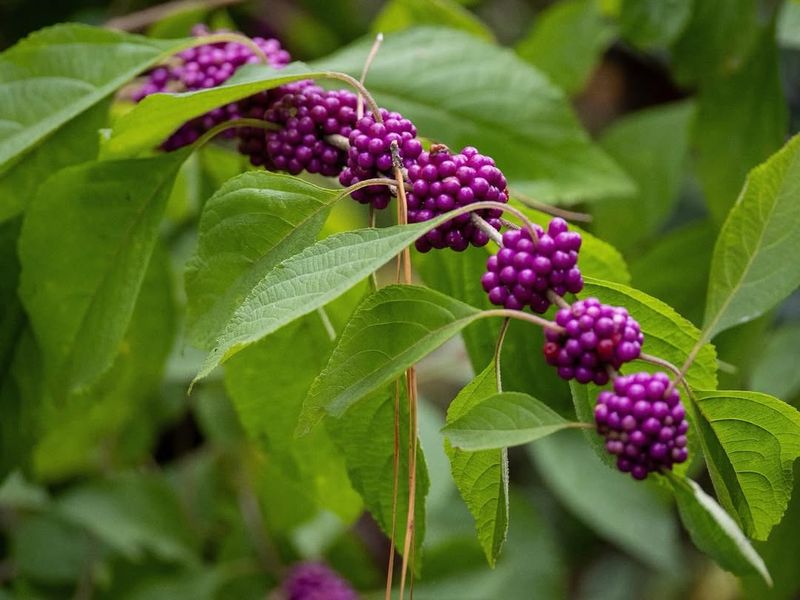
Few shrubs stop people in their tracks the way American Beautyberry does in autumn. Those clusters of neon-purple berries hug the stems in tight rings, and nothing else in the landscape looks quite like it.
Native to the Southeast, this shrub handles heat, humidity, and clay soil without much fuss. It grows fast, reaching six to eight feet tall under decent conditions.
Full sun or partial shade both work well.
Birds absolutely love the berries. Cardinals, mockingbirds, and even wild turkeys feed on them through late fall.
Planting it near a window gives you a front-row seat to all that activity.
Pruning hard in late winter keeps the shape tidy and encourages the best berry production. Without occasional cutting back, older stems get leggy.
A quick trim each year makes a real difference.
Beautyberry spreads naturally through bird activity, so seedlings may pop up nearby. Most gardeners welcome the extras.
It fills gaps in a native planting bed without any effort on your part.
Pairing it with ornamental grasses or dark-leafed plants makes the purple berries pop even more. The contrast is striking.
Yards that swap burning bush for beautyberry rarely look back.
Beautyberry also supports local wildlife beyond birds, providing cover for small animals and nesting sites for songbirds.
Once established, it is fairly drought-tolerant and usually needs very little attention compared to many non-native shrubs.
2. Virginia Sweetspire Delivers Outstanding Seasonal Color
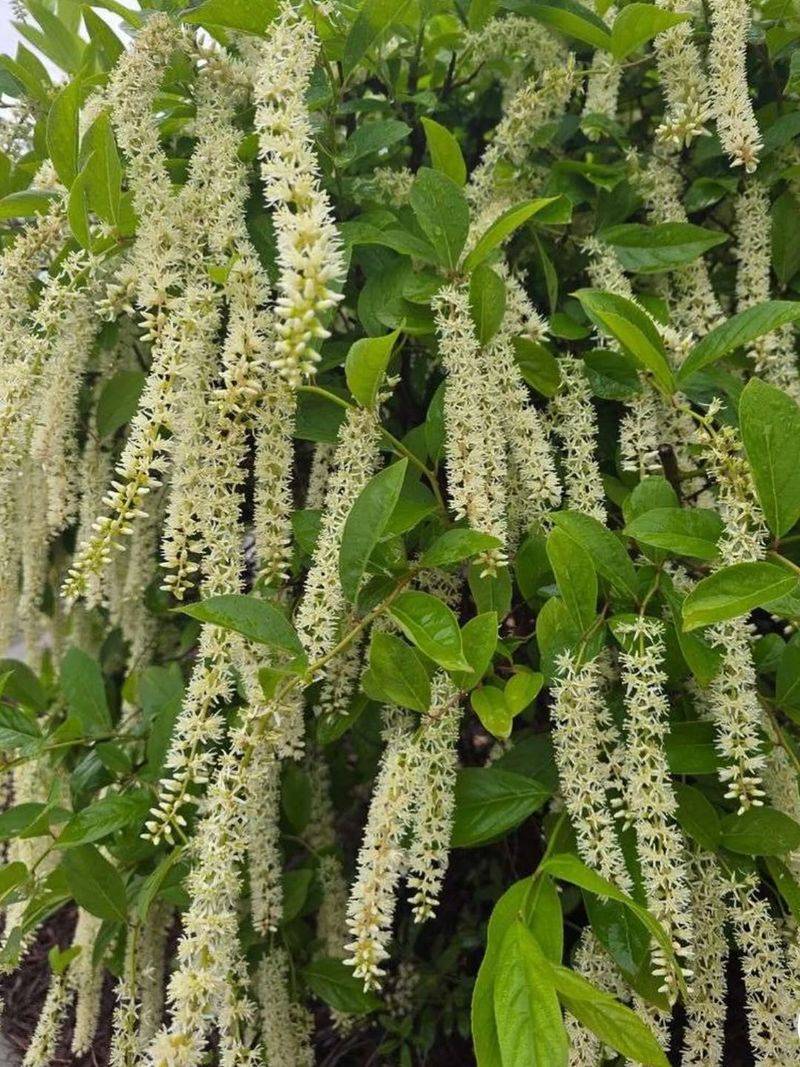
Virginia Sweetspire earns its place in a yard by pulling double duty across two full seasons. White, fragrant flower spikes show up in early summer.
Then fall arrives, and the foliage turns deep red and orange in waves.
Unlike some shrubs that peak once and disappear, sweetspire keeps giving. The fall color lingers longer than most.
Some leaves even hold into early winter in warmer parts of the region.
Wet spots that frustrate most gardeners are actually where sweetspire thrives. Rain gardens, low-lying areas, and spots near downspouts suit it perfectly.
It also handles dry conditions once established, which makes it flexible.
Mature plants spread slowly by suckering, forming natural colonies over time. That spreading habit works well along a slope or woodland edge.
Your Georgia Garden Changes Every Week. Your Plan Should Too.
Gardening in Georgia changes quickly throughout the season. Every Friday you’ll receive a simple weekly plan showing exactly what to plant, prune, fertilize, harvest, and protect so you never miss the right timing.
Containing it is easy if you prefer a tidier look.
Pollinators flock to the flowers in June and July. Bees especially seem drawn to the long, arching blooms.
Few native shrubs offer that combination of fragrance and wildlife value in one compact package.
Sizes range from compact two-foot varieties to larger selections reaching six feet. Choosing the right cultivar for your space saves a lot of pruning later.
Check the plant tag before buying to match the size to your spot.
Virginia Sweetspire also has very few serious pest or disease problems, which adds to its low-maintenance appeal.
3. Oakleaf Hydrangea Adds Interest Through Multiple Seasons
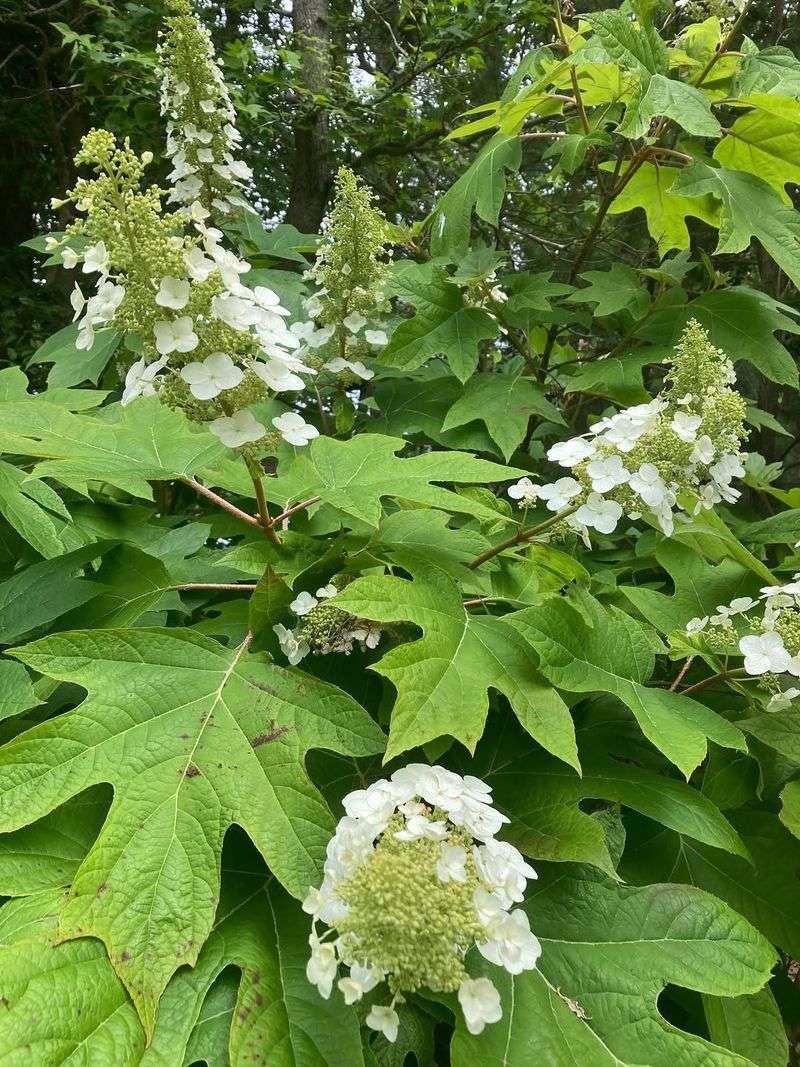
Bold, architectural, and surprisingly tough, oakleaf hydrangea earns a permanent spot in almost any Southern yard. Most people notice the large cone-shaped flower clusters first.
They open creamy white in summer and age through tan and parchment tones into fall.
The foliage is equally impressive. Large, deeply lobed leaves turn burgundy and deep red as temperatures drop.
Even after the leaves fall, the peeling cinnamon-colored bark keeps the shrub looking interesting through winter.
Shade is where this plant truly shines. Under a canopy of mature trees, it fills space that few flowering shrubs can handle.
Morning sun with afternoon shade works just as well in most yards.
Drought tolerance is better than most hydrangeas once the roots are established. That said, the first summer after planting needs consistent watering.
Skipping that critical period leads to stressed plants that struggle to recover.
Sizes vary widely by cultivar. Compact selections stay around four feet, while standard forms can reach ten feet or more.
Knowing the mature size before planting saves a lot of headaches later.
Wildlife benefits are real too. Native bees visit the flowers, and birds use the dense branching for shelter.
Swapping a non-native burning bush for an oakleaf hydrangea is one of the most rewarding changes a gardener in this region can make.
Older specimens develop a broad, layered shape that gives them a strong presence even when they are not in bloom.
4. Sweet Pepperbush Attracts Pollinators In Summer
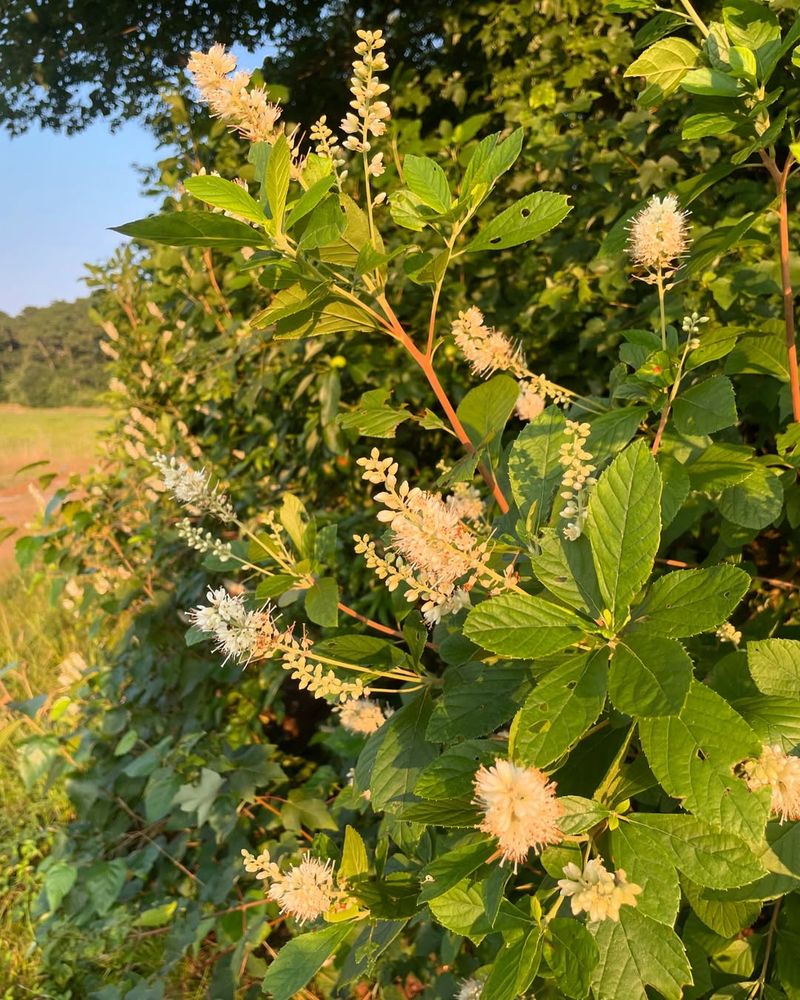
When midsummer heat shuts down most flowering shrubs, sweet pepperbush kicks into gear. Tall, upright spikes of white or soft pink flowers open in July and August.
The fragrance is strong enough to notice from several feet away.
Pollinators respond immediately. Bees, butterflies, and hummingbird moths crowd the blooms during peak flowering.
Planting it near a patio or sitting area lets you enjoy both the scent and the wildlife activity up close.
Moist or wet soil is where this shrub performs best. Low spots, rain gardens, and areas near water features suit it well.
It handles occasional flooding better than most landscape shrubs.
Full sun to partial shade both work, though flowering tends to be heavier in brighter spots. Dense shade reduces bloom production noticeably.
A location with at least four hours of direct light gives the best results.
Fall foliage turns a clean yellow before dropping. It is not dramatic, but it adds a quiet warmth to the late-season garden.
The dried seed capsules also add texture through winter if you leave them in place.
Compact cultivars are widely available now and stay under four feet. Standard forms can reach eight feet in ideal conditions.
Choosing the right size for your space keeps maintenance low and the plant looking its best year after year.
5. Winterberry Holly Provides Bright Seasonal Color
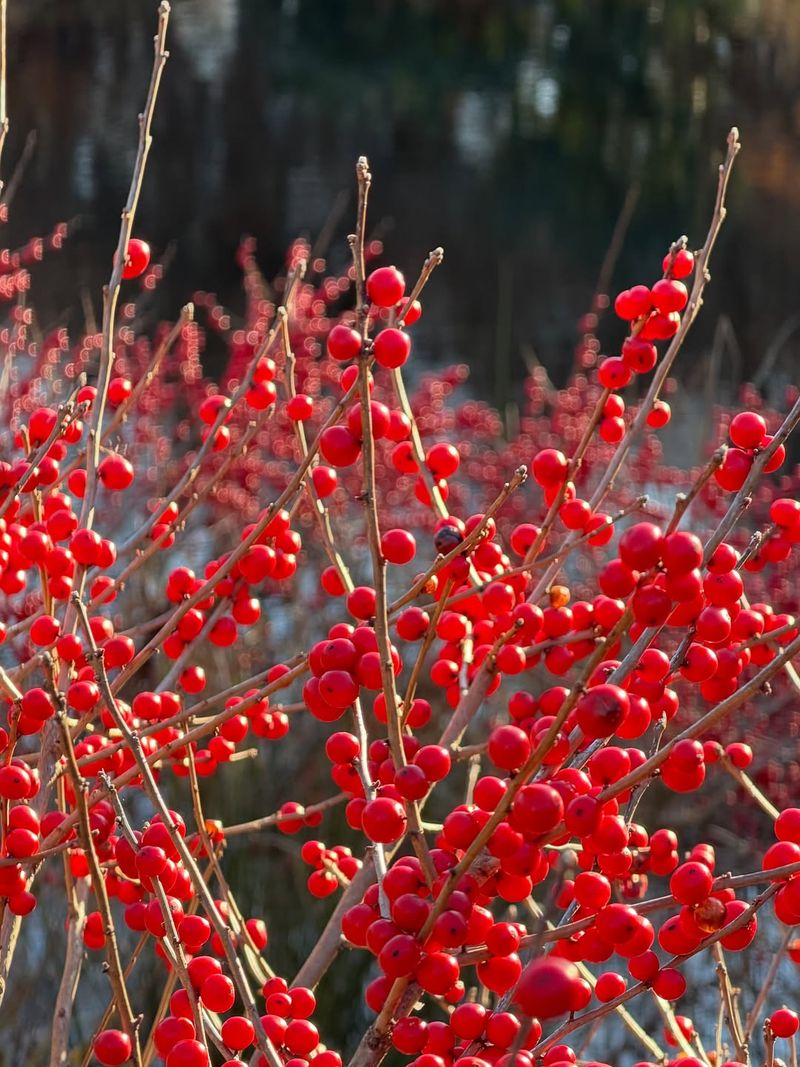
Bare stems covered in blazing red berries against a gray winter sky is a sight that genuinely stops traffic. Winterberry holly earns its reputation every single year without fail.
No other native shrub delivers that kind of winter punch.
A deciduous holly, it loses its leaves in fall to reveal the full berry display. That timing is perfect because the fruit becomes the entire show.
Heavy clusters persist on the stems well into late winter if birds allow it.
Birds absolutely will not leave them alone for long. Cedar waxwings, robins, and bluebirds descend on winterberry in large flocks when other food runs short.
Planting a few together creates a reliable winter feeding station.
One important detail most gardeners miss involves pollination. Female plants produce the berries, but a male pollinator planted nearby is required.
One male can support several females within about fifty feet. Check with your nursery to match compatible varieties.
Wet or poorly drained soil that frustrates other shrubs is where winterberry actually prefers to grow. Rain gardens and low-lying spots work perfectly.
It also performs well in average garden soil with regular moisture.
Sizes vary by cultivar from compact three-foot selections to large plants reaching ten feet. Picking the right size for your planting spot matters.
Dwarf varieties work well in smaller yards without crowding neighboring plants.
6. Possumhaw Viburnum Produces Colorful Winter Fruit
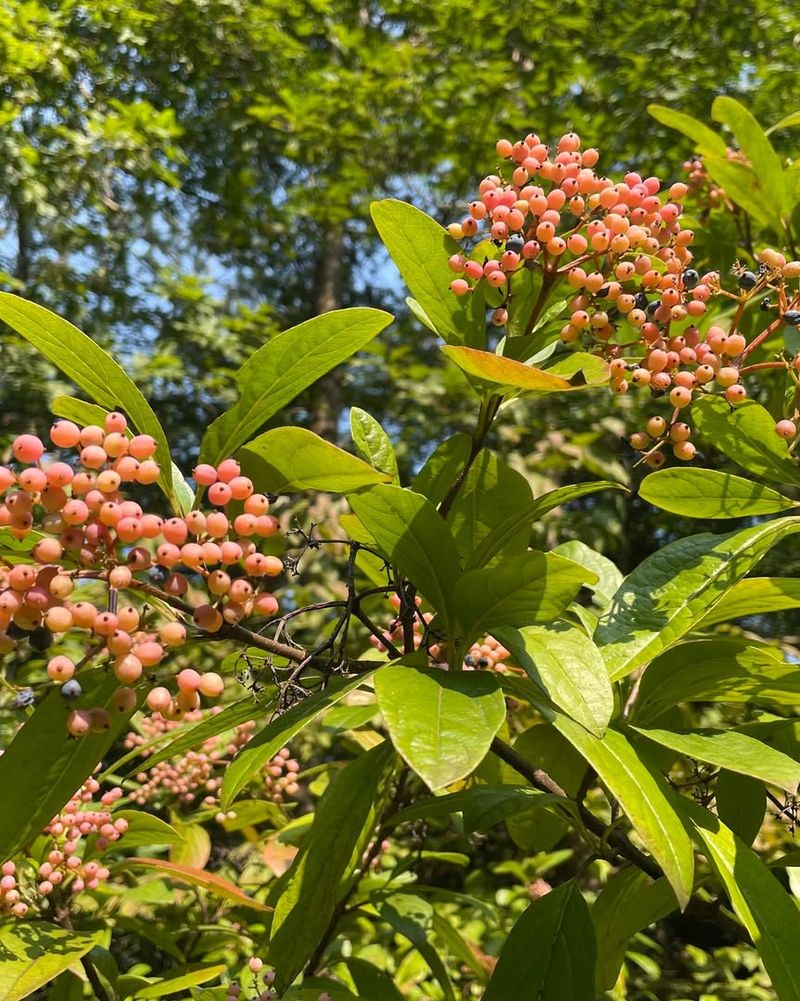
Possumhaw viburnum is one of those plants that rewards patience. Spring brings modest white flower clusters.
Summer is quiet. Then fall and winter arrive, and the whole shrub transforms into a display of red, orange, and yellow berries that lasts for months.
Native across a wide swath of the Southeast, it handles the region’s variable conditions well. Clay soil, sandy soil, wet spots, and dry stretches are all tolerated once the plant is established.
That kind of flexibility is genuinely rare in a landscape shrub.
Wildlife value is high. Cedar waxwings, mockingbirds, and thrushes depend on persistent fruit through winter.
Leaving the berries in place rather than tidying up provides critical food during the coldest months.
Full sun encourages the heaviest fruit set. Partial shade is tolerated, but berry production drops noticeably in lower light.
Siting it where it gets at least five or six hours of direct sun pays off come winter.
Mature plants can reach eight to twelve feet with an arching, spreading habit. Pruning right after flowering keeps the size manageable without sacrificing fruit.
Cutting at the wrong time removes the flower buds and you lose the berry display entirely.
Combining possumhaw viburnum with other native fruiting shrubs extends the wildlife season across multiple months. Staggering bloom and fruit times creates a yard that supports birds from summer through late winter without much extra effort.
7. Fothergilla Brings Brilliant Autumn Foliage
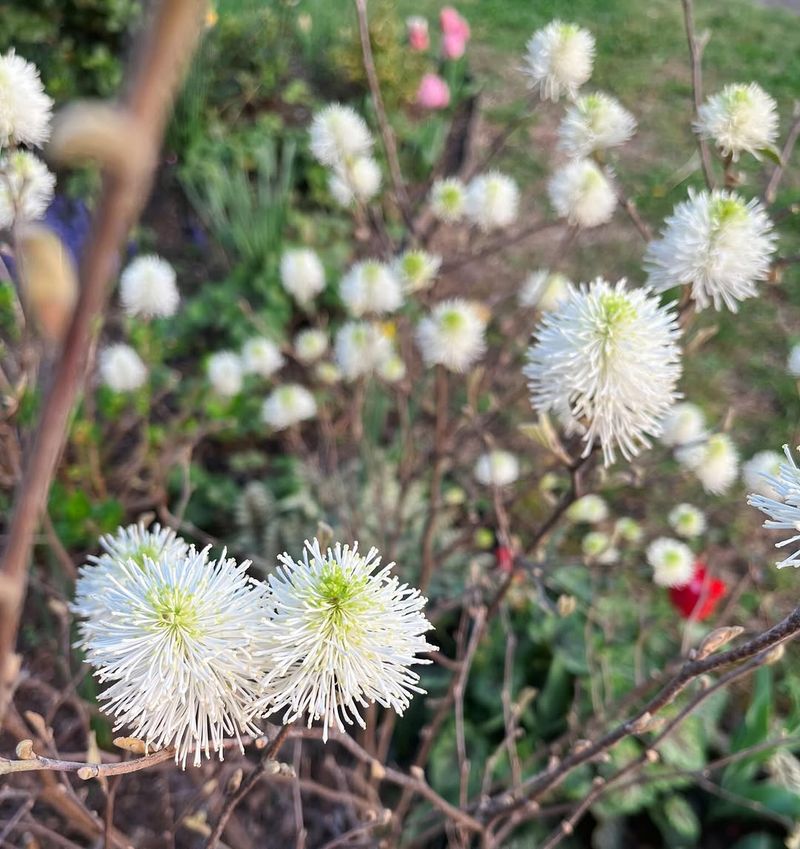
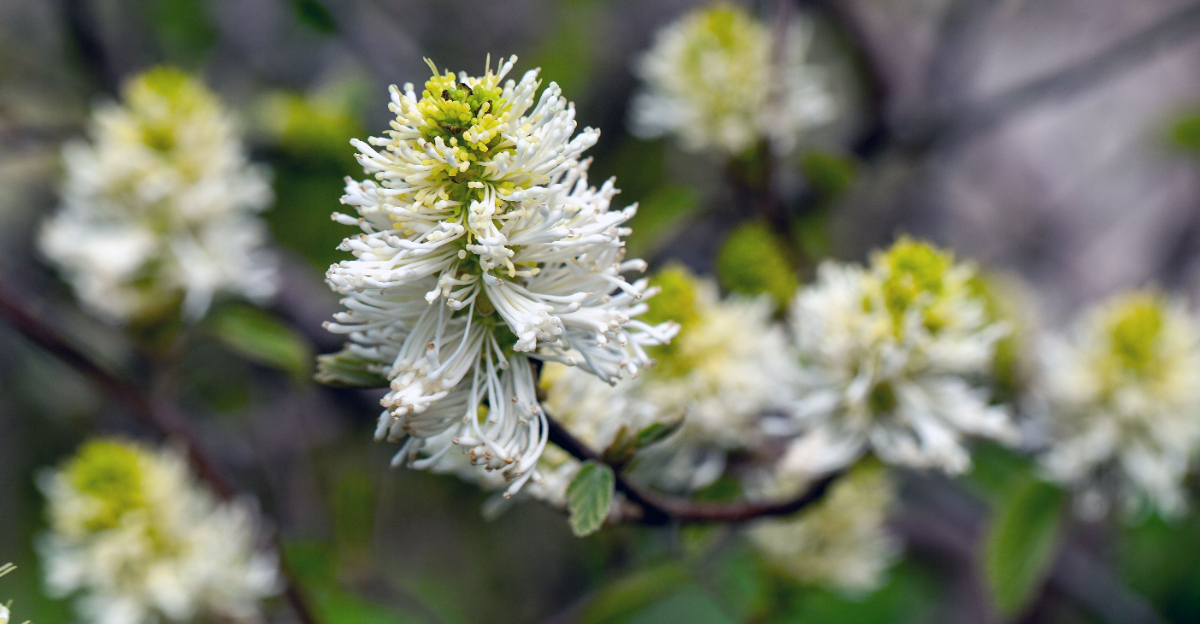
Fothergilla might be the most underused native shrub in the Southeast. Spring arrives and it bursts into fragrant, white bottlebrush blooms before most of the leaves even open.
That alone makes it worth planting.
Come fall, the foliage puts on a show that rivals almost anything in the landscape. Orange, red, yellow, and purple often appear on the same plant at the same time.
Few shrubs can match that range of color in a single season.
Two common species are available at most native plant nurseries. Dwarf fothergilla stays compact at around three feet.
Large fothergilla can reach six feet or more, depending on growing conditions and available light.
Both species prefer acidic, well-drained soil with decent organic content. Sandy or amended beds work well.
Heavy clay without improvement tends to slow growth and limit flowering.
Partial shade is tolerated, but full sun brings out the most intense fall color. Planting along a woodland edge gives it morning light while protecting it from harsh afternoon heat.
That balance works especially well in the warmer parts of this region.
Fothergilla attracts native bees in spring when few other plants are blooming. That early-season support for pollinators is genuinely valuable.
Adding it to a mixed native border rounds out the seasonal interest from March all the way through November.
8. Wax Myrtle Creates Natural Privacy Screens
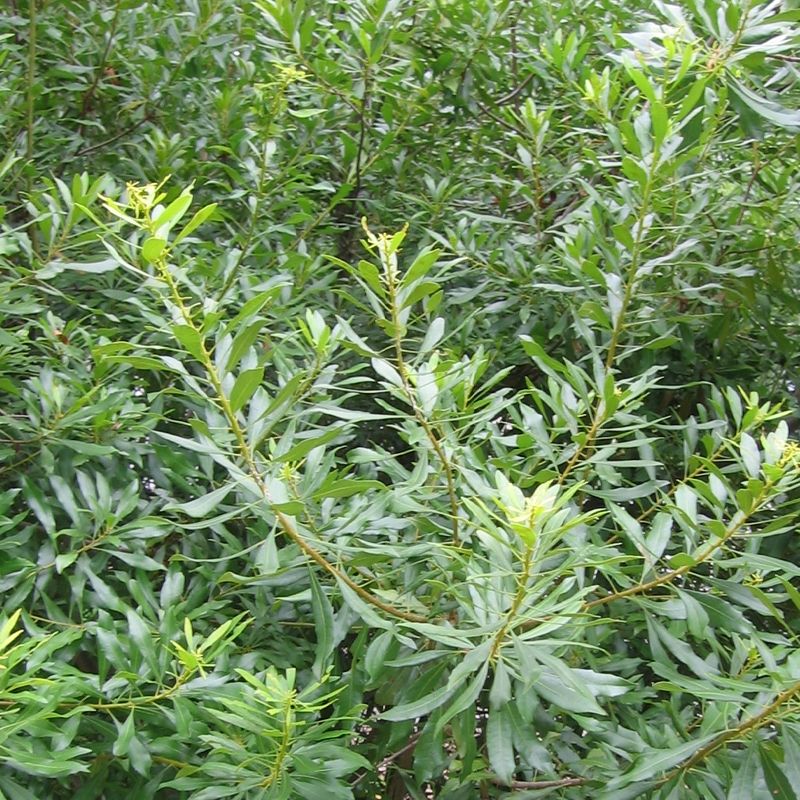
Fast growth and evergreen foliage make wax myrtle one of the most practical native shrubs available in this region. Privacy screens that would take years with slower plants fill in quickly with wax myrtle on the job.
A few years of good growth and the neighbors disappear entirely.
Aromatic gray-green foliage is the giveaway that this plant belongs to a unique family. Crush a leaf and the waxy, spicy scent is unmistakable.
Early American colonists actually boiled the berries to make bayberry candles from the waxy coating.
Adaptability is a genuine strength here. Salt spray, drought, wet soil, poor fertility, and full coastal exposure are all handled without major issues.
Few plants offer that range of tolerance in a single species.
Left unpruned, wax myrtle reaches fifteen to twenty feet and develops a multi-stemmed, open tree form. Regular pruning keeps it dense and shrub-like at whatever height works for your yard.
It responds well to shearing and bounces back quickly after hard cuts.
Female plants produce small clusters of waxy blue-gray berries that birds find irresistible. Yellow-rumped warblers in particular rely on them heavily during winter migration.
Planting a mix of male and female plants ensures good fruit production across the planting.
In Georgia and across the coastal Southeast, wax myrtle grows in natural areas from the piedmont to the shoreline. Using it in home landscapes keeps that ecological connection intact while solving real landscaping challenges at the same time.