Pennsylvania Homeowners Should Watch For These Lawn Signs During A Dry Summer
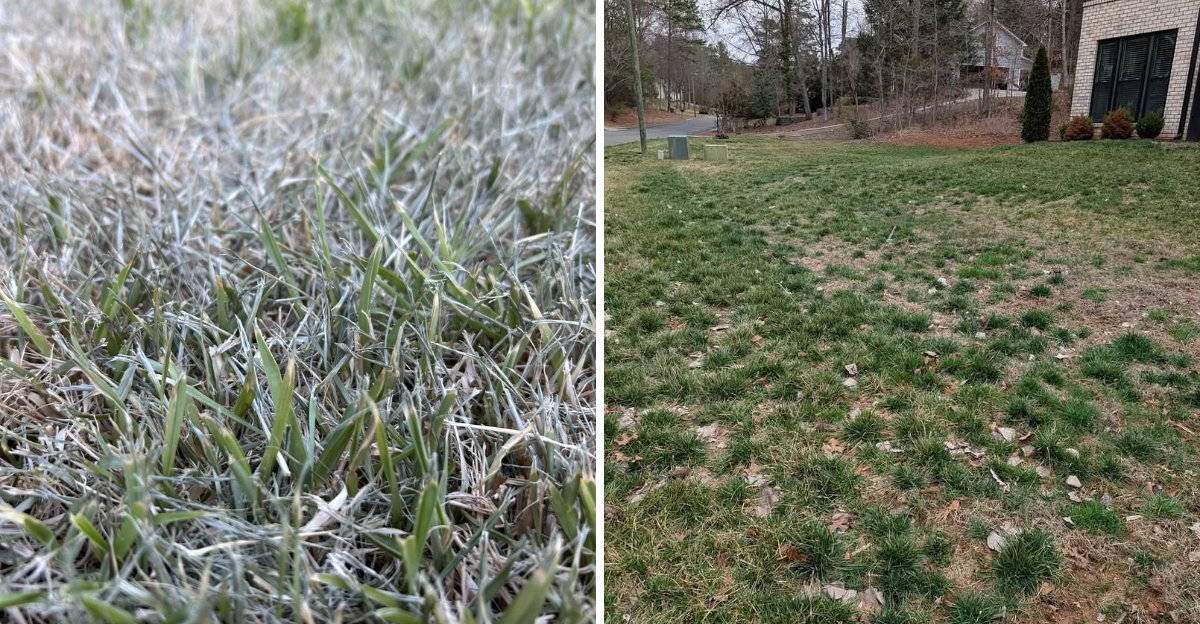
Pennsylvania lawns have a sneaky summer habit. They rarely go from green to crispy overnight. First, they whisper.
A footprint stays pressed in the grass. A blade folds like a tired straw. A patch loses its bounce before it loses its color.
Many homeowners miss those early clues, then rush for the hose once the yard already looks rough. July heat can make cool-season turf act dramatic, especially tall fescue and Kentucky bluegrass.
Add dry weeks, humid swings, compacted soil, or shallow roots, and the lawn starts sending mixed messages. Is it drought stress, pests, disease, or just a bad week?
That is where a slow walk across the yard matters.
The smallest signs often tell the biggest story. Before the lawn turns pale and crunchy, it usually gives you a chance to act.
Learn those signals now, and summer lawn care starts feeling less like guesswork and more like reading the yard’s secret code. Those clues can save water, time, and a whole lot of late-summer lawn regret later.
1. Footprints Stay Pressed Into The Grass
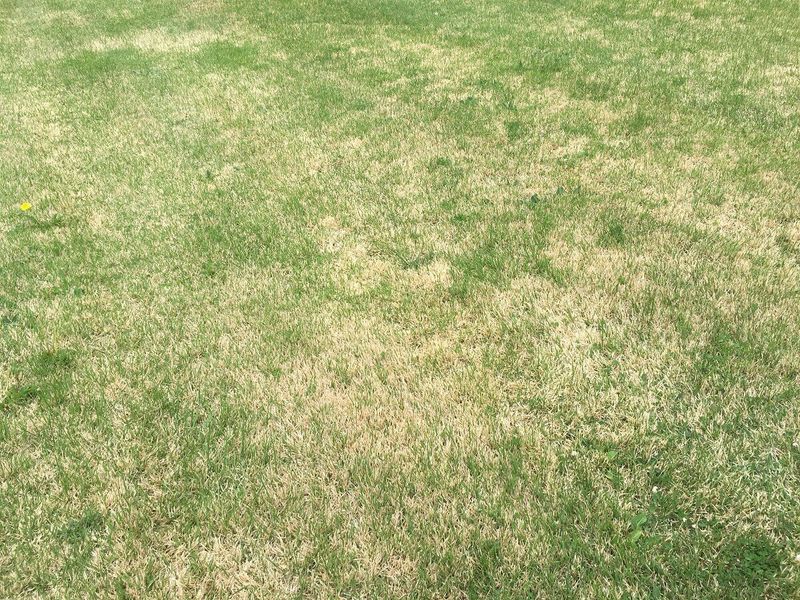
Walk across your lawn on a hot afternoon and then look back.
If your footprints are still clearly visible several minutes later, that is one of the earliest and most reliable signs that your turf is under drought stress.
Healthy grass has enough moisture in its cells to spring back quickly after being stepped on. When that moisture drops, the blades lose their bounce.
This happens because turfgrass cells rely on water pressure, called turgor pressure, to stay firm and upright.
As soil moisture drops, grass loses that internal pressure and can no longer push back against physical force. The result is a lawn that holds impressions like soft clay.
Cool-season grasses like tall fescue and Kentucky bluegrass are especially prone to this during July and August when temperatures regularly climb above 85 degrees in Pennsylvania.
The footprint test is simple, free, and takes about thirty seconds. It does not require any tools or products.
Before you drag out the sprinkler, check a few things first.
Is the soil actually dry several inches down, or just the surface? Probe the ground with a screwdriver. If it slides in easily past four inches, you may have more moisture than the footprints suggest.
Compacted soil and shallow roots can also cause slow bounce-back, so do not assume drought is the only answer without looking a little closer.
2. Blades Fold Like Tiny Tacos
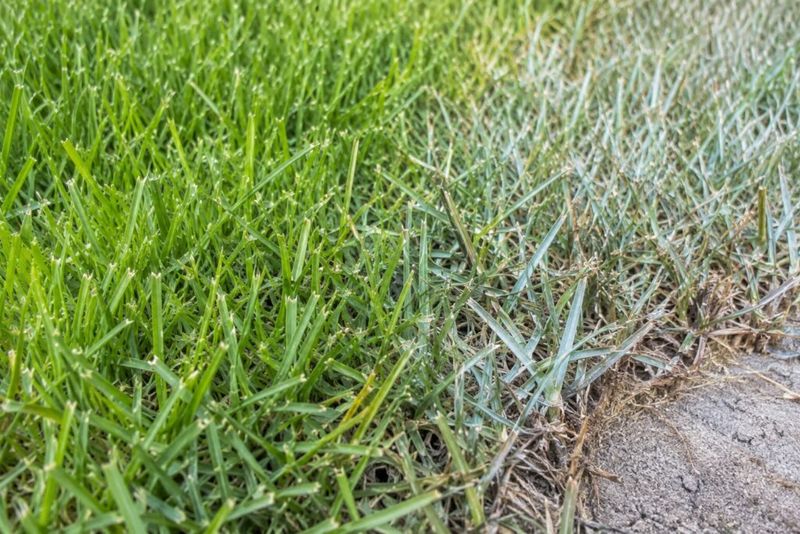
Pick up a single blade of grass and look at it.
During drought stress, many grass species fold their leaves lengthwise down the center, creating a shape that turf scientists sometimes compare to a taco shell.
This is not random. It is a survival response built directly into the grass plant.
When soil moisture falls below what roots can pull up fast enough, the plant begins to conserve water by reducing the surface area exposed to sun and wind.
Your Pennsylvania Garden Changes Every Week. Your Plan Should Too.
Gardening in Pennsylvania changes quickly throughout the season. Every Friday you’ll receive a simple weekly plan showing exactly what to plant, prune, fertilize, harvest, and protect so you never miss the right timing.
Folding the leaf blade cuts down on how much moisture escapes through tiny pores called stomata.
Kentucky bluegrass is especially well known for this response, and you can often spot it across large sections of a lawn before any color change appears.
Penn State Extension notes that leaf rolling and folding are early indicators of drought stress in cool-season turfgrass, often showing up before visible wilting or discoloration.
That makes this sign genuinely useful because catching it early gives you a window to act before the turf enters dormancy.
Keep in mind that leaf folding can also appear when a lawn has a disease problem or when soil is compacted and roots cannot reach deep moisture even when it exists.
Get down close to the ground and look at several different spots across your lawn. If folding is widespread and the soil is bone dry, drought stress is the likely cause.
If folding is patchy and the soil feels moist, something else may be happening worth investigating further.
3. Color Shifts To Blue Gray
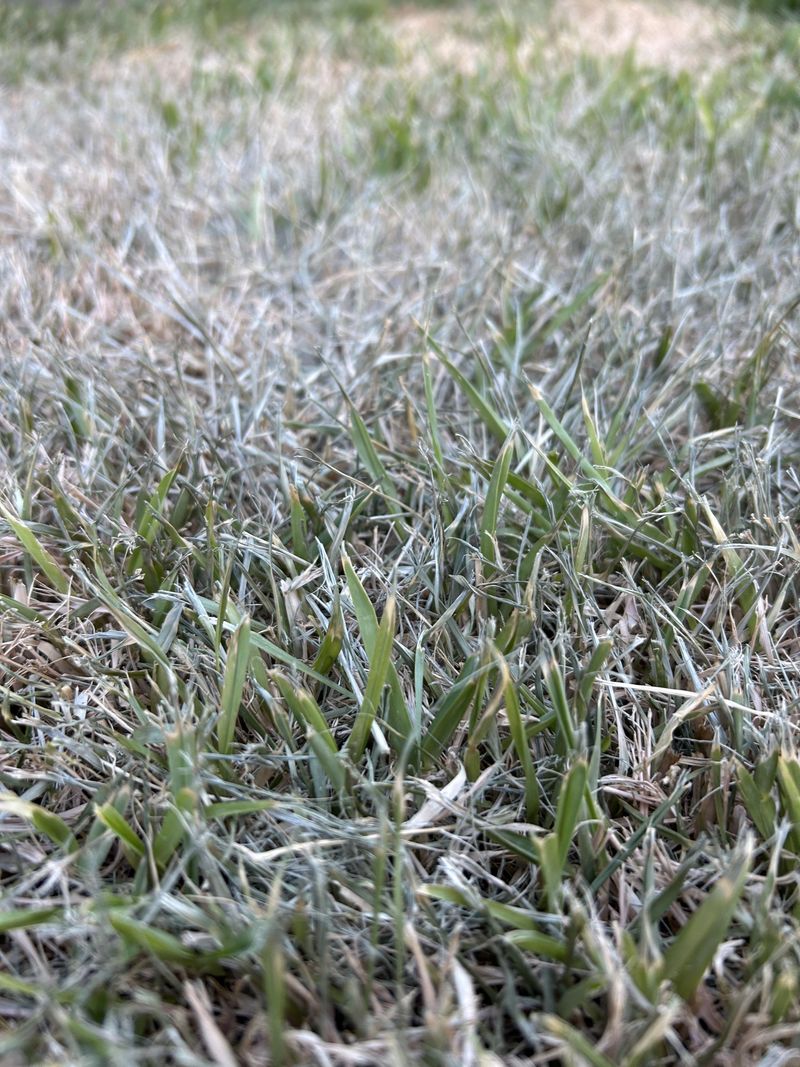
Many homeowners expect drought-stressed grass to turn yellow or brown. But before that happens, many cool-season Pennsylvania lawns pass through a color that catches people off guard.
A dull, silvery blue-gray tone settles over the lawn, and most people do not recognize it as a warning sign. Spotting this shift early is one of the most valuable skills a Pennsylvania homeowner can develop during a dry summer.
The blue-gray color appears when grass blades begin to lose moisture and the surface of the leaf changes how it reflects light.
Penn State Extension identifies this color change as one of the clearest early warning signals of drought stress in cool-season turfgrass, occurring before the grass fully wilts or bleaches out.
This stage is important because the turf is still alive and recoverable.
Once grass reaches the straw-colored stage, it has either entered full dormancy or suffered more serious stress.
Catching the blue-gray phase gives you time to water deeply and help the root zone recover before the situation gets harder to reverse.
Blue-gray patches can sometimes indicate a fungal disease rather than drought.
Look carefully at the shape of the affected areas. Drought discoloration tends to be widespread and follow sun exposure patterns.
Disease patches are often more circular or irregular. When in doubt, pull a few blades and look for lesions on the leaf tissue before reaching for the hose or a fungicide.
4. Sunny Areas Turn Straw Colored First
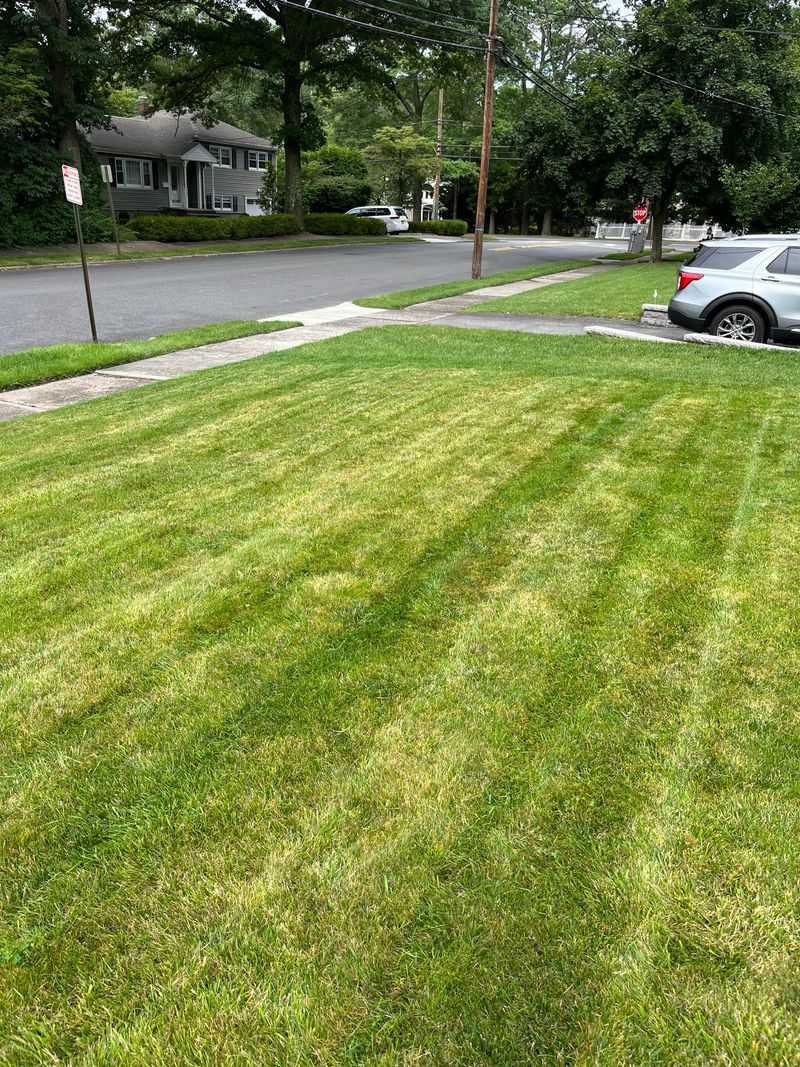
Curb strips, south-facing slopes, and open areas baking under full afternoon sun are almost always the first spots on a Pennsylvania lawn to show serious drought stress.
If you notice straw-colored patches forming in those locations while the rest of the lawn still looks green, that pattern is telling you something specific about how water and heat interact across your yard.
Full-sun areas absorb more heat throughout the day, which increases the rate at which both soil and plant tissue lose moisture.
Slopes also drain faster after rain, so the soil in those zones dries out more quickly than flat, shaded areas. The turf there simply runs out of available water sooner, and the stress shows up first in color.
Penn State Extension points out that turfgrass along sidewalks and curbs faces additional heat stress because concrete and asphalt absorb and radiate heat back onto the grass.
Soil in those narrow strips also tends to be shallower and more compacted from construction, giving roots less room to reach deeper moisture reserves.
When you see straw-colored patches forming in sunny zones, push a screwdriver into both the straw patch and a healthy green section nearby.
Compare how far each one goes in. If the straw zone is clearly drier and harder, drought stress is the most likely explanation.
If the soil moisture feels similar in both spots, the problem might be rooted in something else worth a closer look before treatment begins.
5. Thin Spots Spread Across High Traffic Zones
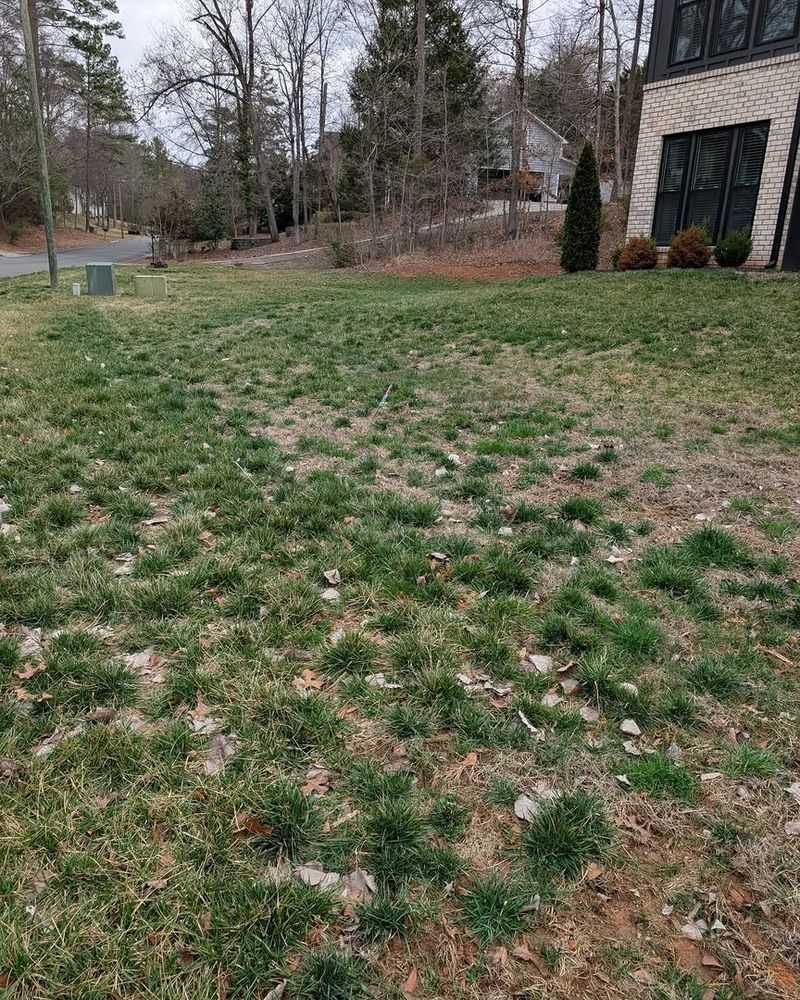
Notice how the path your kids or dog take across the yard every day starts to look thinner and more worn as summer drags on without rain?
That is not a coincidence. High-traffic areas and drought stress are a rough combination, and they tend to make each other worse in ways that are worth understanding.
Foot traffic compacts the soil over time, which reduces the space between soil particles where both air and water move.
Compacted soil holds less moisture, warms up faster, and makes it harder for roots to grow deep. When drought stress arrives on top of compaction, the turf in those zones has very little buffer.
Penn State Extension notes that compaction is one of the most common and overlooked factors in summer lawn decline across Pennsylvania.
Lawns with heavy clay soils, which are common across much of central and eastern Pennsylvania, are especially vulnerable because clay compacts more easily and drains more slowly when dry.
If thin spots are spreading in high-traffic zones, avoid heavy foot traffic on those areas during dry periods.
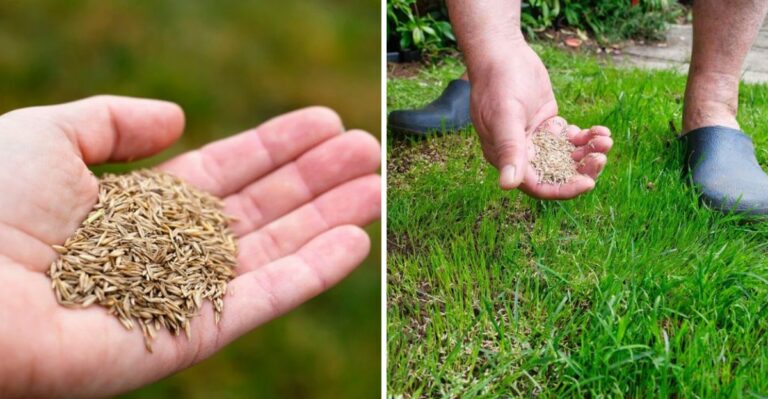
Do not apply fertilizer to stressed, thin turf during a heat wave. Once conditions improve, core aeration followed by overseeding with a drought-tolerant fescue blend can help rebuild those weak zones.
Addressing the compaction is just as important as addressing the drought if you want lasting results.
6. Soil Pulls Away From The Edges
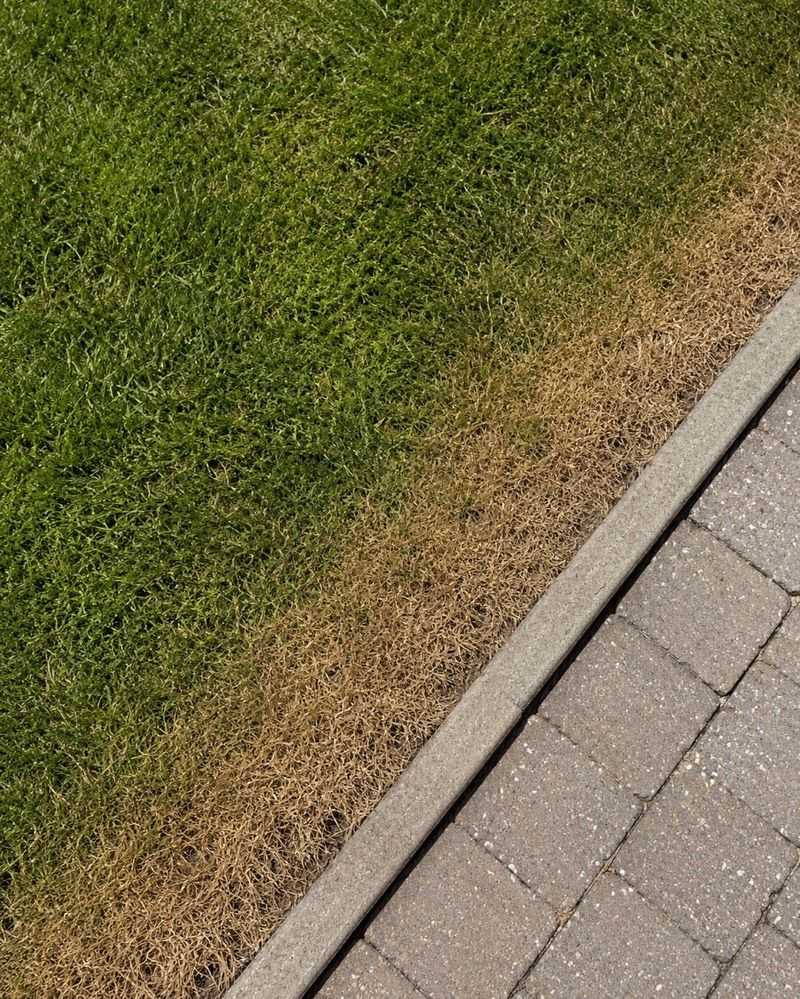
Walk along the edge of your sidewalk or garden bed after a dry stretch and look down.
If you see a visible gap where the soil has pulled back from the pavement or edging, that is not a minor cosmetic issue.
It is a clear signal that the soil has lost a significant amount of moisture and has physically shrunk as a result.
Soil, especially clay-heavy soil common across much of Pennsylvania, expands when wet and contracts when dry.
During an extended dry stretch, that contraction can be dramatic enough to open cracks and pull the soil away from hard edges like sidewalks, driveways, and raised garden borders.
The grass roots in those edge zones are often the most exposed and the most stressed.
These gaps also create a new problem. When rain or irrigation finally arrives, water can rush down into those cracks and bypass the root zone entirely, draining away before the soil and roots can absorb it.
The lawn may stay dry even after a watering event that looked sufficient from the surface.
Slow, deep watering is the best response when you see soil shrinkage. Penn State Extension recommends watering deeply and infrequently, aiming for about one inch of water per week during dry periods, applied slowly enough to allow absorption.
Checking soil moisture a few inches below the surface after watering helps confirm whether the water is actually reaching where roots need it most.
7. Growth Slows Even After Rain
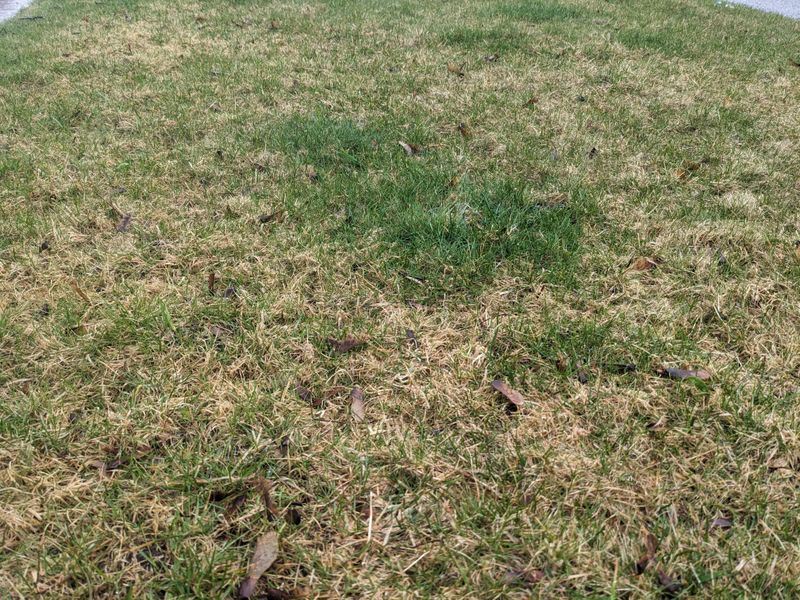
After a summer rainstorm, most homeowners expect the lawn to bounce back quickly.
When it does not, and growth stays slow or the grass still looks dull and stressed a few days later, that is a sign worth paying attention to.
One rain event, even a heavy one, does not always fully rehydrate a root zone that has been dry for weeks.
During an extended drought, soil can become what researchers call hydrophobic, meaning it actually repels water rather than absorbing it.
This happens when organic matter in the soil dries out and coats soil particles with a waxy residue. Water hits the surface and runs off or pools rather than soaking in. The roots beneath stay dry even though the surface looks wet.
Penn State Extension notes that hydrophobic soil conditions are more common than most homeowners realize, particularly in sandy soils or in lawns with heavy thatch layers.
Thatch is the layer of dead and living organic material between the grass blades and the soil surface. When thatch exceeds about half an inch, it can block water from reaching the root zone, making drought recovery slower and less predictable.
If your lawn is not responding to rain the way you expect, try the screwdriver test again a day or two after rainfall.
If the soil is still hard and dry below two inches, the water is not penetrating.
Core aeration, dethatching, or the careful use of a soil wetting agent can help break the cycle and get moisture moving back down to where roots actually grow.