Pennsylvania Native Shrubs That Attract Tick-Eating Birds To Your Yard All Season
Most Pennsylvania homeowners think about tick management in terms of repellents, yard treatments, and staying vigilant during outdoor activities.
What rarely enters that conversation is the role birds play in naturally reducing tick populations, and how much the plants growing in your yard influence which birds show up and how often they stay.
Several bird species common to Pennsylvania actively seek out and consume ticks at various life stages, and attracting those birds consistently requires giving them what they need to visit in the first place. Native shrubs are the most effective way to do that.
They provide the berries, insects, shelter, and nesting conditions that tick-eating birds rely on through the entire active season.
Non-native ornamentals rarely deliver those resources in the same way, which is why yards planted with Pennsylvania natives consistently attract more of the birds that make a real difference in tick pressure over time.
1. Arrowwood Viburnum
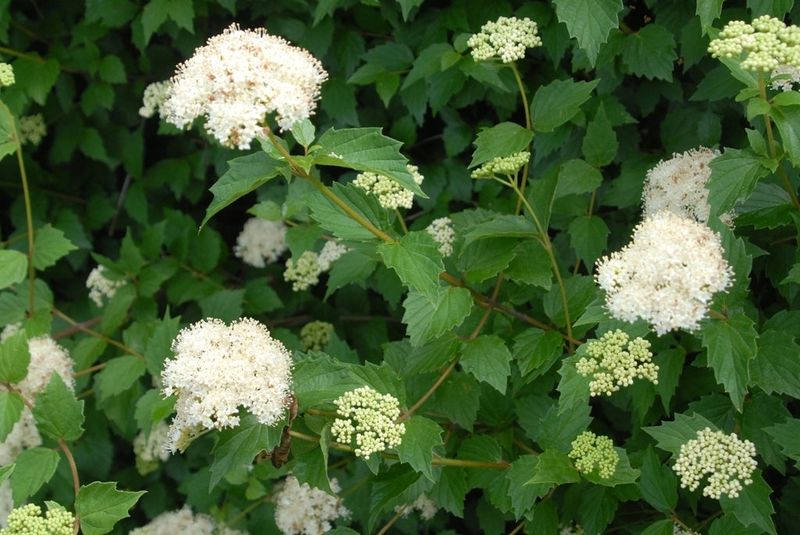
Walk through almost any Pennsylvania woodland edge in late summer, and you will likely spot Arrowwood Viburnum loaded with clusters of small, dark blue berries.
This shrub is a magnet for robins, thrushes, cedar waxwings, and other songbirds that happen to be some of the best natural tick hunters around.
When these birds visit your yard regularly, they spend a lot of time foraging on the ground and in low vegetation, which is exactly where ticks tend to lurk.
Arrowwood Viburnum grows well in both full sun and partial shade, making it easy to fit into almost any yard layout. It can reach six to ten feet tall and wide, giving birds plenty of dense branching to use as cover and nesting space.
The thick structure of this shrub makes birds feel safe enough to return again and again throughout the season.
Beyond its bird-friendly benefits, this shrub puts on a beautiful show all year. Spring brings white flower clusters that also attract pollinators.
Fall turns the leaves shades of red and orange before they drop. The berries often persist into early winter, giving birds a reliable food source even as temperatures drop.
Planting a few of these shrubs together creates a mini habitat that birds will treat like home base. You can find Arrowwood Viburnum at most native plant nurseries in Pennsylvania.
It does well in average soil and handles both wet and dry conditions better than most shrubs. Once established, it needs very little care, making it a smart and low-effort addition to any bird-friendly yard.
2. Winterberry Holly
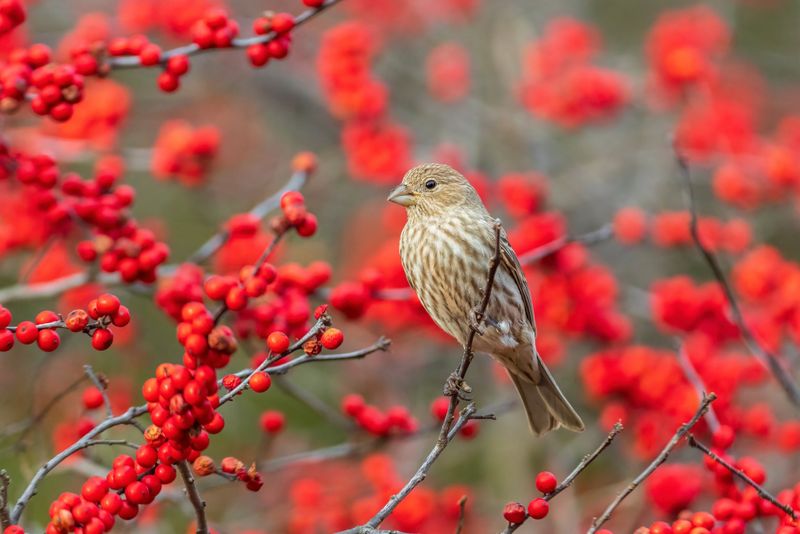
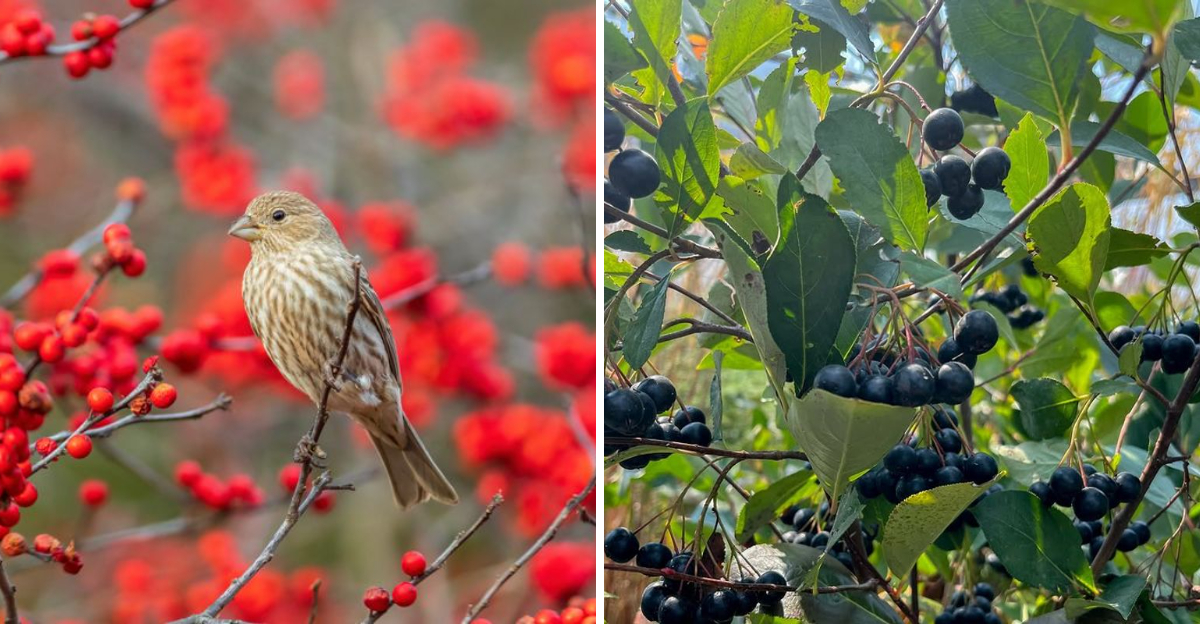
Few sights in a winter yard are as striking as a Winterberry Holly shrub absolutely covered in bright red berries.
Native to Pennsylvania wetlands and woodland edges, this shrub is one of the top food sources for birds during the colder months when other plants have nothing left to offer.
Eastern Bluebirds, catbirds, robins, and hermit thrushes all flock to Winterberry when berries are at their peak.
What makes Winterberry especially valuable is that its berries persist well into winter. Most other native shrubs lose their fruit by early fall, but Winterberry holds on.
Your Pennsylvania Garden Changes Every Week. Your Plan Should Too.
Gardening in Pennsylvania changes quickly throughout the season. Every Friday you’ll receive a simple weekly plan showing exactly what to plant, prune, fertilize, harvest, and protect so you never miss the right timing.
That means birds that eat ticks and other insects during warmer months keep coming back to your yard because they know there will always be something to eat. Loyal visitors are exactly what you want if reducing ticks is your goal.
Growing Winterberry Holly is straightforward if you give it the right conditions. It prefers moist or even wet soil, which makes it ideal for low spots in the yard that stay soggy after rain.
It also needs full sun to partial shade. One important note: you need both a male and a female plant for the female to produce berries. Most native plant nurseries sell them as a pair.
Did you know Winterberry is actually a deciduous holly? Unlike the evergreen hollies most people picture, it drops its leaves in fall, leaving nothing but those brilliant red berries clinging to bare gray branches.
That bare-branch display is part of what makes it so eye-catching and so easy for birds to spot from a distance. It is a true standout in any Pennsylvania landscape.
3. Black Chokeberry
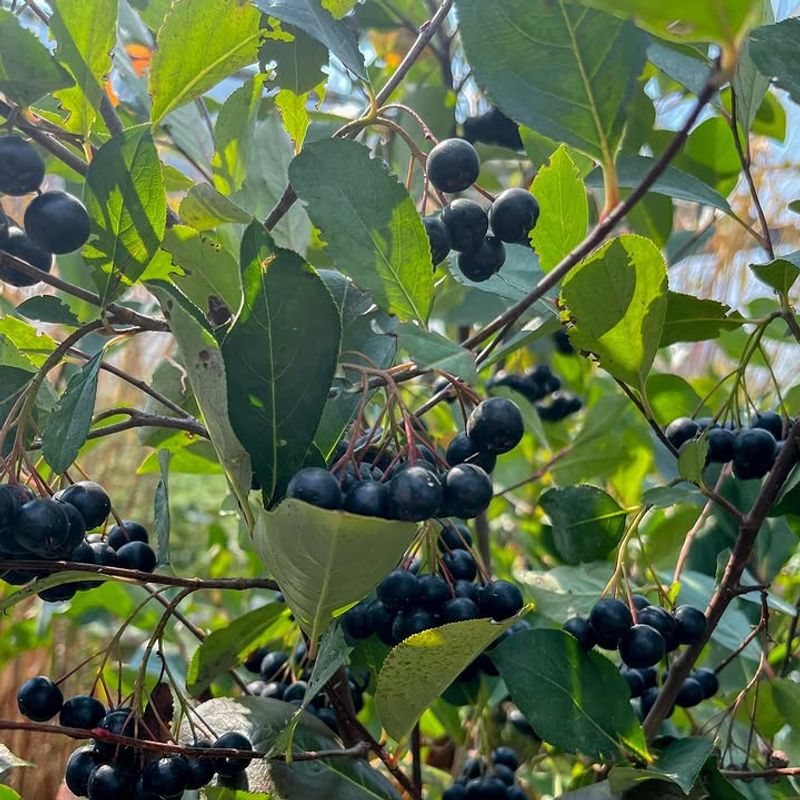
Black Chokeberry does not always get the attention it deserves, but serious bird gardeners in Pennsylvania know this shrub is a quiet powerhouse.
It produces heavy clusters of dark, glossy berries by late summer that attract cedar waxwings, mockingbirds, robins, and other songbirds.
Many of these birds are active foragers that spend time searching through leaf litter and low shrubs, which puts them right in tick territory.
One of the best things about Black Chokeberry is how adaptable it is. It grows in wet soils, dry soils, full sun, and partial shade without much fuss.
Most native shrubs are picky about at least one growing condition, but chokeberry handles a wide range of situations. That makes it a reliable choice for yards with tricky spots like rain gardens, slopes, or shaded corners near a fence.
Birds are not the only ones who benefit from this shrub. Black Chokeberry also supports a variety of native insects, including caterpillars that feed on its leaves.
Insect-eating birds like chickadees and wrens are drawn in by this extra food source, especially during nesting season when they need protein-rich bugs to feed their young. More birds means more tick patrol happening naturally in your yard.
Fall is when Black Chokeberry really shows off. The foliage turns a brilliant red and orange that rivals many ornamental shrubs.
The berries often remain on the branches well into fall and early winter, giving birds an extended buffet. Plant it in groups of three or more for the best visual impact and to give birds a larger foraging area to work through each day.
4. Elderberry
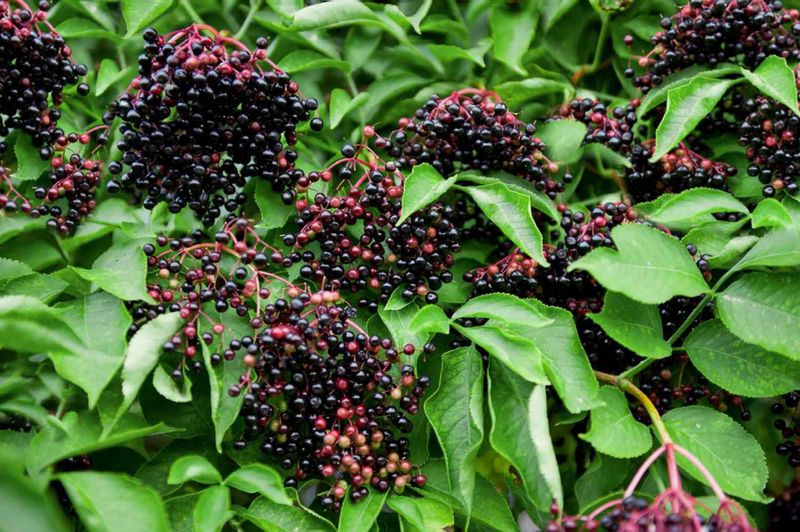
Ask any serious bird gardener which native shrub delivers the most bird activity, and elderberry will almost always come up first.
American Elderberry produces enormous flat-topped clusters of small, dark purple-black berries that ripen in late summer and practically vibrate with bird activity.
More than thirty species of birds are known to eat elderberries, including catbirds, red-eyed vireos, wood thrushes, and brown thrashers. These are exactly the kinds of birds that also forage for ticks and insects in your yard. Elderberry grows fast. Really fast.
A young plant can shoot up four to six feet in its first growing season under good conditions. It forms a large, multi-stemmed shrub that can reach twelve feet tall and wide at maturity.
That big structure gives birds plenty of perching spots, cover from predators, and places to nest. The more comfortable birds feel in your yard, the more time they spend there.
Spring blooms are another bonus. The large white flower clusters attract a wide range of pollinators, which in turn attracts insect-eating birds even before the berries ripen.
Your yard becomes a layered food source that keeps different bird species coming through from spring all the way into fall. That kind of consistent traffic makes a real difference when it comes to natural tick management.
Elderberry thrives in moist soil and full sun but tolerates partial shade and average conditions well. It spreads by root suckers, so give it some space or plan to trim it back occasionally.
Plant at least two shrubs near each other for better berry production. It is one of the fastest and most rewarding native plants you can add to a Pennsylvania yard.
5. Ninebark
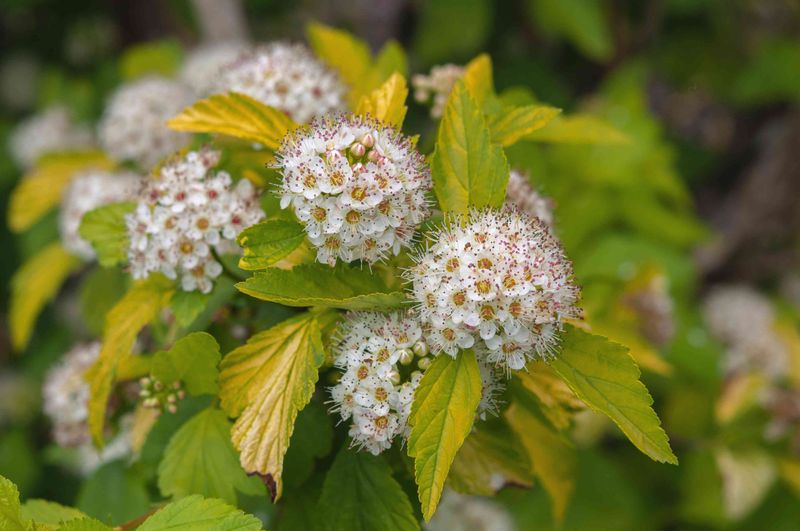
Ninebark has a quirky claim to fame right in its name. The bark peels away in multiple thin layers, revealing different shades of cinnamon and tan underneath.
That peeling texture is not just interesting to look at. It actually creates tiny crevices and hiding spots that many insects use for shelter, and where there are insects, birds will follow.
Chickadees, nuthatches, and woodpeckers are known to pick through the bark looking for bugs, making Ninebark a surprisingly active feeding station.
This native Pennsylvania shrub is a workhorse in the landscape. It tolerates poor soil, drought, wet conditions, full sun, and partial shade with very little complaint.
Few native shrubs are this flexible. That adaptability makes it a go-to choice for spots in the yard where other plants struggle to establish themselves. Once it takes hold, it requires almost no maintenance beyond occasional shaping.
During late spring and early summer, Ninebark covers itself in clusters of small white or pink flowers that buzz with pollinators. Those pollinators attract insect-eating birds like warblers and flycatchers that are passing through Pennsylvania during migration.
Even if these birds are just stopping by, every visit adds up when it comes to reducing tick populations in your yard.
The reddish-brown seed clusters that follow the flowers also attract birds in late summer and fall. Native plant varieties like Diablo and Coppertina have deep burgundy or copper-colored foliage that adds bold color to the yard all season.
Ninebark is a shrub that works on multiple levels, providing nesting habitat, insect life, seeds, and shelter to keep birds coming back consistently throughout the entire year.
6. Spicebush
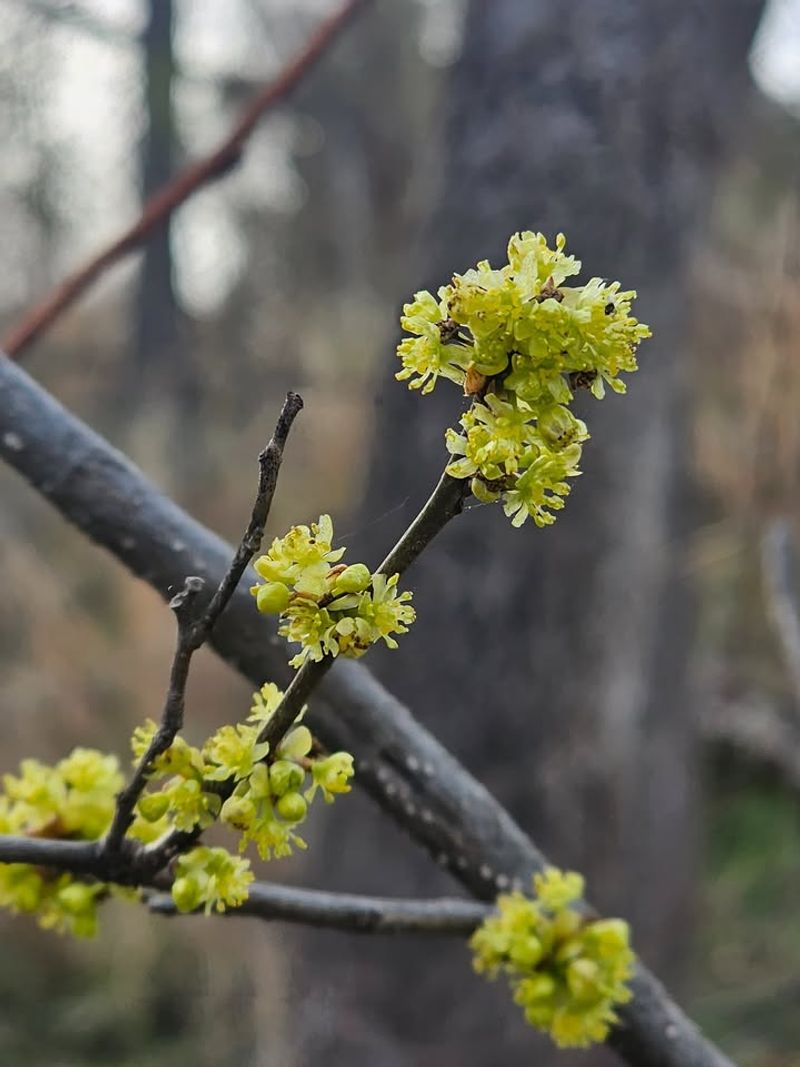
There is something almost magical about Spicebush in fall. The leaves turn a clear, glowing yellow, and the branches light up with small, brilliant red berries that look like tiny ornaments hanging in the understory.
Those berries are rich in fat, which makes them incredibly valuable to migratory birds that need to bulk up quickly before long flights south.
Wood thrushes, veeries, and Swainson’s thrushes are among the species known to rely heavily on Spicebush berries during fall migration.
Beyond the berries, Spicebush is a host plant for the Spicebush Swallowtail butterfly and the Promethea Silkmoth.
Both of these insects lay their eggs on Spicebush leaves, and the caterpillars that hatch become a high-protein food source for nesting birds in spring and summer.
Native shrubs that support insects like this are especially important for tick-eating birds that need more than just fruit to survive.
Spicebush is a natural fit for shaded areas of the yard where many other shrubs struggle. It grows well under tree canopies and in moist, woodland-style soil.
That makes it perfect for the edges of a property with mature trees or near a rain garden or low-lying wet area. It grows slowly at first but becomes a reliable and long-lived part of the landscape.
Crush a leaf between your fingers and you will understand how this shrub got its name. The spicy, aromatic scent is unmistakable and surprisingly pleasant.
Like Winterberry, Spicebush has separate male and female plants, so plant both for berry production. A small grouping of Spicebush shrubs in a shaded corner can transform a forgotten part of your yard into a thriving bird habitat all season long.