Pennsylvania’s Most Dangerous Venomous Species To Watch For This Fall
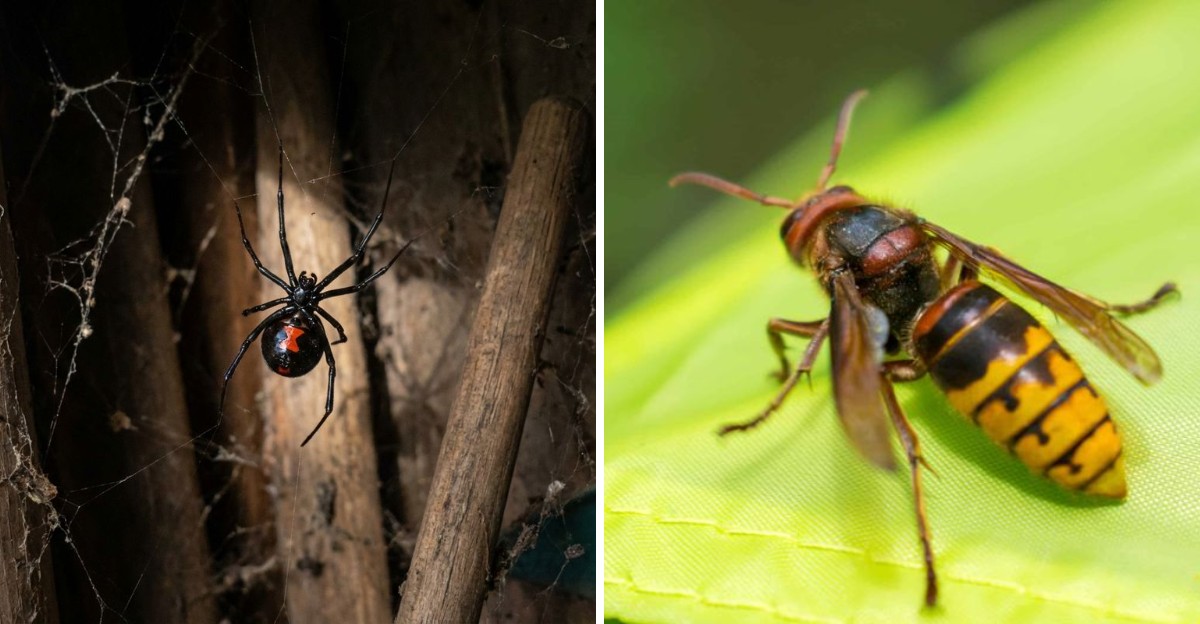
Every fall, timber rattlesnakes in Pennsylvania make a remarkable journey. Many of them travel back to the same rocky den they’ve used year after year, often sharing it with copperheads and other snakes.
That return trip means more snakes on the move this time of year. You might spot them basking on sunny rocks, crossing trails, or resting along stone walls as they soak up the last warm afternoons.
Snakes aren’t the only concern. Yellow jackets and hornets reach their largest numbers in early fall and get more defensive as food runs short.
Black widows and other spiders slip into woodpiles, sheds, and garages as the weather cools. Most of these creatures want nothing to do with people.
Still, a surprise encounter can turn a pleasant fall day into a painful one. Knowing what to look for, and where, keeps you one step ahead.
1. Timber Rattlesnake
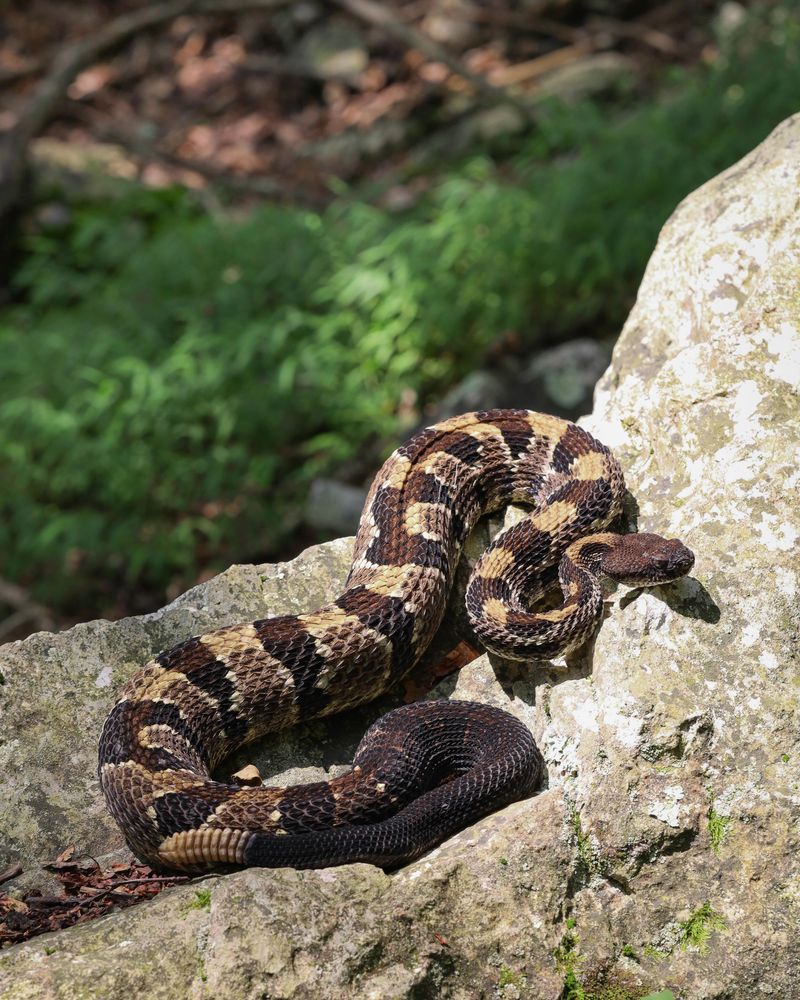
Few sounds in the woods will stop you faster than a dry, buzzing rattle. That warning belongs to the timber rattlesnake, the biggest venomous snake in Pennsylvania. Adults can grow longer than four feet.
You will mostly find them in the forested mountains of central and northern Pennsylvania. They come in two main color styles. Some are yellow with dark bands, while others are nearly black.
Fall is a busy season for these snakes. As nights get colder, they travel back toward their winter dens. These dens are often deep cracks in rocky hillsides.
On cool, sunny days, rattlesnakes love to bask on warm rocks and ledges. That habit puts them right where hikers and climbers like to go. A snake soaking up sun can be hard to spot until you are very close.
So what should you do? Always watch where you step on rocky trails. Never put your hands on a ledge or under a log you cannot see.
Wearing sturdy boots and long pants helps a lot. Using a hiking stick to check the path ahead is another smart move. Keep dogs on a leash so they do not poke their noses into rock piles.
If you hear a rattle, freeze for a moment and find the snake. Then back away slowly. Give it at least several feet of space.
Here is a fun fact. Timber rattlesnakes are a protected species in Pennsylvania, so it is against the law to harm one without a permit. A bite is a medical emergency, so call 911 right away and stay calm.
2. Eastern Copperhead
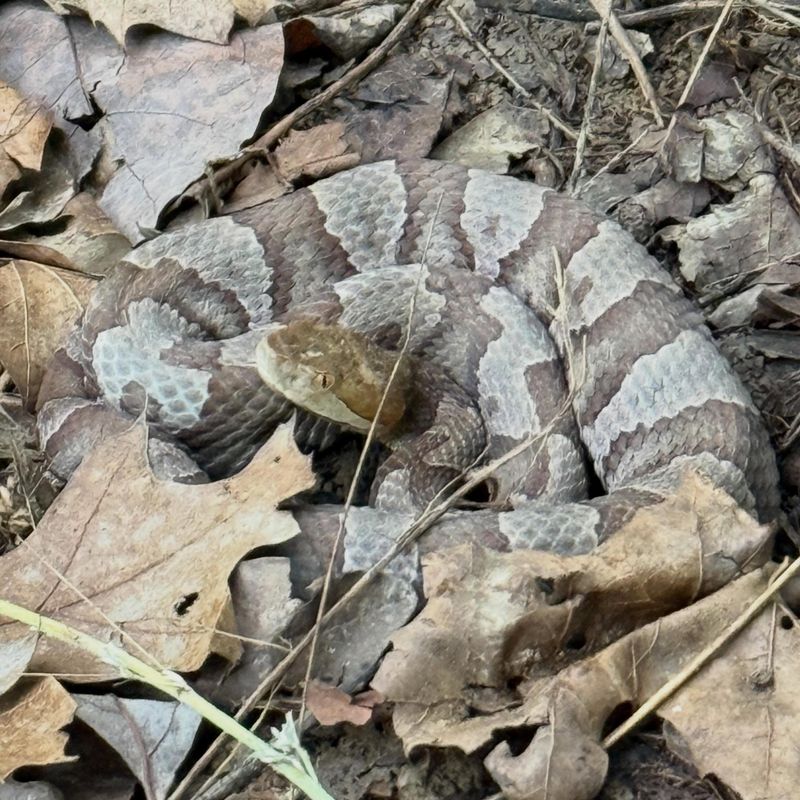
Camouflage experts have nothing on the eastern copperhead. Its body has copper and tan bands shaped a bit like hourglasses. When it rests on a pile of fallen leaves, it almost disappears.
Copperheads live in wooded, rocky areas across much of central and southern Pennsylvania. They also show up near old stone walls, sawdust piles, and the edges of fields. Some even live close to homes in quiet neighborhoods.
Autumn makes them extra tricky to see. The ground is covered with the same colors as their skin. You could walk right past one and never know it.
Your Pennsylvania Garden Changes Every Week. Your Plan Should Too.
Gardening in Pennsylvania changes quickly throughout the season. Every Friday you’ll receive a simple weekly plan showing exactly what to plant, prune, fertilize, harvest, and protect so you never miss the right timing.
Many people get bitten when they reach into leaf piles or step without looking. Copperheads often stay still instead of fleeing. They count on their hiding skills to keep them safe.
Did you know baby copperheads are born in late summer? Young snakes come out ready to go, and they are venomous from birth. Babies have a bright yellow or green tail tip that they wiggle to lure in frogs.
Luckily, copperhead bites are rarely life-threatening for healthy adults. They still hurt a lot and can cause major swelling. Anyone who is bitten needs to see a doctor quickly.
A few easy habits can keep you safe. Wear gloves when you rake or move firewood. Use a flashlight on paths at night, since copperheads often move after dark in warm fall weather.
Keep your yard tidy too. Clearing brush and stacking wood away from the house means fewer hiding spots for snakes and the mice they eat.
3. Northern Black Widow
Reaching for a log on a chilly October evening seems harmless enough. Yet a woodpile is one of the favorite hiding places of the northern black widow. Knowing how to spot this spider can save you from a very bad week.
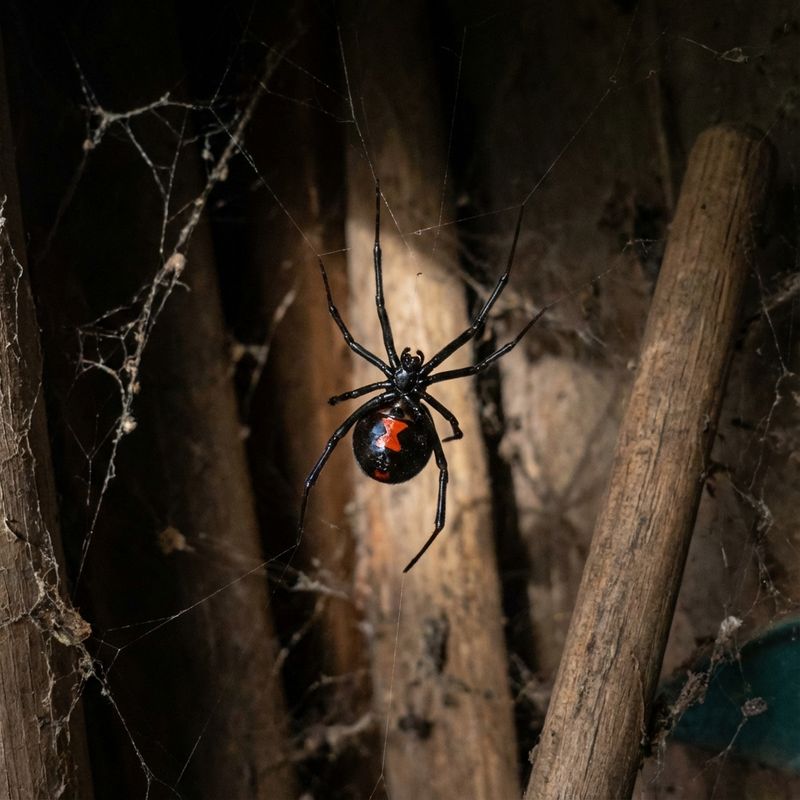
The female is shiny black and about the size of a paperclip’s end with legs spread out. She has red markings, often an hourglass shape on her belly. On northern black widows, that hourglass is often split into two separate triangles.
Look at her back too. You may see a row of small red spots. Males are smaller, lighter in color, and are not a real danger to people.
These spiders love dark, quiet places. Check stone walls, sheds, garages, flower pots, and outdoor furniture. Patio chairs that sat unused all summer are a classic hideout.
Black widow webs look messy and tangled, not neat like a wheel. The silk is also surprisingly strong. If you touch one, it feels almost like thread.
A bite might feel like a small pinprick at first. Over the next hour, though, it can cause severe muscle pain and cramping in the belly, back, or chest. Some people also sweat or feel sick to their stomach.
Get medical care if you think you were bitten. Doctors can treat the pain and watch for problems, especially in kids and older adults.
To stay safe, wear gloves when moving wood or cleaning out the shed. Shake out shoes and gardening gloves left outside before you put them on.
4. Yellowjackets
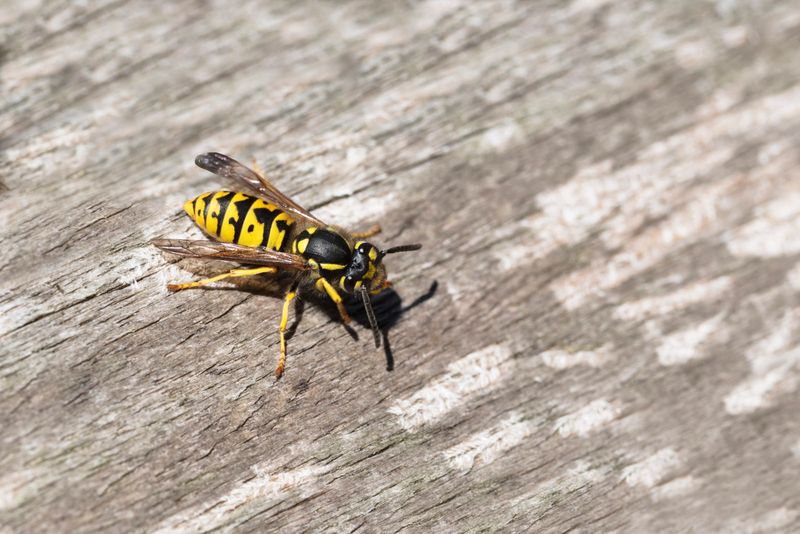
Ask anyone who has opened a soda at a fall picnic, and they will tell you yellowjackets can be total pests. These small yellow and black wasps seem to show up from nowhere. By September, they act like they own the place.
There is a reason for that bold attitude. Yellowjacket colonies reach their biggest size in late summer and fall. A single nest can hold thousands of workers.
At the same time, their usual food starts to run out. Hungry workers go looking for sugar and meat wherever they can find it. That means your juice box, hot dog, or trash can.
Hunger makes them grumpy and quick to sting. Unlike honey bees, yellowjackets can sting again and again. One upset wasp can also call others to join in.
Many people do not realize these wasps often nest underground. Old rodent holes in the lawn make perfect homes. Others build nests inside wall spaces of houses and sheds.
That is why mowing and raking can be risky. Running a mower over a hidden nest is like ringing an alarm bell. Walk your yard first and watch for wasps flying in and out of one spot in the ground.
Eating outside? Keep food covered and use cups with lids or straws. Always look inside a can before taking a sip.
If wasps come after you, walk away quickly to a building or car. Do not swat wildly, since that tends to make things worse. For a big nest near your home, calling a pest professional is the smartest choice.
5. Bald-Faced Hornets
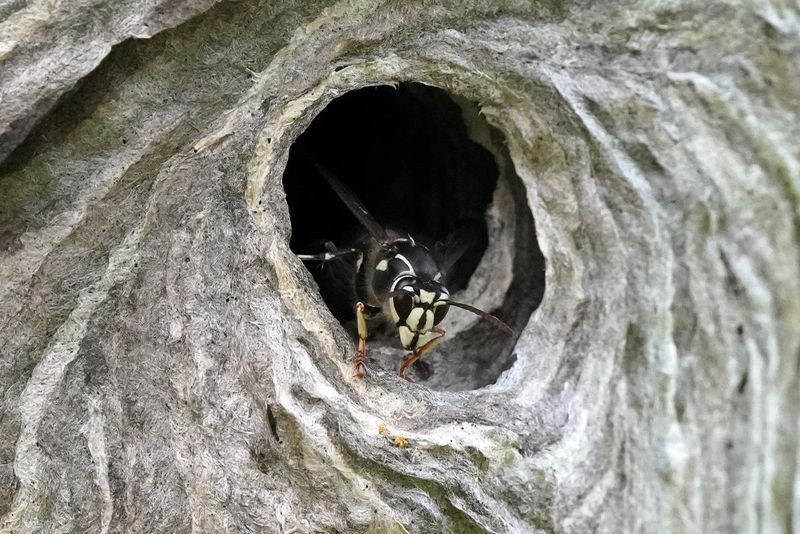
Hanging from a branch like a giant gray football, the nest of a bald-faced hornet is hard to forget once you have seen it.
Some nests grow bigger than a basketball. They are made from chewed wood fibers mixed with saliva, which creates a papery shell.
Bald-faced hornets are not true hornets at all. They are actually a type of yellowjacket. Their bodies are black with bright white markings, especially on the face.
You can find their nests in trees, shrubs, and under the eaves of houses and barns. Sometimes they sit just a few feet off the ground in a bush. People trimming hedges in fall often get a nasty surprise.
By autumn, these colonies are at their largest. Hundreds of hornets may live inside one nest. Every one of them is ready to defend it.
These insects are famous for their fierce protection. If you bump the nest or even stand too close, guards fly out fast. They sting repeatedly and can chase a person for quite a distance.
Their stings are painful and can cause swelling for days. People with allergies face a bigger risk. Watch for hives, trouble breathing, or a swollen face after any sting.
So keep your eyes up when walking near trees and bushes. Look for hornets flying steadily in one direction, which often points to a nest. Stay well back and leave it alone.
Here is some good news. The colony fades away after hard frosts, and old nests are not reused. Waiting until winter to remove one is often the safest plan.
6. European Hornets
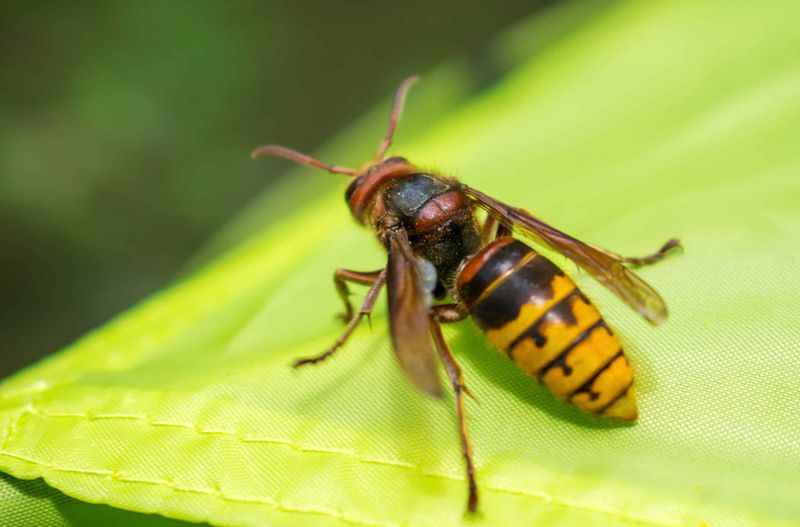
Late one evening, you might hear a loud thump against your porch light. Take a closer look, and you could find a European hornet. These are the only true hornets living in Pennsylvania.
They are big insects, often more than an inch long. Their bodies are brown and yellow, with a reddish head. Their size alone makes many people jump.
European hornets came to North America from Europe in the 1800s. Over time, they spread across much of the eastern United States. Now they are a regular part of Pennsylvania’s fall scene.
They like to nest in hollow trees, old barns, and wall cavities in homes. You may not see the nest at all. Instead, you might notice hornets slipping in and out of a crack in siding.
Like many stinging insects, their colonies peak in fall. More hornets means more chances to cross paths. They also chew bark from shrubs like lilacs, which can leave plants looking damaged.
Here is what makes them unusual. Unlike most wasps, European hornets are sometimes active at night. They are drawn to lit windows, porches, and outdoor lamps.
That night habit can cause trouble. A hornet may fly inside through an open door or crawl into a light fixture. Stings are painful, though these hornets are usually less aggressive away from their nest.
A few simple fixes help. Use yellow bug lights outside, since they attract fewer insects. Make sure window screens have no holes.
Turn off porch lights when you do not need them, and call a professional for nests inside walls.
7. Honey Bees
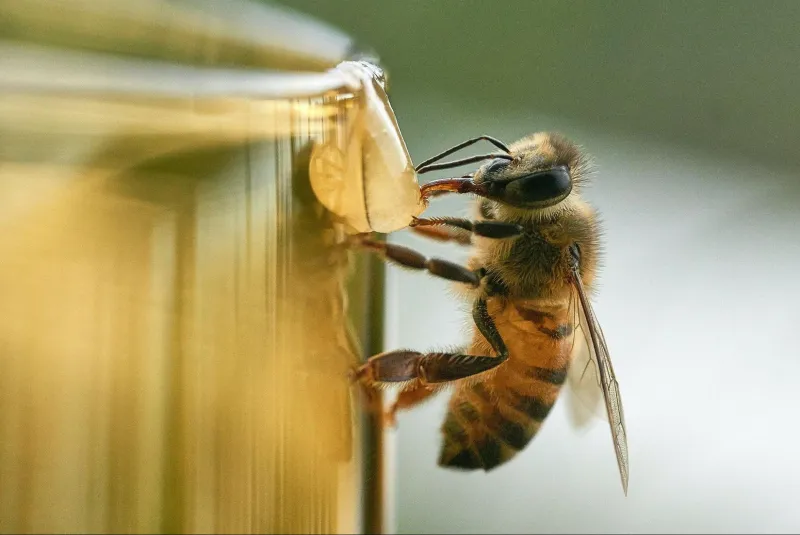
Honey bees are usually the good guys of the insect world. They help pollinate apples, pumpkins, and many other crops Pennsylvania farms grow. On most days, they would rather visit flowers than bother you.
Things change a bit when fall arrives, though. Flowers become fewer as the weather cools. Goldenrod and asters are some of the last blooms of the year.
With nectar getting scarce, bees work hard to protect the honey they stored. That honey is their food for the whole winter. Guard bees at the hive entrance become more watchful and more defensive.
Other insects, like yellowjackets, may try to rob their hives. Bees can stay on high alert because of these attacks. A person walking too close could get caught in the middle.
For most people, a honey bee sting hurts but fades within a day or two. A honey bee can only sting once, because its barbed stinger stays in the skin. Scrape it out quickly with a fingernail or card.
For people with bee allergies, the story is very different. A single sting can trigger a life-threatening reaction called anaphylaxis. Signs include trouble breathing, a swollen throat, dizziness, or hives across the body.
Anyone with a known allergy should carry an epinephrine auto-injector outdoors. Make sure friends and family know how to use it. After using it, call 911 right away.
Everyone else can help too. Stay calm around bees and move slowly. Avoid strong perfumes and bright flowery clothes. Give beehives plenty of room, and enjoy watching these hard workers from a distance.