Plant This Fragrant Shrub Near Arizona Patios This Fall For Sweet Scent Come Spring
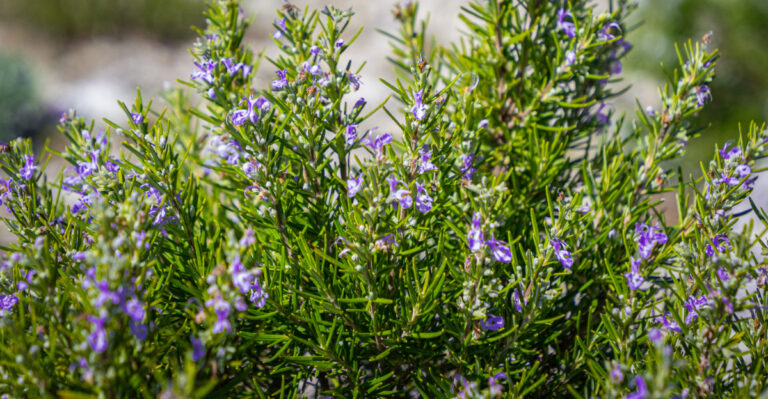
If your patio is missing something this fall, a native shrub with fragrant foliage and spring flowers might be exactly what the space needs. Desert lavender is a Sonoran Desert native that handles full sun, gets by on very little water once it settles in, and can draw bees, butterflies, and hummingbirds right to your yard.
Planting now, in early October, gives roots a head start before next summer’s heat arrives. Spring fragrance and flowers are a real possibility, though how much you get depends on your specific site, soil, and the plant itself.
Desert lavender offers a possible spring fragrance payoff
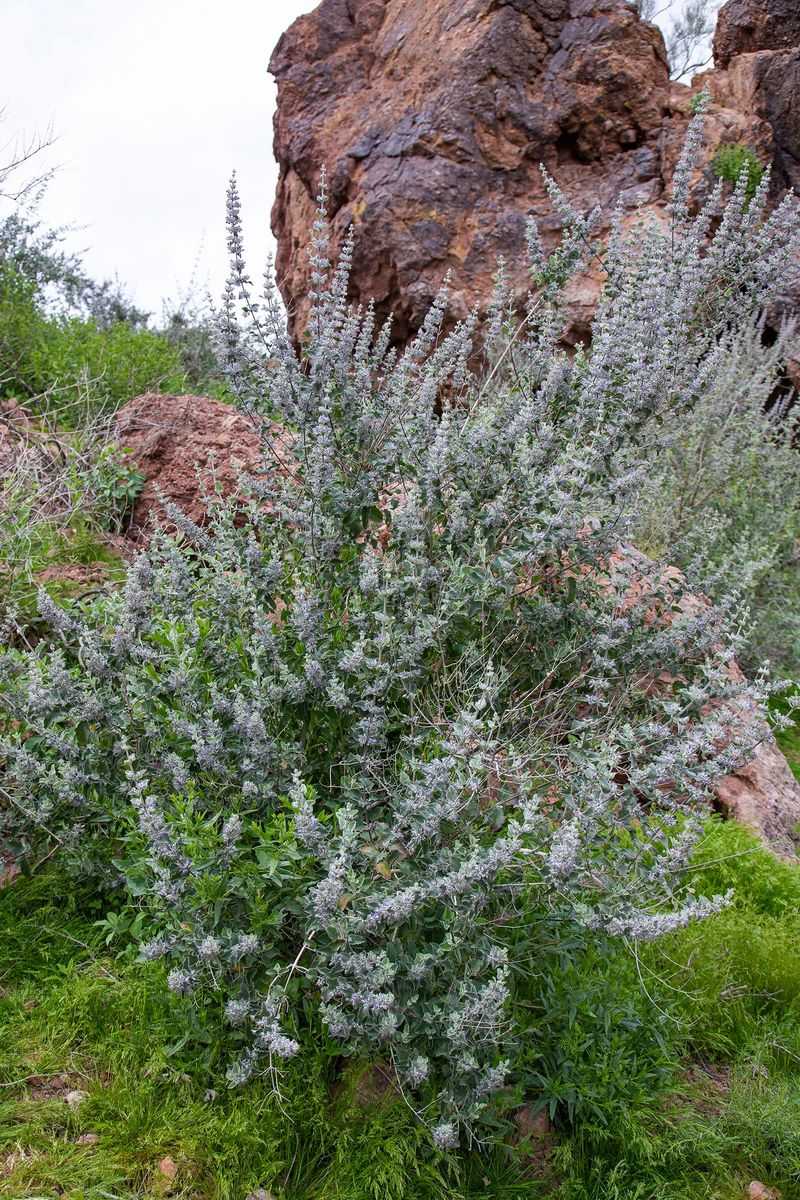
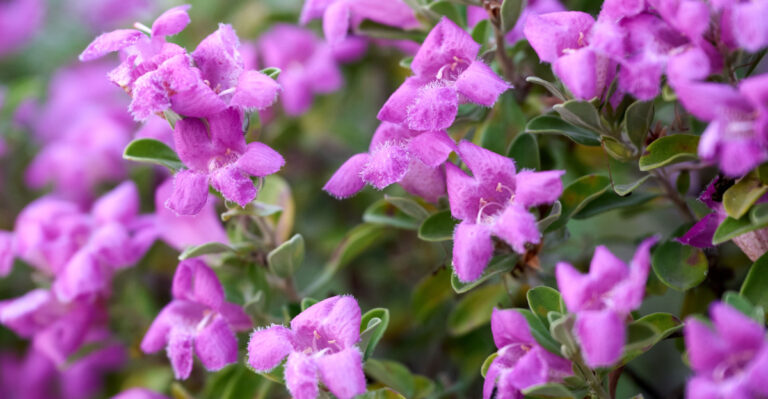
Not every shrub sold for Arizona yards is a genuine fit for the Sonoran Desert, but desert lavender is the real thing. Known botanically as Hyptis emoryi, and also listed under the accepted name Condea emoryi, it is native to the Sonoran and Mojave Deserts, including much of Arizona’s low-desert region.
The foliage carries a pleasant herbal scent, and the flowers typically appear in spring, though timing and intensity shift with weather, exposure, and how well the plant has settled into its spot. Pollinators respond well to those blooms: bees, butterflies, and hummingbirds are all documented visitors.
That combination of fragrance, low water demand, and wildlife value makes desert lavender a sensible candidate for a patio-adjacent planting in Phoenix or Tucson.
Fall planting can give the shrub time to begin developing its root system before the next brutal summer, which may support a stronger spring performance. What it cannot do is guarantee a specific bloom date, a particular fragrance level, or full establishment by any fixed point.
The spring payoff is genuinely possible, but it remains a possibility rather than a promise.
Why early October suits low-desert planting
Timing a shrub planting in Phoenix or Tucson is not the same as timing one in Chicago or Atlanta. Low-desert Arizona has two practical windows when new plants can establish without fighting extreme conditions, and early fall is one of them.
Warm soil matters more than most gardeners expect. Roots continue to grow as long as soil temperatures stay favorable, so a shrub planted in early October can begin extending into surrounding soil before winter slows things down.
Cooler daytime air means the plant loses less moisture through its leaves at the same time, easing the demand on a root system that is still getting organized.
This advantage is specific to the low deserts around Phoenix and Tucson. Gardeners at higher elevations in Arizona face different temperature patterns, frost risk, and soil conditions, and they need plant-selection and timing guidance suited to their zone.
For low-desert sites, early October gives desert lavender a reasonable runway, but a head start on establishment is not the same as a guarantee of spring flowers, noticeable fragrance, or a fully rooted plant by March.
Plan for an open shrub, not a tiny patio plant
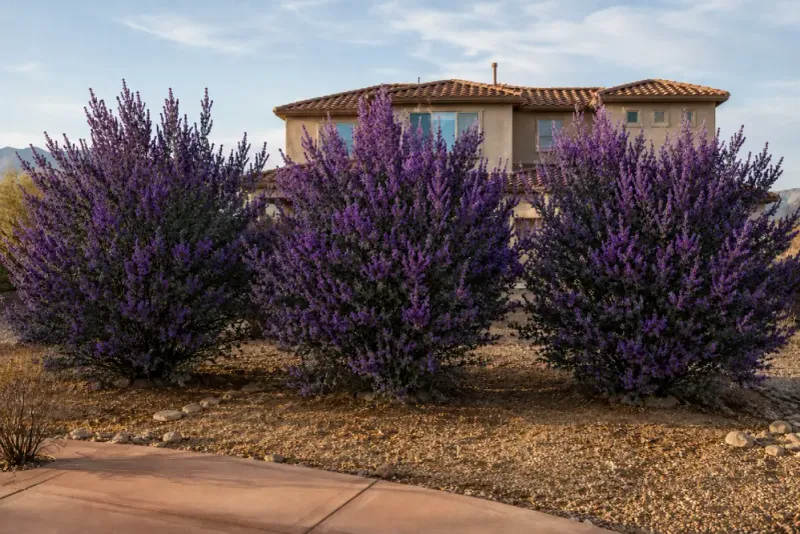
One of the most common siting mistakes with desert lavender is underestimating how much room it eventually claims. Sources differ somewhat on exact mature dimensions: AMWUA’s desert lavender profile lists an upright, open form reaching roughly 10 feet tall and about 8 feet wide, while the University of Arizona Campus Arboretum puts height closer to 6 feet for some specimens.
Your Arizona Garden Changes Every Week. Your Plan Should Too.
Gardening in Arizona changes quickly throughout the season. Every Friday you’ll receive a simple weekly plan showing exactly what to plant, prune, fertilize, harvest, and protect so you never miss the right timing.
Both figures confirm this is not a compact foundation shrub you can tuck against a wall and forget about.
Full sun is non-negotiable. Desert lavender performs best with direct sunlight for most of the day, so a shaded corner or a spot that catches significant reflected shade from a wall will not serve it well.
Beyond light, the shrub needs clearance, meaning real physical distance from seating areas, walkways, doors, and foundations. Placing it too close to a structure creates problems as it fills out, and keeping vegetation trimmed away from buildings is also practical advice for any Arizona homeowner managing scorpions and other desert wildlife around the home.
The good news is that desert lavender is thornless, produces minimal litter, and is listed as pool-friendly, which makes it easier to work into a patio-adjacent design without the usual concerns about spines or messy debris. The key is choosing a spot where the shrub can reach its mature spread without crowding anything.
Several feet of clearance from seating or hardscape edges is a reasonable starting point.
Give the root ball well-drained soil
Choosing a healthy plant at the nursery is the first practical step. Look for a specimen with firm, intact roots, green foliage, and no signs of root circling or waterlogging.
Native and desert-adapted plants are increasingly available at local Arizona nurseries, and starting with a well-grown container plant gives the root ball a better chance of transitioning into surrounding soil.
Soil preparation matters more than most gardeners realize when working with desert-adapted plants. If the planting area has compacted or caliche-layered soil, address that before dropping in a root ball.
Poor drainage does not improve with more irrigation; it only creates prolonged wet conditions that harm desert-adapted roots.
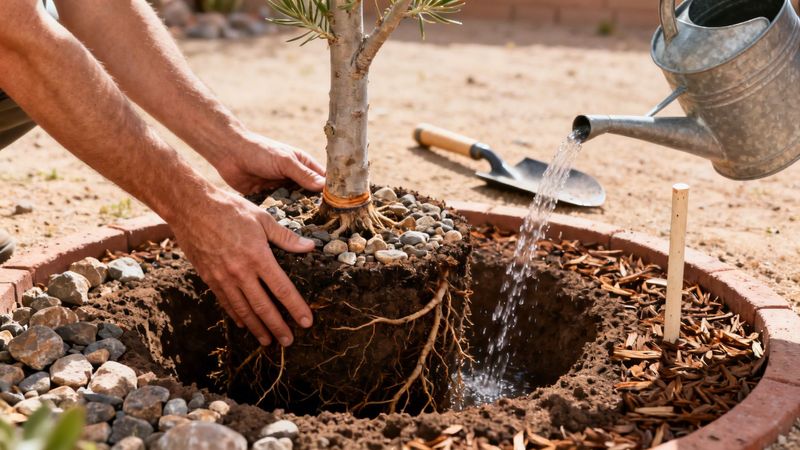
When placing the plant, set the top of the root ball level with or very slightly above the surrounding soil surface. University of Arizona planting guidelines for container trees and shrubs recommend this approach to help roots move outward into native soil without sitting in a water-collecting depression.
Backfill with the existing soil rather than heavily amended mix, which can actually slow root expansion by creating a boundary the roots resist crossing. The goal is a planting that encourages roots to spread wide into the surrounding ground, not one that keeps them comfortable inside a small amended pocket.
Water regularly while the new shrub establishes
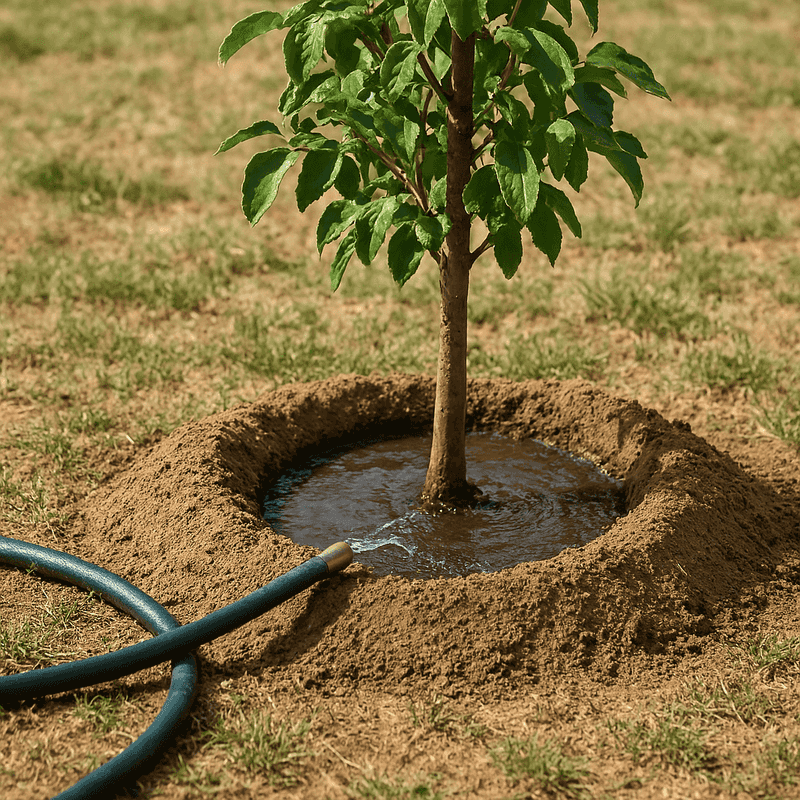
“Very low water” is a classification that describes desert lavender after it has settled into the landscape, not on the day it comes home from the nursery. A newly planted shrub has a root system confined to the original container ball, which means it depends entirely on what gardeners provide until roots spread into surrounding soil.
Skipping irrigation in the first weeks because the plant is labeled drought-tolerant is one of the most reliable ways to lose a native planting.
University of Arizona October gardening guidance for Pima County advises tapering newly planted native and desert-adapted plants toward less frequent watering as they establish, rather than applying a fixed schedule from the start. In practical terms, that means watering thoroughly right after planting, then checking soil moisture and watering again before the root zone dries out completely.
As weeks pass and the plant shows signs of healthy growth, the interval between waterings can gradually stretch.
Soil drainage still matters during this phase. Watering a new plant in poorly drained soil does not speed establishment; it keeps roots sitting in moisture longer than they can tolerate, which causes its own set of problems.
The goal is consistent moisture without waterlogging, adjusted for weather, soil type, and how quickly the specific site dries out. Cooler October temperatures help slow moisture loss compared to summer, but the plant still needs attention through the fall and into winter while roots continue to develop.
Expect variable spring flowers and fragrance
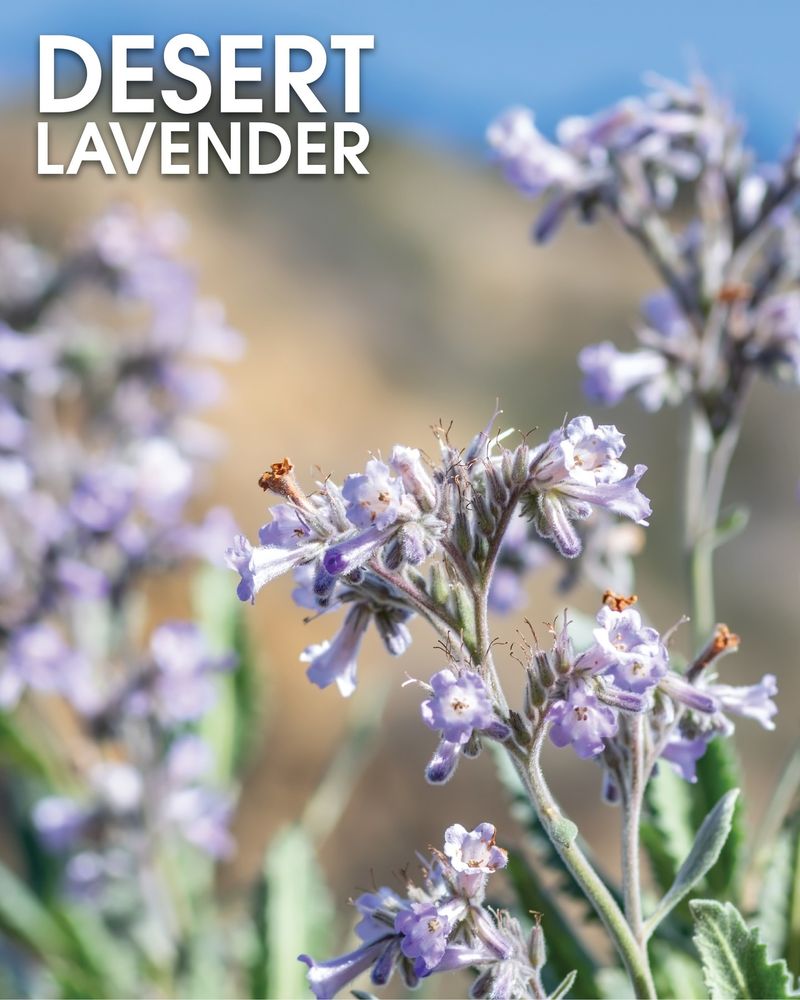
Spring is the primary flowering season for desert lavender, and the foliage carries a herbal fragrance that becomes more noticeable when leaves are brushed or when warm air moves through the plant. The University of Arizona Campus Arboretum lists spring as the flowering season for Condea emoryi, and some specimens may produce scattered blooms at other times of year depending on conditions.
Treating spring as the reliable window and anything else as a bonus is the right framing for a newly planted shrub.
How much fragrance and how many flowers a specific plant delivers depends on several factors working together. A plant in its first spring after a fall planting may flower modestly while it continues establishing, then perform more fully in subsequent seasons as the root system matures.
The pollinator value is well-documented and holds up even when bloom is modest: bees, butterflies, and hummingbirds are drawn to the flowers. That wildlife attraction is the plant’s documented strength.
Desert lavender has no track record as a pest deterrent, and no credible source supports claims that it repels scorpions, mosquitoes, ticks, or similar pests. One more geographic note: AMWUA lists the plant as hardy to approximately 25 degrees Fahrenheit, which makes it a sound choice for Phoenix and Tucson low-desert sites but a less certain bet at higher Arizona elevations where hard freezes occur.
Protect spring buds by timing pruning carefully
Reaching for the pruners in late winter or early spring feels productive, but with desert lavender it can cost you the season’s flowers before they open. Spring-flowering shrubs often set their flower buds during the previous year, which means aggressive pruning in late winter removes buds that were already formed and waiting for warmer temperatures to trigger bloom.
For a newly planted shrub, the better approach is to let it grow through its first spring without shaping. A young desert lavender is still organizing its structure and building root mass, so removing branches during this period sets back both the plant’s form and its flowering potential.
If the shrub puts on a spring bloom, enjoy it fully before touching anything.
Once flowering finishes, light shaping to remove dead or awkward growth is reasonable. Desert lavender’s naturally open, upright form rarely needs heavy intervention, and the plant tends to look better when allowed to develop its own character rather than being forced into a tight shape.
A well-sited desert lavender, planted in fall with good drainage and consistent establishment watering, can become a genuinely low-maintenance, fragrant, pollinator-friendly companion for a low-desert patio. Spring results will always depend on the specific plant and site, but that variability is part of gardening with natives.