Plant A Florida Shade Tree This Fall And Its Roots Get A Head Start Before Summer

Plant one seedling this month and your grandkids will still be sitting in its shade. This is the long game, and one Florida tree plays it better than any other.
Fall hands it a gift that summer never could. Soil stays warm, rain eases up, and the heat finally takes a breather.
Roots stretch out in peace while the leaves barely lift a finger.
By June, the tree already has its feet under the table. Neighbors who plant in July baby a stick that sulks for months.
This giant has a reputation across the South, with limbs that sweep low and wide. Pick the wrong spot and that gift turns into a headache.
Space matters more than most buyers realize. Measure the yard first, then shop.
1. Southern Live Oak Grows Across Most Of Florida
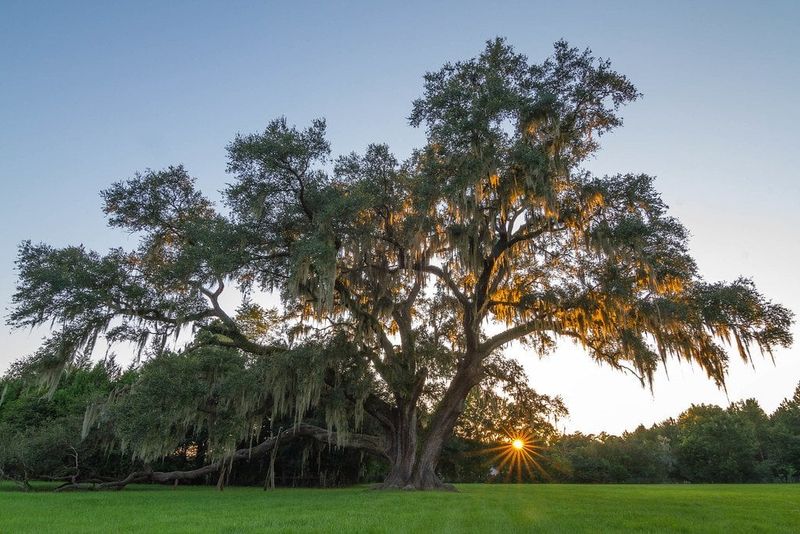
From Pensacola to Key West, one tree shows up again and again in parks, courthouse squares, and old family farms. The Southern Live Oak, known to scientists as Quercus virginiana, is a true local.
Its native range runs from southeastern Virginia down through the state, including the Keys, and west into Texas. That wide map tells you something useful right away.
The tree has already learned how to handle Southern weather.
Inside the state, it does well in many kinds of spots. You can find it near the coast, along riverbanks, and up on drier sandy hills.
It even copes with the limestone soil found in much of the state.
Florida weather swings between dry winters and soggy summers. Plenty of trees struggle with that rhythm, but live oaks take it in stride.
They have grown with these seasons for thousands of years.
The tree is also called semi-evergreen. It keeps most of its leaves through winter, then sheds old ones in spring as fresh ones push out.
You get green shade nearly all year long.
Choosing a native tree brings extra perks. Birds, squirrels, and butterflies depend on live oaks for food and shelter.
Acorns feed wildlife in fall, and the branches host hundreds of tiny insect species that songbirds love to snack on. Your yard becomes a small nature preserve.
2. It Reaches 60 To 80 Feet Tall And Up To 120 Feet Wide
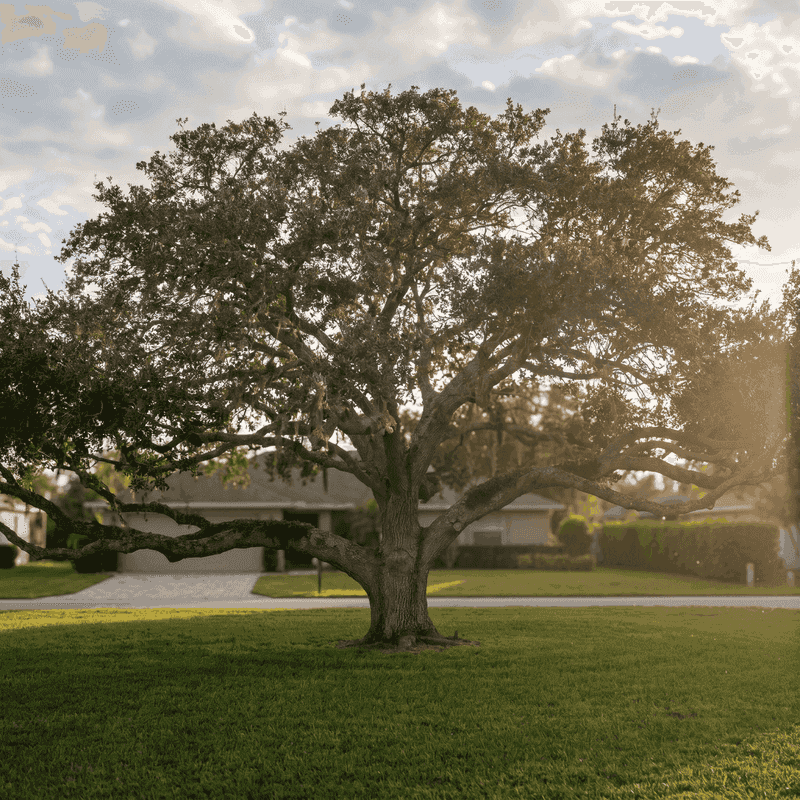
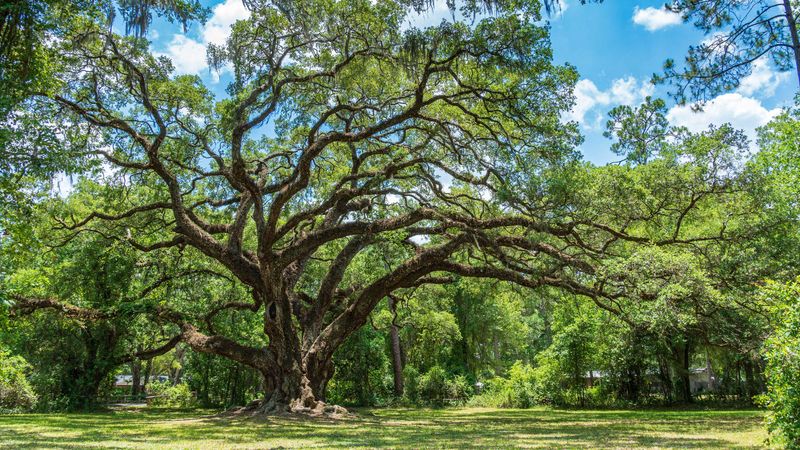
Imagine a tree as tall as a six-story building. Now stretch its arms wider than a football field is long, and you are getting close.
A mature Southern Live Oak usually reaches 60 to 80 feet tall. In open ground, its crown can spread 60 to 120 feet wide.
A few old giants have canopies close to 150 feet across.
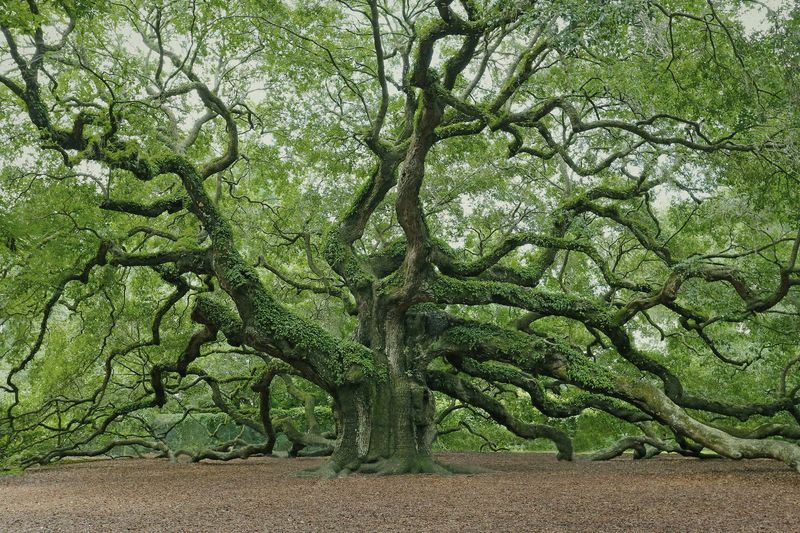
That shape is what makes the tree so special. Most trees grow mostly up, but live oaks love to reach sideways.
Their long, curving limbs can dip low enough to brush the grass before rising again.
Kids adore these branches for climbing. Grown-ups like them for hammocks, tire swings, and quiet picnic spots.
Few trees create such a welcoming outdoor room.
Fun fact time. Some live oaks in the South are thought to be several hundred years old.
Your Florida Garden Changes Every Week. Your Plan Should Too.
Gardening in Florida changes quickly throughout the season. Every Friday you’ll receive a simple weekly plan showing exactly what to plant, prune, fertilize, harvest, and protect so you never miss the right timing.
A tree you plant this fall could still shade your great-great-grandkids someday.
Size also means big benefits. A wide canopy blocks harsh sun from roofs, patios, and driveways.
Strategically placed shade trees can lower cooling electricity use by 10 to 50 percent. They also catch rainwater, which helps reduce flooding and runoff after summer storms.
Think of it as a giant green umbrella that pays you back every month on your power bill.
3. Give It Plenty Of Room, It’s Not For Small Lots
Here is some honest talk before you head to the nursery. A cute little sapling in a pot can fool you into thinking it will stay manageable.
Live oaks grow big, and their roots grow even bigger. The side roots can spread two to three times as wide as the canopy.
Picture a root zone that might stretch well past your property line.
Those roots and heavy limbs can cause trouble near buildings. Experts suggest planting at least 15 feet away from a house.
Many homeowners go even farther to protect roofs, gutters, and foundations.
Look up, too. Power lines and a full-size live oak rarely get along well.
Utility crews may end up trimming your tree into a lopsided shape.
Driveways and sidewalks deserve thought as well. Strong surface roots can lift concrete over time.
Give the tree a wide, open space where roots can roam freely.
So who should plant a classic live oak? Folks with large lots, acreage, churches, schools, and parks are great matches.
If your yard feels snug, do not give up on the idea. There is a smart option coming up next that offers the same tough wood in a slimmer package.
Measure your space first, then decide which version fits best.
4. ‘Highrise’ Fits A Standard-Size Yard
Good news for anyone with a typical neighborhood lot. Tree breeders found a live oak that grows up more than it grows out.
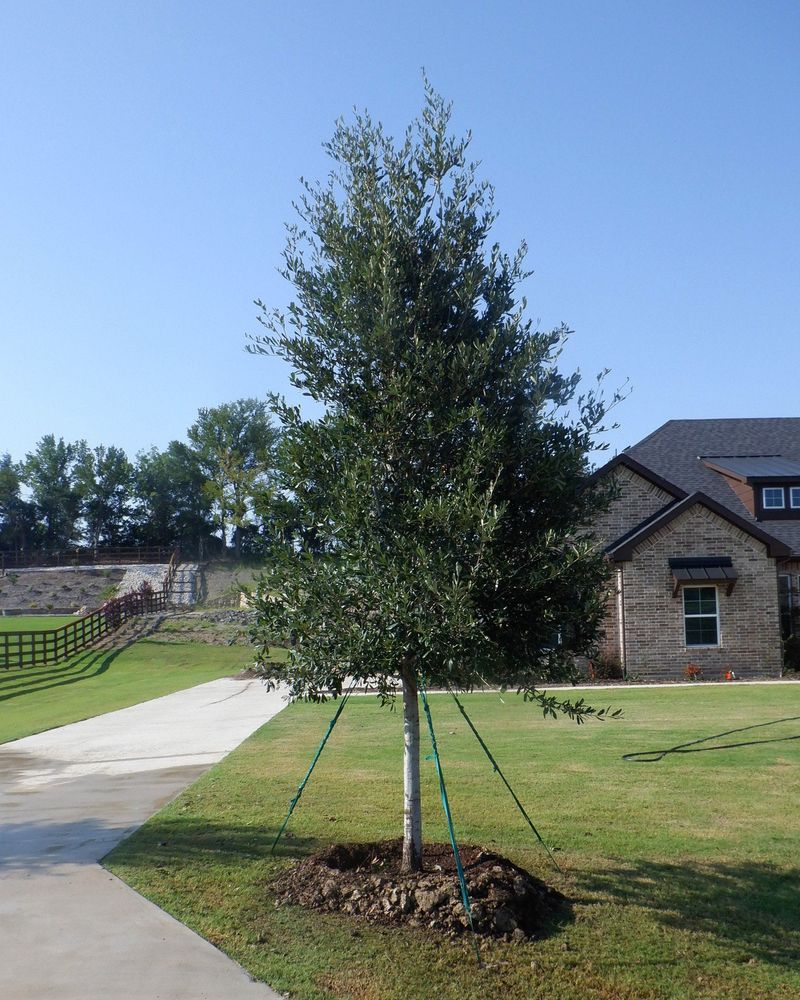
It is called ‘Highrise,’ a cultivar of the Southern Live Oak. Its upright form usually reaches 30 to 40 feet tall with a spread of just 12 to 18 feet.
Some sources say it can get larger with age, up to around 60 feet tall and 40 feet wide.
Even so, that is a much smaller footprint than the classic tree. You still get the same tough nature, glossy leaves, and Florida-friendly habits.
You simply trade the giant sprawl for a tidy column.
Gardeners like how predictable it is. Each ‘Highrise’ tends to hold a steady shape, height, and branch pattern.
That makes planning your landscape much easier.
So where does it shine? Try a row along a driveway for a grand entrance.
Line one up along a fence to build a living privacy screen. Plant one near a patio for afternoon shade without crowding the house.
When shopping, read the tag carefully. Ask the nursery staff whether the tree is true ‘Highrise’ stock.
A quick question now saves you from surprise branches pushing into your gutters ten years down the road.
5. It Holds Up Well In Strong Winds
When Hurricane Andrew roared through South Florida in 1992, many trees snapped or toppled. Live oaks stood out because most of them stayed upright.
Damage on those oaks was mostly limited to outer branches. Years later, Hurricane Katrina brought winds over 125 miles per hour.
Less than 1 percent of mature live oaks were uprooted or badly hurt.
University of Florida research ranks live oaks among the most wind-resistant trees around. So what is their secret?
It comes down to three strengths working together.
First, deep anchor roots grip the ground like a giant hand. Second, the wood is dense yet flexible, so it bends instead of cracking.
Third, the low, wide canopy lets wind slip past with less leverage.
For Florida families, that matters a lot. A tree that crashes onto a roof during a storm is a costly headache.
A sturdy live oak gives more peace of mind each hurricane season.
You can boost that strength with good care. Have young trees pruned to build one strong central trunk.
Remove weak or crossing branches early, while cuts are small. Hire a certified arborist for bigger jobs.
A well-shaped tree handles the wind far better than one left to grow messy limbs.
6. It Handles Drought And Salt Spray
Ocean breezes smell wonderful to people. For many plants, though, that salty mist is bad news.
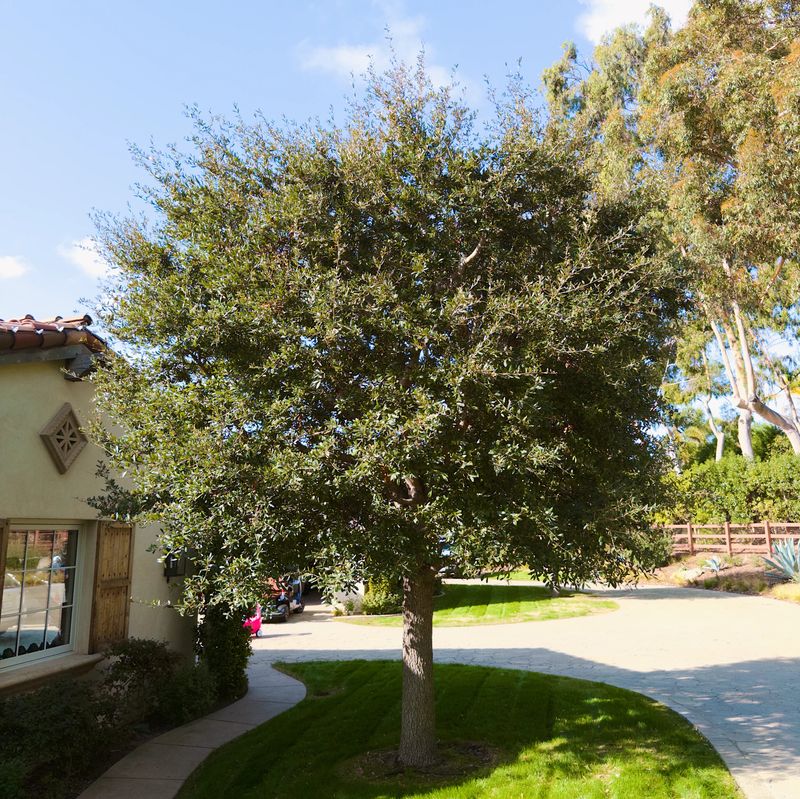
Salt spray can scorch leaves and stress roots. Live oaks shrug it off better than most trees.
They tolerate salty air and even higher salt levels in the soil.
That talent helps explain why live oaks rule many coastal forests. They can even handle an occasional flood of seawater after a storm surge.
Beach towns and barrier islands lean on them for exactly that reason.
Dry weather is another strong suit. Once settled in, a live oak copes with drought quite well.
Its wide roots search deep and far for moisture.
Notice the words once settled in. A brand new tree still needs regular watering for its first year or more.
Sandy soil drains fast, so young roots can dry out quickly.
After that first stretch, life gets easier for you. Many mature live oaks need little extra water outside of long dry spells.
That saves money and time.
Quick tip for coastal yards: spread a ring of mulch two to three inches deep around the tree. Keep it a few inches from the trunk.
Mulch holds moisture, cools soil, and keeps weeds and mower blades away.
7. Fall Planting Helps It Settle In Before Summer Heat
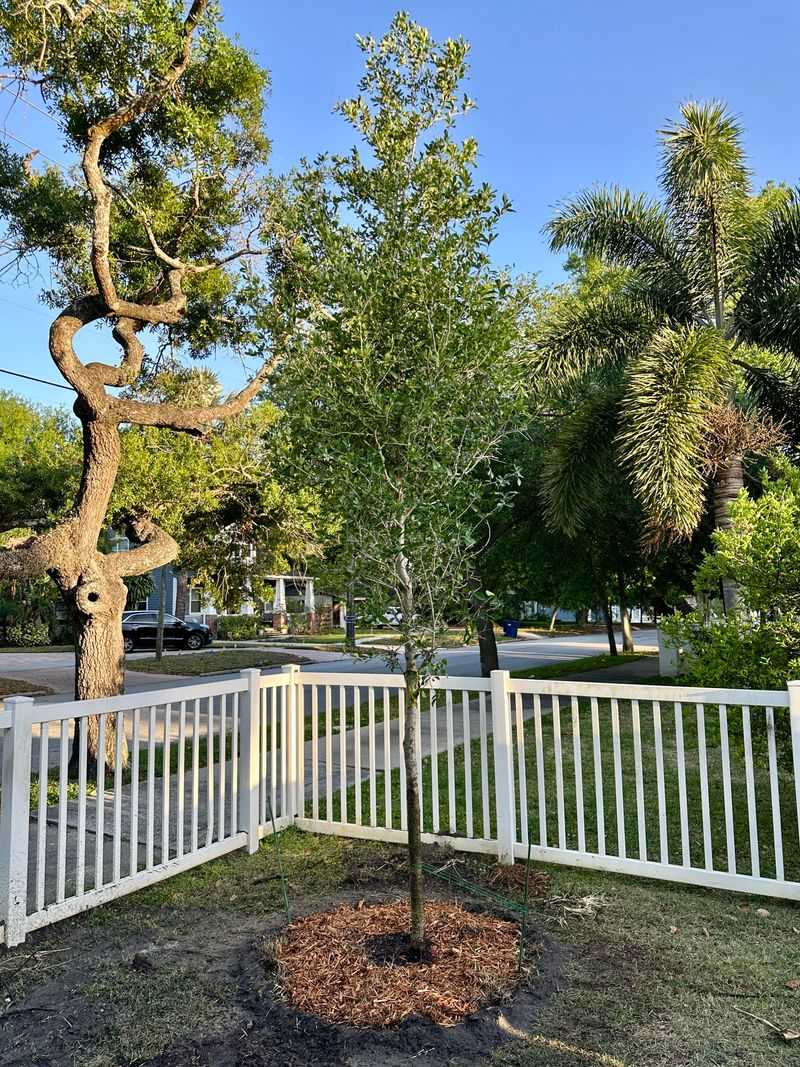
Ask a seasoned Florida gardener about timing, and you will likely hear the same answer. October through early December is the sweet spot for planting trees.
Why fall? Air temperatures drop, so leaves lose less water.
Meanwhile, the soil stays warm enough for roots to keep growing.
Above ground, the tree seems to rest. Underground, it quietly gets busy.
Roots spread out and anchor themselves for months before summer arrives.
Compare that with planting in June. A young tree faces blazing sun, steamy humidity, and long hot days right away.
Its small root ball cannot pull in water as fast as the leaves lose it.
Fall planting skips that rough start. By May, the tree has a stronger root system ready to drink deeply.
It handles heat and dry spells with far less stress.
You benefit, too. Digging a hole in cool November air feels a lot nicer than sweating through August.
Nurseries often have good stock and fall sales as well.
Plan ahead to make it easy. Pick your spot in September, call 811 to mark buried utility lines, and shop early.
Then plant on a mild, cloudy day if you can. Your future shade starts with that one simple choice on the calendar.
8. Keep The Root Flare Visible At Planting
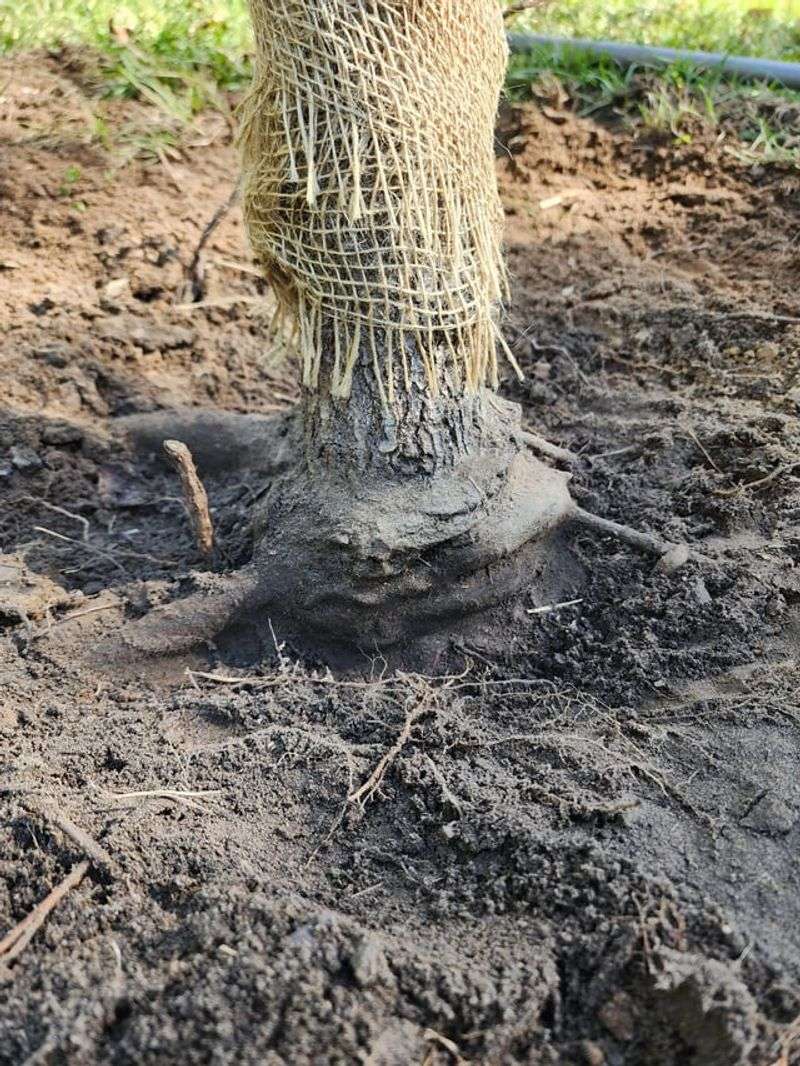
Look closely at the bottom of a healthy tree trunk. Notice how it widens just before it meets the ground, almost like a foot spreading out.
That widened part is called the root flare. It marks where the trunk ends and the roots begin.
Getting it right may be the single most helpful planting step you take.
The flare should sit at the soil surface or slightly above it. Burying it too deep starves roots of oxygen.
Roots need air as much as water.
A tree planted too low often struggles to settle in. Over time, soil and moisture against the trunk can also lead to decay.
Many sad-looking trees trace back to this one small mistake.
Here is a sneaky problem. Nursery pots sometimes have extra soil piled on top.
Gently brush away the top layer until you find the flare before you plant.
Next, dig a hole two to three times wider than the root ball but no deeper. Set the tree in and check the height.
Lay a shovel handle across the hole to see where ground level sits.
Finally, keep mulch from piling against the trunk. Picture a donut, not a volcano.
That small gap keeps the flare dry and breathing.
9. Give 2 To 3 Gallons Per Inch Of Trunk At Each Watering
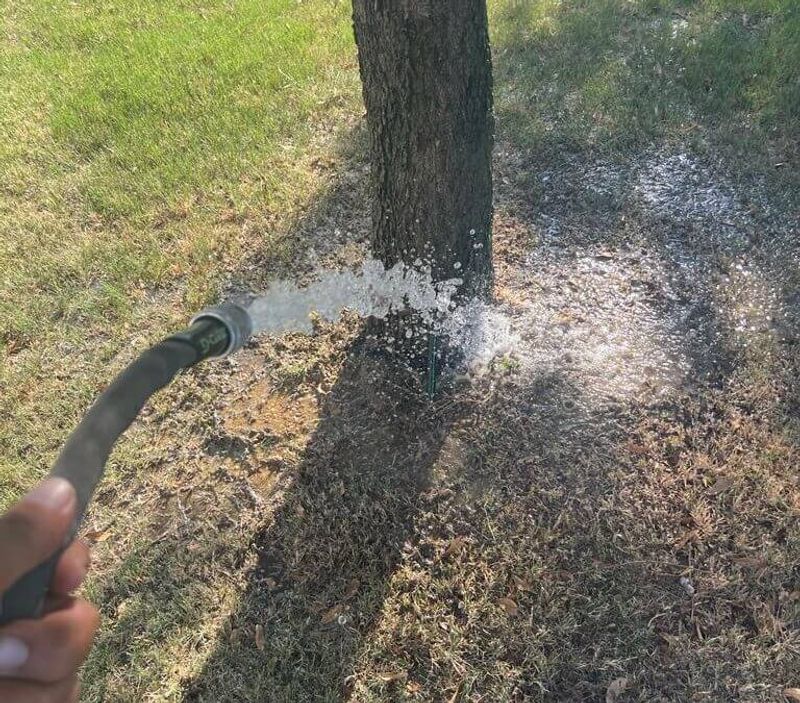
Watering a new tree is a bit like feeding a growing kid. Too little leaves it hungry, while too much can cause its own problems.
A simple rule helps a lot. Give about 2 to 3 gallons of water for each inch of trunk width at every watering.
A tree with a 2-inch trunk would get roughly 4 to 6 gallons.
Guidelines vary from source to source. Some experts suggest a little less, and others suggest more.
Sandy soil, rainfall, and heat all change what your tree needs.
So how do you measure trunk size? Check the diameter about six inches above the ground.
A ruler or tape measure works fine.
Pour slowly so water soaks in instead of running off. A five-gallon bucket with a few small holes drilled in the bottom makes a handy slow drip.
Aim the water right over the root ball.
For the first few weeks, water often, even daily in warm spells. Then slowly space out sessions over the following months.
Big trees from the nursery may need care for a year or longer.
Poke a finger into the soil before each watering. If it feels soggy, wait a day.
If it feels dry, grab that bucket.