Plant Grape Hyacinths In Georgia This November For Early Spring Color
Some flowers smell faintly like grape soda, and one of the earliest spring bloomers in the South does exactly that. I still grin every time I lean down and catch that sweet, fruity scent.
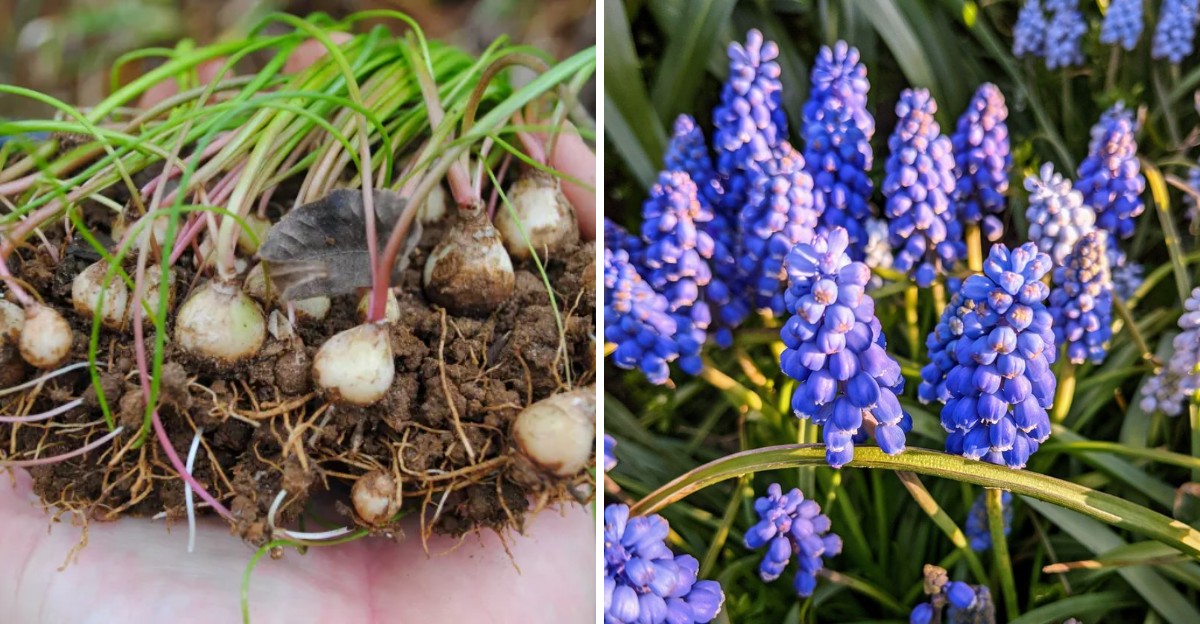
The blooms look like tiny bunches of upside-down grapes in rich cobalt blue. Each little bell is closed at the tip, almost like a bead on a string.
Bees often find them on the first warm days of late winter.
You need to plant them before winter settles in, and here in Georgia that window stays open longer than many gardeners expect. I love that the job takes one cool afternoon and a small trowel.
The bulbs are about the size of a marble. They cost very little and come back for years.
Why does one cool month matter so much for a flower that shows up months later?
1. Cool November Soil Sets Up Those Blue Grape Hyacinth Blooms
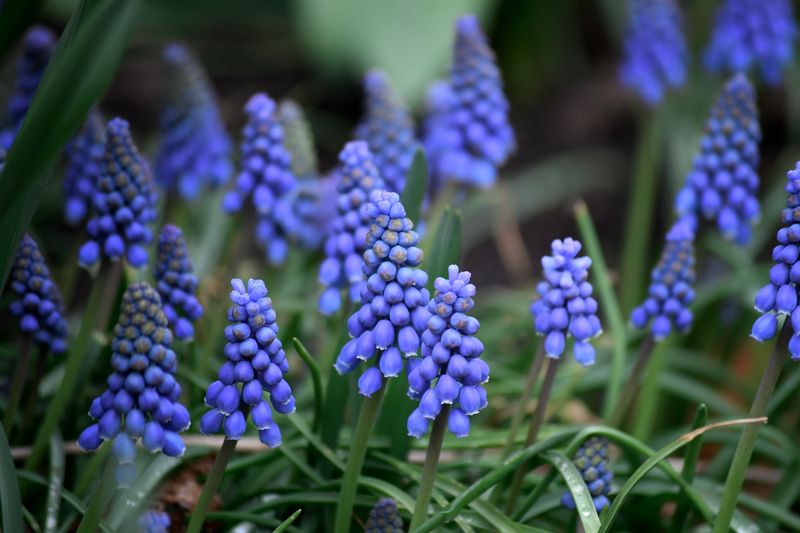
Timing is the quiet trick behind a great spring show. Grape hyacinths, known to botanists as Muscari, are spring bulbs that need a stretch of cool weather to bloom well.
In Georgia, soil temperatures usually drop into the right range in October and November. University of Georgia Extension generally suggests planting spring bulbs once the soil cools, and November fits that plan nicely across most of the state.
Cool soil lets the bulbs grow roots without rushing into heavy top growth. Those roots act like an anchor and a pantry.
They pull in water and nutrients all winter so the plant is ready to flower early.
Planting too early in a hot September can leave bulbs sitting in warm, damp ground. That can lead to rot or weak growth.
Waiting for steady fall chill gives them a much better start.
Gardeners in the North Georgia mountains can plant a bit earlier, often in October. In South Georgia and coastal areas, late November to early December still works well.
I like to check the weather and plant after the first run of chilly nights. A soil thermometer showing below 60 degrees is a handy clue.
2. Tuck Each Little Muscari Bulb About Three Inches Deep
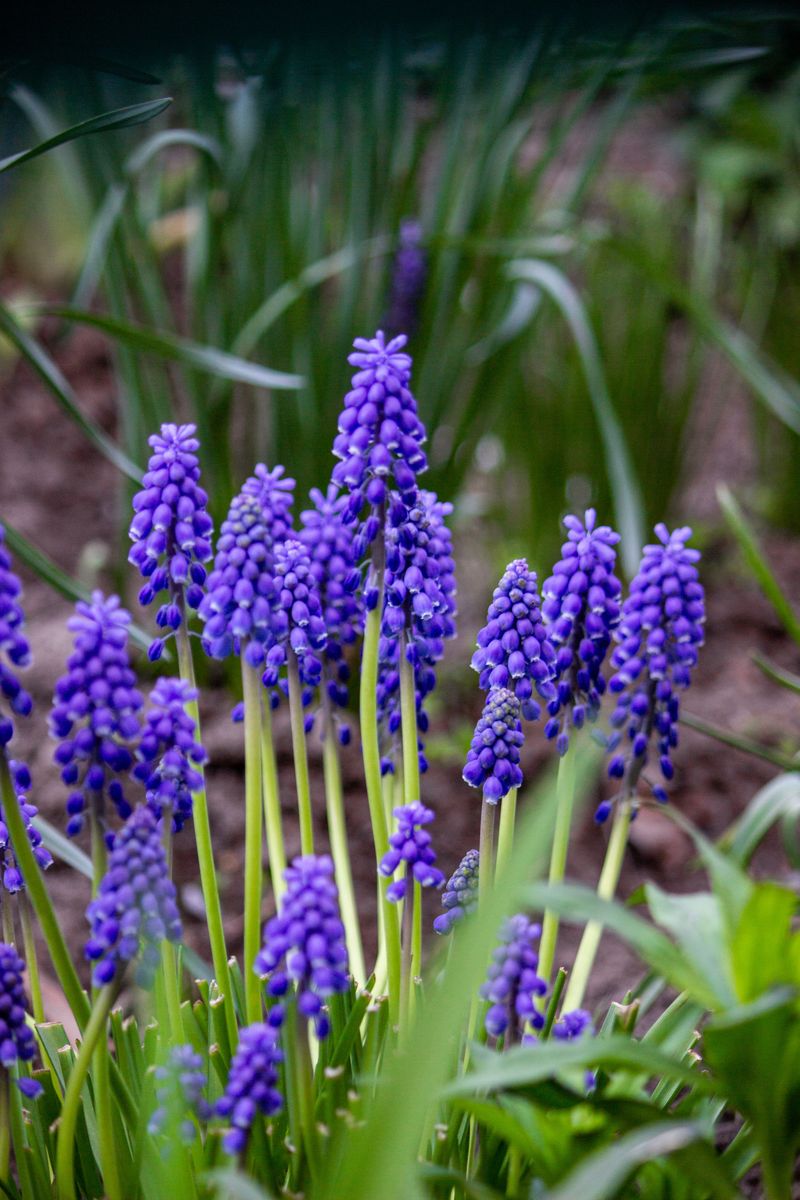
Planting these bulbs is about as easy as gardening gets. Grab a trowel, a bag of bulbs, and maybe a cup of hot cider.
Dig holes about 3 to 4 inches deep. A simple rule for bulbs is to plant them two to three times as deep as they are tall, and these small bulbs fit that guideline well.
Set each bulb pointy end up. If you cannot tell which end is which, look for the flat side with tiny root bits and place that side down.
Even a sideways bulb usually finds its way up.
Space them roughly 2 to 3 inches apart. Close spacing gives a fuller look in the first spring.
Planting in groups of 10 or more looks far better than single bulbs scattered alone.
Once they are in, cover them with soil and press it down gently with your hands. Then water the area well to settle soil around the bulbs.
After that first soaking, Georgia winter rain often handles most of the watering. Check the bed during dry spells, though.
A long dry stretch in December can still slow root growth.
3. Soggy Georgia Clay Is the Real Enemy of Grape Hyacinth Bulbs
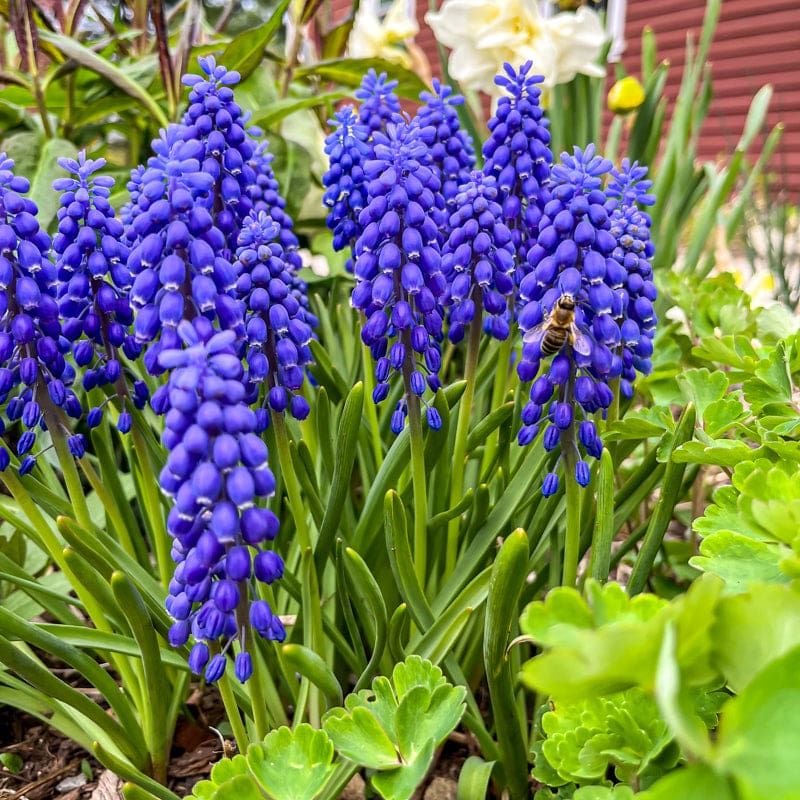
Red clay is practically a Georgia trademark. It holds nutrients well, but it can also hold water like a sponge after winter storms.
Grape hyacinths handle many soil types, including clay. What they dislike is sitting in water for days.
Bulbs in waterlogged ground often turn soft and rot before spring.
Watch your yard after a heavy rain. If puddles linger for hours in one spot, skip that spot for bulbs.
Slopes, raised beds, and the edges of borders often drain better.
Mixing compost into the top 8 to 10 inches of soil helps a lot. Compost loosens heavy clay, improves drainage, and feeds helpful soil life.
Sandy soils in South Georgia have the opposite issue. Water drains quickly, so compost there helps the soil hold onto moisture a bit longer.
A soil test from your county UGA Extension office is cheap and useful. It tells you the pH and nutrient levels, so you know what your bed truly needs.
Grape hyacinths are not fussy about pH. A slightly acidic to neutral range, common in many Georgia yards, suits them just fine.
4. Sunny Spots Under Bare Trees Make Grape Hyacinths Glow
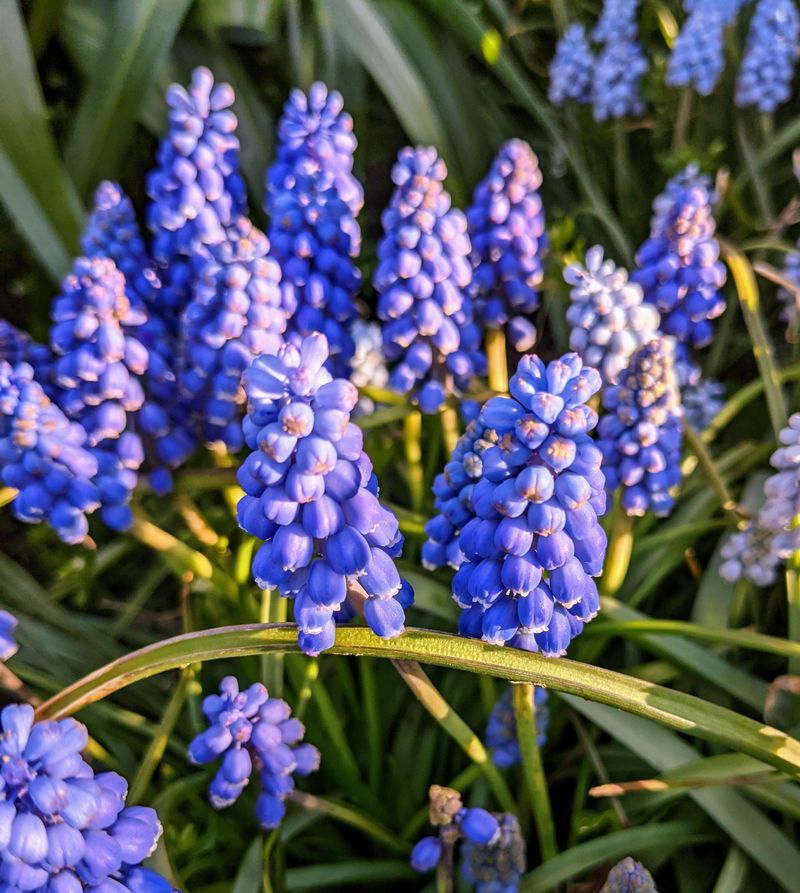
Sunshine is the fuel these little flowers run on. Full sun to light shade gives the strongest color and the most blooms.
One of my favorite tricks is planting them under deciduous trees like oaks, maples, or dogwoods. Those trees are still bare in late winter, so sunlight reaches the ground right when the bulbs need it.
By the time the tree leaves fill in, the grape hyacinths have finished blooming. Their foliage still has a few weeks to soak up light, and dappled shade is fine for that stage.
Deep, year-round shade is a different story. Under thick evergreens like magnolias or hollies, blooms often thin out over the years.
Try to give them at least six hours of sun during their growing season. A south-facing bed near a walkway or mailbox is a great choice.
Planting close to paths has another bonus. You can enjoy that grape-candy scent up close without stepping into wet beds.
Before you dig, watch how sun moves across your yard in late fall. Winter light can look very different from summer light in the same garden.
5. Those Grassy Grape Hyacinth Leaves in Fall Are Supposed to Be There
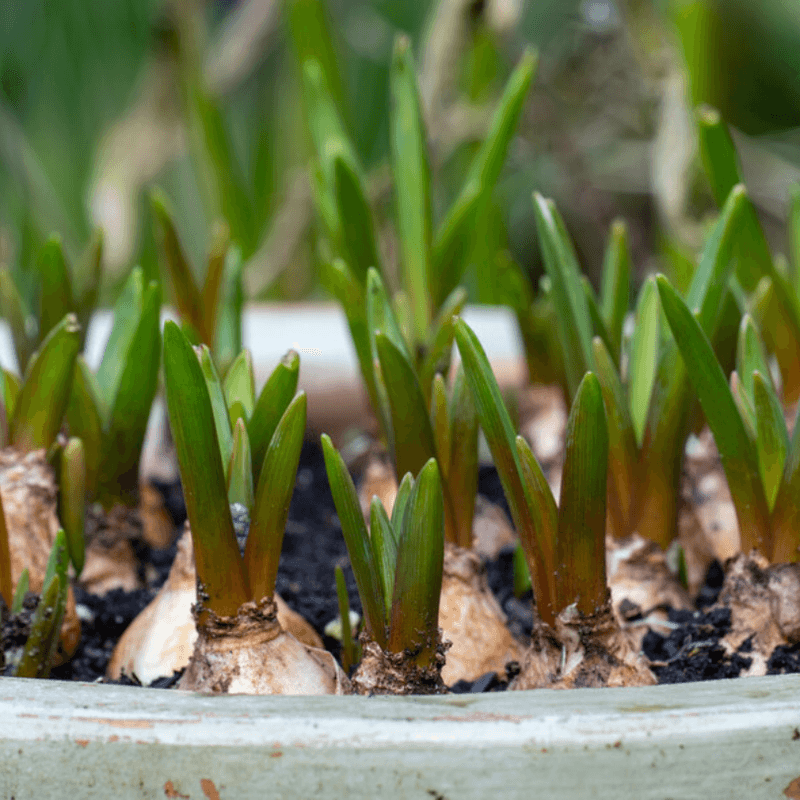
Plenty of new gardeners panic the first time this happens. You plant bulbs in November, and a few weeks later thin green leaves pop up.
Relax, nothing is wrong. Many grape hyacinths, especially the common Muscari armeniacum, send up grassy foliage in fall.
It is part of their normal cycle.
Those leaves help the plant gather energy through the cooler months. They are surprisingly tough and usually handle frost without much trouble.
Leaf tips may look a bit yellow or ragged after a hard freeze. That is mostly cosmetic.
The flower buds are tucked safely below and will appear in late winter or early spring.
In most of Georgia, blooms show up from late February into March. The northern mountains may see them a little later, often in March or early April.
Do not trim the fall leaves to tidy up. Cutting them early takes away part of the plant’s food supply.
If the grassy look bothers you, plant them among low groundcovers or behind pansies. The pansies add color through winter and hide the leaves nicely.
6. A Ribbon of Blue Muscari Along Your Walkway Steals the Show
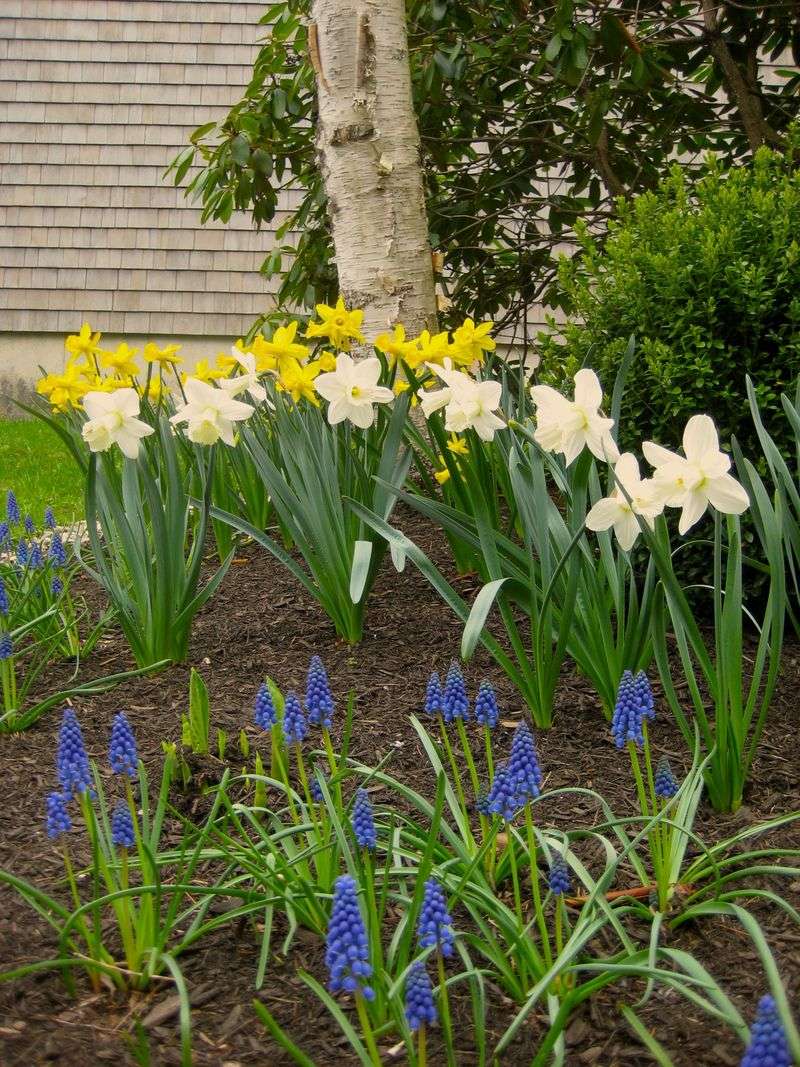
Small flowers can make a huge splash when they travel in crowds. A single grape hyacinth is cute, but a hundred of them look like a stream of blue water.
Gardeners often plant them in long, curving drifts to create a river effect. The famous Keukenhof gardens in the Netherlands made this look world famous, and it works in home yards too.
Edging a walkway is my favorite use. The plants stay short, usually 6 to 8 inches tall, so they never flop across the path.
They pair beautifully with yellow daffodils, which bloom around the same time in Georgia. Daffodils are also avoided by deer and squirrels, so the combo holds up well.
Rock gardens, container pots, and spots around mailboxes are other great choices. They even look charming tucked into the lawn edge.
Color choices go beyond blue, too. You can find white, pale sky blue, and two-tone types like Muscari latifolium.
Buy more bulbs than you think you need. They are inexpensive, and a generous drift makes the spring payoff much more dramatic.
7. Yellowing Grape Hyacinth Foliage Is Busy Recharging the Bulb
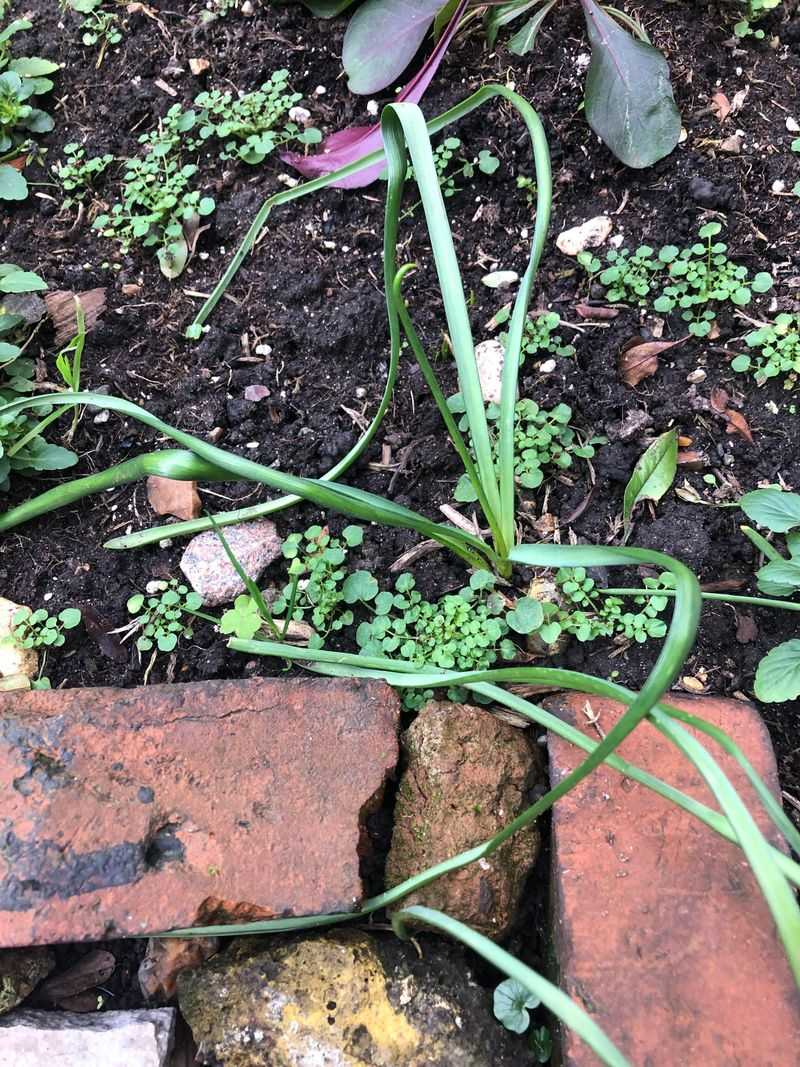
Patience after the party matters as much as the planting. Once the blooms fade in spring, the leaves keep working hard.
Those leaves collect sunlight and send energy down to the bulb. That stored energy becomes next year’s flowers.
Let the foliage turn yellow and flop over on its own before cutting it back. This usually takes about six weeks after blooming ends.
Snipping off faded flower stalks is fine if you want a neater look. It also keeps plants from spending energy on seeds.
Feeding needs are light. A thin layer of compost in fall or after blooming keeps soil healthy.
A balanced bulb fertilizer is optional and works best when guided by a soil test.
Water is rarely an issue during spring in Georgia. Once the plants go dormant in summer, they prefer drier conditions, so avoid planting them near heavily watered annual beds.
Mowing is another common slip. If they are planted along a lawn edge, hold off mowing those spots until the leaves fade, or the bulbs may weaken over time.
8. Crowded Grape Hyacinth Clumps Are Ready to Share
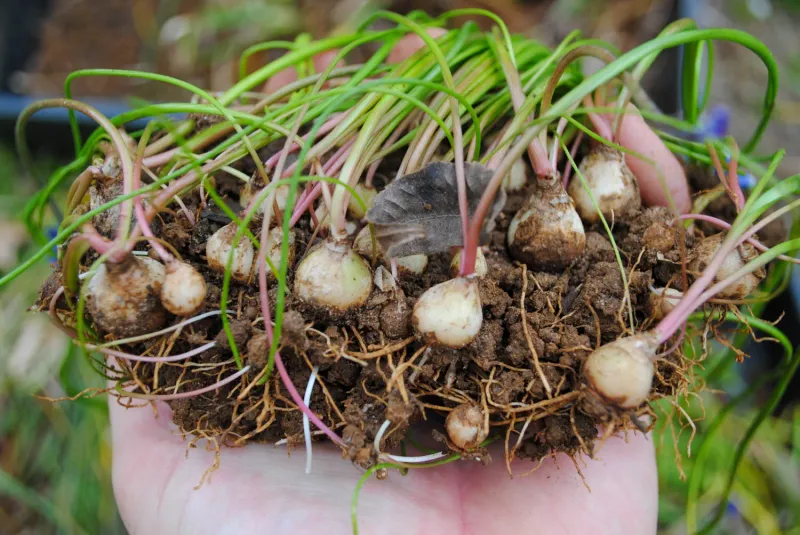
Few bulbs are as generous as this one. Each year, grape hyacinths make little offset bulbs, and many types also spread by seed.
Over time, a small group can turn into a thick clump. That spreading habit is a big part of their charm, though some gardeners find common types a bit too eager in tidy beds.
When blooms get sparse after several years, overcrowding is often the reason. Dividing the clumps every three to five years usually brings them back to full strength.
Late summer or early fall is a good time to dig them. Lift the clump with a garden fork, gently pull bulbs apart, and replant them at the same depth.
Extras make wonderful gifts for friends and neighbors. I like passing them along in paper bags with a note about planting time.
Squirrels and deer tend to leave these bulbs alone, which is a huge plus in many Georgia neighborhoods. The plant parts are mildly toxic, so keep pets from chewing them.
Plant a few dozen this November. By spring, you will wonder why you waited so long.