Plant These Florida Berry-Producing Shrubs If You Want Cardinals Visiting Without A Feeder
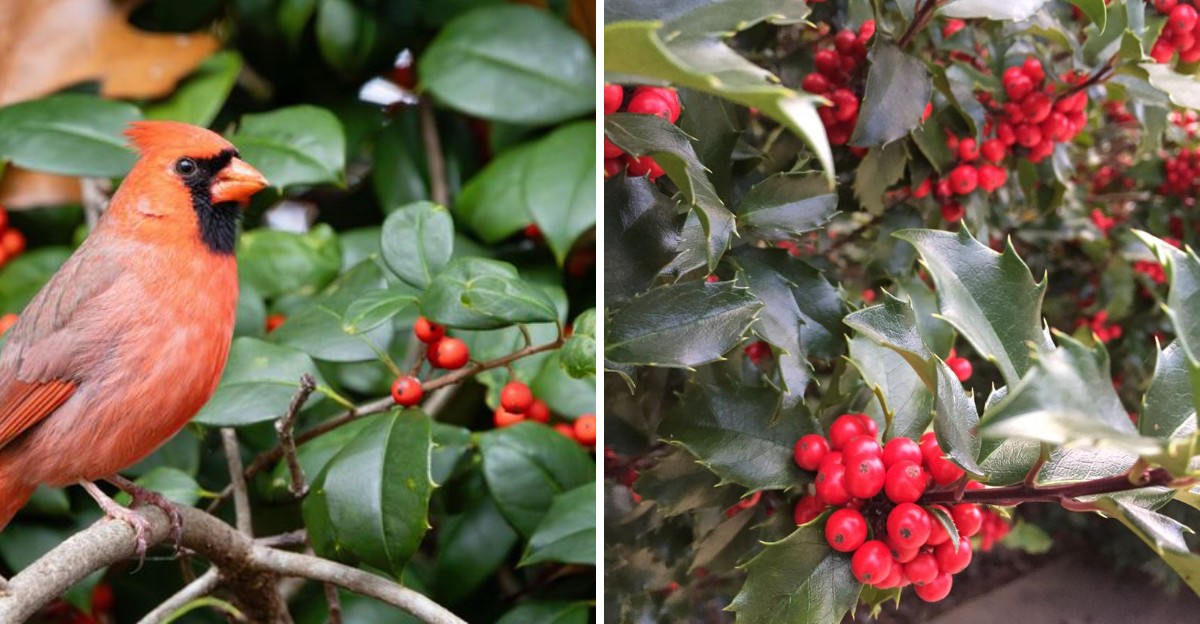
Ditch the feeder. A few Florida shrubs will do the job better, and cardinals won’t even notice the difference.
Certain berry producers pull these birds in on instinct alone, tapping into food sources cardinals already hunt for in the wild. Plant the right mix and the setup runs itself, no refilling, no forgetting, no empty feeder scaring off a regular visitor.
Cardinals are pickier than most people assume though. Some berries barely get a second look while others draw a crowd from yards away.
Choose shrubs built for this specifically instead of whatever happens to fruit. Skip the babysitting, let the yard do the work.
1. Beautyberry Brings Cardinals In For Purple Fall Berries
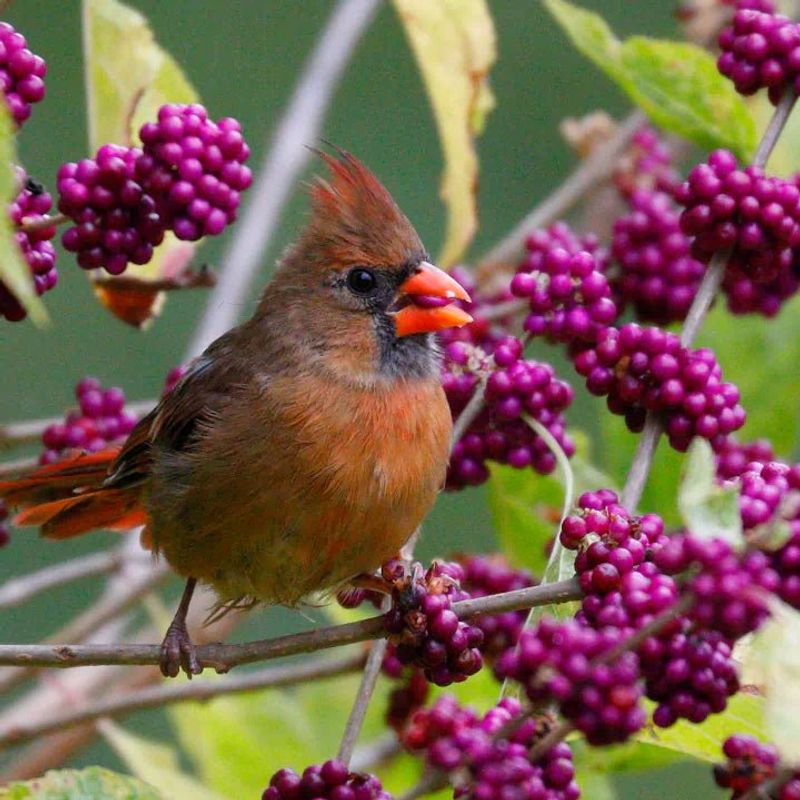
Nothing says fall in Florida quite like a shrub dripping with berries the color of grape soda. American beautyberry looks almost too flashy to be real, yet it grows wild across the state.
Its shiny purple fruits wrap around the stems in tight clusters. They show up in late summer and hang on through fall, often lasting into winter after the leaves drop.
Cardinals love these berries, and so do mockingbirds, finches, and woodpeckers. You may find a whole crowd of birds sharing one bush on a crisp morning.
In late spring and early summer, tiny lavender-pink or white flowers appear. Bees and butterflies flock to them, so the plant stays busy most of the year.
Beautyberry usually grows 3 to 9 feet tall. It works well along a fence, near a patio, or tucked under taller trees where it gets some shade.
Here is a helpful tip for new growers. Plant it where you can see it from a window, since the purple show is worth watching.
Because the shrub loses its leaves in winter, it can look bare for a while. Give it a light trim in late winter, and it will bounce back full and ready for another berry season.
Fun fact: some berries come in white instead of purple. Birds seem to enjoy both kinds just the same.
2. Yaupon Holly Offers Berries Through The Cooler Months
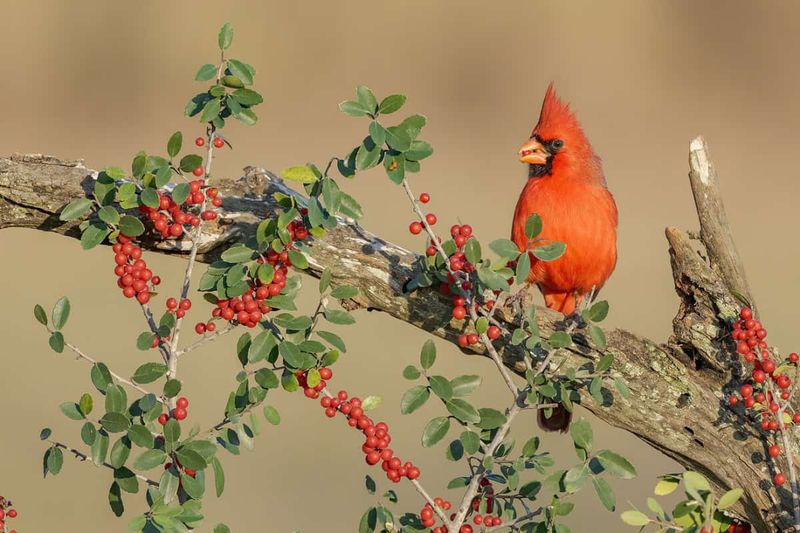
When the air turns chilly and most gardens look tired, yaupon holly keeps its party going. Its bright red berries glow against small green leaves all winter long.
Songbirds count on this holly when other food runs low. Cardinals are regular guests, hopping from branch to branch to pick the ripest berries.
Since yaupon is evergreen, it keeps its leaves all year. That means birds get a snack bar and a cozy hiding spot in the same plant.
Size is flexible, which makes it easy to fit into many yards. Left alone, it can reach up to 25 feet tall, but many people trim it into a hedge or a neat small tree.
There is one trick every gardener should know. Only female plants make berries, and they need a male plant nearby to help with pollination.
When shopping, ask the nursery for a female plant with berries already on it. Adding a male plant somewhere close, even in a neighbor’s yard, will keep the berry crop strong.
Your Florida Garden Changes Every Week. Your Plan Should Too.
Gardening in Florida changes quickly throughout the season. Every Friday you’ll receive a simple weekly plan showing exactly what to plant, prune, fertilize, harvest, and protect so you never miss the right timing.
Yaupon handles sandy soil, heat, and salty coastal breezes quite well. It is a tough plant that asks for very little once it settles in.
Did you know? Yaupon leaves contain caffeine, and Native Americans once brewed them into a tea.
Your cardinals will stick to the berries, though.
3. Marlberry Gives Cardinals Dark Fruits And Dense Cover
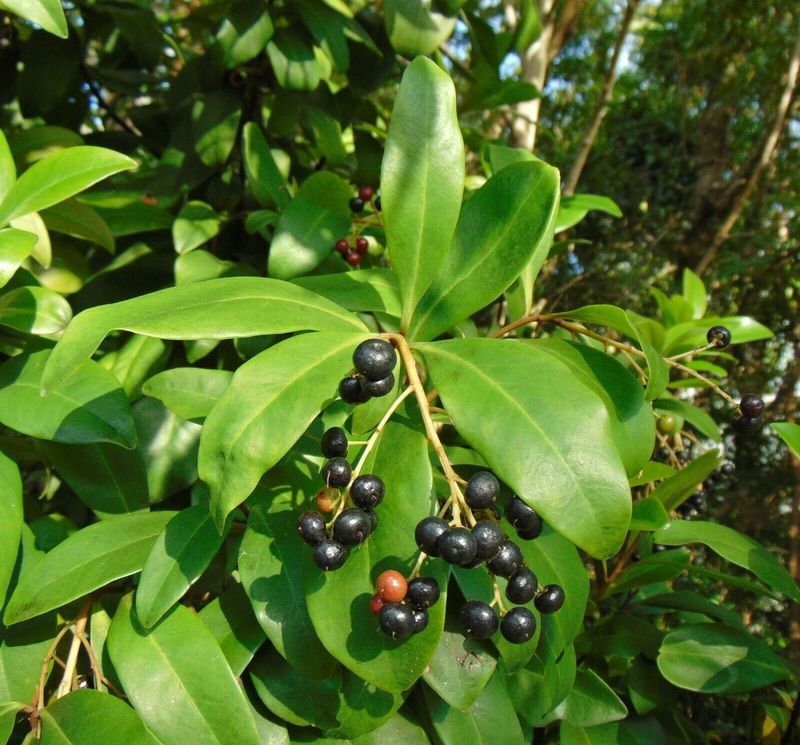
Tucked in the shady hammocks of central and south Florida, marlberry is a quiet star. It does not shout for attention, but birds know exactly where to find it.
Watching its berries ripen is like seeing a slow magic trick. They start white, shift to pale green, and finally turn deep purple or shiny black.
Marlberry can bloom and fruit on and off all year. The biggest show usually comes in fall, with berries lasting through late fall and winter.
Its clusters of small white flowers smell sweet and draw in pollinators. Once those blooms fade, the fruit follows, feeding many kinds of birds and small animals.
What really sets marlberry apart is its thick, leafy growth. Cardinals feel safe here, since the dense cover helps hide them from hawks and cats.
Plants usually grow 8 to 20 feet tall. You can let one grow into a small tree or keep a few trimmed as a privacy screen.
Marlberry does well in partial shade, which makes it great for spots under oaks. It is also evergreen, so your yard keeps its green look all year.
If you live farther north in Florida, check with a local nursery first. Frost can bother it, so it prefers warmer areas.
4. Simpson’s Stopper Adds Small Fruits And Shelter
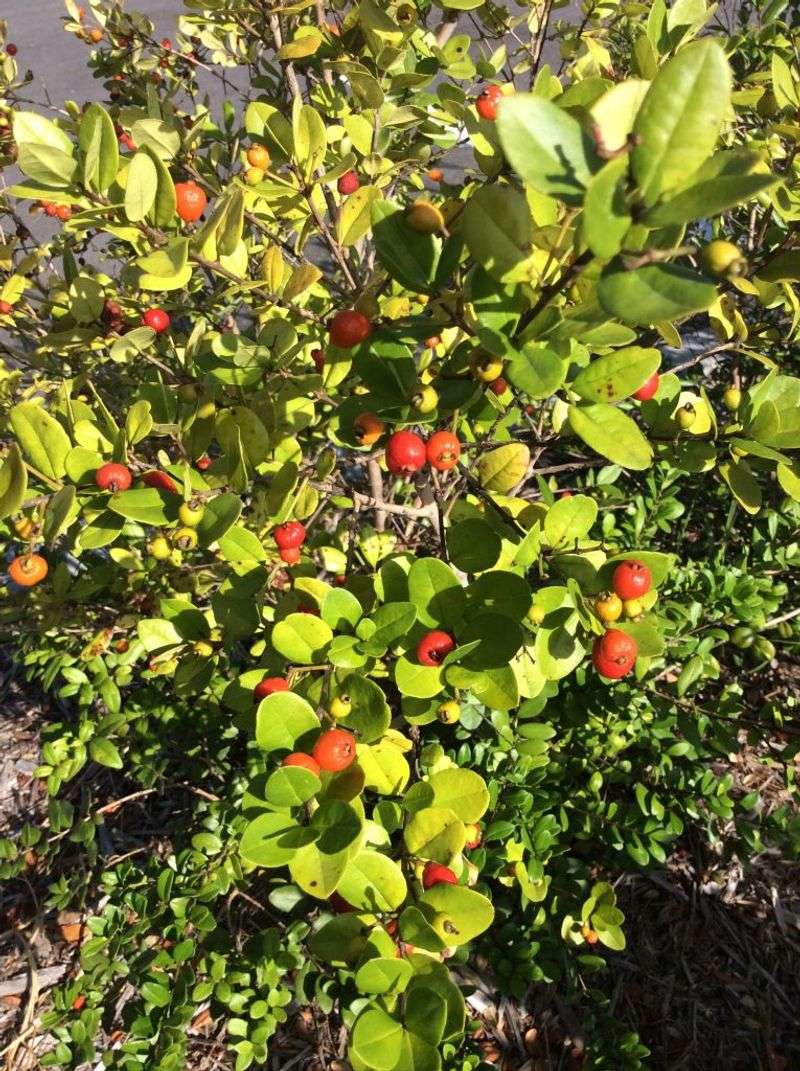
Rub a leaf of Simpson’s stopper between your fingers and take a sniff. You may catch a spicy scent like nutmeg or a hint of citrus.
That fun smell is just a bonus. The real treat for birds is the small, round fruit that turns bright orange to red.
First come fragrant white flowers that look like tiny fireworks. Blooms can pop up now and then all year, though spring is usually the busiest time.
Berries follow those flowers, showing up in cooler months or through summer. Cardinals, mockingbirds, blue jays, and buntings are all happy to grab a bite.
This evergreen plant has thick leaves that make a snug shelter. Birds use it for resting, hiding, and even building nests.
Simpson’s stopper grows about 5 to 20 feet tall. It trims nicely into a hedge, or you can let it grow as a small, bushy tree.
Another perk is how easygoing it is. Once it settles in, it handles Florida heat and dry spells well, and it rarely has serious pest trouble.
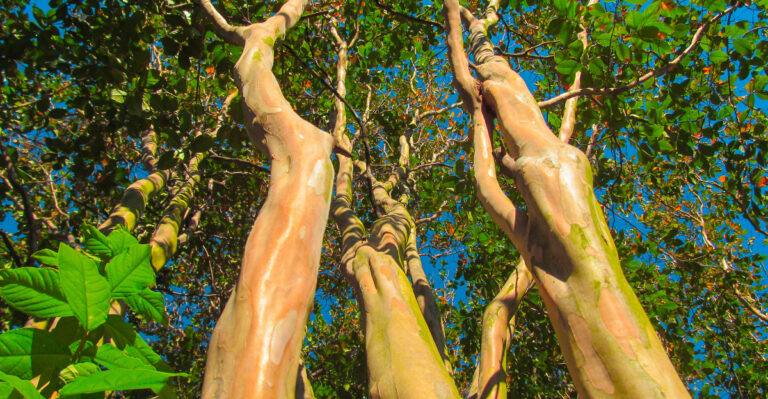
Many gardeners also enjoy its peeling, reddish bark on older trunks. It adds a nice touch of texture to the yard.
Plant one near a sitting area, and you get sweet smells for you and snacks for the birds.
5. Wax Myrtle Provides Berries And Year-Round Protection
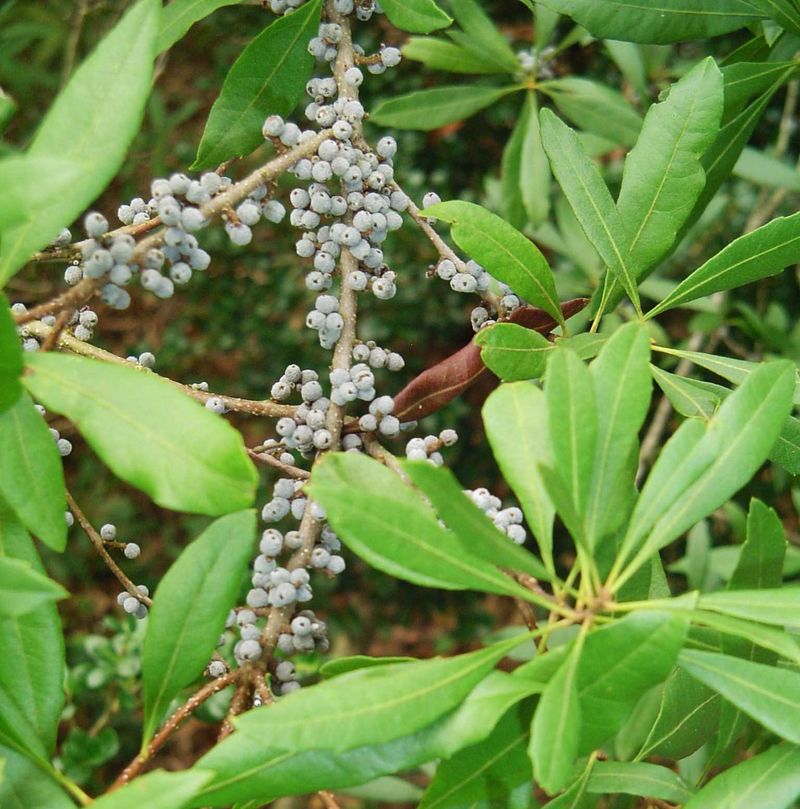
Over 40 kinds of birds eat wax myrtle berries. That is a pretty impressive guest list for one humble shrub.
Female plants grow clusters of small, grey-blue berries with a waxy coating. They ripen in fall and often stick around all winter, right when birds need extra fuel.
Yellow-rumped warblers, bluebirds, quail, and turkeys all enjoy the fruit. While cardinals snack elsewhere, they still benefit from the thick shelter this shrub provides.
Wax myrtle stays green all year. Its dense branches make a great spot for birds to hide from storms, cold winds, and hungry predators.
This plant grows fast, reaching 10 to 25 feet tall. If you need a quick privacy screen, it is one of the best choices around.
Like hollies, wax myrtle needs both male and female plants for berries. Planting a small group gives you the best chance of a good crop.
Crush a leaf, and you will smell a fresh, spicy scent. Early settlers used the waxy berries to make candles, which is how the plant earned its name.
Wax myrtle handles wet soil, dry soil, and salty air. Trim lower branches once in a while to keep it tidy, but leave plenty of thick growth for the birds.
6. Dahoon Holly Offers Bright Berries For Winter Birds
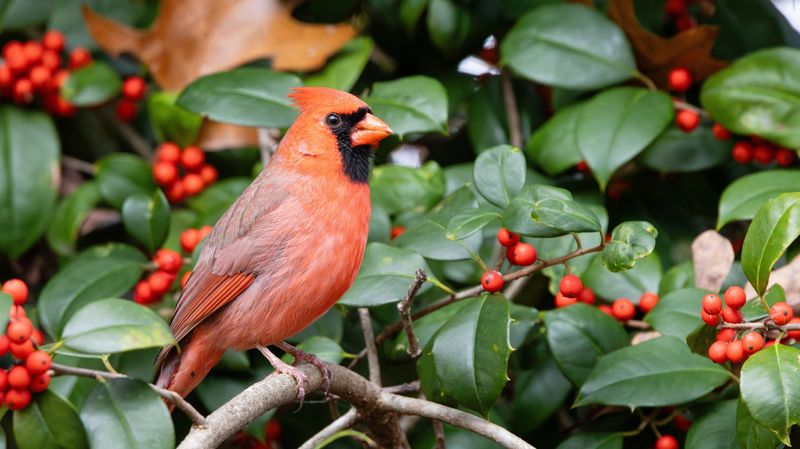
Imagine a tree decorated for the holidays without a single ornament from the store. Dahoon holly does the job all on its own.
Its bright red berries grow in thick clusters, though some trees make orange or yellow ones. They appear in fall and last through winter, sometimes lasting into spring.
Cardinals, mockingbirds, robins, and grackles show up to feast. On a cold morning, you might see several of them sharing the same branch.
Dahoon grows naturally in wet areas across Florida. That makes it a smart choice for yards with soggy spots or low areas that hold water after rain.
This holly can grow 30 to 40 feet tall over time. Give it room to spread, or pick a smaller variety if your yard is tight on space.
The thick, evergreen leaves offer birds a safe spot to nest and rest. Its smooth leaves are also easier to handle than spiny holly types.
Remember that you need male and female trees for berries. Only the females fruit, so buy plants that already show berries when you can.
Dahoon rarely needs much care once it is settled. Water it well during its first year, then let nature take over while you enjoy the red-feathered visitors.
7. American Holly Adds A Classic Berry-Rich Food Source
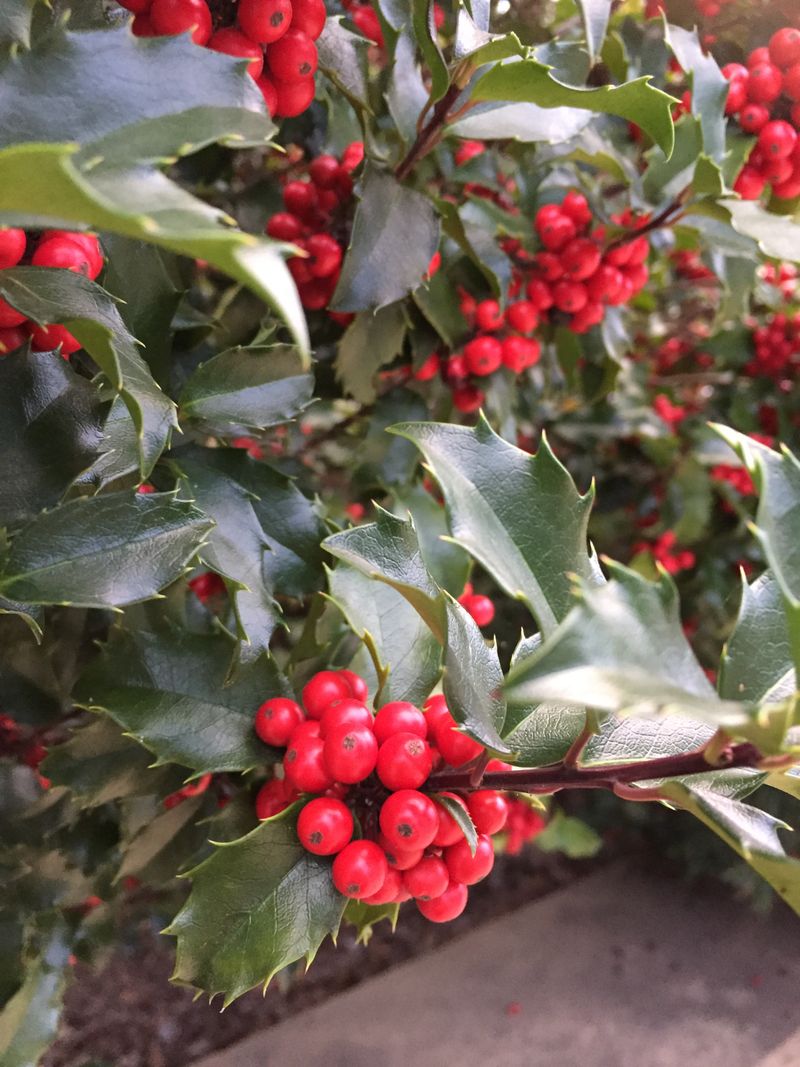
Long before holiday cards, American holly was already famous with the birds. Its glossy leaves and red berries have been feeding wildlife for ages.
The berries ripen in late fall and stay on the tree all winter. Cardinals, cedar waxwings, eastern bluebirds, and American robins all count it as a favorite stop.
Spiny leaves might poke your fingers, but birds see them as armor. Predators struggle to reach inside, so small birds feel safe hiding and nesting there.
This tree grows in a wide, full pyramid shape. Heights can range from 15 to 60 feet, so pick your planting spot with care.
American holly does best in north and central Florida. It likes well-drained soil and some sun, though it can handle light shade.
As with its holly cousins, only female trees produce berries. A male tree nearby is needed to help the female set fruit.
Growth is slow, which means patience pays off here. A young tree may take a few years before it starts making a big berry crop.
Once it matures, though, you get a strong, handsome tree for decades. Many families even snip a few branches for winter decor, leaving plenty behind for the cardinals.
8. Firebush Produces Fruits After Its Flowers Fade
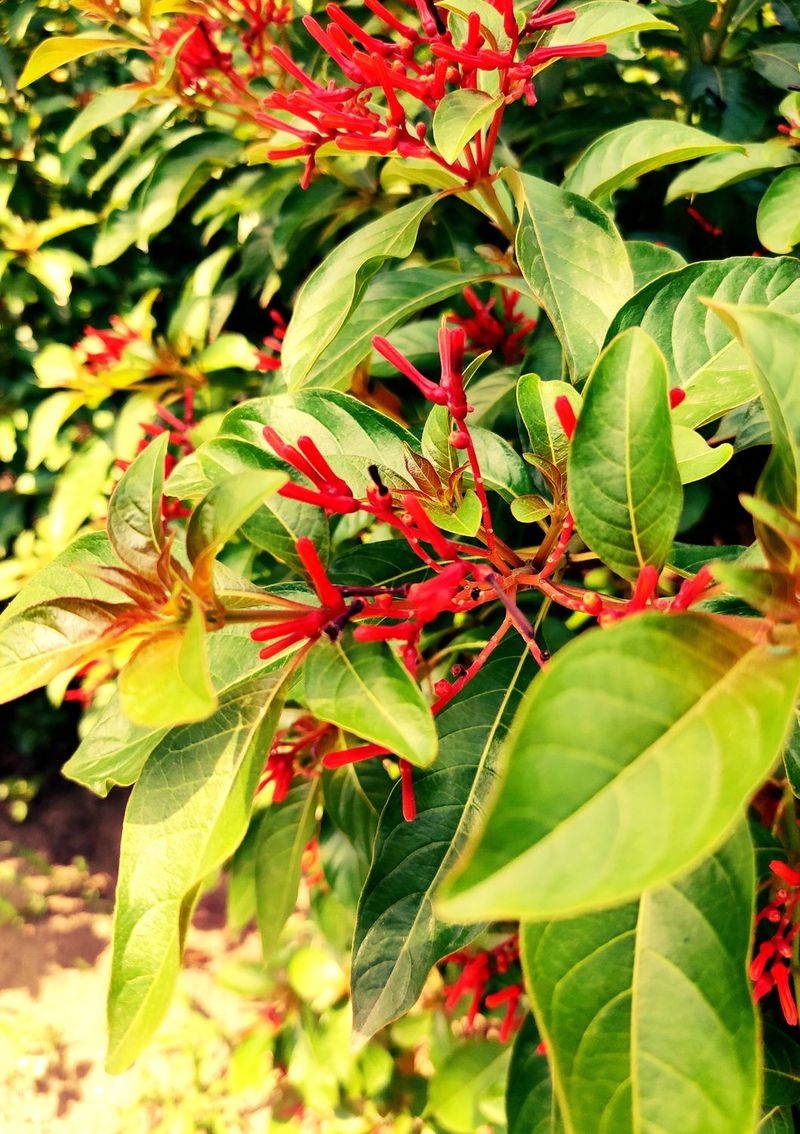
Hummingbirds get first dibs on firebush, but cardinals get the leftovers. And those leftovers are tasty little berries.
Firebush is famous for its tube-shaped, orange-red flowers. They bloom from late spring until the first hard freeze, and even all year in warm areas.
After the flowers fade, small berries take their place. They start green, turn red, and then ripen to a purplish-black color.
Cardinals have been spotted eating these fruits. Other birds and small animals enjoy them too, so nothing goes to waste.
This Florida native grows wild in the hammocks and forests of the central and southern parts of the state. It is fast-growing and hardy, reaching 5 to 15 feet tall.
Plant it in full sun for the most flowers and fruit. It can grow in partial shade, but the show will be a bit smaller.
A cold snap may knock it back in north Florida. Usually it sprouts again from the roots once warm weather returns.
Butterflies also adore firebush, making it a true garden multitasker. You get color, pollinators, and bird food from one easy plant.
Tip: skip heavy pruning in summer. Let the flowers turn into fruit so the birds get their reward.
9. Plant Several Berrying Shrubs For A Better Bird Buffet
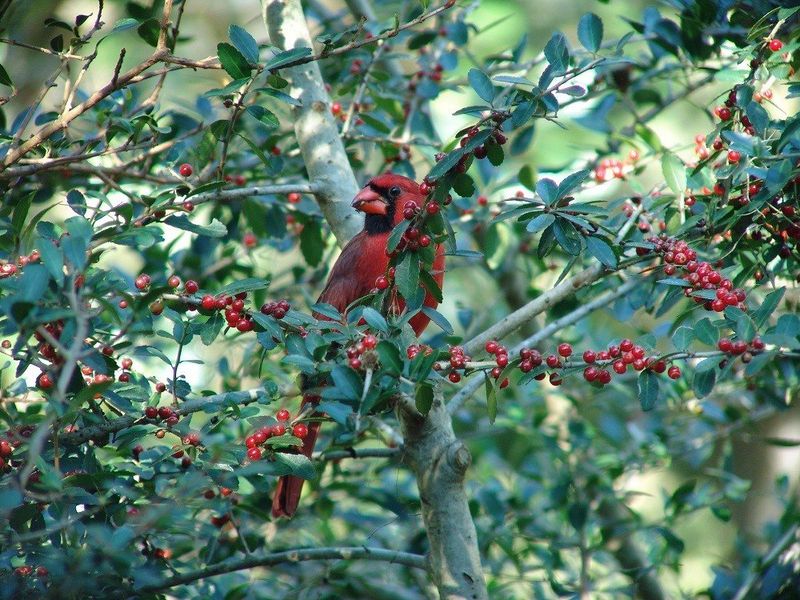
Think about your favorite restaurant. You probably go back because the menu has something good every time you visit.
Birds think the same way. Planting a mix of berry shrubs means food shows up in different seasons, not just for a few weeks.
For example, beautyberry peaks in fall, while hollies carry berries through winter. Firebush and Simpson’s stopper can fill in warmer months, keeping the buffet open.
Variety also gives birds more places to hide and nest. Tall hollies, thick wax myrtles, and bushy stoppers each offer a different kind of shelter.
Try planting in layers, with taller trees in back and smaller shrubs up front. This setup looks natural and gives birds easy paths to move between plants.
Mixing plants can also boost your overall berry crop. If one shrub has a slow year, another may pick up the slack.
Start small if your budget is tight. Two or three types are a great beginning, and you can add more each year.
Remember to keep a birdbath or shallow dish of water nearby. Fresh water pairs well with berries and brings even more visitors.
Soon enough, your yard may become the busiest bird spot on the block, no feeder required.