Why Cardinal Pairs Stick Together Through Florida Winters, And What It Means For Your Yard
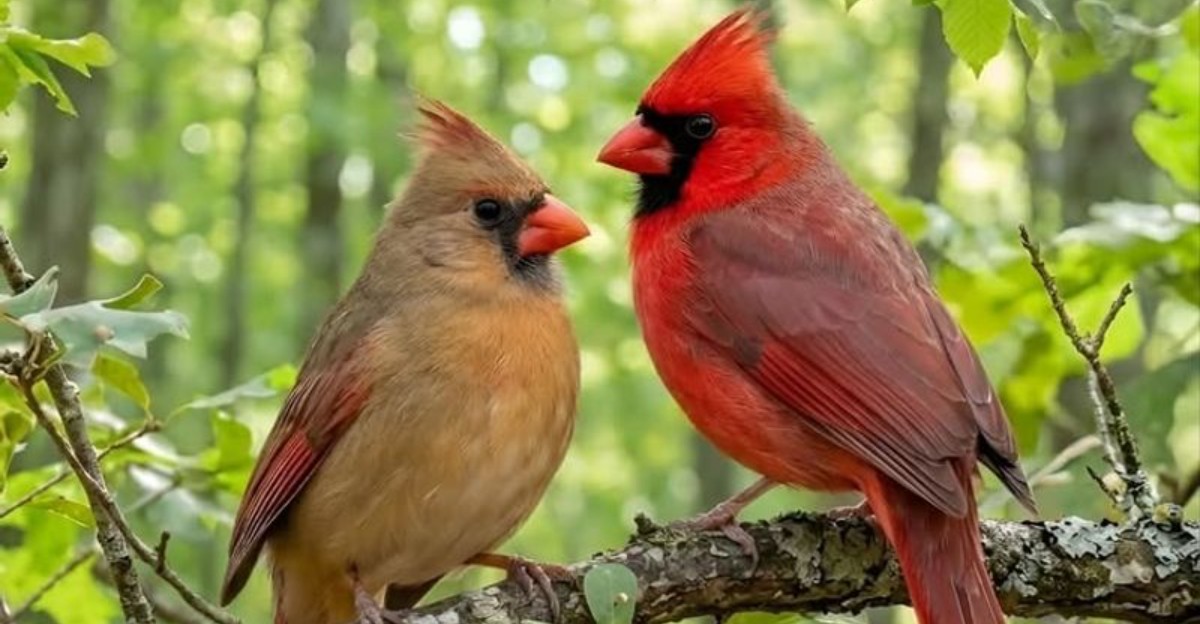
Breakups are common in the bird world. Cardinals skipped that chapter.
Come winter in Florida, most songbirds split up and go solo, scattering to whichever feeder offers the best deal. A male and female cardinal do the opposite.
They stay close from the first cold front to the last. They share the same shrubs, the same seed, and the same grudges.
Scientists have a theory for the habit, and it’s more practical than romantic. Your yard plays a bigger part in the story than you’d guess, since that pair picked it for reasons worth knowing.
Consider that cheerful couple outside your window a message in red and brown. Read it right and you might keep them around for years.
1. Cardinals Stay In Florida Year-Round
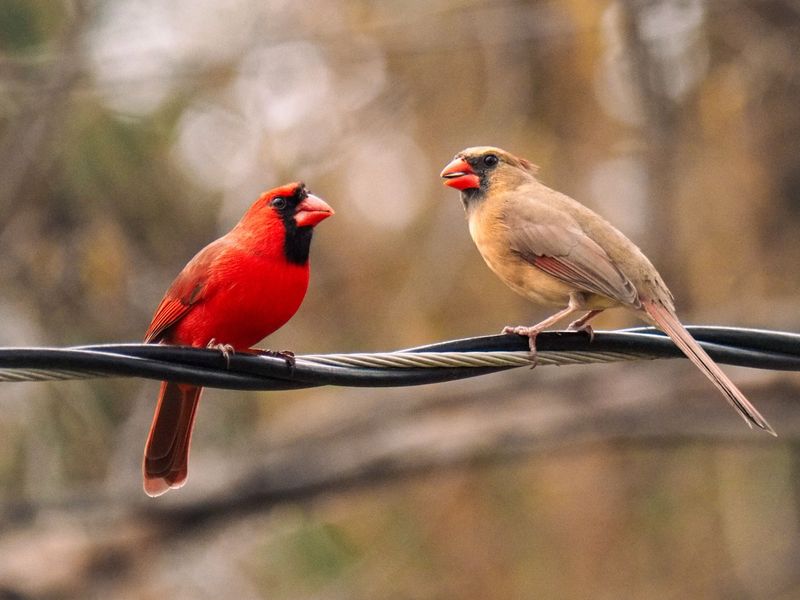
Snowbirds pack their bags every fall, but the bright red bird at your feeder is not going anywhere. Northern Cardinals are permanent residents across the state, so the same faces can greet you in July and January.
Florida even has its own subspecies, known as Cardinalis cardinalis floridanus. It lives across most of the state and tends to look a touch darker and richer in color than its northern cousins.
Staying put has a big benefit for pairs. Since nobody flies off for the winter, mates do not have to find each other again after a long trip.
Here is a fun twist for folks in the Panhandle. Cardinal numbers in northwest region can seem to rise in winter, so your yard may feel busier when the weather cools.
For you, a year-round bird means a year-round guest. Your yard can serve as a steady home base rather than a quick rest stop on a long journey.
Think about what your space offers in every season, not only spring. Fresh water, seeds, and thick greenery matter just as much on a chilly February morning as they do in May.
Start a simple notebook or phone note to track your visitors. Over a few months, you may notice the same pair arriving at nearly the same times each day.
2. Most Pairs Stay Close To Home Through Winter
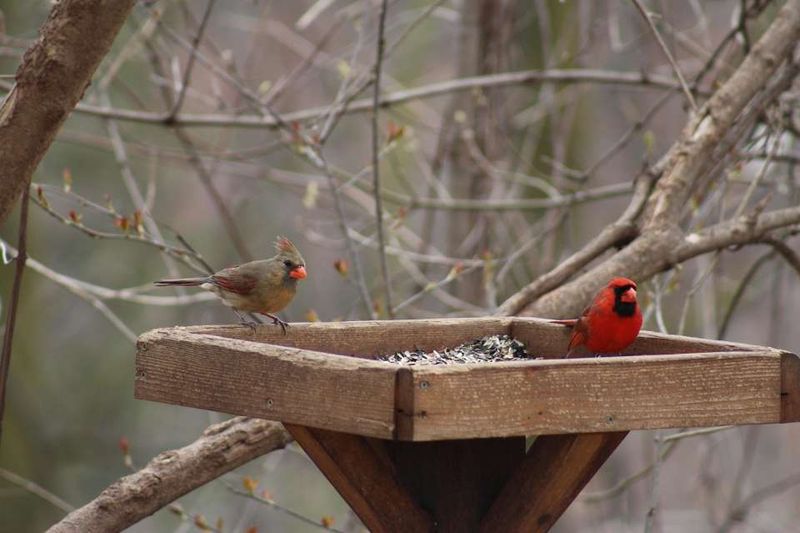
Imagine owning a cozy house and deciding to just stay in when it gets chilly. That is pretty much the cardinal plan for a Florida winter.
These birds are non-migratory and often remain in or near the territory they defended in spring. A pair that raised chicks in your hedge last summer may still be hanging around the same block today.
Winter does soften their attitude, though. Males that chased away rivals in April tend to relax once breeding season ends.
Even so, the couple usually keeps a familiar patch of ground. Knowing every bush, branch, and hiding spot helps them find food fast and dodge hawks or neighborhood cats.
What does this mean for your yard? If your space is part of their home range, small choices you make now can shape where they nest later.
Try to avoid heavy pruning of thick shrubs during the cooler months. Those tangled branches are their winter shelter, and trimming them bare can push the pair to look elsewhere.
Your Florida Garden Changes Every Week. Your Plan Should Too.
Gardening in Florida changes quickly throughout the season. Every Friday you’ll receive a simple weekly plan showing exactly what to plant, prune, fertilize, harvest, and protect so you never miss the right timing.
Keep feeders and water in the same spots instead of moving them around. Cardinals like routine, and a reliable setup tells them your yard is a safe, steady place to stay.
A quiet corner with a brush pile can help, too. Stacked branches give the pair one more place to duck out of the wind.
3. Many Pairs Stay Together For Multiple Seasons
Love songs talk about forever, and cardinals sometimes come close. Scientists call them socially monogamous, which means a male and female team up and share the work of raising a family.
Some partnerships last a single breeding season. Others stretch across several years, and a lucky few stay together for as long as both birds are around.
A long bond gives the pair a real edge. Partners that already know each other can skip the dating phase and get to nest building sooner in spring.
They also seem to learn each other’s habits. One bird may keep watch while the other eats, a kind of teamwork that grows smoother with practice.
For backyard watchers, this is where things get fun. If you see the same pair year after year, you might be looking at a true long-term couple.
Look for little clues to tell them apart. A male with a slightly ragged crest or a female with an extra-bright beak can help you recognize your regulars.
Give a long-term pair what they need, and they may reward you with seasons of visits. Steady food, safe cover, and clean water form a strong base for any feathered partnership.
Some families even name their regular couple, which makes spotting them extra special. Kids especially love checking in on a pair they know by name.
4. Singing Back And Forth Helps Strengthen The Bond
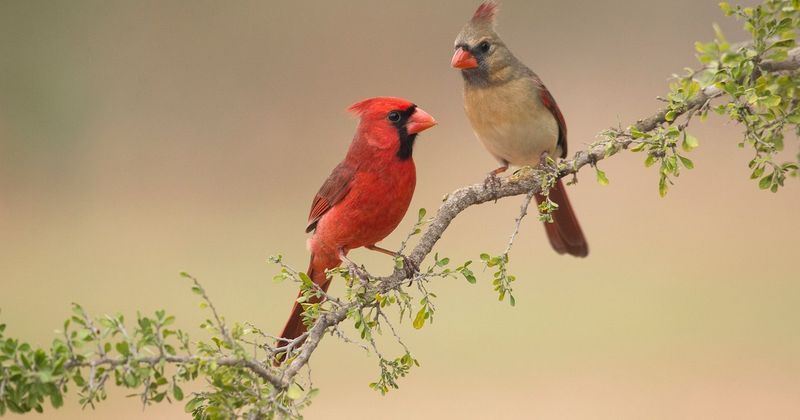
Step outside on a mild winter morning and you might hear a sweet whistle, followed by a matching reply. That back-and-forth is a cardinal duet, and it is one of the coolest things these birds do.
Here is a fun fact. In many North American songbirds, only males sing, but female cardinals sing too, and often.
Males use song to claim territory and attract a mate. Females sing to talk with their partner, sometimes even from the nest, possibly to say they are hungry.
When a pair trades phrases, they are staying in touch and coordinating plans. Researchers believe these duets help strengthen the bond between mates.
Singing peaks from spring into early summer. Still, cardinals sing through much of the year, including on calm, sunny winter days in Florida.
Want to tune in? Spend ten quiet minutes in your yard just after sunrise, when birds tend to be most chatty.
Listen for clear, repeated phrases like cheer, cheer, cheer or a whistled birdie, birdie, birdie. If you hear one bird answer another from across the yard, you have likely found a pair.
A free bird song app can help you match what you hear. Before long, you may recognize your local couple by voice alone.
Try to keep loud yard tools quiet in the early morning. Your birds, and your neighbors, will thank you.
5. Watch For The Male Feeding Seeds To The Female
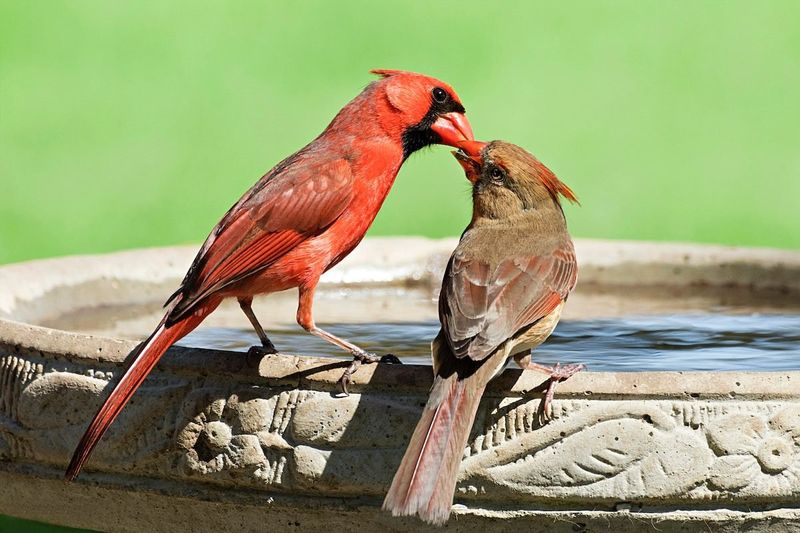
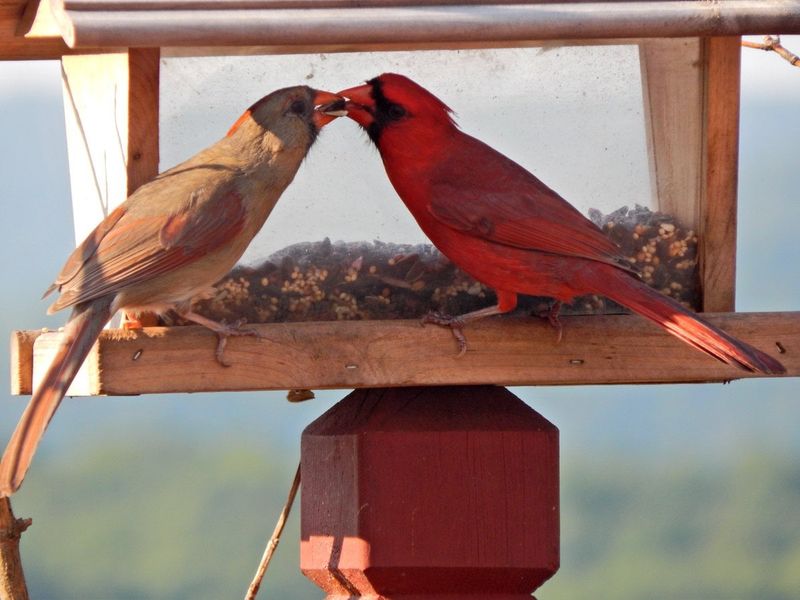
It looks like a tiny kiss, and honestly, it is pretty adorable. A male cardinal hops over with a seed and places it right into the female’s beak.
Bird experts call this courtship feeding. It shows the female that her mate is a good provider, and it helps strengthen their bond.
The behavior becomes more common as breeding season nears. It also continues while she lays eggs and sits on the nest, helping her keep up her strength.
In Florida, you may spot it as early as late winter. Our warm weather gives cardinals a head start compared with birds up north.
Ready to catch the moment yourself? Set up a feeder within view of a window, and keep a pair of binoculars nearby.
Watch for the male cracking a seed, then turning toward the female instead of eating it. She may flutter her wings or lean forward like a hungry chick asking for a snack.
A flat platform feeder or a wide tray makes this easier to see. Cardinals are a bit bulky and prefer room to perch rather than a narrow tube with tiny ports.
Snap a photo if you can, but stay still and quiet. A sudden movement can break up the date before it even starts.
Morning light is great for photos. Position yourself so the sun is behind you for the best colors.
6. Not Every Pair Lasts Forever
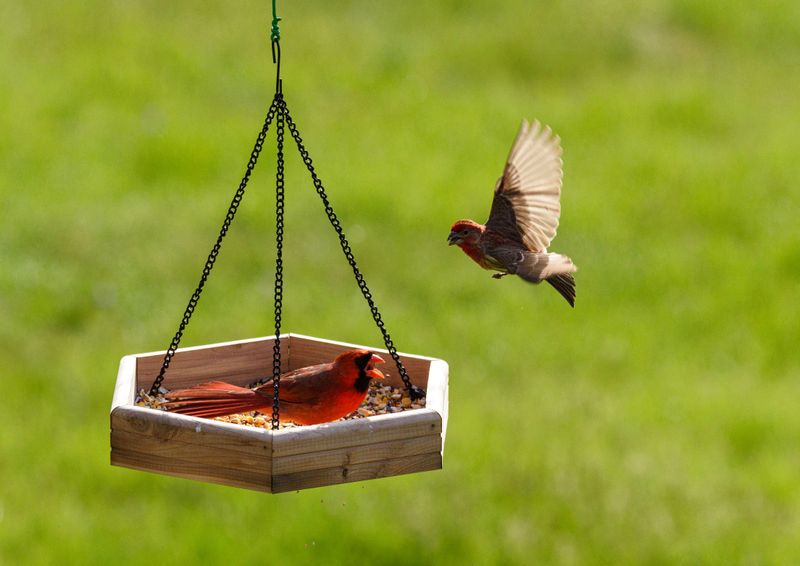
Real talk: bird romance has its messy side, just like a reality TV show. Cardinals form strong bonds, yet those bonds are not a lifetime guarantee.
Studies suggest that around 20 percent of pairs split up between seasons. Breakups seem more likely after a nest fails, as if the pair decides to try again with someone new.
DNA testing has turned up another surprise. In some populations, between 9 and 35 percent of nestlings were fathered by a male other than the female’s partner.
Sometimes a mate simply goes missing, too. When that happens, the remaining bird usually finds a new partner fairly quickly.
So if your regular couple seems to change, do not worry. It is a normal part of cardinal life, and it does not mean your yard did anything wrong.
Still, you can help pairs succeed. Nest failure often comes from predators, so keep cats indoors and place feeders away from spots where they can hide and pounce.
Avoid trimming shrubs during nesting season, which in Florida can begin in early spring. A disturbed nest is one of the quickest ways to send a couple searching for a fresh start.
Healthy habitat gives every pair, old or new, a better shot. A happy nest this year may help keep the same couple together next year.
7. Some Join Winter Flocks But Stay Near Their Mates
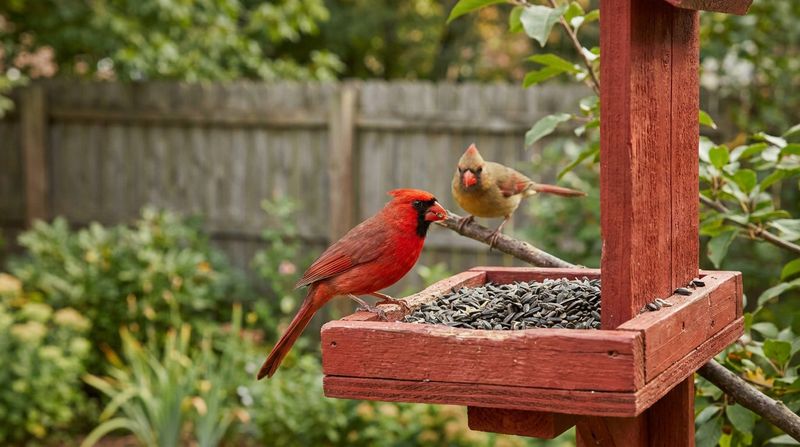
Picture a busy school cafeteria where kids from different classes share a table. Cardinal winter flocks work a bit like that.
Once breeding season ends, cardinals relax their territory rules. They may join mixed groups with Tufted Titmice, White-throated Sparrows, American Goldfinches, and other small birds.
Traveling in a group makes finding food easier when supplies run low. More eyes also mean someone is likely to spot a hawk before it strikes.
Here is the sweet part. Even inside these busy flocks, pairs often stick together, or they reunite on their home turf later.
Watch a winter feeder closely and you may see it in action. A male and female might arrive with a crowd yet stay a few feet from each other the whole time.
To welcome these mixed groups, offer a variety of foods. Ground feeders enjoy scattered seed, while titmice and goldfinches like hanging feeders.
Spread feeding stations around the yard instead of crowding them together. This cuts down on squabbles and gives shy birds like cardinals space to eat in peace.
Keep a field guide by the window during cooler months. You might discover that your cardinal couple has brought along a whole crew of interesting neighbors.
Counting species can be a fun family game. See who can name the most visitors before breakfast.
8. Dense Shrubs Give Pairs Cover And Future Nest Sites
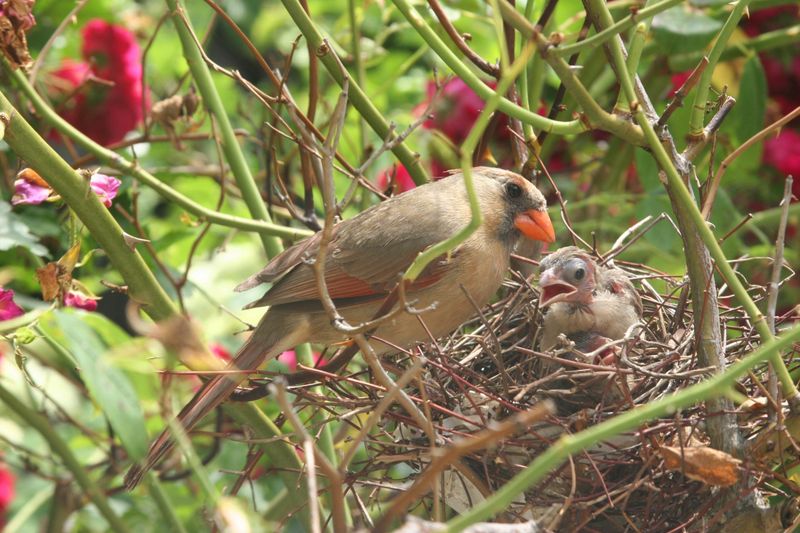
If cardinals had a dream home listing, it would read, thick bushes, great privacy, snacks included. These birds love dense, tangled greenery more than almost anything else.
In the wild, they live along forest edges, overgrown fields, and hedgerows. In neighborhoods, a backyard full of layered shrubs can offer the very same comfort.
Thick cover protects a pair from hawks, wind, and chilly nights. It also gives them a place to scout nest sites long before spring arrives.
Cardinals build cup-shaped nests in the forks of small branches. They usually pick spots about 1 to 15 feet off the ground, right at shrub height.
For Florida yards, native plants are a smart pick. Firebush, beautyberry, wax myrtle, Walter’s viburnum, and Simpson’s stopper all offer cover along with berries or seeds.
Plant in clusters rather than single shrubs dotted around the lawn. A group of bushes creates a hidden hallway where birds can move safely.
Let some areas grow a little wild instead of trimming everything into neat shapes. Cardinals tend to prefer a natural, slightly messy look over tidy boxes.
Fall and winter are great planting seasons in much of the state. Shrubs you add now may become next spring’s nursery.
Wild grape vines on a fence can also help. They add extra tangles and a sweet fruit treat.
9. Sunflower Seeds Help Keep Them Coming Back
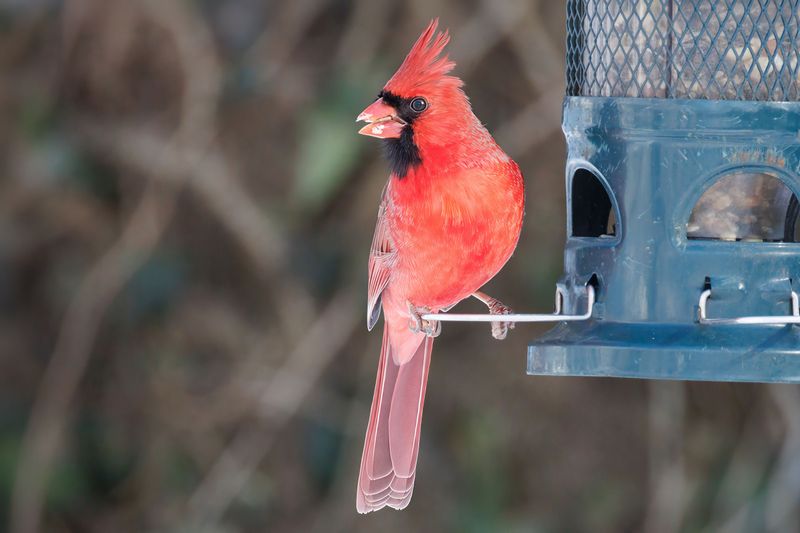
Ask any longtime bird lover for the secret to cardinal visits, and you will likely hear one answer. Black oil sunflower seeds top the list.
Cardinals mostly eat seeds and fruit. Their thick, cone-shaped beaks act like built-in nutcrackers, perfect for popping open shells.
Black oil sunflower seeds have thin shells and lots of fat inside. That makes them easy to crack and full of energy for cooler days.
Safflower seeds are another winner. Many squirrels and grackles dislike them, so more of the feast goes to your red friends.
Cardinals also enjoy peanuts, cracked corn, and suet. Suet gives an extra boost on the rare chilly Florida night.
Placement matters as much as the menu. Put feeders about 10 feet from dense shrubs, close enough for a quick escape but far enough to limit ambush spots.
Cardinals often feed early in the morning and again near dusk. Fill feeders the evening before so breakfast is ready when the pair shows up.
Clean feeders every couple of weeks with warm, soapy water. Moldy seed can make birds sick, especially in humid Florida weather.
A steady snack bar paired with good cover makes your yard hard to resist. Keep it up, and your favorite couple may stick around for many seasons.