Plant This Bulb Near Georgia Walkways Now For Fragrance Next Spring
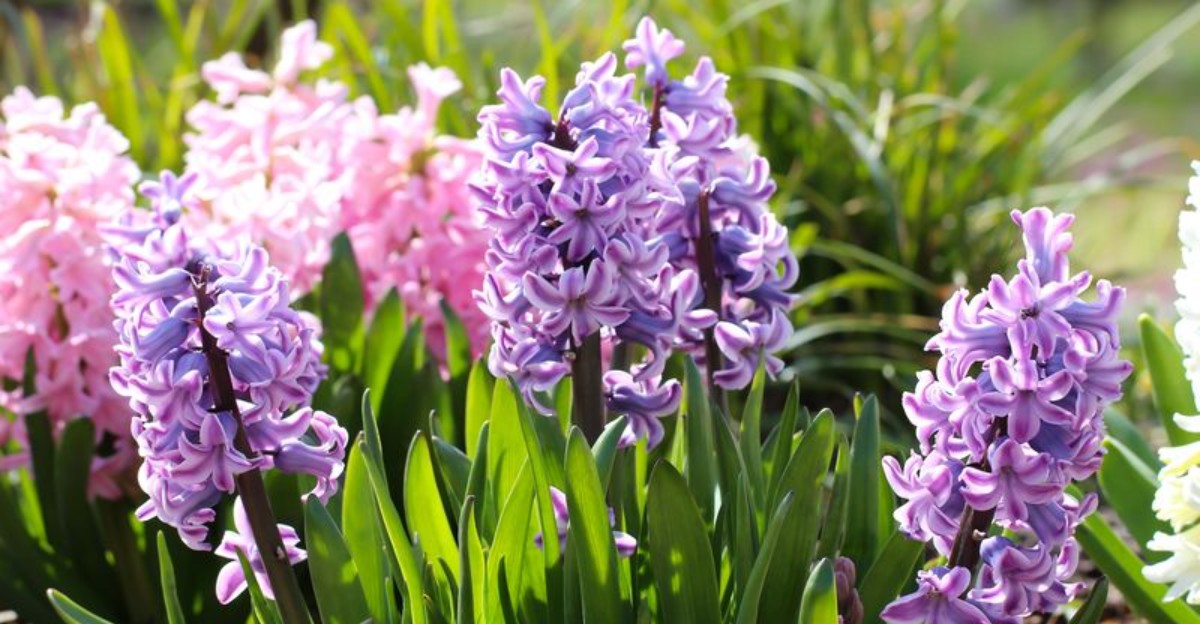
A bare spot beside your walkway can become more inviting next spring when the right bulbs are tucked into the soil this fall.
Fragrant hyacinths are worth considering when you want flowers that greet you near a path. Many varieties can return for years with proper care.
Fall gives the bulbs the cool period they need before spring growth begins.
In Georgia, choose a well-drained planting spot that receives enough light while the bulbs are actively growing. Keep them away from areas where water collects.
Planting near a walkway also lets you enjoy the fragrance without needing a large flower bed.
Choose a fragrant variety rather than assuming every hyacinth smells equally strong. With thoughtful placement now, those bulbs can bring color and fragrance close to your daily path next spring.
1. One Spring Bulb Makes Its Presence Known Before You Pass By
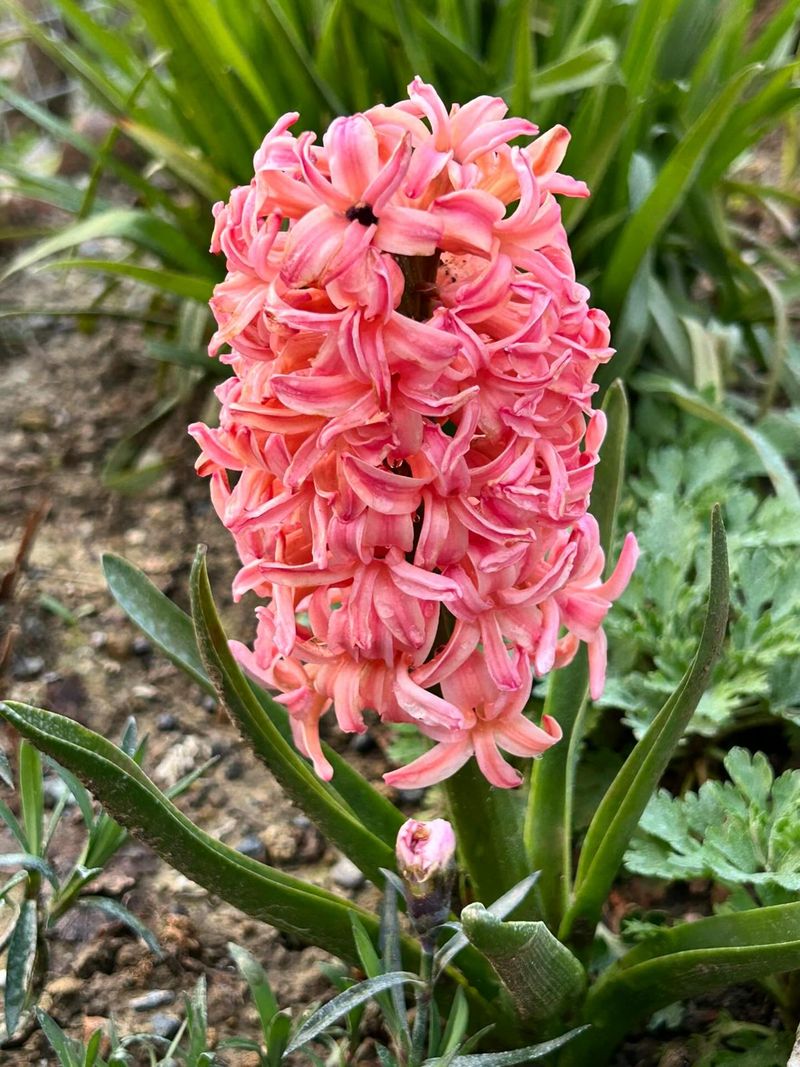
Hyacinth is the bulb that tends to announce itself first. On a still spring morning, its sweet scent can drift a few feet beyond the flower bed.
Each plant sends up a thick stalk packed with small, star-shaped flowers in shades of purple, pink, blue, white, or soft yellow.
Gardeners in Georgia often plant them for that fragrance more than for their looks. A small cluster near a path can scent the air around it, especially on warm days with little wind.
How strong the smell seems will depend on the variety, the weather, and how many bulbs you plant together.
Classic Dutch hyacinths are the ones you will see most often in stores each fall. Their blooms are dense and upright, which makes them easy to spot from the porch or driveway.
Expect them to flower sometime in early to mid spring, though timing shifts with each year’s temperatures.
Hyacinths in warm climates often bloom best in their first spring. Later years may bring smaller, looser flower spikes, so some gardeners treat them as short-term plants and add fresh bulbs every fall.
Handle the bulbs with gloves if your skin is sensitive, since the papery outer layer can cause itching for some people.
2. Fall Planting Gives The Bulbs The Cold Period They Need
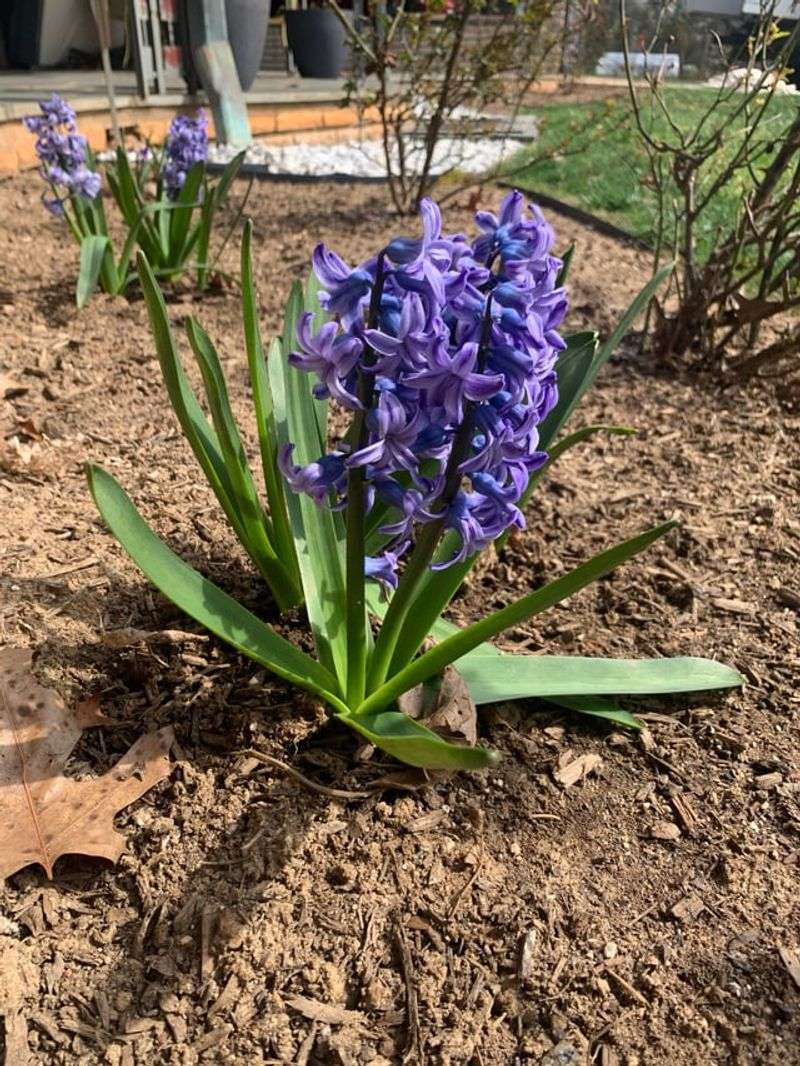
Cold weather does real work for a hyacinth bulb. Weeks of chilly soil help trigger the growth that leads to spring flowers.
Without enough chill, blooms may come up short, uneven, or sometimes not at all.
In north Georgia, planting from late October through November usually lines up well with cooling soil. Gardeners farther south may want to wait until late November or even December, once the ground feels cool to the touch.
A handy guide is soil temperature, which should ideally sit below about 60 degrees at planting depth.
Winters in the southern half of the state can be too mild for good results. Pre-chilling helps here, and it simply means storing bulbs in a paper bag in the refrigerator for around 8 to 12 weeks before planting.
Keep chilled bulbs away from apples and other ripening fruit, since the gas fruit gives off can harm the flower buds inside.
Your Georgia Garden Changes Every Week. Your Plan Should Too.
Gardening in Georgia changes quickly throughout the season. Every Friday you’ll receive a simple weekly plan showing exactly what to plant, prune, fertilize, harvest, and protect so you never miss the right timing.
Some bulbs sold in stores are labeled as pre-chilled already. Check the package, or ask at the garden center, so you do not chill them twice.
Once they are in the ground, roots begin forming during the cool months while very little shows above the soil.
3. Choose A Sunny Spot Where Water Drains Away Easily
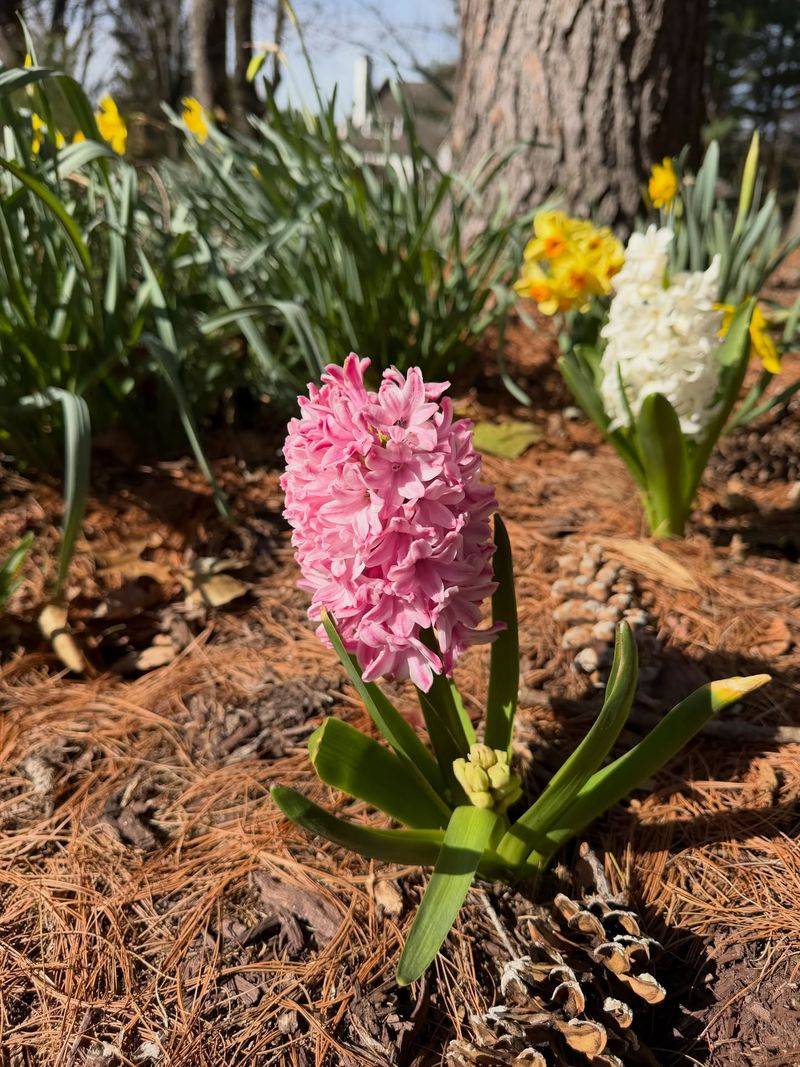
Soggy soil is the quickest way to lose a hyacinth bulb. Water that sits around it for days can lead to rot before spring ever arrives.
Red clay is common across Georgia, and it holds moisture longer than sandy or loamy soil.
Before you plant, try a simple test by digging a hole about a foot deep and filling it with water. If it takes hours to drain, the spot likely needs some help.
Mixing in compost or finely shredded pine bark can loosen heavy ground and improve drainage over time.
Raised beds and slightly mounded rows are other good options. Both lift the bulbs above the wettest layer of soil.
Sunlight matters too, since hyacinths tend to flower best with at least six hours of direct sun.
Spots under deciduous trees can still work, because the branches stay bare through much of late winter and early spring. Evergreen shade from pines or magnolias is a different story and may lead to weaker blooms.
Watch where rain runs off your roof or driveway after a storm, and avoid placing bulbs in those low, puddly areas.
4. Plant Bulbs With The Pointed End Facing Up
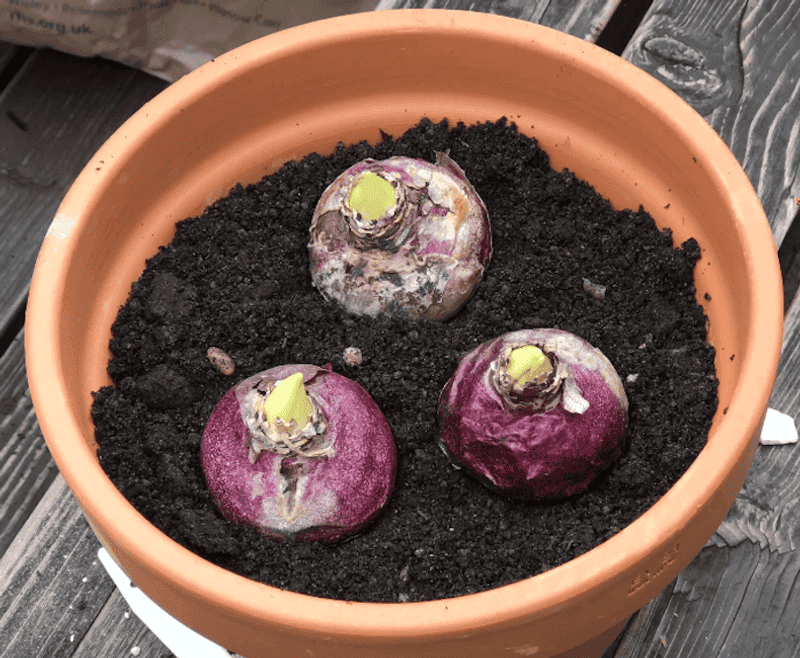
Picture a small onion with a tip on one end and a flat, rough base on the other. That shape tells you exactly how a hyacinth bulb should sit in the ground.
Roots grow from the flat bottom, so place that side down and let the pointed tip face the sky.
Dig each hole about six to eight inches deep, measured from the base of the bulb. Hyacinths are fairly large, so going too shallow can leave the flower stalks floppy.
Spacing them about four to six inches apart gives each plant room while still creating a full look.
Sometimes it is hard to tell which end is which. If you truly cannot decide, set the bulb on its side and let the stem find its own way up, though it may take a little longer to emerge.
Group them in clusters of five or more for a stronger visual effect and a richer scent.
Fill the holes back in with loose soil and press gently with your hands. You want good contact around the bulb without packing the ground hard.
Placing a few small markers nearby can keep you from digging into the spot by accident this winter.
5. Walkway Edges Put Spring Fragrance Close To Passing Gardeners
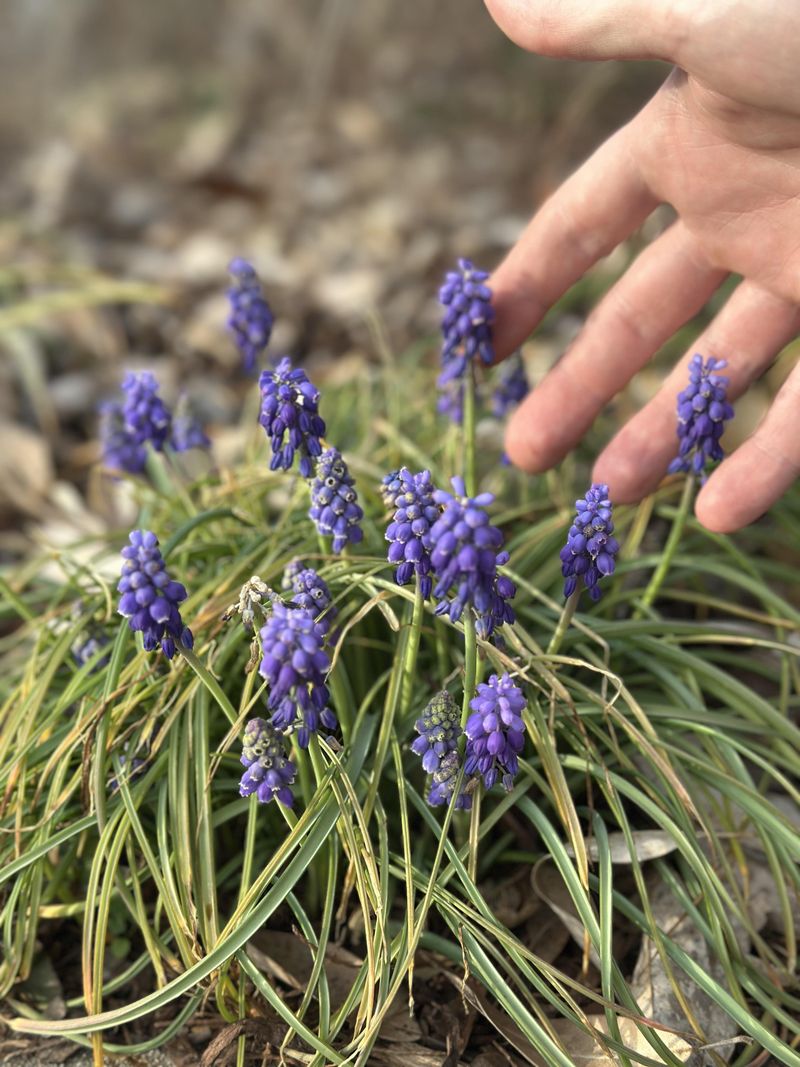
Smell is a close-range sense, and that is exactly why placement matters so much. A hyacinth tucked in a back corner may go mostly unnoticed.
Along a front walk, mailbox path, or porch step, you pass by often enough to catch the scent nearly every day.
Try planting them about a foot from the edge of the path. That distance keeps the blooms close to your nose while giving them room so feet and wheels do not crush the foliage.
Spring breezes in Georgia can carry the fragrance a short way, especially on warm afternoons.
Pairing hyacinths with low groundcovers or pansies can fill the bed through the cooler months. Pansies are planted in fall too, so you can tackle both jobs on the same weekend.
Keep in mind that hyacinths are toxic if eaten, so think about curious pets or small children who play near the walkway.
Some people find the scent strong in tight spaces like a narrow entry. If that worries you, plant a smaller group first and add more next year once you know how you like it.
A curved path lined with clusters often looks more natural than one long, straight row.
6. Water After Planting To Settle The Soil Around The Bulbs
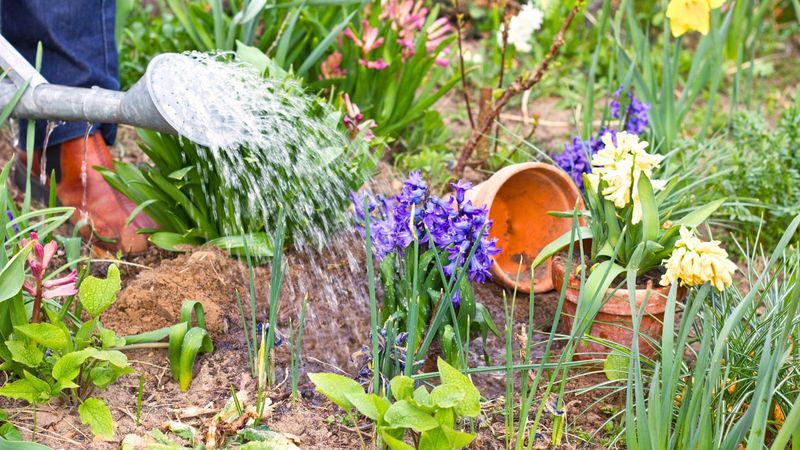
Fresh soil hides air pockets you cannot see. A good soaking right after planting helps fill those gaps and settle the ground around each bulb.
Soak the bed slowly so the water moves down to the bulbs rather than running off the surface.
After that first drink, ease off. Bulbs need moisture to start forming roots, but too much water over winter can cause trouble, especially in clay.
Fall rain in Georgia often handles most of the work, though dry spells do happen.
Check by pushing a finger a couple of inches into the soil. If it feels dry for a week or more without rain, a light watering is reasonable.
Spreading two to three inches of pine straw or shredded mulch over the bed can hold steady moisture and temperature.
Mulch also keeps soil from splashing onto the walkway during heavy storms. Pull it back slightly in late winter if shoots seem to be struggling to push through.
As leaves appear in spring, keep the soil lightly moist, particularly if the weather turns warm and dry while buds are forming.
7. Leave Foliage In Place After Blooming Until It Fades Naturally
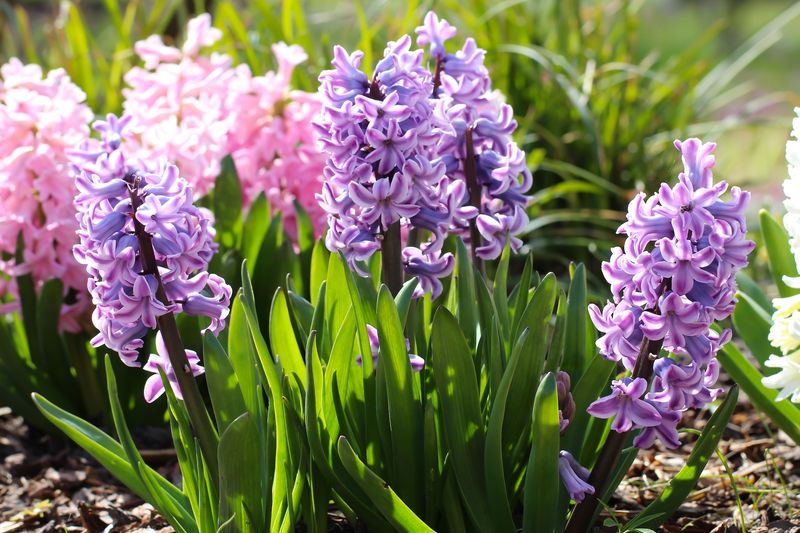
Floppy green leaves can look messy once the flowers are gone. Even so, those leaves are busy making food the bulb stores for next year.
Cutting them too early can leave the bulb weak, with fewer or smaller blooms the following spring.
Snip off the faded flower stalk if you like. Removing it keeps the plant from putting energy into seeds and makes the bed look tidier.
Leaves usually turn yellow and brown over roughly six weeks, and that is the signal they are finished.
Resist the urge to braid or tie them into bundles. Folded leaves catch less sunlight, which cuts into the energy the bulb can collect.
Planting summer perennials nearby can hide the fading foliage while it does its job.
Daylilies, lantana, and coneflowers grow well in many parts of Georgia and fill in as hyacinth leaves wither. Just avoid heavy watering over the bulbs during summer, since dormant bulbs prefer drier soil.
Because reblooming can be uneven in warm regions, some gardeners add a few new bulbs each fall to keep the walkway smelling sweet.