Orange Spiky Caterpillars Stripping A Georgia Vine Bare Are Worth Leaving Alone
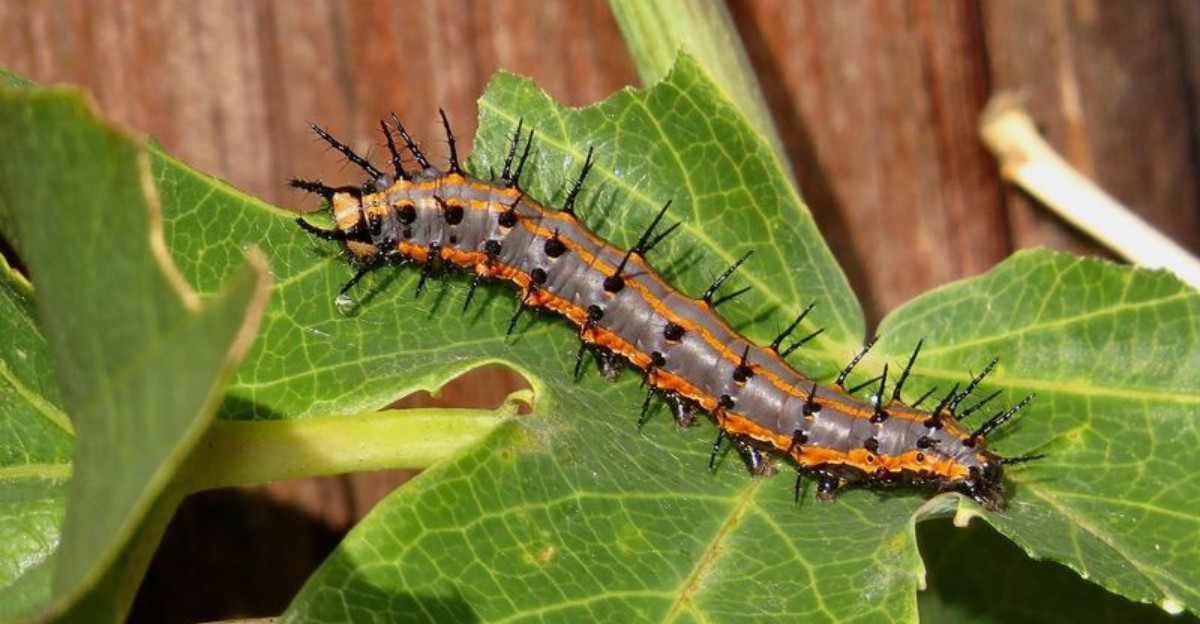
Bright orange caterpillars covered in black spines can strip a vine along a Georgia fence down to bare stems surprisingly fast. The sight is alarming, especially when the plant looked full only a week earlier.
Their spines make them seem dangerous to touch, too. Many homeowners reach for a spray before they ever figure out what they are looking at.
Each of these caterpillars is the young stage of a butterfly many gardeners work hard to attract.
Their host vine is built to bounce back, and it often regrows quickly once the feeding stops.
Spraying would wipe out the butterflies you might otherwise see drifting around your garden in the coming weeks.
Letting them finish their meal is one of the easiest ways to support pollinators without lifting a finger.
1. Bristly Orange Caterpillars Like These Grow Up Into Familiar Butterflies
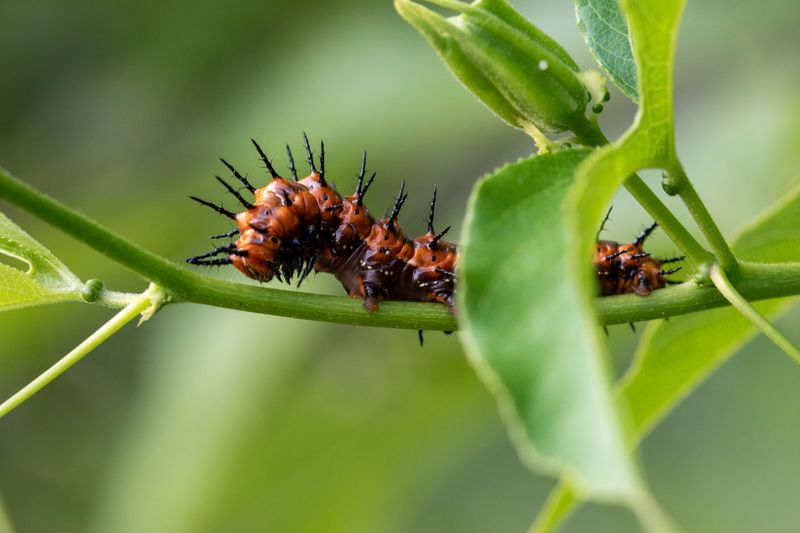
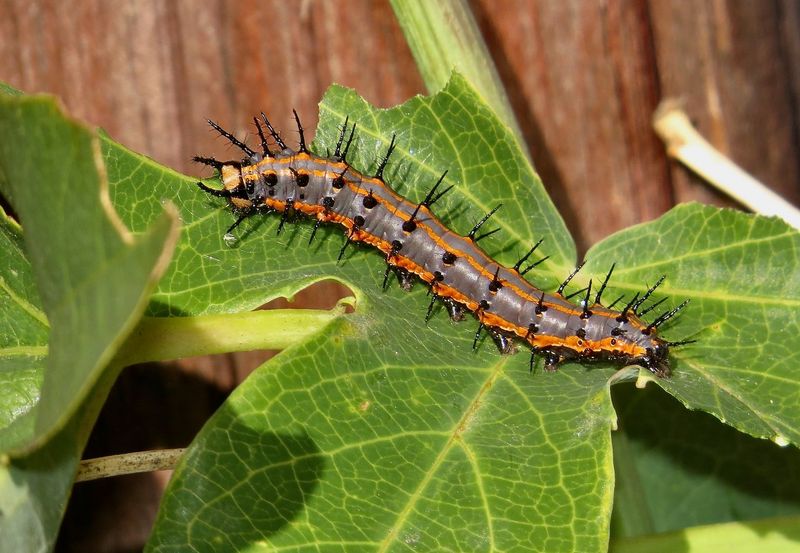
Meet the Gulf fritillary in its hungriest stage. Those orange, spiky crawlers chewing through your vine are almost certainly its caterpillars, and they are feeding on passionflower, often the native maypop.
Look for a bright orange body lined with rows of branched black spines. Some show darker stripes along the sides, and full-grown ones reach roughly an inch and a half long.
Gardeners across Georgia spot them on maypop growing along fences, mailboxes, and woodland edges.
Once a caterpillar finishes eating, it wanders a short distance and hangs upside down to form a chrysalis. That chrysalis is brownish and often looks like a curled, withered leaf, so it is easy to overlook.
After a week or two in warm weather, an adult butterfly crawls out and dries its wings before flying off.
Timing can stretch longer when the weather turns cool, so do not worry if a chrysalis seems to sit for a while. Patience usually pays off with a bright orange butterfly.
Before you blame the caterpillars on any other plant, take a close look at what they are eating. If the leaves are not from a passionflower vine, you may be dealing with a different species altogether.
A quick photo shared with your county Extension office can help confirm the identity.
2. Passionflower Is The Plant Their Young Depend On
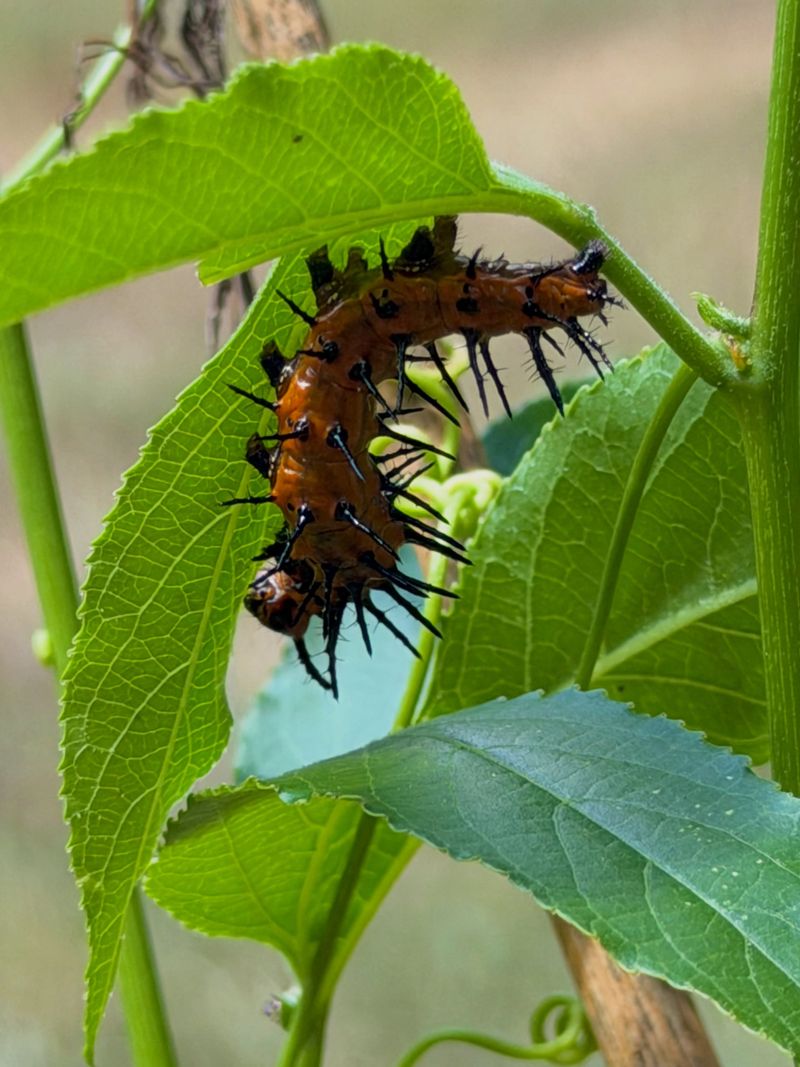
Picky eaters do not come much pickier. Gulf fritillary caterpillars feed on passionflower plants in the genus Passiflora, and the female butterfly seeks them out when laying eggs.
That close tie explains why one vine gets stripped while the tomatoes and roses next to it stay untouched.
In Georgia, the native maypop, Passiflora incarnata, is the most common host. It grows wild in fields and roadsides and shows up in plenty of home gardens for its fringed purple flowers.
Some other passionflower species and hybrids may also be used. How well caterpillars do on them can vary, so the native maypop tends to be the safer bet if butterflies are your goal.
Females lay tiny yellow eggs one at a time, usually on leaves, tendrils, or new shoots.
Because the caterpillars stick to this one plant group, they are not likely to spread to your vegetables or shrubs. Your other garden plants are generally safe from them.
Your Georgia Garden Changes Every Week. Your Plan Should Too.
Gardening in Georgia changes quickly throughout the season. Every Friday you’ll receive a simple weekly plan showing exactly what to plant, prune, fertilize, harvest, and protect so you never miss the right timing.
Want to check for eggs? Turn over a few young leaves and scan the curly tendrils near the tips of the vine.
Spotting those small yellow dots early gives you a heads-up that more chewing is on the way. It also tells you the vine is doing its job as a butterfly nursery.
3. Those Black Spines Look Fierce But Generally Don’t Sting
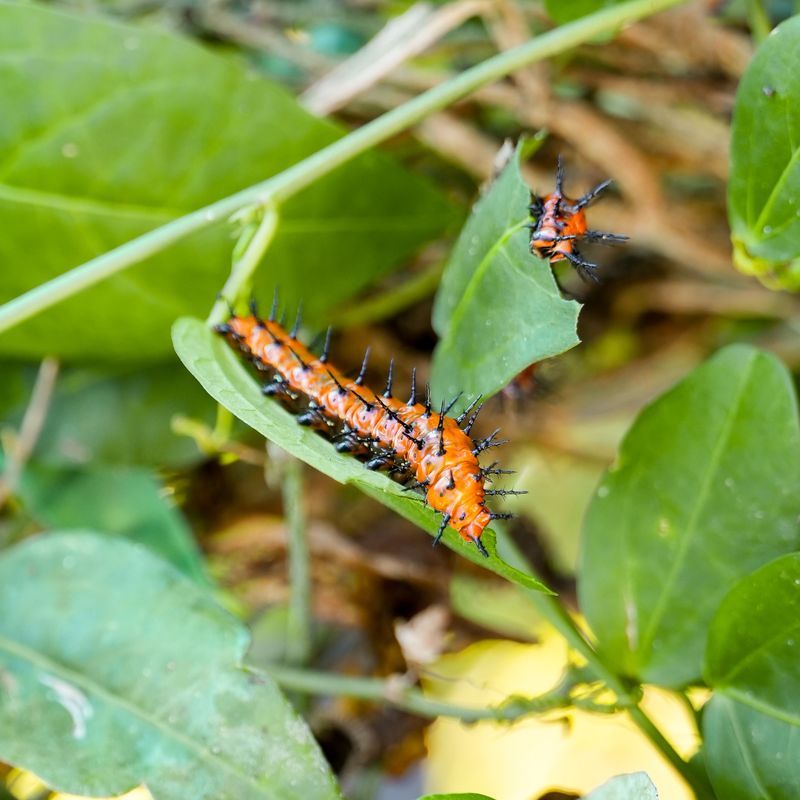
Spiky does not automatically mean dangerous. Gulf fritillary caterpillars look armed, but their soft, branched spines are not known to sting the way some other caterpillars can.
Even so, a gentle approach is smart. Some people with sensitive skin report mild itching or redness after handling them, so it makes sense to use gloves or move them with a leaf.
Kids are often curious, and that is a good thing.
Teach them to look closely without squeezing or poking. A magnifying glass can make the spines and markings easy to see without touching at all.
Birds are another story. These caterpillars feed on passionflower, and that diet may make them taste bad to some predators.
Their bright orange color may serve as a warning signal, though not every predator is put off.
Be careful about confusing them with truly stinging caterpillars. Saddleback and puss caterpillars are found in Georgia too, and they look very different and feed on other plants.
If you find a spiny caterpillar on something other than passionflower, avoid touching it until you know what it is.
Wash your hands after any contact with caterpillars, especially before touching your eyes. It is a simple habit that saves trouble.
4. Bright Orange Adults Flash Silver Spots Under Their Wings
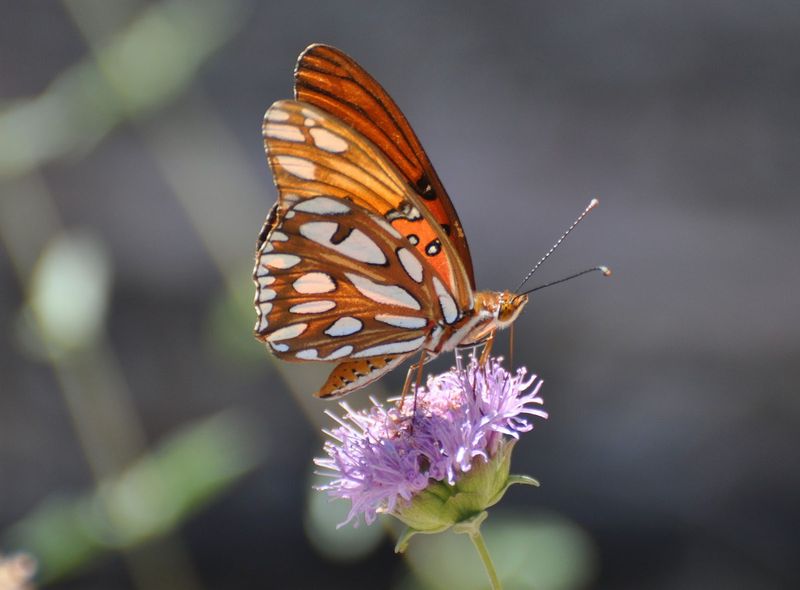
Wait until a Gulf fritillary lands and folds its wings. You will see shiny silver spots scattered across a brown underside, and they catch the sun like little mirrors.
Open wings tell a different story, with bright orange tops marked by black spots and lines.
That two-sided look makes this butterfly easy to recognize once you know it. It is a common sight in gardens across Georgia, especially in the southern half of the state.
Adults sip nectar from a wide range of flowers. Lantana, zinnias, pentas, and native options like ironweed are popular choices with them.
Planting nectar flowers near your passionflower can keep adults around longer.
Watch for females fluttering slowly around the vine, touching down on leaves and tendrils. They are likely laying eggs, which means the next round of caterpillars is already underway.
Gulf fritillaries are fast, strong fliers, so they can be tricky to photograph in the air. Your best chance usually comes while they are feeding on flowers.
Morning and late afternoon light tends to show off the silver spots best.
Keep a simple log of when you see the first adults each year. Over time, you may notice patterns that help you plan your plantings.
5. Numbers Often Peak In Late Summer And Fall
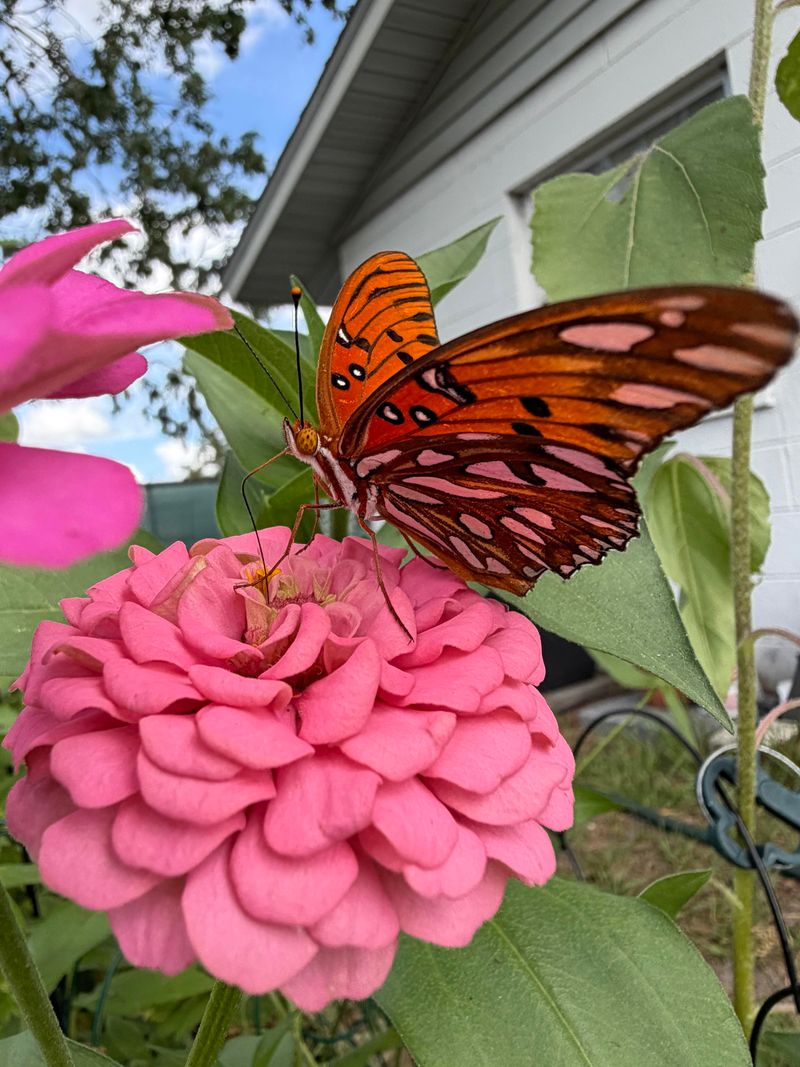
Late August can feel like an invasion. Gulf fritillaries produce several generations a year in warm climates, so their numbers tend to build as summer goes on.
By late summer and fall, many gardeners see far more caterpillars and adults than they did in spring.
That pattern is common, but it is not exact every year. Weather, rainfall, and how much passionflower is around can all shift the timing.
Gulf fritillaries are also known to move south in fall, and large groups sometimes pass through the Southeast.
Winter is where location really matters. These butterflies handle cold poorly, so they are more likely to persist through mild winters in south Georgia and Florida than in the mountains up north.
In colder areas, they may disappear for months and show up again as the weather warms.
Maypop also fades back to the ground after frost, which ends the feeding season naturally. Caterpillars still on the vine late in the year may not all make it to adulthood.
Fall is a great time to enjoy the show rather than fight it.
Keep nectar flowers blooming into autumn if you can. Asters and goldenrod can help support the late-season adults visiting your yard.
6. Chewed Vines Typically Bounce Back From The Roots
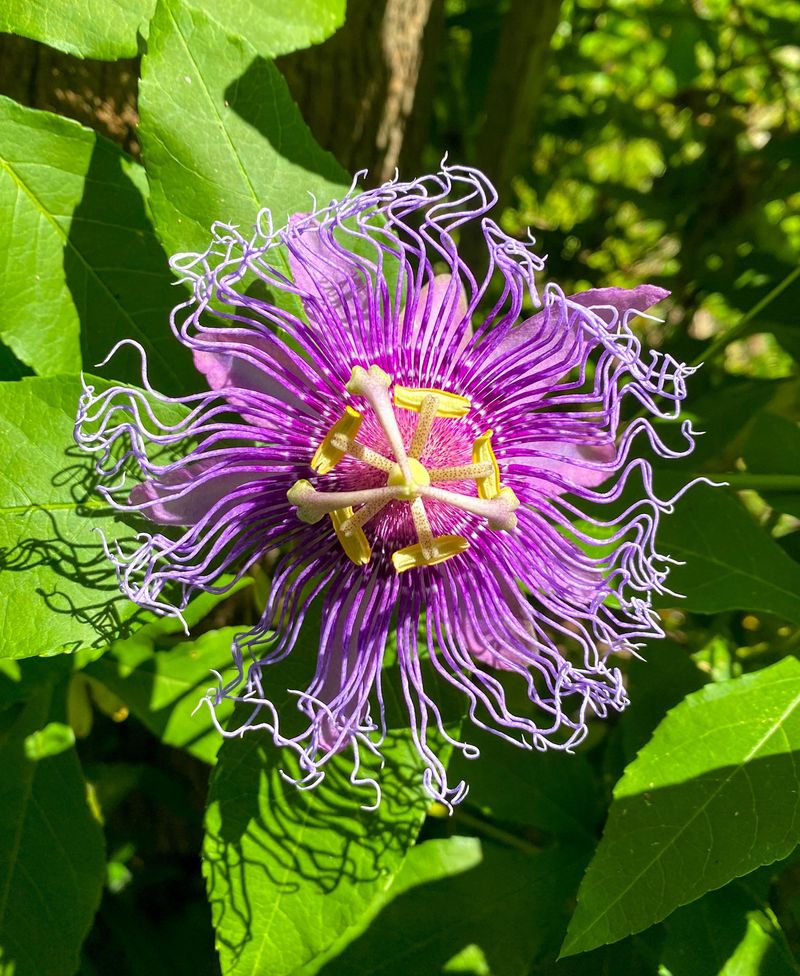
Bare stems are not the end of the story. Maypop is a tough perennial with deep roots, and it often sends up new shoots after heavy feeding.
In most home gardens, the vine handles caterpillar damage better than it looks at first glance.
Maypop also spreads by underground runners. New shoots may pop up a few feet away from where you planted it, sometimes in spots you did not expect.
Recovery is not certain in every case, though. A young plant in its first season, or one stressed by drought, may struggle more after losing most of its leaves.
Deep watering during dry spells can help a stressed vine regrow.
Skip pesticides on passionflower if you want butterflies. Sprays aimed at caterpillars, including ones labeled organic like Bt, can harm Gulf fritillary larvae as well.
Gardeners in Georgia usually see maypop foliage fade and the vines retreat to the ground in winter before returning in spring. That seasonal cycle is normal and not a sign of caterpillar damage.
Cut old stems back after they turn brown if you like a tidy look. Leave the roots in place so new growth can come up when the soil warms.
Give the plant time before judging it.
7. Planting Extra Passionflower Lets You Share With The Caterpillars
Sharing is easier when there is plenty to go around. Growing more than one passionflower vine gives caterpillars room to feed while leaving you some flowers to enjoy.
One small vine can be stripped quickly, but several plants spread out the feeding.
Maypop likes full sun to part shade and tolerates many soil types. It does well in much of Georgia, from the coast to the Piedmont.
Give it a fence, trellis, or arbor to climb.
Keep in mind that maypop spreads by runners and can wander into nearby beds. Plant it where a little spreading is welcome, or pull extra shoots as they appear.
Native plant nurseries and plant sales are good places to find maypop. Spring is a common planting time, though container plants can often go in later with regular watering.
Some gardeners keep one vine near the house for blooms and another farther back for the caterpillars. That simple setup lets everyone get what they need.
Add a few nectar flowers nearby to round things out.
Results will vary with your sun, soil, and rainfall each year. Even so, a bit of extra passionflower can turn a chewed-up vine into a lively butterfly garden.