Plants You’ll Never Need To Water In Your North Carolina Garden After Year One
The first summer after planting is the hard one. You water consistently, check the soil regularly, and nurse new plants through the heat and dry spells that North Carolina summers reliably deliver.
Most gardeners assume that routine continues indefinitely. For certain plants it does not.
A surprising number of species, once their root systems are established through that first growing season, become genuinely self-sufficient in North Carolina’s climate.
They find water on their own, handle dry stretches without showing stress, and perform well through summers that push everything else in the garden to its limit. Some of them are beautiful. Some are structural.
All of them share the same quality once they settle in: they stop needing anything from you and simply get on with growing.
1. Butterfly Weed
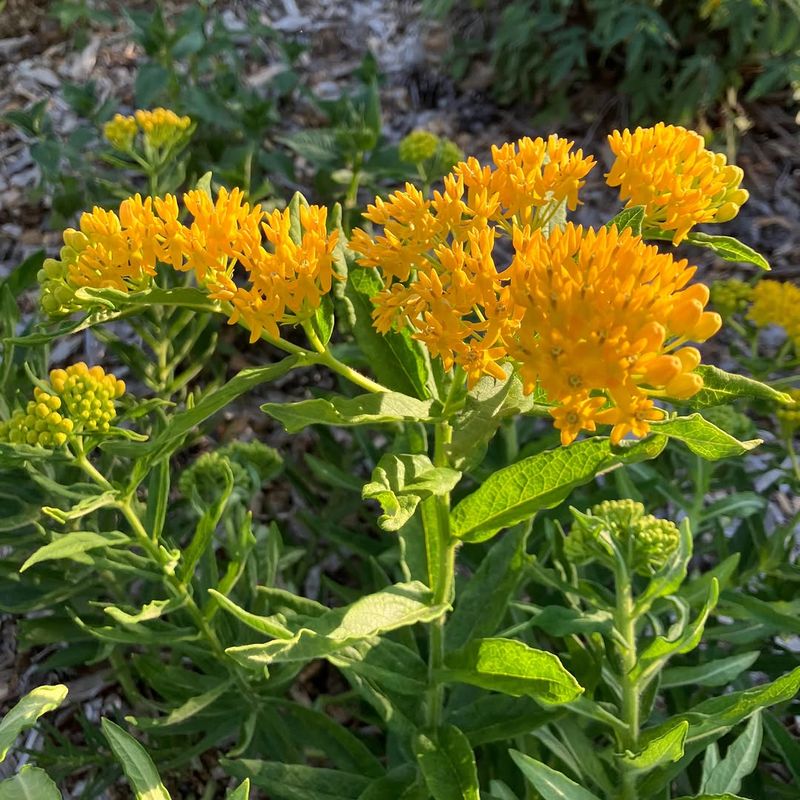
Few plants put on a summer show quite like butterfly weed, blazing with clusters of vivid orange blooms that practically glow in the afternoon sun.
Native to North Carolina and much of the eastern United States, this tough perennial has a deep taproot that reaches far down into the soil to pull up moisture even during dry spells.
That root system is exactly why you should resist the urge to move it once it is planted.
During its first growing season, give it a little extra water to help those roots get established. After that, butterfly weed is genuinely on its own.
Sandy or rocky soil actually suits it better than rich, moist garden beds, so skip the compost and let it grow lean. Overwatering or heavy soil can cause root rot, which is the one thing that will actually hurt this plant.
Monarchs, swallowtails, and bumblebees absolutely love it, making it one of the hardest-working plants in any pollinator garden. It blooms from early summer through midsummer and sometimes pushes out a second flush of flowers in late summer.
The seed pods that follow are gorgeous too, splitting open to release silky white fluff. Plant it in full sun, forget about it, and enjoy the butterflies that show up like clockwork every single year.
2. Purple Coneflower
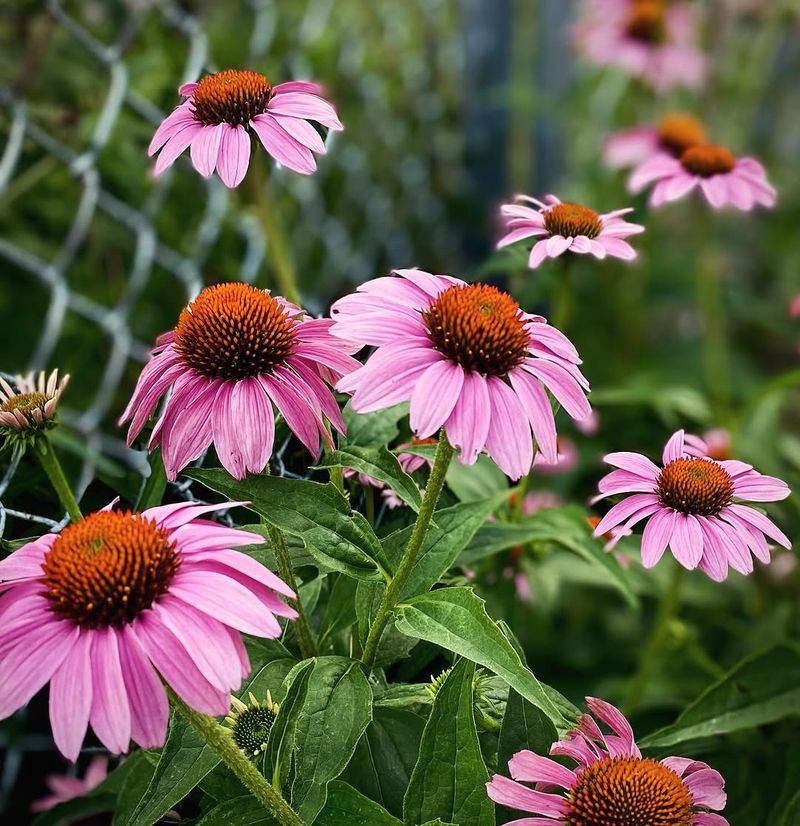
Purple coneflower is one of those plants that feels like it was made specifically for the Southeast. It handles North Carolina summers without missing a beat, blooming reliably in pink-purple waves from June all the way through August.
The spiky orange centers are just as eye-catching as the petals, and birds like goldfinches flock to the seedheads in fall and winter.
Once established, echinacea pulls moisture from deep in the soil and rarely needs any help from you. It actually performs better in leaner soil conditions than in overly rich beds.
Too much fertilizer pushes floppy, weak stems instead of the sturdy upright growth that makes this plant so attractive. A sunny spot with decent drainage is really all it needs to thrive year after year.
Something interesting about purple coneflower is that it has been used in herbal medicine for centuries, long before it became a garden staple. Native American tribes used various parts of the plant for everything from sore throats to wound care.
Your North Carolina Garden Changes Every Week. Your Plan Should Too.
Gardening in North Carolina changes quickly throughout the season. Every Friday you’ll receive a simple weekly plan showing exactly what to plant, prune, fertilize, harvest, and protect so you never miss the right timing.
Today it is grown mostly for its beauty, but that history adds a cool layer to an already impressive plant.
Divide clumps every three or four years to keep them vigorous, and leave the seedheads standing through winter to feed the birds and let plants naturally reseed throughout your garden.
3. Black-Eyed Susan
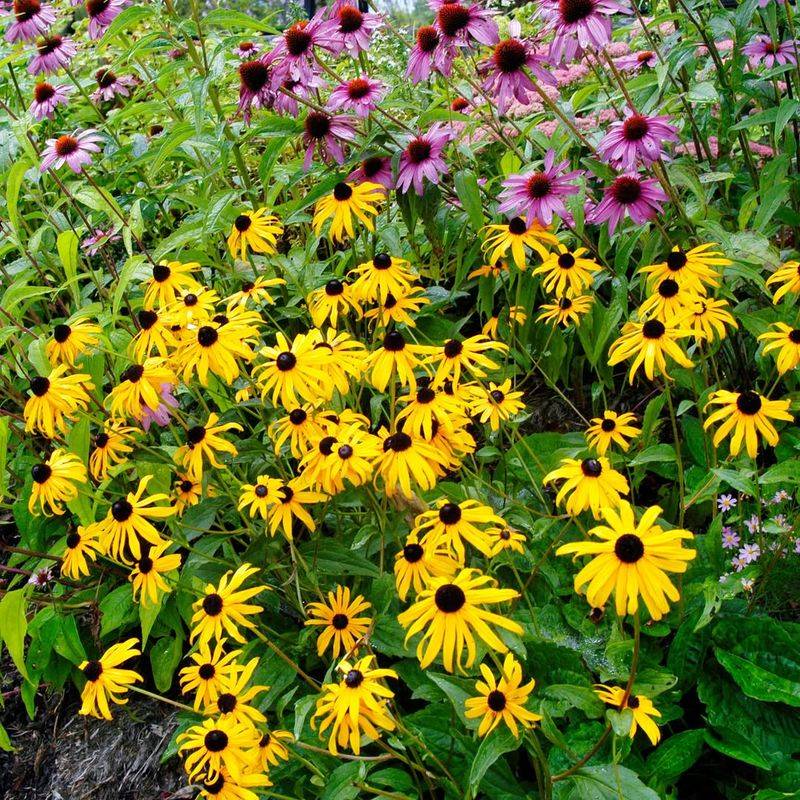
Golden yellow petals surrounding a deep brown center make black-eyed Susan one of the most recognizable wildflowers in the entire Southeast.
It pops up naturally along roadsides, meadows, and open fields all across North Carolina, which tells you everything about how tough it really is.
This plant is not just surviving out there without water. It is absolutely thriving. In the garden, rudbeckia hirta behaves as a short-lived perennial or biennial, but it self-seeds so freely that you will never notice the difference.
Plant it once and it just keeps coming back, spreading cheerfully through sunny borders without any encouragement from you.
Full sun and well-drained soil are its two main requirements, and beyond that it handles heat, humidity, and dry stretches with ease.
Black-eyed Susan blooms from early summer through fall, giving you months of bright color when many other plants start to look tired. It pairs beautifully with little bluestem grass and purple coneflower for a classic native planting that practically takes care of itself.
Bees and butterflies visit constantly during the bloom season, and birds eat the seeds through fall and winter. Skip deadheading if you want reseeding, or trim spent flowers to extend the bloom period.
Either way, this plant rewards very little effort with a whole lot of garden beauty season after season.
4. Wild Bergamot
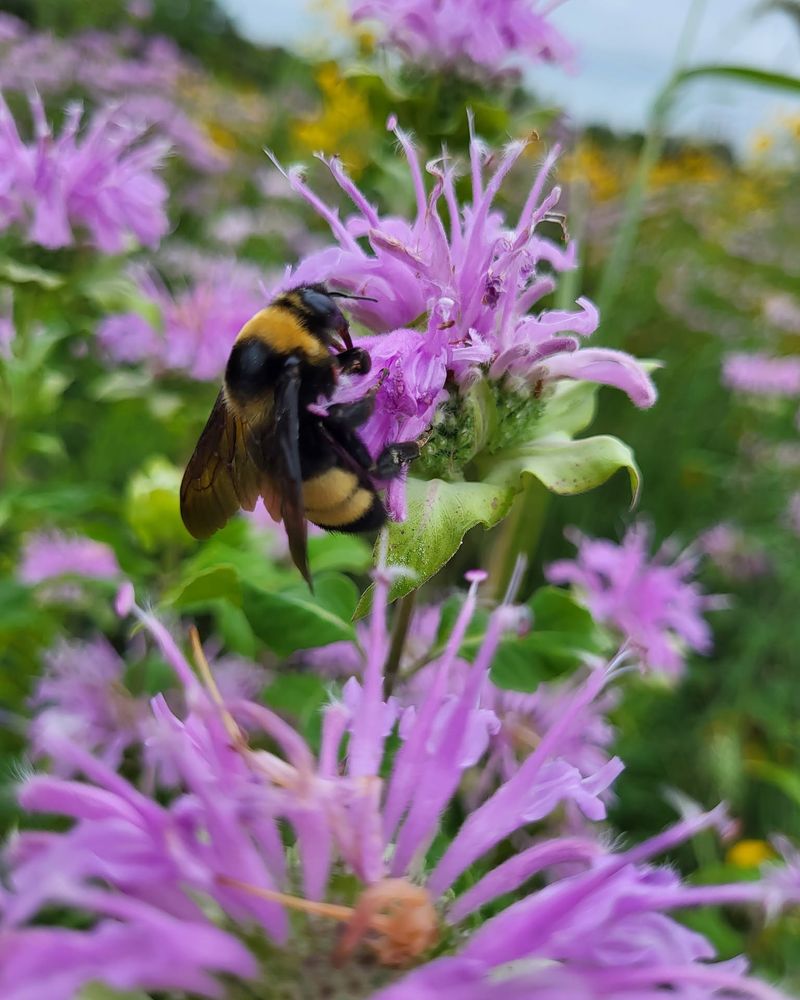
Crush a leaf of wild bergamot between your fingers and you get a burst of oregano-like fragrance that explains exactly why this plant has been treasured for centuries.
Native to open meadows and dry prairies across much of North America, monarda fistulosa is the tougher, more drought-tolerant cousin of the popular bee balm you often see in catalogs.
Where bee balm can struggle with powdery mildew in humid summers, wild bergamot holds up much better in these conditions.
The lavender-pink flower clusters bloom from midsummer into early fall and attract an almost ridiculous number of pollinators.
Bumblebees, hummingbirds, sphinx moths, and swallowtails all make regular visits, turning this plant into a buzzing, fluttering hub of garden activity.
It spreads gradually by underground rhizomes, forming loose colonies that fill in gaps beautifully without becoming aggressive.
Plant wild bergamot in full sun with average to dry soil and it will ask almost nothing from you after its first year. Good drainage is more important than soil richness, so skip the heavy amendments and let it grow naturally.
Cutting plants back by about a third in late spring encourages bushier growth and reduces any chance of powdery mildew. The dried seedheads stand through winter and add texture to the garden while also feeding birds.
For a truly low-effort, high-reward native plant, wild bergamot is hard to beat in any sunny border.
5. Narrowleaf Mountain Mint
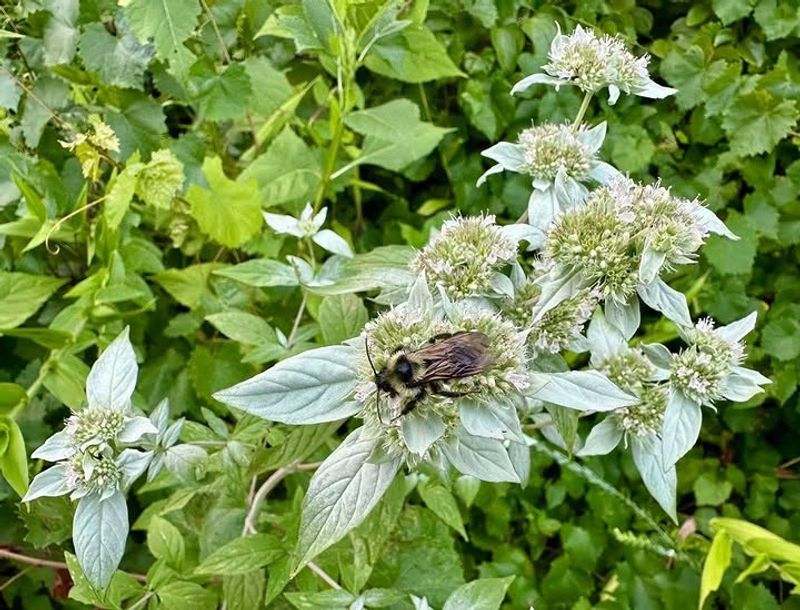
If you want to see more bees in your garden than you have ever seen before, plant narrowleaf mountain mint and stand back.
This native perennial is one of the most powerful pollinator magnets in the entire eastern United States, attracting dozens of bee species, wasps, butterflies, and beetles during its long summer bloom period.
The tiny white flowers may look modest, but insects find them absolutely irresistible.
Pycnanthemum tenuifolium is incredibly well-suited to North Carolina gardens because it naturally grows in dry to medium-moisture meadows, roadsides, and open woodlands across the state.
The fine, needle-like foliage smells strongly of mint when brushed, which also makes it deer-resistant.
That combination of drought tolerance, deer resistance, and pollinator power makes it genuinely one of the most useful native plants you can add to a low-maintenance garden.
Full sun and decent drainage are really all this plant needs to succeed. It spreads slowly by rhizomes and self-seeds moderately, filling in a border gradually without overwhelming its neighbors.
After the first year, you can essentially forget about watering it entirely. The upright stems reach about two to three feet tall and work well mixed with grasses like little bluestem or flowering perennials like coneflower.
Cut it back hard in early spring to keep it tidy, and it will flush back with fresh growth quickly. Year after year, it delivers without asking for much in return.
6. Little Bluestem
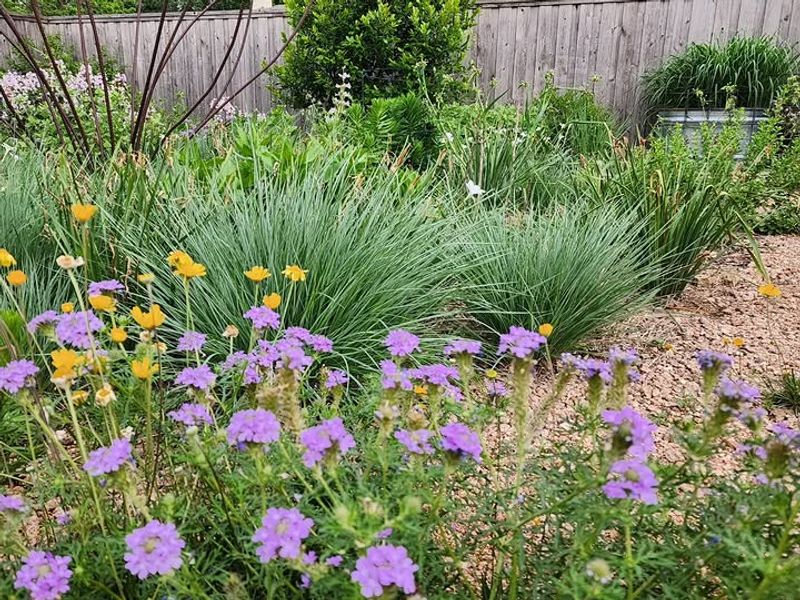
Little bluestem is one of those grasses that genuinely looks better as the seasons change, starting out blue-green in summer and shifting into stunning shades of copper, rust, and burgundy by fall.
Native to the prairies and open uplands of North America, it is perfectly adapted to the dry, sunny conditions found in much of North Carolina.
Once established, this grass can handle serious drought without losing any of its good looks.
Schizachyrium scoparium grows in clumps about two to four feet tall, making it useful as a mid-border plant or a natural-looking mass planting.
It thrives in lean, well-drained soil and actually struggles in overly rich or wet conditions, so resist the urge to fertilize or amend the planting area heavily.
Poor soil is genuinely this grass’s best friend, encouraging the tight, upright form that makes it so attractive in the landscape.
The fluffy silver seedheads that appear in late summer and fall are beautiful and provide food for birds through winter. Leaving the clumps standing until late winter adds structure and visual interest to the garden during the coldest months.
Cut them back to about four inches from the ground in late February or early March before new growth begins.
Little bluestem pairs naturally with black-eyed Susan, butterfly weed, and coneflower for a classic native meadow planting that looks great and requires almost no maintenance after the first growing season.
7. Splitbeard Bluestem
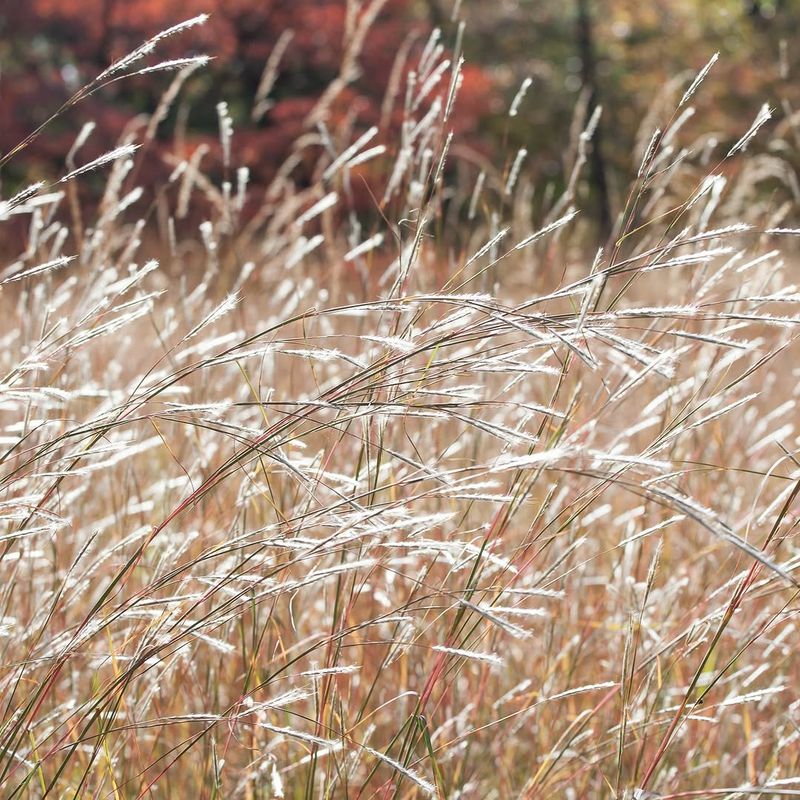
Most gardeners have heard of little bluestem, but splitbeard bluestem tends to fly under the radar despite being one of the most striking native grasses in the Southeast.
What makes it unforgettable is the show it puts on in fall, when the seedheads split open into fluffy, silvery-white plumes that catch the light and shimmer in the breeze.
On a sunny autumn afternoon, a mass planting of splitbeard bluestem looks almost magical.
Native to the Piedmont and Coastal Plain regions of North Carolina, andropogon ternarius is built for dry, sandy, or rocky soil and full sun. It handles drought with ease once its root system gets established through the first growing season.
After that, natural rainfall in North Carolina is more than enough to keep it healthy and looking its best through the entire year.
Growing about three to four feet tall, splitbeard bluestem works beautifully as a backdrop plant in mixed native borders or as a meadow grass in larger open spaces.
It pairs especially well with goldenrod, aromatic aster, and black-eyed Susan for a fall garden that practically glows with warm color.
Birds visit regularly to feed on the seeds, adding life and movement to the garden in winter. Cut clumps back in late winter before new growth emerges, and this grass will return reliably year after year without any special care or irrigation from you.
8. Eastern Prickly Pear
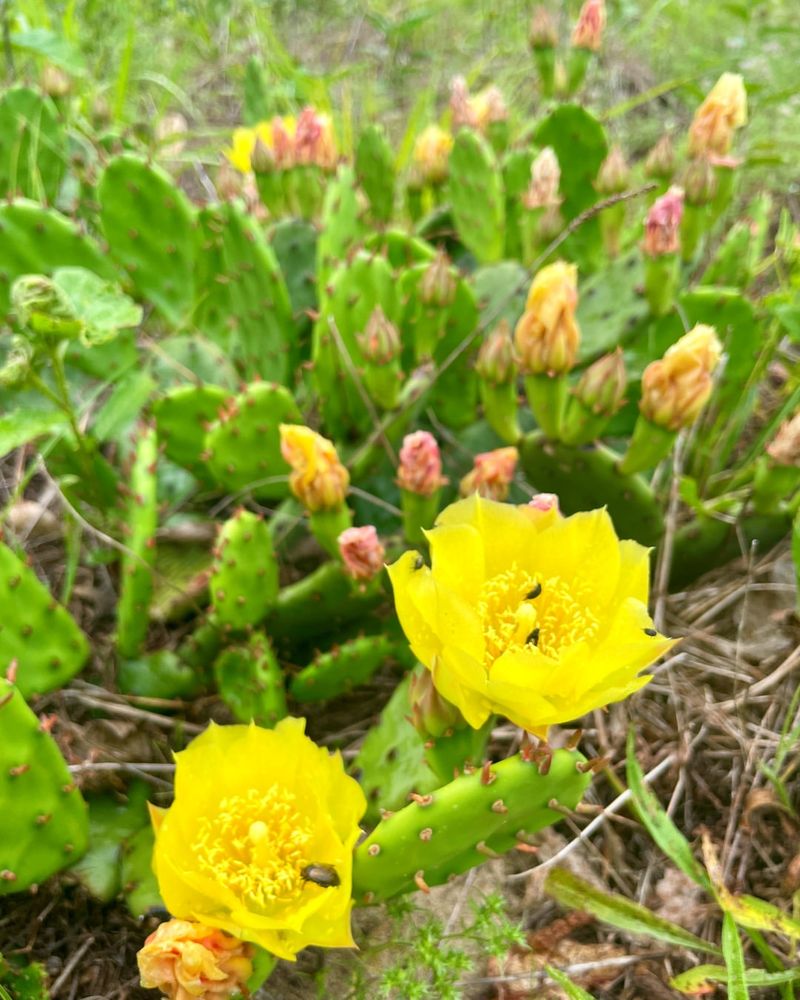
Yes, North Carolina has a native cactus, and yes, it is absolutely stunning in bloom. Eastern prickly pear produces large, silky yellow flowers in early summer that look almost tropical against the flat, paddle-shaped pads.
It is one of the most drought-tolerant plants on this entire list because it stores water directly inside its thick, fleshy pads, making it almost completely self-sufficient once established in your garden.
Opuntia humifusa grows naturally on sandy soils, rocky outcrops, and dry open areas throughout North Carolina, including barrier islands where conditions are brutal. In the garden, it needs full sun and extremely well-drained soil above everything else.
Clay soil that holds moisture will cause the pads to rot, so either plant it in a raised bed, amend with coarse sand and gravel, or choose a naturally dry, sloped area of your yard.
Beyond the flowers, the plant produces small reddish-purple fruits in late summer that wildlife enjoys. The pads turn slightly purplish in winter as a natural response to cold, then green back up in spring.
Keep in mind that the spines are small but surprisingly sharp, so wear thick gloves whenever you handle it. Plant eastern prickly pear where it will not be brushed against accidentally.
Aside from that one consideration, this plant is genuinely one of the most low-effort, high-drama plants you can grow in a dry North Carolina garden.
9. Carolina Phlox
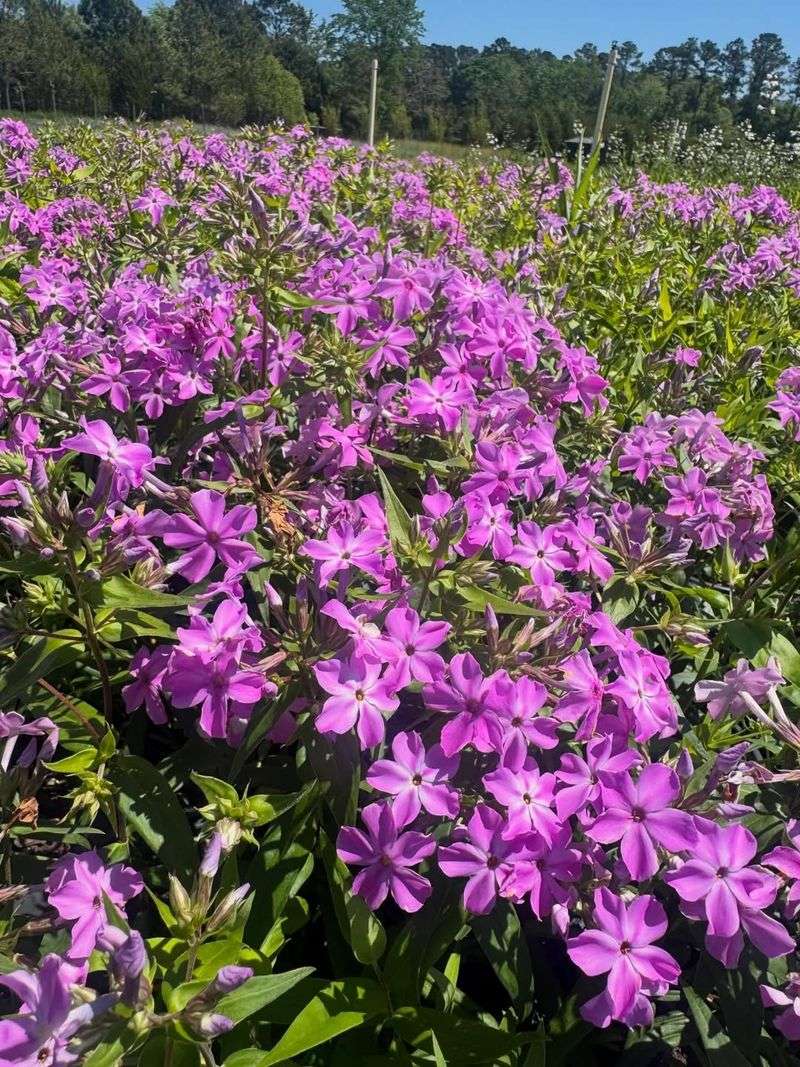
Named for the state it calls home, Carolina phlox brings clusters of rich pink to purple flowers to the garden in late spring and early summer, just as the season is really heating up.
Unlike tall garden phlox, which often struggles with powdery mildew in humid Southern summers, phlox carolina shows much better disease resistance and handles drier conditions with confidence.
It is a plant that genuinely feels at home in North Carolina.
Growing naturally in open woodlands, roadsides, and forest edges across the Southeast, this phlox is adapted to the kind of variable rainfall North Carolina gets. During its first summer, water it regularly to help the roots settle in.
After that, established plants pull through dry periods on their own, especially when planted in a spot with morning sun and some afternoon shade, which also helps reduce stress during the hottest weeks of the year.
Carolina phlox reaches about two feet tall and spreads gradually into tidy clumps that look great in a mixed border. The flowers are fragrant and attract butterflies and hummingbirds reliably during the bloom period.
Cutting stems back by about half after the first flush of blooms sometimes encourages a second round of flowering later in summer.
It pairs naturally with black-eyed Susan, wild bergamot, and native grasses for a garden that looks polished without requiring constant attention.
A simple layer of mulch around the base helps retain soil moisture during dry stretches in the first year.
10. Threadleaf Coreopsis
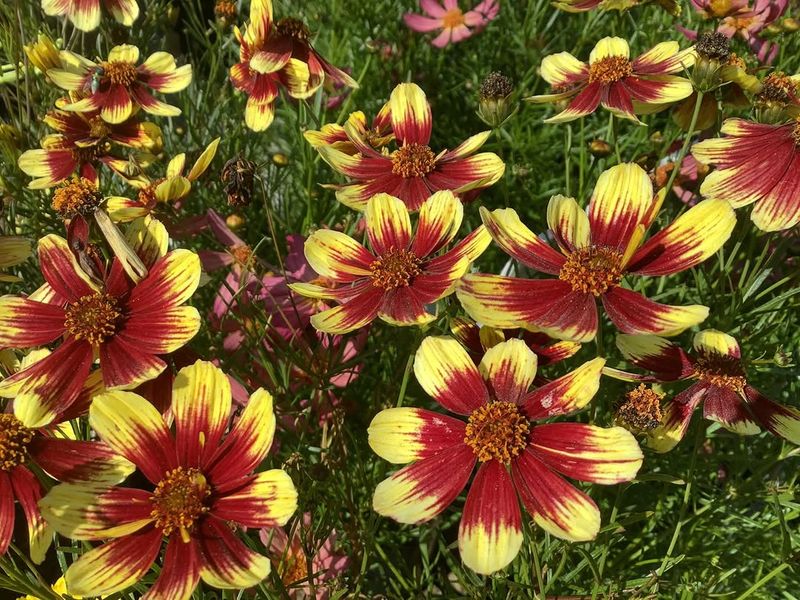
Threadleaf coreopsis earns its place in the low-maintenance garden by blooming almost nonstop from late spring through midsummer, covering itself so completely in bright yellow flowers that the feathery foliage nearly disappears underneath.
Few perennials offer that kind of floral generosity over such a long stretch of the season. And when the blooms finally slow down, a quick trim encourages another flush of color in late summer.
Native to the eastern United States, coreopsis verticillata has developed a naturally efficient relationship with dry, lean soil. Rich, heavily amended beds can actually cause it to flop or spread too aggressively, so this is another plant that rewards a lighter touch.
Plant it in full sun, skip the fertilizer, and let it grow in whatever average to dry soil you have available. It adapts well to both sandy and clay-based soils as long as drainage is reasonable.
After the first year, established threadleaf coreopsis rarely needs supplemental water even during North Carolina’s dry summer stretches.
It spreads steadily by underground rhizomes into attractive weed-suppressing mounds about one to two feet tall, making it useful as both a border plant and a ground cover in sunny spots.
Butterflies and bees visit the flowers regularly, and the plant has a generally cheerful, bright energy that lifts the whole garden.
Divide clumps every three years or so to keep them at their most floriferous and to share extras with neighbors who will definitely want some.
11. Wrinkleleaf Goldenrod
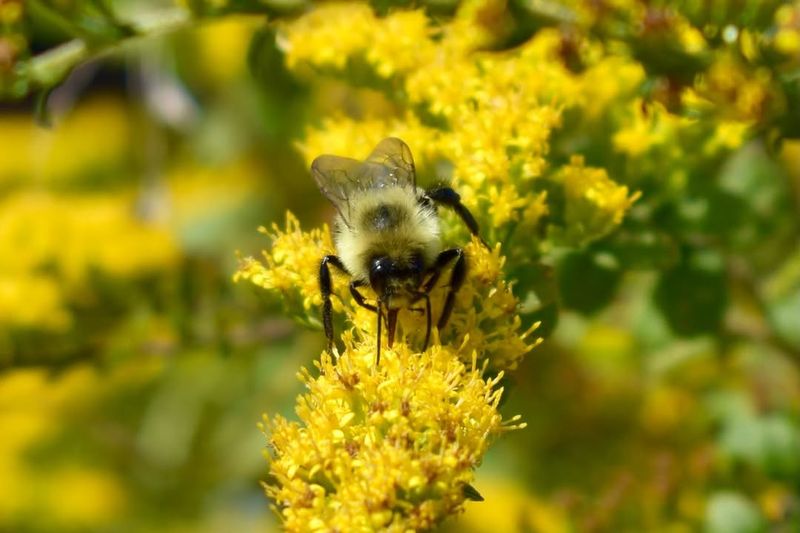
Goldenrod has a reputation problem it does not deserve. Many people blame it for fall allergies, but the real culprit is ragweed, which blooms at the same time but spreads its pollen by wind.
Goldenrod spreads its pollen by insects, which means it is actually a critical food source for late-season pollinators trying to build up their reserves before winter.
Wrinkleleaf goldenrod, solidago rugosa, is one of the most adaptable species for North Carolina gardens.
Unlike some goldenrods that spread aggressively, solidago rugosa stays reasonably well-behaved in garden settings while still forming attractive colonies over time.
It blooms from late summer into fall with arching sprays of tiny yellow flowers that attract an enormous variety of bees, beetles, wasps, and butterflies.
The bloom time fills a gap in the garden calendar when many other perennials have already finished for the season.
One of the things that makes wrinkleleaf goldenrod especially useful is its tolerance for both dry and moderately moist soil conditions, giving it more flexibility than many drought-tolerant plants.
Full sun to partial shade both work well, which opens up more planting options in a typical yard. After the first growing season, it handles North Carolina summers without supplemental water.
Pair it with aromatic aster and little bluestem for a fall-focused native planting that looks spectacular and feeds wildlife generously right up until the first frost arrives and the garden quiets down for the season.
12. Aromatic Aster
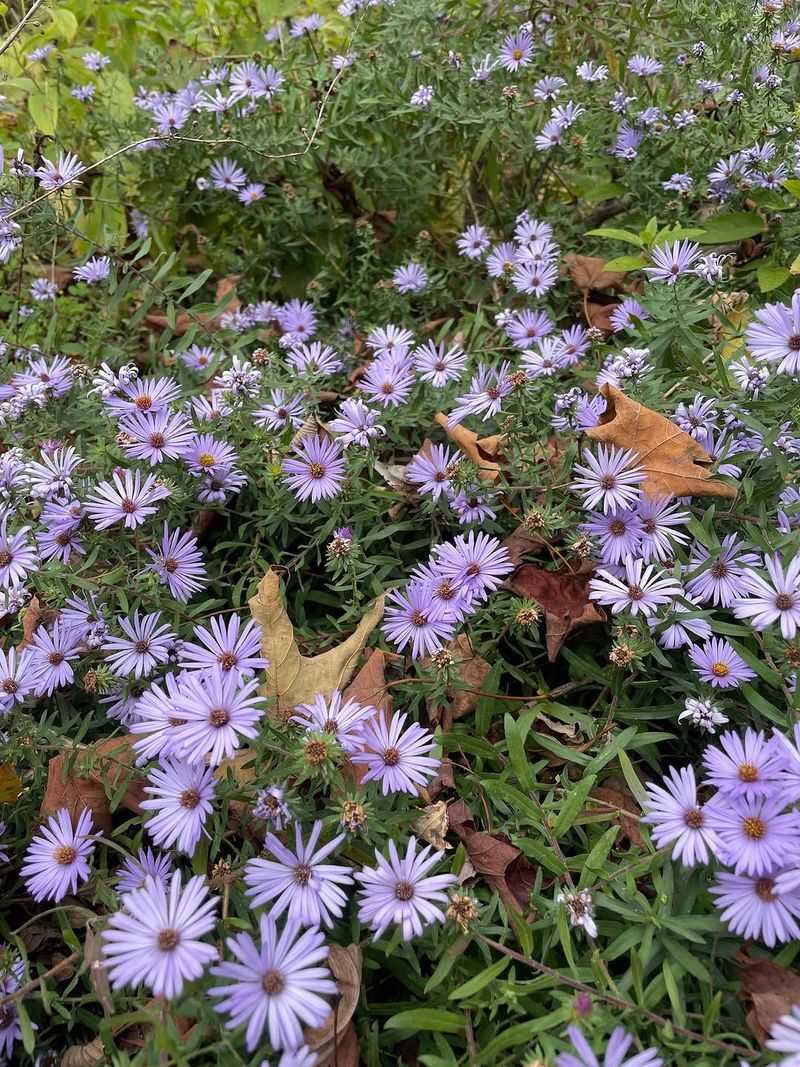
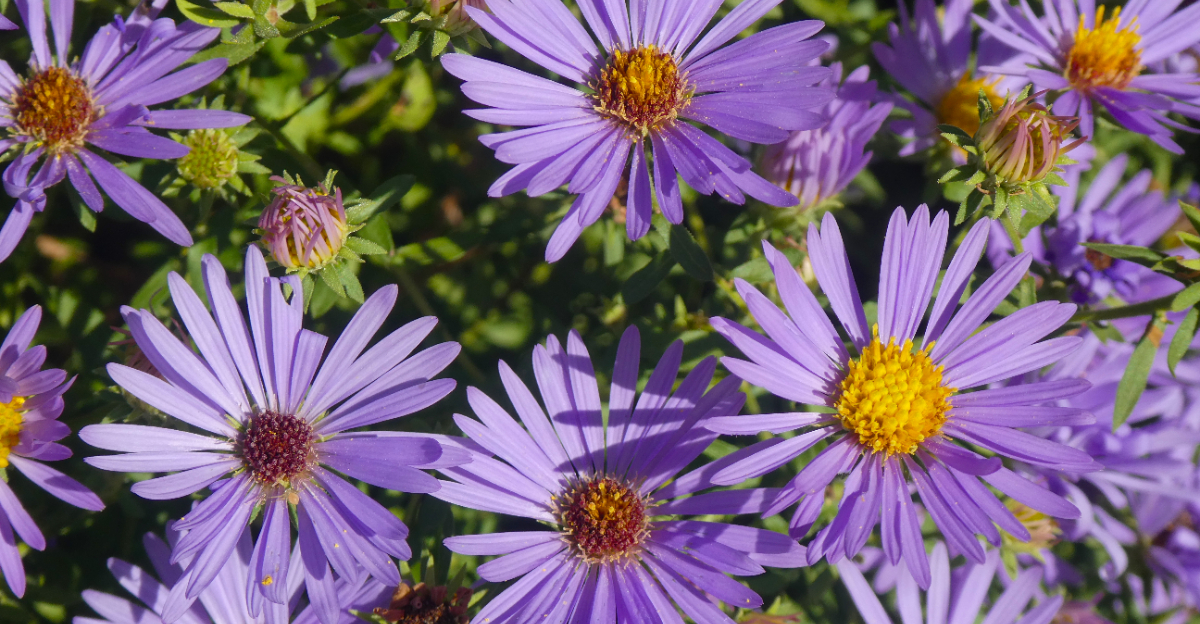
When most of the garden is winding down in October, aromatic aster is just hitting its stride. Clouds of small purple daisy-like flowers cover the mounded plants from September through November, creating one of the most vibrant fall displays of any native perennial.
Rub the foliage and you get a pleasant, spicy-sweet fragrance that is surprisingly strong for such a compact plant.
Symphyotrichum oblongifolium is native to dry, rocky, and open habitats across much of the central and eastern United States, which makes it exceptionally well-suited to the hotter, drier parts of North Carolina.
Once established, it shrugs off summer drought without any visible stress, continuing to grow steadily through the season before exploding into bloom in fall.
Well-drained soil and full sun are its two non-negotiable requirements, and beyond that it is remarkably forgiving.
The mounded form, typically about two feet tall and equally wide, makes aromatic aster a natural fit for the front or middle of a sunny border.
Cutting plants back by half in late May or early June produces a more compact, floriferous plant that holds its shape better through the season without staking.
Bees are absolutely wild for the flowers in fall, often covering the plant so completely that the purple blooms are hard to see underneath the activity.
Pair it with goldenrod and splitbeard bluestem for a stunning late-season native combination that requires almost zero effort from you after the plants settle in.
13. Oakleaf Hydrangea
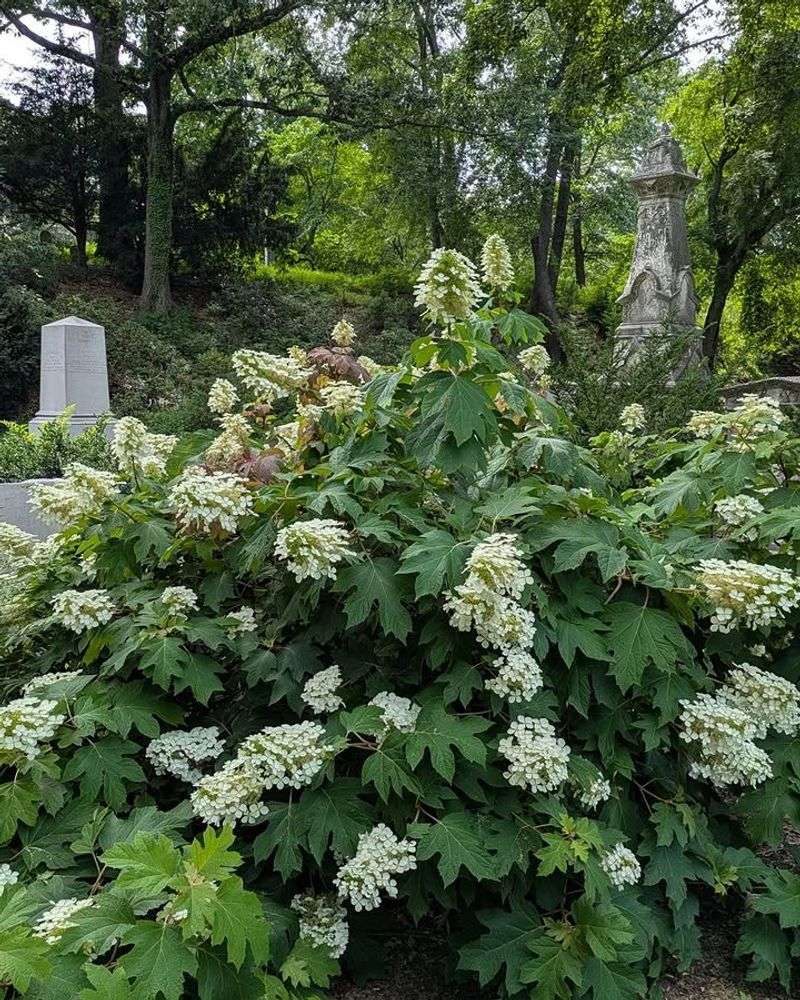
Oakleaf hydrangea might be the most impressive four-season shrub you can plant in a North Carolina garden. In summer it carries enormous cone-shaped clusters of white flowers that gradually fade to parchment and dusty rose as the weeks pass.
In fall, the large oak-shaped leaves turn deep red, burgundy, and orange. Winter reveals attractive peeling cinnamon-brown bark on the stems, and spring brings fresh new leaves and the promise of another spectacular bloom season.
Native to the southeastern United States, hydrangea quercifolia is surprisingly drought-tolerant once established, especially when planted in a site with morning sun and afternoon shade.
Unlike the popular mophead hydrangeas from Asia, oakleaf hydrangea has a deep, efficient root system that handles dry summer stretches without the dramatic wilting that makes other hydrangeas so high-maintenance.
A layer of mulch over the root zone during the first year helps it get established quickly.
This shrub grows six to eight feet tall and wide at maturity, so give it space from the start rather than trying to keep it pruned into a small space.
It works beautifully at woodland edges, along house foundations with some shade, or as a large specimen plant in a mixed border. The flowers are excellent for cutting and drying, lasting for months in arrangements.
After year one, established oakleaf hydrangea handles rainfall on its own through the growing season, making it one of the most rewarding low-effort shrubs available to home gardeners in the region.
14. Fragrant Sumac
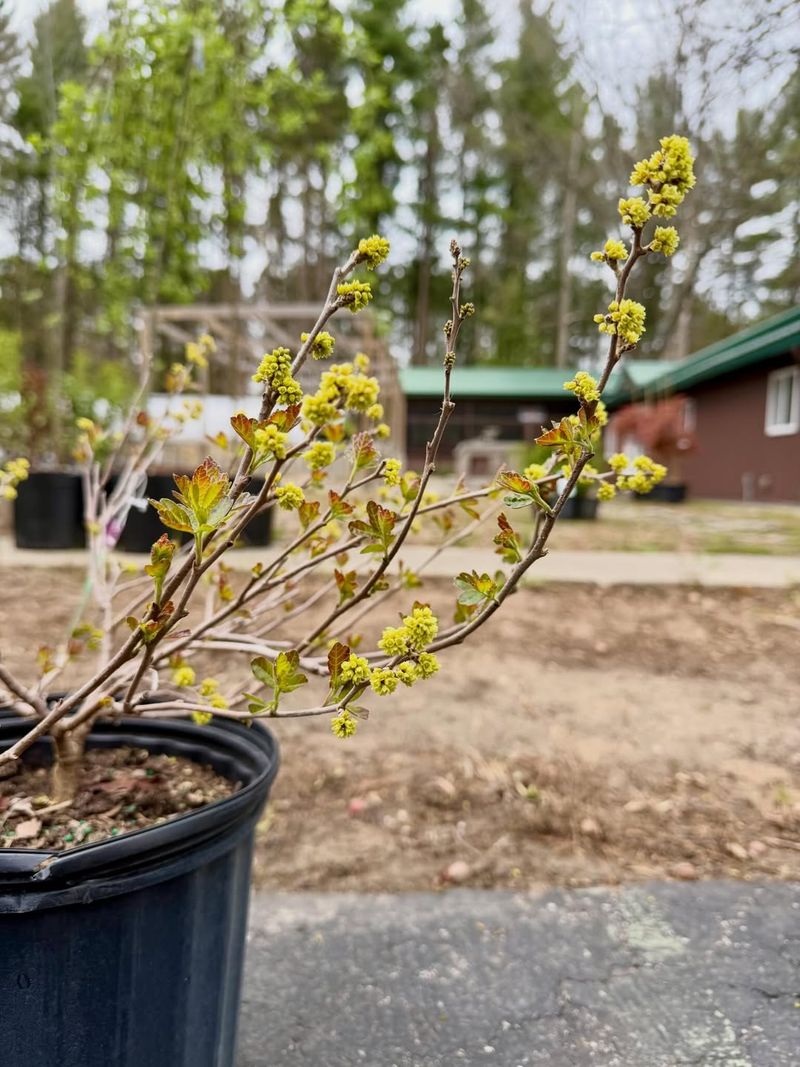
Fragrant sumac is the kind of plant that landscape professionals reach for when they need something tough, beautiful, and completely reliable on a difficult site. Slopes, dry banks, rocky soil, full sun, partial shade, this shrub handles all of it without complaint.
Scratch a stem or crush a leaf and you get the spicy, aromatic scent that gives it its name, a detail that makes this plant memorable the first time you encounter it.
Rhus aromatica is native to dry woodlands and open slopes throughout much of the eastern United States, including North Carolina.
Small yellow flowers appear in very early spring before the leaves emerge, providing an early nectar source for bees just waking up from winter.
Red berries follow in summer and attract birds. Then in fall, the foliage turns brilliant shades of orange, red, and yellow, rivaling much showier ornamental shrubs.
Growing three to six feet tall and spreading wider over time, fragrant sumac works especially well as a mass planting on slopes where erosion control is needed. The spreading root system holds soil firmly in place while the dense foliage shades out weeds below.
After establishment, it is completely self-sufficient in North Carolina’s climate, requiring no irrigation, no fertilizer, and very little pruning. The cultivar Gro-Low is a popular compact form that stays under three feet tall, making it useful as a ground cover in smaller spaces.
Either way, fragrant sumac delivers outstanding value with minimal effort from the gardener.