What Ants Swarming Your North Carolina Okra Stems In Summer Are Really Telling You About Your Garden
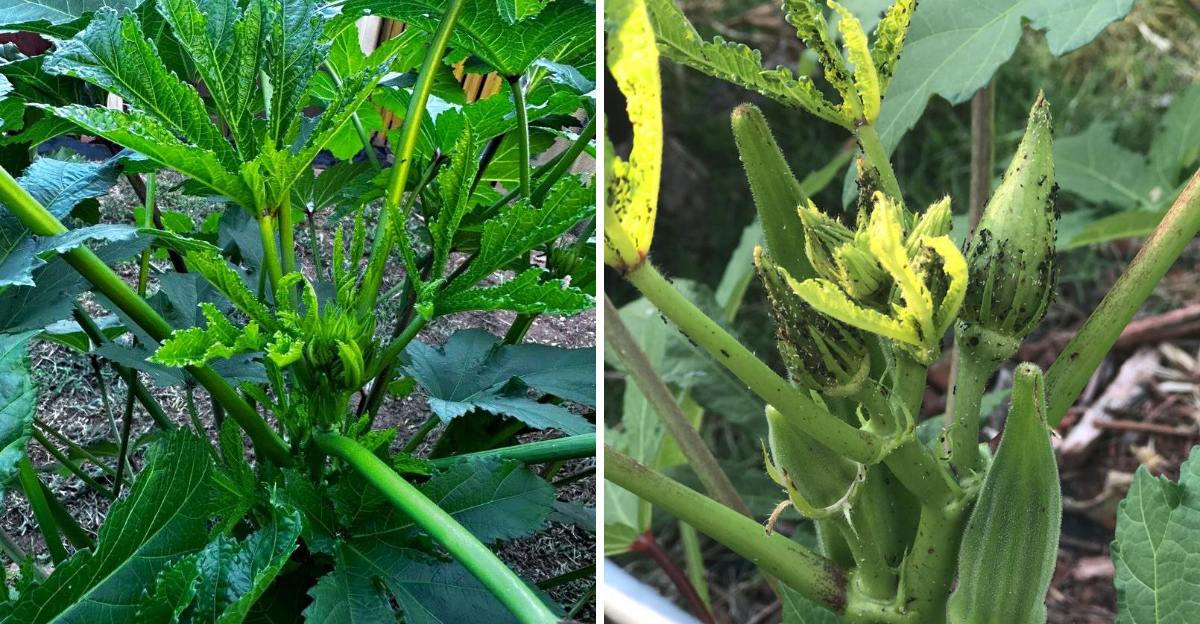
Ants on okra stems in midsummer North Carolina look like a pest problem worth addressing immediately. They are almost never what they appear to be at first glance.
Ants do not target okra stems randomly or find the plant itself particularly interesting.
When they are present in numbers on those stems, they are almost always farming something else entirely, something smaller and far more damaging that has established itself on the plant first.
The ants are a signal pointing directly at an underlying infestation that is easier to address early than after it has had time to build. Misidentifying the ants as the primary problem and treating them as such solves nothing and leaves the real issue untouched.
1. The Ants May Be Following Honeydew
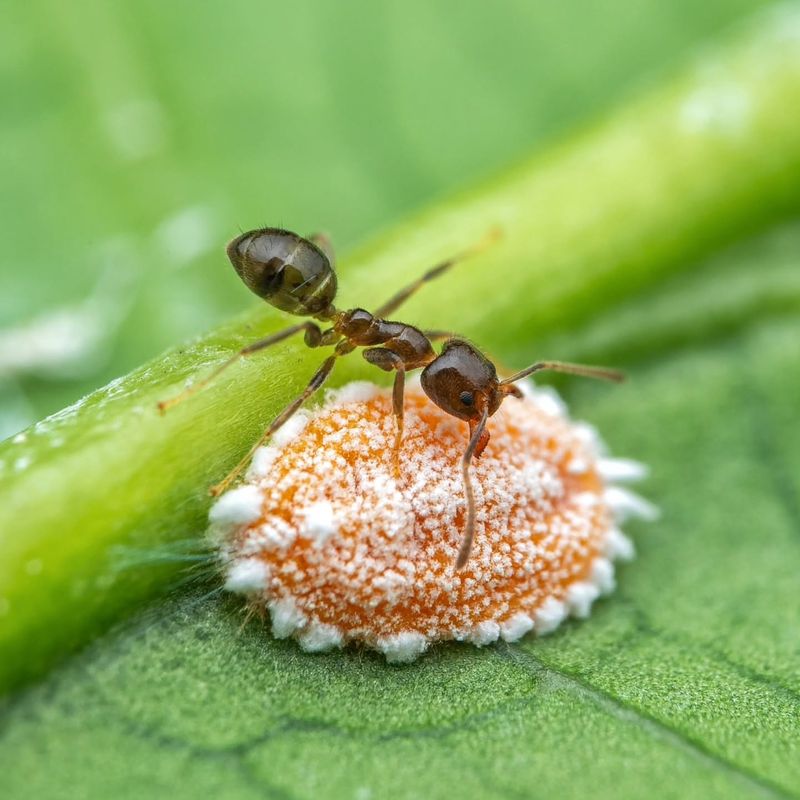
Ants on your okra stems are rarely the original troublemakers. More often, they show up because something else arrived first.
Honeydew, a sweet and sticky liquid produced by sap-feeding insects like aphids, acts like a magnet for ants. When aphids feed on okra stems or leaves, they release this sugary substance, and ants pick up on it fast.
Think of it like a trail of breadcrumbs. The ants follow the honeydew from the ground all the way up the stem, sometimes in long, organized lines that look almost purposeful.
They are not there to hurt your okra directly. They are there because someone else already started the feast.
North Carolina summers create perfect conditions for this kind of activity. Warm temperatures and humidity help aphid populations grow quickly, especially on tender okra growth.
So when ants appear on your stems in July or August, the smart move is to treat them as a clue rather than the cause.
Start by looking closely at the plant before doing anything else. Check the undersides of leaves, the soft tips, and the areas around new buds.
You may spot small, soft-bodied insects clustered in groups. The ants are pointing you toward the real issue, and that is actually helpful information.
Recognizing this pattern early gives you a much better chance of addressing the problem at its source before it spreads further across your garden rows.
2. Aphids May Be Hiding On New Growth
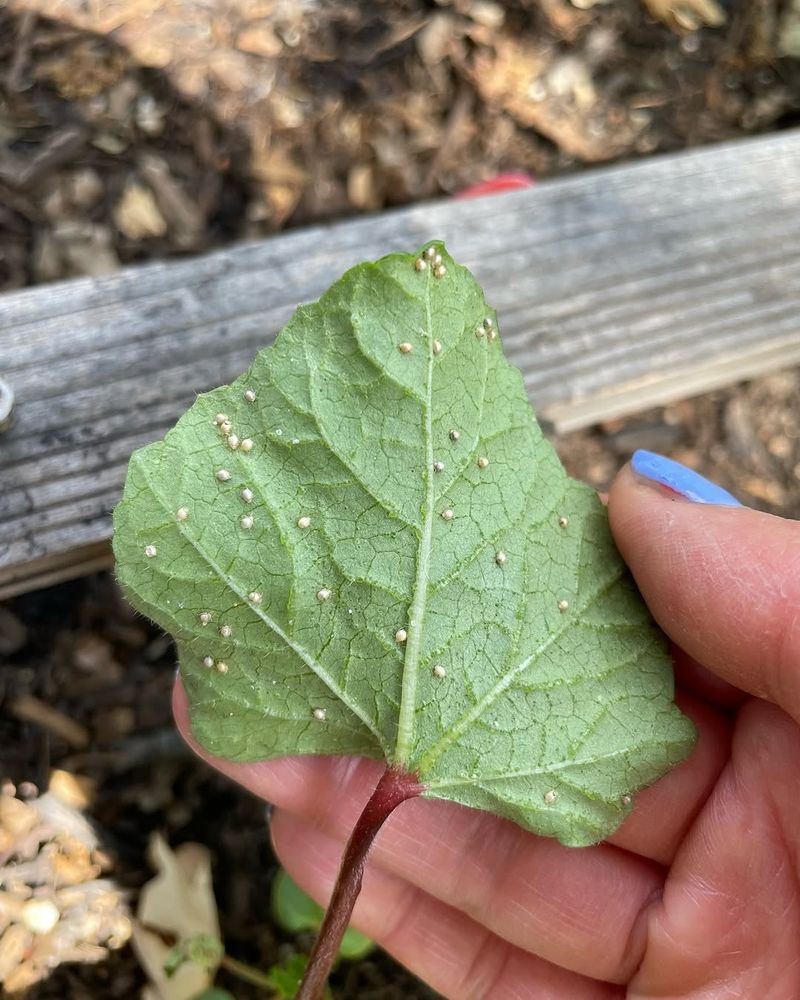
Aphids are masters of hiding in plain sight. They tend to gather on the softest, most tender parts of a plant, which on okra usually means the newest growth at the tips, the undersides of young leaves, and the areas around developing buds.
By the time most gardeners notice them, a small group has already grown into a much larger one.
When ants start climbing your okra, that is your cue to get up close and personal with your plant. Grab a magnifying glass if you have one, flip over a few leaves near the top of the stem, and look carefully at the surface.
Aphids are tiny, often green or yellowish, and they tend to sit very still in clusters. They can be surprisingly easy to overlook if you are just doing a quick walk-through of the garden.
Your North Carolina Garden Changes Every Week. Your Plan Should Too.
Gardening in North Carolina changes quickly throughout the season. Every Friday you’ll receive a simple weekly plan showing exactly what to plant, prune, fertilize, harvest, and protect so you never miss the right timing.
One important thing to keep in mind is that not every ant sighting means you have a serious aphid problem. Sometimes populations are small and already being managed by helpful insects in the area.
Checking carefully before spraying anything gives you a realistic picture of what is actually happening on your plant.
Rushing to treat without inspecting first can cause more harm than good, especially if you end up disturbing beneficial insects that were already working on the problem.
Take a few minutes, look closely at every part of the new growth, and let what you find guide your next step. Your okra will thank you for the patience.
3. Sticky Leaves Can Confirm The Clue
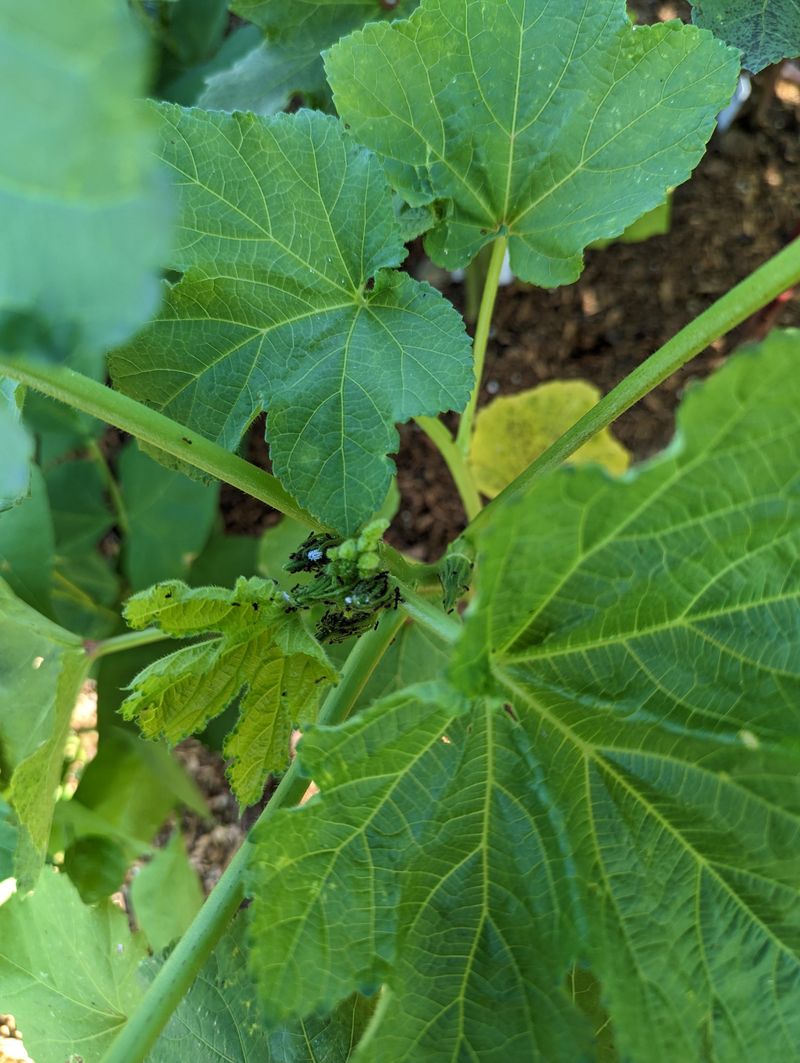
Sometimes your hands tell you what your eyes miss. Running your fingers along an okra stem or gently touching a leaf surface can reveal stickiness that is not visible at first glance.
That tacky feeling is a reliable sign that honeydew has been deposited on the plant, which strongly suggests sap-feeding insects are or recently were active nearby.
Shiny patches on stems, a glossy coating on leaf surfaces, or spots that feel slightly wet even when the plant has not been watered are all worth paying attention to. These are not random occurrences.
Honeydew builds up over time as insects feed, and the residue stays on the plant even after the insects move or are removed. So even if you cannot find the aphids immediately, the sticky surface tells you they were there.
Ants returning to the same spot on your okra day after day is another strong confirmation. Ants are efficient foragers, and if they keep going back to one area of the plant, something is drawing them there consistently.
That kind of repeated behavior is a pattern worth noticing.
Using both touch and observation together gives you a more complete picture of what is happening in your garden. A sticky leaf combined with ant activity is a strong enough signal to start looking more carefully for the pest source.
Once you find it, you can respond with the right approach instead of guessing. Practical observation like this is one of the most valuable skills any North Carolina gardener can build over time.
4. Black Sooty Mold May Follow Honeydew
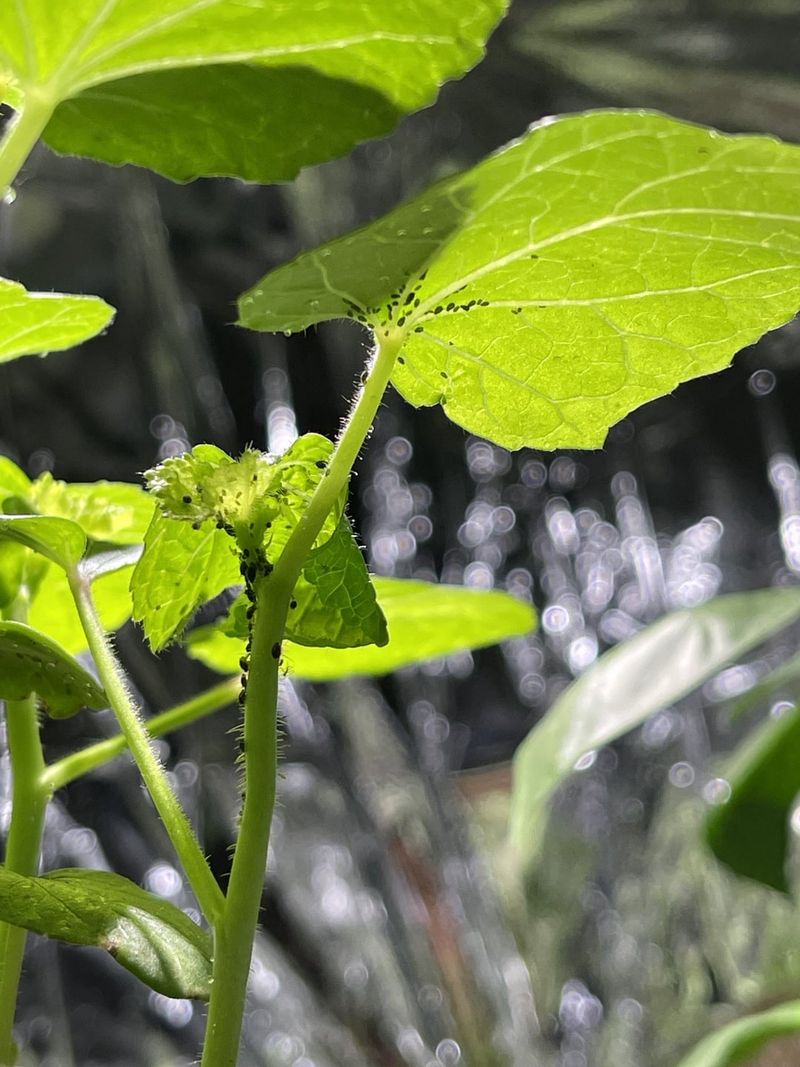
A dark, powdery coating on your okra leaves can look alarming, but it helps to understand what is actually causing it. Black sooty mold is a fungus that grows on top of honeydew left behind by sap-feeding insects.
It does not attack the plant tissue directly, but it does block sunlight from reaching the leaf surface, which can slow the plant down over time.
Seeing this mold on your okra is a signal that honeydew has been building up for a while. It means sap-feeding insects have likely been active long enough to leave a significant amount of sticky residue.
The mold itself is a symptom, not the starting point of the problem, so scrubbing or wiping the leaves without addressing the insect source will only offer temporary relief.
North Carolina summers, with their warmth and moisture, can encourage sooty mold to spread fairly quickly once honeydew is present.
The good news is that once the source insects are reduced and honeydew stops accumulating, the mold often fades on its own over time as rain and sunlight work on the residue. Healthy plant growth can outpace the damage.
Focusing on finding and reducing the aphid or other pest population is the most effective path forward. Once the honeydew source is managed, the mold loses its food supply and gradually disappears.
Treating the mold directly without handling the root cause is a bit like mopping the floor without turning off the leaky faucet. Address the source first, and the mold situation tends to resolve itself naturally.
5. Ants May Protect The Pest Source
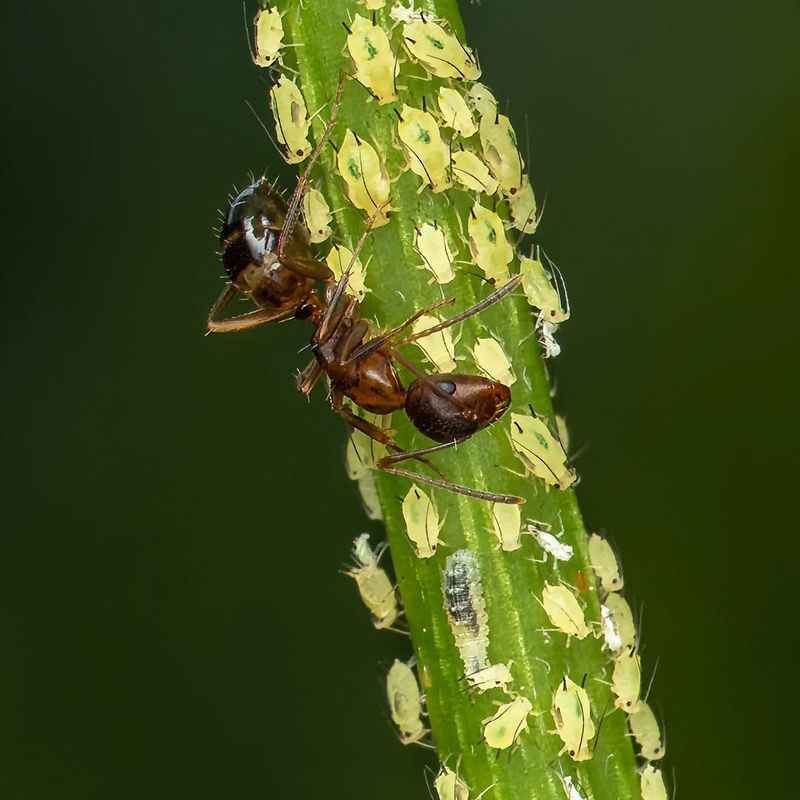
Here is something most gardeners do not realize at first: ants and aphids can have a working relationship.
Some ant species actively tend to aphid colonies, moving them to fresh plant tissue and guarding them from insects that would otherwise reduce their numbers.
In exchange, the ants get access to a steady supply of honeydew. It is a trade that benefits both sides, but not your okra.
When ants are guarding aphids on your okra stems, they may chase away or interfere with lady beetles, lacewing larvae, and other helpful insects that naturally manage aphid populations.
This does not happen in every garden or with every ant species, but it is a real possibility worth keeping in mind when you notice heavy ant activity alongside a persistent aphid presence.
Watching how ants behave around the insects on your plant can give you useful clues. If you see ants moving around aphid clusters in a protective way, or if helpful insects seem unable to stay on the plant, there may be some interference happening.
Again, this is not guaranteed, but it is worth observing before drawing conclusions.
One practical approach some gardeners use is creating a barrier on the lower stem to limit ant access to the plant. Sticky barriers applied carefully to the stem can reduce how many ants reach the upper portions of the okra.
Fewer ants in that area may give beneficial insects a better opportunity to work without being disrupted. Patient observation is your best starting point before trying any approach.
6. Beneficial Insects May Already Be Working
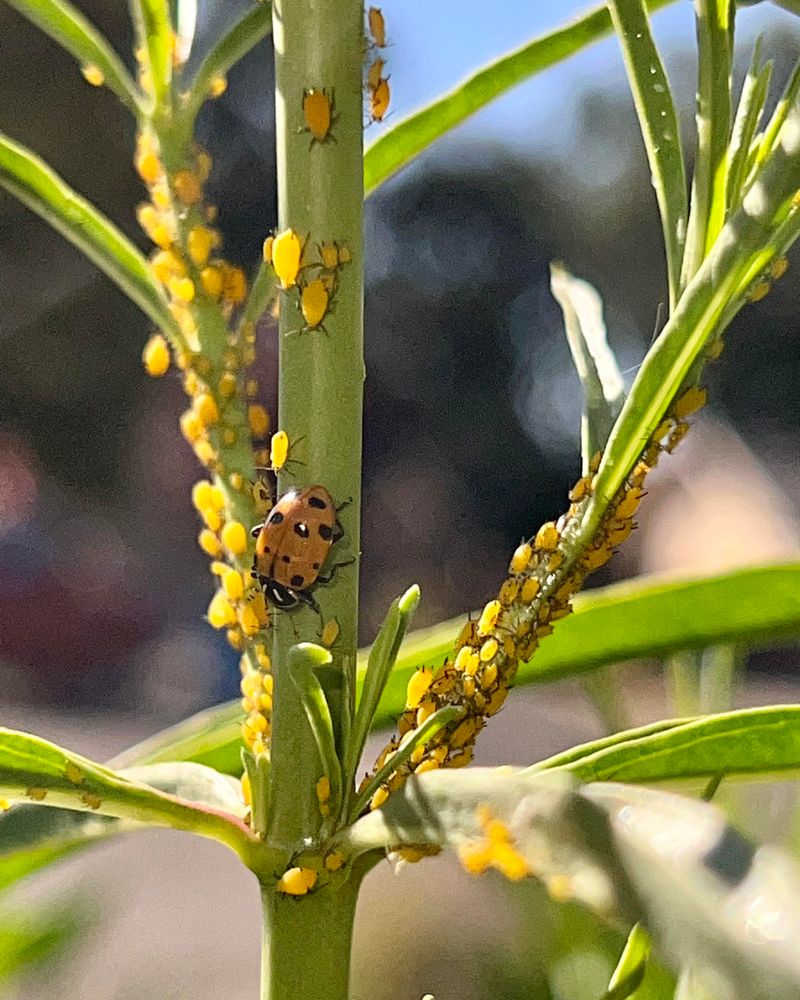
Before reaching for any kind of treatment, take a slow walk around your okra patch and look carefully at what is already happening on the plant. Nature often sends in reinforcements before you even notice a problem.
Lady beetles, lacewing larvae, syrphid fly larvae, and tiny parasitized aphids that look swollen or a different color are all signs that helpful insects are already active in your garden.
Lady beetles are probably the most recognizable. Both the adults and their larvae feed on aphids, and they can work through a surprising number of them in a short time.
Lacewing larvae are less familiar to most people but just as effective. They look a bit like tiny alligators and move through aphid clusters with impressive speed.
Syrphid fly larvae, which are small and worm-like, also feed on aphids and are often overlooked entirely.
Parasitized aphids are another clue worth knowing. When a tiny parasitic wasp lays an egg inside an aphid, the aphid eventually turns a tan or bronze color and looks puffed up.
Seeing these on your okra means the natural balance is already working in your favor. Spraying at this point could remove the very insects doing the most good.
When damage to your okra looks light and you are spotting these beneficial insects nearby, patience is genuinely your best tool. Give the natural process a chance to work before stepping in.
Many North Carolina gardeners find that waiting a few days while monitoring closely leads to much better outcomes than reacting immediately to the first sign of aphid activity.
7. A Strong Water Spray Can Be The First Fix
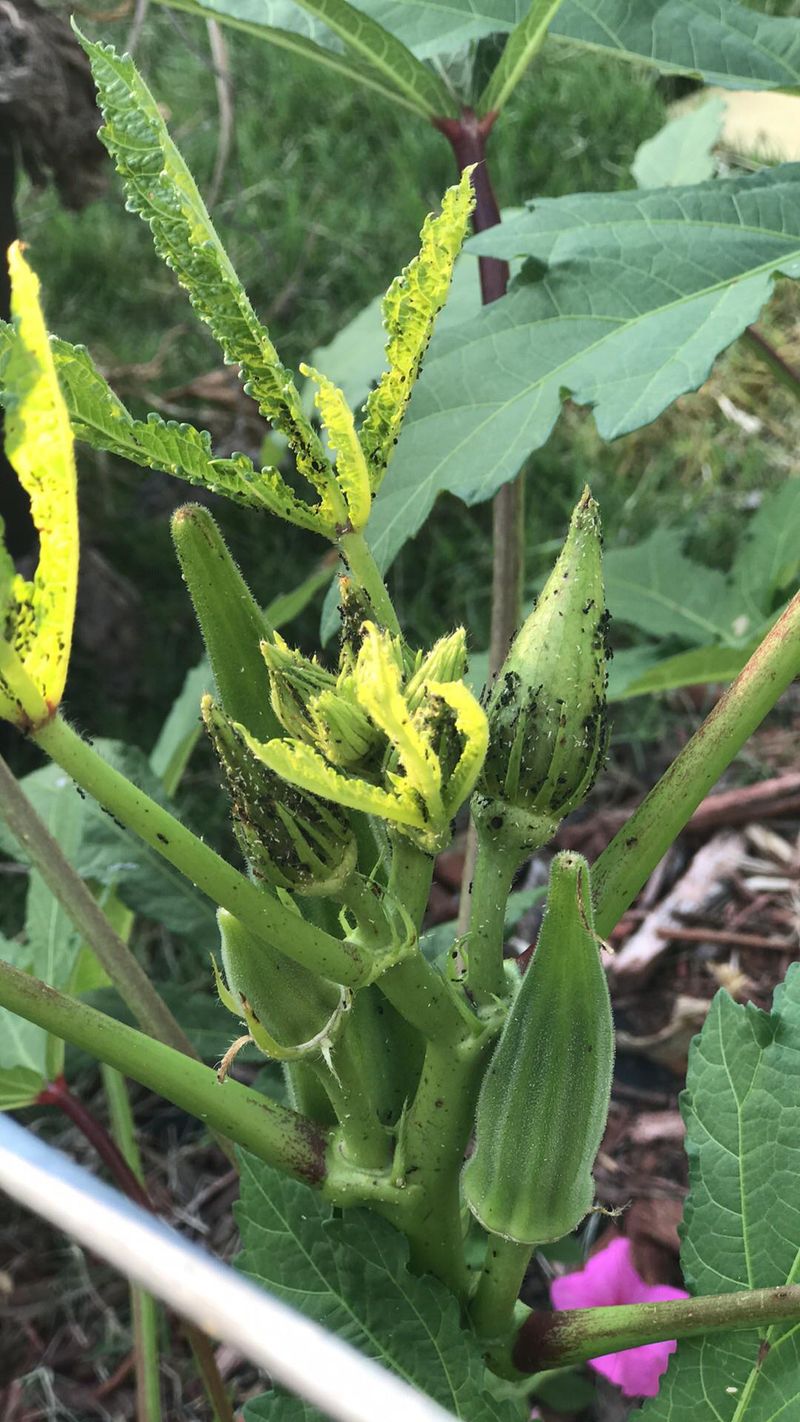
Water is one of the most underrated tools in a gardener’s toolkit, and it can be surprisingly effective when aphids are clustered on okra stems or leaf undersides.
A firm, focused spray from a garden hose can knock large numbers of aphids off the plant without introducing any products into your garden space.
It is a practical first step that many experienced growers reach for before anything else. The key is using enough pressure to actually dislodge the insects. A gentle mist will not do much.
You want a steady, direct stream aimed at the undersides of leaves and along the stem where clusters tend to gather.
Moving methodically from the top of the plant downward gives you the best coverage and helps make sure you are not missing hidden spots.
Timing matters more than most people think. Doing this early in the morning gives your okra plant the rest of the day to dry out in the summer sun.
Wet foliage that stays damp into the evening can create conditions that encourage other issues, so morning is the ideal window for this kind of treatment in North Carolina’s warm, humid climate.
You may need to repeat this process over a few days to see a meaningful reduction in aphid numbers. Aphids that land on the soil after being knocked off generally cannot make it back up the stem easily, especially if you have mulch or dry ground at the base.
Combining a water spray routine with regular monitoring gives you a solid, straightforward approach that keeps things simple and your garden balanced.
8. Avoid Overfeeding With Nitrogen
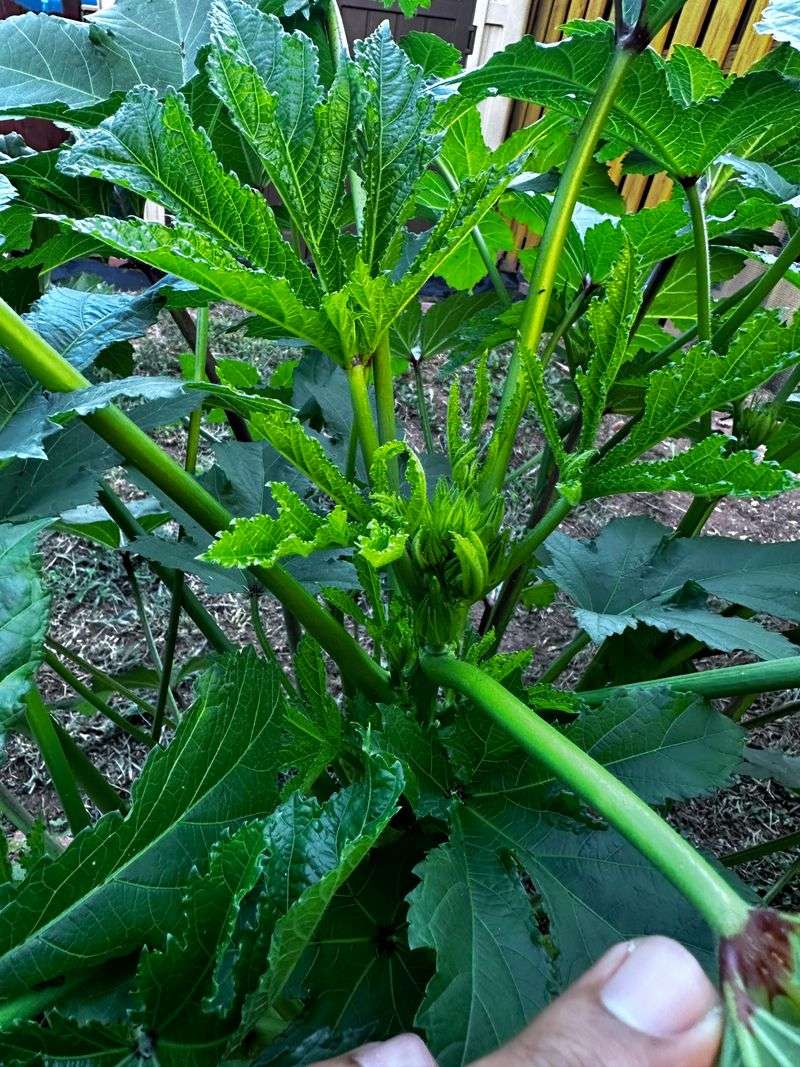
Soft, lush plant growth is beautiful to look at, but it can also be an open invitation for sap-feeding insects. When okra receives too much nitrogen, it pushes out an abundance of tender new growth very quickly.
That soft, fast-growing tissue is exactly what aphids find most appealing, so heavy feeding can unintentionally turn your okra into one of the most attractive spots in the garden for pests.
Nitrogen is an important nutrient for any vegetable garden, but balance is the goal. Okra is actually a fairly tough, adaptable plant that does not need heavy fertilizing to produce well.
In North Carolina’s warm summers, it tends to grow vigorously on its own when soil conditions are reasonable. Feeding lightly and consistently, rather than applying large amounts at once, keeps growth steady without creating overly soft, fast-expanding tissue.
Choosing a balanced fertilizer with roughly equal parts nitrogen, phosphorus, and potassium gives your okra what it needs without overloading on any single nutrient.
Compost worked into the soil before planting is another great option because it releases nutrients slowly and steadily over time, supporting healthy growth without sudden flushes of tender shoots.
Soil testing is worth doing at least once if you have not tried it. North Carolina’s Cooperative Extension service offers affordable testing that tells you exactly what your soil already has and what it actually needs.
Feeding your okra based on real data rather than guessing takes the uncertainty out of the process and helps you grow a plant that is strong, productive, and far less likely to attract the kind of attention ants and aphids are known to give.