Prune California Stone Fruit Carefully This Month To Avoid Borer And Disease Trouble
August can make a California stone-fruit tree look ready for an immediate haircut.
Peach shoots stretch past the canopy, plum water sprouts point straight upward, and apricot or cherry branches may seem overdue for cleanup.
The catch is that midsummer pruning does not mean the same thing for every stone fruit.
This month is especially important for apricots and cherries in areas where Eutypa dieback is a concern.
Dry summer pruning gives fresh wounds time to become less vulnerable before fall and winter rains arrive.
Peaches, nectarines, and some plums can also receive limited summer thinning, but heavy cutting can expose bark, reduce shade, and create stressed or wounded tissue that certain borers favor.
So what deserves a cut right now?
Start with species, weather, wound size, and tree health rather than the calendar alone. Watch for gum, reddish frass, sunburned bark, cankers, and damaged scaffold crotches before making another opening.
Careful August pruning can help.
Careless pruning can turn one tidy afternoon into a longer pest or disease problem.
Match Pruning Time To The Stone Fruit
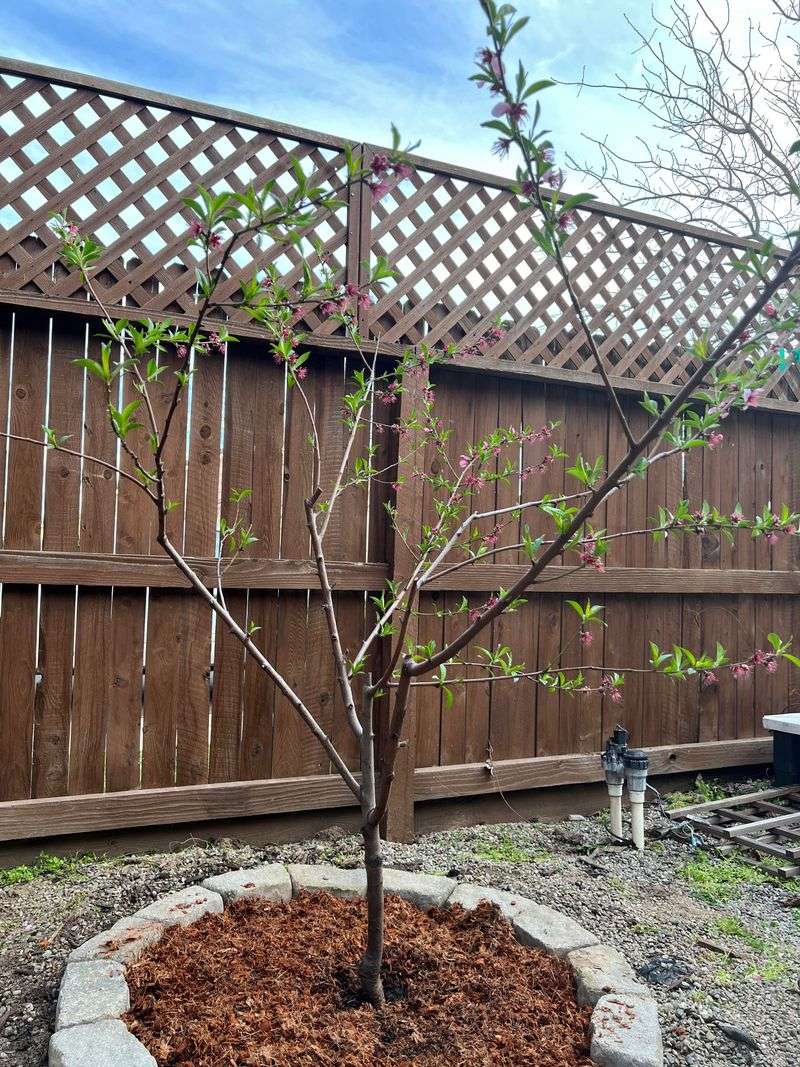
One pruning date does not fit peaches, nectarines, plums, apricots, and cherries equally well.
For California apricots and cherries, dry summer pruning has a specific disease-management advantage. Eutypa dieback can infect fresh pruning wounds when rainfall follows within roughly six weeks.
That is why July and August are favored in inland areas, while August is especially important near the coast. The goal is to finish early enough for wounds to become less susceptible before fall rain begins.
Peaches, nectarines, and Japanese plums are more flexible. Light summer thinning can reduce excessive vegetative growth, improve light penetration, and help control tree size.
That does not make August the right moment for a hard structural overhaul.
Large cuts remove shade from bark and create bigger wounds.
A vigorous peach with a few upright shoots may only need selective thinning. An apricot with interfering limbs or diseased wood may benefit from carefully timed summer work. A mature cherry often needs very little annual pruning at all.
Species comes first.
Before cutting, identify the tree, decide what problem the cut solves, and keep August work proportional to that purpose. The calendar may say summer, but the tree still gets the final vote.
Dry Summer Weather Protects Apricot And Cherry Wounds
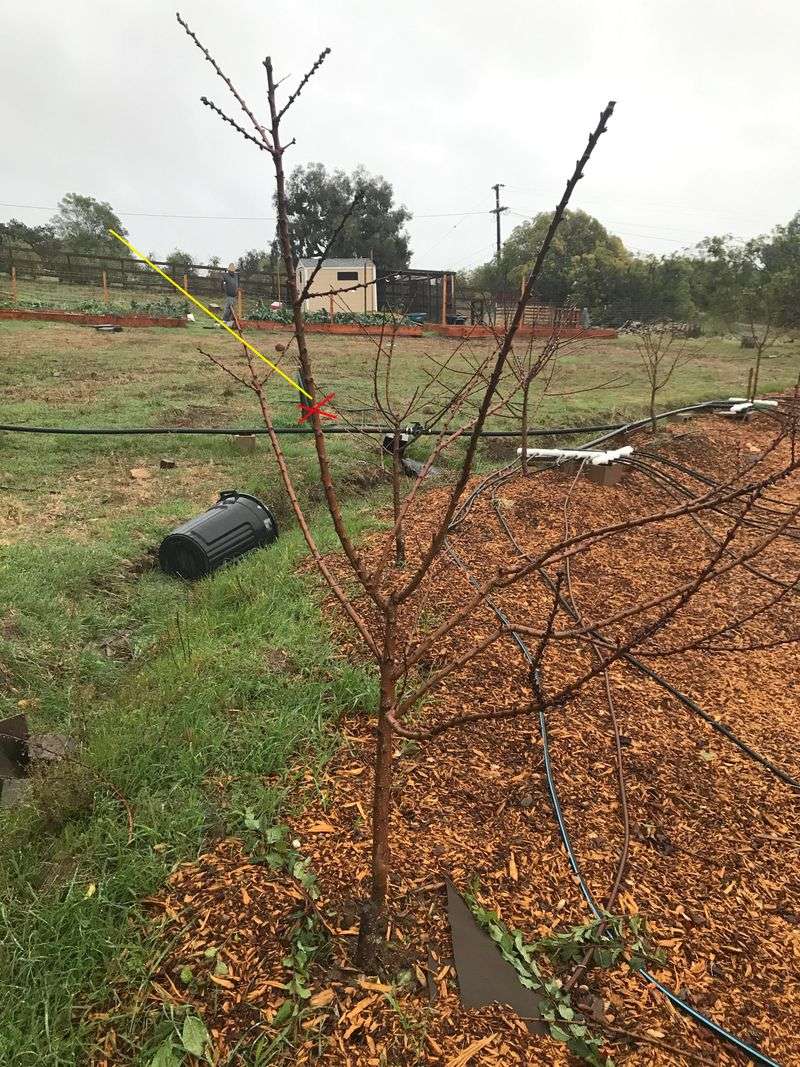
Apricots and cherries have a strong reason to prefer dry pruning weather in California.
Eutypa dieback enters through fresh pruning wounds, and infection is tied closely to rainfall. The fungus is most troublesome during fall and winter wet periods, when spores can reach newly exposed wood.
Giving summer cuts a long dry stretch reduces that opportunity.
A six-week buffer before expected fall rain is a useful target.
That does not mean every August day is automatically safe. Coastal gardens can receive mist, irrigation splash, or an early weather change, while inland locations usually have a more dependable dry window.
Check the forecast and avoid soaking freshly pruned branches with overhead sprinklers.
Cherries also face bacterial canker pressure.
Your California Garden Changes Every Week. Your Plan Should Too.
Gardening in California changes quickly throughout the season. Every Friday you’ll receive a simple weekly plan showing exactly what to plant, prune, fertilize, harvest, and protect so you never miss the right timing.
That disease is favored by cool, moist conditions, and spring or summer pruning can help reduce exposure compared with work done during wetter periods.
The larger lesson is the same: dry wood and dry weather make pruning wounds less inviting to several disease problems.
Keep cuts clean and limited.
Remove interfering, affected, or unproductive growth without stripping the canopy. Smaller wounds close more readily than large ones, and a tree with enough foliage left in place is better protected from sunburn.
For apricots and cherries, August is not just convenient pruning weather. In much of California, it is part of the disease-prevention strategy.
Keep Fresh Cuts Away From Incoming Rain
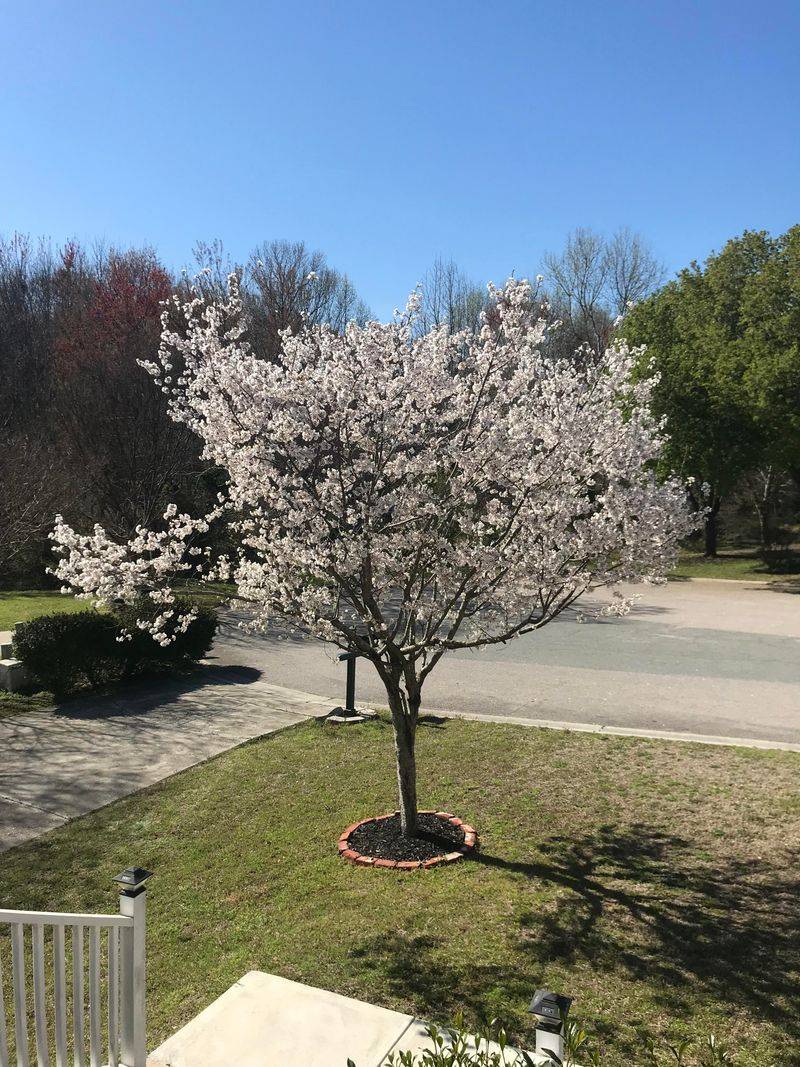
A pruning cut does not become irrelevant the moment the shears leave the branch.
Fresh wounds remain susceptible for a period after cutting, which is why the weather following a pruning session matters so much.
Eutypa infections on apricot and cherry are associated with rainfall reaching pruning wounds before they have had enough time to become less vulnerable.
That makes the six-week dry window important.
Finishing summer pruning well before the first dependable fall storms gives the tree time to respond to the wound.
Waiting until the edge of the rainy season removes much of the advantage that summer pruning was supposed to provide.
Irrigation deserves the same attention.
Sprinklers that wet trunks and branches can create unnecessary moisture around fresh cuts. Drip or other soil-focused irrigation keeps water near the roots instead of repeatedly washing the canopy.
Do not chase a perfect date on the calendar.
California weather varies from foggy coastal districts to hot inland valleys, and the first meaningful rain does not arrive everywhere at the same time.
Use local conditions, recent weather, and the forecast to choose the pruning window.
Dry timing is one of the cheapest disease-management tools in the orchard.
A sharp pair of pruners cannot control the weather, but choosing a dry stretch keeps fresh wood from meeting rain at the worst possible moment.
Learn Which Borers Target Wounded Wood
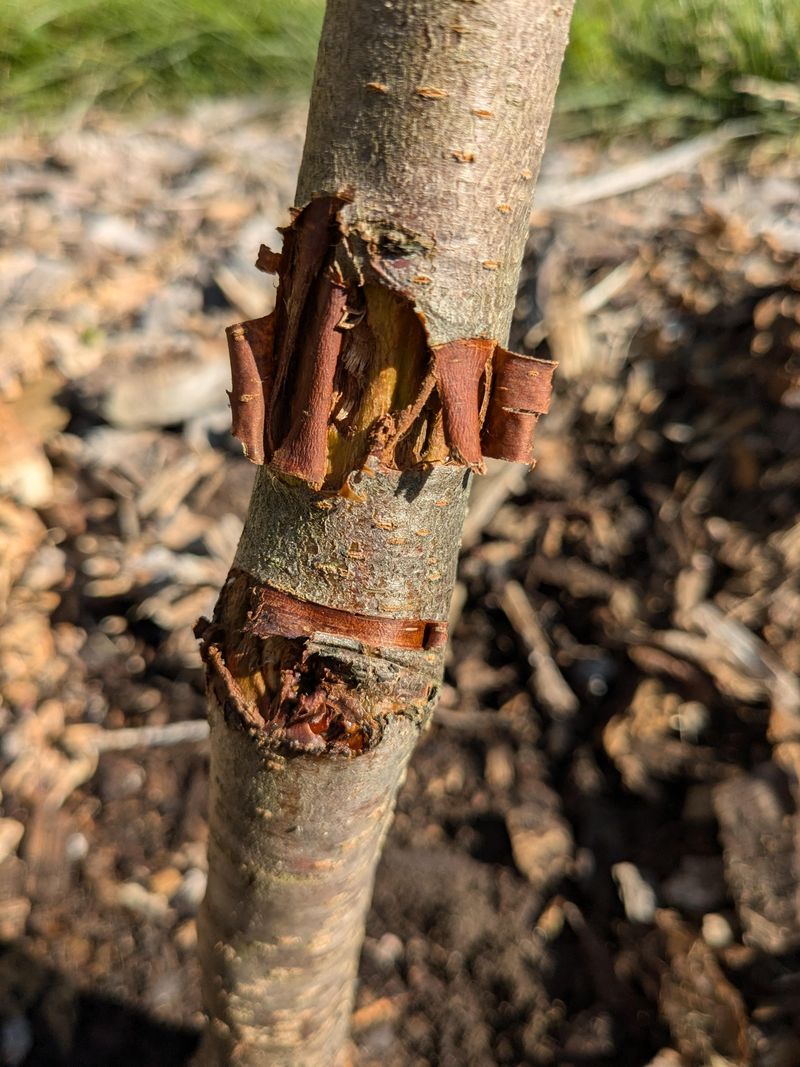
Borers do not need an invitation printed on the bark.
Several California wood-boring insects are more likely to use stressed, injured, sunburned, or freshly wounded trees.
American plum borer females lay eggs around relatively fresh bark wounds, callused pruning sites, scaffold crotches, graft unions, and other damaged tissue.
Pacific flatheaded borer also favors stressed or injured wood, including areas affected by sunburn and major pruning cuts.
That makes aggressive August pruning a poor bargain.
Removing a large limb creates a wound, and opening the canopy suddenly can expose bark that developed under shade. Strong California sun can then scorch that newly exposed surface, adding another layer of stress.
Keep summer cuts selective.
Remove shoots that truly interfere, reduce a crowded area gradually, and avoid stripping whole sections of canopy simply to make the tree look tidy. A smaller number of well-placed cuts leaves less wounded wood for insects to exploit.
Tree vigor matters too.
Drought stress, disease, sunburn, and mechanical injuries can all make woody tissue more vulnerable to borer attack. Regular irrigation suited to the tree and site, protection from trunk injury, and sensible pruning work together.
August pruning should solve a problem without creating three new ones.
A clean canopy is nice. Intact, shaded, vigorous bark is better, especially where wound-seeking borers are already part of the orchard pest picture.
Watch For Gum Mixed With Frass
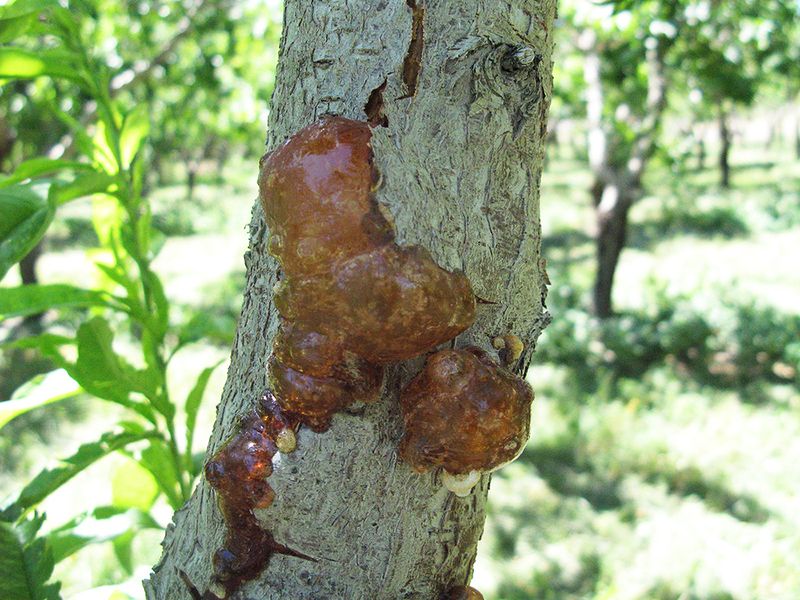
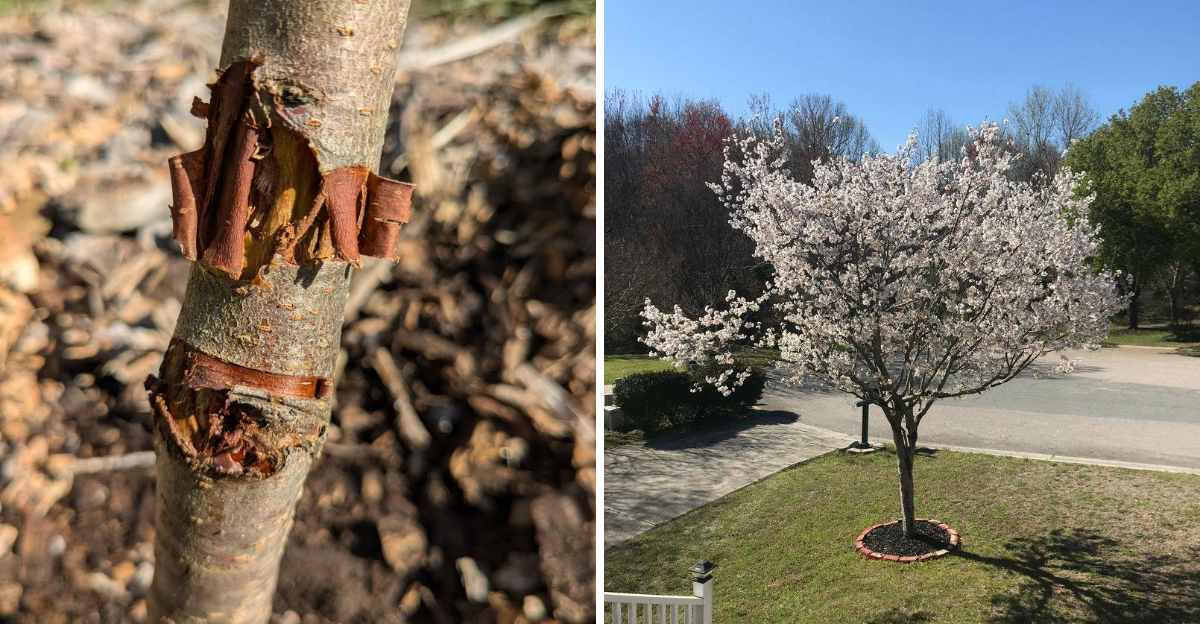
Amber gum on a stone-fruit tree deserves attention, but gum alone does not identify the cause.
Stone fruits can produce gum after physical injury, disease, environmental stress, or insect feeding. The clue becomes more specific when the gum is mixed with reddish-orange frass, webbing, or sawdust-like material around wounded bark.
American plum borer commonly leaves that combination.
Its larvae feed beneath the bark, especially around branch crotches, graft unions, and wounded areas. Their activity can create pockets of gum and reddish frass.
Pacific flatheaded borer causes galleries under bark and may leave cracked areas or characteristic adult emergence holes later.
Look before cutting.
Check the crown, lower trunk, scaffold junctions, old pruning sites, and sunburned patches. Note the color and texture of the debris and look for bark that appears sunken, cracked, or unusually soft.
Do not assume every gummy patch needs another pruning wound.
Canker diseases can also cause gumming, and cutting blindly into affected wood can make diagnosis harder while exposing more tissue.
Eutypa, for example, can produce amber gumming and brown discoloration beneath affected bark.
The tree often leaves more than one clue.
Read the location, the wound history, the frass, and the bark condition together. Good diagnosis should come before the shears, not after them.
Inspect Scaffold Crotches For Borer Activity
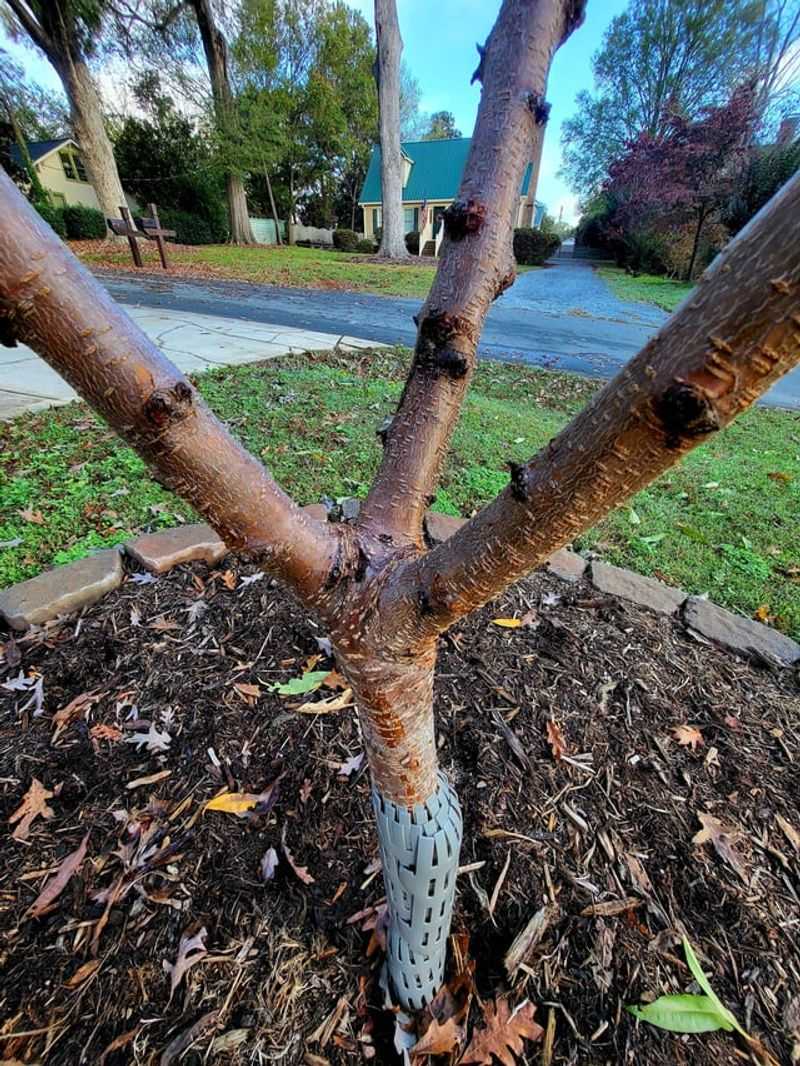
The junction where a major limb meets the trunk carries a lot of weight, and borers can make that spot even more vulnerable.
American plum borer is known to attack scaffold crotches and other wounded areas on young stone-fruit trees. Larval feeding beneath the bark can weaken the junction enough to increase the chance of limb breakage under wind or a heavy crop.
Inspect those crotches before pruning nearby.
Look for reddish frass, gum pockets, webbing, bark cracks, or old wounds that never closed cleanly. Graft unions and lower trunk injuries deserve the same attention.
Sun exposure matters too.
Overpruning can remove the leafy shade that previously protected branches and trunks. Newly exposed bark can sunburn in intense California heat, and sunburned tissue is more attractive to some flatheaded borers.
Keep protective foliage where it is doing useful work.
Young trunks or exposed lower limbs that face strong sun may benefit from whitewashing with interior white latex paint diluted with an equal amount of water, a method used to reduce sunburn on susceptible bark.
Do not cover suspicious damage and forget it.
A coating can help prevent sun injury, but it does not remove larvae already tunneling beneath bark or cure cankered tissue.
Scaffold crotches are structural checkpoints.
A few minutes spent inspecting them before August pruning can reveal the problem that matters more than the unruly shoot you planned to cut.
Remove Affected Wood At The Right Time
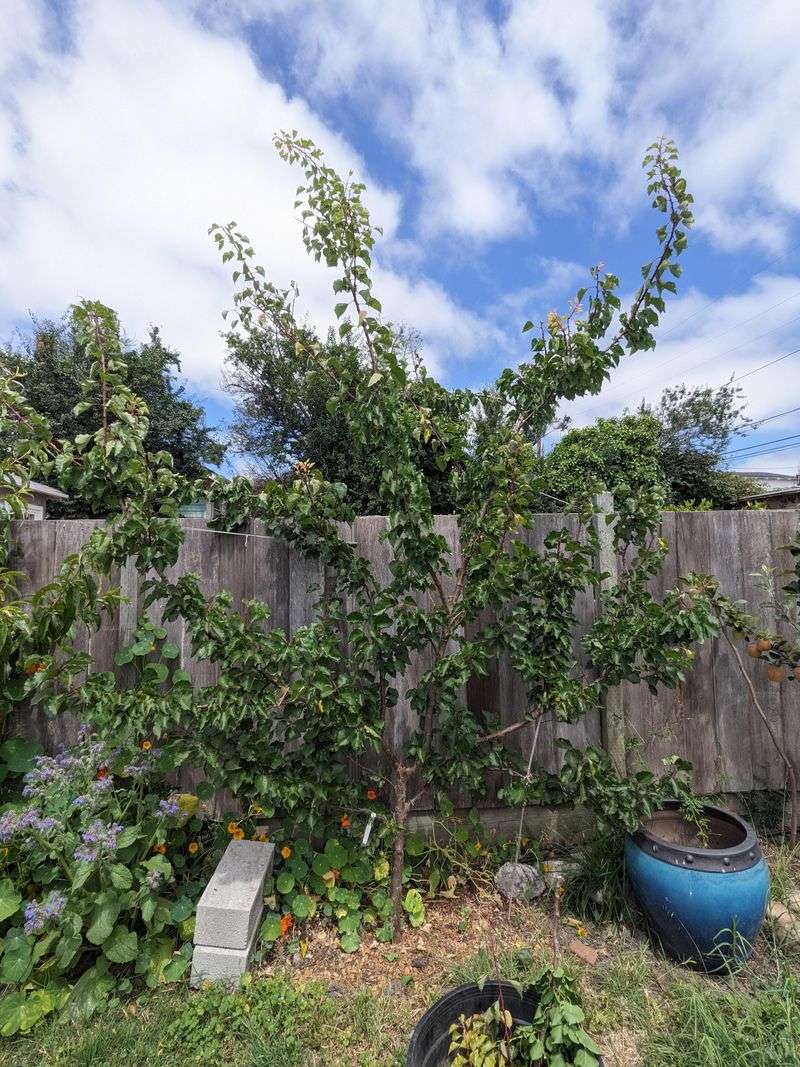
Sanitation pruning works best when the problem is identified and the cut reaches healthy wood.
For Eutypa on apricot or cherry, infected limbs should be removed well below visible internal symptoms.
California guidance calls for cutting at least one foot below signs of the disease because discoloration can extend beyond what is obvious from the outside.
Use sharp tools.
A clean cut damages less surrounding tissue than a crushed or ragged one. Stay outside the branch collar and branch bark ridge on ordinary branch removal so the tree keeps the tissues that support wound closure.
Tool hygiene matters around diseased wood.
Clean pruning equipment and disinfect it after contact with suspect tissue. Seventy percent isopropyl alcohol or a fresh ten-percent bleach solution are recommended options, with bleach followed by rinsing and tool care because it can corrode metal.
Remove the prunings promptly.
Diseased branches, infested wood, and debris left beneath orchard trees can remain sources of pathogens or wood-boring insects. Get affected material away from healthy trees rather than building a brush pile beside the row.
Large diseased scaffolds deserve caution.
A certified arborist or experienced fruit-tree professional may be the better choice once cuts become large, high, or structurally important.
Good sanitation pruning is not about cutting more.
It is about making the few necessary cuts correctly, then taking the problem wood with you.