Prune Your Wisconsin Apple Trees in Late Winter for Better Structure, Fruit Quality, and Long-Term Productivity
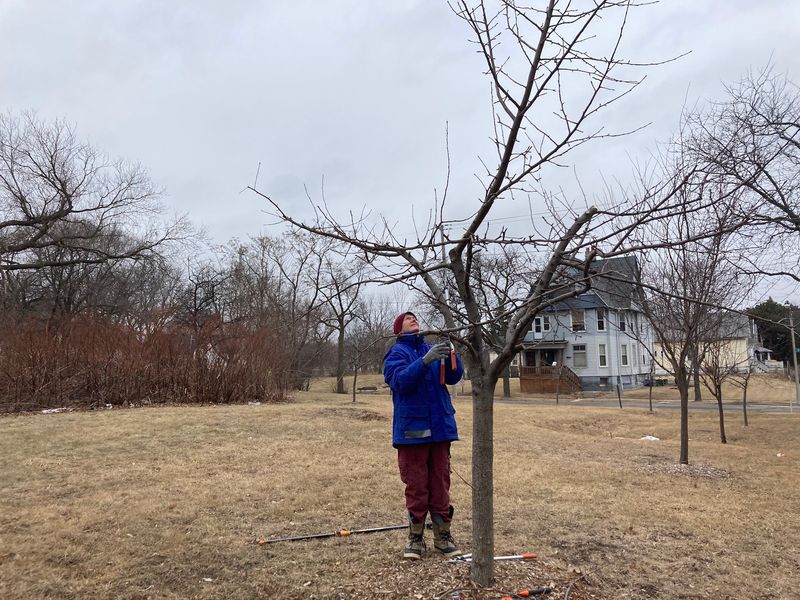
Apple trees in Wisconsin reward a little late-winter attention with stronger branches, better-lit fruit, and a canopy that is easier to manage through the growing season. Pruning at the right moment, while the tree is still dormant and before any green tissue pushes out, gives you a clear view of the branch structure and lets wounds begin healing as soon as spring arrives.
The timing, the cuts you make, and how much you remove all matter more than most homeowners expect. Get those three things right and your Wisconsin apple trees will be in noticeably better shape heading into the growing season.
When Wisconsin Apple Trees Reach the Right Dormant-Pruning Window
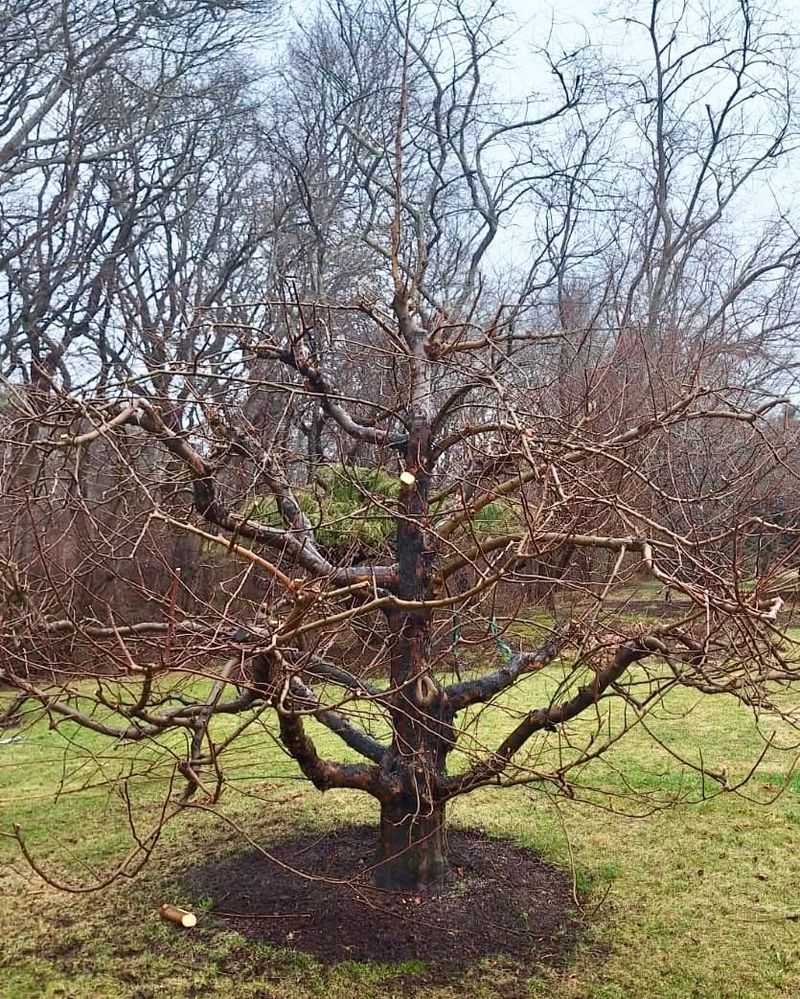
Late February can feel too early and May is definitely too late, so Wisconsin apple growers need a reliable seasonal cue rather than a fixed date on the calendar. UW-Madison Extension guidance on training and pruning apple trees identifies late winter and early spring, after the coldest temperatures have passed and before new green growth appears, as the practical window for dormant pruning in Wisconsin.
March and sometimes early April offer a useful general reference for much of the state, but the exact timing shifts depending on where in Wisconsin you garden and what the spring weather is doing in any given year.
The reliable trigger is not a date but a condition: the tree should still be dormant, with no emerging green tissue on the buds. Wisconsin spans a wide range of climates from its southern border to its northern counties, and bud break can arrive weeks earlier in Kenosha than in Ashland.
Watching your own trees rather than the calendar keeps you from pruning too late in a warm spring or too early after a brief mild spell.
When you do head outside with your pruning tools, choose a dry and mild day when temperatures are above freezing.
Milwaukee County Extension’s apple-pruning demonstration recommends exactly those conditions, partly because frozen wood is harder to cut cleanly and partly because wet weather can spread disease.Waiting for a decent day costs nothing and makes the work easier on both you and your Wisconsin apple tree.
If a warm week fools you into thinking spring has arrived and you spot the first hint of green swelling on the buds, stop and assess. A small amount of early green movement does not automatically disqualify you from pruning, but once leaves are actively unfolding in Wisconsin, the dormant window has closed and you should wait until the following winter.
What Dormant Pruning Can—and Cannot—Do for a Wisconsin Apple Harvest
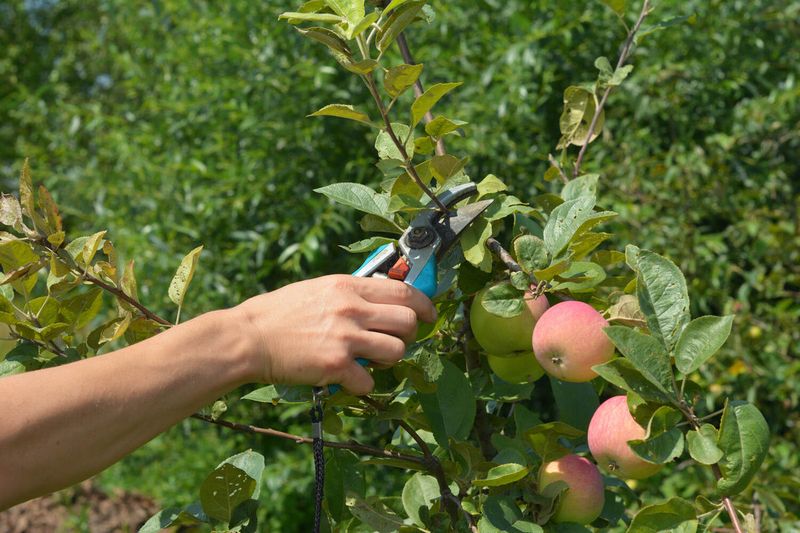
Many Wisconsin gardeners prune their apple trees expecting a bigger apple count the following fall, and that expectation deserves a careful correction before anyone picks up a saw. UW-Madison Extension’s seasonal pruning update frames the real benefits clearly: better light penetration through the canopy, improved air circulation, stronger branch structure, more manageable tree size, and easier access for spraying and harvesting.
Those are meaningful and practical gains for any Wisconsin apple grower.
Your Wisconsin Garden Changes Every Week. Your Plan Should Too.
Gardening in Wisconsin changes quickly throughout the season. Every Friday you’ll receive a simple weekly plan showing exactly what to plant, prune, fertilize, harvest, and protect so you never miss the right timing.
Fruit quality is also a well-supported benefit. Apples that develop in a more open, better-lit Wisconsin canopy tend to color more evenly, size up more consistently, and face less disease pressure than fruit crowded in a dense interior.
That is a genuinely better harvest in many ways, even if the total number of apples on the tree does not automatically climb.
The tradeoff is real and worth understanding before you start cutting. Every branch you remove from a Wisconsin apple tree also removes some of the fruiting wood that would have carried blossoms and fruit.
University of Minnesota Extension’s apple pruning guidance, which applies well to the upper Midwest climate Wisconsin shares, notes that heavy pruning can stimulate vigorous leafy regrowth rather than productive fruiting growth, which can actually reduce the crop in the short term.
The practical goal for a mature Wisconsin apple tree is balance, not maximum removal. You want enough fruiting wood to carry a reasonable crop, enough open space to let light and air reach that fruit, and a branch structure strong enough to hold it all without breaking.
A Wisconsin apple tree pruned with that balance in mind will be more productive over many seasons than one pruned aggressively in a single afternoon.
Start by Removing Problem Growth from the Wisconsin Apple Tree
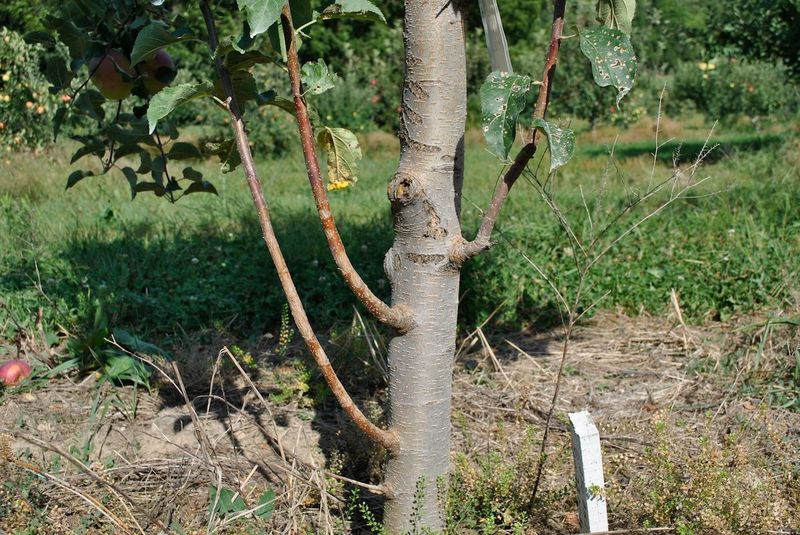
Before you think about shaping or opening the canopy of your Wisconsin apple tree, work through a first pass that removes the growth no healthy tree needs. Dead, diseased, broken, or damaged branches are the first priority on any Wisconsin apple tree because they contribute nothing productive and can harbor pests or disease pathogens through the winter.
Pull these out cleanly and you have already improved the tree.
Next, look down at the base and along the lower trunk for suckers growing from the rootstock. Many Wisconsin apple trees are grafted onto dwarfing or semi-dwarfing rootstocks, and any growth originating below the graft union will not produce the apple variety you planted.
Remove those suckers at their point of origin. UW-Madison Extension’s apple training and pruning resource also identifies water sprouts, crossing or rubbing branches, downward-growing limbs, and weakly positioned growth as priority removal candidates in Wisconsin apple trees.
Water sprouts deserve a slightly nuanced approach. Most of the long, whippy, vertical shoots that shoot straight up from scaffold branches in a Wisconsin apple tree should come off because they shade the canopy and rarely fruit well.
However, Wisconsin Extension notes that an occasional water sprout can be retained if it happens to fill a genuinely open gap in the canopy structure, so evaluate each one rather than stripping every upright shoot automatically.
Sharp, clean tools matter throughout this process, and they matter most when you are working near any tissue that looks diseased. UW-Madison Extension’s tool-maintenance guidance recommends disinfecting pruning tools with 70% isopropyl alcohol or a properly diluted bleach solution.
Wipe or dip blades between cuts when moving from branch to branch on a Wisconsin apple tree that shows any sign of disease, and do not skip this step even when it slows you down.
Use Thinning Cuts to Shape Mature Wisconsin Apple Trees
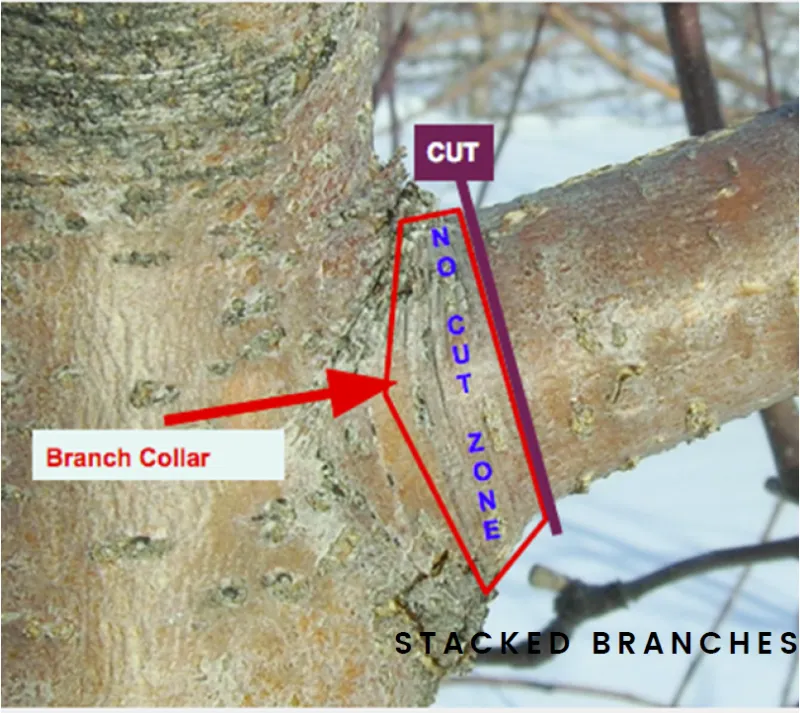
Once problem growth is out of the way, the main technique for shaping a mature Wisconsin apple tree is the thinning cut. A thinning cut removes an unwanted branch entirely, tracing it back to the parent branch or trunk and cutting just outside the raised ring of tissue called the branch collar.
The collar contains the cells the tree uses to seal over the wound, so leaving it intact is one of the most important things you can do for your Wisconsin apple tree’s long-term health.
Contrast the thinning cut with a heading cut, which chops a branch partway back and leaves a stub. University of Minnesota Extension’s pruning guidance explains that heading cuts stimulate vigorous regrowth directly below the cut point, often producing a cluster of fast-growing shoots that shade the canopy and are poorly attached to the parent wood.
For mature Wisconsin apple trees, thinning cuts are the preferred choice because they remove wood cleanly without triggering that burst of unproductive growth.
Avoid two common errors on both ends of the cut: a flush cut that removes the collar entirely, and a long stub that leaves dead wood projecting from the branch. Both interfere with the Wisconsin apple tree’s ability to close the wound.
UW-Madison Extension’s apple-tree training resource is clear that cuts should be made just outside the collar, angled slightly away from the trunk, and Wisconsin Extension also advises against applying pruning paint or wound dressing, preferring to let cuts dry naturally.
Large limbs on a Wisconsin apple tree require a three-cut sequence to prevent the weight of the falling branch from tearing a strip of bark down the trunk. Make a shallow undercut about 12 inches out from the trunk, then cut from the top a few inches further out to drop the bulk of the limb, and finish with a clean final cut just outside the collar.
UW-Madison Extension’s deciduous tree pruning guide describes this three-cut method and explains why skipping the undercut on a heavy Wisconsin apple branch can cause significant bark damage that takes years to close over.
Open the Wisconsin Apple Canopy Without Overpruning
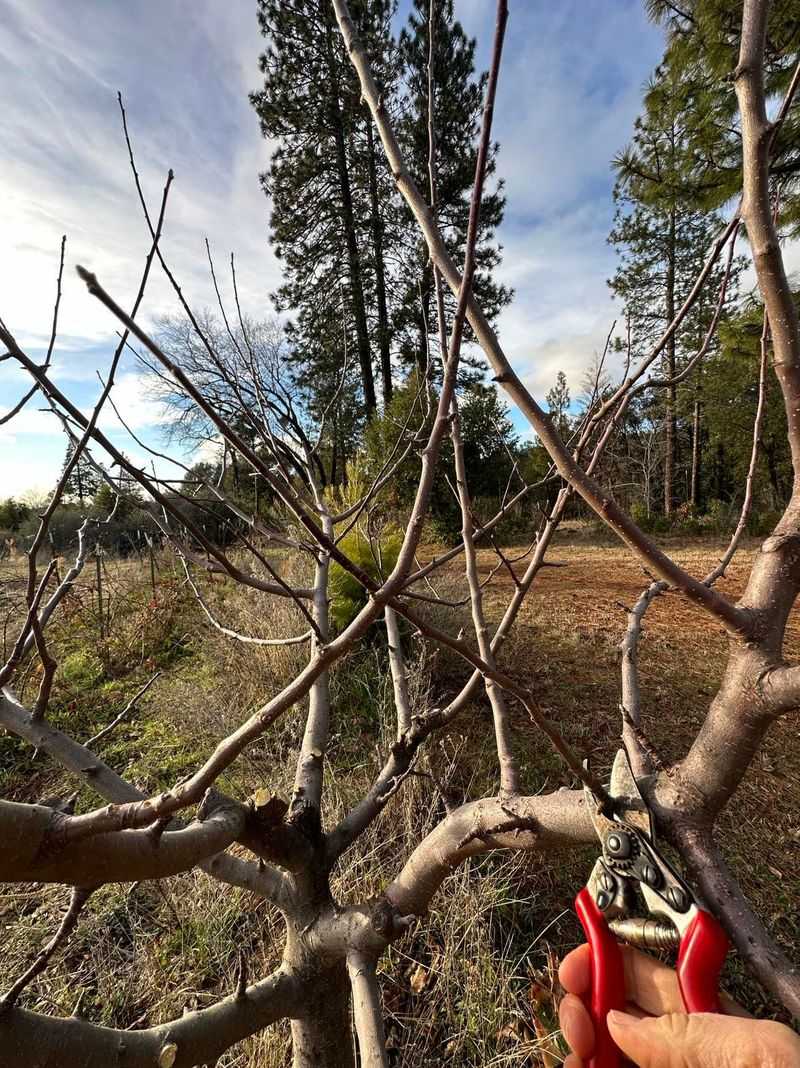
Applying individual thinning cuts well is one skill; deciding where to make them across the whole canopy is another. The goal for a Wisconsin apple tree is not a stripped-down skeleton but a canopy with open windows, meaning spaces that allow sunlight to reach interior branches and fruit, and airflow that reduces the moist, stagnant conditions that favor fungal diseases.
You are editing the tree, not rewriting it from scratch.
A practical limit that Wisconsin Extension and regional guidance consistently recommend is removing no more than about one-third of the live canopy in any single dormant season. UW-Madison Extension’s deciduous tree pruning resource supports this boundary, noting that removing too much at once stresses the tree and can trigger a flush of vigorous vegetative growth that shades the very interior you were trying to open.
For a Wisconsin apple tree that has been neglected for several years, staying within that one-third limit likely means spreading the work across multiple seasons.
As you work through the canopy of your Wisconsin apple tree, step back frequently and look at the light pattern. You want to see sunlight reaching into the middle of the tree from multiple angles, not just streaming through one large gap while the rest of the canopy stays dense.
UW-Madison Extension’s seasonal pruning update describes this as creating windows through the canopy rather than gutting the interior, and that framing is useful because it reminds you that productive fruiting wood in a Wisconsin apple tree is worth preserving.
The stopping rule is simple: quit when the structure and light distribution look noticeably better, not when you run out of branches to question. A well-pruned Wisconsin apple tree still looks like a tree when you are done, with most of its canopy intact and a cleaner, more open branch framework than when you started.
Better canopy light connects directly to improved fruit color, more even sizing, reduced disease pressure, and easier harvesting, which are concrete improvements even if the total apple count stays roughly the same.
Train Young Wisconsin Apple Trees Before Chasing Fruit
A two-year-old Wisconsin apple tree and a fifteen-year-old bearing tree need completely different approaches, and mixing them up is one of the most common pruning mistakes homeowners make. Young, recently planted trees in Wisconsin are still establishing their root systems, and those roots depend on the foliage above ground to generate the energy needed for growth.
Removing too much top growth too soon slows establishment rather than helping it.
For a newly planted Wisconsin apple tree, the first year or two of pruning should be limited mostly to corrective work: removing any broken, dead, or diseased growth and cleaning up obvious structural problems. UW-Madison Extension’s deciduous tree pruning guide advises retaining as much healthy foliage as possible on young trees to support root development, which is the opposite of the approach you would take with an established Wisconsin apple tree carrying a full canopy.
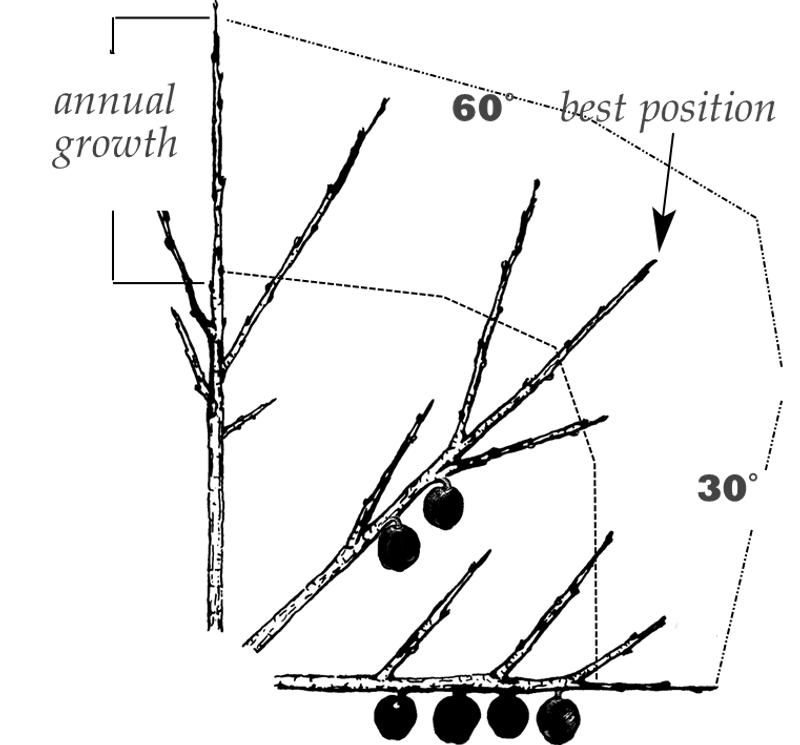
Once a Wisconsin apple tree is established and putting on consistent growth, structural training becomes the priority. The central leader, the single upright stem that forms the trunk and runs through the center of the canopy, should be maintained and encouraged.
Scaffold branches, the main lateral limbs that will eventually carry fruit, should be selected for even spacing around the trunk and for wide crotch angles. UW-Madison Extension’s apple training resource and University of Minnesota Extension’s companion guide both describe branches positioned at roughly 60 degrees from the central leader as stronger and more conducive to fruiting than branches that grow more steeply upright.
Steeply angled branches in a young Wisconsin apple tree tend to grow vigorously and produce less fruit; wider angles slow that vegetative push and encourage earlier fruiting. You can encourage wide angles on young flexible branches by weighting them with small bags of sand or tying them to stakes during the growing season, a technique that costs almost nothing and shapes the Wisconsin apple tree’s framework for decades.
Renovate Neglected Wisconsin Apple Trees Slowly and Safely
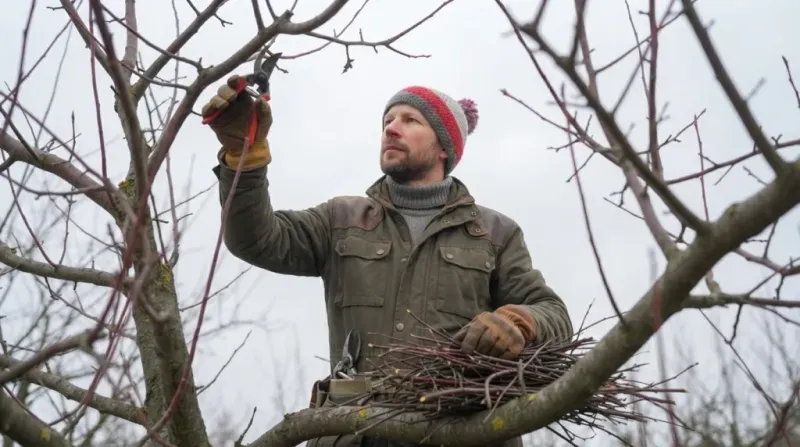
An apple tree that has gone years without pruning in Wisconsin presents a different challenge than a well-maintained one. The instinct to fix everything in a single session is understandable, but acting on it is one of the fastest ways to reduce rather than improve fruit production.
Removing a large share of the canopy at once triggers the tree to respond with a surge of fast-growing vegetative shoots, which shade the interior, rarely fruit well, and leave you with more to remove the following year.
UW-Madison Extension’s guide to rejuvenating old apple trees recommends spreading major renovation work across two or three dormant seasons, removing no more than about one-third of the live canopy each year. That pace keeps the Wisconsin apple tree productive while gradually opening the structure, and it gives you time to evaluate how the tree responds before making the next round of cuts.
Some long-neglected Wisconsin apple trees are genuinely poor candidates for renovation if they are severely damaged, excessively tall, or growing in deep shade, and in those cases replacement with a younger tree on an appropriate rootstock may be the more practical path.
Safety is a separate and non-negotiable consideration. Any Wisconsin apple tree work that requires a tall ladder, involves limbs larger than about four inches in diameter, or puts you near a building, fence, or power line calls for a certified arborist rather than a homeowner with a handsaw.
UW-Madison Extension’s arborist-selection guide explains what credentials to look for and how to find a qualified professional in Wisconsin.
Fire blight is a bacterial disease that affects Wisconsin apple trees and requires a different removal approach from ordinary dormant pruning. During the growing season, UW-Madison Extension’s fire blight management resource recommends cutting at least 12 inches below the lowest visible symptom.
When removing overwintering cankers during the dormant season on a Wisconsin apple tree, cut at least 4 to 6 inches below the canker margin, disinfect tools between every cut with 70% isopropyl alcohol or a diluted bleach solution, and bag or burn the removed material rather than leaving it near the tree. UW-Madison Extension’s dedicated fire blight page provides additional detail on identifying the disease and managing it through the season.
Plan for a Wisconsin Apple Harvest That Depends on More Than Pruning
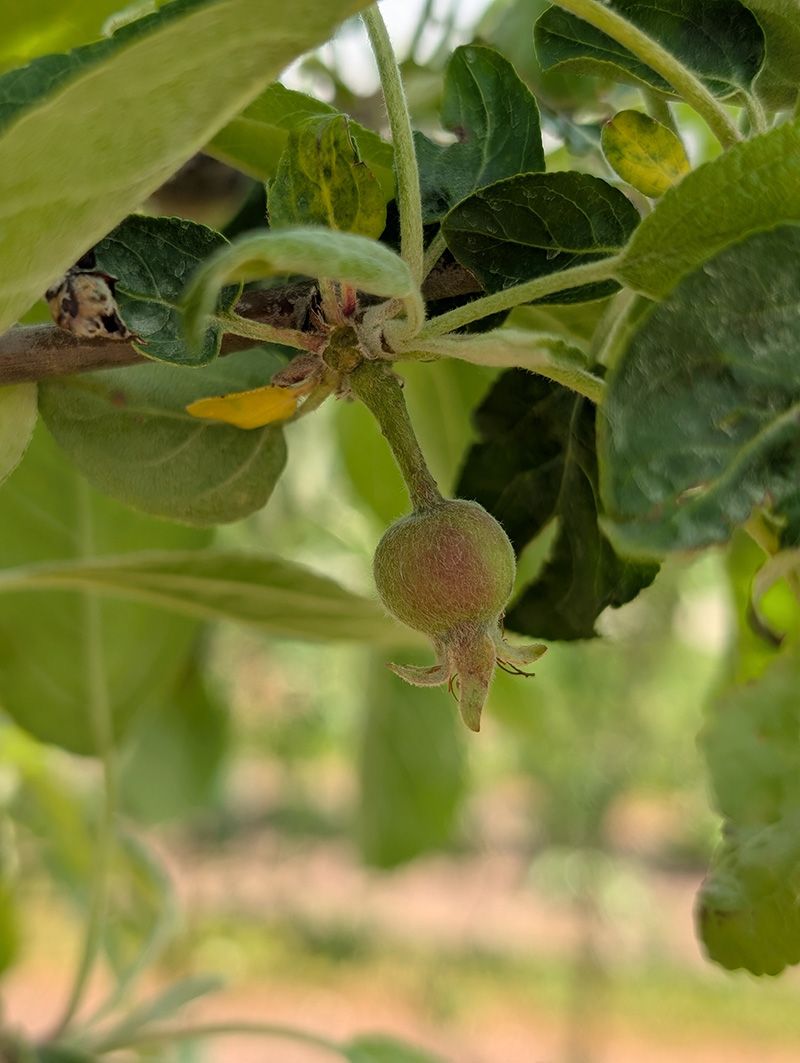
Dormant pruning is one important tool in a Wisconsin apple grower’s seasonal routine, but it does not operate in isolation. Even a well-pruned Wisconsin apple tree can set far more fruitlets than it can size up properly, which is why fruit thinning often becomes necessary after bloom.
University of Minnesota Extension’s apple-thinning guidance explains that removing excess fruitlets improves fruit size, quality, and return bloom, and that dormant pruning alone does not eliminate the need for that later step. Minnesota Extension’s bloom-thinning research summary adds useful context on timing that thinning intervention for best results.
A range of other factors shapes what Wisconsin apple trees actually produce in any given fall. Pollination depends on compatible cultivars growing nearby and on bee activity during bloom, both of which vary season to season in Wisconsin.
Rootstock and cultivar selection influence tree vigor, fruit size, and cold hardiness. Soil fertility, drainage, pest pressure, and disease history all play roles that no amount of pruning can offset.
Spring frost during bloom is perhaps the most unpredictable production limit for Wisconsin apple growers, capable of eliminating most of a crop in a single night regardless of how well the tree was pruned that winter.
UW-Madison Extension’s Wisconsin apple-growing overview and the Extension’s core pruning guide together make the practical picture clear: prune Wisconsin apple trees during dormancy, remove branches selectively, stay within the one-third canopy limit, and protect branch collars. Judge the results by a healthier, more open, and more manageable Wisconsin apple tree, not by a guaranteed increase in apple count.
A well-structured Wisconsin apple tree, pruned with patience and realistic expectations, tends to reward its grower with better fruit quality and easier seasons for years to come.