9 California Garden Plants That Can Handle A Cooler Fall Without Losing Their Appeal
A flower bed in late October is exactly the kind of thing most neighbors assume gave up somewhere back in September, tired stems, faded color, nothing left worth a second glance.
Look closer, though, and something entirely different is happening in a few specific spots.
Pink grass catching the sun at an angle nobody expected. Red berries settling in on a shrub that looks otherwise unremarkable. Fresh flowers opening like the calendar just reset itself back to spring.
Something about the plants doing this seems to actually prefer the cooler weather, rather than merely tolerating it the way most of the garden does.
Curious which ones are quietly having their best month while everything else fades? The answer starts with a plant most people only notice for its leaves.
1. Coral Bells Hold Color Through Cooler Weeks
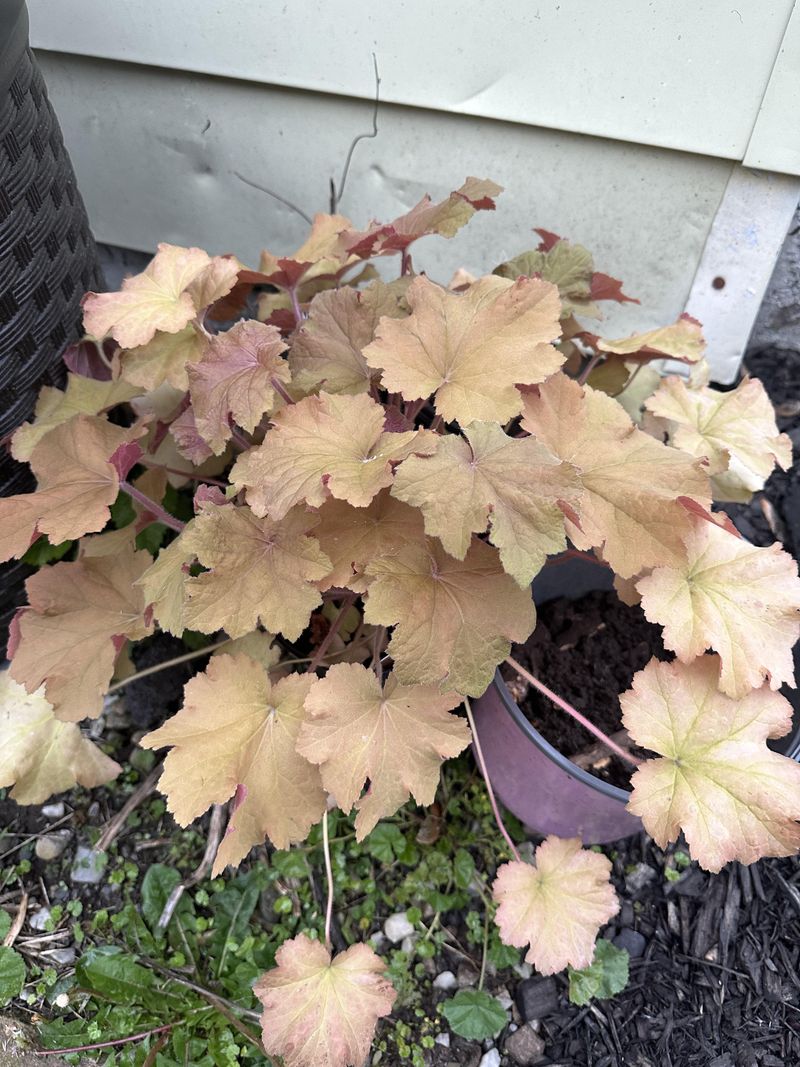
A shady bed of coral bells in November often looks better than it did back in July, which surprises most people the first time they notice it.
Gardeners mostly grow heuchera for its foliage, not its tiny flowers. Leaves come in shades like deep plum, caramel, lime green, silver, and near-black.
Cooler weather helps these plants relax.
Summer heat, especially in inland valleys, can scorch the leaf edges and make colors look washed out. Once temperatures drop, many varieties hold their color well, and some purple and amber types look even richer in the softer fall light.
California even has its own native relative.
Island alum root, Heuchera maxima, comes from the Channel Islands and handles dry shade better than many fancy hybrids. It pairs nicely with ferns and other shade lovers.
A few simple habits keep coral bells looking sharp into late fall.
Give them morning sun and afternoon shade, especially away from the coast. Plant them in soil that drains well, since soggy roots can lead to crown rot. Water deeply but let the top inch of soil dry out between drinks.
Fall is also a great time for a little cleanup.
Snip off brown or tattered leaves so the fresh ones can shine. If an older plant has a tall, woody center, dig it up, divide it, and replant the healthy pieces a bit deeper.
2. Muhly Grass Adds Movement Late In The Season
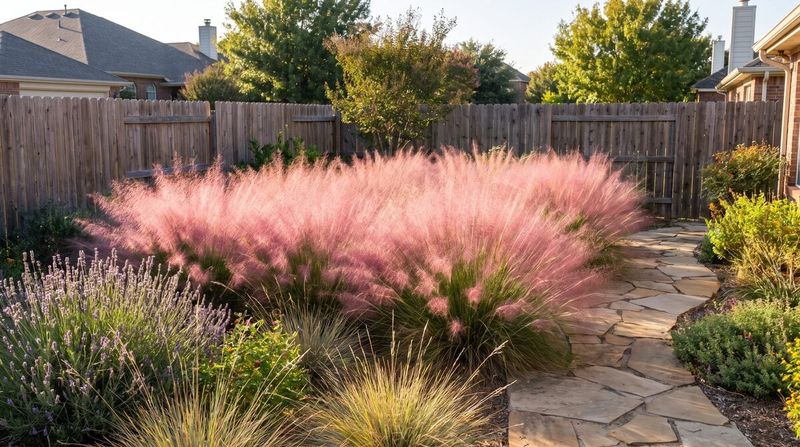
Most of the year, pink muhly grass looks like a plain, tidy clump of thin green blades. Then fall arrives, and clouds of airy pink to purple plumes float above the foliage like cotton candy.
The real magic happens when sunlight hits it from behind.
Plant it where the low autumn sun shines through in the morning or late afternoon, and the plumes seem to glow. Even a light breeze sets the whole clump swaying, adding motion to a garden that might otherwise feel still.
Pink muhly, Muhlenbergia capillaris, is native to the southeastern United States, but it does well in many California gardens.
If you want a true California native cousin, look at deer grass, Muhlenbergia rigens. Its tall, wand-like flower spikes turn a soft tan in fall and hold up nicely through winter.
Your California Garden Changes Every Week. Your Plan Should Too.
Gardening in California changes quickly throughout the season. Every Friday you’ll receive a simple weekly plan showing exactly what to plant, prune, fertilize, harvest, and protect so you never miss the right timing.
Both grasses are easygoing once their roots settle in.
They like full sun, soil that drains well, and only occasional deep watering after the first year. Too much shade leads to floppy clumps and fewer plumes.
Here’s a tip that saves work: skip the fall haircut.
The faded plumes still look attractive into winter, and they give small birds a place to hide. Wait until late winter to cut the clump back to a few inches tall.
3. Salvia Keeps Blooming As Nights Cool
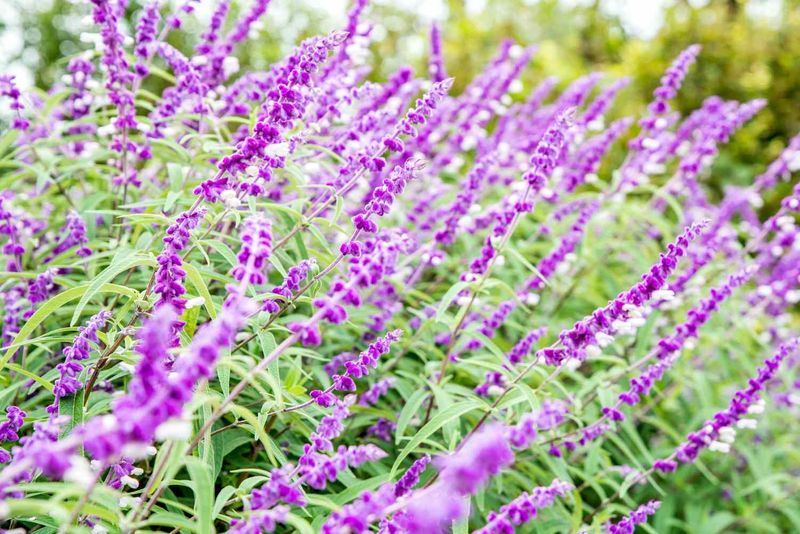
Ask any hummingbird where to find a snack in October, and it might point you toward the salvia patch.
Many sages keep pumping out flowers long after summer annuals have quit. For busy gardeners, that means color without replanting.
Two types shine in cooler California weather.
Mexican bush sage, Salvia leucantha, saves its best show for fall, when fuzzy purple and white flower spikes arch over silvery leaves. Autumn sage, Salvia greggii, blooms in waves from spring through fall, with flowers in red, pink, coral, or white.
Cool nights do not slow them down much.
In fact, many salvias look fresher in fall because they’re no longer fighting intense heat. Their nectar also helps migrating and wintering hummingbirds refuel.
To keep the blooms coming, do a little light trimming.
Snip off spent flower stems on autumn sage every few weeks, and new buds will follow. Mexican bush sage needs less fuss during the season.
Save the heavy pruning for later.
Once the fall flowers fade and the danger of frost passes, usually in late winter, cut Mexican bush sage down close to the ground. Autumn sage just needs a trim by about one third to stay compact.
4. Sedum Deepens In Color Not Fades
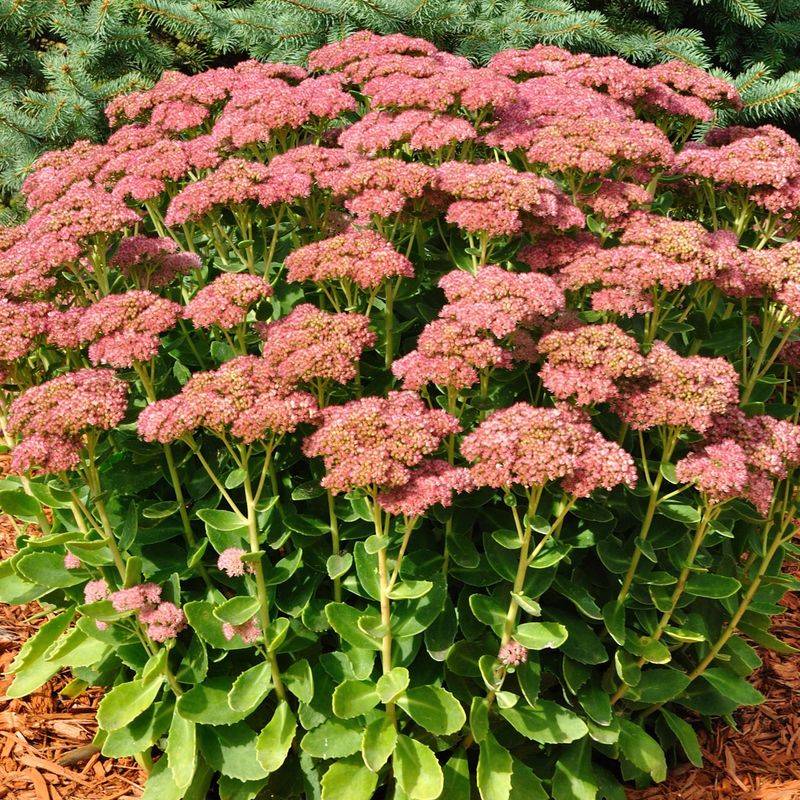
Most flowers fade as they age, but upright sedum does the opposite entirely.
Take Autumn Joy, now often sold under the name Hylotelephium. Its broccoli-like flower heads open pale pink in late summer, turn a rosy red in early fall, and finally settle into a deep copper or rusty brown.
Cooler temperatures and shorter days help drive that shift.
Many low-growing stonecrops change too, with green or blue-gray leaves picking up red and bronze tints when nights get chilly and the plants sit in bright sun.
Sedums are succulents, so they store water in their thick leaves.
That makes them a smart match for California’s dry summers and water-wise gardens. The biggest threat is not drought but soggy soil, which can rot the stems.
Follow a few easy rules for the best color.
Pick a sunny spot, since too much shade makes stems weak and colors dull. Use gritty, fast-draining soil or a raised bed. Go light on fertilizer, because rich feeding creates floppy, pale growth.
Resist the urge to cut the dried flower heads right away.
They look handsome through late fall, especially when dew or a light frost outlines them.
5. California Fuchsia Peaks Right On Schedule
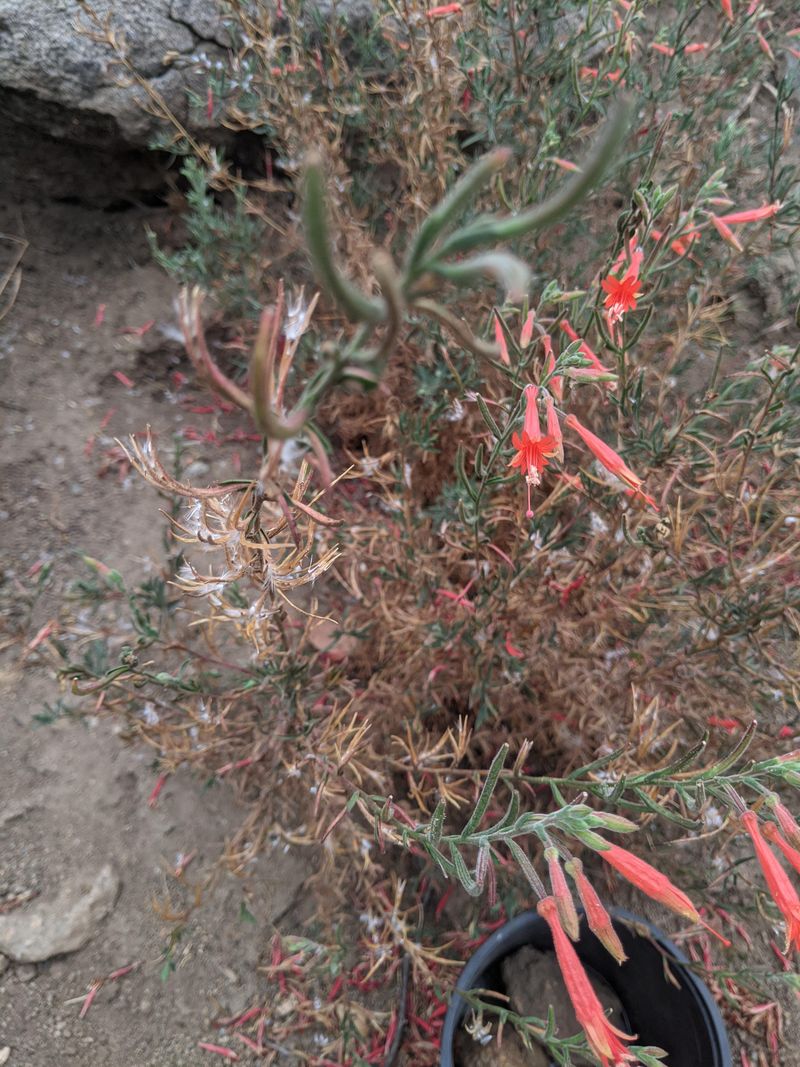
While many gardens slump by late August, California fuchsia is just warming up.
This tough native, known to botanists as Epilobium canum and once called Zauschneria, blooms from late summer into fall. Its bright scarlet-orange trumpets can light up a dry slope when almost nothing else is flowering.
That timing is no accident.
In the wild, it grows on rocky hillsides and canyons across much of California, where it evolved to flower during the driest part of the year. Its blooms line up with hummingbird migration, offering nectar just when the birds need extra fuel.
Once cooler weather settles in, the flowers usually keep going for weeks before tapering off.
Some varieties have gray, fuzzy leaves that look silvery in autumn light, while others stay greener. Popular choices include Everett’s Choice, a low spreader, and cultivars with softer pink or white flowers.
Care is refreshingly simple.
Give it full sun, lean soil with good drainage, and very little summer water once it’s established. Overwatering and rich soil tend to make it floppy and short-lived.
Be ready for its wandering habit. California fuchsia spreads by underground runners, so give it room or plant it where a little roaming is welcome.
6. Toyon Trades Blooms For Berries Gracefully
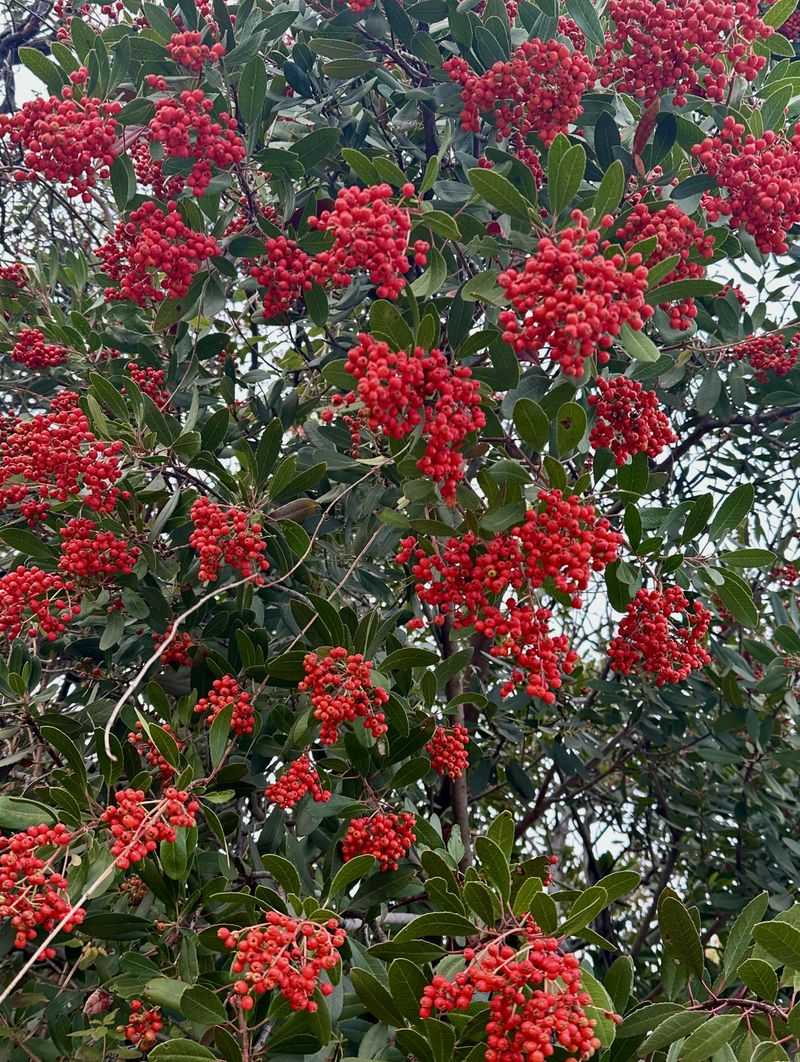
Long before holiday lights went up in Los Angeles, the hills were already decorated with toyon.
This evergreen native shrub, Heteromeles arbutifolia, is often called California holly or Christmas berry. A popular story says Hollywood got its name from it, though historians are not fully sure that tale is true.
Toyon’s year unfolds in two acts.
In early summer, flat clusters of small white flowers cover the shrub and draw bees and butterflies. By fall, those flowers have turned into bunches of green berries that ripen into bright red, usually peaking in late fall and winter.
The switch is smooth, with no awkward messy stage.
Glossy, leathery leaves stay green all year, so the berries have a handsome backdrop. As temperatures drop, flocks of robins and cedar waxwings often show up to feast, which adds another layer of life to the garden.
Toyon is a strong choice if you have space.
It can grow into a large shrub or small tree, often 6 to 15 feet tall, and it works well as a screen or hedge. Once established, it needs little summer water and handles clay or rocky soil.
7. Camellia Is Just Getting Started
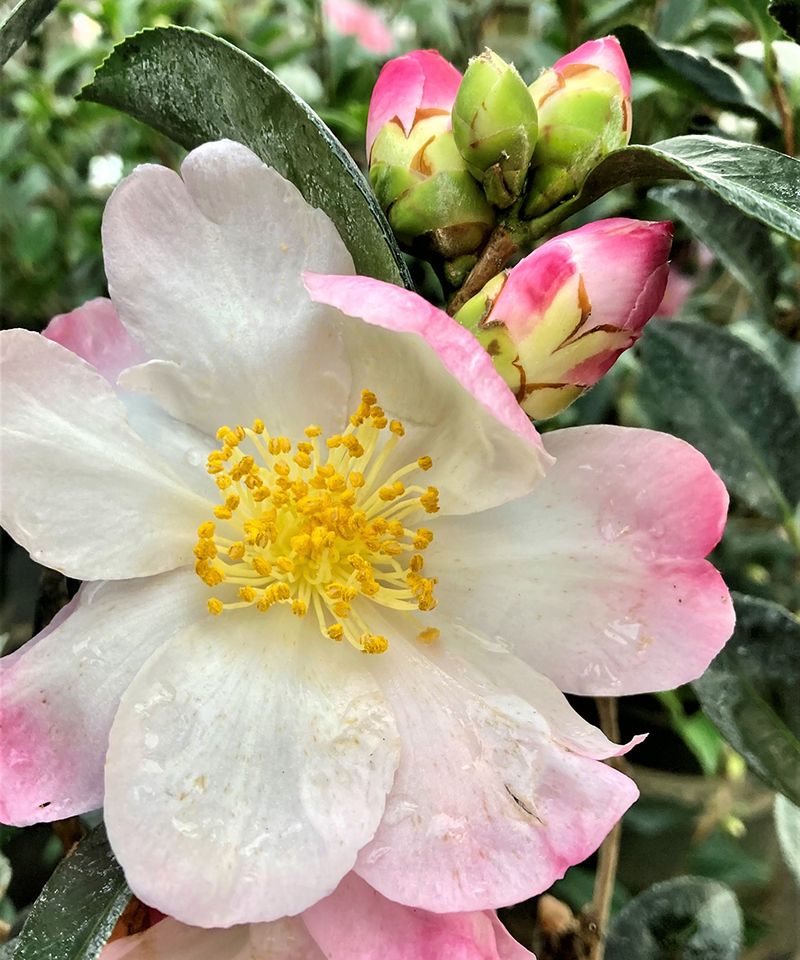
Most plants on this list are hanging on or showing off as the weather cools, but camellias are doing something different entirely.
For these shrubs, fall is not the end of the season. It’s opening night.
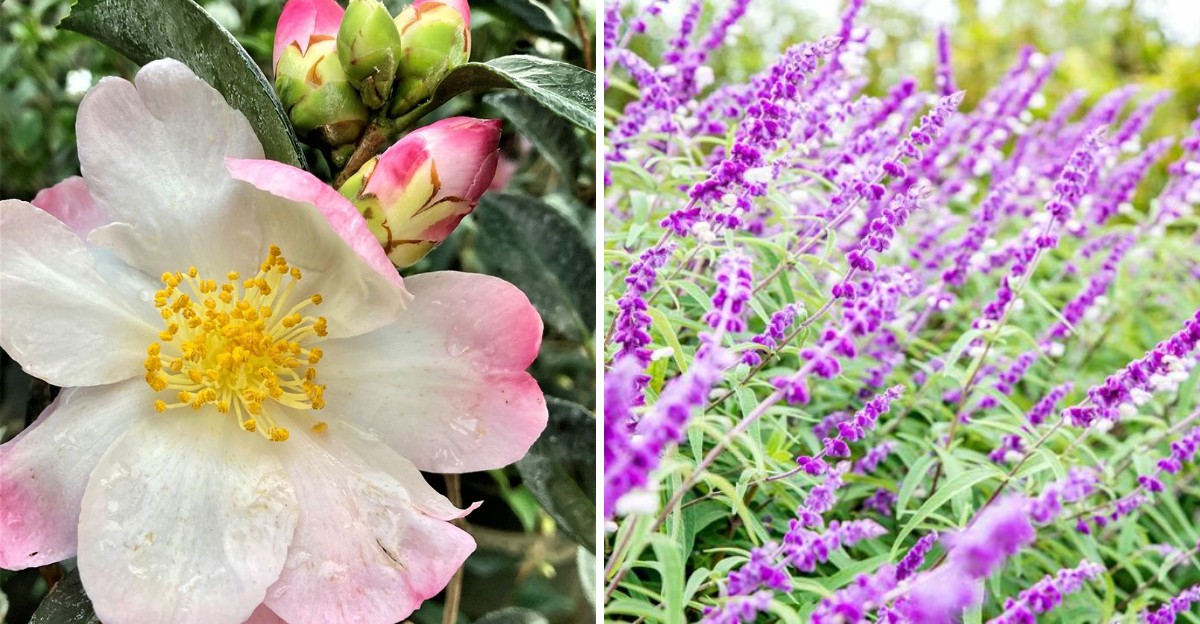
Sasanqua camellias, Camellia sasanqua, usually begin blooming in fall and carry on into early winter.
Their flowers are often smaller and single or semi-double, in white, pink, or red, and some have a light, sweet scent. Japonica camellias, Camellia japonica, follow with larger, showier blooms from winter into spring.
So if you plant both, you can enjoy flowers for months when most gardens look sleepy.
The buds actually form during summer, which is why late summer and fall care matter so much.
Camellias grow best in partial shade, especially where afternoons get hot.
They like slightly acidic soil rich in organic matter, similar to what azaleas enjoy. A layer of mulch helps keep the roots cool and moist.
Steady watering is the big secret.
If the soil swings between bone dry and soaked while buds are forming, the plant may drop its buds before they open. Water deeply and regularly until winter rains take over.
8. Ornamental Kale Thrives As Others Wind Down
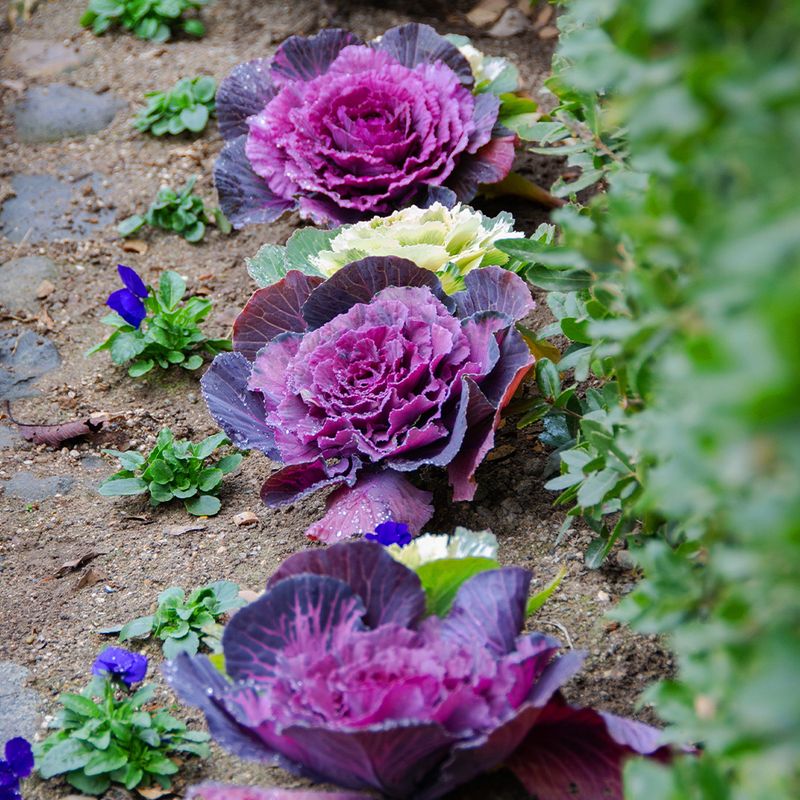
Few plants actually need the cold to look their best, and ornamental kale is one of them.
A close cousin of the kale in your salad, it’s grown for its ruffled rosettes in shades of pink, purple, cream, and white. While summer flowers fade, it’s only gaining strength.
The color shows up because of cooler temperatures.
When nighttime lows stay around the mid-50s Fahrenheit or cooler, the centers of the plants start to turn bright. Warm weather keeps them mostly green, so patience pays off.
Across much of California, planting in early to mid fall works well.
Look for plants with a sturdy stem and healthy outer leaves, then set them in full sun. They work beautifully in pots, window boxes, or along the edge of a path.
Treat them like a vegetable crop, since that’s what they are.
Keep the soil evenly moist, and feed lightly with a balanced fertilizer when planting. Too much nitrogen late in the season can keep colors from developing fully.
Keep an eye out for pests. Aphids and cabbage worms love these plants as much as their edible cousins do, so check under leaves and rinse or pick off invaders early.
9. Aster Adds A Final Burst Of Purple
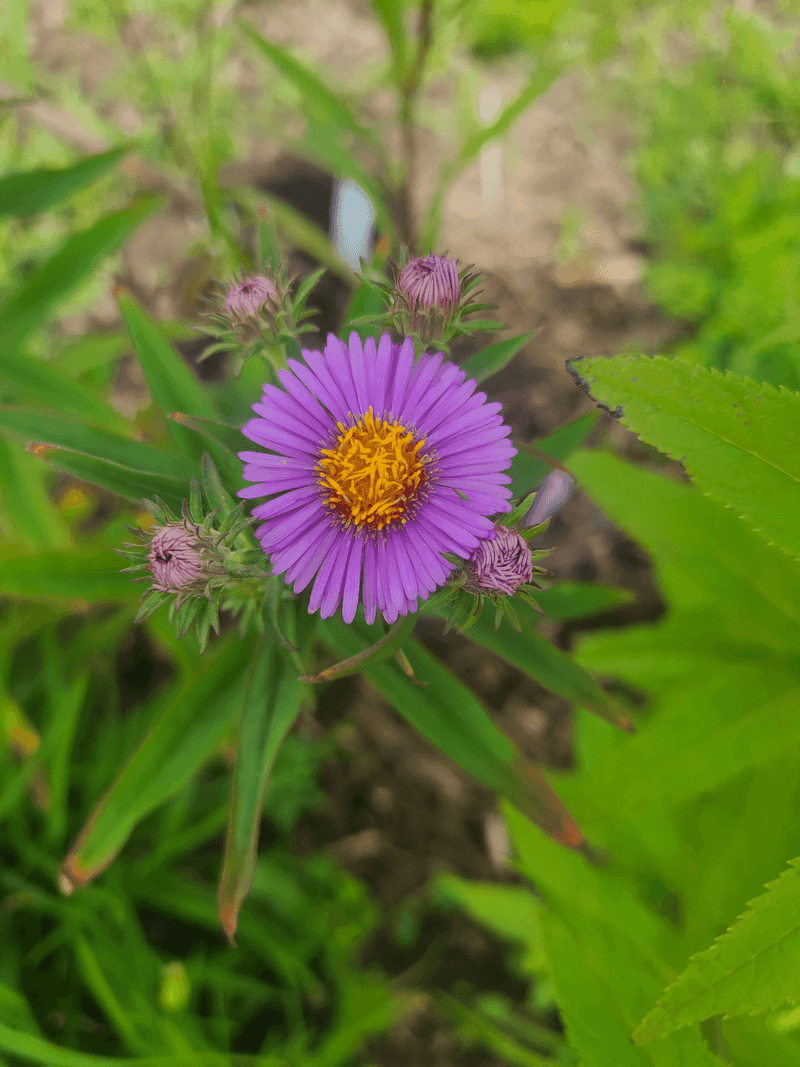
The word aster comes from the Greek word for star, and one look at those daisy-like blooms explains exactly why.
Masses of small lavender, purple, or pink flowers with sunny yellow centers can cover a plant like a night sky, and many varieties save that show specifically for the cooler weeks most gardens have already given up on.
California has its own native option worth seeking out. The Pacific aster, now known scientifically as Symphyotrichum chilense, spreads by underground stems, handles coastal conditions well, and attracts butterflies and native bees late in the season.
Garden favorites like Michaelmas daisy and Frikart’s aster add even more choices for gardeners who want that same effect without going strictly native.
Asters grow best in full sun with decent drainage underfoot. Give them regular water while blooming, since thirsty plants may drop flowers early, cutting the display shorter than it needs to be.
Leaves can get powdery mildew in crowded beds, so space plants apart and water the soil rather than the foliage itself.
Pinching stems back by about a third in early summer helps many asters grow fuller and less leggy come fall, a small effort that pays off considerably once the blooms finally open.
Once flowers fade, cutting them back can sometimes coax a few more out of the plant. Leaving some seed heads standing, though, gives finches a reliable snack through the colder weeks ahead.
Bloom length varies quite a bit across the state depending on where you garden. Foggy coastal gardens may enjoy purple color into November, while inland valleys typically see an earlier finish once frost settles in for good.