8 Reasons Cucumber Vines Suddenly Stop Producing
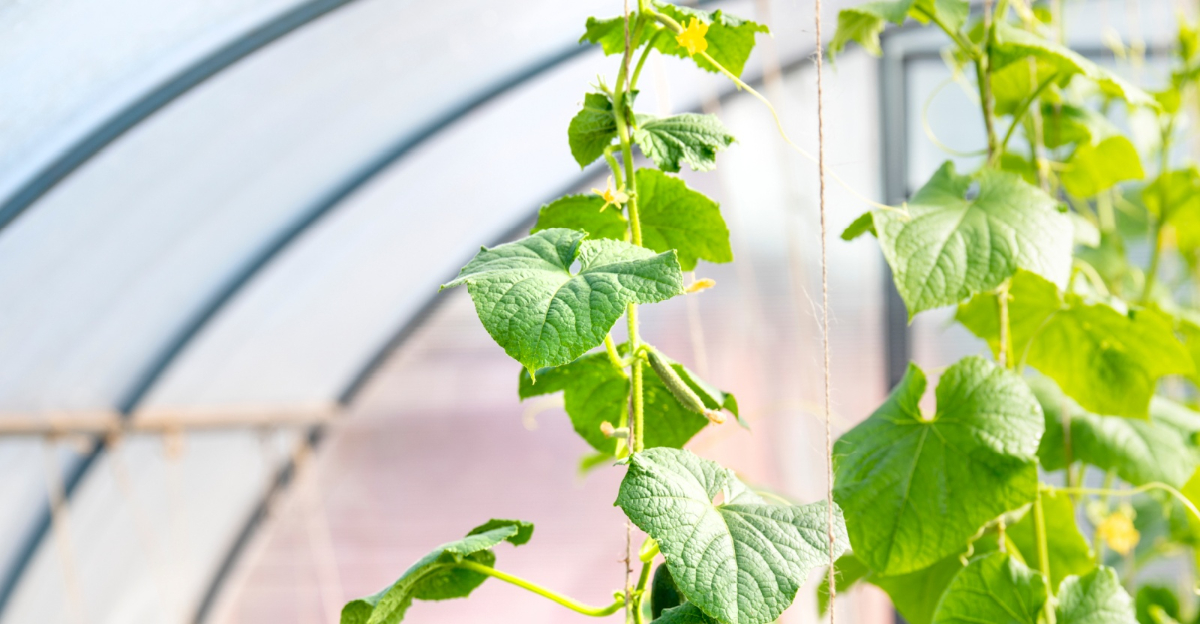
Three days ago your cucumber vines were dripping with fruit. Now you’re standing there in your slippers, mug going cold, staring at a jungle of leaves and nothing else. It’s a strange kind of letdown, honestly.
Cucumbers don’t usually ghost you like this. One week you’re gifting bags of them to neighbors who stopped answering the door, and the next you’re picking through vines like a detective at a crime scene, hunting for clues that just aren’t there.
Here’s the good news: this isn’t a mystery novel with no ending. Cucumber plants stall out for very specific, very fixable reasons, and most of them have nothing to do with bad luck or a black thumb.
Heat stress, pollination hiccups, water swings, even overcrowded roots can all slam the brakes on production overnight.
Below are the most common troublemakers, plus exactly what to do about each one so your harvest basket fills back up.
1. Heat Stress Shuts Down Pollen Viability
Very hot days can significantly reduce your harvest. Without viable pollen, most cucumber varieties won’t set fruit.
Heat stress is one of the sneakiest reasons cucumber vines stop producing. The plant looks healthy on the outside, but the reproductive process has quietly stalled.
You won’t see obvious damage, just an empty vine. Male flowers open first, usually in the morning. By afternoon on a hot day, that pollen has often lost most of its viability.
The window for successful pollination shrinks to almost nothing. Shade cloth rated at 30 to 40 percent can drop soil and air temps noticeably.
Draping it over your trellis during peak afternoon heat gives the plant breathing room. Your blooms will last longer and stay fertile.
Watering deeply in the early morning also helps cool the root zone before the sun peaks. Roots that stay cool keep the whole plant more stable.
A stable plant produces far more reliably. Mulching with straw or wood chips adds another layer of protection against ground-level heat.
A two-inch layer holds moisture and keeps soil temps from spiking. Think of mulch as sunscreen for your garden beds.
Some gardeners plant heat-tolerant cucumber varieties like Marketmore or Straight Eight for summer growing.
These handle warm conditions better than standard types. Matching your variety to your climate is a smart first move that pays off all season long.
2. Inconsistent Watering Causes Blossom Drop
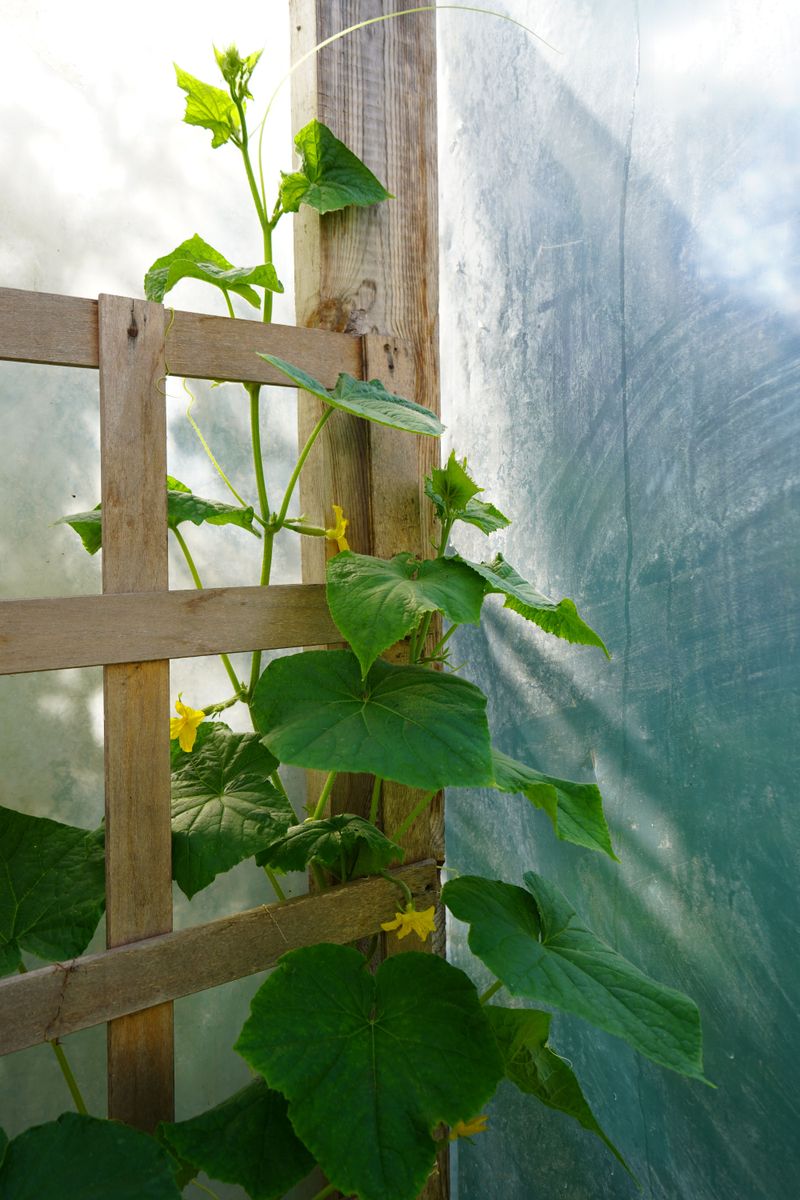
Feast or famine watering is a major cause of reduced yield. Cucumbers need consistent moisture to keep their blooms attached and their fruit developing.
One dry spell followed by a heavy soak sends the plant into stress mode. When soil moisture fluctuates significantly, the plant often drops its blossoms as a stress response.
It cannot support developing fruit if it cannot predict its next water source. Blossom drop is the plant’s way of cutting its losses.
The fix is simple but requires commitment. Aim for about one inch of water per week, delivered steadily. Drip irrigation or a soaker hose does this job better than a sprinkler.
Checking soil moisture before watering prevents both overwatering and underwatering. Stick your finger two inches into the soil near the base of the plant.
If it feels dry at that depth, it’s time to water. Container-grown cucumbers dry out faster than in-ground plants. They may need water every single day during hot stretches.
Check them morning and evening to stay ahead of moisture loss. Raised beds fall somewhere in between, draining well but drying out faster than traditional garden rows.
Adding compost to your bed improves water retention without waterlogging roots. Healthy soil structure is the backbone of consistent moisture levels.
Inconsistent watering also leads to bitter cucumbers and misshapen fruit, even when some production continues.
Getting on a regular schedule protects both your yield and your flavor. A steady hand with the hose changes everything about your harvest.
3. Poor Pollination From Low Bee Activity
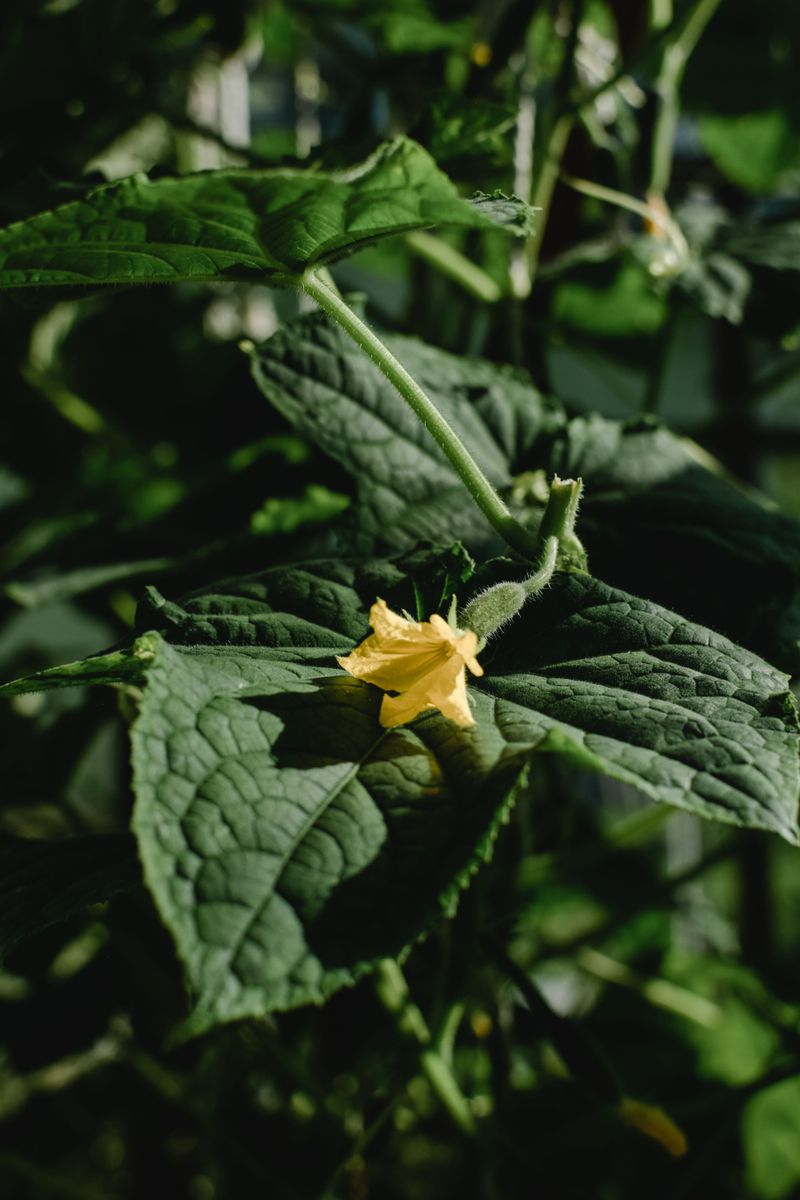
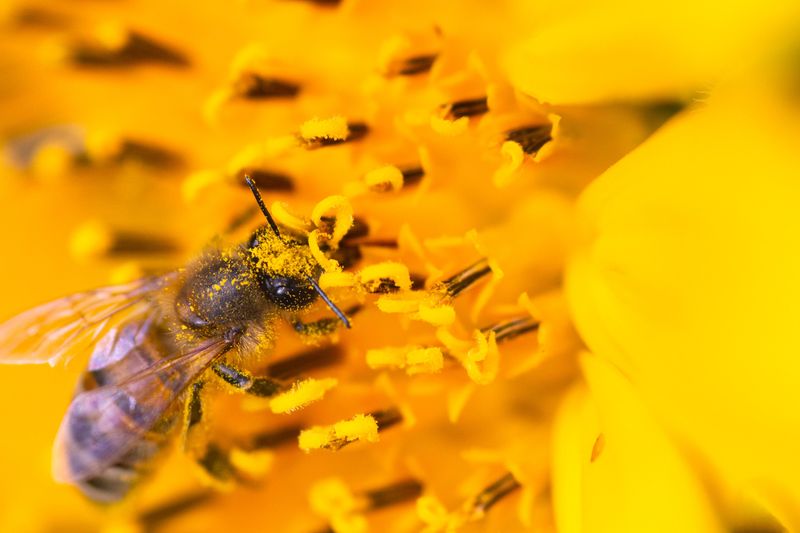
Without adequate pollinators, cucumber production drops sharply for most varieties. These plants depend almost entirely on insects to move pollen from male flowers to female ones.
If your yard has low bee traffic, your vines will bloom beautifully but produce almost nothing. You’ll see plenty of flowers and then watch them shrivel and fall off.
It’s one of the most frustrating experiences in the home garden. Pesticide use is a leading cause of reduced bee activity.
Even products labeled as safe can harm pollinators when applied during bloom hours. Spray only in the evening when bees have returned to their hives.
Planting pollinator-friendly flowers nearby draws bees into your garden space. Lavender, borage, and marigolds are all excellent companions for cucumber beds.
A diverse garden is a busy garden when it comes to bee visits. Hand pollination is a reliable backup when natural pollinators are scarce.
Use a small paintbrush or cotton swab to transfer pollen from a male flower to a female one. Female flowers have a tiny bump at the base that looks like a miniature cucumber.
You can also remove a male flower and gently press it against the center of an open female flower. This direct contact method works surprisingly well.
Many gardeners do this every morning during peak bloom season. Encouraging a healthy pollinator population pays dividends across your entire garden.
Fewer pesticides, more flowers, and a little patience bring the bees back. Once they arrive, your worries about vines suddenly stopping largely disappear.
4. Nitrogen Overload Favors Leaves Over Fruit

Too much nitrogen can work against your harvest. Excess nitrogen causes the plant to prioritize leaf and stem growth over flowering.
The result is a gorgeous, bushy vine with almost no fruit. Gardeners often make this mistake after reading that cucumbers are heavy feeders.
They load up on nitrogen-rich fertilizers, expecting a bigger harvest. Instead, they get a jungle of green leaves and almost nothing to pick.
Nitrogen tells a plant to grow stems and foliage. When it’s in excess, the plant prioritizes that vegetative growth over reproduction.
Flowering and fruiting get pushed to the back burner. A balanced fertilizer with equal parts nitrogen, phosphorus, and potassium works better for fruiting crops.
Look for a ratio like 10-10-10 on the package label. Phosphorus specifically supports flower and fruit development.
Once your vines start flowering, switch to a low-nitrogen option or a tomato-specific fertilizer. These are formulated to promote blooms rather than leaves.
The shift in nutrients signals the plant to redirect its energy toward producing fruit. Soil testing takes the guesswork out of fertilizing.
A basic test from your local garden center tells you exactly what your soil already has. Feeding what’s already lacking prevents accidental nutrient overload.
If you suspect nitrogen overload, hold off on any feeding for two to three weeks. Let the plant burn through its excess supply naturally.
Patience here pays off, and soon you’ll see new blooms appear where only leaves stood before.
5. Overcrowded Vines Compete For Resources
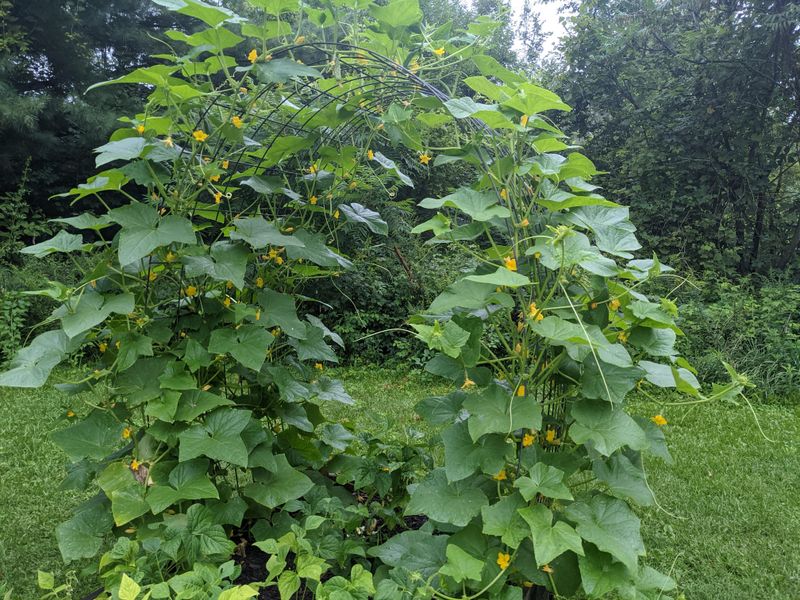
Overcrowded plants are more prone to stress. When cucumber vines grow too close together, they compete for water, nutrients, light, and airflow.
That competition always comes at the expense of fruit production. Most gardeners underestimate how much space a single cucumber plant needs. Each vine can spread six feet or more when given room to grow.
Planting them roughly twelve inches apart in rows about three feet wide is a common guideline, though spacing needs can vary by variety.
Shading is a major issue in dense plantings. Lower leaves get blocked from sunlight, reducing the plant’s ability to photosynthesize. Less energy from the sun means fewer resources available for fruiting.
Poor airflow between tightly packed plants also creates a humid environment. That humidity invites fungal problems like powdery mildew, which further weakens production.
Spacing plants generously is one of the best disease-prevention strategies available. Training vines onto a trellis solves two problems at once. It lifts the plant off the ground and opens up airflow significantly.
Vertical growing also makes it much easier to spot and harvest cucumbers before they become overripe.
Thinning seedlings early is far easier than trying to fix crowding later. If two seedlings sprout in the same spot, remove the weaker one right away. It feels wasteful, but the stronger plant will reward you with a far better harvest.
Container gardeners should stick to one plant per large pot, at least twelve inches in diameter. Squeezing two plants into one container chokes both of them. Give each vine its own space and watch production climb steadily.
6. Disease Or Pest Damage Weakens Plants
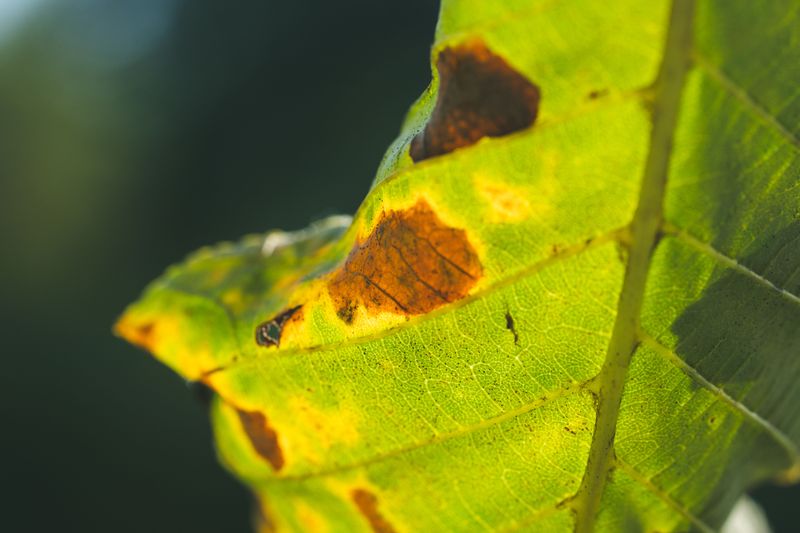
A diseased or pest-damaged vine diverts energy away from fruit production. Pests and diseases divert the plant’s energy toward defense, not reproduction.
When damage goes unchecked, production can stop almost overnight. Aphids are among the most common cucumber pests.
These tiny insects cluster on the undersides of leaves and suck out plant sap. A heavy infestation weakens the vine quickly and spreads plant viruses at the same time.
Cucumber beetles are another serious threat. They chew through leaves and transmit bacterial wilt, a disease that can collapse an entire plant in days.
Yellow and black striped beetles on your vines are a red flag worth acting on immediately. Powdery mildew shows up as white chalky patches on leaves. It thrives in humid, crowded conditions and spreads rapidly through a garden.
Affected leaves lose their ability to photosynthesize, starving the plant of energy it needs for fruiting.
Downy mildew causes yellow angular spots on the upper leaf surface. It spreads through water splashing and overhead irrigation.
Switching to drip watering and removing infected leaves slows its progress considerably. Neem oil is a go-to organic treatment for both pests and fungal issues.
Spray it in the evening to protect beneficial insects and coat the plant thoroughly. Repeat every seven to ten days for consistent control.
Catching problems early is the single most effective pest management strategy. Walk your garden every morning and flip a few leaves to check the undersides.
Cucumber vines slow or stop producing when damage piles up, but early action keeps the harvest going strong.
7. Old Age Reduces A Plant’s Natural Yield
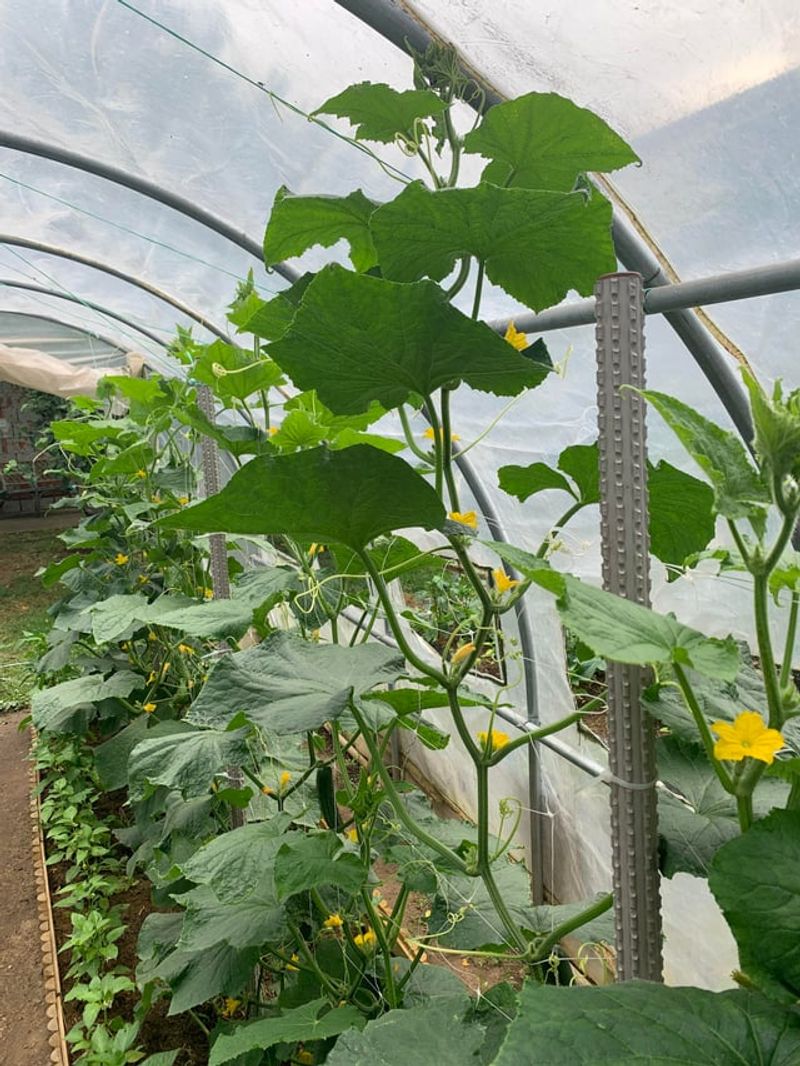
Every plant has a life cycle, and cucumbers are no exception. As the season progresses, even well-cared-for vines naturally slow down their fruit production. This is biology, not failure.
Most cucumber plants tend to peak in productivity roughly six to eight weeks after transplanting, though this varies by variety and conditions.
After that point, output begins to taper off regardless of care. The plant has fulfilled its biological purpose and starts winding down.
Older vines develop woody, tough stems at the base. The leaves begin to yellow and drop, starting from the bottom of the plant upward. These are natural signs of aging, not disease or neglect.
Succession planting is the smartest way to keep cucumbers coming all season long. Start a new set of seeds every three weeks from late spring through midsummer. When the first planting fades, the second is just hitting its stride.
Some gardeners try to revive aging plants by cutting them back hard. Pruning back to a few healthy lateral shoots can sometimes trigger a second flush of growth.
It doesn’t always work, but it’s worth trying before pulling the plant entirely. Adding a dose of balanced fertilizer to older plants can also extend their productive period.
A light feeding gives them a small energy boost during the late season slowdown. Don’t overdo it, though, since excess feeding on a declining plant rarely helps much.
Knowing when to let go is part of smart gardening. Pull spent plants at the end of their run and compost the debris.
Fresh soil, a new planting, and a little patience bring that satisfying crunch right back to your plate.
8. Unharvested Mature Cucumbers Signal The Plant To Stop
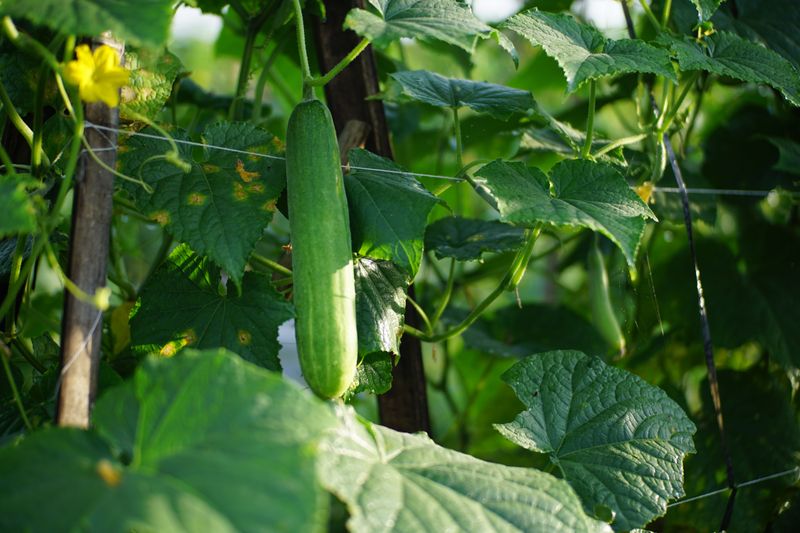
Leaving one overripe cucumber on the vine can significantly slow your entire harvest. This is one of the most surprising and most common reasons cucumber vines quit producing.
The plant senses a mature seed-bearing fruit and decides its job is done. Cucumbers are programmed to reproduce.
Once they sense that seeds have matured inside a fruit, they shift all energy toward those seeds. New flower production slows, and existing blossoms drop without setting fruit.
That big yellow cucumber hiding under the leaves essentially signals the plant to stop producing new fruit. Removing it quickly can restart production within just a few days.
Checking your vines every single day during peak season is non-negotiable. Cucumbers grow fast, sometimes going from perfect to overripe in just 24 hours.
A daily harvest prevents any fruit from reaching that seed-mature stage. Pick cucumbers when they are firm, dark green, and sized appropriately for their variety.
Slicing types are best at six to eight inches long. Pickling varieties should come off the vine even smaller, around two to four inches.
The more you harvest, the more the plant tends to produce. It’s a helpful general principle for cucumber growing.
Frequent picking keeps the plant in active production mode and extends the season by weeks.
Set a reminder on your phone if you tend to forget your daily garden walk. One missed day can mean a missed signal that shuts everything down.
Stay consistent, pick often, and your cucumber vines will reward you with a steady, generous harvest all season long.