Recognize These Texas Squash Vine Borer Signs Before They Destroy Your Garden
Squash vine borers are one of the most frustrating pests a Texas vegetable gardener can face, partly because of the damage they cause and partly because of how quickly that damage becomes irreversible.
A squash plant that looks perfectly healthy on Monday can be wilting by the weekend, and by the time the obvious signs show up, the larvae have often already done enough damage inside the vine to make recovery difficult.
Texas growing conditions create a specific window when squash vine borers are most active, and knowing that timeline is one of the most useful things a gardener can understand going into the season.
The signs they leave behind are readable if you know what to look for, and catching them early is the difference between saving a plant and losing it entirely.
This is one pest where waiting until the damage is impossible to miss is already waiting too long.
1. Sudden Wilting During The Heat Of The Day
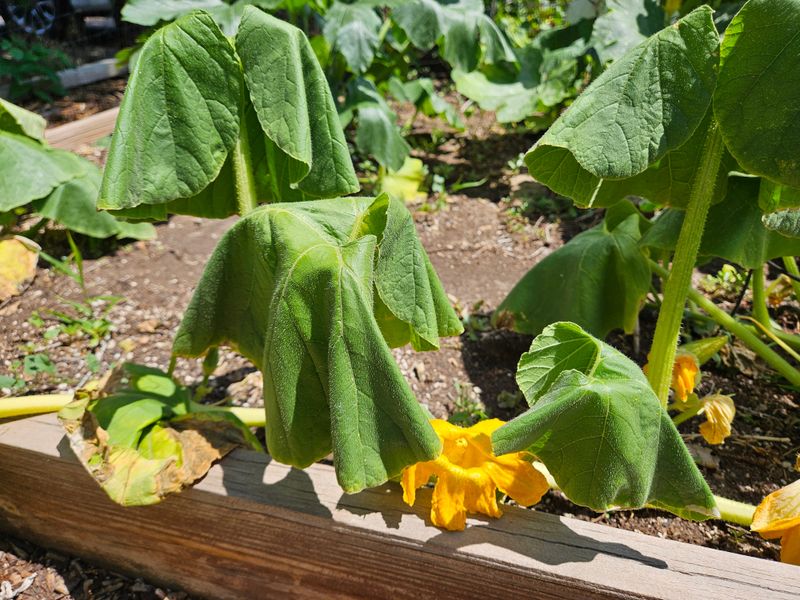
Picture this: you watered your squash plant just yesterday, the soil still feels damp, but by midday your plant looks completely limp and sad.
That sudden wilting during the hottest part of the day is one of the very first red flags that squash vine borers may already be at work inside your plant.
Squash vine borer larvae hatch from tiny eggs laid on the stem near the soil. Once they hatch, they chew their way inside the main stem and start feeding.
As they feed, they block the tubes inside the plant that carry water up to the leaves. Even if there is plenty of moisture in the soil, the leaves cannot get what they need.
What makes this sign so tricky is that it looks just like heat stress or drought stress. Texas summers are brutal, and it is easy to blame the weather.
But if your plant perks back up in the evening and then wilts again the next afternoon, that pattern is a strong clue something is wrong inside the stem.
Check the base of the stem closely when you notice this happening. Look for other signs like tiny holes or a powdery material near the soil line.
Acting quickly at this stage gives you the best chance of saving the plant. You can even try burying the stem under a layer of moist soil to encourage new root growth above the damaged area.
The sooner you respond to midday wilting, the better your chances of keeping your squash plants alive and productive through the season.
2. Sawdust-Like Frass Around The Base Of The Stem
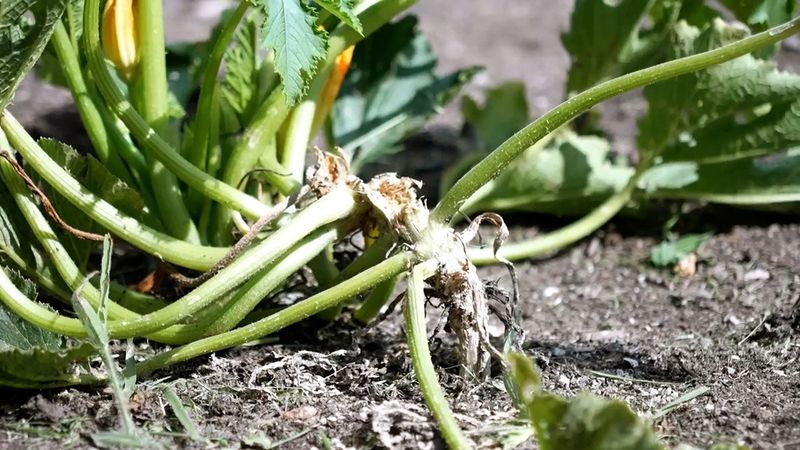
Spotting a small pile of yellowish or orange crumbly material near the bottom of your squash plant might seem harmless at first glance.
But that powdery stuff is actually frass, which is the waste material left behind by squash vine borer larvae feeding inside the stem. It is one of the most reliable and distinctive clues that borers are already active.
Frass looks a lot like wet sawdust or even coarse cornmeal. It tends to collect right at the base of the main stem, close to the soil line.
Your Texas Garden Changes Every Week. Your Plan Should Too.
Gardening in Texas changes quickly throughout the season. Every Friday you’ll receive a simple weekly plan showing exactly what to plant, prune, fertilize, harvest, and protect so you never miss the right timing.
Sometimes it piles up noticeably, and other times just a small smear of it is visible. Either way, finding it means larvae are currently feeding and causing damage from the inside out.
Many gardeners overlook frass because it blends in with garden debris or gets washed away by rain or irrigation. Make it a habit to get down low and really inspect the stem base at least once a week during the growing season.
In Texas, vine borer activity typically peaks in early to midsummer, so that is when you need to be most watchful. If you find frass, do not panic. You still have options.
Some gardeners carefully slit the stem with a clean knife to remove larvae by hand, then cover the wound with moist soil to help the plant recover.
Wrapping the base of the stem with aluminum foil earlier in the season can also help prevent egg-laying in the first place. Catching frass early is honestly one of the best ways to stay ahead of a serious infestation.
3. Small Holes In The Main Stem
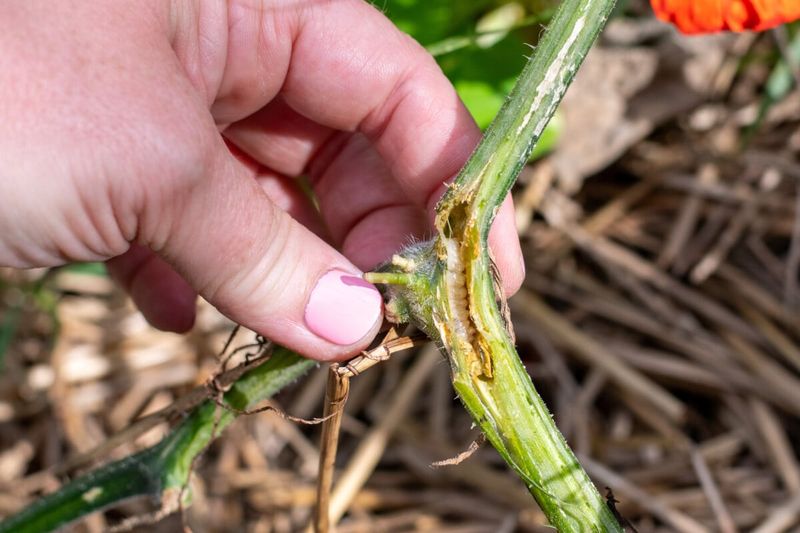
Tiny holes near the base of your squash plant stem might look minor, but they tell a big story. Each small hole is an entry point where a squash vine borer larva has chewed its way inside.
Once they are in, the larvae feed on the inner tissue and create tunnels that seriously weaken the entire plant.
These entry holes are usually found within the first few inches of the stem, right around the soil line or just above it. They tend to be small and round, sometimes surrounded by that telltale frass material.
Because the holes are low on the plant and easy to miss during a quick walk-through, many gardeners do not spot them until the plant is already showing other signs of stress.
Here is something worth knowing: a single plant can have more than one larva inside at a time. Each hole you find could represent a separate larva, and multiple larvae feeding together cause damage much faster.
In Texas, where warm temperatures allow vine borers to be especially active, infestations can escalate quickly from just a few holes to widespread internal damage.
When you find entry holes, try using a thin wire or a toothpick to locate and remove larvae inside the stem. After removing them, pack moist soil or compost around the damaged area and keep it consistently damp.
New roots may form at that spot and help the plant continue growing. Checking for stem holes every few days during peak season is a simple habit that can make a real difference in protecting your harvest.
4. Yellowing Leaves Despite Regular Watering
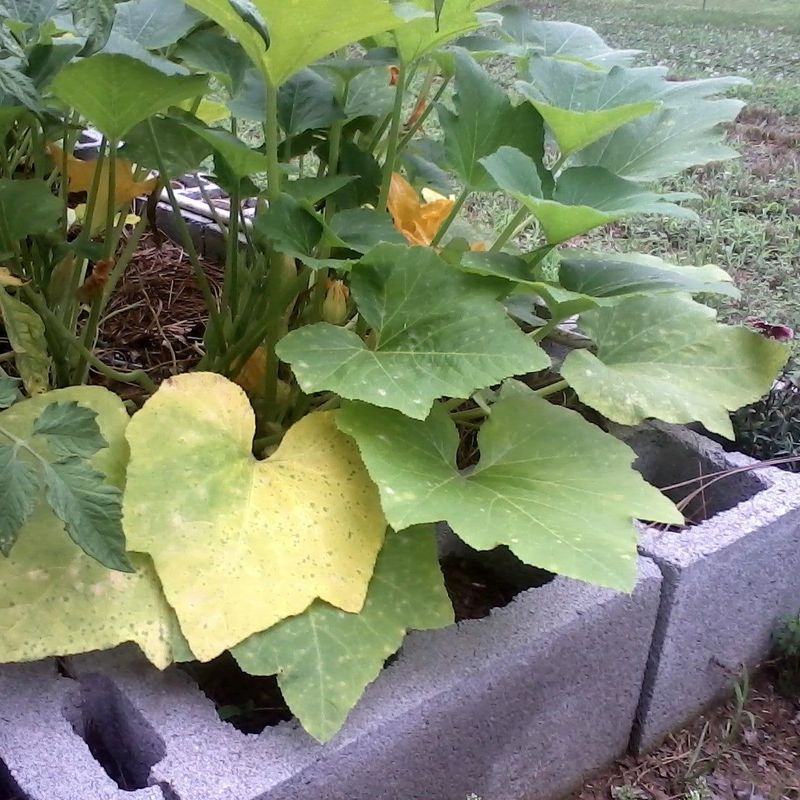
You have been watering faithfully, your garden gets plenty of sunshine, and yet your squash leaves are turning yellow anyway. That kind of unexplained yellowing can be really frustrating, especially when you feel like you are doing everything right.
The problem might not be your watering routine at all. It could be squash vine borers quietly working away inside the stem.
When larvae feed inside the main stem, they damage the vascular tissue that moves both water and nutrients through the plant. Even if the roots are soaking up moisture just fine, that water cannot travel properly to the leaves.
The result is leaves that look starved and yellow, almost like the plant is suffering from drought or a nutrient shortage, even when neither is the case.
Yellowing caused by vine borers tends to start on the older leaves closer to the base of the plant. It then spreads outward as more stem tissue gets damaged.
This pattern is slightly different from yellowing caused by overwatering or a nitrogen deficiency, which can help you narrow down the cause. Look at the whole picture: check the stem base for frass or holes at the same time you are assessing the leaf color.
Texas gardeners should also keep in mind that heat and humidity can cause yellow leaves for other reasons, so it helps to rule those out first. If the soil moisture is fine and you are still seeing yellow leaves, investigate the stem right away.
Early action, like removing larvae and providing extra support to the plant, can sometimes help it bounce back before the damage becomes too widespread.
5. A Soft Or Hollow Stem Near The Crown
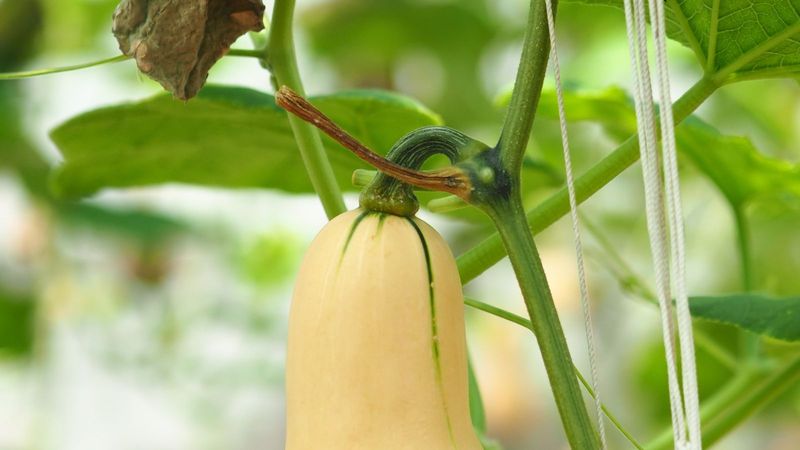
Run your fingers gently along the base of your squash plant stem and pay attention to how it feels. A healthy squash stem should feel firm and solid.
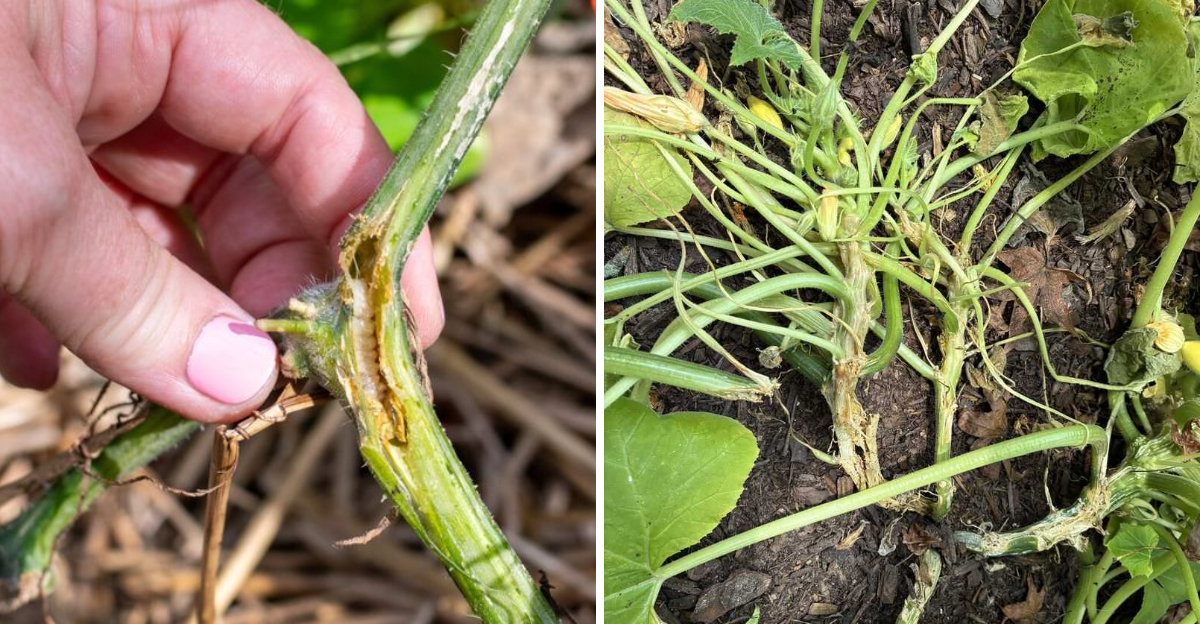
If it feels soft, squishy, or even hollow when you press lightly near the crown, that is a serious warning sign. Vine borer larvae have likely been feeding inside for a while, hollowing out the inner tissue as they grow.
The crown of the plant is where the main stem meets the roots. It is one of the most critical parts of the whole plant.
When larvae feed in this area, they cause structural damage that can make the plant unstable and unable to support itself.
You might notice the stem looks slightly swollen or discolored on the outside too, which is another clue that something is happening beneath the surface.
Feeling for a soft stem is a quick and easy check that takes only a few seconds. Make it part of your regular garden routine, especially from late spring through midsummer in Texas when vine borers are most active.
The earlier you detect softness, the more options you have for helping the plant recover.
If the stem feels hollow or very soft, carefully cut it open lengthwise with a clean, sharp blade. You will likely find one or more pale, chunky larvae inside. Remove them carefully and then mound damp soil or compost over the cut area.
Some gardeners also use row cover fabric earlier in the season to prevent adult moths from laying eggs in the first place, which is one of the most effective prevention strategies available to home gardeners.
6. Complete Vine Collapse Within Days
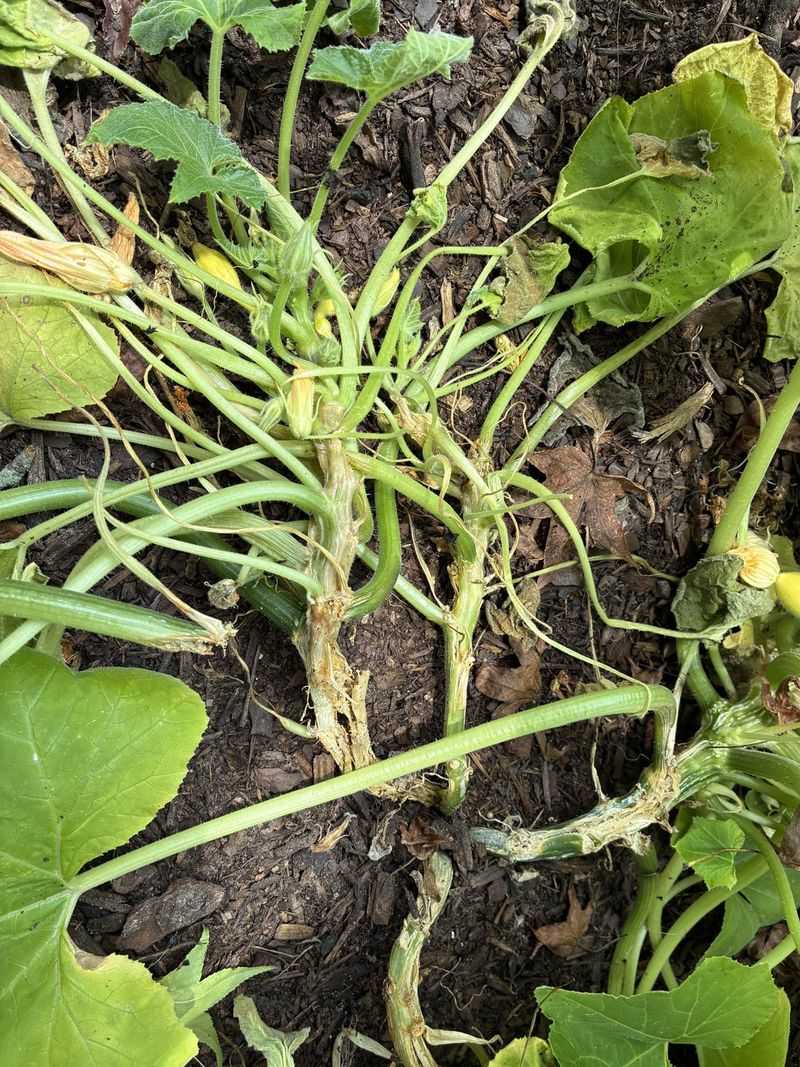
One of the most alarming things a Texas gardener can witness is a squash plant that looked perfectly healthy just a few days ago suddenly lying flat on the ground. Complete vine collapse happens fast and can feel like it came out of nowhere.
But in most cases, the damage was building up inside the stem long before the plant gave out.
When a heavy infestation goes undetected, larvae continue feeding until the internal structure of the stem is almost entirely gone. At that point, the plant simply cannot support itself anymore.
The vines fall, the leaves turn brown, and the whole plant collapses within a very short window of time. Zucchini, pumpkins, and summer squash are all vulnerable, and in Texas heat, the collapse can happen even faster than in cooler climates.
Seeing a collapsed plant is discouraging, but it does not always mean the situation is completely hopeless. Check whether any side shoots or lateral vines are still showing signs of life.
If the main stem is destroyed but secondary vines are still rooted or green, there may still be a chance to salvage part of the plant. Keeping those areas moist and supported can sometimes lead to new growth.
Moving forward, the best defense is a strong offense. Plant resistant squash varieties when possible, use row covers during the egg-laying season, and check your plants every few days throughout the summer.
Rotating where you plant squash each year also helps reduce vine borer populations in your garden soil. Staying alert all season long is truly the most powerful tool in your gardening toolkit.