Scientists Just Found a Rare Lichen in New York. Should You Worry About the Lichen on Your Yard Trees?
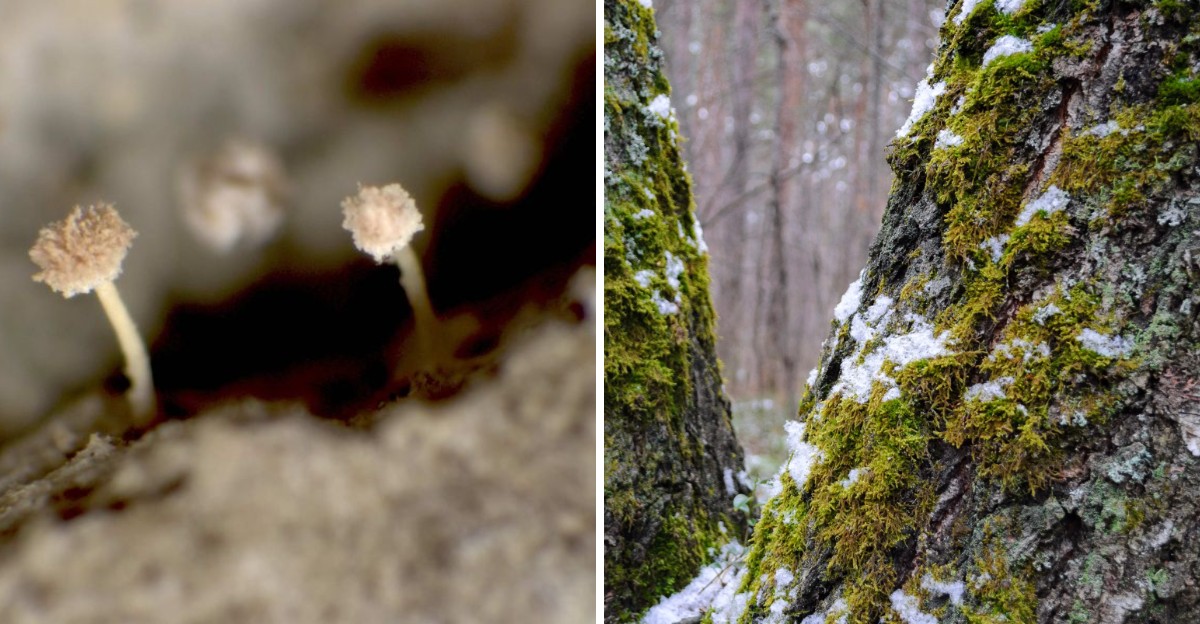
A tiny organism that most hikers would walk right past just made botanists in the Adirondacks very happy. It was clinging to an old yellow birch deep in the Moose River Plains Wild Forest of New York.
I’ll be honest, my first reaction was to run outside and stare at my own maple. That crusty gray-green patch on the bark suddenly looked a lot more interesting.
These crusty patches are some of the most overlooked residents of any backyard. They have no roots, no leaves, and no flowers, yet they can live for decades on a single branch. Some kinds are so picky about clean air that scientists use them like little pollution meters.
So what exactly is growing on your trees? And is it a friend, a freeloader, or a warning sign you should take seriously before next season?
A Tiny Find on an Old Yellow Birch Got Botanists Buzzing
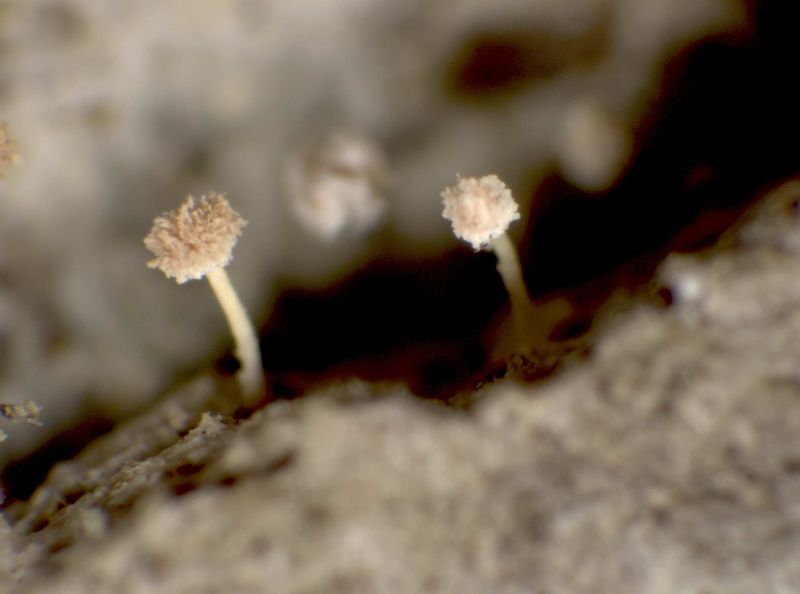
Botanists working in the Adirondacks recently spotted a lichen called Sclerophora coniophaea on a mature yellow birch. It lives in the Moose River Plains Wild Forest, a big, wild stretch of woods in the middle of the park.
Don’t expect a showy plant. This lichen belongs to a group often called pin lichens, and its fruiting parts look like tiny stalks shorter than an eyelash.
You’d honestly need a hand lens and a lot of patience to spot it.
Why the excitement, then? Species like this one tend to show up on old trees in old forests, where conditions have stayed steady for a very long time.
Finding one tells scientists that a patch of woods has kept its quality over the years.
The New York State Museum has been working hard to record lichens across the state. Other recent Adirondack finds include the Eastern candlewax lichen, once thought lost from the state, and the endangered bubbling witch’s hair lichen.
I love that a creature this small can still surprise experts. It reminds me that even familiar woods hold secrets.
Rare finds like this help shape how forests get protected.
Your backyard probably isn’t hiding a rare pin lichen. Still, the lichens on your trees have a story of their own, and it’s a far friendlier one than most people expect.
That Crusty Gray-Green Patch on Your Tree Bark Is Almost Certainly Harmless
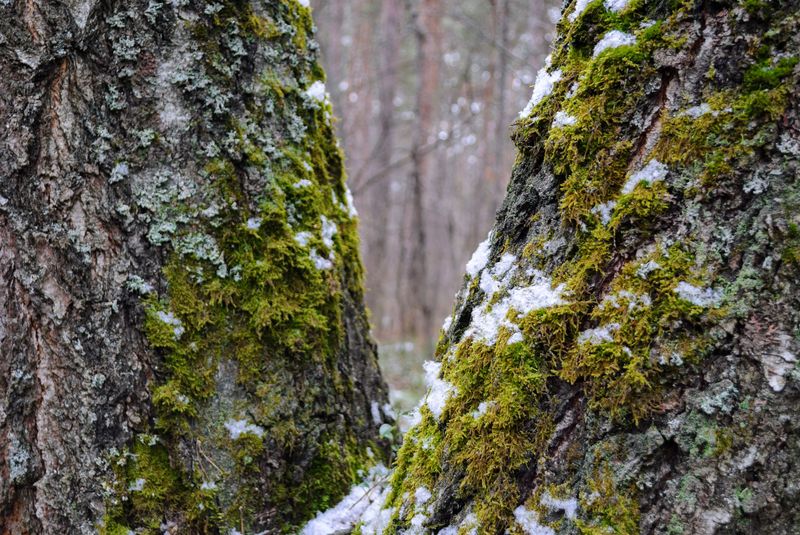
Let me save you some worry right away. The lichen on your yard trees is not eating them, and it isn’t a disease.
Lichens don’t have roots. They can’t tap into the wood or reach the tree’s inner plumbing that moves water and food.
Instead, they simply sit on the bark like a hitchhiker on a bench.
All of their food comes from sunlight, rain, and bits of dust floating in the air. Penn State Extension and other university experts agree that lichens are not parasites.
They use the trunk as a place to stand, and that’s about it.
I used to panic every time I saw a new orange or gray splotch on my crabapple. Once I learned this, I started enjoying them instead.
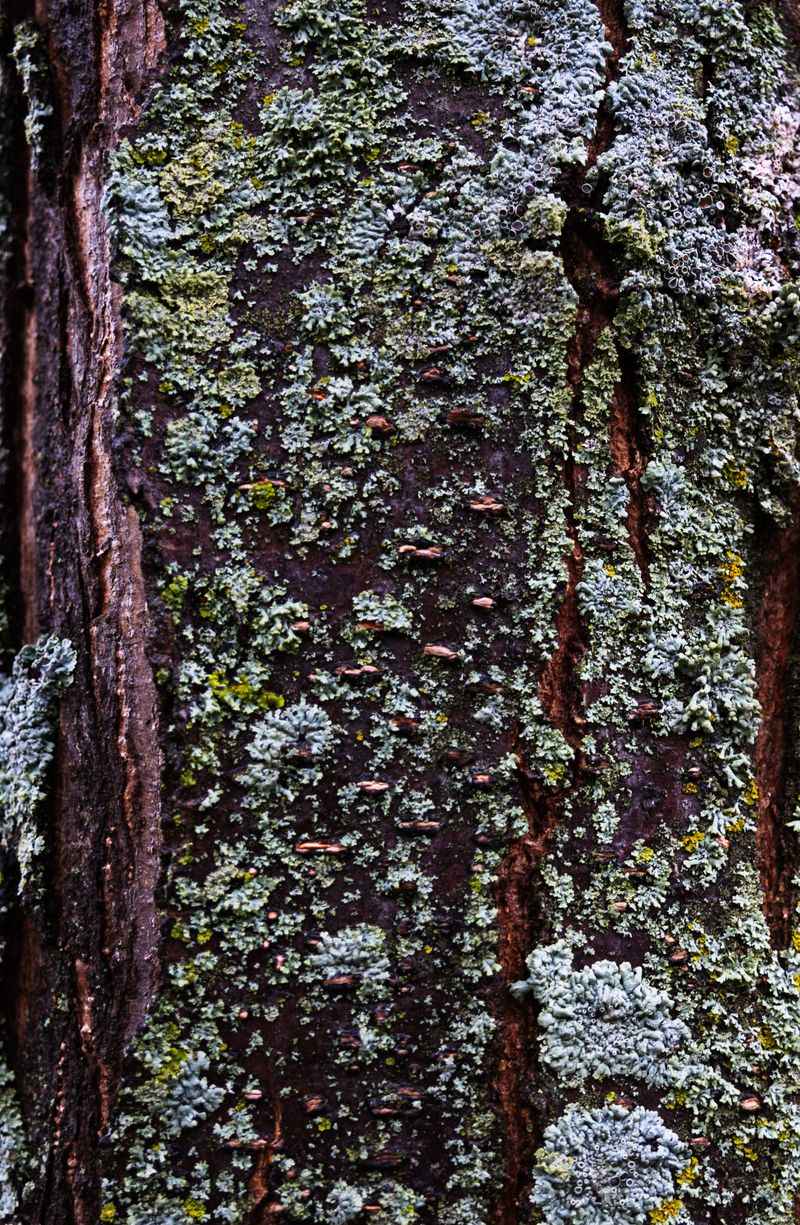
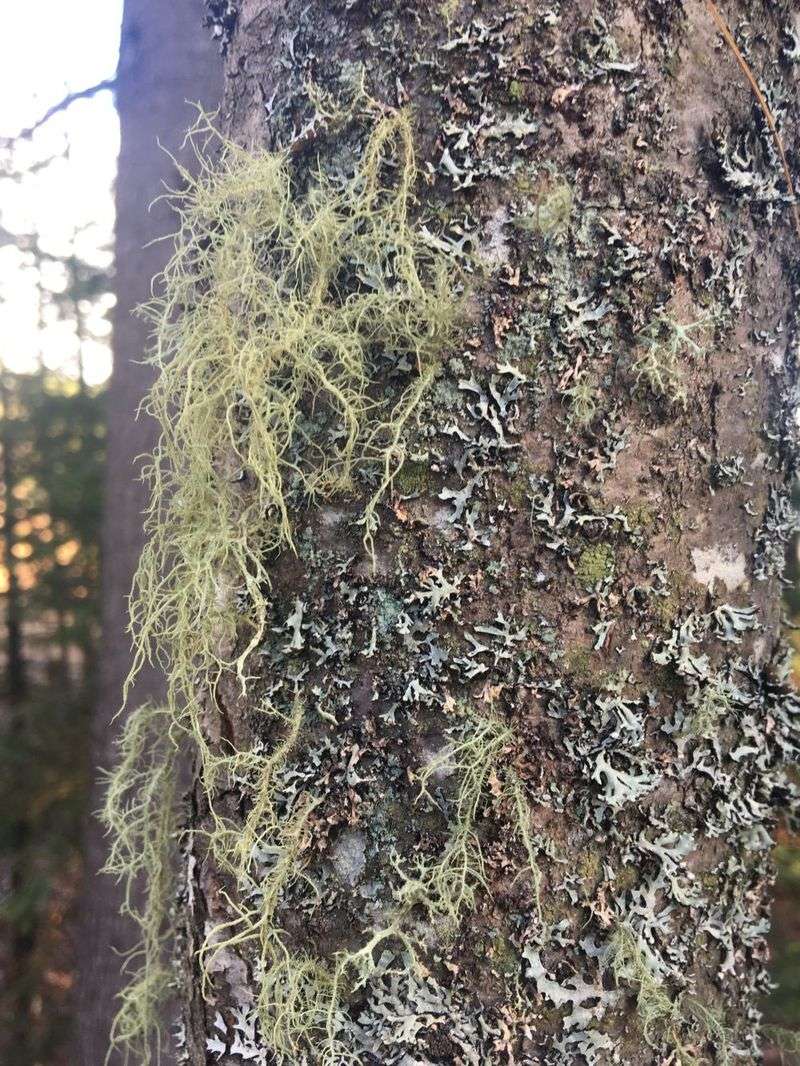
Some look like tiny leaves, some like crusty paint, and others like little shrubs.
Here’s a quick way to check what you’re seeing. Lichens feel dry and papery or crusty, and they often come in pale green, gray, yellow, or orange.
Mold, sap oozing, or soft mushy bark is a different story. Those signs point to real trouble and deserve a closer look.
But a plain lichen patch on solid bark is simply a quiet neighbor sharing your tree.
Lichens Are Really a Fungus and an Alga Sharing One Home
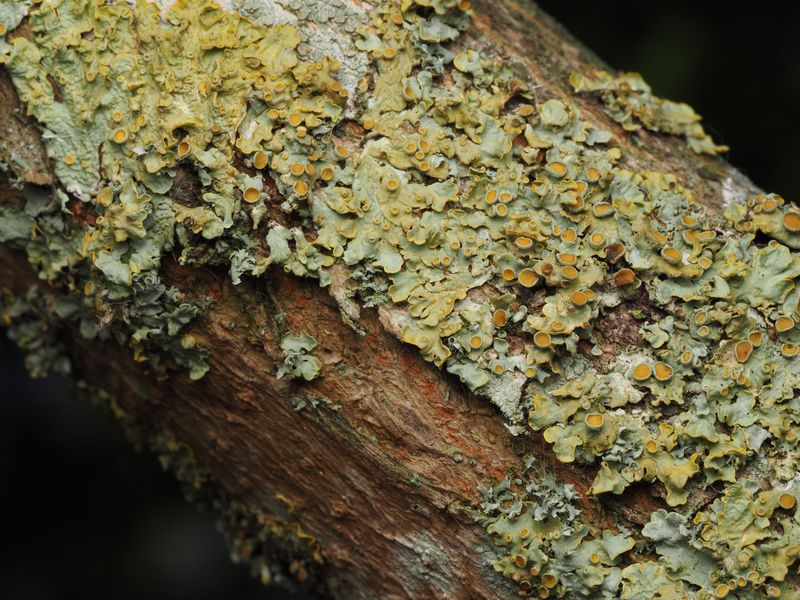
Fun fact for your next backyard tour. Every lichen is actually two or more living things working as a team.
A fungus builds the body, which acts like a sturdy little house. Inside, an alga or a cyanobacterium makes food from sunlight, the same way a plant leaf does.
The fungus offers shelter and moisture, and the partner pays rent in sugar.
Scientists call this kind of partnership symbiosis. It works so well that lichens can grow on rocks, fences, gravestones, and even old rooftops where little else survives.
They also grow slowly, sometimes just a fraction of an inch each year. A patch the size of your hand on an old oak may have been there longer than your house.
Lichens come in three main shapes. Crusty ones lie flat like dried paint, leafy ones have little lobes that peel up at the edges, and shrubby ones dangle or stand up like tiny bushes.
Now that I think about it, that teamwork is pretty inspiring. Two tiny life forms that couldn’t make it alone end up thriving together for decades.
That’s a good thing to remember the next time you’re tempted to call them ugly bark gunk.
Shaggy Beard Lichens on Branches Often Mean Your Air Is Clean
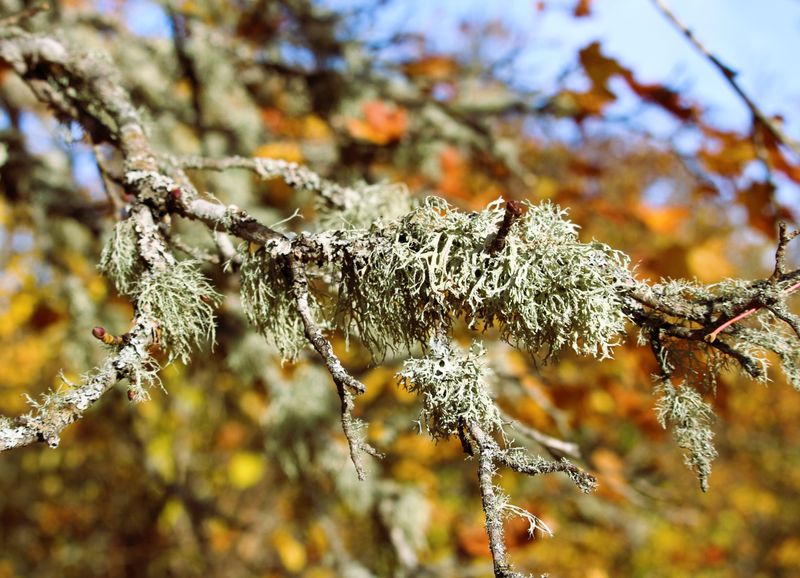
My garden taught me that some guests are compliments in disguise. Lichens are a great example.
Because they soak up everything from the air and rain, many lichens react strongly to pollution. Sulfur dioxide, a gas from burning coal and some industry, used to make them vanish from city trees across the Northeast.
As air quality improved over the past few decades, many lichens slowly returned. Researchers often use them like living air monitors because they respond to changes long before people notice.
The shaggy, hair-like, and shrubby types are usually the most sensitive. If you spot pale green tufts hanging from twigs, that’s a hint your local air is in decent shape.
Flat crusty lichens tend to be tougher. You’ll see them even along busy roads and in parking lots in places like Buffalo or Albany.
So go ahead and take a little pride. A yard dotted with different lichen shapes suggests a fairly healthy environment for you, your kids, and your plants.
One caution, though. Lichens are not a full air quality test, so don’t skip official air alerts.
Think of them as a friendly hint rather than a lab report hanging from your branches.
A Sudden Lichen Crowd on Thinning Branches Deserves a Second Look
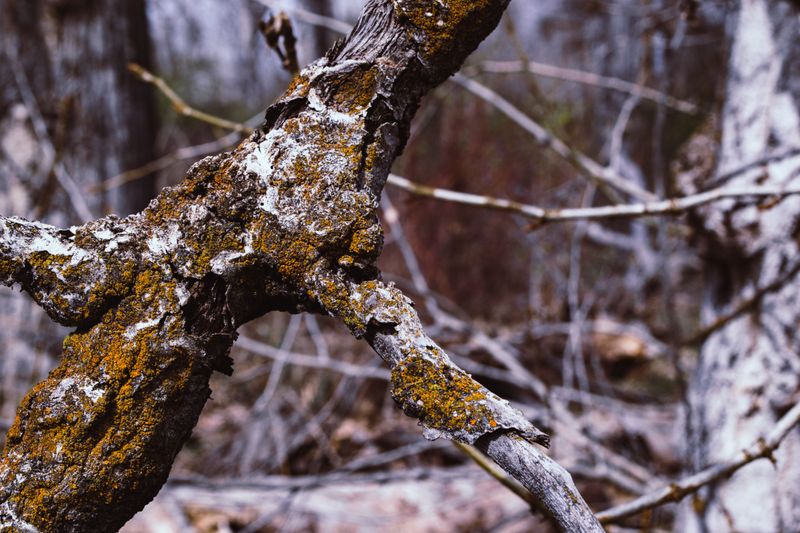
Here’s where lichens can actually tell you something useful. They aren’t the problem, but they can point to one.
Lichens love light. When a tree loses leaves or its canopy thins out, more sunshine reaches the branches, and lichens spread happily into the open space.
That’s why a struggling shrub or tree sometimes looks suddenly covered. People blame the lichen, but the tree was already in decline from something else, such as drought, root damage, poor soil, or insect pests.
Watch for these clues alongside heavy lichen growth:
Leaves come out late, look small, or drop early in summer. Branch tips stay bare in spring, and bark cracks or peels away.
Mushrooms pop up at the base of the trunk.
In New York, keep an eye out for known troublemakers too. Emerald ash borer has hurt ash trees across the state, and beech leaf disease is spreading on American beech.
If several of these signs show up together, call a certified arborist. Your local Cornell Cooperative Extension office can also help identify problems.
As a rule, I treat a lichen-heavy branch like a check engine light. It doesn’t mean disaster, but it’s worth a peek under the hood.
Put Down the Pressure Washer and Wire Brush Before You Hurt That Bark
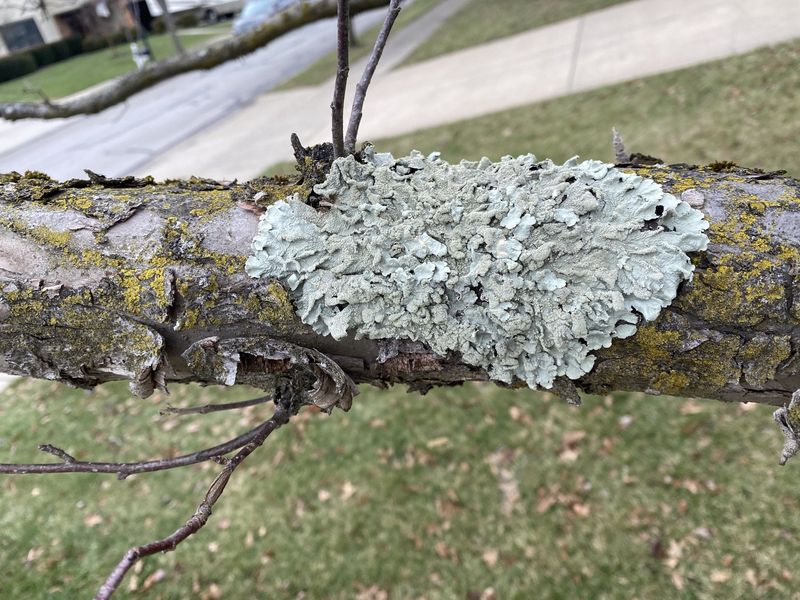
Don’t make my mistake. Years ago I scrubbed a patch of lichen off a young dogwood, thinking I was helping, and left the bark raw and scraped.
Scraping, wire brushes, and pressure washers do more harm than good. Bark is the tree’s protective skin, and any wound gives insects, fungi, and bacteria an easy way inside.
Chemical sprays aren’t a smart fix either. Copper products and harsh cleaners can damage bark, run off into soil, and hurt helpful critters living on the trunk.
Since lichens aren’t hurting the tree, there’s no reason to treat them.
Even if you remove them, they’ll likely creep back. The conditions that invited them, like light and moisture, are still there.
What about lichen on a fence, deck, or patio? That’s a different situation, and a gentle cleaning with a soft brush and mild soap is usually fine on hard surfaces you don’t mind scrubbing.
On living trees and shrubs, though, the best tool is patience. Let them be.
If appearance bothers you, try a little perspective instead. Many gardeners now see lichen as a mark of character, like silver hair on a wise old tree.
I’ve come to love that look on my own crabapple.
Birds and Tiny Bugs Count on Those Lichen-Covered Trunks
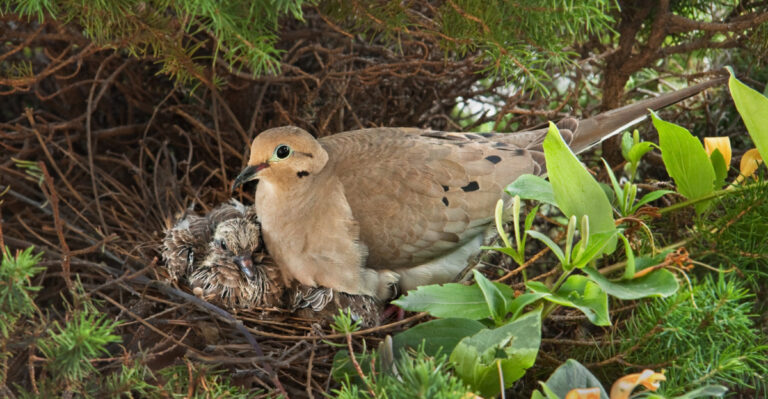
I’ll never forget the first time I saw a hummingbird nest up close. It was covered in little flakes of lichen, blending into the branch so well I almost missed it.
Ruby-throated hummingbirds, the only kind that nests regularly in the eastern U.S., often decorate their nests this way. Blue-gray gnatcatchers and some vireos do it too.
The lichen works like camouflage, hiding eggs from hungry eyes.
That’s just the start. Tiny insects, mites, spiders, and springtails hide in lichen and munch on it.
Those little creatures then become dinner for chickadees, nuthatches, and warblers hopping along your branches.
Some moths have caterpillars that feed on lichens. A few adult moths even wear lichen-like patterns on their wings to vanish against the bark.
In the far north, caribou rely on lichen as winter food. Your backyard won’t host any caribou, but it’s fun to know these crusty patches feed big animals elsewhere.
If you want a friendlier yard for wildlife, leaving lichen alone is one of the easiest steps you can take. No planting, no watering, no cost.
Next time you see a chickadee poking at a trunk, watch closely. There’s a good chance it’s shopping in a lichen patch for a snack.
Grab a Hand Lens and Get to Know the Lichens in Your Own Yard
Mark my words, once you start looking, you won’t stop. Lichens are a fun backyard hobby that works in every season, even in the middle of a snowy winter.
Start simple. Grab a cheap 10x hand lens, a phone camera, and a curious kid if you have one nearby.
Check different trees and different sides of each trunk. You’ll notice that bright orange lichens often show up where bird droppings or dust add extra nutrients, while pale green ones may prefer shady, damp bark.
Free apps like iNaturalist can help you name what you find. Your photos also help scientists track where lichens grow, which is exactly how rare species get noticed.
Want to support lichens and your trees at the same time? Water young trees during dry spells, protect roots from lawn mowers and heavy cars, and mulch lightly without piling it against the trunk.
Planting native trees like oaks, maples, and birches gives lichens long-lasting homes. Older trees tend to host the most variety.
If you ask me, the real takeaway is this. That patch on your bark is a sign of life, not trouble.
Keep an eye on the tree itself, call an arborist if it looks unwell, and let the lichens enjoy the view.