Should You Trim Florida Ixora In September Or Let The Fall Flowers Continue?
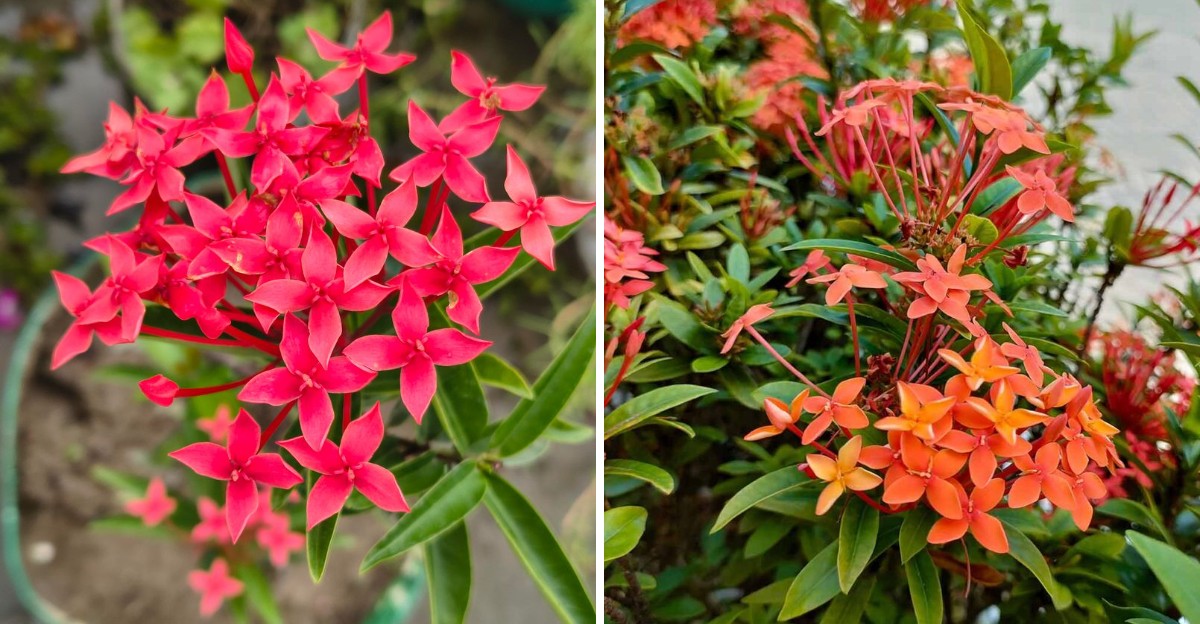
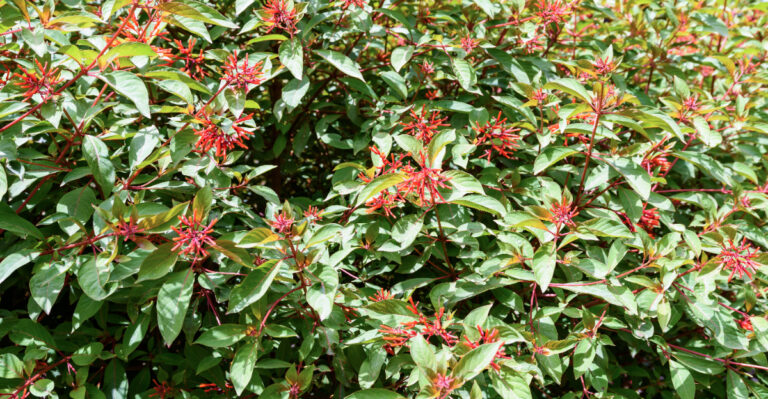
It is early September, the humidity has not budged, and the ixora beside your driveway is still loaded with those tight orange-red clusters glowing in the afternoon sun.
You walk past it holding the pruners, thinking the shrub could use a little shaping before company arrives for the weekend.
But you hate the idea of cutting off flowers that took all summer to show up in the first place.
That hesitation is worth taking seriously, because ixora does not follow the same pruning rules as gardenias or azaleas at all.
Most gardeners assume every shrub follows the same basic pruning logic, and that assumption costs them a whole season of color they never needed to lose.
Knowing how this plant sets its buds makes the decision much easier than it looks.
1. Ixora Blooms On Fresh New Growth
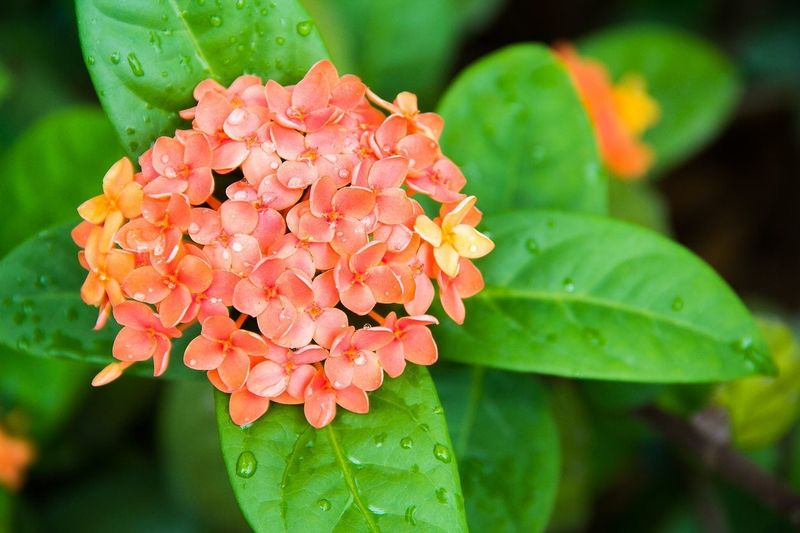
Picture a shrub that treats every fresh shoot like a launchpad for color. Ixora coccinea sets its rounded flower clusters at the tips of stems that grew recently, which places it firmly in the new-wood camp.
Old-wood bloomers work differently entirely. Gardenias and azaleas form their buds months in advance on branches that hardened the previous season.
University of Florida IFAS Extension describes ixora as a warm-season shrub that flowers repeatedly through much of the year in South and Central Florida.
Every time a shoot pushes out, matures a little, and slows down, a cluster tends to follow right behind it.
That habit changes the whole pruning conversation entirely. Instead of asking whether the shears will destroy next spring’s show, you are really asking how much of the current show you want to trade.
Gardeners who understand the difference stop panicking about September altogether. A snip here and there on a new-wood bloomer is a nudge, not a punishment.
Keep in mind that ixora only performs this trick when it is warm outside. Growth slows once temperatures drop, so the plant’s ability to replace what you remove shrinks as fall moves along.
2. Light Shaping Won’t Cost You Flowers
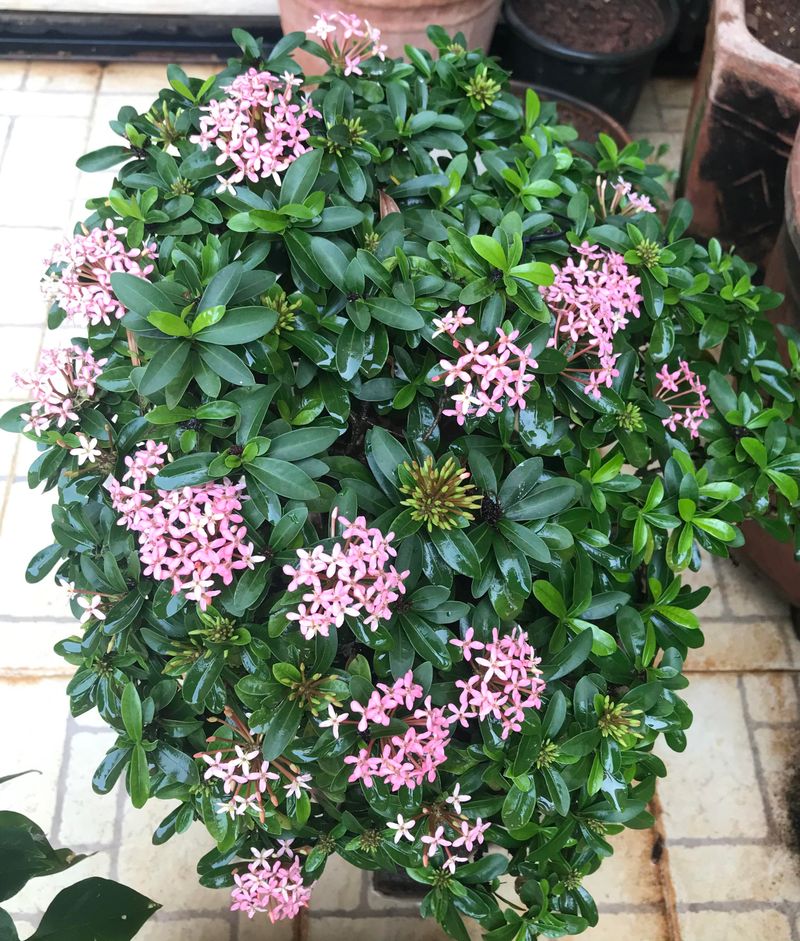
A few careful cuts are not the same as a haircut at all. Trimming a stray shoot that rockets above the canopy, or evening out one lopsided side, touches only a small fraction of the stems carrying flowers on the whole shrub.
Because ixora blooms flush by flush rather than all at once, a shrub in September usually holds clusters at different stages simultaneously. Some are wide open, some are just coloring up, and some are still hidden inside swelling tips waiting their turn.
Light shaping lets you pick your targets carefully rather than cutting blindly. Follow a branch back to a fork, cut just above a healthy pair of leaves, and leave the neighboring stems alone entirely. The plant keeps most of its display while you tidy the outline.
Skip the hedge trimmer for this particular job. Shearing flattens every tip at the same height, which removes buds indiscriminately and leaves stubs that brown in the sun. Hand pruners give you real control over exactly which shoots go and which stay.
Your Florida Garden Changes Every Week. Your Plan Should Too.
Gardening in Florida changes quickly throughout the season. Every Friday you’ll receive a simple weekly plan showing exactly what to plant, prune, fertilize, harvest, and protect so you never miss the right timing.
Clean blades matter too in this process. Wipe them with rubbing alcohol between plants so you are not carrying disease from one shrub to the next unknowingly.
Aim to take no more than a handful of stems from any single plant during this window of opportunity. Removing under roughly ten percent of the canopy keeps the shrub looking full and keeps flowering essentially uninterrupted through fall.
Trimming spent clusters counts as light work as well, and it keeps the plant looking crisp without touching the buds waiting behind them, ready to open next.
3. Heavy Cutback Removes The Current Show
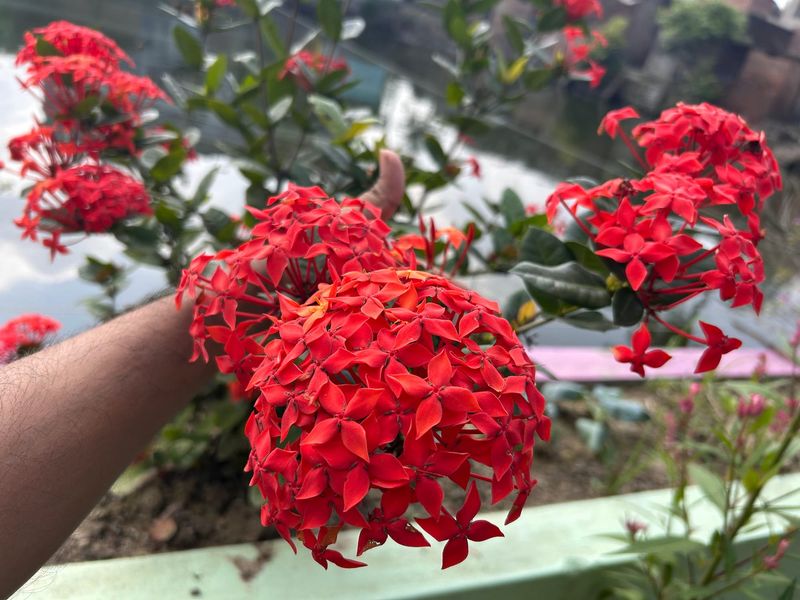
Here is the tradeoff nobody mentions when they hand you the loppers and send you off toward an overgrown shrub. Ixora carries its flowers at the ends of stems, so a hard cutback that shortens every branch by a foot takes the entire bloom display with it in one pass.
Rejuvenation pruning, where a tired shrub gets reduced dramatically to force fresh structure, does work on ixora under the right conditions. The plant resprouts from older wood when it is healthy and the weather stays warm enough to support new growth.
After a severe cut, the shrub spends weeks pushing leaves before it even thinks about flowers again. That regrowth period can easily run a couple of months depending on temperature, fertility, and how much root system supports the plant through recovery.
Start that clock in September, and the new shoots arrive just as Florida nights turn cool and growth naturally slows down. Ixora dislikes cold, and tender new growth is the first tissue damaged when temperatures drop into the forties.
So you lose twice over with bad timing. The current flush disappears immediately, and the replacement flush stalls out or gets nipped before it ever opens fully.
There is also the look of it to consider through the following months. A heavily cut ixora sits bare and twiggy through the months when Florida landscapes are otherwise at their best, right when visitors and holiday gatherings show up.
If the shrub genuinely needs that level of work, put it on the calendar rather than doing it on impulse with a plant covered in orange-red clusters right now.
4. New Growth Still Brings More Blooms
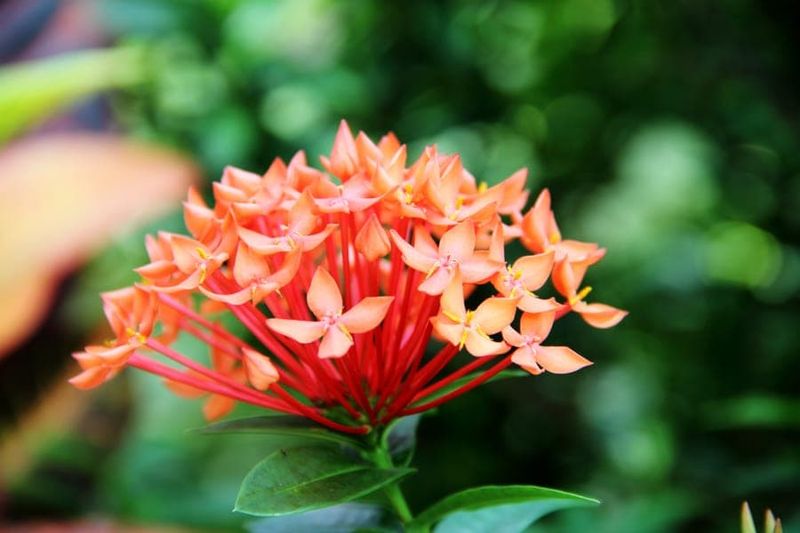
Snipping a shoot tip sends a message the plant cannot ignore or delay responding to. Removing the growing point releases side buds lower on the stem, and those buds become two or three new shoots where one used to grow alone.
More shoot tips means more places for clusters to form down the line. On a new-wood bloomer like this one, that math works in your favor over time, which is why a modestly pinched ixora often carries a denser display than one left completely alone all season.
Timing decides whether the trade actually pays off though. A light trim in early September still leaves warm weeks ahead on the calendar, and in South Florida the growing season stretches well into November most years without much slowdown.
Farther north, in Central Florida, that cushion shrinks considerably compared to the coast. Growth slows sooner there, the replacement flush may not finish in time, and you end up staring at bare tips instead of blossoms come November.
Fertility helps the plant respond well to any pruning done. Ixora prefers acidic soil, and UF IFAS notes it frequently shows yellowing leaves from iron or manganese shortage in Florida’s alkaline ground. A shrub already struggling with nutrition will regrow slowly no matter when you cut it back.
Water steadily during the regrowth period too, since fresh shoots wilt fast in dry sand without consistent moisture reaching the roots.
Think of light pruning as investing a little color now for more branching later on. On a plant that flowers from fresh wood, the investment is real, but only when the calendar and the plant’s health both cooperate together.
5. Save Major Pruning For Late Winter
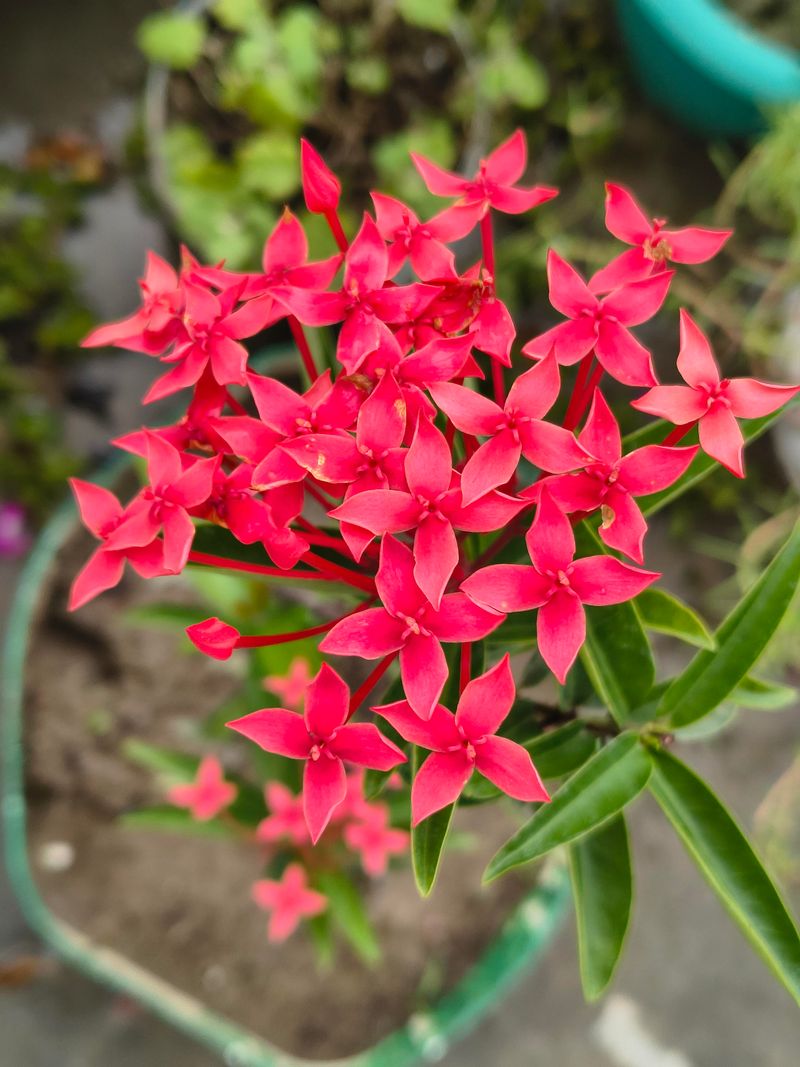
Serious reshaping deserves a better slot on the calendar than late summer offers. UF IFAS guidance for cold-sensitive tropical shrubs points to late winter or early spring, after the risk of chilly weather has passed, as the ideal window for significant pruning work.
For much of Central Florida that means roughly late February into March most years. South Florida gardeners can often start a few weeks earlier than that, since cold snaps there tend to be milder and shorter in duration.
The logic behind this timing is simple enough to follow. Cutting hard just before the warm season means every new shoot emerges into rising temperatures, longer days, and steady growing conditions rather than fighting against the season.
Recovery happens fast under those favorable conditions. A shrub reduced in late winter can refill its shape and start flowering by late spring, giving you an entire warm season of color instead of a bare skeleton sitting in the yard.
Winter pruning also protects the plant from cold damage in a meaningful way. Fresh growth is thin-skinned and vulnerable, so you want it appearing when frost is safely behind you rather than still ahead on the forecast.
Use the wait productively while the shrub keeps blooming. Walk around it now, note which branches crowd a walkway, which side leans awkwardly, and how tall you actually want it to stay, then snap a photo on your phone so you remember the plan in February.
Mark the date and let September pass with the shears staying in the shed. Hedged ixora used as a formal border is the one real exception, since shearing a few times through the warm months keeps the lines crisp.
6. Remove Only Damaged Or Crossing Stems
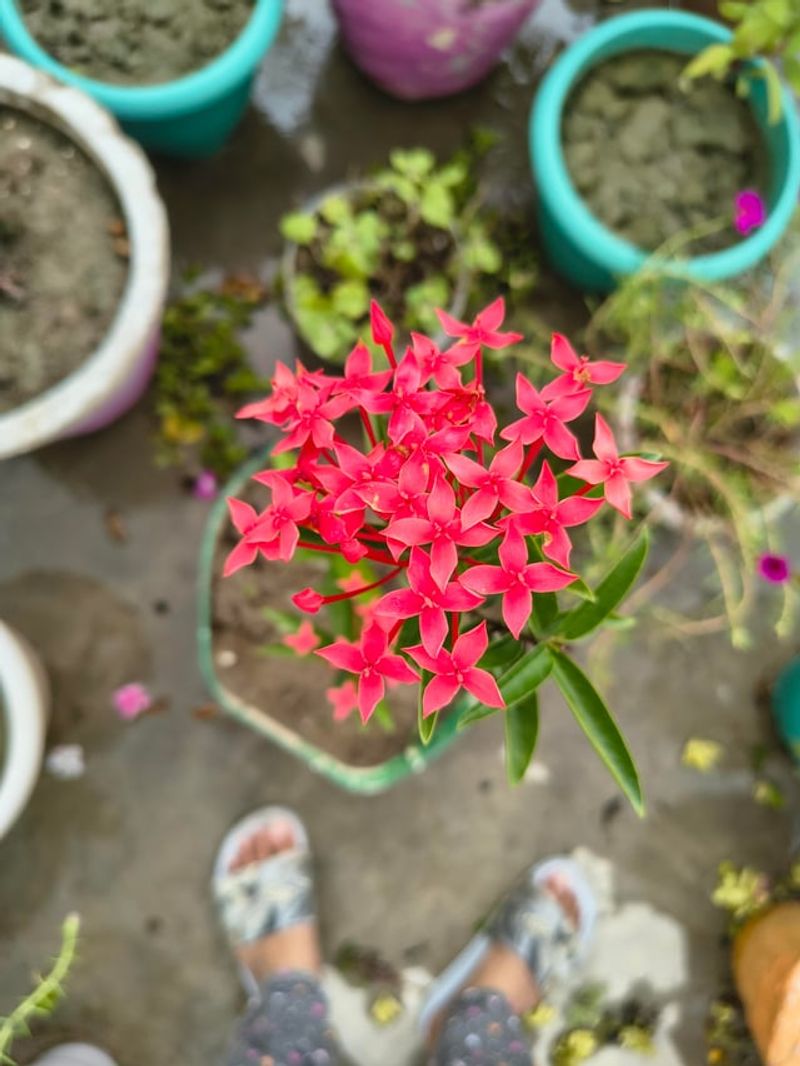
Not all cutting counts as pruning in the risky sense discussed throughout this article. Damaged wood, broken branches, and stems rubbing against each other can come out any month of the year without hurting the bloom cycle at all.
Damaged stems are easy to spot once you know what to look for on the plant. Scratch the bark lightly with a thumbnail, and green underneath means the branch is alive, while dry brown tissue means it can safely go without any loss.
Cut back to a healthy fork or to the main stem rather than leaving a stub sticking out awkwardly. Stubs heal poorly on ixora and often become entry points for decay to work its way inward over time.
Crossing branches deserve attention too, because the constant rubbing wears through the bark and creates an open wound. Choose the weaker or more awkwardly placed of the pair and remove it cleanly at its point of origin.
Storm season leaves plenty of this kind of work behind each year across Florida. After heavy summer rain and wind, ixora often carries snapped tips, tangled interior growth, and leaves matted with debris from the storm.
Opening the middle of the shrub slightly improves airflow, which helps with the sooty mold and scale insects that sometimes settle on these plants in humid weather conditions.
Keep the tools sensible for this kind of work. Bypass pruners handle stems up to about half an inch thick, and loppers cover anything thicker without crushing the surrounding wood tissue.
Gather the clippings instead of leaving them under the plant afterward, since damp debris invites fungal trouble to take hold. Ten minutes of cleanup is genuinely useful right now, and it leaves every flowering tip exactly where it already is.
7. Let This Season’s Color Play Out
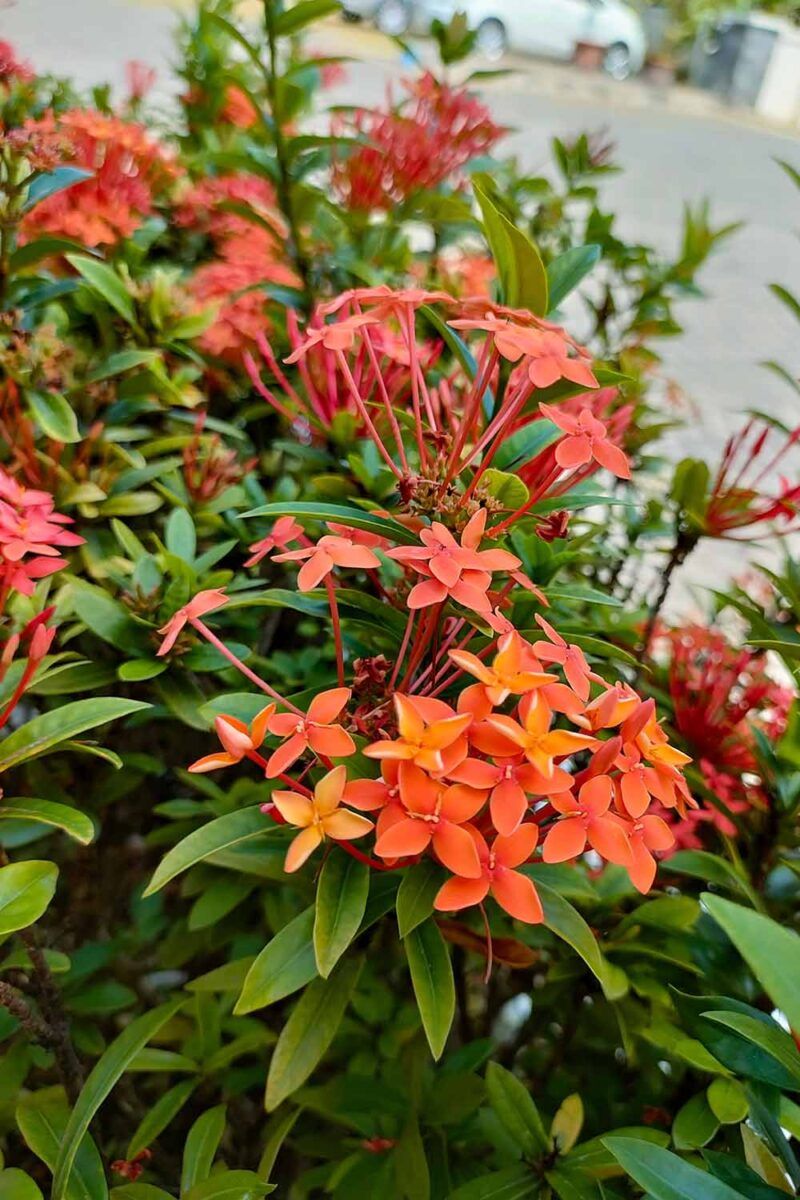
So, back to that shrub glowing orange-red beside the driveway that started this whole question. The honest recommendation is to leave it mostly alone for the time being.
Ixora flowering in September is doing exactly what you planted it for in the first place, and Florida’s warm fall usually keeps the show running for weeks longer than gardeners expect from a typical shrub.
Light touch-ups are fine to do in the meantime. Snip the odd rogue shoot, remove faded clusters, clear damaged or crossing wood, and stop there without going any further into the canopy.
Save the shaping, the height reduction, and any rejuvenation work for late winter when the plant can bounce back quickly and safely from a harder cut.
Because flowers form on new growth rather than old wood, you are not locking in a lost spring by waiting through fall. You are simply choosing to enjoy what is already open instead of trading it for regrowth that may run out of warm weather before finishing.
Spend the time on care that actually pays off instead of pruning right now. Check soil moisture regularly, watch for scale on the undersides of stems, and consider a fertilizer suited to acid-loving plants if the leaves look pale between the veins.
A well-fed, well-watered ixora blooms harder than a heavily pruned one ever will manage, regardless of how carefully that pruning gets done.
One caveat worth flagging here. Exact recovery times after pruning vary by cultivar, and dwarf types such as Maui and Nora Grant differ in size and vigor, so watch your own plant’s rhythm across a full season before making big changes to your routine.