Signs Your North Carolina Lawn Has Chinch Bugs, Not Drought (And What To Do About Each One)
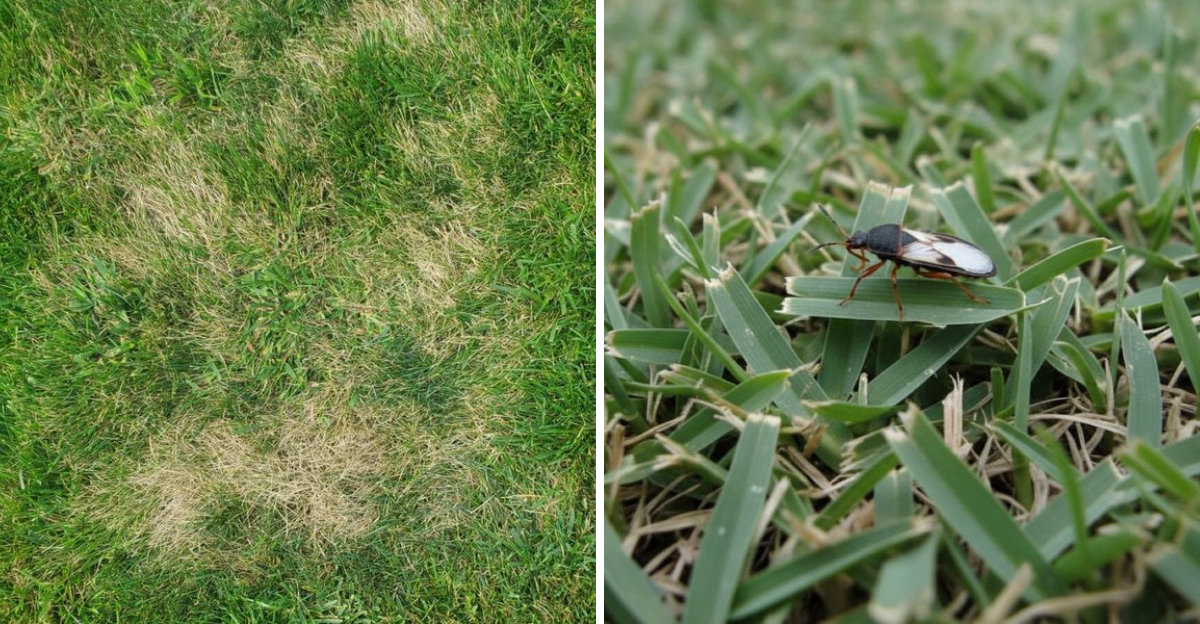
Brown patches showing up across a North Carolina lawn in late spring or summer are easy to blame on drought.
The timing lines up, the weather feels hot and dry, and watering seems like the logical response.
The problem is that chinch bugs cause damage that looks almost identical to drought stress, and treating for the wrong issue wastes time while the real problem gets worse.
Chinch bugs are active across North Carolina lawns from late spring through summer, targeting warm season grasses and spreading outward from initial damage points in a pattern that keeps expanding if nothing is done.
Knowing the difference between what drought stress actually looks like and what chinch bug damage looks like is the fastest way to get in front of the problem.
The fixes are completely different, and catching chinch bugs early makes a significant difference in how much of the lawn needs to be addressed before the season ends.
1. Chinch Bug Damage Usually Starts In Sunny Areas First
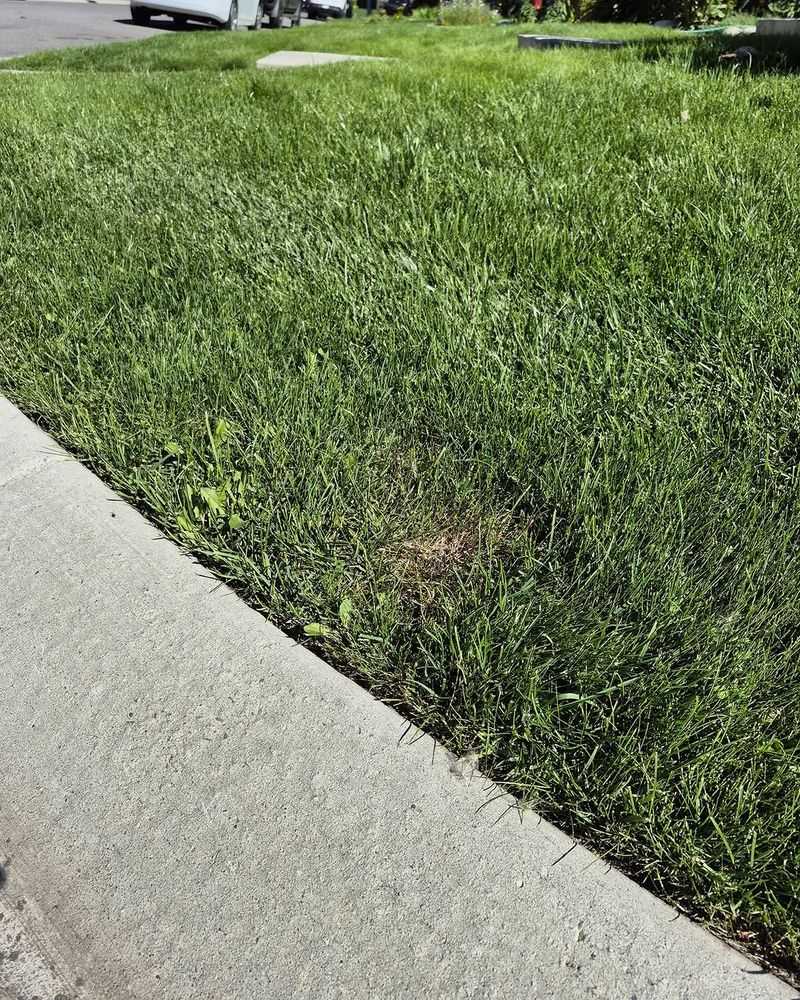
Most people notice the brown spots and immediately reach for the garden hose.
But if those patches are showing up first near sidewalks, driveways, or the sunniest corners of your yard, that pattern is a big clue pointing straight toward chinch bugs rather than drought.
Chinch bugs are heat lovers. They thrive in the hottest, driest parts of your lawn and begin feeding most aggressively in areas where the sun beats down the longest during the day.
Drought stress, on the other hand, tends to affect the whole lawn more evenly because it is related to soil moisture levels across the yard, not just one corner.
St. Augustinegrass and Zoysiagrass, two of the most popular warm-season grasses in North Carolina, are both favorite targets.
When you see browning that seems to start along sunny edges and then expand inward, walk the perimeter of those patches carefully and look closely at the soil line.
The practical next step is simple: grab a magnifying glass and crouch down at the edge of the damaged area.
Chinch bugs are tiny, about the size of a sesame seed, but visible to the naked eye if you look patiently. If drought were the issue, watering deeply for several days would show improvement.
If the patches keep spreading despite moisture, chinch bugs are almost certainly the cause. When you confirm chinch bugs are the culprit in these sunny areas, your immediate course of action should shift from irrigation to eradication.
To stop them from spreading across your yard, apply a liquid or granular bifenthrin or cyfluthrin insecticide directly to the affected areas and a few feet into the surrounding grass.
2. Grass That Stays Brown After Watering May Point To Chinch Bugs
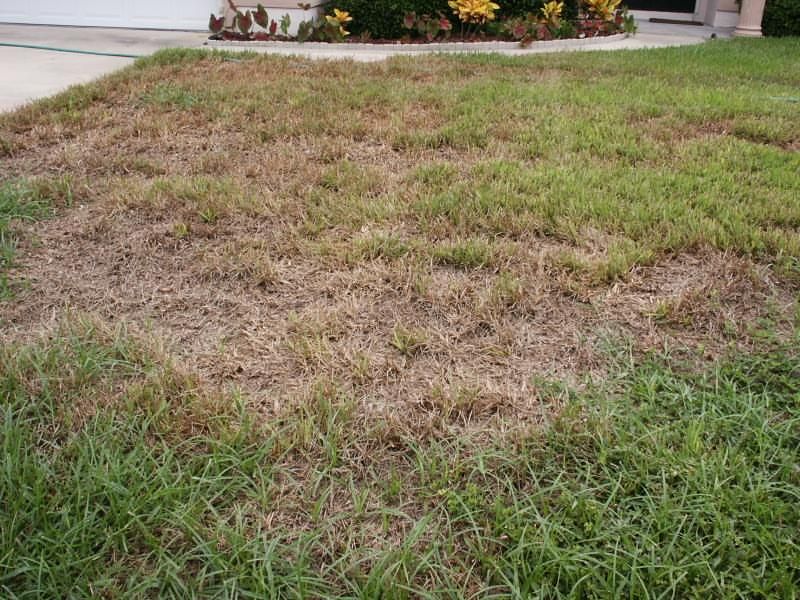
Watering your lawn and seeing zero improvement is one of the most frustrating experiences a homeowner can face.
You put in the effort, you ran the sprinklers, and yet the grass just sits there looking worse than before.
That is actually one of the clearest signs that moisture is not the real problem. Drought stressed grass has a straightforward recovery process.
Your North Carolina Garden Changes Every Week. Your Plan Should Too.
Gardening in North Carolina changes quickly throughout the season. Every Friday you’ll receive a simple weekly plan showing exactly what to plant, prune, fertilize, harvest, and protect so you never miss the right timing.
Give it a deep, thorough watering and within a day or two, the blades perk back up and color starts returning to the turf.
The grass responds because its cells were simply thirsty and now they have what they need. Chinch bug damage works differently.
These insects inject a substance into grass blades that disrupts the plant’s ability to move water and nutrients internally.
Even when the soil has plenty of moisture, the grass cannot use it properly because the internal system has been compromised.
Watering more does not fix that, and in some cases, overwatering can create other issues like fungal problems on top of the insect damage.
A practical test for North Carolina homeowners is to water a struggling area deeply for three to four consecutive days. Mark the edges of the brown patch with small flags or stakes.
If the patch continues growing outward despite regular moisture, shift your focus from irrigation to a closer inspection for insect activity along those expanding edges.
If the water test confirms it is just drought, you can fix it with a strict routine. Water deeply just two days a week so the lawn gets one full inch of water.
Also, raise your mower to its highest setting; taller grass shades the soil, keeping the roots cooler and holding in moisture.
3. North Carolina Lawns With Thick Thatch Tend To Have More Chinch Bug Problems
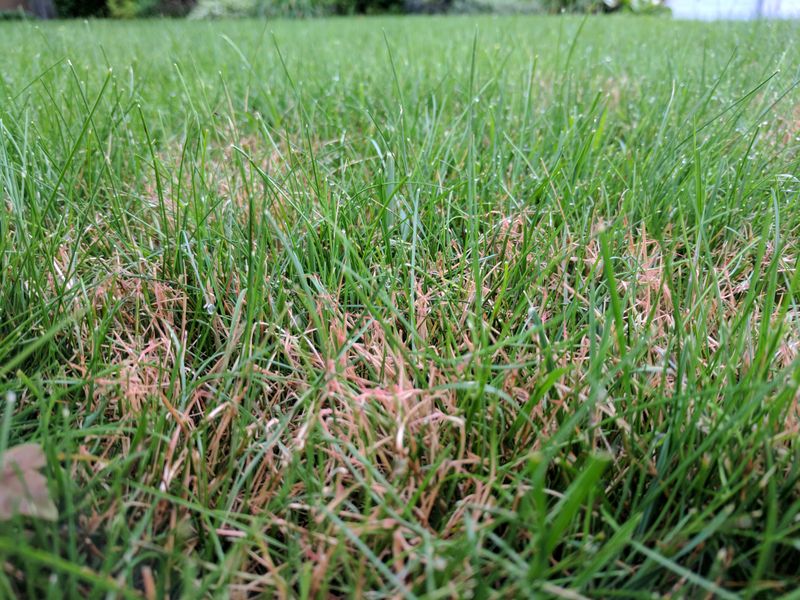
Thatch gets overlooked by a lot of homeowners, but it plays a surprisingly big role in how welcoming your lawn is to pest insects.
A thin thatch layer is actually healthy and normal. Trouble starts when that layer builds up past about half an inch thick.
Thick thatch traps heat close to the soil surface, creating a warm, sheltered environment that chinch bugs absolutely love.
It also makes it harder for water and nutrients to reach the roots, which weakens the grass and makes it less able to handle insect pressure. A stressed lawn is always more vulnerable than a healthy one.
North Carolina summers are hot and humid, which means organic material breaks down at a certain rate, but heavy fertilization and frequent mowing without proper cleanup can cause thatch to accumulate faster than it breaks down.
St. Augustinegrass is especially prone to heavy thatch buildup compared to other warm-season grass types.
The best time to dethatch in North Carolina is late spring, just as warm-season grasses are actively growing.
Use a dethatching rake for small areas or a power dethatcher for larger lawns. After dethatching, water the lawn well and avoid heavy nitrogen fertilizer for several weeks.
Keeping thatch thin removes one of the key conditions that allow chinch bug populations to build up unnoticed until the damage becomes obvious across large sections of the yard.
4. Chinch Bugs Often Create Sharp Edges Between Healthy And Weak Grass
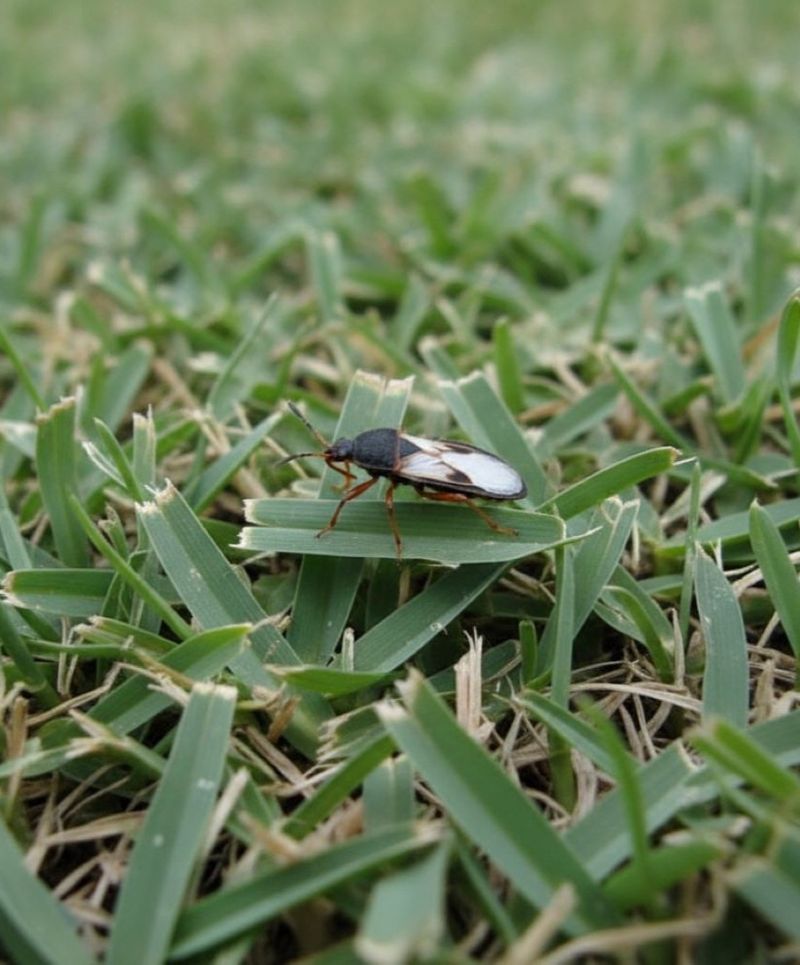
One of the most telling visual clues in any lawn investigation is the border between healthy turf and struggling turf.
The shape and sharpness of that edge can tell you a lot about what is actually going on beneath the surface.
Drought stress creates gradual transitions. You will notice the grass getting progressively lighter and weaker as you move from a well-watered area toward a dry zone.
The change happens slowly across several feet, almost like a fade from green to tan. There is rarely a sharp cutoff because moisture levels change gradually through the soil. Chinch bug damage is different in a very noticeable way.
Because these insects feed in concentrated colonies and then move outward as a group, the border between damaged and healthy grass tends to be surprisingly sharp and well-defined.
One side looks great and the other looks like it has been struggling for weeks, with almost no gradual middle ground.
When you are monitoring your North Carolina lawn, get down low and look across the turf from ground level. That low angle makes the border shape much easier to see.
Walk slowly along the edge of any damaged patch and watch for the zone where green grass meets brown grass abruptly.
If that line is crisp rather than gradual, start inspecting the soil and thatch layer right along that border.
That is exactly where active chinch bugs tend to be feeding and moving from. Because this sharp border is the insect front line, it is also where your treatment will do the most good.
If you choose to use an eco-friendly option like neem oil or insecticidal soap rather than traditional chemicals, target this exact perimeter heavily.
Soaking this transition zone disrupts the nymphs’ feeding right where they are expanding into healthy turf.
5. Footprints Lingering In Grass Usually Point More Toward Drought Stress
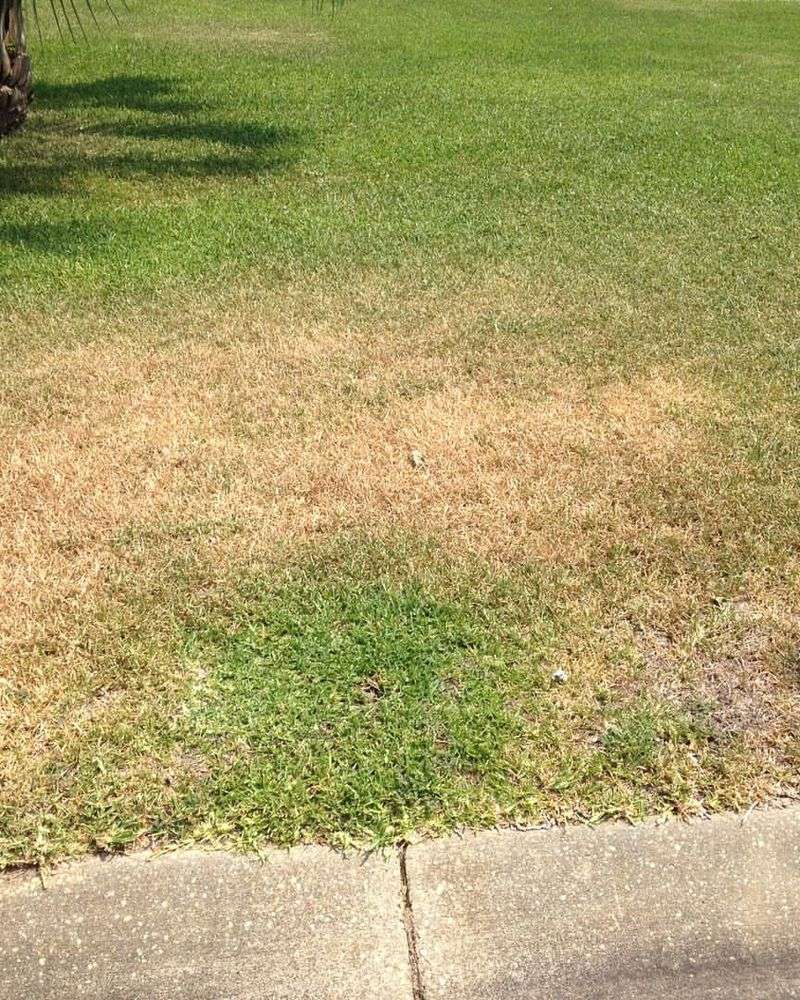
Here is a quick lawn test that takes about ten seconds and can give you a surprising amount of information.
Walk across a section of your lawn that looks like it might be struggling, then turn around and look at where you stepped. What you see next is very telling.
Grass under drought stress loses its natural ability to spring back after being pressed down.
The cells inside the blades do not have enough water to maintain their normal firmness, so footprints stay visible in the turf for several minutes or longer.
This is called the footprint test, and lawn care professionals use it all the time as a quick check for moisture levels. Chinch bug damaged grass behaves a little differently.
The blades may look brittle, discolored, or patchy, but the footprint response is not as consistent because the damage is coming from a different source.
The grass is not simply thirsty; it has been physically compromised by insect feeding activity at the base of the blade.
For North Carolina homeowners, the footprint test works best in the morning before temperatures climb.
Try it across both a struggling area and a healthy section of your lawn for comparison. If footprints linger in an area, that spot needs water instead of pest treatment. Using this simple test with a visual check clearly shows what your lawn needs.
6. Chinch Bugs Become More Active During Hot Dry North Carolina Weather
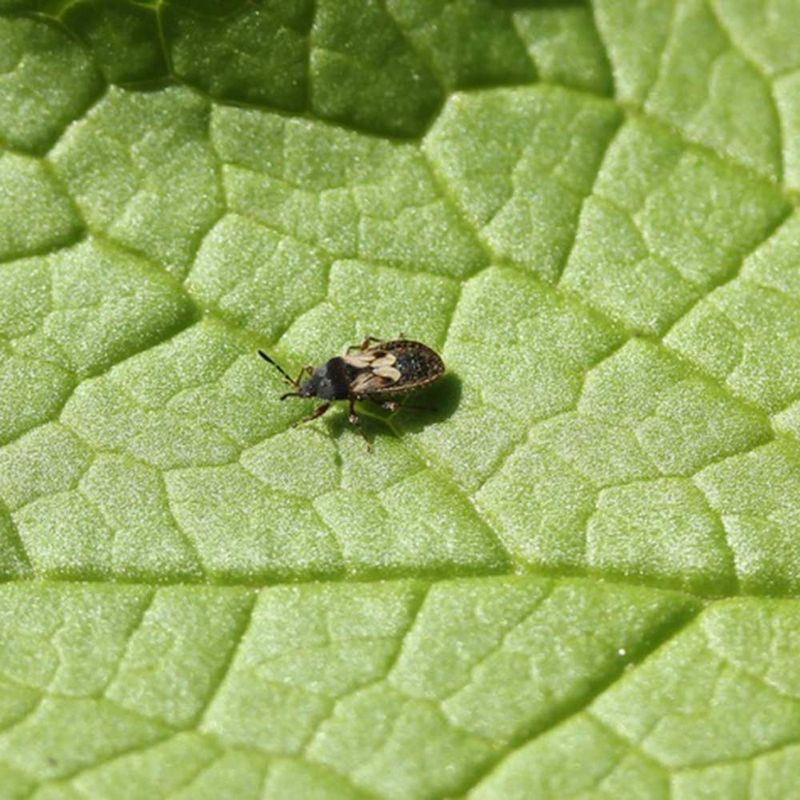
Timing matters a lot when it comes to chinch bugs. These insects do not cause problems year-round in North Carolina.
They have a very predictable seasonal window when conditions line up perfectly for them to feed aggressively and multiply quickly.
Late spring through early fall is the danger zone, with July and August being the peak months for chinch bug activity.
When temperatures climb above 80 degrees Fahrenheit and rainfall becomes inconsistent, chinch bug populations can explode rapidly.
Hot, dry stretches that last even a week or two can accelerate feeding damage significantly in warm-season lawns. What makes this tricky is that drought stress also peaks during the same summer months.
Both problems show up at the same time of year, which is exactly why so many homeowners misread the situation.
A lawn that is not getting enough rain and is also under chinch bug pressure will decline much faster than one facing just one of those challenges alone.
To prevent heat damage and chinch bugs, keep your grass taller and water deeply two to three times a week instead of lightly every day.
Also, inspect sunny areas weekly starting in late May to catch pest problems before they spread.
7. Overfertilized North Carolina Lawns Often Attract More Chinch Bugs
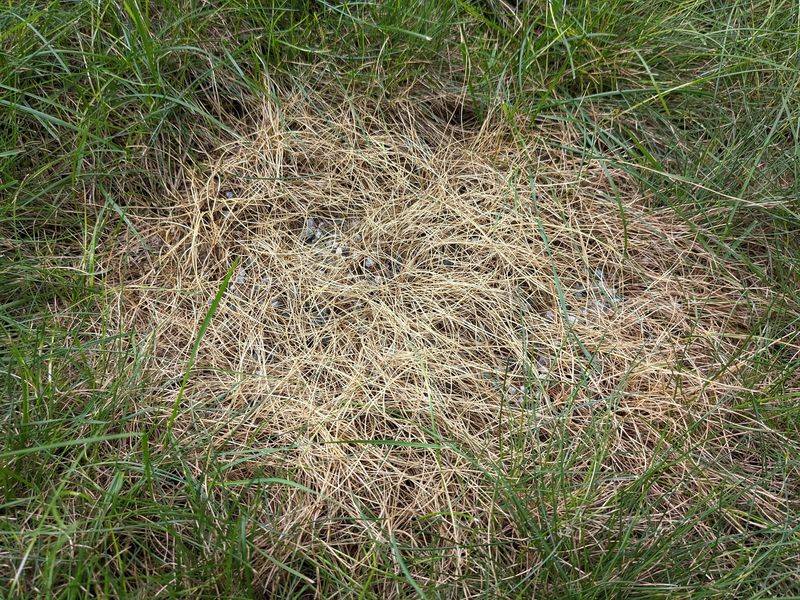
More fertilizer does not always mean a healthier lawn. In fact, pushing too much nitrogen into your grass during the warm months can actually set you up for bigger pest problems down the road.
Chinch bugs are one of the most common beneficiaries of over-fertilized turf. Heavy nitrogen applications cause grass to grow fast and lush, but that rapid new growth tends to be soft and tender rather than tough and resilient.
Chinch bugs are attracted to that kind of growth because it is easier to feed on. Thick, succulent grass blades offer less resistance, and the insects can feed and reproduce more successfully in those conditions.
North Carolina’s warm, humid summers already push warm-season grasses toward vigorous growth.
Adding excess nitrogen on top of that creates the kind of environment where chinch bug populations can build up quickly before you even notice the early warning signs.
A smarter fertilizing approach involves feeding your lawn in smaller amounts more strategically.
For most North Carolina warm-season lawns, applying a balanced fertilizer in late spring and a lighter feeding in midsummer is usually enough.
Avoid heavy nitrogen applications after mid-July when the grass is already under heat stress.
Soil testing through your local North Carolina Cooperative Extension office is one of the best ways to understand exactly what your lawn needs rather than guessing and accidentally overfeeding it.
8. Drought Stress Usually Improves Faster In Shaded Lawn Areas
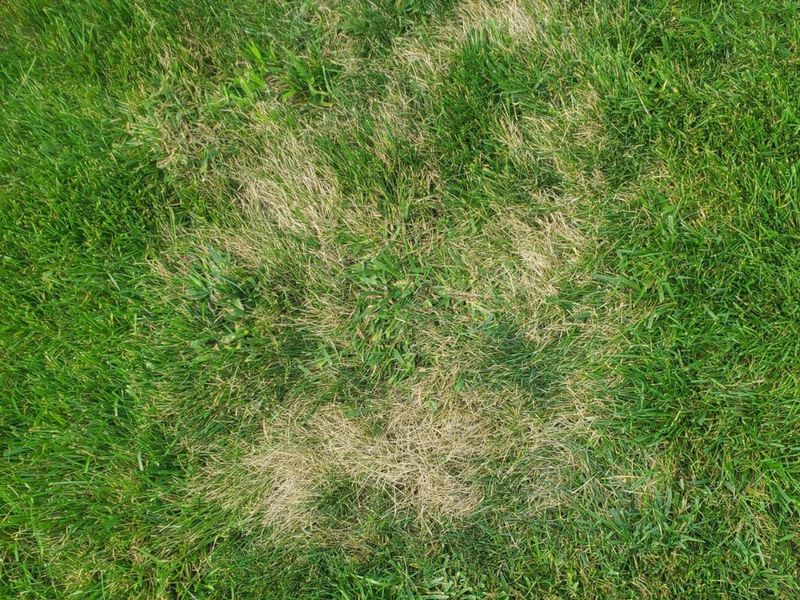
Shade can be your lawn’s best friend during a drought. If you have ever noticed that the grass under your trees looks greener and more alive during a dry stretch, that is not a coincidence.
Shaded areas lose moisture much more slowly because they are protected from direct sun and high temperatures.
When drought stress is the main problem, shaded sections of your North Carolina lawn will almost always look better and recover faster than open, exposed areas.
The soil under trees stays cooler and retains moisture longer, which gives the grass roots a better chance to stay hydrated even when rainfall is scarce.
If your lawn is restricted by strict local summer watering limits, you can use this shade factor to your advantage. Focus your limited watering budget entirely on the high-risk, sun-baked areas of the yard.
Let the shaded zones rely on their natural moisture retention, and prioritize the open areas to keep the grass crowns alive until restrictions ease. Chinch bug damage does not follow the same pattern.
Because these insects prefer heat and sunlight, shaded areas tend to stay cleaner and healthier even when nearby sunny sections are declining.
If you notice that your shaded grass looks fine while open sections are struggling badly, that contrast is a strong indicator of insect activity rather than a simple lack of water.
Use this observation as a diagnostic tool. Walk your entire yard and compare shaded zones to open zones. Take notes or even snap a few photos on your phone over several days.
If shaded grass looks good but sunny areas worsen despite watering, check the hot, open sections for chinch bugs along the turf surface and thatch layer.
9. Chinch Bugs Can Often Be Confirmed With A Simple Water Test
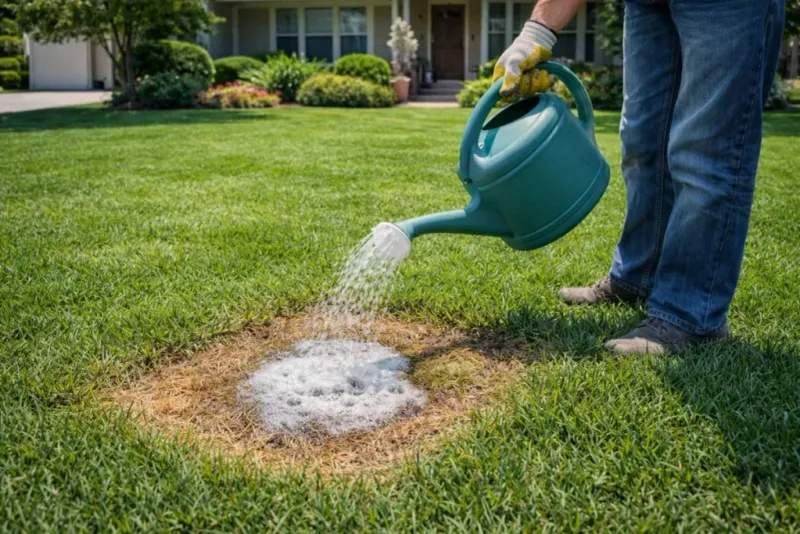
You do not need fancy equipment or a professional pest inspector to find out if chinch bugs are living in your lawn.
One of the most reliable detection methods costs almost nothing and takes about ten minutes to complete right in your own backyard.
The flush test, sometimes called the soap flush, involves cutting both ends off a large metal coffee can and pressing it a few inches into the soil at the edge of a damaged area.
Fill the can with water mixed with a small amount of dish soap, about two tablespoons per gallon of water.
Watch the water surface carefully for about five minutes. If chinch bugs are present, they will float to the surface within a few minutes.
Adult chinch bugs are tiny, black and white insects about one-sixth of an inch long. Nymphs are even smaller and may appear orange or red depending on their stage.
Finding even a few insects per square foot suggests a population that warrants attention. The best time to perform this test in North Carolina is mid-morning when temperatures are already warm but not yet at peak heat.
Test at least two or three spots along the border between healthy and damaged grass, since that is where active feeding is most likely occurring.
If the test comes back negative, consider moisture management and soil health as the next areas to investigate before assuming insects are the cause.
If the test is positive, apply a granular insecticide as soon as the area dries, then water lightly to activate it and push it into the soil.
If the test is negative, check your soil health and watering habits before assuming insects are the problem.
10. Watering Every Day Can Actually Make Lawn Problems Worse
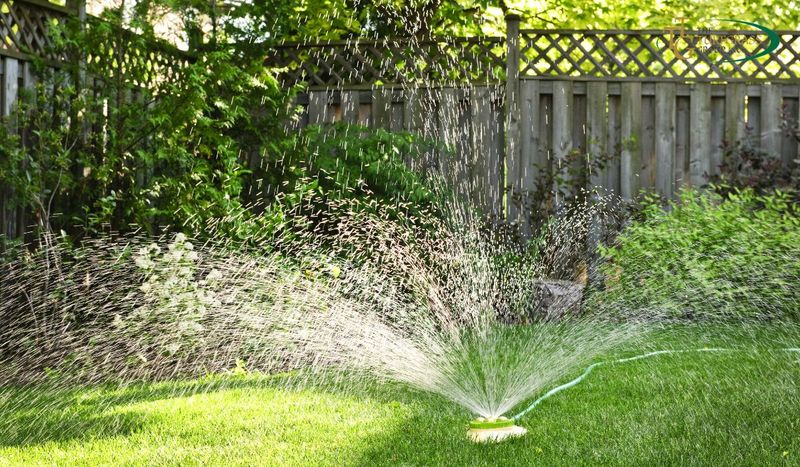
Daily watering sounds responsible, but for most North Carolina lawns it is actually one of the habits that leads to weaker turf over time.
Grass roots follow moisture, and when water is always available at the surface, roots have no reason to grow deep into the soil where they would be far more resilient.
Shallow, frequent watering keeps the top inch or two of soil constantly damp. That creates an environment where roots stay short and close to the surface, making the entire lawn much more vulnerable to heat stress, drought, and even pest pressure.
Chinch bugs and certain fungal problems also thrive in conditions where the soil surface stays consistently wet and warm. A much better approach for North Carolina lawns is deep, infrequent watering.
Most warm-season grasses benefit from about one inch of water per week, delivered in two sessions rather than seven small ones.
Watering deeply encourages roots to chase moisture downward, building a stronger, more drought-tolerant lawn over time.
Early morning is the best time to water, ideally between 5 a.m. and 9 a.m. This gives the grass blades time to dry before the heat of the day, reducing fungal risk.
A simple rain gauge placed in your yard takes all the guesswork out of knowing how much water your lawn is actually receiving each week from both rain and irrigation combined.
11. Chinch Bug Damage Often Spreads Outward In Expanding Patches
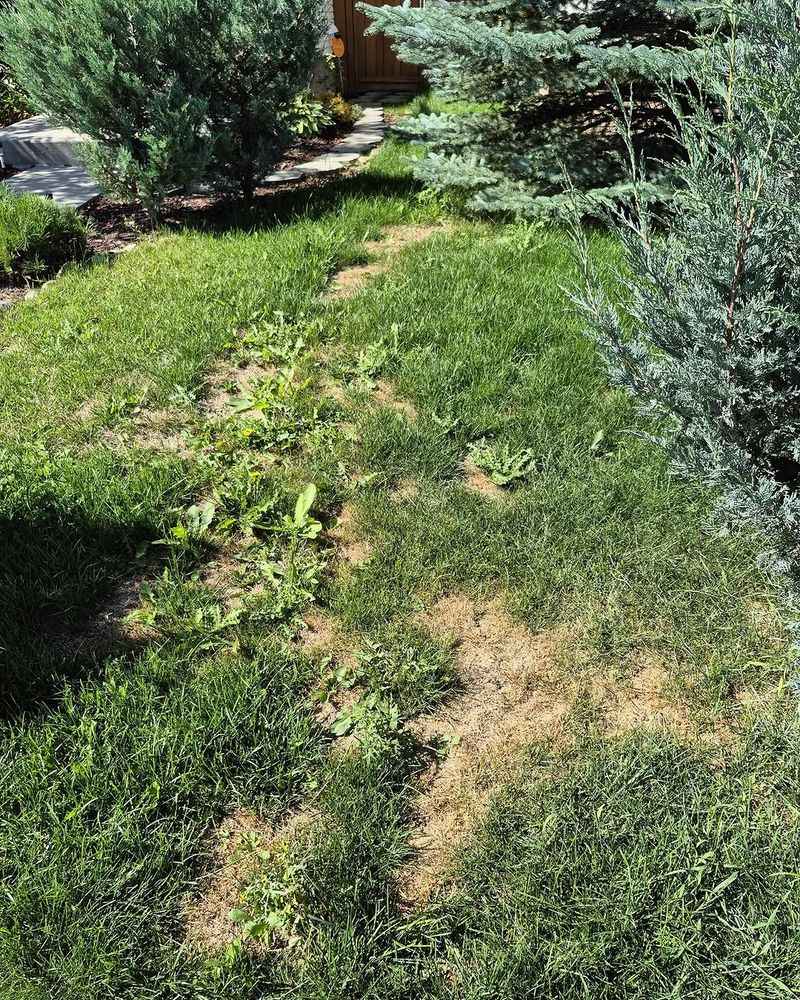
Watching a brown patch in your lawn slowly get bigger over the course of a week is genuinely alarming.
What starts as a small, isolated area can double in size within days during peak summer heat, and that expanding pattern is one of the strongest indicators of active chinch bug feeding.
Chinch bugs do not stay in one place. They feed on a section of grass until it declines, then move outward to fresh turf at the edges of the damaged zone.
This is exactly why chinch bug damage creates those characteristic expanding circular or irregular patches rather than a scattered, random browning pattern across the yard.
Drought stress rarely behaves this way. Dry patches tend to stay roughly the same shape and size unless the entire lawn is drying out uniformly.
A patch that seems to grow a little larger each day, especially during a stretch of hot weather, is almost always being driven by an active biological cause rather than simple moisture loss.
Marking the edges of a suspicious patch with small garden flags or chalk marks on a nearby hard surface is a great monitoring strategy. Check those markers every two to three days.
If the brown area is consistently pushing past your markers outward into previously healthy grass, act quickly.
Early action when patches are still small keeps the affected area manageable and gives your lawn a much better chance of recovering fully before the season ends.
12. Healthy North Carolina Lawns Recover Faster When The Real Problem Is Identified Early
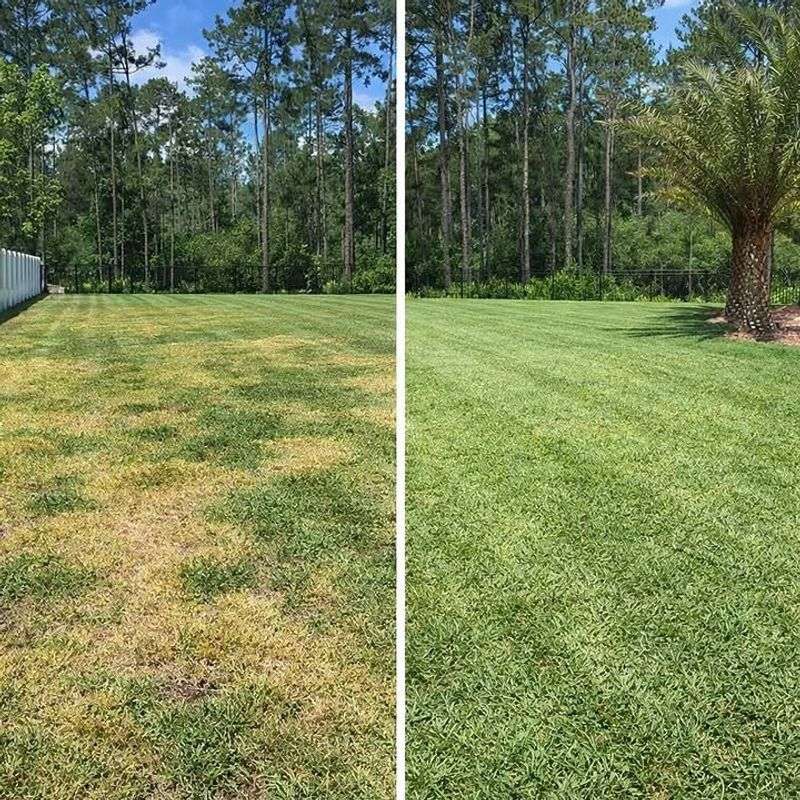
Getting the diagnosis right from the beginning saves time, money, and a whole lot of stress. A lawn that is treated for drought when it actually has chinch bugs will keep declining no matter how much water you apply.
And a lawn treated for insects when the real problem is moisture will not recover either. Accuracy matters more than speed. North Carolina’s summer climate is demanding on warm-season turf.
Heat, humidity, occasional drought stretches, and pest pressure all overlap during the same months, which makes correct identification genuinely challenging.
Using the inspection methods covered throughout this article, including the footprint test, the soap flush test, and monitoring patch borders, gives you a solid set of tools to work with before spending anything on treatments.
Once the real problem is confirmed, recovery timelines become more realistic. Drought stressed grass in good underlying health can bounce back within one to two weeks of proper deep watering.
Lawns recovering from chinch bug pressure may take longer, especially if feeding was heavy before the problem was caught, but healthy soil and proper care give the turf the best possible foundation for regrowth.
For areas severely thinned out by a chinch bug attack, once the pests are eradicated, gently rake away the dry, matted debris to expose the soil.
Because warm-season grasses like St. Augustine and Zoysia spread via aggressive runners, keeping the soil damp and applying a light, balanced fertilizer will help the surrounding healthy grass naturally plug and repair those bare spots before the summer ends.
Prevention is your best long-term strategy. To make your lawn less inviting to chinch bugs and ready for hot North Carolina summers, maintain a proper mowing height, avoid excess nitrogen, manage thatch, and water deeply but infrequently.