Six Lined Racerunners Are Easier To Spot In Georgia Yards During August Heat
Something lightning-fast may streak through your yard before you even get a good look at what just passed.
Six-lined racerunners rarely sit around waiting to be noticed. Their quick movements can turn a simple walk outside into an unexpected wildlife sighting.
August heat gives Georgia homeowners a better chance of catching these speedy lizards in action.
Look near sunny ground when temperatures climb. Racerunners depend on warmth for activity, which helps explain why they can suddenly seem more visible during especially hot stretches.
Their speed is not the only detail worth noticing when one crosses your path.
Those bright stripes and restless movements belong to a lizard well suited for active summer days. Seeing one around your yard can offer a fascinating glimpse into how local reptiles handle the season.
1. August Heat Brings Racerunners Out More Often
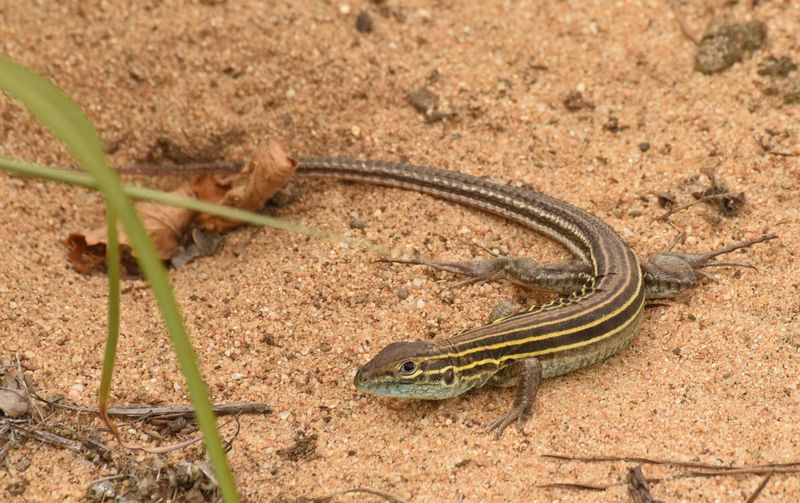
Hot pavement, dry soil, and blazing afternoon sun are basically an open invitation for six lined racerunners. August temperatures in the South push these lizards into high gear.
Unlike many animals that slow down in extreme heat, racerunners actually thrive in it.
Racerunners are cold-blooded, so outside temperatures directly control their body activity. Warm air means faster movement, sharper reflexes, and more time spent hunting.
On cooler or overcast days, you are far less likely to spot one out in the open.
Peak activity usually happens between mid-morning and early afternoon, when the ground surface gets the hottest. Concrete driveways, brick patios, and sandy garden paths become favorite hangouts.
Racerunners absorb heat from below through direct ground contact, not just from sunlight above.
August also lines up with a busy stretch in their seasonal calendar. Food is plentiful, and juveniles hatched earlier in summer are now active and visible.
More lizards moving around means more chances for backyard sightings. If you have noticed a quick flash of green streaking across your yard lately, a racerunner is a very likely explanation.
2. Sunny Bare Ground Is Their Preferred Habitat
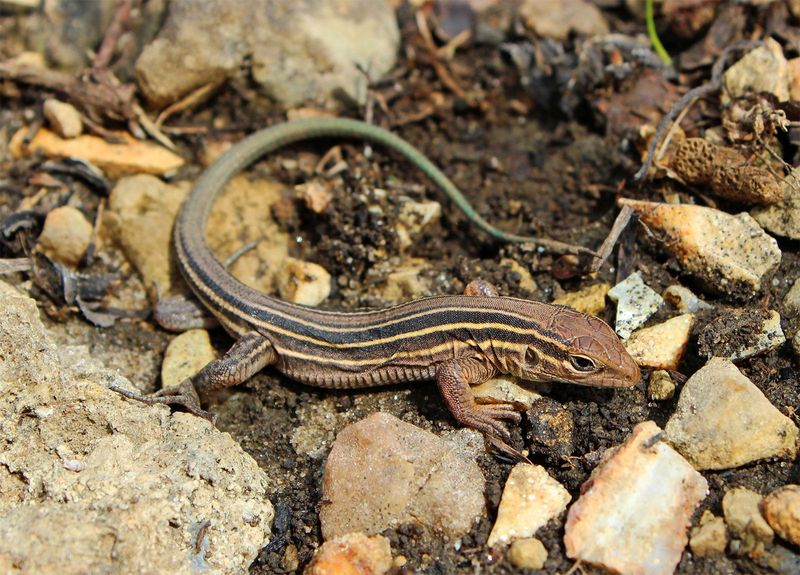
Shaded lawns with thick grass are not where racerunners want to spend their time. Open, sunny patches with loose or bare soil are their ideal setting.
Yards with gravel paths, sandy edges, or sparse ground cover often attract these lizards regularly.
Racerunners prefer spots where sunlight hits the ground directly for most of the day. Gardens with raised beds, rock borders, or exposed dirt between plants can be surprisingly attractive to them.
Even a narrow strip of bare ground along a fence line can become a regular patrol route.
Grass that is too thick or tall blocks the ground heat they need. Short-mowed turf near a sunny border works better than a dense lawn.
Open areas also give them clear sightlines to spot approaching threats and escape quickly.
Across Georgia, suburban yards with mixed landscaping, sandy soil, and some open ground tend to host racerunners more than heavily shaded properties. They are especially common near woodland edges, roadsides, and open fields.
If your yard has a mix of sun-baked spots and nearby cover like shrubs or wood piles, you have created conditions that racerunners find very appealing throughout the summer months.
Your Georgia Garden Changes Every Week. Your Plan Should Too.
Gardening in Georgia changes quickly throughout the season. Every Friday you’ll receive a simple weekly plan showing exactly what to plant, prune, fertilize, harvest, and protect so you never miss the right timing.
3. Long Stripes Help Identify Six Lined Racerunners
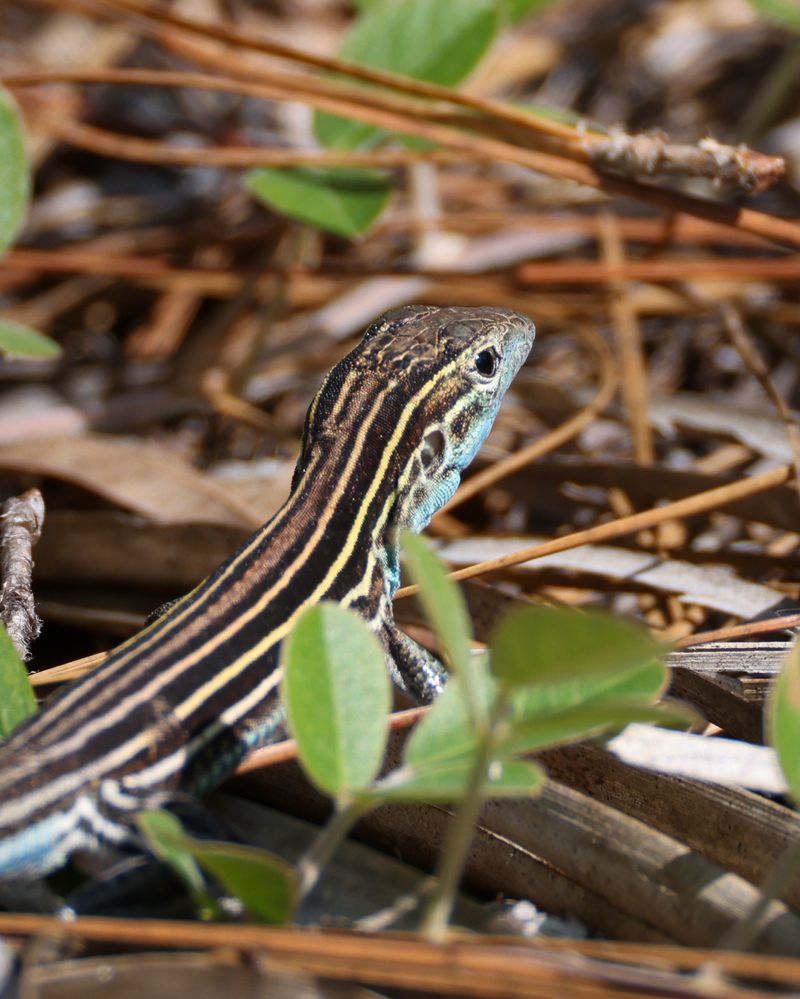
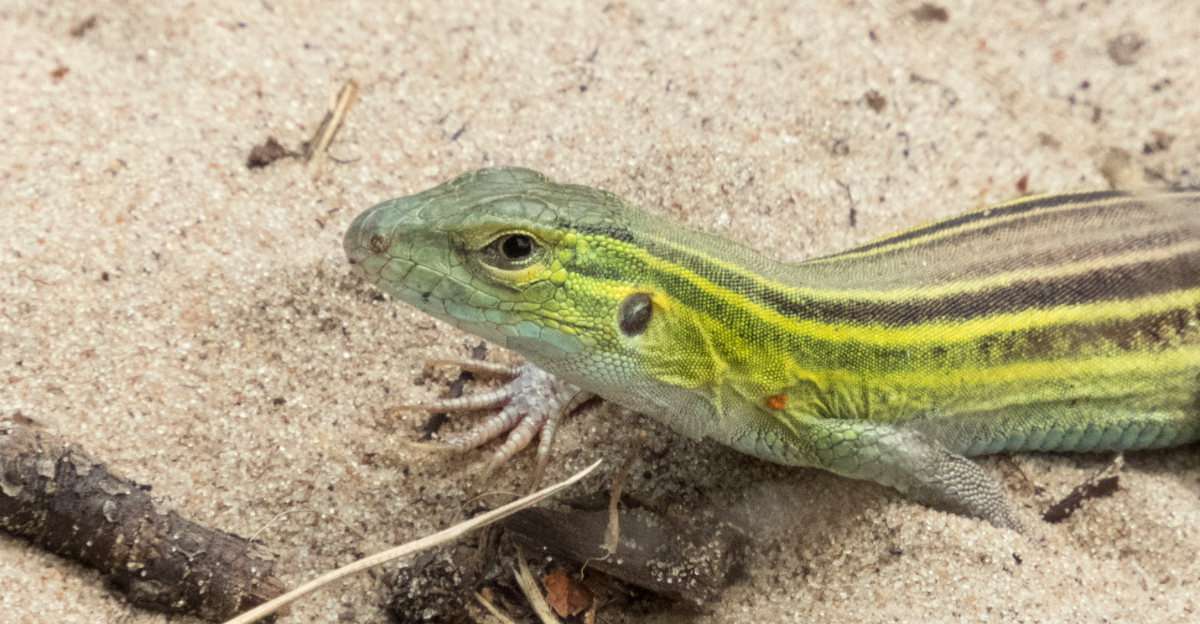
Six bright stripes running from head to tail make this lizard surprisingly easy to identify once you know what to look for. Adults typically show six light-colored lines against a darker brown or greenish background.
Young racerunners also show the distinctive light stripes that help identify the species.
Males tend to show more green or turquoise coloring along the sides, especially during the breeding season. Females are usually more uniformly brown with clear pale stripes.
Both sexes share the same basic stripe pattern, which is consistent enough to use as a reliable field identifier.
At first glance, some people confuse racerunners with skinks. Skinks are generally smoother and stockier, while racerunners have a noticeably slender build and a longer, whip-like tail.
Racerunners also move with a distinctive quick, jerky motion that sets them apart from most other backyard lizards.
Body length for adults typically ranges from about six to ten inches, with much of that length being the tail. Scales along the back have a slightly rough or granular texture.
Getting a good look can be tricky since they rarely sit still for long. A quick photo with your phone can help you confirm the ID after the lizard has already sprinted away.
4. Small Insects Provide Much Of Their Diet
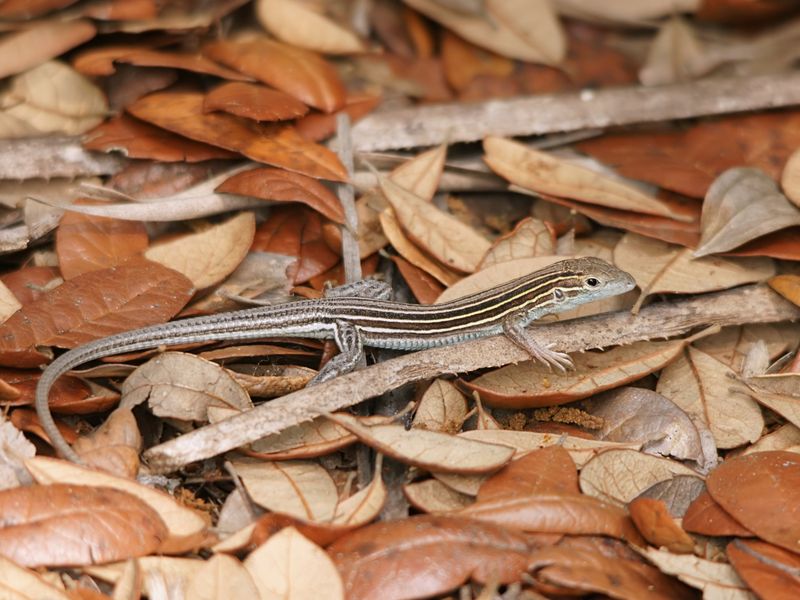
Speed matters when your meals run, jump, or fly. Six lined racerunners rely almost entirely on small invertebrates for food.
Beetles, grasshoppers, crickets, ants, and spiders make up a large portion of what they eat throughout the warmer months.
Racerunners hunt by sight and use fast bursts of movement to chase down prey. They do not sit and wait like some other lizard species.
Active foraging means they cover a lot of ground each day, which is part of why they show up in so many different spots around a yard.
August is a good month for insect activity, which partly explains why racerunners are so visible then. More prey means more hunting trips across open ground.
A yard with healthy insect populations can support racerunner activity for much of the summer season.
Having racerunners around can be a quiet bonus for gardeners. They pick off insects near garden beds, patios, and pathways without causing any damage to plants or soil.
No special feeding is needed or recommended. Wild racerunners do best when left to forage naturally on their own.
Putting out food is unnecessary and may attract unwanted pests instead. Simply letting them roam freely is the best way to support them.
5. Shallow Burrows Offer Shelter From Extreme Conditions
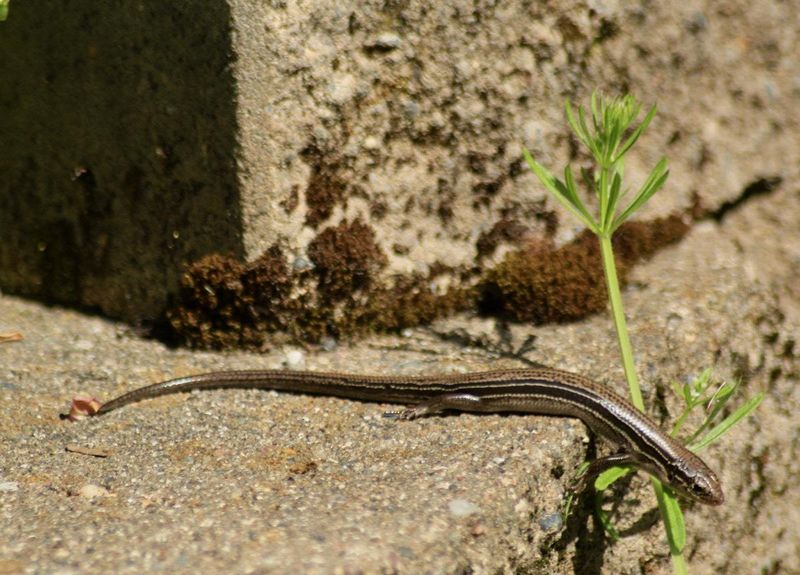
When temperatures spike past comfortable limits even for a heat-loving lizard, racerunners know exactly where to go. Shallow burrows dug into loose soil give them a quick retreat from the most intense afternoon heat.
These burrows are also used overnight and during cooler stretches of weather.
Racerunners typically dig their own burrows, though they may occasionally use existing cavities under rocks, roots, or debris. Sandy or loose soil makes digging much easier, which is another reason they prefer open, well-drained areas.
Clay-heavy or compacted soil is harder to work with and less suitable for their needs.
Burrows are usually only a few inches deep. They serve as a temperature buffer rather than a permanent underground home.
On very hot afternoons, a racerunner might duck underground briefly and then return to activity once surface conditions cool slightly.
Leaf litter piles, loose mulch, and rock edges near garden beds can also provide informal shelter spots. Racerunners are adaptable and use whatever cover is available nearby.
Keeping a small section of your yard with loose soil or natural debris can make it more welcoming for these lizards. Avoid heavy soil compaction in garden borders if you want to encourage wildlife-friendly conditions throughout the summer season.
6. Females May Produce More Than One Summer Clutch
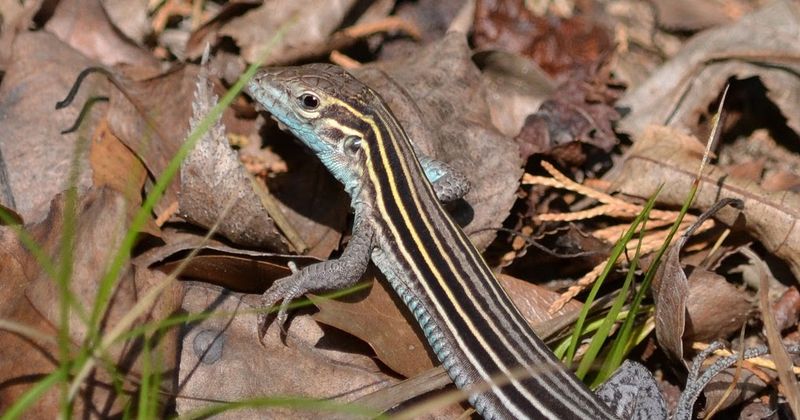
One litter per summer is not the limit for six lined racerunners. Females can produce multiple clutches of eggs between late spring and mid-summer, making August a time when young lizards from later clutches are hatching or growing fast.
A sudden uptick in small racerunners in your yard is often a sign of recent hatching activity nearby.
Clutch sizes are typically small, often ranging from one to six eggs per nesting. Eggs are buried in warm, loose soil where ground heat helps with incubation.
Sandy garden edges, sunny bare patches, and soft soil near walkways are common nesting spots.
Incubation takes roughly six to eight weeks depending on soil temperature and conditions. Warmer soil speeds things up, which is why August hatchlings are common in areas with consistently hot summers.
Juveniles are independent right from hatching and receive no parental care.
Young racerunners are noticeably smaller than adults and usually show the same distinctive light stripes along the body.
Seeing tiny racerunners in late summer can be a sign that a female nested successfully in or near your yard.
Avoid disturbing soft soil patches near sunny garden borders during summer, as eggs may be buried just a few inches below the surface without any visible marking.
7. Yard Sightings Are Usually Nothing To Worry About
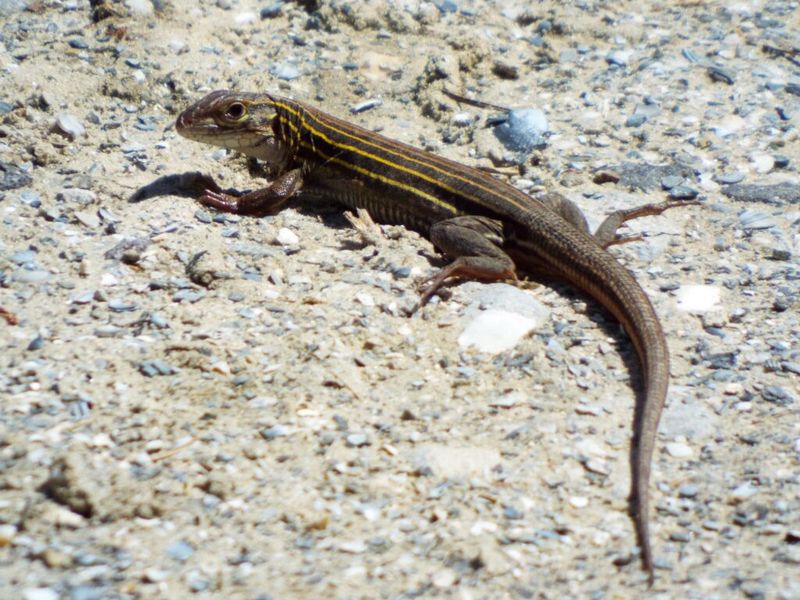
Seeing a fast-moving striped lizard dart across your patio can catch you off guard. Most people’s first reaction is surprise, but there is no real cause for concern.
Six lined racerunners are harmless to people, children, and household pets.
Racerunners do not bite unless directly handled, and even then the bite is minor and causes no serious injury. They are not venomous in any way.
Their instinct is to flee, not confront. Chasing one down is nearly impossible anyway since they are among the fastest lizards in North America.
Having racerunners visit your yard is generally a sign of a healthy outdoor environment. They need insects, open ground, and warm sun, all things that a well-maintained yard naturally provides.
Their presence does not indicate a pest problem or any kind of issue with your property.
Children who spot one may want to catch it, which is understandable. Gentle observation from a distance is a better approach.
Handling wild lizards can stress them significantly and may cause them to drop their tail as a defense response. Watching them hunt and move from a few feet away is genuinely entertaining and completely safe.
Racerunners are a natural part of summer life across the Southeast and deserve a little space to do their thing.