Southern Indiana’s Bare Treetops Are Hiding A Holiday Plant That’s Toxic To Pets
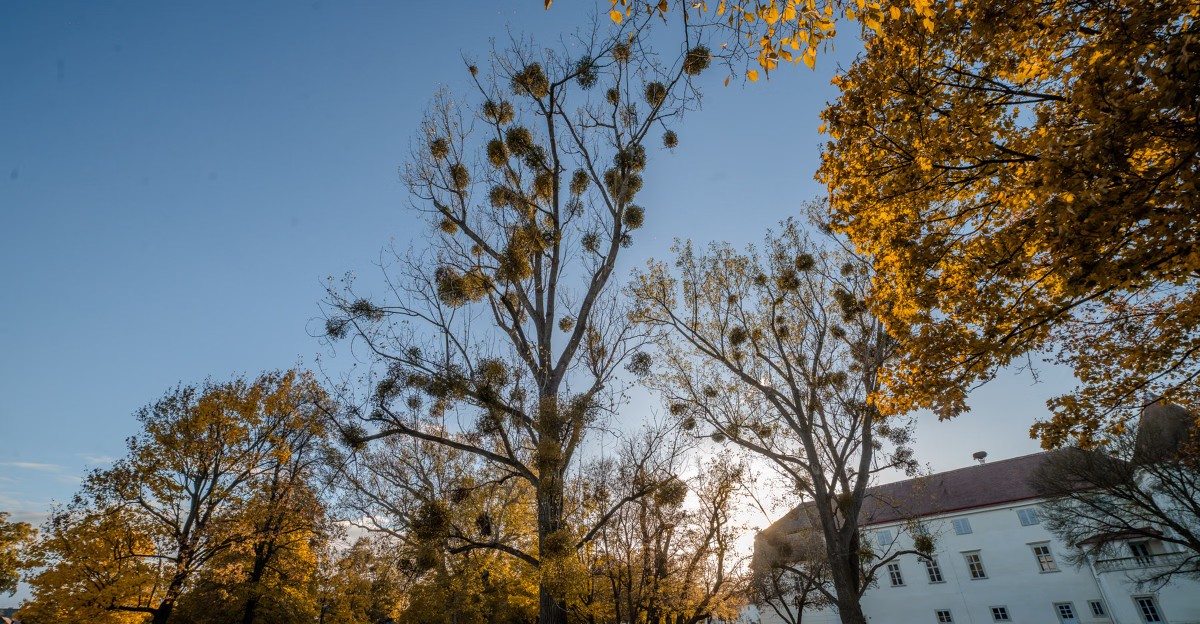
Some of the greenest things in a December woods grow nowhere near the ground. They hang in bare branches like forgotten basketballs, round and leafy while everything around them looks gray.
I used to think those clumps were squirrel nests. Then a friend handed me binoculars, and I saw thick leathery leaves and tiny pearly berries staring back at me.
Here’s what gets me. This plant shows up on holiday cards and above doorways, yet its genus name translates to tree thief. In Indiana, it mostly sticks to the far southern counties, especially near the Ohio River.
Truth is, those pretty berries carry compounds that can upset a dog or cat in a hurry. If your pup loves sniffing fallen twigs after a windy night, you may want to know exactly what’s up there.
Those Green Balls In Bare Winter Trees Aren’t Bird Nests
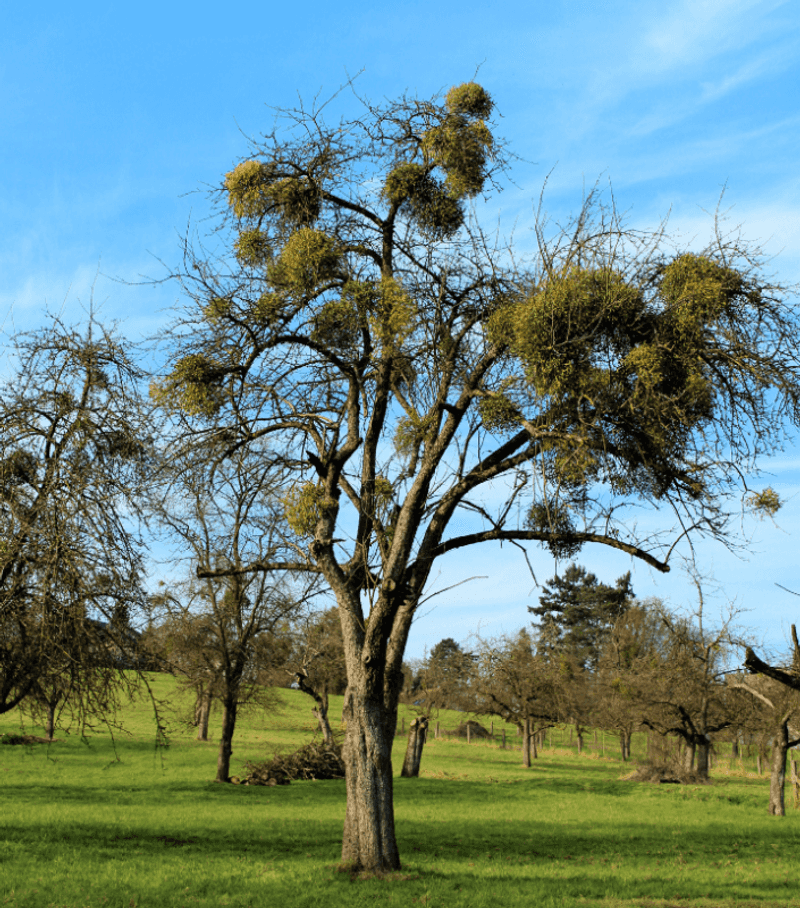
Once the leaves drop, the woods start telling secrets. Look up along a creek or a quiet country road and you may spot dark green orbs tucked into the bare limbs.
Plenty of folks guess those are squirrel nests or old bird nests. Squirrel nests, though, look brown and messy, built from dried leaves and twigs. These clumps stay bright green all winter, with a tidy rounded or oblong shape.
The plant hiding up there is American mistletoe, known to scientists as Phoradendron leucarpum and sometimes listed as Phoradendron serotinum. It’s native to the eastern United States, so it isn’t some weird invader that blew in last year. It has simply been quietly living in the treetops all along.
Summer leaves hide it beautifully. By late fall, the host tree goes bare, and suddenly the mistletoe stands out as a bright green clump against the gray branches. That timing lines up almost perfectly with the holiday season, which is part of why the plant got so tied to winter celebrations.
Grab a pair of binoculars on your next walk. Once you spot your first clump, you’ll start noticing them everywhere, especially in older trees along low, sheltered spots.
Mistletoe Berries Pack Compounds That Can Sicken Dogs And Cats
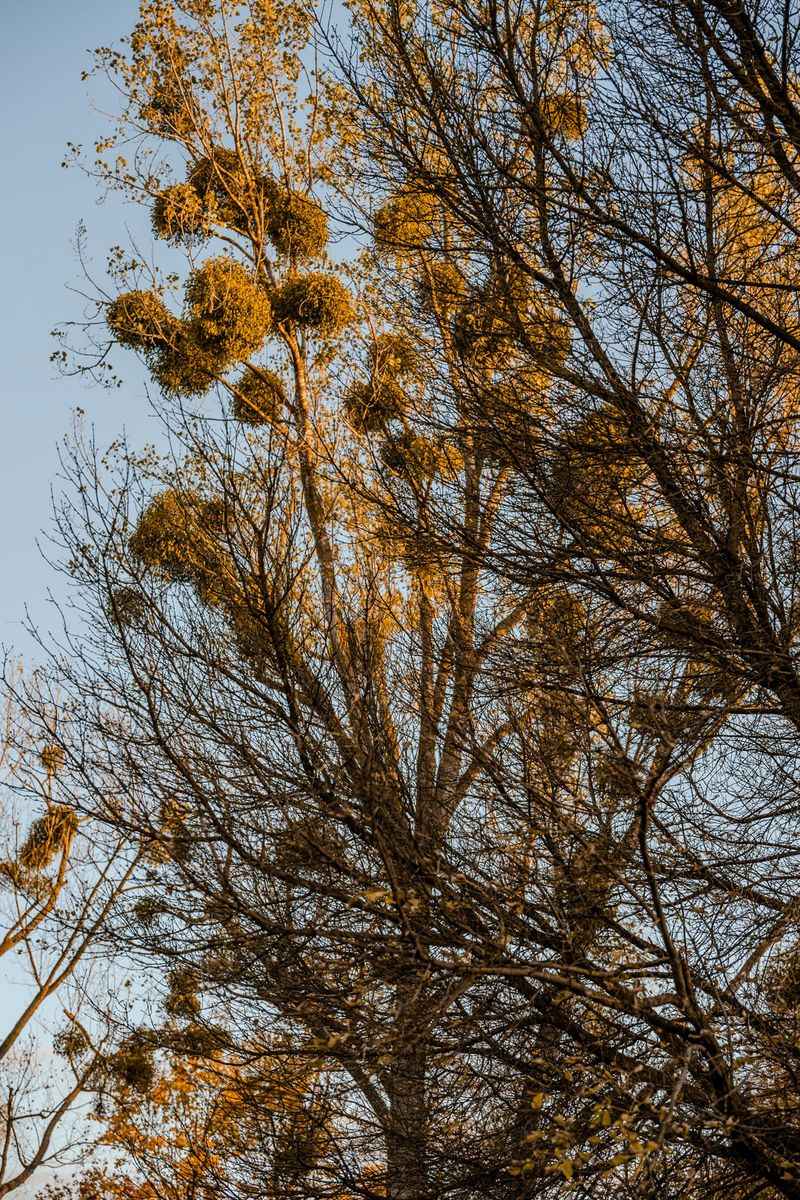
Pretty doesn’t mean harmless. Every part of American mistletoe is considered toxic to pets, and the waxy white berries carry the highest load of trouble.
The plant contains toxic compounds called phoratoxins. That name sounds like a chemistry quiz, but the takeaway is simple. These compounds can irritate the stomach and gut, and in bigger doses they may affect the heart and nervous system.
Dogs, cats, and even horses are on the list of animals that can react. A curious puppy chewing a fallen sprig is the most common real-life worry. Cats that nibble on holiday greenery indoors are another.
Fair warning, though. The berries often grab attention first because they look like little pearls, and pets love anything that rolls. One loose berry under a coffee table can become a toy and then a snack.
Severe poisoning is uncommon and usually tied to eating a large amount. Still, small bodies handle toxins differently, so a tiny dog or kitten faces more risk than a big Labrador. Pets with health problems also deserve extra caution.
Treat any mistletoe, wild or store-bought, as something to keep well out of reach.
Watch Your Pet For Drooling, Vomiting, And Sudden Sluggishness
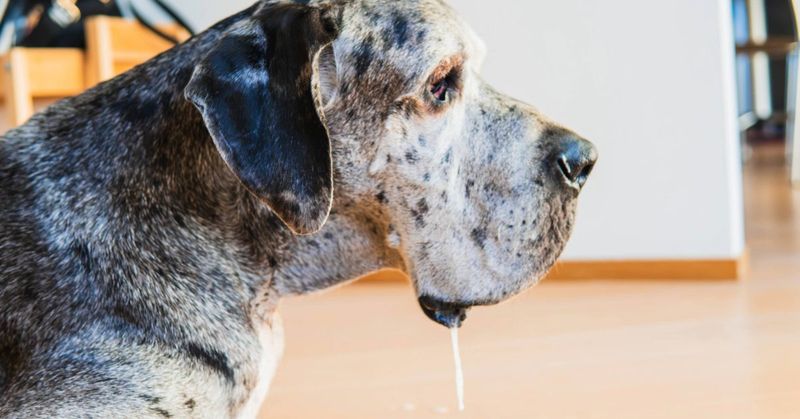
Pets are terrible at confessing. You may find a chewed sprig before you notice any symptoms, or the symptoms might be your first clue.
The most common signs of mistletoe trouble involve the belly. Watch for drooling, vomiting, diarrhea, and a pet who suddenly turns down food. Some animals act sluggish or seem sore around the stomach, hunching or not wanting to be picked up.
Larger amounts can bring more serious problems. These include trouble breathing, a slowed heart rate, low blood pressure, weakness, wobbly walking, tremors, seizures, or collapse. Thankfully, those severe reactions are rare and usually follow a big meal of the plant.
How badly a pet reacts depends on a few things. The amount eaten matters, along with the type of mistletoe and the animal’s size and health. A senior cat with heart issues isn’t in the same boat as a healthy young shepherd.
Jot down what you notice and when it started. Snap a photo of the plant if you can. Those small details help your vet decide how worried to be and what to do next, which brings us to the most important step.
Call Your Vet Or A Pet Poison Hotline Right Away

Speed beats guessing every time. If you think your dog or cat ate any part of mistletoe, call your veterinarian or a pet poison control hotline right away.
Two well-known options are the ASPCA Animal Poison Control Center and the Pet Poison Helpline, both reachable by phone around the clock. They may charge a consultation fee, but the guidance can save you a stressful night of wondering.
Don’t try to make your pet vomit unless a professional tells you to. Home remedies found online can cause their own problems, and some pets shouldn’t vomit at all depending on their condition.
Have a few facts ready before you dial. Know your pet’s weight, roughly how much plant is missing, and when it happened. If you still have the sprig, bring it along to the clinic.
Not going to lie, I keep the hotline numbers taped inside a kitchen cabinet. During the holidays, when vet offices run short hours, that little note feels like a safety net.
Quick action and professional advice often make a real difference in how well a pet recovers. Calling early never hurts, even when it turns out to be a false alarm.
Elm Trees Near The Ohio River Are Mistletoe Hot Spots

Geography plays favorites with this plant. Purdue Extension notes that mistletoe grows most commonly in extreme southern Indiana, and American elms near the Ohio River are frequent hosts.
Why the far south? American mistletoe doesn’t handle bitter cold well. Warmer winters along the river valley give it a better shot, while colder counties farther north see it much less often.
So if you live around Evansville, Jeffersonville, New Albany, or the river towns in between, your odds of spotting it climb. Folks in Indianapolis or the northern counties may hunt for years without finding a single clump.
Elms aren’t the only targets. The plant also settles into other hardwoods, including oaks and poplars, and you may see it on trees around farm edges, creek bottoms, and older neighborhoods with mature shade trees.
Here’s a fun way to scout. Drive or walk along river roads after a hard freeze, when the canopy is fully open. Look for green blobs high in the crowns, often in the upper branches where birds like to perch.
Knowing where it grows helps you know where fallen sprigs might show up, especially after windy winter storms.
Birds Plant Mistletoe Seeds With A Sticky Little Trick
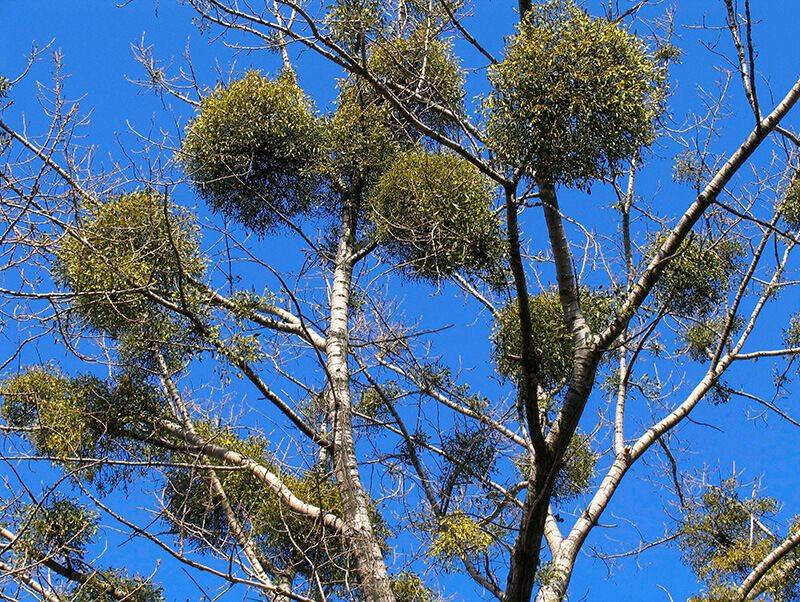
Nobody plants mistletoe on purpose. Birds handle that job, and the way they do it is a little gross and kind of genius.
Birds eat the white berries, which hold seeds coated in a gluey substance called viscin. The seeds either pass through the bird or get wiped off when it cleans its beak on a branch. Either way, they stick right where they land.
From there, the seed sprouts and sends a root-like structure called a haustorium into the bark. It taps into the tree’s plumbing for water and minerals. The mistletoe still makes its own food through its green leaves, which is why scientists call it hemiparasitic rather than a full parasite.
Remember that tree thief name? Phoradendron comes from Greek words meaning just that, and it fits pretty well.
On the bright side, mistletoe isn’t all bad news for wildlife. Its berries feed birds during lean winter months, and the dense clumps give small critters shelter.
I’m a sucker for that kind of tradeoff. A plant that bothers our pets can still play a helpful role in the woods, which is one reason many experts suggest leaving wild clumps alone.
A Heavy Mistletoe Load Can Weaken Your Shade Tree
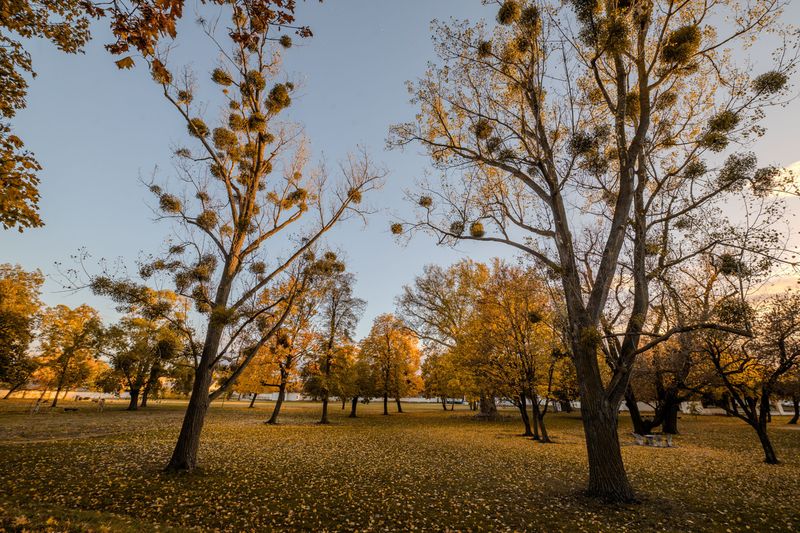
One clump of mistletoe rarely spells trouble for a big, healthy tree. Mistletoe grows slowly, and a mature elm or oak can usually host a few without much fuss.
Problems show up when the clumps multiply. Heavy infestations can slow a tree’s growth and weaken the branches they cling to. Over many years, a badly loaded branch may decline, and in serious cases, the whole tree can struggle.
If you spot mistletoe in a yard tree, start by counting clumps and checking where they sit. A couple near the top usually means wait and watch. Several clumps on one limb may call for action.
Pruning out the infected branch is the most reliable fix, ideally cutting at least a foot below the clump so the haustorium goes too. Simply snapping off the leafy part often lets it regrow.
Please don’t climb a tall tree in icy weather to reach it. A certified arborist has the gear and training to work high limbs safely, and they can judge whether removal is worth it.
Bonus perk for pet owners: fewer clumps overhead means fewer sprigs and berries dropping into the yard where your dog plays.
Swap Real Mistletoe For Faux Sprigs And Pet-Safe Holiday Plants
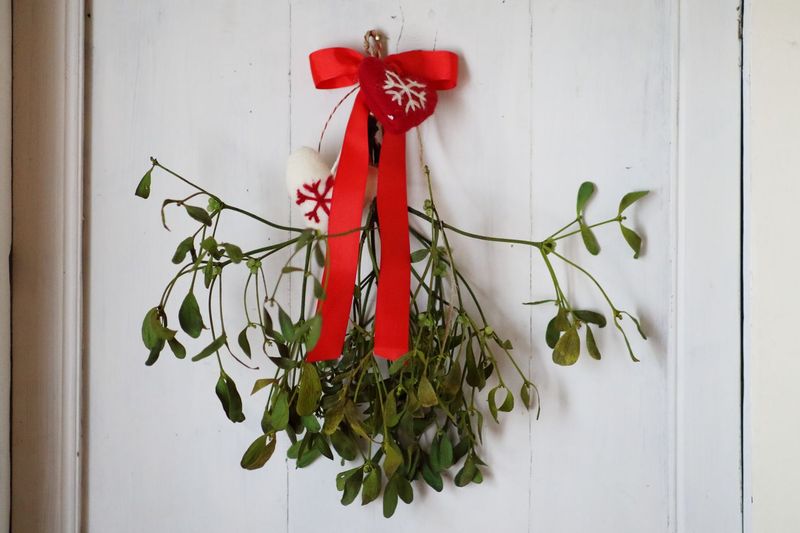
Kissing traditions can survive without the risk. Artificial mistletoe looks surprisingly convincing these days, and it removes any chance of poisoning from the start.
Real sprigs can still work if you’re careful. Hang them high in a spot your cat can’t leap to, and check the floor often for dropped berries and leaves. Cats are climbers, so a doorway near a bookshelf is a bad match.
Watch out for faux versions too. Some artificial sprigs have small plastic berries that could become a choking hazard, so keep them up and away from chewers.
Want living greenery? A Christmas cactus is a cheerful, pet-friendly choice with bright winter blooms. Red roses and white orchids also brighten a table without the same worries.
Outside, walk your yard after storms during the cold months. Pick up any mistletoe that fell from nearby trees before your dog finds it first. Wear gloves and toss it in the trash rather than the compost pile.
Trust me on this one. A two-minute yard check beats a holiday trip to the emergency vet. Enjoy those green treetop orbs from a distance, and let the birds keep the berries.