The Venomous Stranger Spinning Giant Golden Webs In Maryland Looks Far Scarier Than It Is
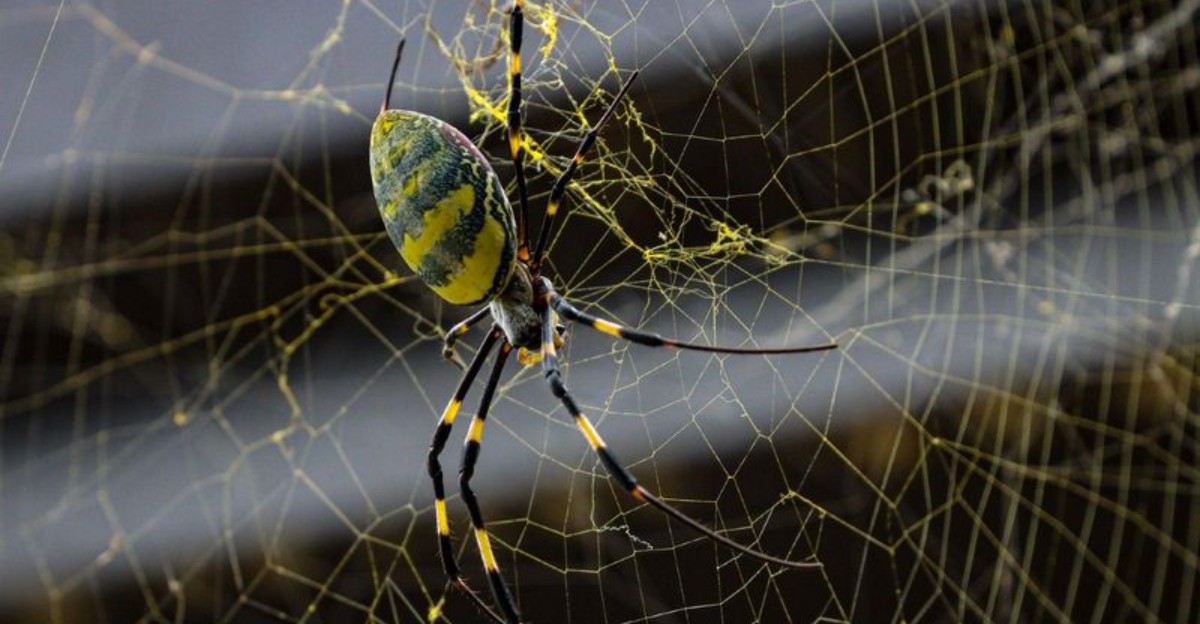
Some of the newest webs in the yard shine like spun gold when the sun hits them.
The spider in the middle can stretch about four inches from leg tip to leg tip. Its body is painted in bold yellow, blue-gray, and black bands.
I’ll admit my first reaction was a quick step backward. Truth is, I nearly reached for a broom before I took a closer look.
This eight-legged newcomer first turned up in Maryland in 2022, and it has been popping up in more places since. Yes, it carries venom, like nearly every spider in your garden.
You’d think something this flashy would be a menace, but scientists keep describing it with words like shy and docile. So what exactly is hanging over your tomato cages, and should you worry about it at all?
Those Shimmering Golden Webs Belong To A Recent Arrival
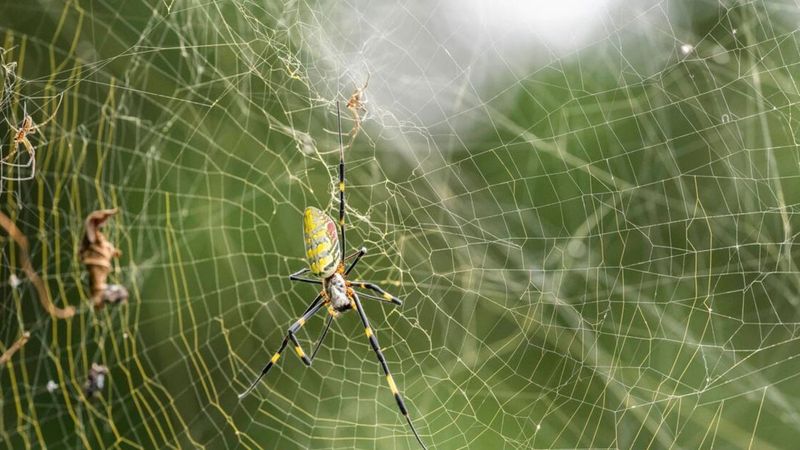
Late summer is when most of us start walking face-first into spider silk. These particular webs feel different, though, because the threads glow a rich yellow-gold in sunlight.
The builder is the Joro spider, a large orb-weaver native to East Asia. Researchers think it reached Georgia around 2013 or 2014, probably as a stowaway in shipping cargo. From there it spread across the Southeast and kept moving north.
Maryland’s first confirmed report came from Elkridge in Howard County in 2022. Since then, sightings have appeared in more parts of the state, especially around the Baltimore and Washington suburbs. Experts expect the range to keep growing through the Mid-Atlantic.
You notice them most in late summer and fall for a simple reason. Spiderlings hatch in spring and stay tiny for months. By September and October, adult females reach full size, and their webs get large enough to catch your eye from across the yard.
Some webs stretch several feet wide, and a few reported ones reach close to ten feet. They often hang between trees, porch railings, fences, and utility lines.
So that golden curtain by your shed is part of a bigger story playing out across the East Coast.
That Big Yellow Joro Spider Would Rather Freeze Than Fight
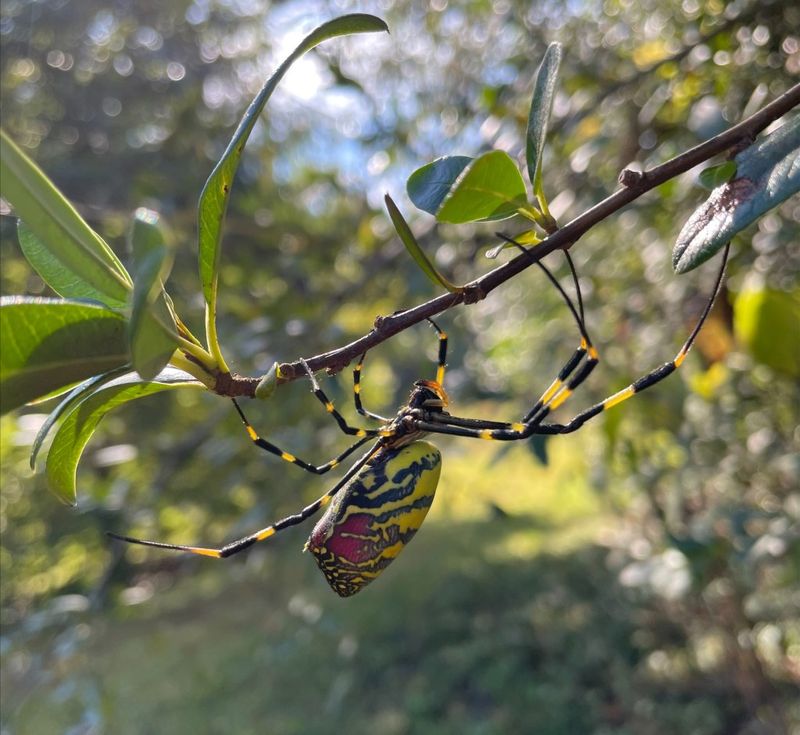
Here’s a fun experiment researchers at the University of Georgia ran. They gently puffed air at Joro spiders and timed the reaction. Many simply froze in place, some for more than an hour.
That shy streak is the heart of why this spider looks far scarier than it acts. Joros are not known to chase, jump, or lunge at people. Disturb the web, and the spider usually holds still or scoots away.
Yes, Joros do have venom, as most spiders do. They use it to subdue insects, not to defend themselves against giant humans. Their fangs are small relative to their size and are not considered a medical concern for people or pets.
Bites are rare and typically happen only if someone grabs or pinches the spider. Reports compare the feeling to a mild bee sting, with brief redness or soreness. Anyone with allergies or unusual symptoms should still check with a doctor, just as with any bug bite.
My advice is simple. Give the spider a little space and keep bare hands out of the web. Teach kids to look, snap a photo, and admire from a step away.
Spot A Joro By Its Banded Yellow Legs And Blue-Gray Stripes
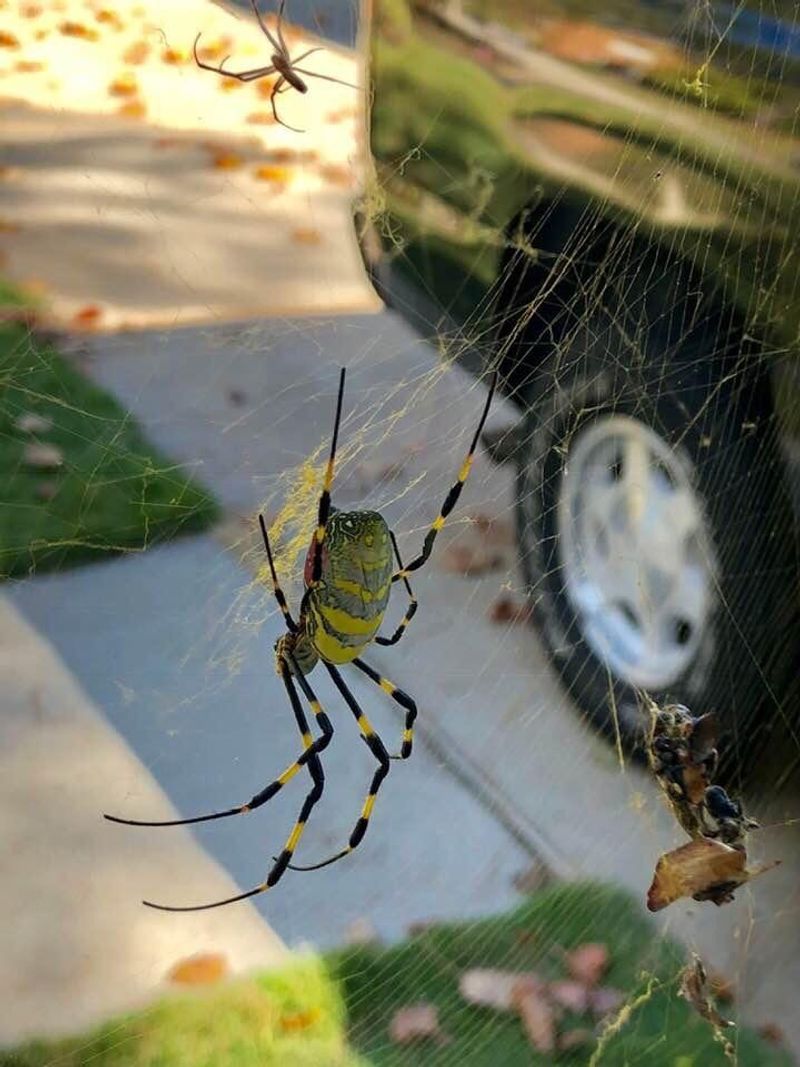
Once you know what to look for, a Joro is hard to confuse with anything else. The adult female is the showstopper you will usually spot.
Her abdomen is long and oval, with bright yellow bands mixed with blue-gray and black stripes. Underneath, you may see red markings near the spinnerets. Her long black legs carry distinct yellow bands, which is one of the easiest clues.
With legs stretched out, a big female can span around three to four inches. That’s roughly the length of a playing card, which explains the gasps on Facebook groups every fall.
Males are a different story. They are small and brownish, often a fraction of the female’s size. You might find one or two perched near the edge of her web, waiting for a chance to mate.
Joros usually hang head-down near the center of their web. They like sunny, open spots such as fence lines, porches, garden edges, and the spaces between shrubs and trees.
Bring your phone and zoom in instead of leaning in close. A clear photo of the back and legs makes identification much easier for you and for anyone you ask.
Your Native Yellow Garden Spider Builds A Different Kind Of Web
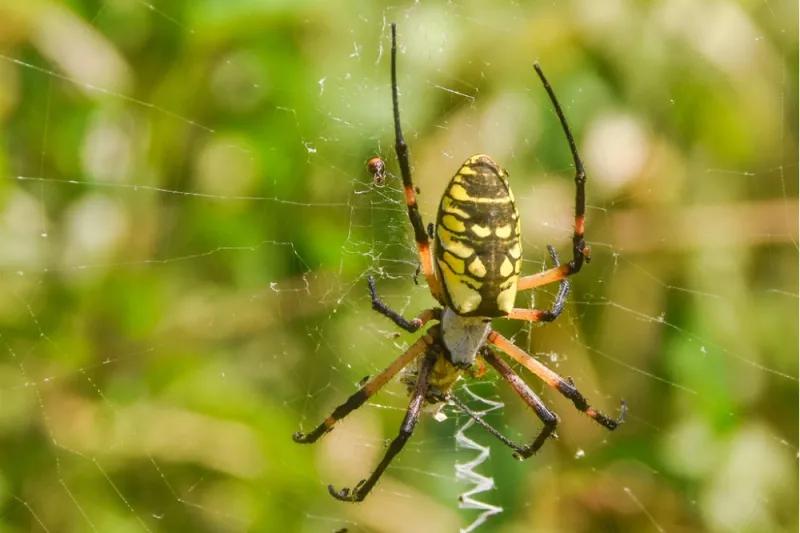
Not every big yellow spider in your flower bed is a newcomer. Maryland already has a well-loved native lookalike, the black and yellow garden spider, often called the writing spider.
The easiest way to tell them apart is the web. Native garden spiders often weave a thick white zigzag down the middle, called a stabilimentum. Joro webs usually skip that zigzag entirely.
Color helps too. Joro silk has a golden shine, and the webs often look messy and layered, with extra tangles of silk in front and behind the main wheel. Native garden spider webs tend to look neater and more like a classic circle.
The bodies differ as well. Garden spiders have a plumper, egg-shaped abdomen in black and yellow with no blue-gray tones. Their legs are mostly dark with reddish or orange bands near the body.
Why bother learning the difference? Native orb-weavers are valuable garden helpers that belong here, and they deserve your protection. Mistaking one for an invader could lead someone to clear out a perfectly welcome guest.
So before you reach for the broom, check for that zigzag. It might save a hardworking local spider.
Baby Joro Spiders Ride The Wind To New Neighborhoods
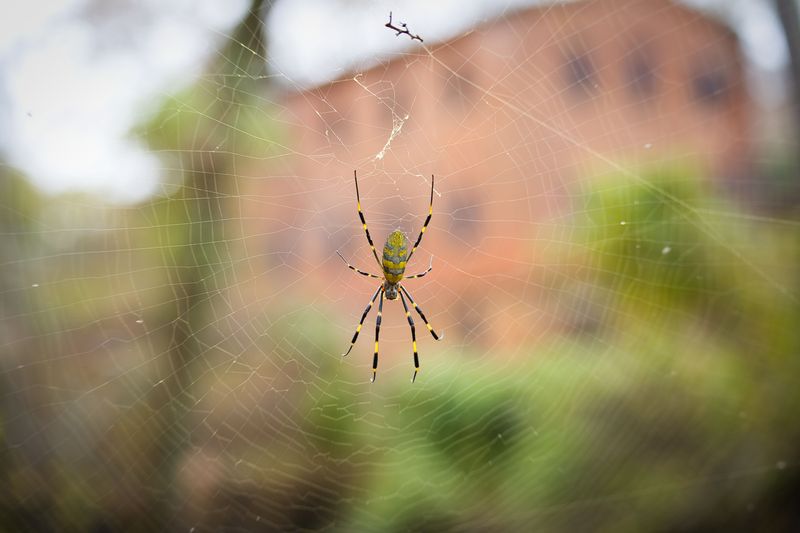
Joro spiders have a travel trick that sounds made up. Tiny spiderlings climb to a high point, release thin silk strands, and let the breeze carry them away. Scientists call it ballooning.
Ballooning helps explain how this species has spread so steadily. Spiders and egg sacs can also hitch rides on cars, trucks, and outdoor gear, so people help them along too.
Cold weather was once expected to hold them back. Research from the University of Georgia found Joros have a higher metabolism and heart rate than a close relative, the golden silk orb-weaver. They also survived a brief freeze in testing better than that relative.
That hardiness is why many scientists think Joros can handle winters across much of the Mid-Atlantic. Maryland’s mix of mild coastal areas and colder western mountains may lead to uneven spread across the state, though the details are still being studied.
Each fall, females lay egg sacs on nearby surfaces like trees, siding, and eaves. The adults decline as frost arrives, and the eggs carry the next generation through winter.
In short, expect to see these golden webs again next year, and probably in a few new spots.
Leave The Golden Orb Web Alone Unless It Blocks Your Path
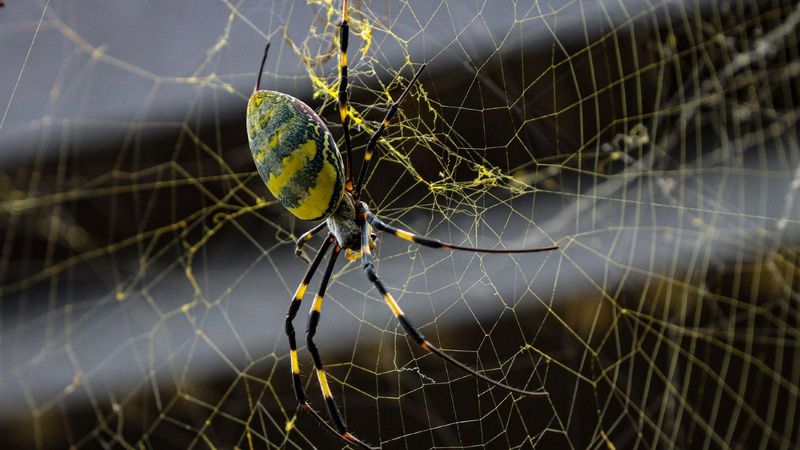
Guilty as charged, I’ve walked into a web or two while hauling mulch. Even so, most experts suggest leaving Joro webs alone when they aren’t in your way.
Joros are passive hunters that wait for insects to fly into their silk. They catch flies, mosquitoes, moths, and other bugs. Some reports and early observations suggest they may snag brown marmorated stink bugs and even spotted lanternflies, though how much they help is still unclear.
When a web stretches across a doorway, path, or grill area, you have easy options. Use a broom or long stick to gently lift the web away. The spider often rebuilds somewhere nearby, hopefully out of your walking lane.
Skip the spray. Broad pesticides tend to harm bees, butterflies, and native spiders far more than they solve a Joro problem. Many extension specialists point out that spraying is unlikely to stop a spreading invasive species.
A few simple habits help. Walk paths with a stick in hand during early morning, trim branches that create web anchor points near doors, and turn off bright porch lights that draw insects.
Hands-off coexistence keeps your garden balanced while you enjoy the view.
Snap A Photo Of That Joro Spider And Help Scientists Track It
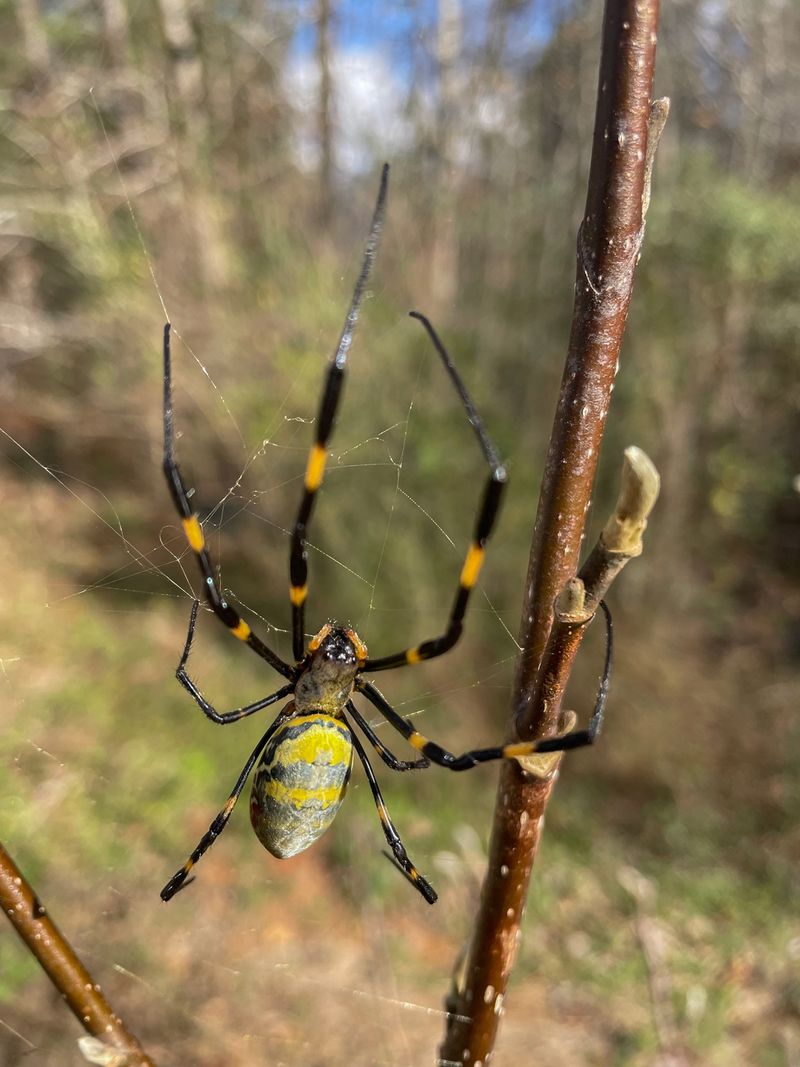
Your phone might be the most useful garden tool this fall. Every clear photo of a Joro spider can help researchers understand where it’s going and what it’s doing.
Joros are still considered an invasive species, and their long-term effect on local wildlife is unknown. Scientists want to learn whether they crowd out native orb-weavers or change what insects and birds do. Some studies suggest native spiders may lose ground where Joros settle, but research is ongoing.
Citizen science makes a real difference here. Apps like iNaturalist let you upload a photo with a location, and experts help confirm the identification. Those records have been key for mapping the spread across the eastern United States.
For the best results, take a sharp photo of the spider’s back and legs. Add a wider shot showing the web, and note the date and general location.
You can also contact University of Maryland Extension if you have questions about a spider in your yard. Their specialists can help with identification and practical tips.
So the next time a golden web catches the light, treat it like a small science project. Look, learn, record, and let the spider get back to catching bugs.