Spiky Silk Balls Under Illinois Patio Furniture Do Not Come From Every Spider
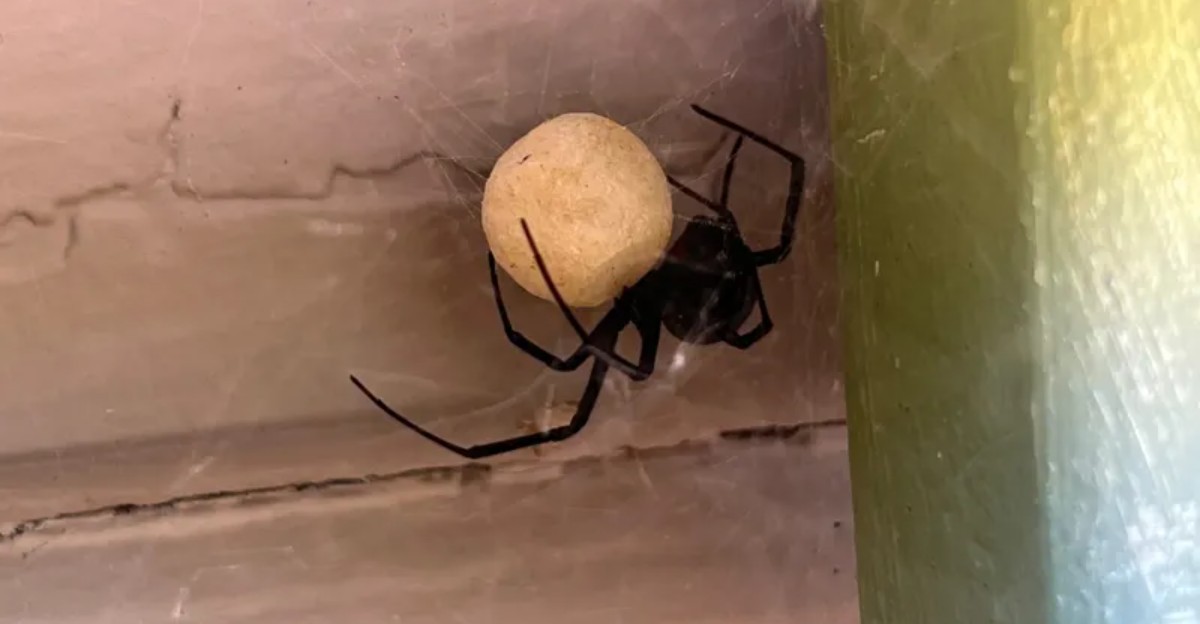
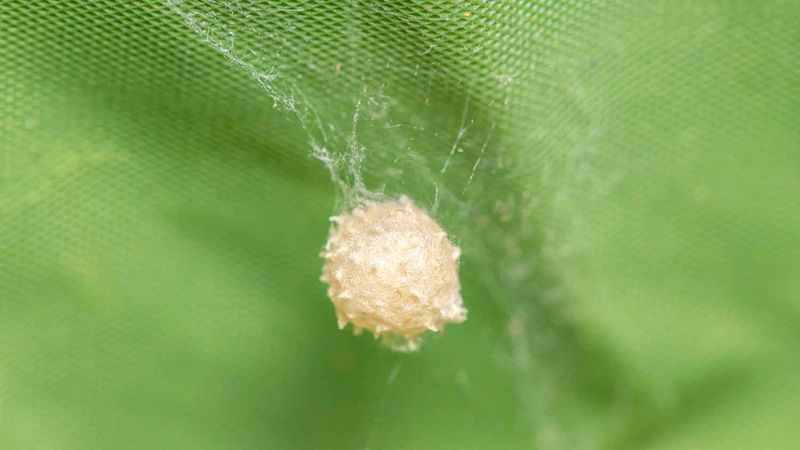
Some spider eggs come wrapped in a silk ball covered in tiny spikes, like a burr from a weed patch. I found one taped under a resin chair in my Illinois yard and stared at it for a full minute.
That bumpy little sphere is not random decoration. Among widow spiders in the United States, only one is known for building egg sacs with pointy silk bumps all over them.
You might notice these pale yellow or cream balls in shady corners, tucked under tables, cushions, and chair arms. Most spiders in an Illinois yard make smooth or papery sacs instead, so a spiky one stands out fast.
I was surprised how much a single egg sac can reveal about the spider that made it. The shape, color, and texture tell a story if you know how to read them. That prickly little ball had been quietly guarding its secret under my chair all summer long.
That Spiky Silk Ball Under Your Chair Has a Very Short List of Suspects
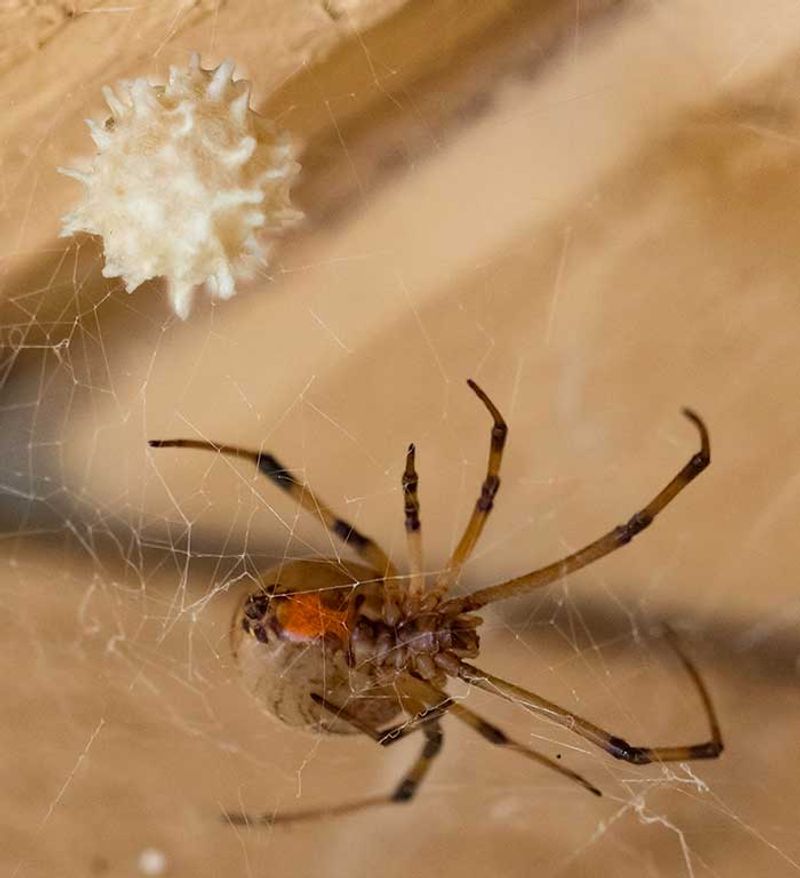
Those little pointed bumps are a big clue. Among widow spiders in North America, the brown widow is the one famous for spiky egg sacs.
Scientists call it Latrodectus geometricus. Its sacs are round, about a half inch across, and usually pale yellow, cream, or tan.
The surface is covered with tiny silk points, so people often compare them to sandspurs or old sea mines.
Each sac can hold roughly 120 to 150 eggs. A single female may make many sacs during her life, sometimes close to 20, according to university entomologists in California and Florida.
Here is the twist for Midwest readers. Brown widows are well established in warm southern states like Florida, Texas, Louisiana, and southern California. Illinois extension and public health sources do not list them as an established resident.
So a spiky sac on your patio could mean a rare hitchhiker arrived on plants, furniture, or boxes shipped from the South. It could also be a sac from another spider that looks lumpy when dusty or worn.
A clear photo sent to University of Illinois Extension can help settle the question. Experts love a good mystery specimen.
Brown Widow Spiders Are Mostly Visitors in Illinois, Not Residents
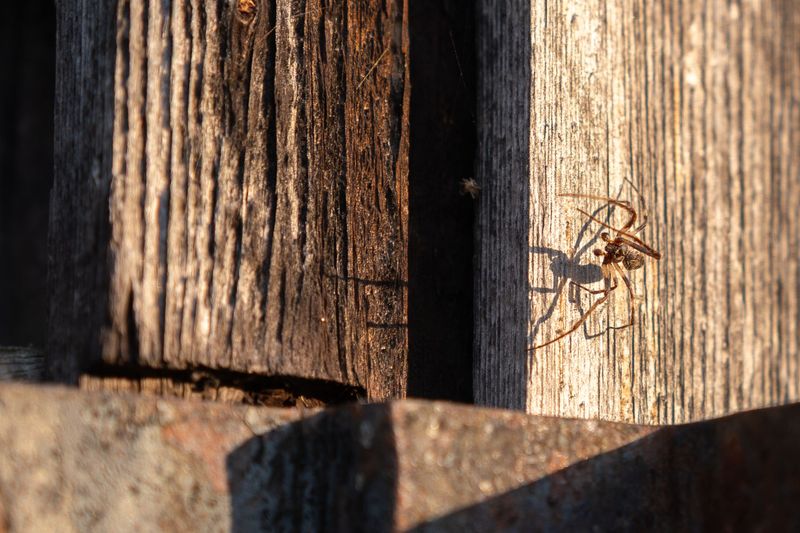
Brown widows are travelers. They spread around the world by riding along in cargo, nursery plants, and outdoor gear.
In the United States, they settled first in Florida and later moved through the Gulf Coast and southern California. Cold winters tend to hold them back, which helps explain why Illinois has no confirmed established population in state health or extension records.
The Illinois Department of Public Health lists black widows and the brown recluse as the spiders of medical interest here. Brown widows simply do not appear on that list.
That does not mean a stray one can never show up. Garden centers bring in plants from southern growers every spring, and a female with a sac could tag along.
To spot one, look for a tan to gray spider with mottled stripes and an orange or yellow hourglass underneath. Legs often show dark and light bands.
If you suspect you found one, capture it in a sealed jar and contact your county extension office. A confirmed record from Illinois would matter to researchers who track how these spiders spread northward over time.
Black Widow Egg Sacs in Illinois Look Smooth and Papery Instead
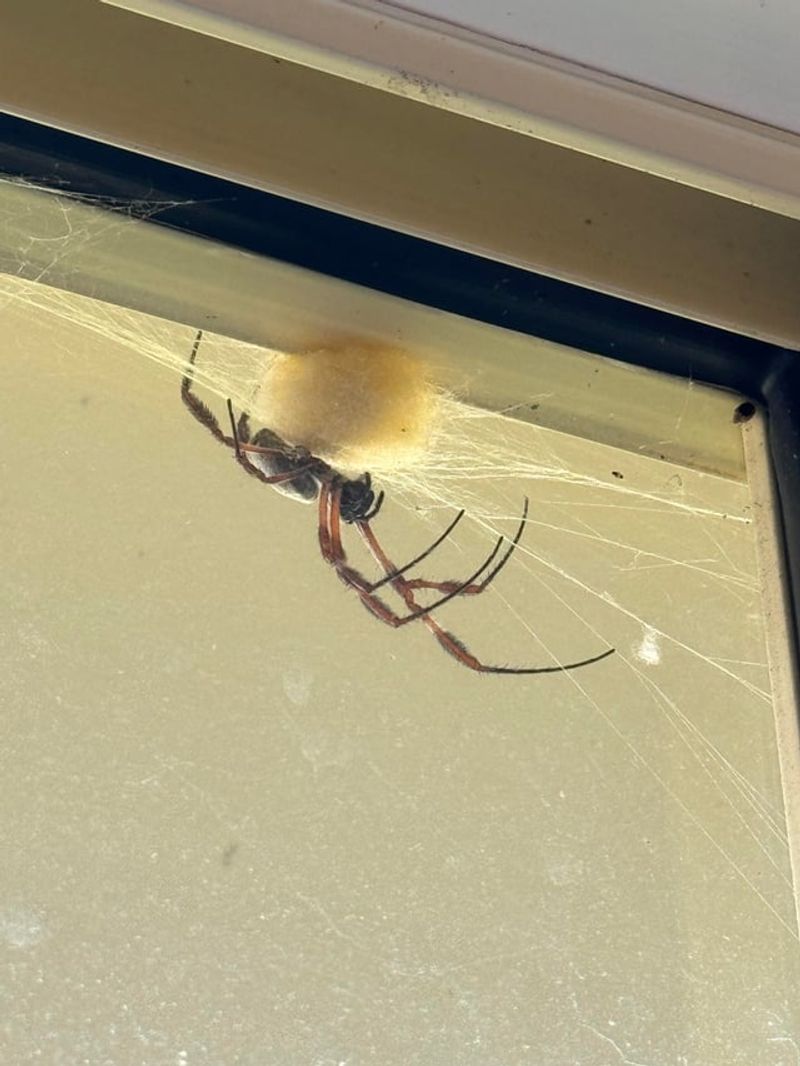
Our homegrown widows play by different rules. Illinois has the northern black widow and the southern black widow, and neither makes spiky sacs.
Their egg sacs are round to teardrop shaped with a smooth or slightly fuzzy surface. Colors range from off-white and cream to pale tan or gray, and most are about a half inch wide.
The southern black widow sometimes adds a small nipple-like point at the top. That single bump is easy to tell apart from the dozens of spikes on a brown widow sac.
Black widow females often guard several sacs in one messy web. You may see two or three hanging close together, with the mother tucked nearby in a dark corner.
I like to compare sacs with a quick side-by-side photo on my phone. Smooth and papery points to a black widow, while bumpy all over raises the brown widow question.
Either way, treat a widow sac with respect. Hundreds of tiny spiderlings can hatch from just a few sacs, though only a small share survive to adulthood in the wild.
Glossy Black Bodies and Red Hourglasses Tell You Who Built the Web
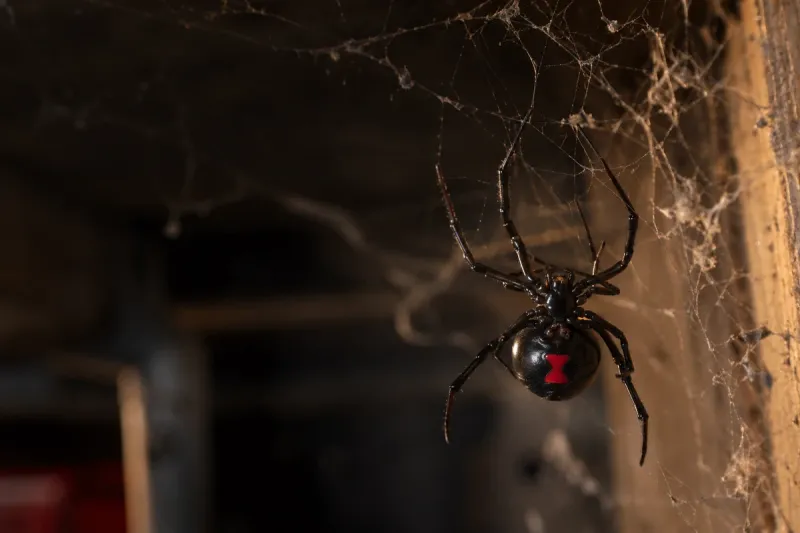
Flip a chair, and a shiny black spider might be staring back. Female black widows have round, glossy abdomens with a red or orange hourglass underneath. They favor dark, undisturbed spots, which makes the underside of patio furniture ideal.
Northern black widows, the most common widow in much of Illinois, often show a broken hourglass. It can look like two separate red marks instead of one shape.
Males and young spiders look quite different. They are smaller, with lighter colors and red or white markings on the back, so people rarely recognize them.
Black widows are shy. They usually bite only when pressed against skin, like when you slide your hand under a seat or pull on a glove left outside. Shaking out gloves and cushions first is a simple habit that prevents most bites.
The venom affects nerves and can cause muscle pain, cramping, and sweating. Most healthy adults recover with medical care, but children and older adults should be checked quickly.
If someone gets bitten, wash the area, apply a cool pack, and call Illinois Poison Center at 1-800-222-1222. Do not wait for symptoms to worsen. Bringing the spider in a sealed container helps doctors confirm what happened.
Dark Spots Under Patio Tables Are Prime Widow Real Estate
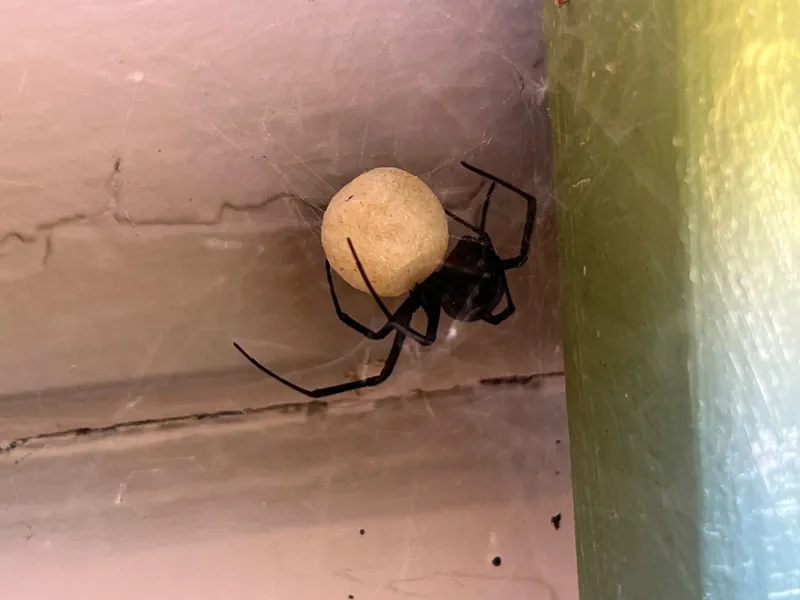
Widows love a quiet hangout. Shady, sheltered spaces close to the ground suit them perfectly, and patio furniture checks every box.
Look under seats, inside hollow chair legs, beneath table edges, and around stacked cushions. Their webs look messy and tangled, not like the neat wheels made by garden orb weavers.
Other favorite spots include woodpiles, sheds, garages, flower pot rims, water meter boxes, and gaps in block walls. Anywhere insects wander and people rarely disturb is fair game.
Late summer often brings more noticeable webs and sacs. That is when females have grown large and spent weeks producing eggs.
A flashlight helps a lot. Shine it under furniture before sitting or reaching, especially if chairs sat unused for a while.
I give my patio set a quick shake and a once-over each weekend. It takes less than a minute and keeps surprises to a minimum.
Moving firewood and clutter away from the house also helps. Fewer hiding spots mean fewer widows choosing your patio as their home base.
Plenty of Harmless Illinois Spiders Make Egg Sacs Too
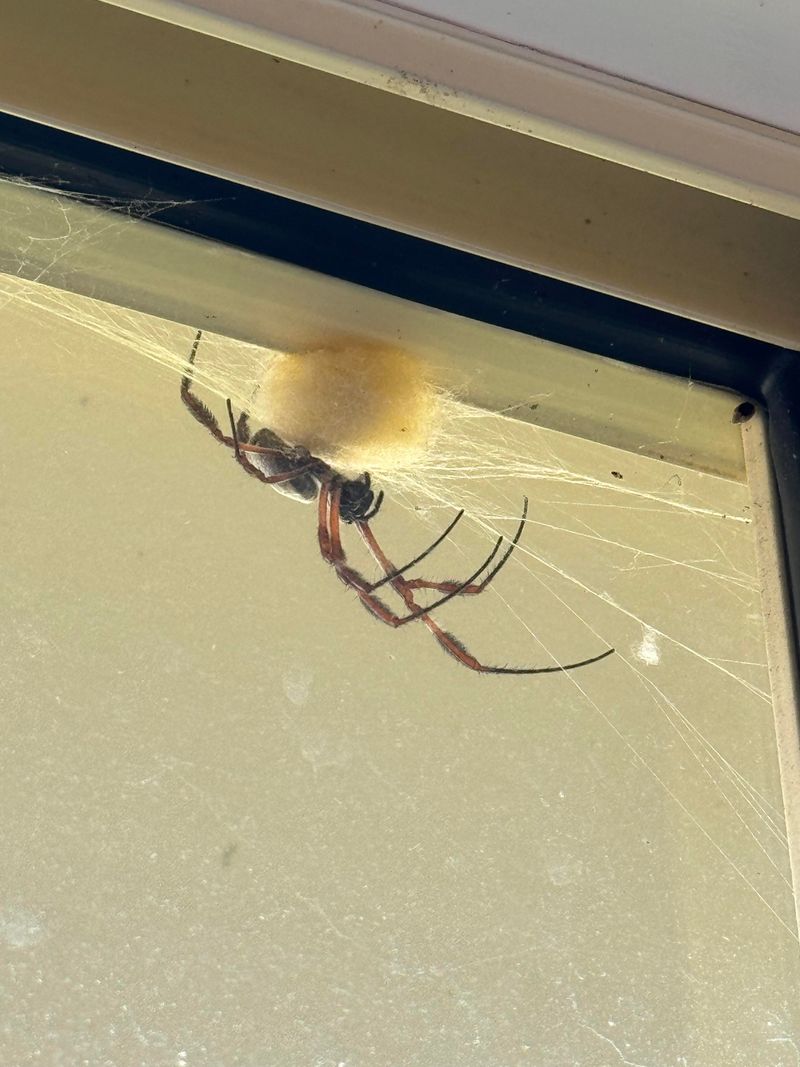
Not every egg sac spells trouble. Many friendly backyard spiders build them, and each type has its own look.
Black and yellow garden spiders make large tan sacs, a bit smaller than a ping pong ball. You will find them tied to plant stems or eaves in late summer and fall.
Wolf spiders take a different approach. Mothers carry a pea-sized round sac attached to their back end, and the hatchlings later ride on her back.
Common house spiders hang small brown, pear-shaped sacs in their cobwebs. They often show up in garage corners and window frames.
Fun fact: many garden spider sacs spend the winter outside. Babies hatch inside in fall but wait until spring warmth to leave.
These spiders eat flies, mosquitoes, and garden pests. Leaving their sacs alone in flower beds can mean free pest control next season.
If a sac is tan, papery, and big, or hanging in an orb web, relax. Save your caution for small widow-style sacs in tangled webs low to the ground.
Gloves and a Vacuum Make Egg Sac Cleanup Simple and Safe
Cleanup is easier than you might expect. A pair of thick gloves and a vacuum handle most widow egg sacs with little fuss.
Start by pulling on gloves and wearing long sleeves. Use a flashlight to find the sac, the web, and the spider if she is nearby.
Vacuum the sac and web, then seal the bag or empty the canister into a tied plastic bag. Toss it in an outdoor trash bin right away.
Another option is scraping the sac into a jar with a stick and freezing it. Crushing sacs by hand is a bad idea since it can spread eggs and invite bites.
Broad pesticide sprays rarely help with sacs because the silk protects the eggs. Simple removal works better and keeps helpful insects safe.
For prevention, store cushions in bins, clean furniture often, and seal gaps around doors and foundations. Outdoor lights attract insects, so yellow bulbs can mean fewer meals for spiders.
If you ever find a spiky sac in Illinois, snap a photo before removing it. Your county extension office may want to know about it.