10 Spots Where Cucumbers Struggle To Grow In Ohio (Plus Alternatives That Work)

Ohio gardeners plant cucumbers with high hopes, pick the sunniest corner of the yard, and still end up staring at yellowing vines by July. The problem almost never comes down to effort.
It comes down to location, and cucumbers are pickier about it than most vegetables will ever let on. A spot that looks ideal in April can turn into a humidity trap, a drainage nightmare, or a cold air sink the moment summer weather arrives.
By then, the damage is already done. Ohio’s clay soil, unpredictable spring temperatures, and sticky humid summers expose bad planting spots fast.
Cucumbers growing in the wrong location don’t just struggle quietly. They make the whole garden look like a failure.
The good news? Every problem spot has a workaround, and in most cases a simple swap to a better-suited variety or a slightly different location changes everything.
Knowing what to avoid going in saves the entire season before it starts.
1. Skip Shady Corners And Grow Leafy Greens Instead
Shady corners might feel like wasted space, but putting cucumbers there is one of the most common ways gardeners end up with nothing to harvest. Cucumbers are sun-hungry plants.
They need at least six to eight hours of direct sunlight each day to build strong vines, push out flowers, and set fruit. A corner tucked beside a garage, under a tree canopy, or behind a tall fence rarely delivers that.
In shaded spots, cucumber vines grow slowly and look leggy. The leaves stretch toward whatever light they can find, and the plant puts so much energy into reaching the sun that it rarely has enough left for fruiting.
Fewer flowers appear, and the ones that do often drop off without turning into cucumbers. You end up with a lot of vine and very little to show for it.
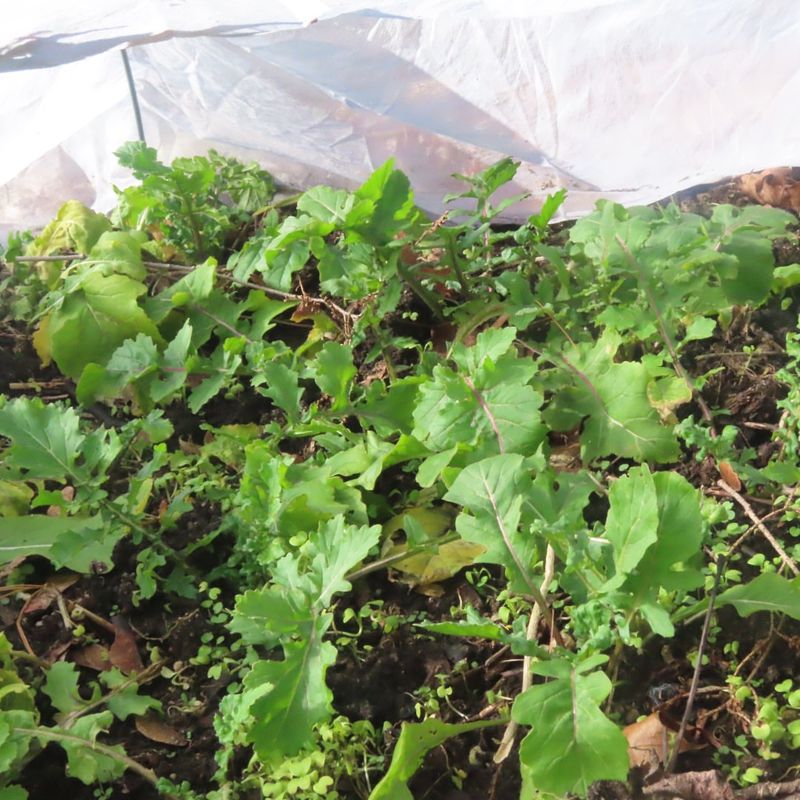
If the shady spot is the only open garden bed you have, swap in leafy greens instead.
Lettuce, spinach, arugula, kale, and Swiss chard all handle partial shade much better than cucumbers do.
These crops actually prefer cooler, lower-light conditions, especially in spring. Move your cucumbers to the sunniest spot in the yard, even if it means using a trellis against a south-facing fence to maximize every bit of available light.
2. Avoid Cold Spring Soil And Try Peas Earlier

Every spring, the urge to get something in the ground hits hard. The days get longer, the seed packets come out, and it is tempting to plant cucumbers the moment the last frost date passes.
But in Ohio, a frost-free date does not mean warm soil. Soil temperatures in many parts of the state stay below 60 degrees well into May, and cucumbers need soil at least 60 to 65 degrees to germinate and grow well.
Cold soil slows everything down. Seeds planted too early can rot before they sprout, or they sit dormant for weeks while cool-season weeds get a head start.
Transplants set out into cold soil often turn pale yellow and stall out, even if daytime air temperatures feel warm. That stress early in the season can set a plant back for weeks.
Your Ohio Garden Changes Every Week. Your Plan Should Too.
Gardening in Ohio changes quickly throughout the season. Every Friday you’ll receive a simple weekly plan showing exactly what to plant, prune, fertilize, harvest, and protect so you never miss the right timing.
A simple soil thermometer takes the guesswork out of timing. Wait until the reading is consistently above 60 degrees a few inches down before planting cucumbers.
In the meantime, cool-season crops can fill that bed beautifully.
Peas, radishes, spinach, lettuce, and green onions all thrive in cool spring soil and can be harvested before cucumber season even begins.
That way, the bed stays productive from early May onward.
3. Fix Soggy Beds With Raised Rows Or Bush Beans
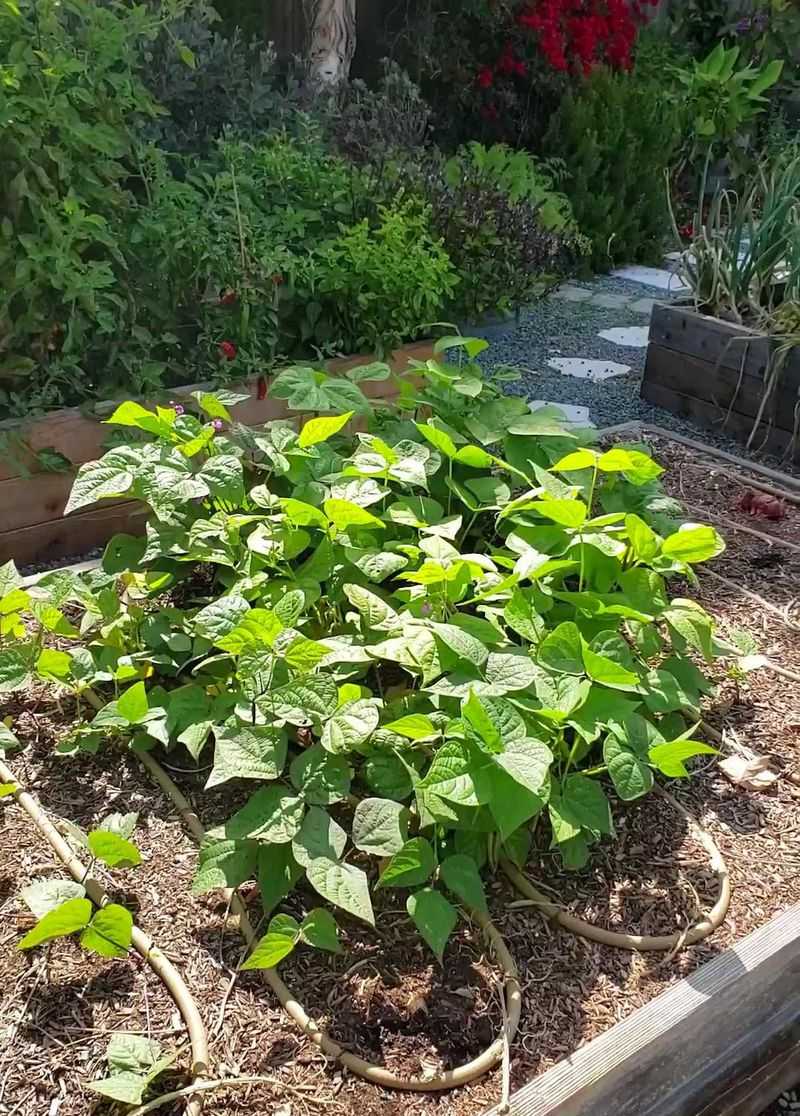
Ohio spring rain is no joke. Some years, April and May bring steady downpours that leave garden beds saturated for days at a time.
Cucumbers planted in low-lying or poorly drained spots end up sitting in waterlogged soil, which limits root growth and makes the whole plant weak. Roots need both moisture and oxygen, and soggy soil cuts off that oxygen supply fast.
Signs of drainage trouble include standing water after rain, soil that stays slimy or compacted, and plants that yellow at the base even when the weather looks fine. These are clues that the spot is not set up for cucumbers, at least not without some work first.
Planting into wet, compacted soil also makes it harder to build the loose, fertile root zone that cucumbers prefer.
Raised rows and raised beds are practical fixes for gardens with drainage issues. Even a bed raised four to six inches above grade drains noticeably better than a flat garden plot.
Adding compost improves soil structure and helps water move through more evenly.
If the spot stays wet no matter what, do not use it for cucumbers or beans; redirect the water, improve drainage, or use that area for moisture-tolerant ornamentals instead.
Bush beans can be a more forgiving option in a bed that holds moderate moisture, but they still need soil that drains reasonably well. Save cucumbers for a bed with better natural drainage, or build a raised bed specifically for them.
4. Move Vines Away From Crowded Tomato Patches
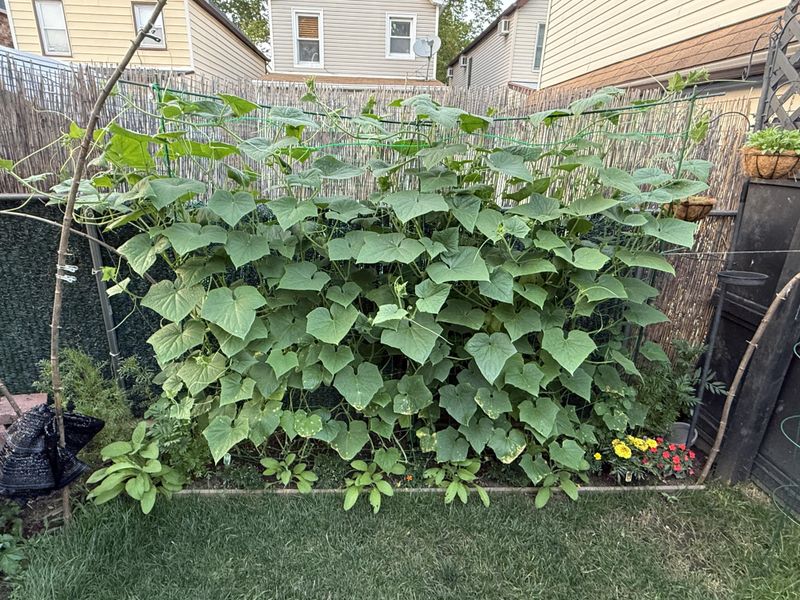
Squeezing cucumber vines next to tomato plants seems logical when garden space is tight.
Both are warm-season crops, both love sun, and both go in the ground around the same time.
But the combination tends to create problems as the season moves along. Tomatoes grow tall and wide, and so do cucumber vines.
Once both plants hit their stride in July, they start competing for light, airflow, and room to spread.
Tangled vines make it harder to spot cucumbers ready for harvest, which means some get missed and grow oversized and bitter. Overlapping leaves stay wet longer after rain or irrigation, which creates conditions where fungal leaf problems can take hold more easily.
Harvesting becomes awkward too, since reaching into a dense tangle of tomato cages and cucumber tendrils is not exactly a quick chore.
Spacing matters more than most gardeners expect. Cucumbers on a trellis need about twelve inches between plants and should have at least two to three feet of clear space away from nearby tomatoes.
If the bed is truly too small for both, consider planting compact basil, parsley, marigolds, or calendula near tomatoes instead. These lower-growing companions fit the space without competing, and they can attract pollinators that benefit both crops nearby.
5. Keep Cucumbers Out Of Windy Open Spots
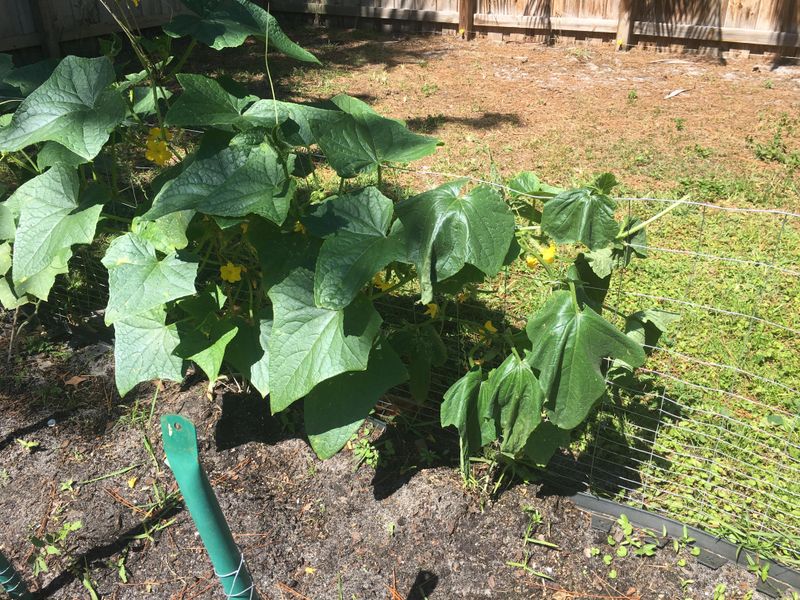
Full sun is essential for cucumbers, but a wide-open spot with no shelter can cause a different kind of trouble.
Hot, dry wind pulls moisture out of leaves faster than roots can replace it, and young transplants are especially vulnerable in their first few weeks in the ground.
On a breezy July afternoon, an exposed bed can go from moist to bone dry in a matter of hours.
Wind stress shows up as curled leaf edges, wilting in the afternoon even after morning watering, and slow growth despite good sunlight.
In spring, cold winds can also chill transplants that are not yet fully hardened off, setting them back even when soil temperatures look adequate.
A trellis helps by giving vines something to climb, but it also needs to be staked firmly so it does not tip over in a storm.
Mulching heavily around the base of cucumber plants helps hold soil moisture and reduces the impact of drying wind. Planting near a breathable windbreak, like a row of tall flowers or a slatted fence, can soften air movement without blocking sunlight.
If the spot is just too exposed for cucumbers, sturdy crops like bush beans, okra, zinnias, or native prairie flowers handle open, windy sites with much less fuss.
6. Leave Tight Containers For Compact Herbs
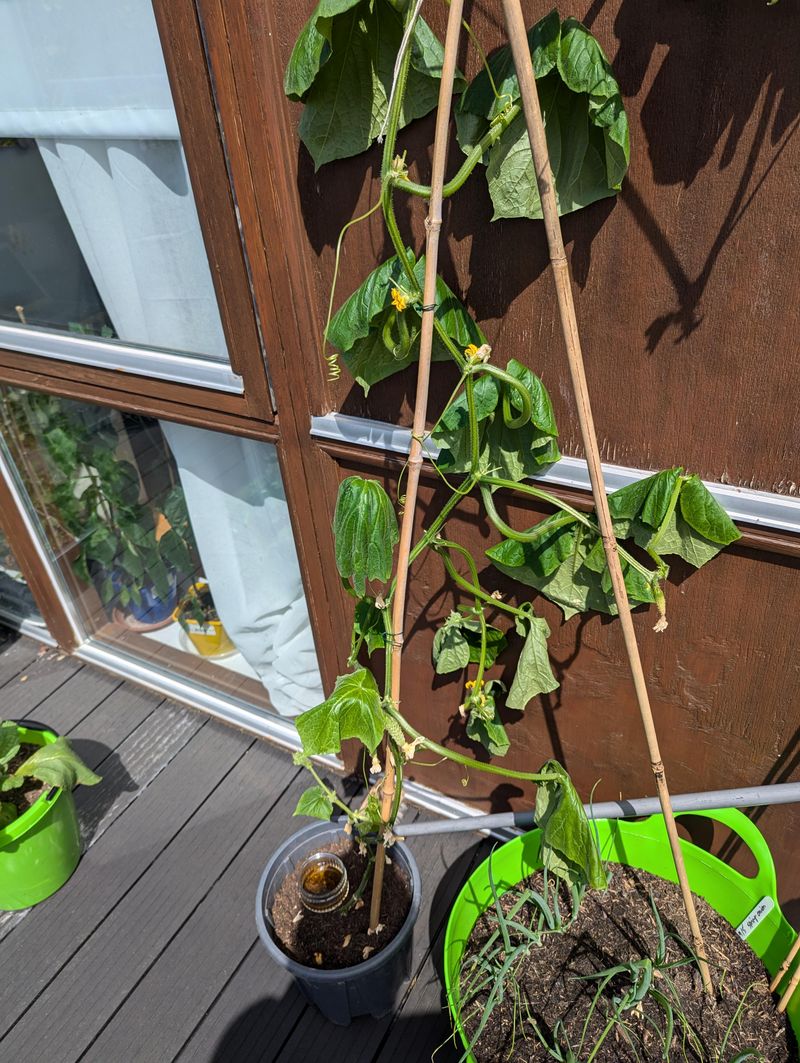
Container gardening is popular here especially for renters, small-yard homeowners, and anyone with a sunny patio but no in-ground space. Cucumbers can absolutely grow in containers, but the container has to be the right size.
A pot that is too small runs out of root space quickly, and in warm summer sun, small pots can dry out completely between waterings. That cycle of drought stress and recovery weakens cucumber plants noticeably.
A standard twelve-inch pot or a shallow window box is really not enough for most cucumber varieties. Vines need a container that holds at least five gallons of potting mix to give roots room to spread and retain enough moisture.
Without that, leaves wilt by midday, flowers drop, and fruit production stays low. Bush or compact cucumber varieties bred for containers fare better, but they still need a proper-sized pot and a small trellis or cage to climb.
Smaller containers are much better suited to herbs. Basil, parsley, chives, thyme, and oregano all thrive in modest pots on a sunny patio without the constant watering demands that cucumbers require.
Compact peppers and patio lettuce also fit smaller container gardens well.
If you want cucumbers on the patio, invest in a large pot, add a trellis, and water consistently every day during hot weather.
7. Avoid Low Airflow Areas And Plant Trellised Beans

Tucked-in garden pockets between buildings, along crowded fence lines, or in corners where air barely moves can look protected and cozy. But they create real headaches for cucumber growers. Cucumbers have large, broad leaves that collect moisture easily.
In spots where air circulation is poor, those leaves stay wet for hours after rain or morning dew, and that extended wetness encourages leaf issues to develop over the course of the season.
Ohio summers bring humidity, especially in July and August. In low-airflow areas, that humidity settles right onto plant foliage and lingers.
You might notice a powdery or grayish coating on older leaves during humid weather, or dark spots from other leaf diseases that spread when foliage stays wet and crowded.
These problems are much harder to manage once they take hold, and they can spread to neighboring plants if the whole bed is tightly packed.
Spacing cucumber plants properly and trellising them vertically both help by lifting foliage off the ground and letting air move around the plant. Watering at the base rather than overhead also keeps leaves drier.
If the low-airflow corner is a fixed part of your yard layout, pole beans on a trellis handle those conditions better than cucumbers. Bush beans, herbs, or compact flowers that prefer sheltered spots also fit those garden pockets without the same humidity-related struggles.
8. Skip Heavy Clay Pockets And Try Swiss Chard
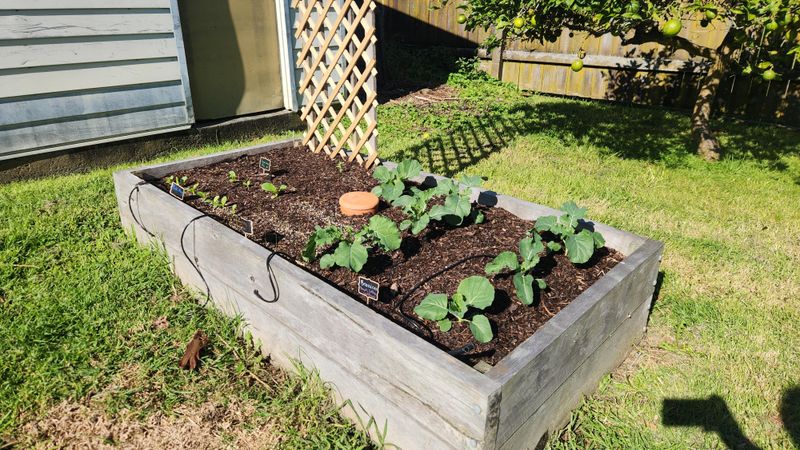
Heavy clay soil is one of the most widespread challenges in gardening. Across much of the state, especially in central and northwest Ohio, the native soil is dense, slow-draining, and sticky when wet.
Cucumbers need loose, well-drained, fertile soil that warms up quickly in spring.
Clay soil does none of those things easily, and planting cucumbers directly into an unimproved clay pocket usually leads to stunted, struggling plants.
The problems stack up fast. Clay stays cold longer in spring, so soil temperatures needed for good cucumber germination arrive later.
When it rains, clay holds water around roots longer than cucumbers can tolerate. When it dries out, clay can crack and become almost concrete-like, making it hard for roots to push through.
Shallow, restricted root systems lead to plants that cannot pull enough water or nutrients to grow strong.
Adding compost is the most practical long-term fix for clay. Working several inches of compost into the top foot of soil improves drainage, loosens texture, and feeds soil biology.
Raised beds filled with quality garden mix skip the clay issue entirely. While improving a clay bed, Swiss chard is a forgiving alternative that handles heavier, moderately moist soil without complaint.
Kale also works well in clay that has been lightly amended with compost.
9. Move Plants Away From Splashy Downspouts
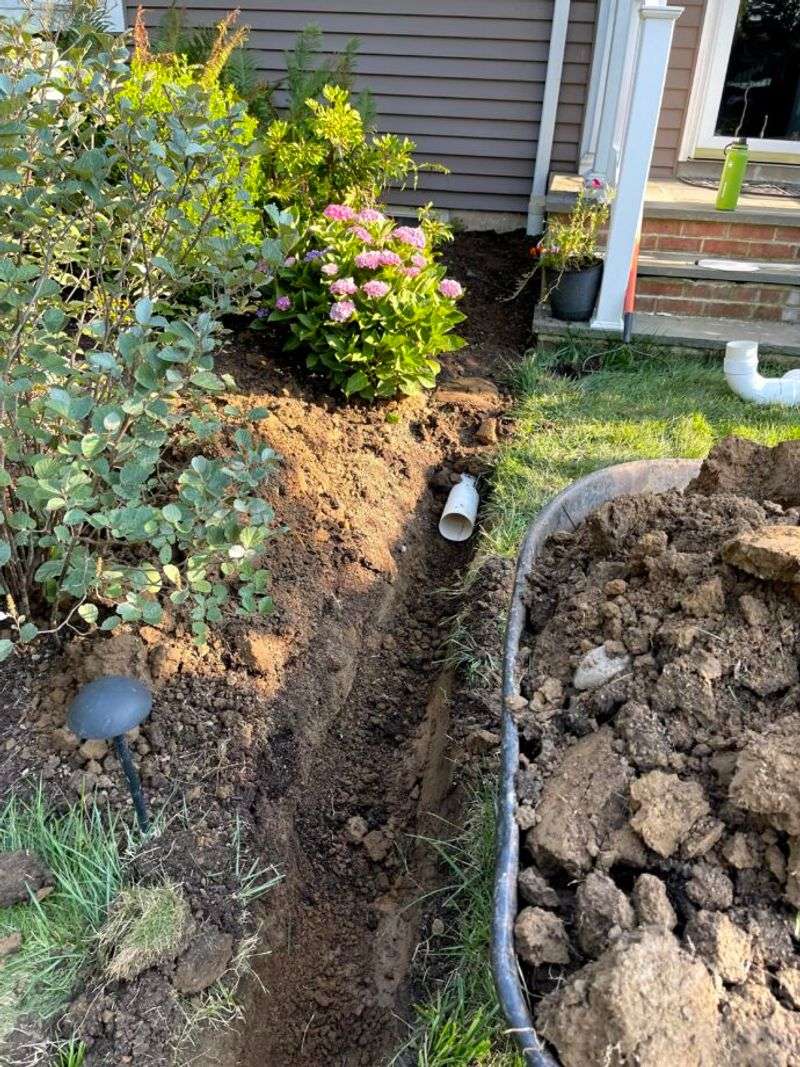
Planting a vegetable bed near a downspout feels practical at first. The water is right there, the soil stays moist, and it seems like less watering work.
But the reality is messier.
During a heavy rainstorm, downspouts release a concentrated rush of water that pounds the soil, splashes mud onto leaves, and can leave roots sitting in pooled water.
Cucumbers planted in those conditions rarely thrive.
Soil splashback onto leaves is a particular concern. Mud landing on foliage can introduce soil-borne issues and makes leaves look battered and stressed.
Repeated pounding also compacts the soil around plant bases, reducing the loose structure that cucumber roots need. Erosion near the downspout can wash away topsoil and expose shallow roots over the course of the summer.
Redirecting downspout flow away from vegetable beds is the cleanest solution. Downspout extenders or underground drainage pipes can move water to a rain garden or lawn area instead.
If the low spot naturally collects water, a rain garden planted with swamp milkweed, blue flag iris, cardinal flower, or soft rush handles that moisture beautifully.
Move cucumbers to a calmer, well-drained spot and add a thick layer of mulch to protect the soil surface from rain impact.
10. Save Tiny Beds For Lettuce, Herbs, Or Compact Peppers
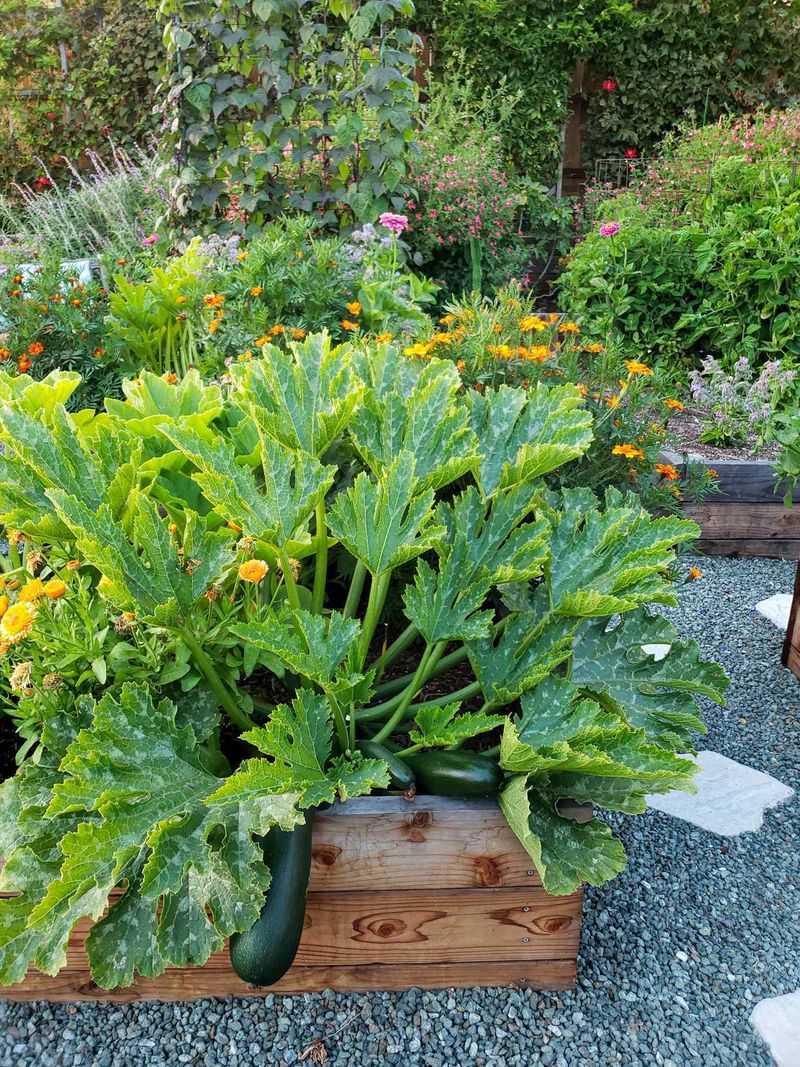
A four-by-four raised bed feels generous when it is empty in April. But by July, a cucumber vine can fill that entire space on its own, leaving no room for anything else.
Standard cucumber varieties are vigorous climbers and sprawlers that need either vertical support or plenty of horizontal room.
In a tiny bed shared with peppers, herbs, and a tomato plant, a cucumber vine quickly becomes the neighbor that takes over the whole block.
Vertical growing helps a lot. A sturdy trellis at the back of a small bed lets cucumber vines climb upward instead of sprawling sideways, which frees up ground space for lower-growing companions.
Bush cucumber varieties are a better fit for tight spaces since they stay more compact than vining types. Look for varieties labeled as bush or patio on the seed packet.
If the bed is genuinely too small even for a trellised cucumber, use the space for something that fits naturally. Lettuce, herbs, compact peppers, or small determinate tomatoes are usually better fits than zucchini in very tight beds.