Spray Hydrogen Peroxide On Arizona Powdery Mildew And It Vanishes Without A Trace
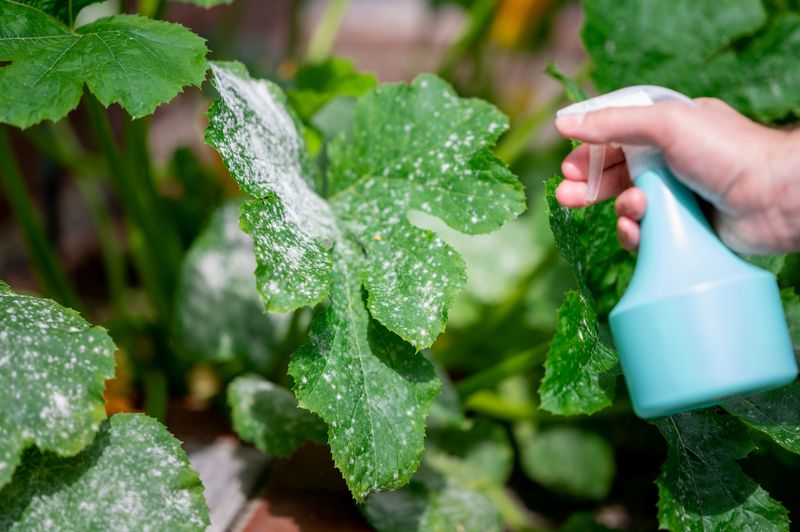
Powdery mildew shows up as a chalky white coating on leaves, and it can spread fast across Phoenix and Tucson gardens, especially during monsoon season. A lot of homeowners reach for hydrogen peroxide the moment they spot it, convinced it will wipe out the problem instantly.
The truth is more complicated, and knowing the difference between what peroxide can actually do and what it cannot do may save your plants from more damage than the mildew itself.
What hydrogen peroxide can—and cannot—do
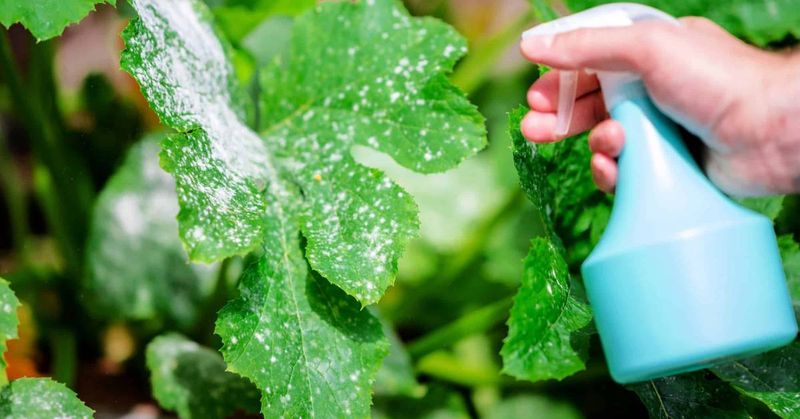
Hydrogen peroxide works as an oxidizing contact treatment, meaning it can damage exposed fungal growth when it makes direct physical contact. A historical EPA label for one commercial agricultural formulation, Oxy Blast 50, describes contact activity against fungi on ornamentals and requires a specific dilution, complete foliage coverage, fresh solution prepared daily, and application during cooler parts of the day.
That is evidence for a single labeled product under defined conditions, not a green light for the bottle sitting in your medicine cabinet.
The headline premise that powdery mildew vanishes without a trace does not hold up. The Oxy Blast 50 label reviewed by the EPA describes contact activity, not instant eradication.
Living fungal colonies on exposed surfaces may be affected, but spores, infected plant tissue beneath the surface, and the white residue left behind by dead growth are separate matters entirely.
Future infections are also outside the reach of any contact-only treatment. Peroxide applied today does not protect new leaves that emerge tomorrow.
Performance varies by concentration, formulation, how thoroughly surfaces are covered, which pathogen is present, which plant species is involved, and what the weather is doing. No single application guarantees that mildew will not return.
Why powdery mildew can return in Arizona
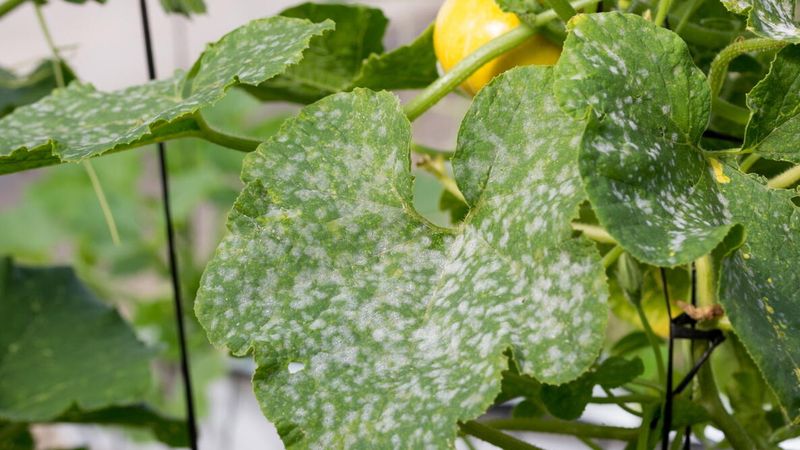
Powdery mildew is not a single disease. It is a group of host-specific fungal diseases, meaning the species that attacks your squash is not the same one targeting your roses or crape myrtles.
A treatment that suppresses mildew on one plant may perform very differently on another, even in the same garden bed.
Low-desert Arizona creates conditions where mildew can persist or return throughout much of the year. Arizona Cooperative Extension research on powdery mildew points to humid microclimates, crowded foliage, low light, and poor air movement as key factors that favor the disease.
Shaded corners, dense shrubs, and plants pushed too close together create exactly those conditions in a typical Phoenix or Tucson yard.
Extreme summer heat may slow mildew temporarily, but that slowdown is not permanent. Monsoon humidity arrives as temperatures moderate in late summer, and that combination can trigger a new wave of infection just when gardeners assume the problem has passed.
If mildew disappears after a hot spell, giving peroxide the credit overlooks the more likely explanation: the fungus paused because conditions were briefly unfavorable, and it may resume as soon as the weather cooperates.
A household bottle is not an agricultural label
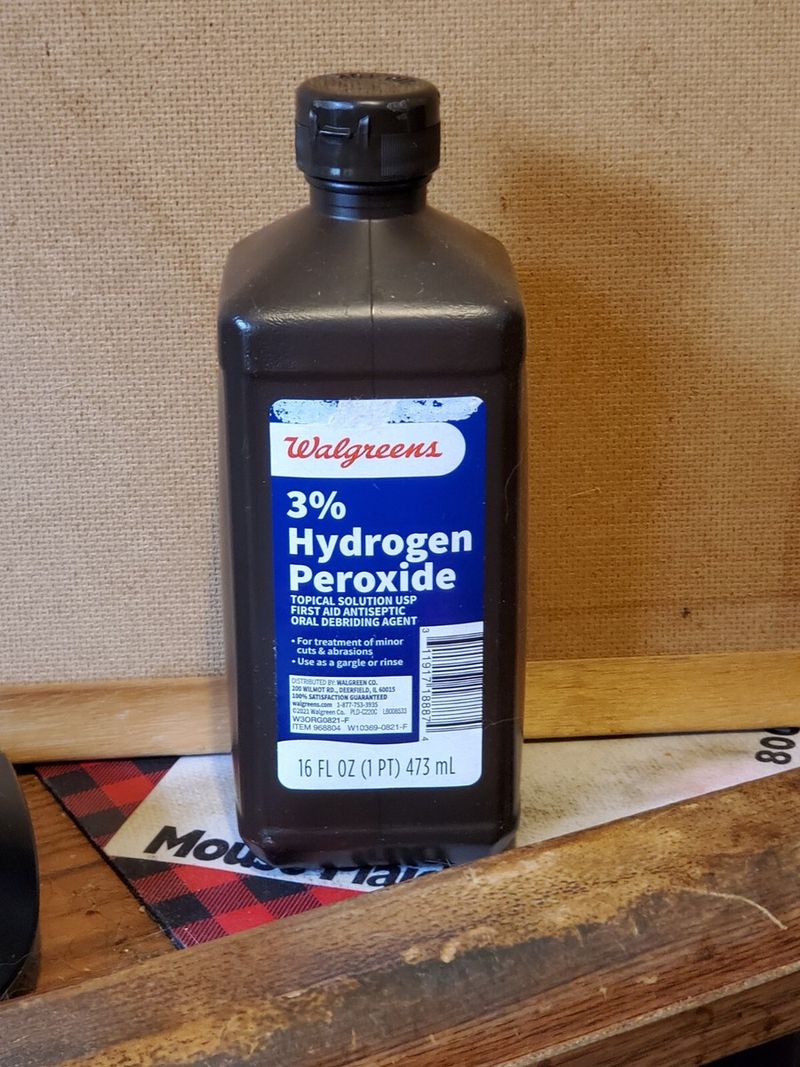
Picking up a brown bottle of 3% peroxide at the grocery store and spraying it on your plants is not the same as using a registered agricultural fungicide. Concentration, formulation, stabilizers, and directions can differ substantially between a pharmacy product and a commercial horticultural one.
Your Arizona Garden Changes Every Week. Your Plan Should Too.
Gardening in Arizona changes quickly throughout the season. Every Friday you’ll receive a simple weekly plan showing exactly what to plant, prune, fertilize, harvest, and protect so you never miss the right timing.
The pharmacy bottle carries directions for antiseptic or cleaning use, not plant disease control.
The 2014 Oxy Blast 50 document referenced in this article is a historical label example, not current verification of registration or approved use. Before relying on any hydrogen-peroxide product for plant disease, readers should confirm the current EPA registration and any applicable Arizona state label for the exact product, plant, and disease they intend to treat.
The EPA explains why this step matters: pesticide products must be used according to their current labels, and an outdated or misread label does not provide legal or practical cover.
One detail worth addressing directly: the historical Oxy Blast 50 label described a rate of 0.7 fluid ounces, or 21 milliliters, per gallon of water. That rate belongs to that specific commercial product under its specific registered conditions.
Transferring it to household peroxide, or to any other unlabeled bottle, is not supported by the reviewed sources and should not be treated as a safe or approved recipe. Follow the current label for whatever product you choose, or choose a different product that carries clear, current directions for your plant and disease.
Arizona heat raises the risk of foliage injury
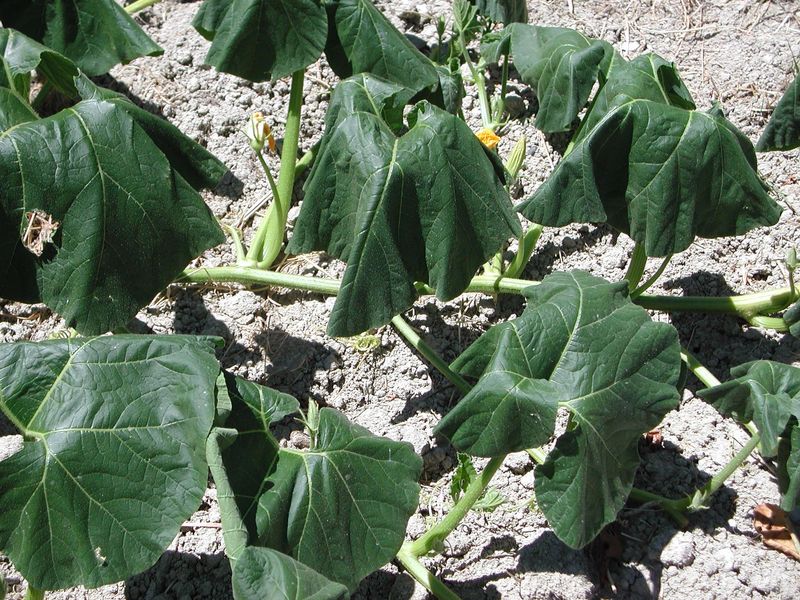
Before considering any peroxide-based treatment, Arizona gardeners need to account for conditions that increase the chance of burning or damaging their plants. Oxidizing contact products can injure foliage that is already under stress, and in the low desert, plant stress is common for much of the year.
Tender growth, thin-leaved plants, newly transplanted specimens, drought-stressed roots, and heat-baked foliage are all more vulnerable to chemical injury than healthy, well-established plants in moderate weather.
The historical Oxy Blast 50 label directed application in the early morning or late evening, specifically to reduce the chance of phytotoxicity. That precaution is not optional in Arizona.
Spraying any oxidizing product during peak afternoon heat or under intense sun raises the risk of burning leaves, regardless of what the bottle says it is supposed to do to the fungus.
Current label directions must take precedence over any historical example or internet recommendation. If the product you select advises testing a small area first, do it, and wait at least 24 to 48 hours before treating the whole plant.
The ATSDR notes that hydrogen peroxide is unstable, releases heat during decomposition, and can cause irritation and other hazards at sufficient exposure levels, which is a useful reminder that rapid breakdown does not equal automatic safety for plants or people handling the spray.
Water and oxygen do not equal harmlessness
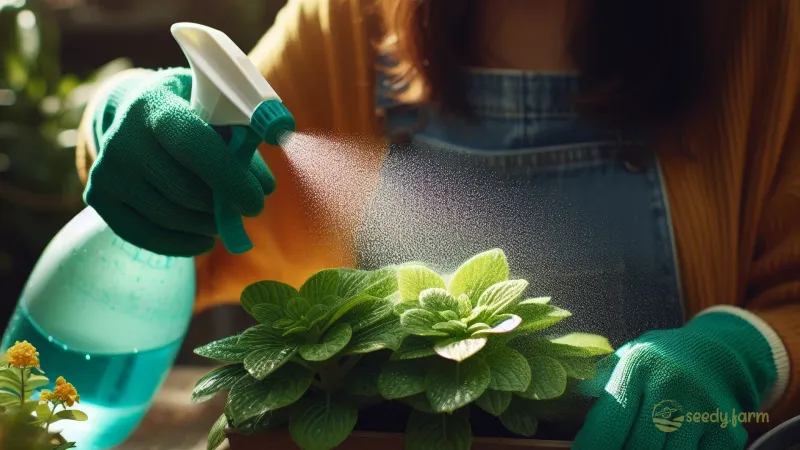
Part of hydrogen peroxide’s appeal is the claim that it breaks down into nothing but water and oxygen, leaving no trace behind. That breakdown is real under many conditions.
An EPA environmental fate review confirms that hydrogen peroxide degrades into water and oxygen and generally shows limited persistence in soil and water environments. The rate of that breakdown, however, depends on concentration, light exposure, organic matter, soil enzymes, and other variables that differ from one garden to the next.
Separating the active ingredient’s fate from everything else matters here. A complete commercial formulation may contain additional ingredients beyond hydrogen peroxide itself, and rapid breakdown of the active ingredient does not guarantee that the full product leaves zero residue or causes zero ecological impact.
Concentrated hydrogen peroxide is a strong oxidizer, and the ATSDR describes it as unstable and capable of causing irritation and other hazards during decomposition at sufficient exposure levels.
The white coating on your leaves after treatment is also worth addressing plainly. Even if peroxide kills exposed living fungal cells on contact, the visible residue from dead growth, damaged leaf tissue, and dormant spores does not disappear immediately. “Gone without a trace” is not a technically accurate description of what contact treatment does to a powdery mildew infection, regardless of how cleanly the active ingredient eventually breaks down in the environment.
Build control around the canopy and the diagnosis
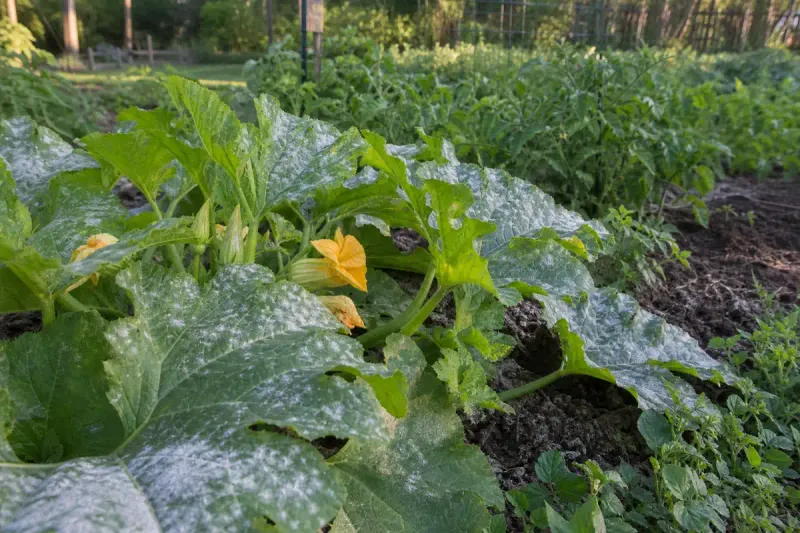
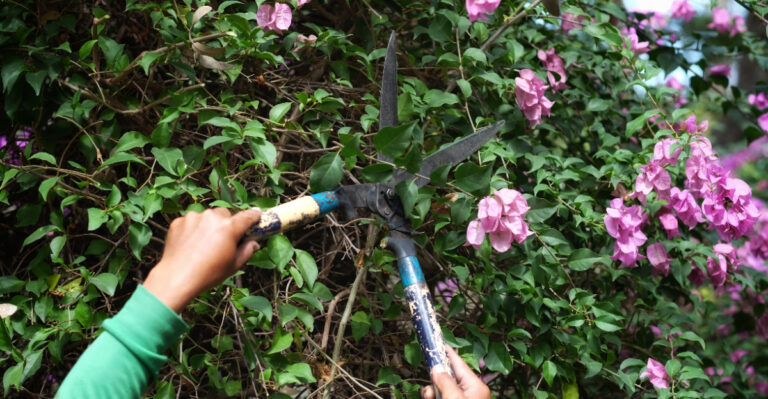
Canopy management is one of the most practical first steps for Arizona gardeners dealing with recurring mildew. Thinning crowded growth opens space for air to move through the plant, which reduces the humid, stagnant conditions that powdery mildew prefers.
Arizona Cooperative Extension guidance consistently points to poor airflow and dense foliage as key contributors to disease pressure in low-desert gardens.
Irrigation habits matter too, but not in the way some gardeners expect. Overhead watering is not a reliable cure for powdery mildew, and wet foliage can encourage other diseases.
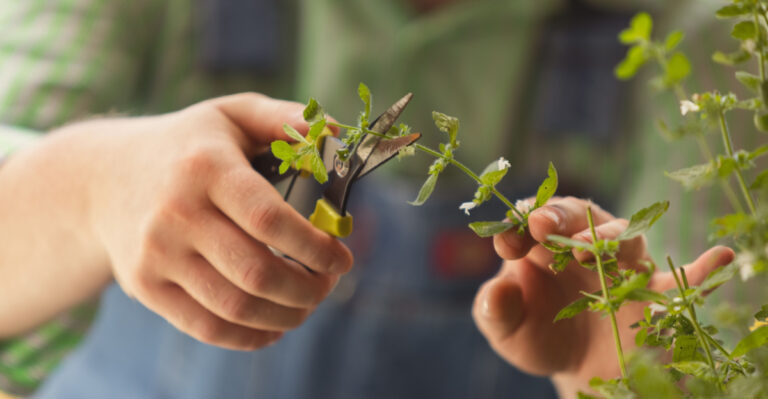
Managing irrigation to keep foliage dry while maintaining healthy root moisture is a more useful goal. Remove badly infected leaves or plant parts when you find them, dispose of diseased material in the trash rather than a home compost pile, and disinfect pruning tools between cuts to avoid spreading the pathogen to healthy tissue.
Penn State Extension recommends tool sanitation as a standard step in managing powdery mildew in home gardens.
For chemical options, UC IPM lists labeled sulfur, potassium bicarbonate, horticultural oils, and biological fungicides as commonly used treatments for powdery mildew on ornamentals. Each option comes with its own label requirements, and sulfur requires particular caution in Arizona: it can injure plants when applied near or above 90 degrees Fahrenheit, which covers a large portion of the Phoenix and Tucson growing calendar.
Whatever product you consider, confirm it is registered for your specific plant and disease, and follow current label directions for timing, rate, and safety precautions.
The low-desert decision rule
Hydrogen peroxide is not a miracle cure, an automatically approved fungicide, or a universal fix for every mildew problem across Arizona’s wide range of plants, soils, and microclimates. A product carrying current, applicable label directions may suppress exposed mildew when used exactly as labeled and under suitable conditions.
Outcomes still depend on which host plant is involved, which pathogen is present, how advanced the infection is, and whether coverage is thorough enough to reach the affected surfaces.
Diagnosis, canopy management, sanitation, and label-compliant treatment options work together as integrated choices rather than a ranked list where one approach always beats another. No single step guarantees control, and combining several approaches thoughtfully gives Arizona gardeners a better chance of keeping mildew pressure manageable over time.
Three things are worth rejecting outright before reaching for any spray bottle: the idea that mildew will vanish instantly, the assumption that household peroxide is automatically safe for every plant in your yard, and the habit of applying any contact product during the hottest or sunniest part of an Arizona day. The fungus is patient, and good outcomes follow from careful, label-guided decisions rather than from a quick fix that promises more than it can deliver.