Stop Pulling This Up In Your Arizona Yard – It’s Not A Weed, And Here’s Why
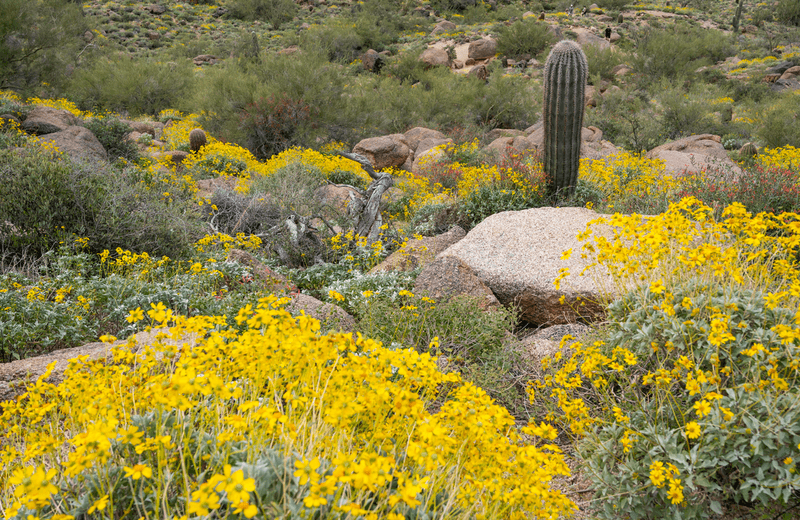
Arizona yards are full of surprises, and one of the most common is a fuzzy, silver-leafed shrub that pops up on its own and gets yanked out before anyone takes a second look. That volunteer plant may actually be brittlebush, a native Sonoran Desert shrub that earns its keep in low-desert landscapes around Phoenix and Tucson.
Before you reach for the gloves, it pays to know what you are pulling and whether removing it is actually the right call for your yard.
The Arizona “Weed” May Be Native Brittlebush
A low-growing, silver-leafed shrub shows up uninvited in an Arizona yard, and the instinct is to pull it. That reaction is understandable, but it may be worth pausing long enough to figure out what you are actually looking at.
The most likely candidate behind the headline is brittlebush, known botanically as Encelia farinosa, a native Sonoran Desert shrub that the Arizona Native Plant Society identifies as an iconic low-water colonizer that supports native insects, including bees that depend on it specifically.
That identification, though, is provisional. The volunteer in your Arizona yard could be brittlebush, or it could be something else entirely.
Flower color alone is not enough to confirm any plant, and the article’s headline oversimplifies the situation. Confirming the plant from a clear photograph or a sample with flowers and roots is the right first step before deciding anything.
The word “weed” is also worth unpacking. In Arizona, as elsewhere, a weed is not a botanical category.
University of Arizona Extension defines it as an undesired plant or one that interferes with cultivated plants in a particular setting. A native brittlebush can still be a weed if it is growing where it creates a problem, blocks a path, or crowds something you value more.
Brittlebush is genuinely useful in the right Arizona location. It is drought-tolerant, noninvasive, and classified as native by the USDA and regional institutions.
The corrected premise of the headline is this: identify the volunteer first, then evaluate whether its mature size, seasonal appearance, water needs, and placement actually work for your yard. Keeping it makes sense when those conditions line up.
Removing it is still a reasonable choice when they do not.
How to Recognize Brittlebush in Low-Desert Arizona
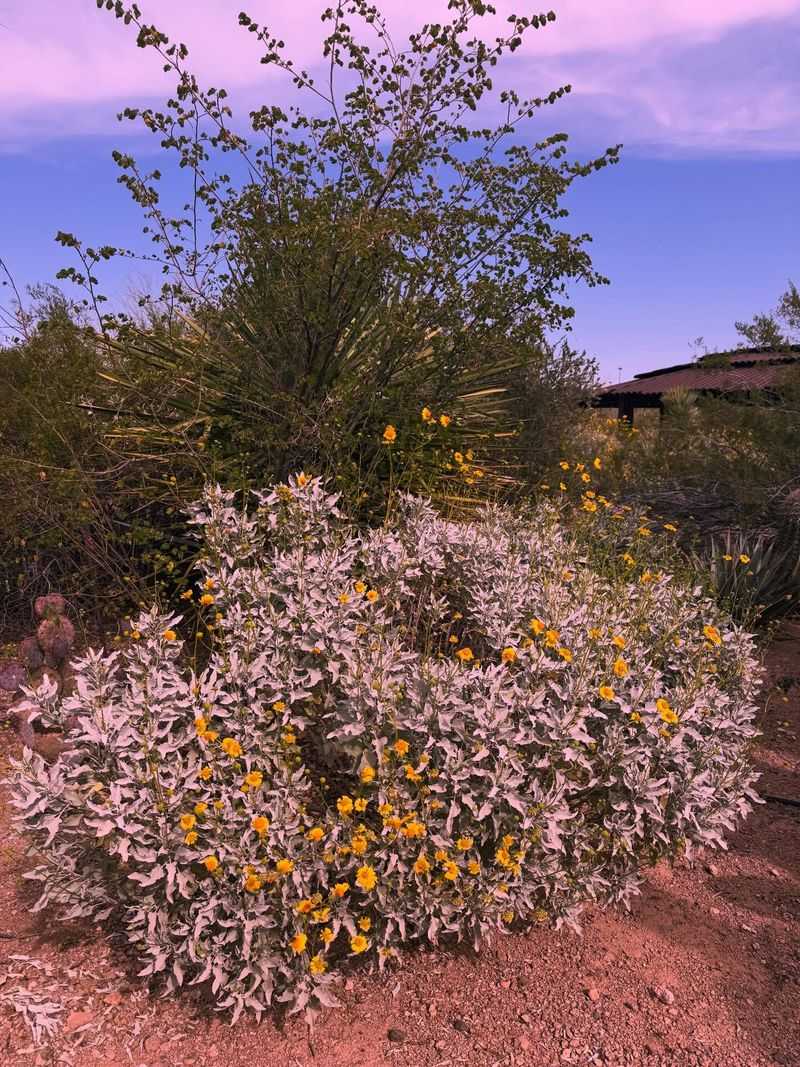
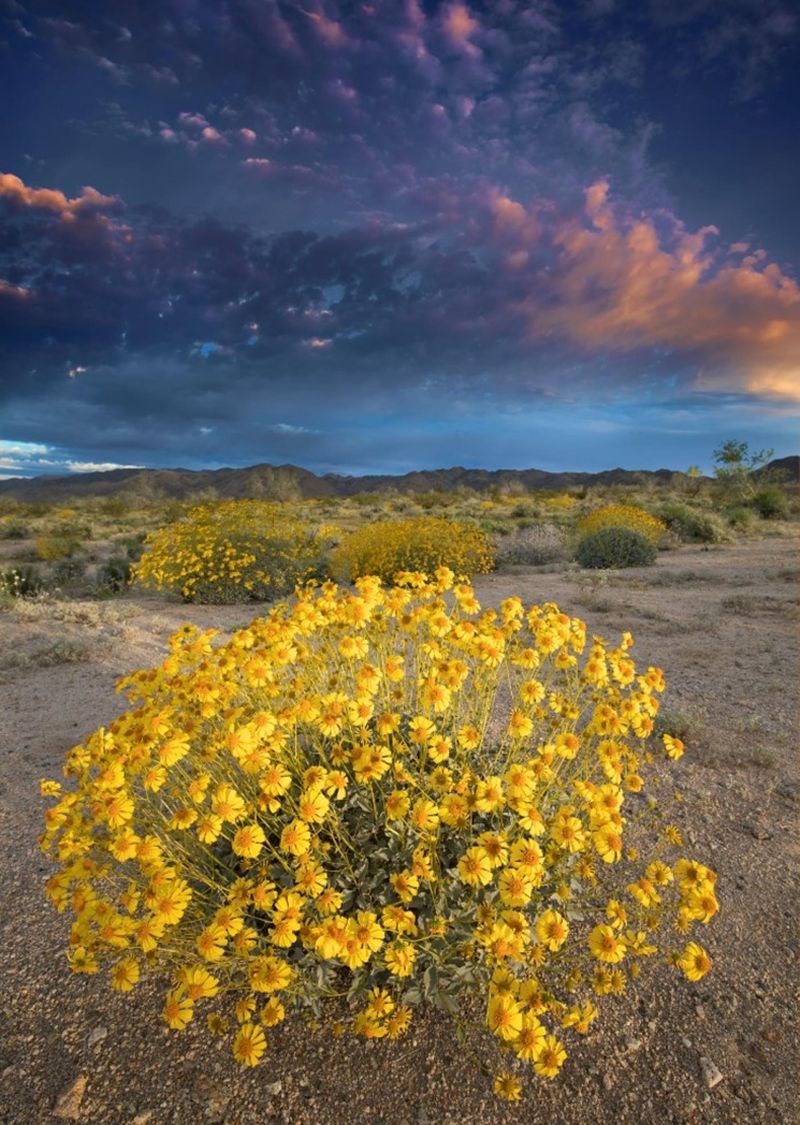
Knowing what brittlebush looks like in person makes all the difference for Arizona homeowners trying to decide whether to keep or remove a volunteer plant. A mature brittlebush in the Phoenix or Tucson area typically grows into a rounded mound, generally reaching somewhere between 2 and 5 feet tall, with a similar spread.
The overall shape tends to be tidy and compact rather than sprawling.
The leaves are one of the most reliable identification clues. They are oval to triangular, covered in fine white hairs that give them a gray-green to silvery appearance, and they feel distinctly fuzzy to the touch.
Flowers appear from late winter into spring in Arizona’s low desert, typically from around February through April depending on rainfall, elevation, and sun exposure. Each flower head looks like a bright yellow daisy, with slender petals radiating from a central disk, held up on long bare stalks above the foliage.
Your Arizona Garden Changes Every Week. Your Plan Should Too.
Gardening in Arizona changes quickly throughout the season. Every Friday you’ll receive a simple weekly plan showing exactly what to plant, prune, fertilize, harvest, and protect so you never miss the right timing.
The display can be striking when the plant is in full bloom.
One caution worth repeating: yellow flowers alone do not confirm brittlebush in Arizona. Several other plants, including invasive ones, also produce yellow blooms.
The USDA Forest Service notes that brittlebush is a warm-desert species whose range is limited by cold temperatures, which means it is most relevant to low-elevation areas like the Phoenix and Tucson regions rather than higher-elevation Arizona locations like Flagstaff. If the plant in question is growing at higher elevation or in a colder microclimate, the identification becomes less certain and warrants extra verification before assuming it is a beneficial native.
What Brittlebush Adds to an Arizona Yard
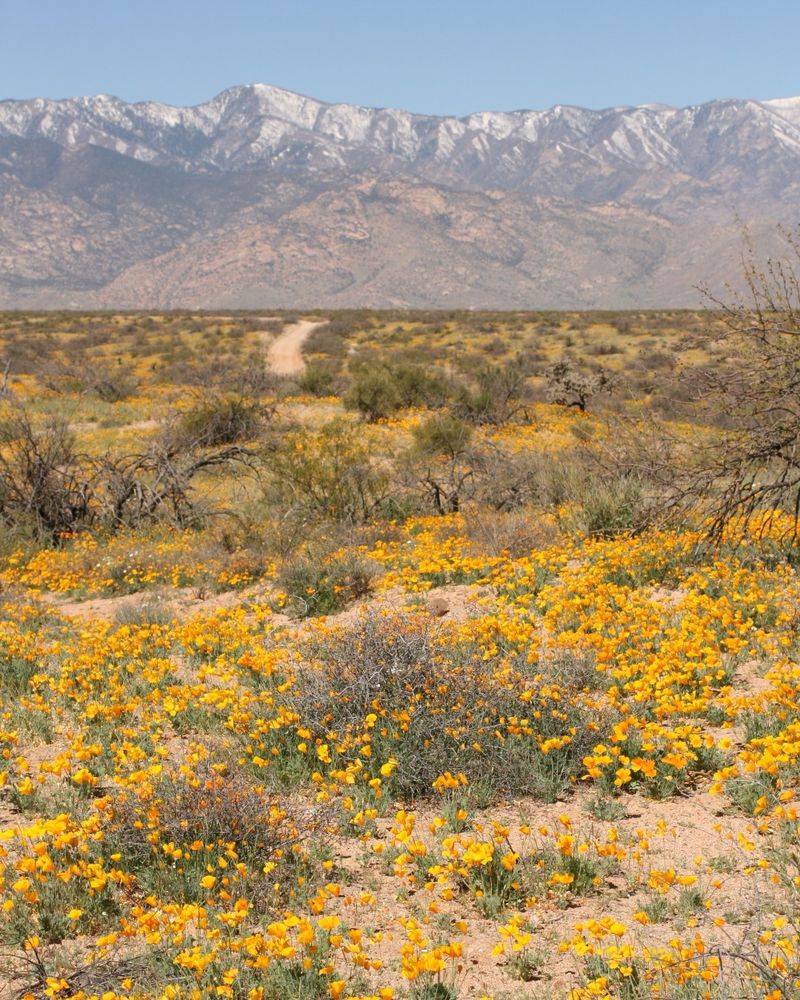
Brittlebush earns a place in Arizona yards for reasons that go beyond looking good in spring. Its flowers attract a broad range of insects, including bees, butterflies, moths, flies, and beetles.
Some native bee species are reported to depend specifically on brittlebush as a pollen source, though no particular species is guaranteed to show up in any given Arizona yard. The plant creates opportunity for pollinators; it does not promise a specific outcome.
Beyond insects, the Arizona-Sonora Desert Museum notes that sparrows eat brittlebush seeds, adding a second layer of habitat value for Arizona homeowners who want their yards to support more than just ornamental appeal. A yard that feeds both pollinators and seed-eating birds is doing real ecological work without requiring much from the homeowner in return.
Brittlebush fits that strategy because it is adapted to the low-desert climate and uses little water once established. Keeping a volunteer brittlebush is not going to produce a measurable reduction in a household water bill on its own, but it is a reasonable part of a broader shift toward plants that belong in Arizona’s climate rather than fighting it.
What brittlebush does not do is equally worth stating plainly. It does not eliminate scorpions, mosquitoes, ticks, or other pests.
It is not a pesticide, natural or otherwise. Its documented value is as a habitat plant that supports insects and wildlife in the context of a water-efficient Arizona landscape, which is a genuine benefit without needing exaggeration.
A Native Plant Can Still Be in the Wrong Place
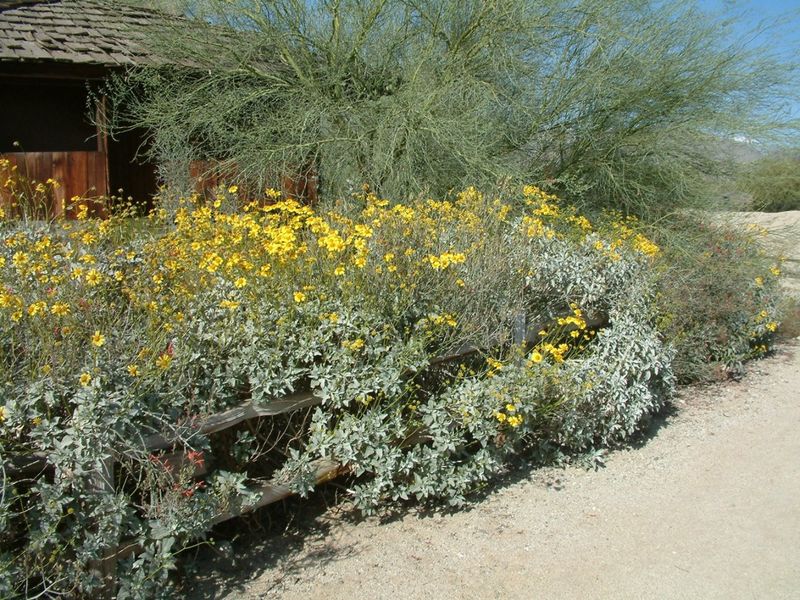
Being native to Arizona does not automatically make brittlebush the right plant for every spot in your yard. Placement matters, and a volunteer that sprouted on its own may not have chosen the most convenient location.
Full sun to light shade and well-drained soil are the conditions brittlebush prefers, which is why it naturally grows on rocky slopes and gravelly flats in the Sonoran Desert rather than in compacted or irrigated garden beds.
The University of Arizona Campus Arboretum recommends evaluating volunteer brittlebush for mature spread, proximity to walkways and walls, visibility, and exposure to irrigation before deciding to keep it in an Arizona yard. A plant that sits in the path of regular sprinkler runoff or drip-system overflow will grow larger and faster than one in a dry, sunny spot.
That extra growth is not harmful to the plant, but it does mean more reseeding and more pruning to keep the shrub from encroaching on other plants or structures.
Irrigation exposure is a specific concern in Arizona residential yards. The UA Campus Arboretum notes that additional water can increase reseeding and maintenance for brittlebush, which changes the calculus on whether to keep a volunteer that is already sitting inside an irrigated zone.
A plant in that situation may perform differently from one growing in a genuinely dry, open location that mimics its natural Arizona habitat.
Removal is a legitimate option when brittlebush crowds valued plants, blocks movement around the yard, creates a maintenance burden, or occupies an unsuitable watering zone. Native status does not override practical yard management.
The honest assessment is site-specific: a brittlebush in the right Arizona spot is worth keeping, and one in the wrong spot is worth removing regardless of what it is.
Brittlebush Needs Care, Not Constant Attention
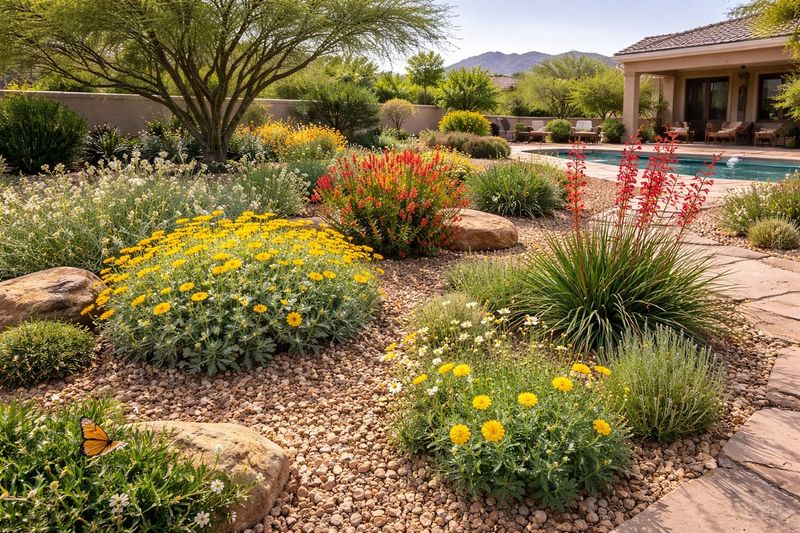
Brittlebush is not a plant that demands weekly attention, but calling it maintenance-free would be misleading. New plants in Arizona yards need regular establishment watering to survive their first season.
The Arizona-Sonora Desert Museum recommends at least weekly watering when first planted, tapering off as the roots settle in. Skipping establishment irrigation, especially during Arizona’s brutal summer heat, can cost the plant before it ever has a chance to prove itself.
Once established, brittlebush uses little water and generally does not need fertilizer. Well-drained soil is more important than soil amendment in most Arizona locations.
Keeping the plant consistently wet or planting it in a low spot that holds water will cause more problems than a dry summer will.
Pruning has a seasonal rhythm worth following in Arizona. Removing dried flower stalks in late spring keeps the plant looking tidy after the bloom period ends.
The Arizona-Sonora Desert Museum cautions against winter pruning because it can reduce the following season’s flower production, which is one of the plant’s best features in an Arizona yard.
Seasonal appearance can be misleading. Brittlebush in Arizona may lose leaves or look sparse during severe drought or after a hard frost.
A plant that drops most of its foliage in January or during a dry spell is not necessarily dead. According to USDA Forest Service species data, drought and cold can trigger dormancy or partial defoliation in brittlebush without killing the plant.
Waiting until late winter or early spring to assess whether new growth is emerging is a better approach than pulling a dormant shrub out of the ground in December and assuming the worst.
Regular irrigation in an Arizona yard can also increase reseeding, so monitoring the area around an established brittlebush for seedlings is a reasonable part of keeping it manageable without treating the plant as invasive.
Identify Stinknet Before You Preserve a Yellow-Flowered Volunteer
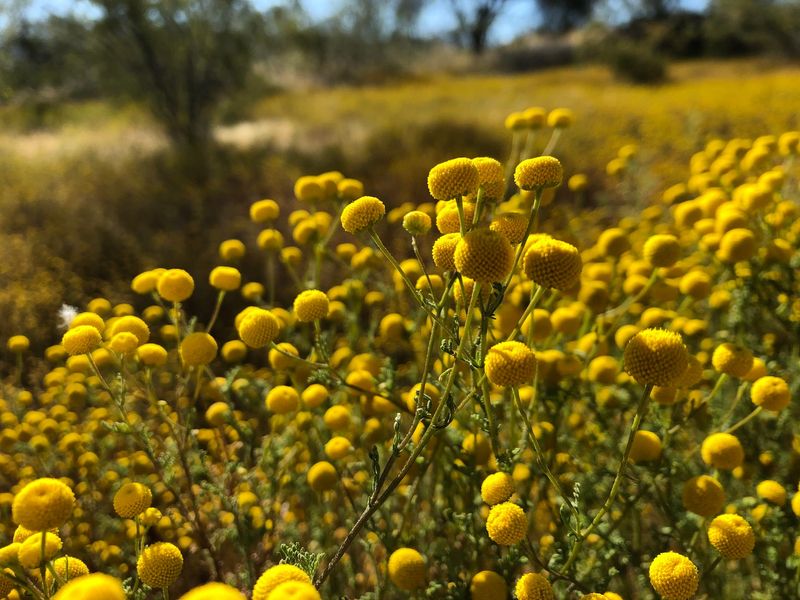
Yellow flowers in an Arizona yard do not automatically mean brittlebush. Stinknet, known scientifically as Oncosiphon piluliferum, is an invasive weed that also produces bright yellow blooms and has spread aggressively across southern Arizona in recent years.
Mistaking it for a beneficial native and leaving it in place is a real risk, particularly for Arizona homeowners who are trying to do the right thing for their landscape.
The two plants look quite different once you know what to check. Brittlebush has large, oval, fuzzy silver-gray leaves and produces yellow daisy-like flowers with visible petals radiating from a central disk.
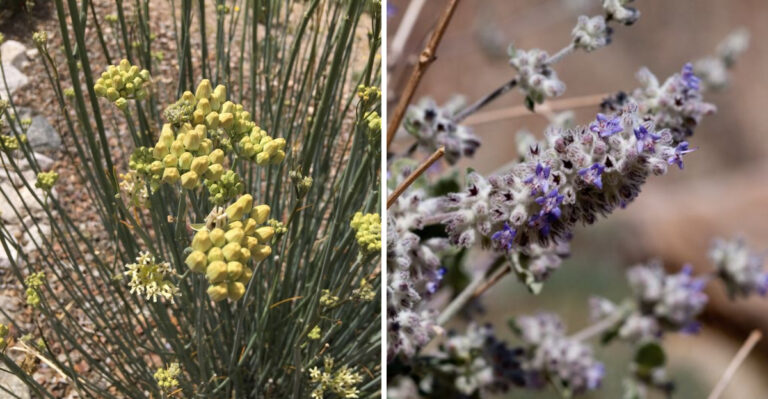
Stinknet produces globe-shaped, button-like yellow flower heads without obvious petals, and its foliage is feathery and carrot-like rather than broad and fuzzy.
Stinknet is also reported to have a pungent odor, but deliberately smelling an unknown plant is not a safe identification strategy. Do not rely on a single trait, and do not touch, burn, eat, or broadly spray any unidentified yellow-flowered volunteer in an Arizona yard before confirming what it is.
If you cannot confidently tell the two apart from a visual inspection, photograph the plant clearly and take the image to a University of Arizona Cooperative Extension office, a qualified local nursery, or a plant-identification program. Collecting a small sample with leaves, stems, and flowers in a sealed bag is another option when practical.
If you suspect the plant is stinknet, University of Arizona guidance recommends wearing gloves and long sleeves before handling it, because skin reactions have been reported. Getting the identification right in Arizona protects both your yard and the broader landscape around it.
Make the Keep-or-Remove Decision After Identification
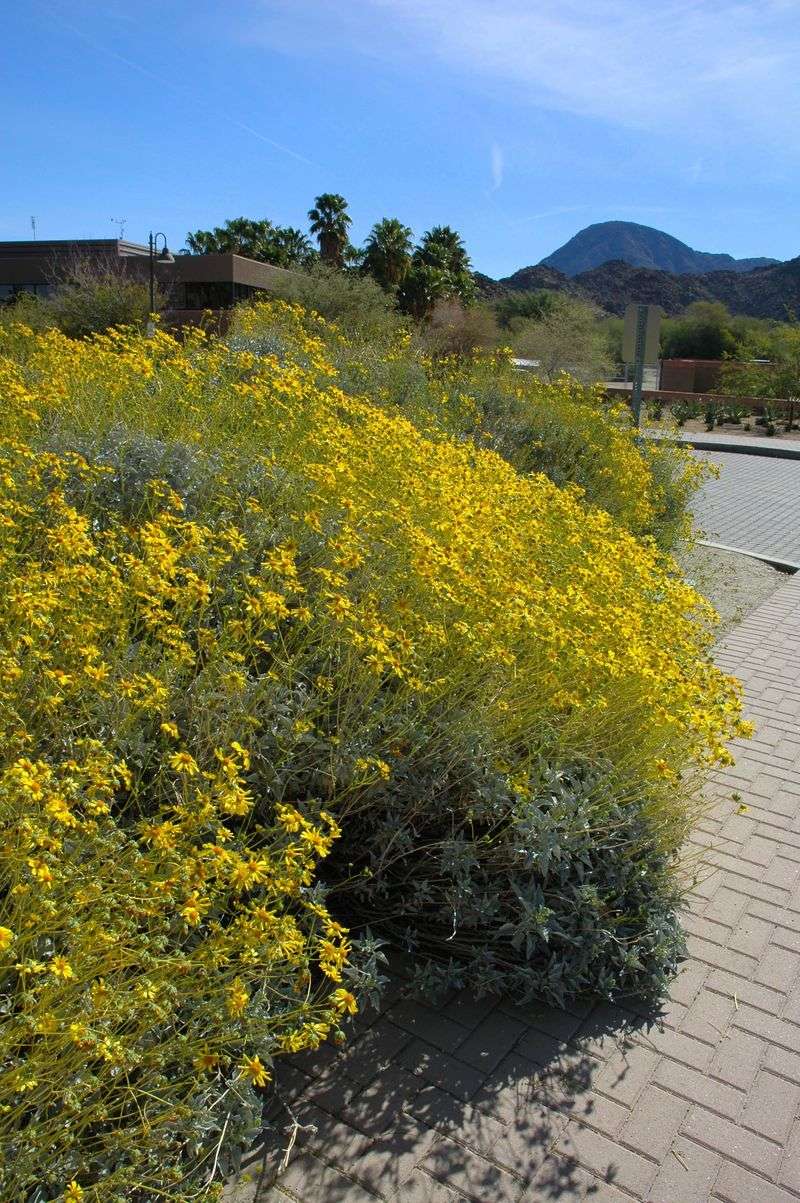
A confirmed, healthy brittlebush growing in the right Arizona spot is worth keeping. Full sun, well-drained soil, enough room to reach its mature spread without crowding other plants or blocking pathways, and minimal exposure to regular irrigation are the conditions that make it a low-maintenance asset rather than a recurring problem.
When those factors line up in an Arizona yard, the plant earns its space.
Monitoring makes sense when seasonal sparseness or reseeding raises concern. A brittlebush that looks bare after a frost or a dry stretch may simply be dormant.
Waiting for spring growth before making a removal decision avoids pulling a plant that would have recovered on its own. Seedlings around an established shrub can be pulled early before they establish, which keeps the plant from spreading beyond its intended area in an Arizona landscape.
Removal is the right call when the shrub obstructs movement, crowds plants you value more, sits in an irrigation zone that promotes excessive growth, or turns out to be stinknet rather than brittlebush. Native status is one factor in the decision, not the only one.
The headline’s blanket instruction to stop pulling this plant is an oversimplification. What actually helps Arizona homeowners is identifying the volunteer accurately, then making a site-specific judgment based on what the plant is and where it is growing.
A yard that works well in Arizona’s low desert is built on that kind of informed, practical decision-making rather than on rules that apply everywhere or nowhere.