The Arizona Tree That Drops Seed Pods Homeowners Constantly Sweep Up
Some Arizona trees announce themselves with shade, flowers, or thorns.
Velvet mesquite announces itself with all of that, then adds a carpet of crunchy seed pods underfoot.
By summer, the long tan pods can collect across patios, gravel, sidewalks, driveways, and pool decks until sweeping feels like a daily chore.
That mess is real.
So is the tree’s value.
Velvet mesquite is one of the most recognizable native trees of the Sonoran Desert, and its pods are not just yard litter.
They feed wildlife, support traditional foodways, and belong to a tree that handles heat, drought, tough soil, and brutal sunlight with desert confidence.
That is what makes the cleanup debate interesting.
For some homeowners, the pods are a nuisance. For others, they are part of the tradeoff for filtered shade, pollinator support, wildlife activity, and a tree that looks completely at home in Arizona.
So which Arizona tree drops the seed pods homeowners keep sweeping up?
It is velvet mesquite, and knowing how it grows makes the mess much easier to understand.
Velvet Mesquite Is The Tree
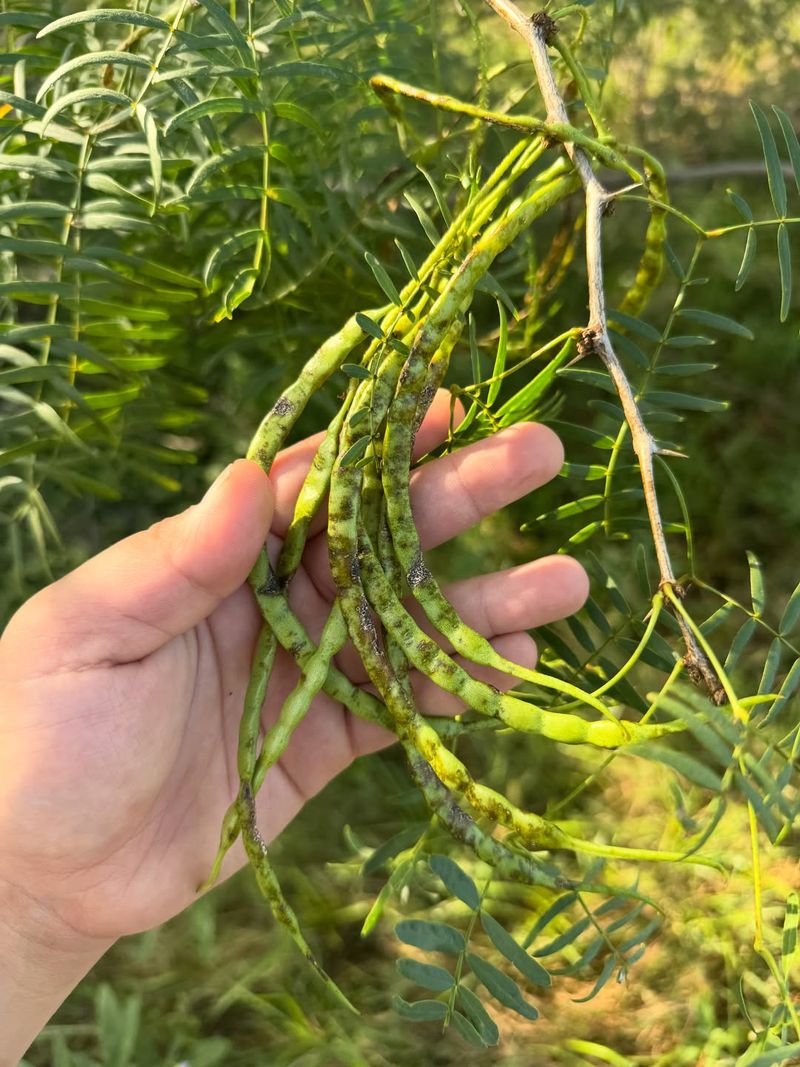
Velvet mesquite is the pod-dropping tree many Arizona homeowners recognize instantly.
The long tan pods, airy canopy, fine leaflets, rough bark, and sharp thorns all point toward this Sonoran Desert native. Botanically, it is known as Prosopis velutina, and it is one of the defining native trees of southern Arizona.
Its name comes from texture. Young stems, leaf stalks, and pods often have fine soft hairs that give them a slightly velvety feel.
The tree can grow large. Mature velvet mesquite may reach around 30 feet tall and spread just as wide when conditions allow.
The shade is open and filtered. Instead of casting dense darkness, the small leaflets create a dappled pattern that cools without making the area feel closed in.
It is deciduous. Leaves may drop in late winter or during stress, then return when growing conditions improve.
Thorns are part of the package. Paired spines along branches can be sharp enough to surprise anyone pruning, walking nearby, or leaning a bicycle under the canopy.
The pods are hard to miss. In summer, mature trees can drop enough of them to make gravel yards look scattered with dry straw.
Not every mesquite is the same. Honey mesquite, screwbean mesquite, and nonnative landscape mesquites can look different and behave differently.
Velvet mesquite earns both praise and complaints.
It is native, useful, beautiful, messy, thorny, tough, and very Arizona all at once.
Seed Pods Feed Desert Wildlife
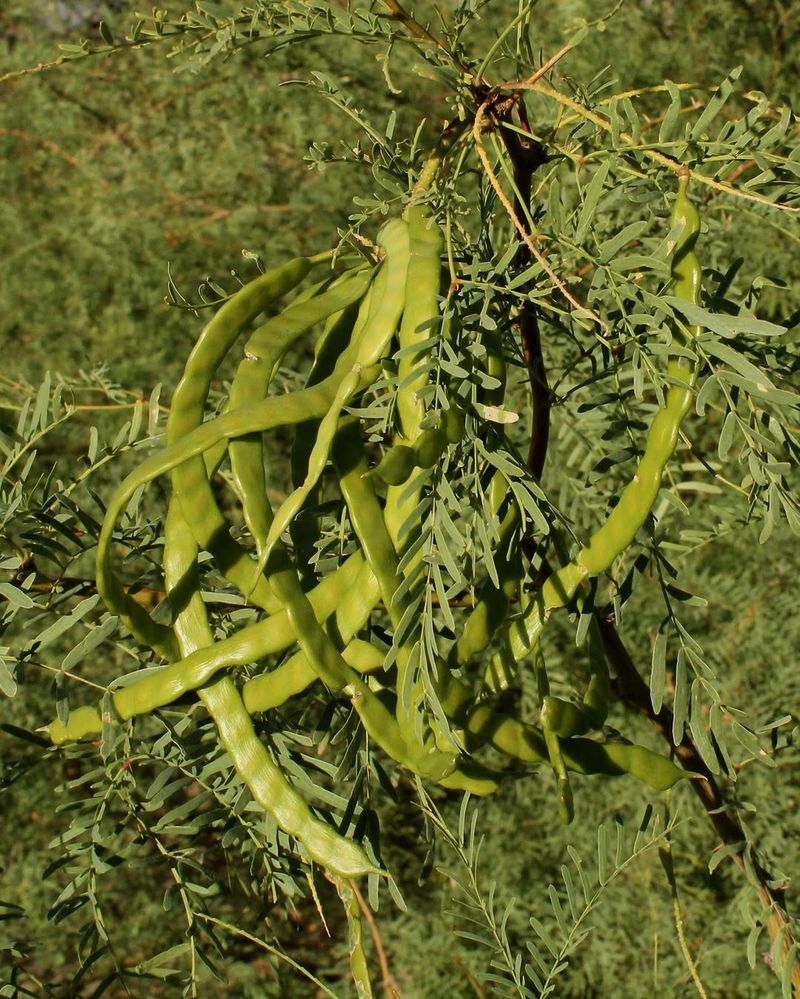
Those pods are not wasted in the desert.
Velvet mesquite produces long, sweet, starchy seed pods that attract wildlife once they ripen and fall. To a homeowner, they may look like debris. To many animals, they look like food.
Javelinas may forage under the canopy. They root through fallen pods and chew what they can find, especially during dry periods when other food is limited.
Coyotes can eat the pods too. Mesquite seeds often travel through wildlife this way, helping the tree spread in natural desert areas.
Your Arizona Garden Changes Every Week. Your Plan Should Too.
Gardening in Arizona changes quickly throughout the season. Every Friday you’ll receive a simple weekly plan showing exactly what to plant, prune, fertilize, harvest, and protect so you never miss the right timing.
Quail scratch through the litter. Gambel’s quail and other birds may search beneath the tree for seeds, insects, and bits of pod material.
Small mammals notice the drop. Ground squirrels, rodents, and other desert animals use mesquite pods when available.
Insects move in as well. Fallen pods can shelter beetles and other small invertebrates, which then become food for lizards and birds.
The timing matters. Pod drop often overlaps with hot, dry weeks when wildlife may be working harder to find calories and moisture.
Drought can increase interest. During lean years, animals may rely more heavily on dependable native food sources like mesquite pods.
Cleanup can still happen. Leaving pods for a short window, then raking later, gives wildlife a chance without surrendering the whole patio.
The mess has a food-web role.
That does not make sweeping fun, but it does explain why a mature velvet mesquite becomes such a busy summer gathering spot.
Filtered Shade Cools Patios
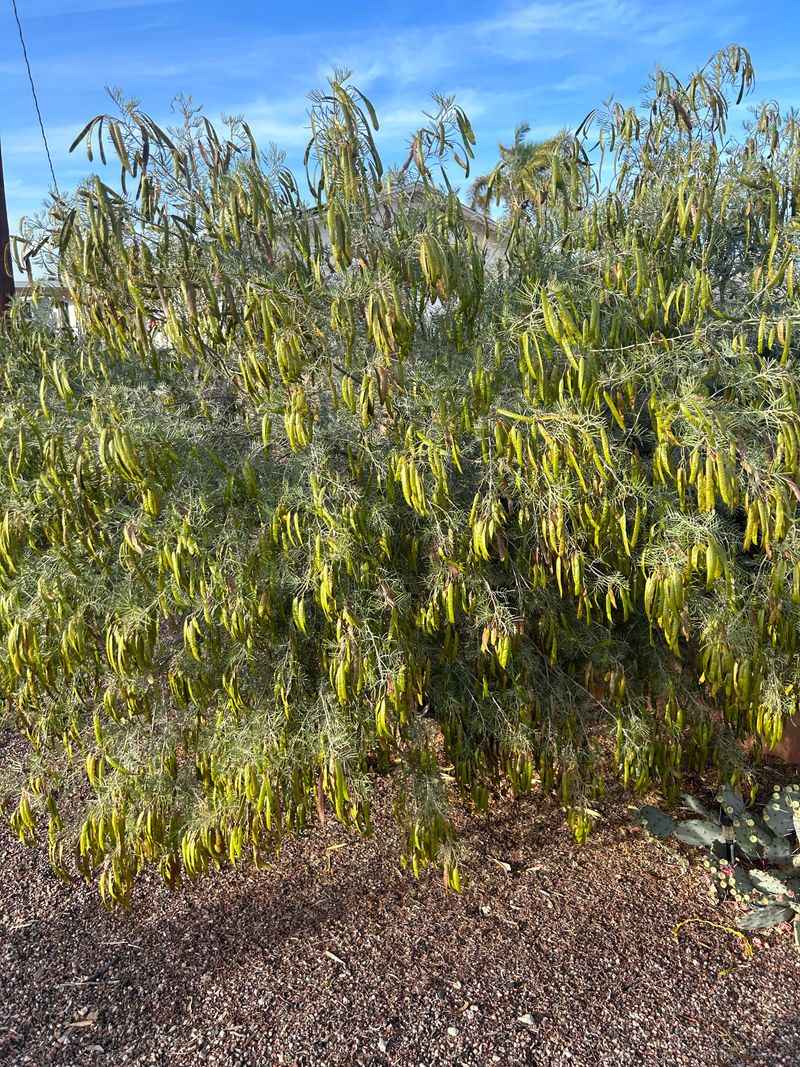
Velvet mesquite shade feels made for the desert.
The canopy is open, airy, and finely textured, which lets breezes move through while still softening harsh sunlight. That kind of shade can make a patio, sitting area, or west-facing yard feel much more usable.
The light stays dappled. Instead of deep shade, mesquite creates a shifting pattern that cools surfaces without making the space gloomy.
Afternoon placement matters. A tree on the west or southwest side of an outdoor living area can block some of the day’s most punishing sun.
Patio surfaces benefit. Stone, concrete, gravel, and pavers all heat up under direct sunlight, and filtered shade helps reduce that surface blast.
The canopy does not solve everything. One tree will not cool an entire yard, but it can make the area directly beneath it much more comfortable.
Winter leaf drop changes the light. Velvet mesquite may shed leaves in the cooler season, allowing more sun through when warmth is welcome.
Spring growth returns the shade. As temperatures climb again, the canopy fills out and begins doing its summer work.
Placement needs thought. Planting too close to pools, walkways, driveways, and outdoor dining areas can turn useful shade into constant pod cleanup.
The best site balances comfort and mess.
Velvet mesquite can be a brilliant shade tree when its mature size, pod drop, and thorny branches are planned for from the start.
Flowers Support Pollinators
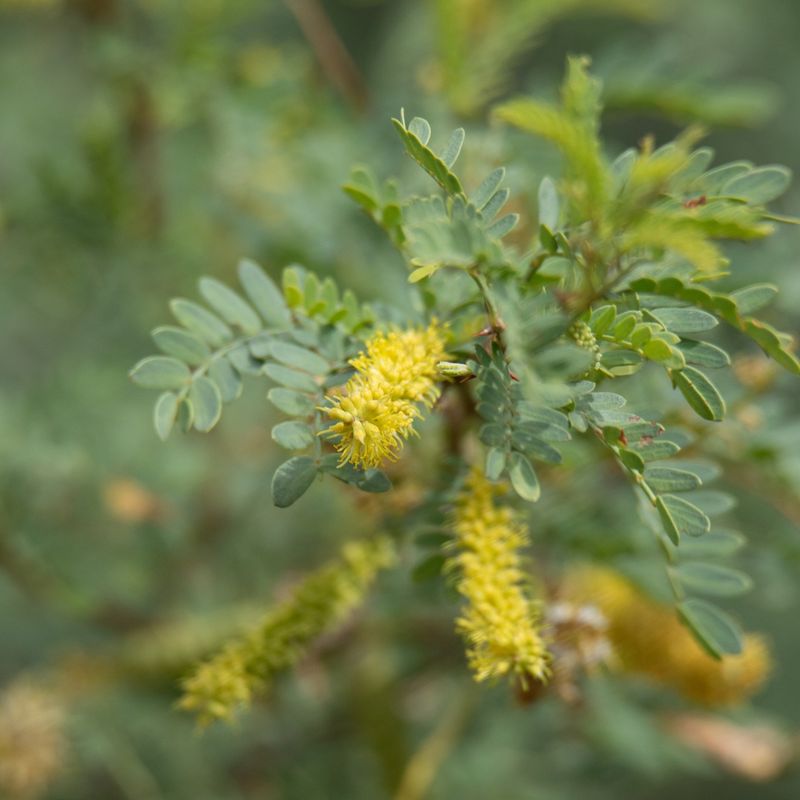
Before the pods arrive, the flowers do important work.
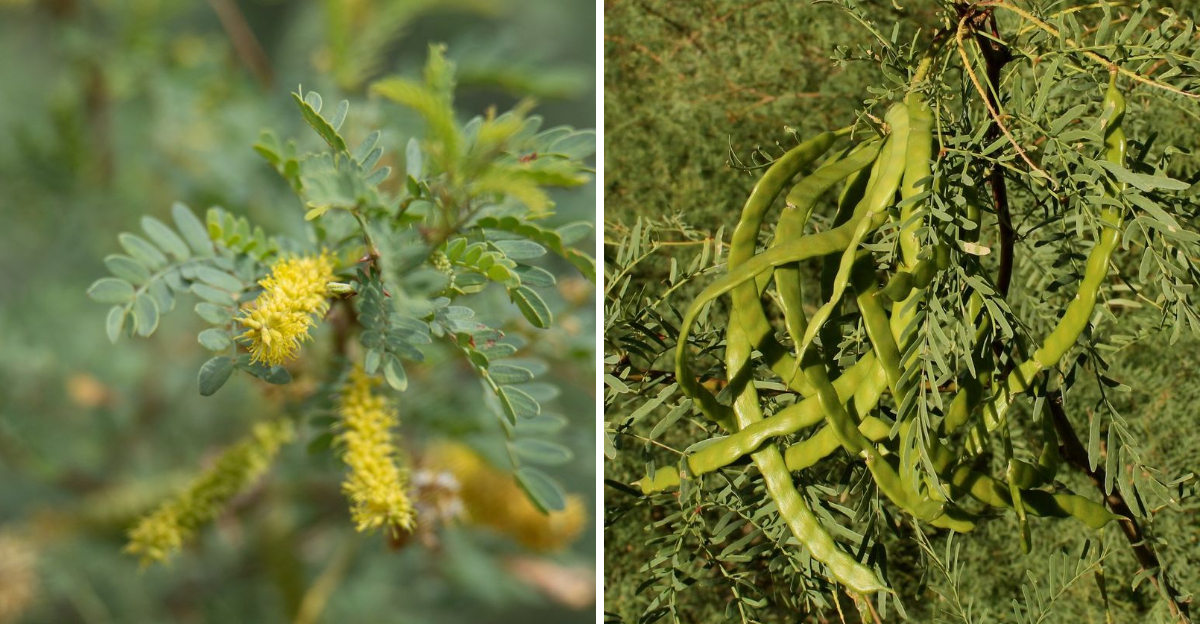
Velvet mesquite produces pale yellow to greenish flower spikes that attract bees and other insects in spring and early summer. The blooms may look modest from a distance, but pollinators notice them quickly.
The flowers appear in fuzzy clusters. Each spike holds many tiny blooms that offer pollen and nectar.
Bees work them heavily. Honey bees may visit, but native bees also use mesquite flowers as a valuable seasonal resource.
Other insects join in. Flies, beetles, wasps, and smaller pollinators can all move through the canopy when flowers are fresh.
The bloom window is valuable. In desert landscapes, flowers that arrive during dry, warming months can help bridge food gaps for insects.
Pollinator activity leads to pods. The same flowers that feed bees eventually become the seed pods homeowners sweep up later.
Avoid spraying during bloom. Broad insecticide use near flowering mesquite can disrupt the very insects that make the tree ecologically useful.
Let the bloom finish when possible. The flower period is usually short compared with the long life of the tree.
Planting nearby natives helps. Desert marigold, brittlebush, fairy duster, and other native plants can extend pollinator food beyond the mesquite bloom.
The flowers are easy to overlook.
But before velvet mesquite becomes the pod-dropper, it becomes one of the busiest pollinator stops in the yard.
Roots Handle Tough Soil
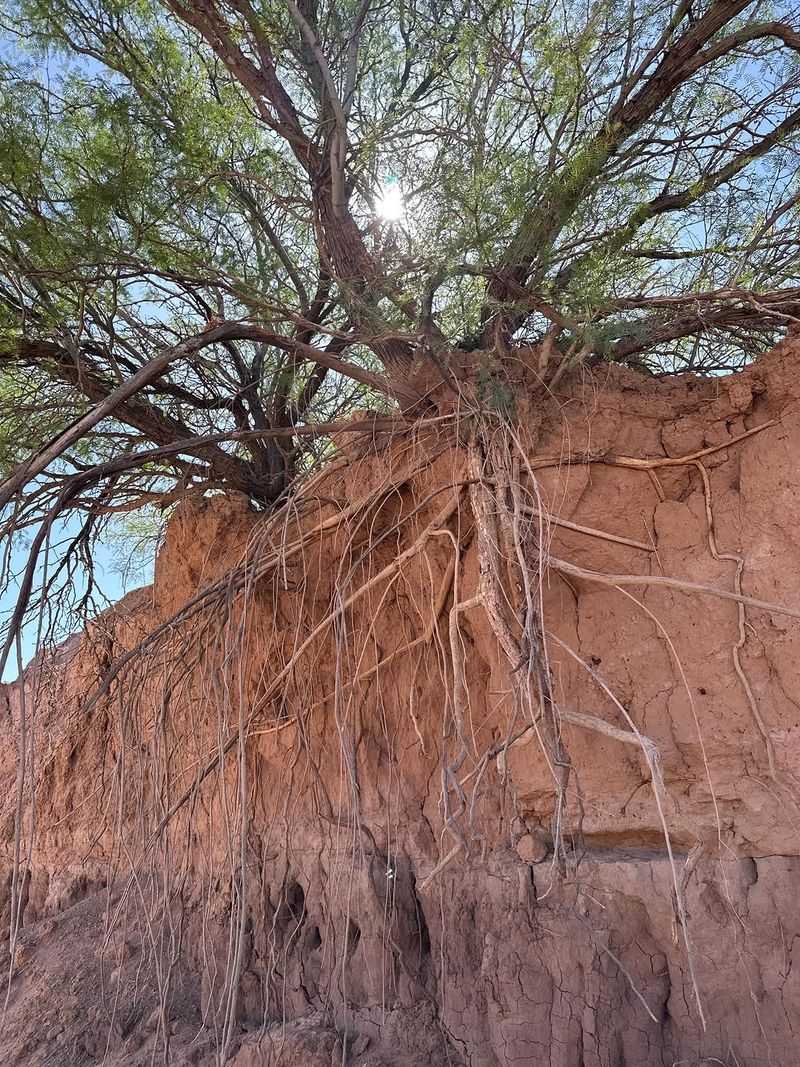
Velvet mesquite is built for difficult Arizona ground.
Rocky soil, alkaline soil, compacted areas, and dry stretches are all part of its natural world. That toughness is one reason the tree became so common in desert landscapes.
Young trees need establishment water. Deep, infrequent irrigation during the first few years encourages roots to move downward and outward.
Established trees need much less help. Once roots find deeper moisture, velvet mesquite can handle long dry periods better than many landscape trees.
The root system spreads wide. Lateral roots can travel well beyond the canopy, especially where moisture is available.
That strength can cause conflicts. Roots may follow irrigation lines, pool leaks, or consistently wet spots near hardscape.
Planting distance matters. A mesquite placed too close to patios, sidewalks, driveways, or walls can create future headaches.
Deep watering is better than surface sprinkles. Shallow irrigation encourages shallow roots that may cause more surface issues later.
Avoid constant moisture. Velvet mesquite is drought-adapted, not swamp-adapted, and soggy soil can stress the root zone.
Mulch can help young trees. A wide mulch ring keeps soil temperature steadier and reduces water loss while roots establish.
Keep mulch away from the trunk. A clear space around the base helps prevent trapped moisture against the bark.
The roots are part of the tree’s desert success.
Give them room, water them correctly while young, and they become an asset instead of a surprise problem under the driveway.
Pods Can Become Meal
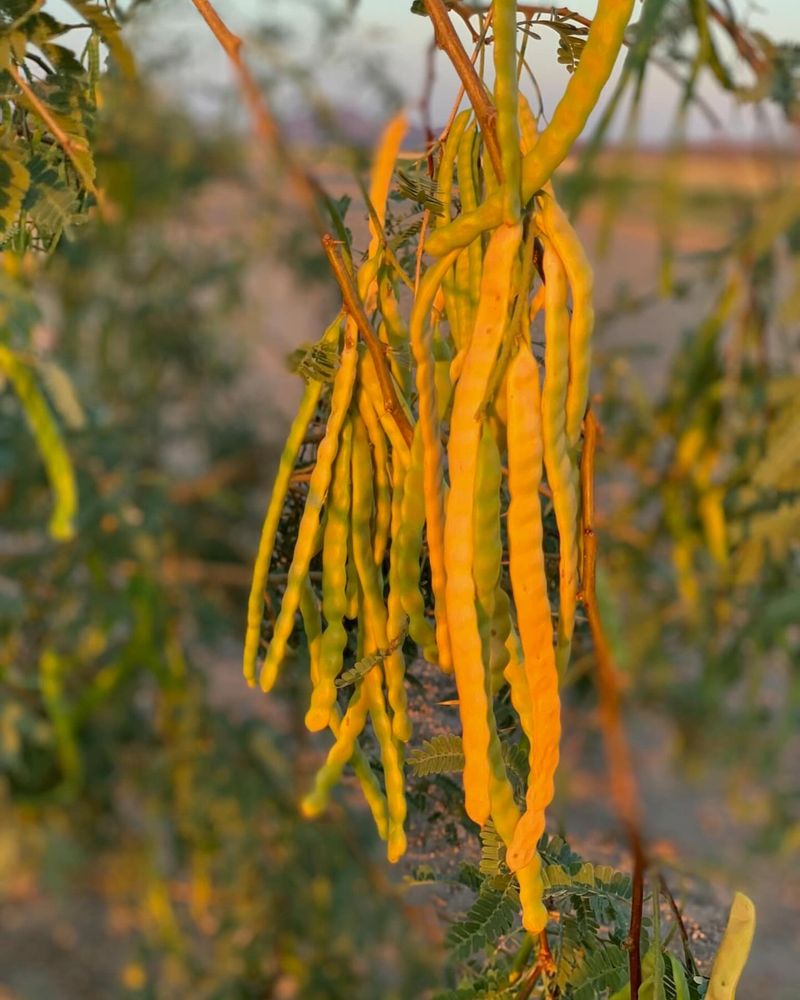
Mesquite pods are not just sweepings.
For thousands of years, Indigenous peoples of the Sonoran Desert used mesquite pods as food. Dried pods were ground into meal with a sweet, earthy flavor that could be used in cakes, porridges, drinks, and other traditional preparations.
The sweetness comes from the pod. The outer pod flesh contains natural sugars that concentrate as the pods ripen and dry.
Correct identification matters. Velvet mesquite should be clearly identified before any food use, because several mesquite species and hybrids may grow in Arizona landscapes.
Clean collection is essential. Pods from roadsides, sprayed yards, treated landscapes, or contaminated soil should not be used for food.
Moldy pods should be discarded. Any pod with visible mold, off odors, heavy insect damage, or dark questionable spots belongs in the waste pile, not the kitchen.
Dry pods store better. Properly dried pods are easier to mill and less likely to spoil.
Community milling events exist in some areas. These events help people process pods safely and learn from local desert food experts.
Mesquite meal is gluten-free. It is often used as a flavorful addition to baked goods rather than a direct one-for-one flour replacement.
Start small. Anyone new to mesquite meal should learn proper collecting, drying, sorting, and storage before handling large batches.
The pods underfoot may feel annoying.
But they also connect a modern yard to one of the desert’s oldest food traditions.