Take Immediate Action If You See This Beetle On Pennsylvania Roses Before It Spreads Further
Rose season in Pennsylvania comes with a list of things to watch for, but one of them demands faster action than almost anything else you are likely to encounter in the garden.
A specific beetle can move through a rose planting with a speed and thoroughness that catches even experienced gardeners off guard, doing visible damage within days and drawing in more of its kind before you have had a chance to fully assess what is happening.
Pennsylvania summers create exactly the conditions that allow this pest to be most active, and the window between spotting the first one and dealing with a genuinely out of control situation can be surprisingly short.
Knowing what to look for, recognizing the early signs before the population builds, and understanding what immediate steps are actually effective makes a real difference in how this plays out for your roses.
Waiting to see if the problem resolves on its own is almost never the right call with this particular beetle.
Japanese Beetle – The Threat To Pennsylvania Roses
Every summer, Pennsylvania gardeners face a familiar and frustrating enemy: the Japanese beetle, known scientifically as Popillia japonica.
Introduced to the United States accidentally in the early 1900s, this invasive insect has spread across much of the eastern half of the country. Roses are among its favorite targets, making backyard gardens especially vulnerable.
What makes this pest so alarming is just how fast it can cause damage. A single beetle is manageable, but Japanese beetles rarely travel alone.
They release pheromones that attract more beetles, turning a small problem into a full-blown infestation within days. A rose bush that looks healthy on Monday can look stripped and ragged by the weekend.
Adult beetles are most active during the warmest months of the year, typically from late June through August in Pennsylvania. That window is short, but the damage they leave behind can affect your plants for the rest of the growing season.
Weakened roses may struggle to produce new blooms or recover their full strength before fall arrives.
Early detection is your most powerful tool. Walking through your garden each morning and inspecting your rose bushes closely can help you catch an infestation before it explodes.
The sooner you act, the better your chances of protecting your plants and keeping your garden looking its best all summer long.
Staying alert during peak beetle season is not just helpful, it is essential for any Pennsylvania rose grower who wants to stay ahead of this persistent and damaging pest.
Identifying Japanese Beetles On Your Roses
Spotting a Japanese beetle is not too difficult once you know what to look for. These insects have a very distinctive appearance that sets them apart from other common garden bugs.
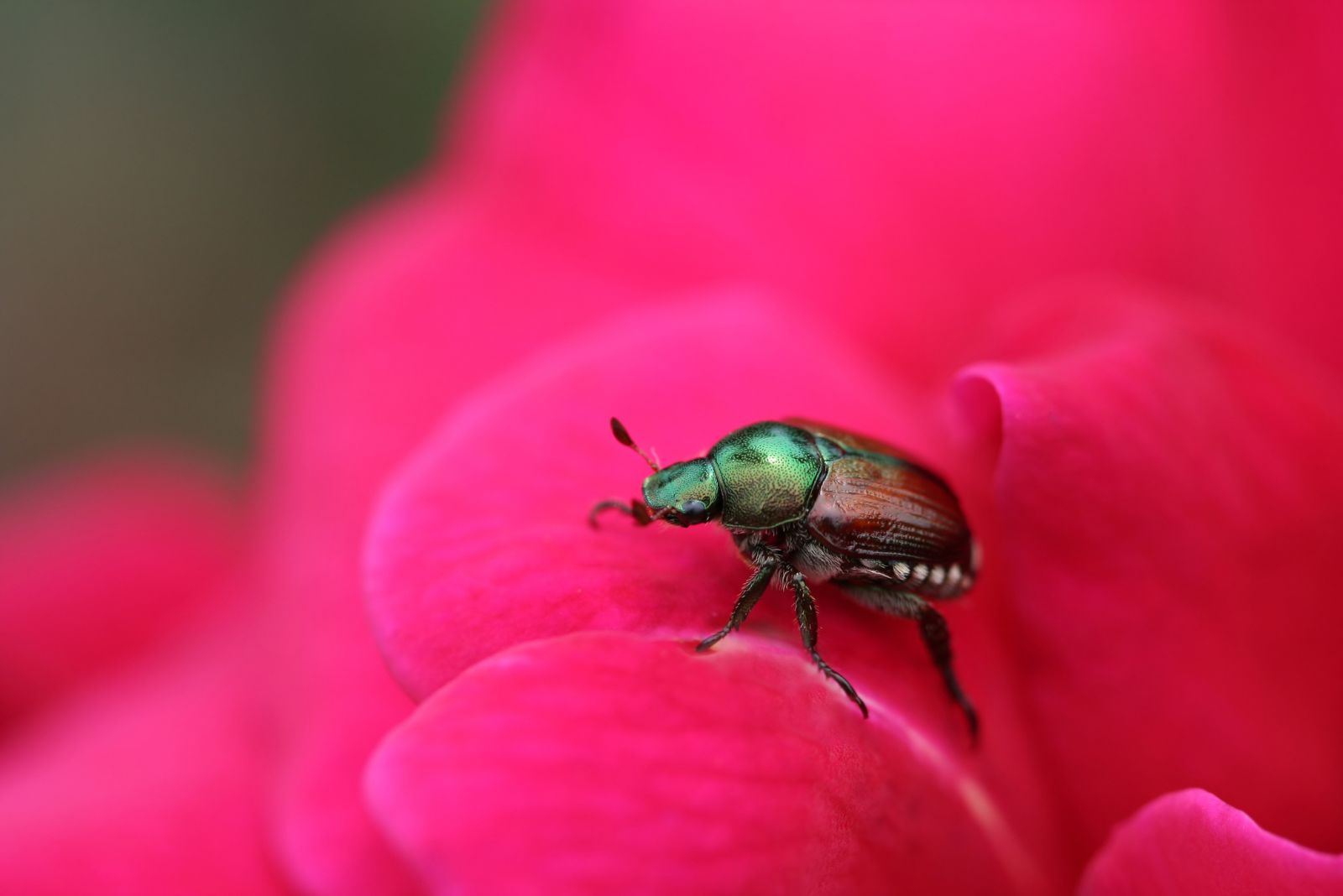
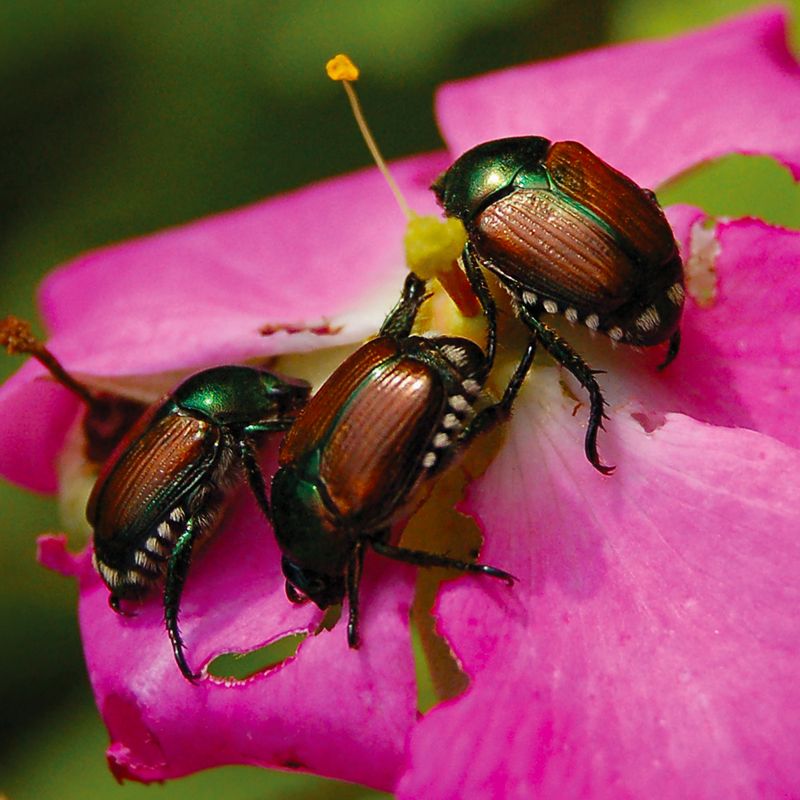
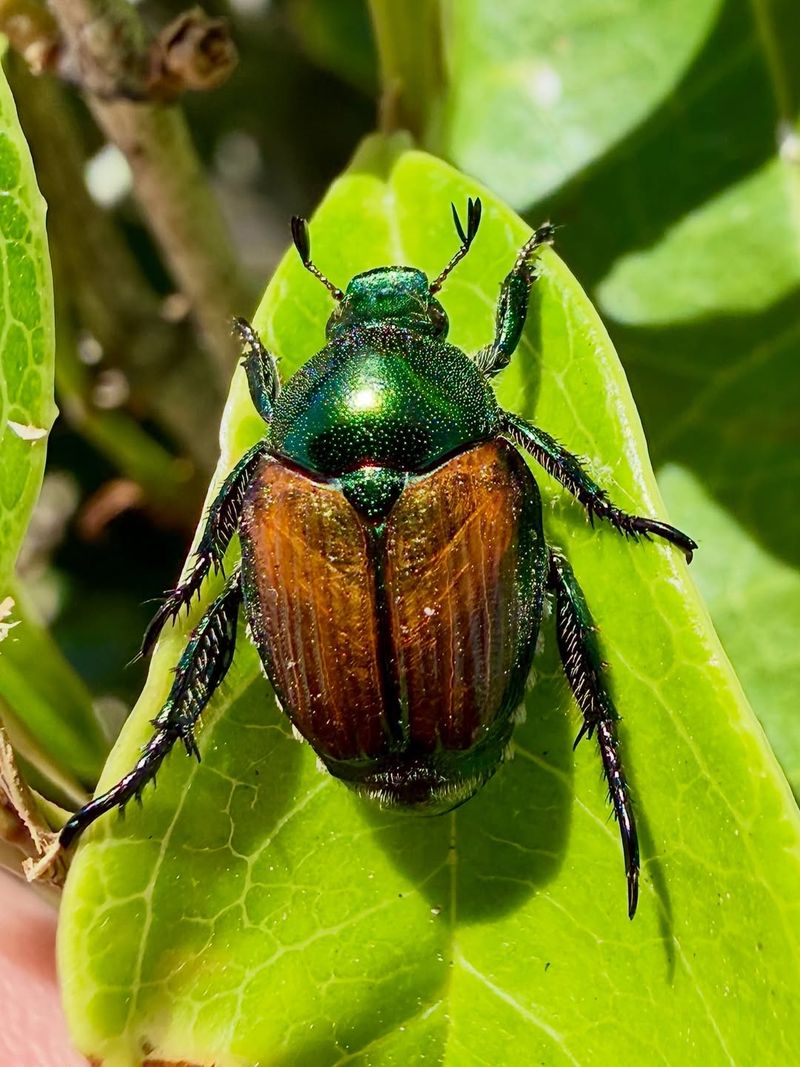
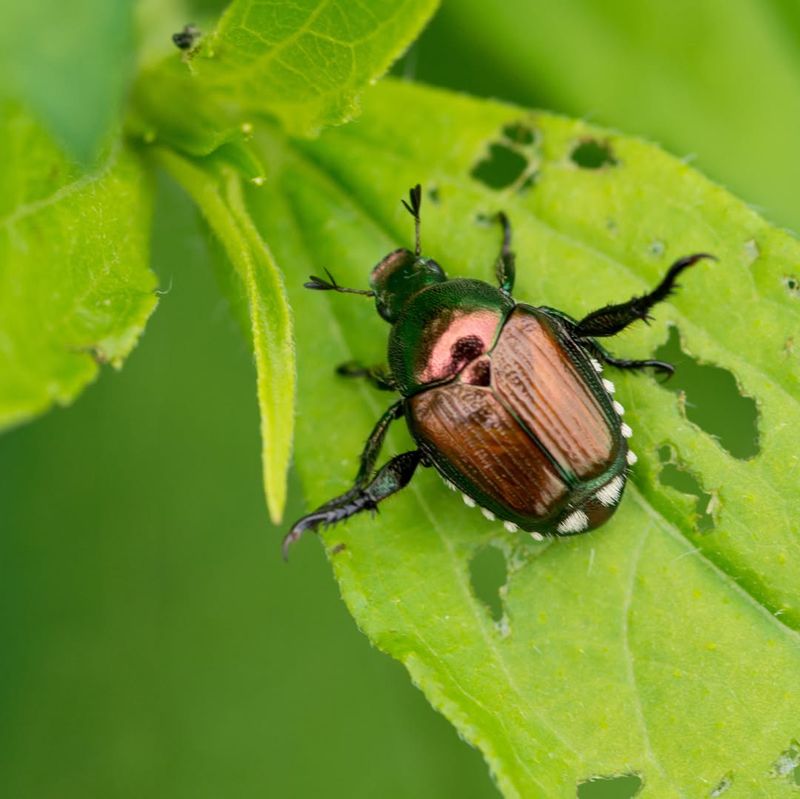
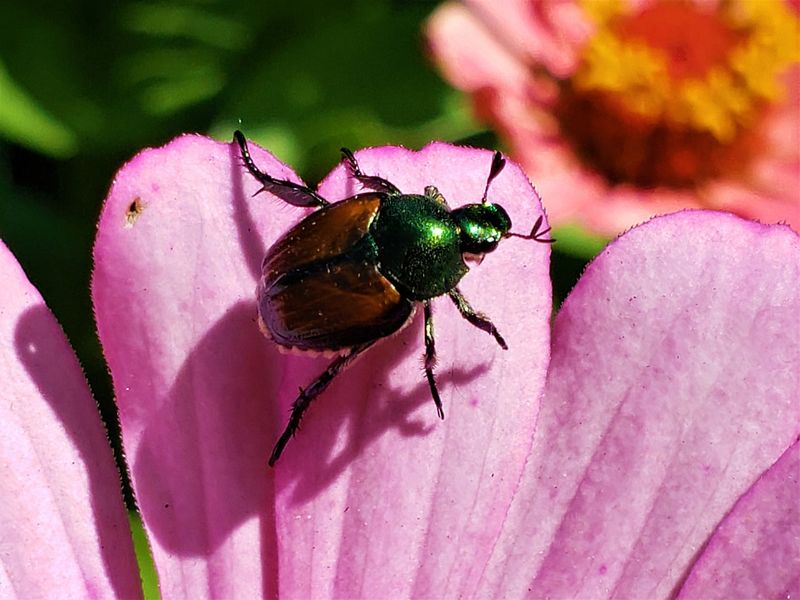
The body is a shiny, metallic green color, almost jewel-like, and the wing covers are a warm coppery-brown.
Along the sides of the abdomen, you will notice small white tufts of hair arranged in neat rows. That combination of colors and features makes identification pretty straightforward.
Your Pennsylvania Garden Changes Every Week. Your Plan Should Too.
Gardening in Pennsylvania changes quickly throughout the season. Every Friday you’ll receive a simple weekly plan showing exactly what to plant, prune, fertilize, harvest, and protect so you never miss the right timing.
Size-wise, Japanese beetles are about half an inch long, roughly the size of a large apple seed.
They are small enough to overlook if you are not paying close attention, but when several gather together on a flower or leaf, they become much easier to spot. Beetles tend to feed in groups, which is one of their most recognizable behaviors.
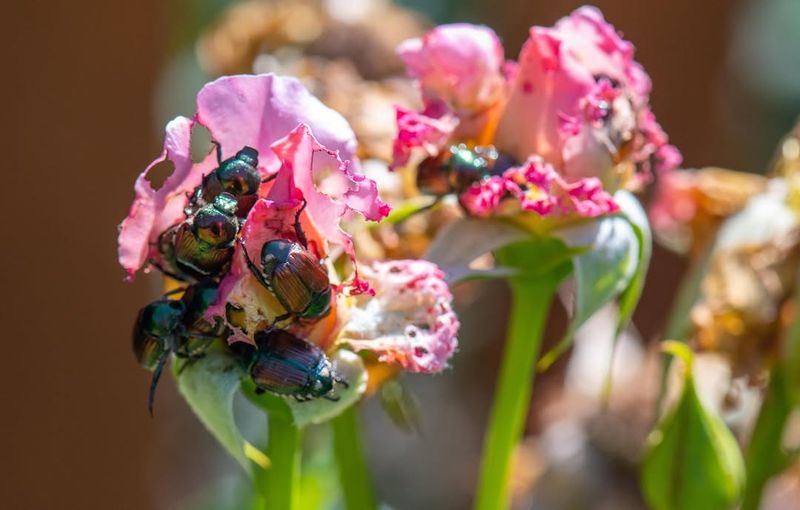
The signs of their feeding are just as telling as their appearance. Look for leaves that appear lacy or skeletonized, meaning the soft tissue between the veins has been eaten away, leaving only a fragile, see-through framework behind.
Flower petals may be chewed ragged or completely missing. Buds that never open are another red flag worth noticing.
Check the upper surface of leaves first, since beetles prefer to feed in sunny spots where they can soak up warmth. Flower clusters and open blooms are especially attractive to them.
If you see clusters of beetles munching away on your roses, there is no need to guess. That is a Japanese beetle infestation, and it is time to take action right away.
How Japanese Beetles Damage Your Rose Plants
Few garden sights are more disheartening than a rose bush that has been worked over by Japanese beetles. The damage they cause is both fast and highly visible.
Adult beetles chew through the soft tissue of leaves, eating everything between the veins and leaving behind a fragile, lace-like skeleton. From a distance, affected leaves may look brownish and dried out.
Up close, the delicate web of remaining veins tells the real story. Flowers and buds take a serious hit as well. Beetles are drawn to the scent and color of open blooms, and they will chew through petals with surprising speed.
Buds that are just starting to open often get targeted before they ever have a chance to bloom fully. A rose plant that should be bursting with color ends up looking ragged and bare instead.
Heavy infestations do more than just ruin the look of your garden. When a plant loses too many leaves, it loses its ability to absorb sunlight and produce the energy it needs to grow.
Over time, this weakens the entire plant. Stems may become less vigorous, and the plant may produce fewer blooms for the rest of the season, even after the beetles are gone.
Repeated damage across multiple summers can take a real toll on rose bushes, especially older or already stressed plants. Young rose plants are particularly vulnerable and may struggle to bounce back at all.
Understanding how serious this damage can be is a strong motivator for acting fast and treating your roses before the problem gets out of hand.
Early Detection Strategies That Actually Work
Catching a Japanese beetle problem early is far easier than trying to control a large infestation once it has taken hold. The single best habit you can build is a daily inspection routine.
Every morning, take a slow walk through your garden and look carefully at your rose bushes. Check the tops of leaves, inside open blooms, and along buds that are just starting to form.
Morning inspections work especially well because beetles tend to be slower and less active in cooler temperatures.
Pay extra attention during June, July, and the first half of August, since that is when adult beetles are most active in Pennsylvania. If you spot even one or two beetles, treat it as an early warning sign and increase how often you check.
Japanese beetles release chemicals that attract others, so a small group can grow into a much larger one surprisingly fast.
Traps are another option for monitoring beetle activity in your garden. These traps use scent lures to attract beetles and catch them before they reach your plants.
However, placement matters a lot. Setting traps too close to your rose bushes can actually draw more beetles toward them. Place traps at least 30 feet away from the plants you want to protect.
Keeping a simple garden journal can also help you track when beetles first appear each year. Over time, you will start to notice patterns in their arrival and peak activity periods.
That kind of knowledge lets you prepare ahead of time, setting up monitoring systems before the beetles even show up, giving your roses a real fighting chance each season.
Control And Management Options For Japanese Beetles
Once you have confirmed Japanese beetles are present on your roses, moving quickly gives you the best chance of limiting the damage. One of the most effective and straightforward methods is handpicking.
Go out in the early morning when beetles are sluggish and easier to catch. Hold a container of soapy water beneath the beetle and flick or shake it in.
The soap breaks the surface tension of the water, preventing the beetle from escaping. It sounds simple, but done consistently, it can make a real dent in small to medium populations.
For gardeners who prefer organic solutions, neem oil is a popular and widely available option. Neem oil is derived from the seeds of the neem tree and works by disrupting the feeding and reproductive behavior of insects.
Mix it with water and a small amount of dish soap, then spray it directly onto affected plants in the early morning or evening to avoid burning leaves in direct sunlight.
Insecticidal soaps work in a similar way and are safe for use around most beneficial insects when applied carefully.
If the infestation is large and manual or organic methods are not keeping up, chemical insecticides may be necessary. Products containing pyrethrin or carbaryl are commonly used for Japanese beetle control.
Always read the label thoroughly before applying any chemical treatment, and follow the directions exactly. Avoid spraying when pollinators like bees are active, typically during midday hours.
Combining multiple methods tends to produce the best results. No single approach works perfectly on its own, but layering your strategies gives your roses the strongest possible protection throughout the entire beetle season.
Preventing Future Japanese Beetle Infestations In Your Garden

Dealing with Japanese beetles once is frustrating enough. Dealing with them every single summer without a plan gets exhausting fast.
The good news is that there are several smart steps you can take to make your garden less welcoming to these pests in the future. Prevention does not eliminate all risk, but it can seriously reduce how bad each season gets.
Choosing the right plants is a great place to start. Some rose varieties are naturally less attractive to Japanese beetles than others.
Roses with tightly packed petals, like hybrid teas, tend to get targeted more heavily than varieties with fewer petals.
Planting companion plants that beetles tend to avoid, such as catnip, garlic, or tansy, around your roses can create a natural buffer zone that discourages feeding.
Keeping your rose bushes strong and healthy all season long also helps. Well-fertilized, properly watered plants are better equipped to handle minor feeding damage without losing too much vigor.
Stressed or undernourished plants suffer far more visible harm from the same level of beetle activity compared to healthy, well-tended ones.
Garden cleanliness plays a bigger role than most people realize. Japanese beetles spend part of their life cycle as grubs living in the soil beneath lawns and garden beds.
Removing fallen leaves, decaying organic matter, and dense debris reduces the spots where grubs can develop. Applying beneficial nematodes or milky spore to your lawn targets grubs before they ever become adult beetles.
Building these habits into your regular gardening routine creates a more resilient garden year after year, giving your roses a much stronger foundation for surviving beetle season with minimal damage.