Texas Fall Crops To Grow In Containers Instead Of Garden Beds
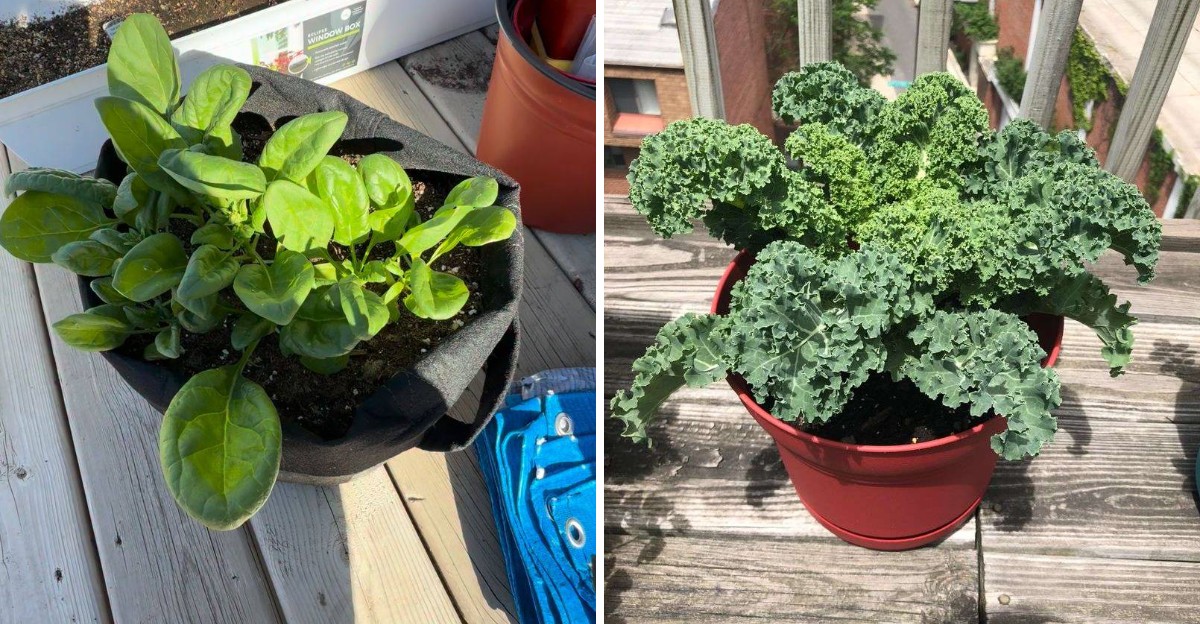
In Texas, a hard freeze can show up on the forecast with barely a day’s warning. Gardeners with plants in the ground scramble for sheets, buckets, and old blankets.
Gardeners with containers simply roll them into the garage. That’s just one reason pots are such a smart choice for fall crops.
Containers let you skip the heavy clay, rocky ground, and soil problems that plague so many Texas yards.
You control the soil mix and drainage, and you can move pots to chase the sun as the days get shorter.
Pests and weeds are easier to manage, too. And you don’t need a big backyard. A sunny patio, balcony, or driveway works just fine.
Some cool-season crops actually do better in pots than in traditional garden beds. They stay compact, grow fast, and bring fresh, homegrown flavor to your table all season long.
1. Lettuce For Easy Salad Bowls
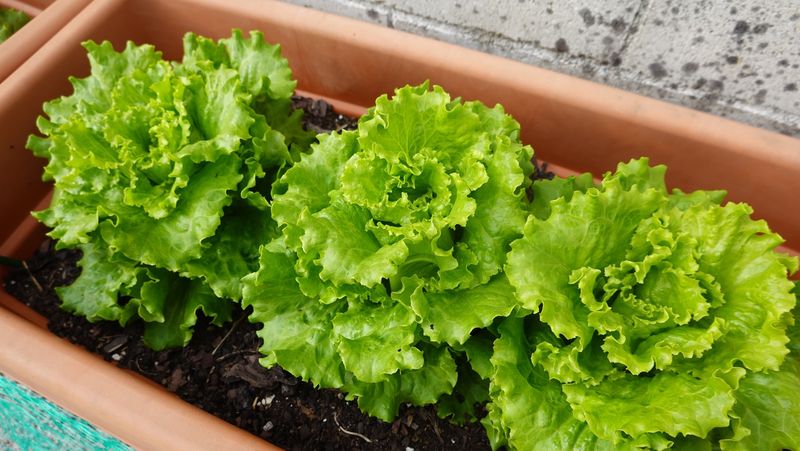
Fresh salad greens straight from your porch taste nothing like the bagged kind from the store. Leaf lettuce is crisp, tender, and full of flavor when you pick it just before dinner. It is also one of the easiest crops to start with in a pot.
Lettuce has short roots, so it does not need a deep home. A container about 6 to 8 inches deep works just fine.
Wide, shallow pots, window boxes, or even old plastic storage bins with holes drilled in the bottom can all work well.
Fill your container with a good potting mix, not soil from the yard. Sprinkle the seeds lightly on top and press them down gently. Lettuce seeds need light to sprout, so cover them with only a thin dusting of mix.
In Texas, you can usually start lettuce from late September through November. Keep the soil moist but not soggy while the seeds come up. Once the plants are a few inches tall, thin them so each one has a little elbow room.
Harvesting is where lettuce really shines. Instead of pulling the whole plant, snip a few outer leaves at a time. The center keeps growing, so one pot can feed you for weeks.
Try mixing types for fun. Red leaf, green oakleaf, and buttercrunch look beautiful together and add variety to your plate.
Cold weather can be tricky, though. Lettuce handles cool nights but can be hurt by a hard freeze.
When temperatures drop below the upper 20s, simply move the pot into a garage or onto a covered porch overnight. That simple move is a big win for container gardeners.
2. Spinach That Loves Cool Weather
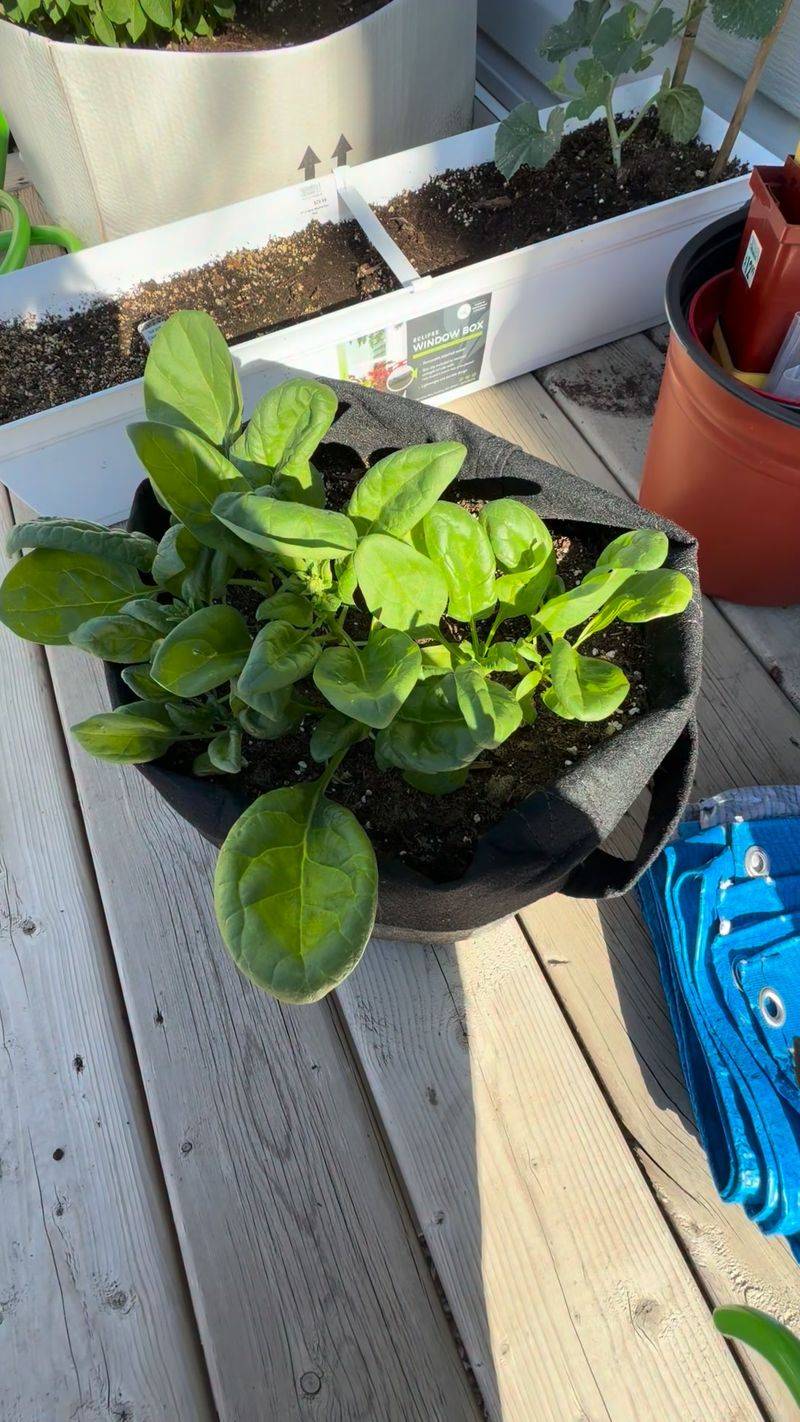
Popeye had the right idea about spinach. Those dark green leaves are packed with iron, vitamins, and flavor. Even better, spinach is a cool weather fan that does its best work during Texas fall and winter.
Hot weather makes spinach grumpy. Once temperatures climb, it tends to bolt, which means it rushes to make flowers and seeds. Planting in fall avoids that problem and gives you months of tasty leaves.
A pot or window box at least 6 to 8 inches deep gives spinach plenty of room. Plant seeds about half an inch deep and a couple of inches apart. Later, thin the seedlings to about 4 inches apart so each plant can spread out.
Your Texas Garden Changes Every Week. Your Plan Should Too.
Gardening in Texas changes quickly throughout the season. Every Friday you’ll receive a simple weekly plan showing exactly what to plant, prune, fertilize, harvest, and protect so you never miss the right timing.
Drainage matters a lot with this crop. Spinach dislikes wet feet, and soggy soil can lead to rot and disease.
In many Texas yards, heavy clay holds water for days after a rain. A container with good drainage holes and a light potting mix fixes that issue right away.
Water when the top inch of soil feels dry. Push your finger into the mix to check. If it feels damp, wait another day.
Spinach can handle light frosts without much trouble. In fact, a little chill can make the leaves taste sweeter. If a hard freeze is in the forecast, though, cover the pot with an old sheet or move it inside for the night.
For a steady supply, pick the outer leaves first. Fresh spinach is great in salads, smoothies, omelets, and pasta. Smooth leaf types like ‘Space’ are easier to clean than crinkly ones, which can trap grit.
3. Kale, The Tough Winter Workhorse
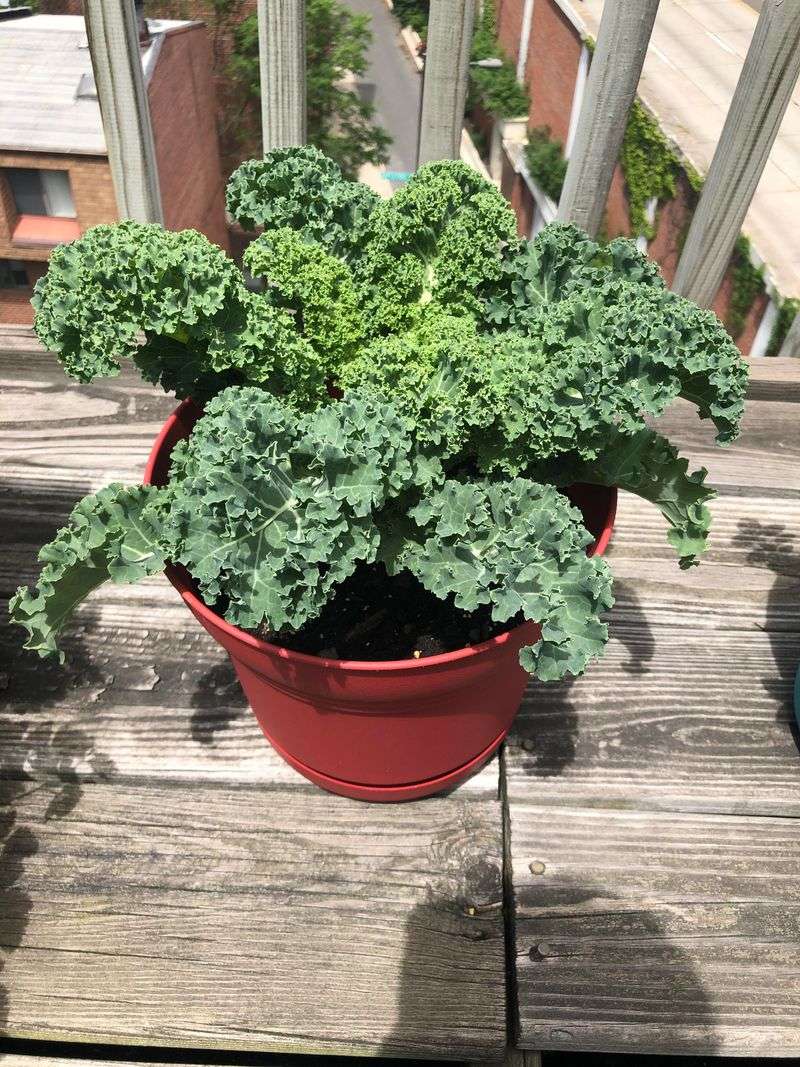
If vegetables had a toughness contest, kale would bring home a trophy. It shrugs off chilly nights, keeps producing for months, and asks for very little in return. For Texas container gardeners, it is a true winter workhorse.
Kale plants grow bigger than many people expect. Give each one a pot that holds about 5 gallons or more. That size lets the roots stretch out and keeps the plant from drying out too fast on warm fall afternoons.
Starting with transplants from a garden center is the quickest route. Set one plant in the center of your pot and water it well. If you prefer seeds, sow them in early fall and thin to the strongest seedling.
Here is a fun bit of plant science. When frost hits, kale turns some of its starches into sugars to protect itself. That is why many gardeners say the leaves taste sweeter after a cold night.
Harvest by snapping off the lower, older leaves first. Leave the top cluster alone so the plant keeps growing upward. One healthy plant can give you a handful of leaves every week all winter.
Watch out for cabbage loopers, small green caterpillars that chew holes in leaves. Pick them off by hand or use a natural spray made with Bt, which is safe for people and pets.
There are many kinds to try. Curly kale is classic, while ‘Lacinato’, also called dinosaur kale, has bumpy blue-green leaves.
Red Russian kale adds purple stems for color. Toss the leaves into soups, smoothies, or bake them into crunchy chips.
4. Swiss Chard With Rainbow Stems
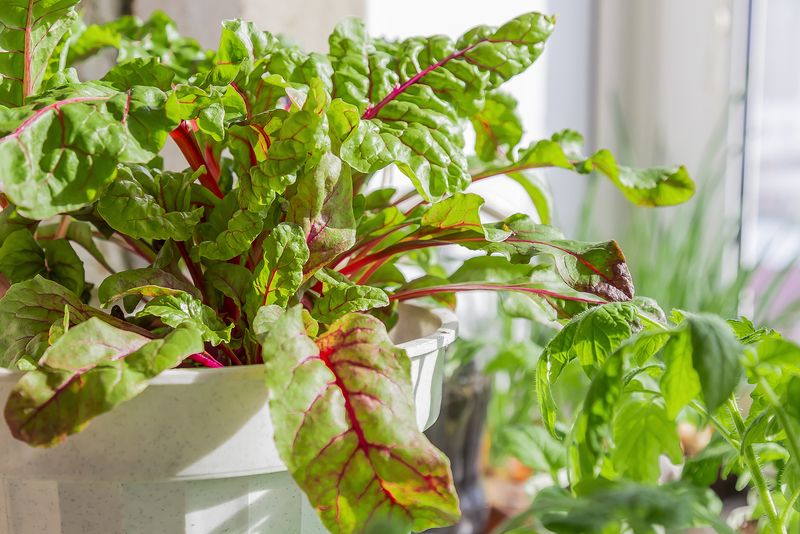
Who says vegetables cannot be pretty? Swiss chard looks like it belongs in a flower bed. Its glossy green leaves sit on bright red, yellow, orange, or pink stems that practically glow in the fall sunshine.
Many gardeners grow chard by their front door just for the looks. Then they get the bonus of fresh greens for dinner. It is a win for your eyes and your stomach.
Chard is related to beets, and you can taste a hint of that earthy flavor in the stems. The leaves are mild and soft when cooked, a lot like spinach. Saute them with garlic and olive oil for a quick side dish.
One plant per 5-gallon container is the sweet spot. Chard grows tall and leafy, sometimes reaching 18 inches or more. A sturdy pot keeps it from tipping over on windy Texas days.
Each chard seed is actually a small cluster of seeds. That means several sprouts may pop up from one spot. Snip the extras at soil level with scissors so one strong plant remains.
Chard is famously easygoing. It handles warm fall days better than lettuce and keeps going through light frosts. In much of Texas, it can provide harvests from October right into early spring.
To pick, cut the outer stalks near the base and let the center keep producing. Feed the plant with a liquid fertilizer every few weeks to keep new leaves coming.
‘Bright Lights’ is a popular variety that gives you a mix of colors in one packet, making every pot look like a rainbow.
5. Radishes For Speedy Snacking
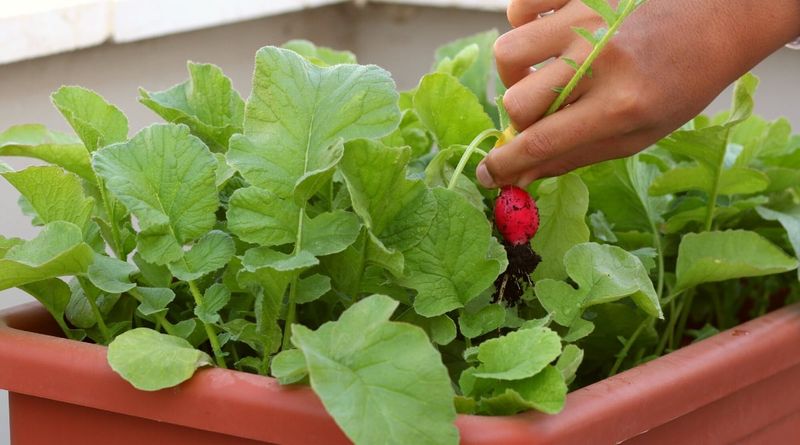
Patience not your strong suit? Radishes are the perfect crop for you. Many varieties go from seed to snack in just three to four weeks, which makes them a favorite for kids and impatient grown-ups alike.
Radishes are also tiny space savers. A pot about 6 inches deep is plenty for round types like ‘Cherry Belle’ or ‘French Breakfast’. You can even use a sturdy bucket, a deep tray, or an old dishpan with drainage holes.
Plant seeds about half an inch deep and roughly 2 inches apart. Water gently so the seeds do not wash around. Little green sprouts often appear within just a few days.
Steady moisture is the secret to good radishes. If the soil dries out too much, roots can turn woody, cracked, or extra spicy. Check your pot daily, especially on sunny fall afternoons.
Thinning matters too. Crowded radishes make leaves but skip the round roots you want. If seedlings are touching, pull a few out and toss the baby greens into a salad.
Here is a handy trick. Sow a few seeds every couple of weeks instead of all at once. That way you get a small, fresh batch over and over instead of a huge pile you cannot eat fast enough.
Pull radishes as soon as they reach full size. Leaving them too long makes them pithy. Slice them thin for tacos, add them to salads, or roast them in the oven, which makes them taste mild and almost sweet. Fun fact: ancient Egyptians grew radishes over 4,000 years ago.
6. Cilantro Right By The Kitchen
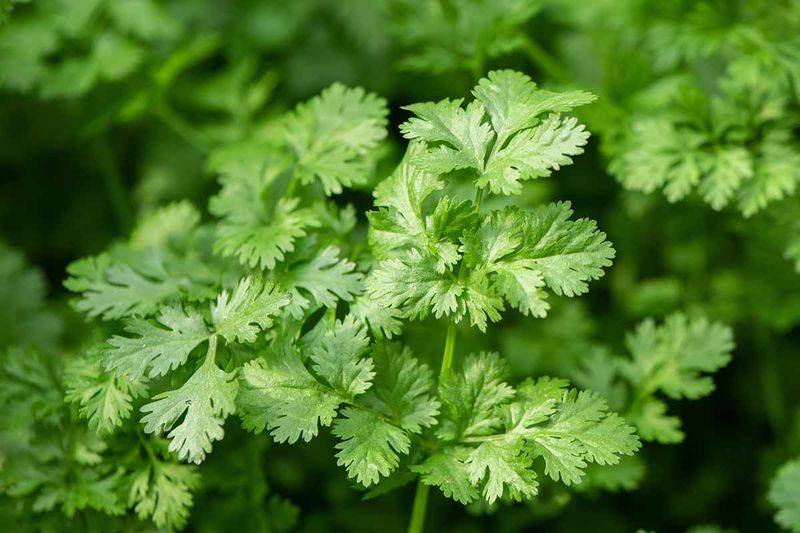
Ask any Texan who loves salsa, and they will tell you cilantro is a must. Fresh leaves bring a bright, zesty pop to tacos, guacamole, and rice. Sadly, growing it in summer often ends in disappointment.
The problem is heat. Cilantro bolts fast when temperatures climb, sending up flower stalks and turning its leaves bitter. In Texas, that can happen almost overnight in late spring.
Fall and winter change everything. Cool weather keeps cilantro leafy and flavorful for much longer. Sow seeds from October through early winter for the best results.
Choose a container about 8 inches deep. Cilantro grows a taproot, a long main root, so it does not like being moved once it gets going. Plant seeds directly in the pot rather than transplanting.
Cover the seeds with about a quarter inch of mix and keep them moist. Sprouting can take one to two weeks, so do not give up early. Some gardeners lightly crack the round seed husks first to speed things up.
Placement is half the fun with this herb. Set your pot on a patio or near the kitchen door. When dinner needs a handful of leaves, you just step outside and snip.
Harvest the outer stems once plants reach about 6 inches tall. Taking about a third at a time keeps them growing. Sowing a new pot every few weeks keeps the supply steady.
Did you know the seeds of cilantro are called coriander? If your plant does flower in spring, let the seeds dry and save them for cooking or next fall.
7. Carrots Without The Clay Struggle
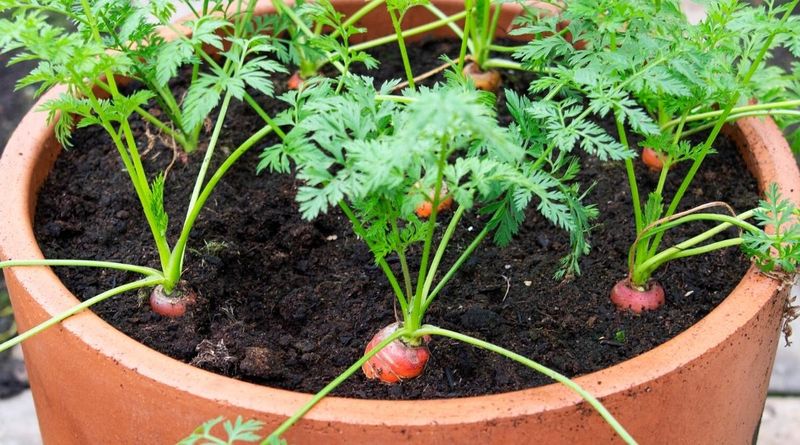
Anyone who has tried growing carrots in Texas clay knows the frustration. The roots come out twisted, stubby, or split into funny shapes. Hard soil simply pushes back against them as they grow.
Containers solve that problem beautifully. Fill a pot at least 12 inches deep with loose, fluffy potting mix. Carrots can slide down easily and grow straight and smooth.
Picking the right variety makes a big difference too. Short or round carrots are made for pots. ‘Paris Market’ grows into cute little orange balls about the size of a golf ball.
‘Little Finger’ stays slim and small, perfect for snacking. ‘Danvers Half Long’ is a sturdy, classic choice that handles deeper containers well.
Carrot seeds are tiny and slow. Sprinkle them on the surface, cover lightly, and keep the top of the soil damp. Sprouting can take up to three weeks, so a piece of burlap or damp paper over the pot helps hold in moisture.
Once seedlings appear, thin them to about 2 inches apart. It feels hard to pull healthy plants, but crowded carrots stay tiny. You can snip them with scissors to avoid disturbing their neighbors.
Skip high nitrogen fertilizers. Too much makes leafy tops and hairy roots. A balanced or low nitrogen feed works better.
Most carrots are ready in 60 to 75 days. Brush back the soil to peek at the top of a root. When it looks wide enough, give it a gentle tug. Cool fall weather makes Texas carrots extra sweet and crunchy.