Texas Native Ground Covers That Replace Pine Straw And Look Better Through Every Season
Pine straw has had a good run in Texas gardens, truly. But let’s be honest: watching it blow across the yard after a windy afternoon, or realizing you need to reapply it again already, gets old pretty fast.
Texas landscapes are tough on mulch in general. The heat is relentless, the soil ranges from rocky to heavy clay depending on where you are, shade under trees can be deep and stubborn, and rainfall shows up whenever it feels like it.
What if the mulch actually grew back on its own? That’s basically what living ground covers do, and Texas has some genuinely impressive native options that add real texture, seasonal color, and a more natural look to planted beds.
The catch is that matching the right plant to the right spot matters a lot more than most people expect.
1. Texas Frogfruit Adds Low Spreading Coverage
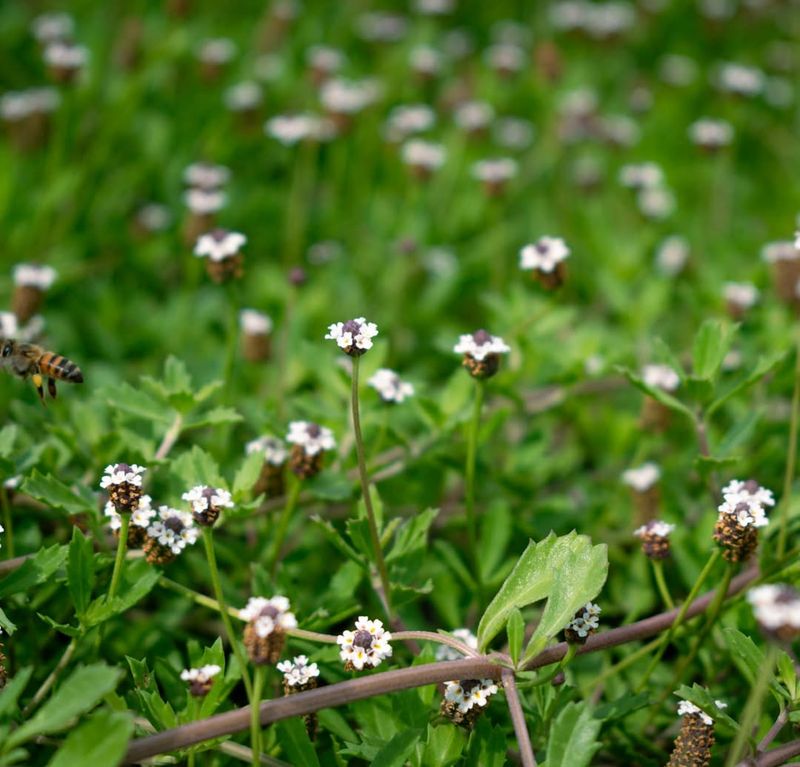
Bare soil under a tree or along a sunny walkway edge can be one of the trickiest spots to fill in a Texas yard. Frogfruit, known botanically as Phyla nodiflora, is a mat-forming native that spreads steadily across the ground and fills in open areas with surprisingly dense coverage.
It stays low, usually just a few inches tall, and produces small white and lavender flowers through the warm months that butterflies and other pollinators visit regularly.
In Central and South Texas, frogfruit tends to stay semi-green through mild winters, though it may thin out or go dormant during hard freezes.
It handles full sun well and tolerates some foot traffic, making it useful along edges and open beds where pine straw would scatter or wash away.
Frogfruit also manages moderate drought once established, though it looks its best with occasional watering during dry stretches.
Before planting, consider that frogfruit spreads through runners and can move into adjacent areas over time. It works well when contained by hardscape borders or used in larger naturalistic plantings.
For Texas gardeners looking for a low-maintenance living layer that brings pollinators in while cutting back on mulch needs, frogfruit is worth a close look.
2. Horseherb Fills Shady Beds Naturally
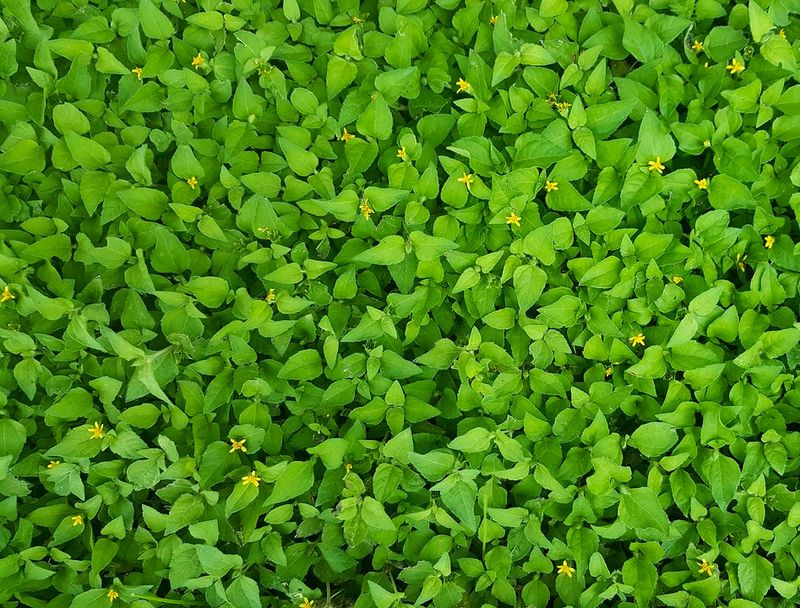
Shaded beds under large oaks and pecans are notoriously difficult to plant because the roots compete fiercely for moisture and nutrients.
Horseherb, or Calyptocarpus vialis, manages to grow in those tough spots with a quiet persistence that few other plants can match.
It spreads naturally through seed and runners, forming a soft green carpet that fills in beneath trees without much encouragement from the gardener.
Small yellow flowers appear throughout the growing season, adding a subtle charm that pine straw simply cannot offer.
Horseherb is sometimes considered a lawn weed, but in shaded native plant beds or naturalistic gardens, it earns its place as a reliable understory ground cover.
It handles both dry shade and moderate moisture, which makes it adaptable across many Texas landscapes from the Hill Country to East Texas.
During winter, horseherb may thin considerably or disappear in colder parts of Texas, so gardeners in North Texas should expect a slower return in spring. In warmer areas, it often stays present through mild winters.
Your Texas Garden Changes Every Week. Your Plan Should Too.
Gardening in Texas changes quickly throughout the season. Every Friday you’ll receive a simple weekly plan showing exactly what to plant, prune, fertilize, harvest, and protect so you never miss the right timing.
Because it self-seeds freely, it can spread beyond the original planting area, so it works best where naturalistic spreading is welcome rather than a concern.
3. Pigeonberry Brightens Shade Under Trees
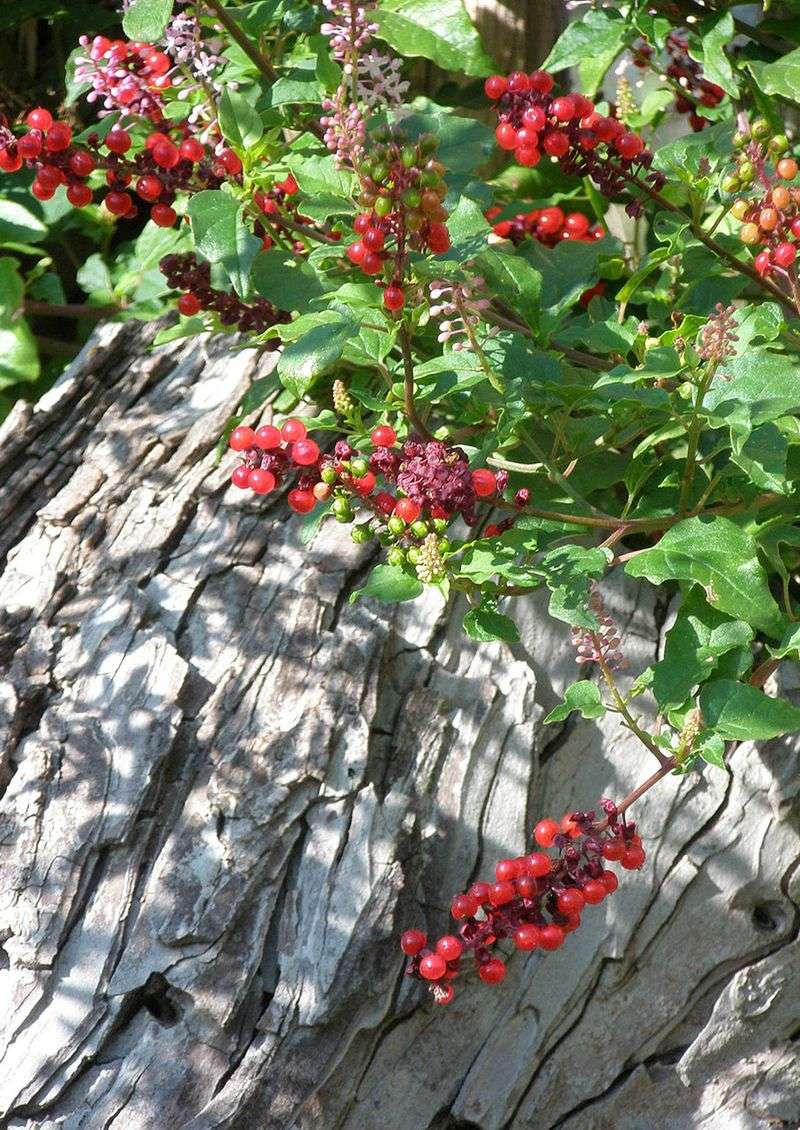
Few native plants bring as much visual interest to a shady corner as Pigeonberry, known botanically as Rivina humilis.
The small clusters of bright red and purple berries appear alongside tiny pink and white flowers almost continuously through the warm season, creating a layered, jewel-like effect that catches the eye even in low light.
Birds are drawn to the berries, which adds a welcome layer of wildlife activity to planted beds beneath large Texas trees.
Pigeonberry grows naturally in woodland edges, creek bottoms, and shaded areas across much of Texas. It reaches about one to three feet tall and spreads gradually, filling in beneath taller shrubs and trees in a way that feels organic rather than forced.
It is not a flat mat-forming ground cover but functions as a low shrubby layer that reduces bare soil exposure similarly to how pine straw would.
This plant prefers well-drained soil and dappled to full shade, and it can struggle in open sunny beds during peak Texas summer heat. In mild winters, it may stay semi-evergreen, but cold snaps can knock it back to the ground.
Gardeners in Central and South Texas tend to have the most consistent success with Pigeonberry as a living understory layer.
4. Inland Sea Oats Softens Shady Garden Beds
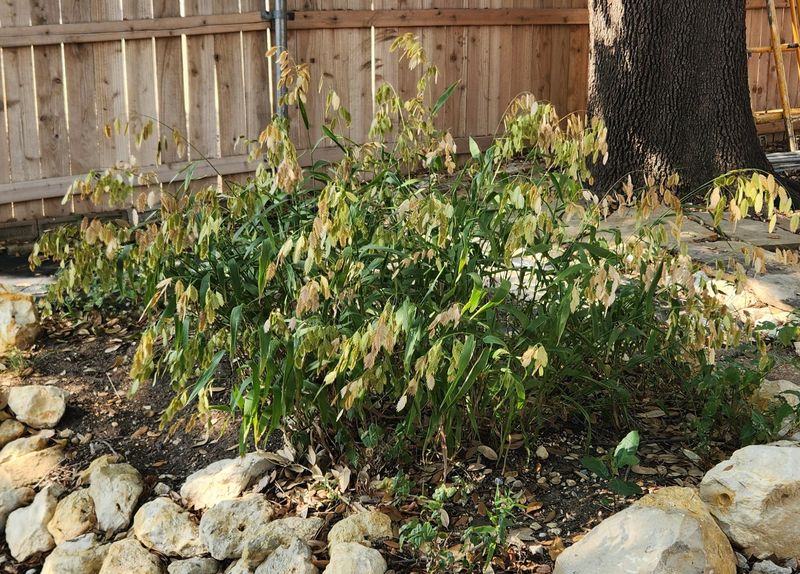
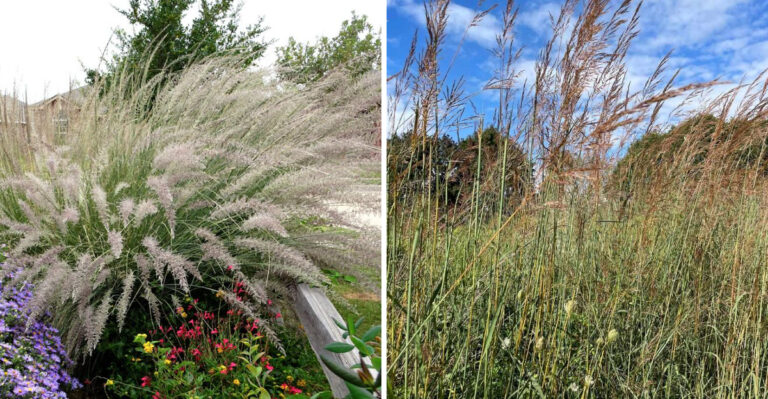
Walk through almost any creek-side woodland in Texas and you will likely find Inland Sea Oats, or Chasmanthium latifolium, growing in graceful clumps along the shaded ground.
The broad, bamboo-like leaves and dangling seed clusters give it a relaxed, airy look that softens the hard edges of garden beds in a way no mulch can replicate.
It grows well in moderate to deep shade and tolerates the dry, root-filled soil common beneath large trees.
Through summer, the foliage stays a fresh medium green. As fall arrives, the seed heads shift from green to copper and then to a warm tan that persists into winter, offering seasonal interest that changes naturally without any effort from the gardener.
The dried stems and seed heads hold up well even through cold months, providing texture and structure when most other plants have gone dormant.
Inland Sea Oats does self-seed readily, so gardeners who want to keep it contained should remove seed heads before they drop. It spreads slowly by rhizome as well, gradually filling in shaded areas over several seasons.
For beds under large oaks or pecans where little else thrives, this native grass offers a living alternative to pine straw with genuine four-season presence and reliable growth.
5. Lyreleaf Sage Works As A Living Ground Cover
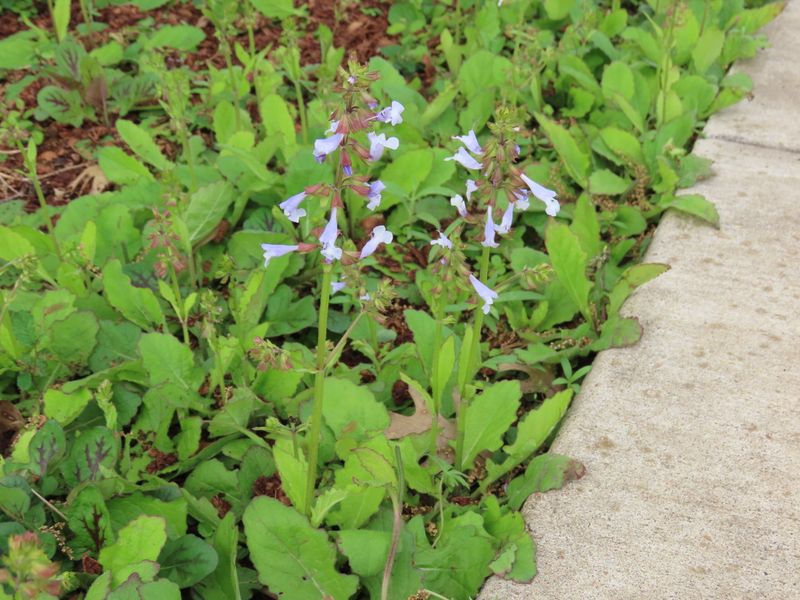
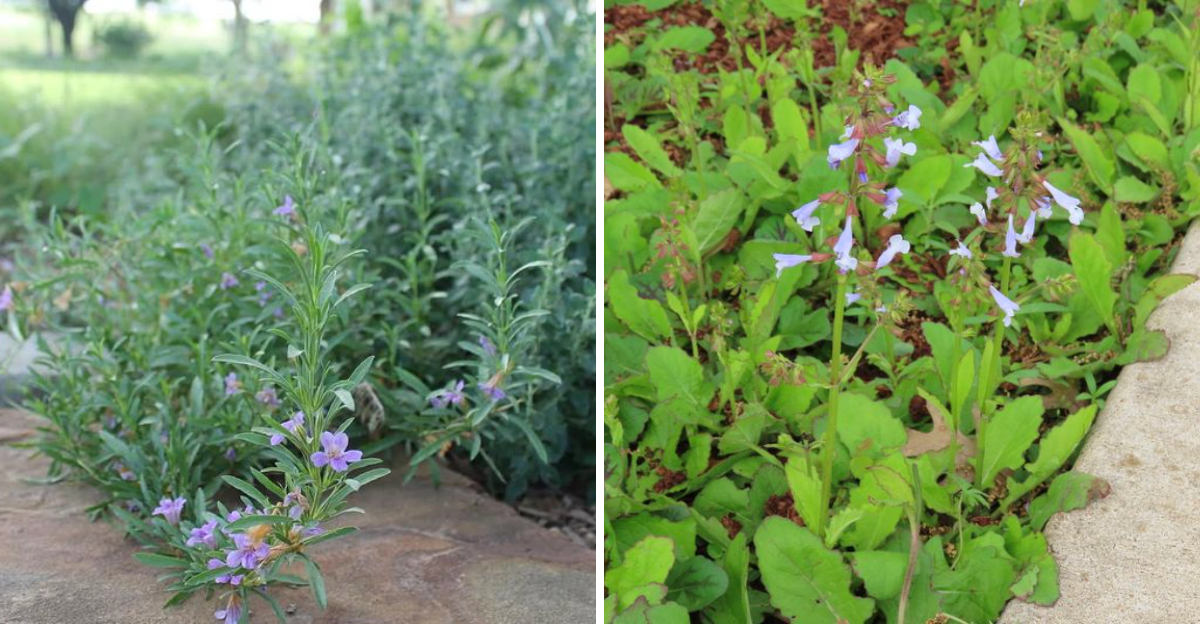
Spring-blooming natives that stay low to the ground are not always easy to find for Texas beds, but Lyreleaf Sage, or Salvia lyrata, fits that role in a satisfying way.
The deeply lobed, dark green leaves form a rosette that hugs the ground through winter and into spring, followed by upright spikes of small blue-purple flowers that attract bees and butterflies when little else is blooming.
It brings early-season color to beds that would otherwise sit bare and mulched until warmer plants wake up.
Lyreleaf Sage grows naturally in open woodlands, meadow edges, and lawn areas across Central and East Texas. It tolerates a range of light conditions from partial shade to light sun and manages moderately dry soil once established.
The rosette habit keeps it relatively low-profile outside of bloom time, making it easy to combine with taller native plants without it overwhelming the bed.
One thing to consider is that Lyreleaf Sage is technically a biennial or short-lived perennial, meaning individual plants may not persist for many years. It self-seeds reliably, though, so a colony tends to maintain itself once established.
For gardeners wanting a low winter rosette that transitions into spring blooms before summer heat arrives, this native sage provides a seasonal rhythm that pine straw simply cannot offer.
6. Silver Ponyfoot Brings Silvery Seasonal Interest
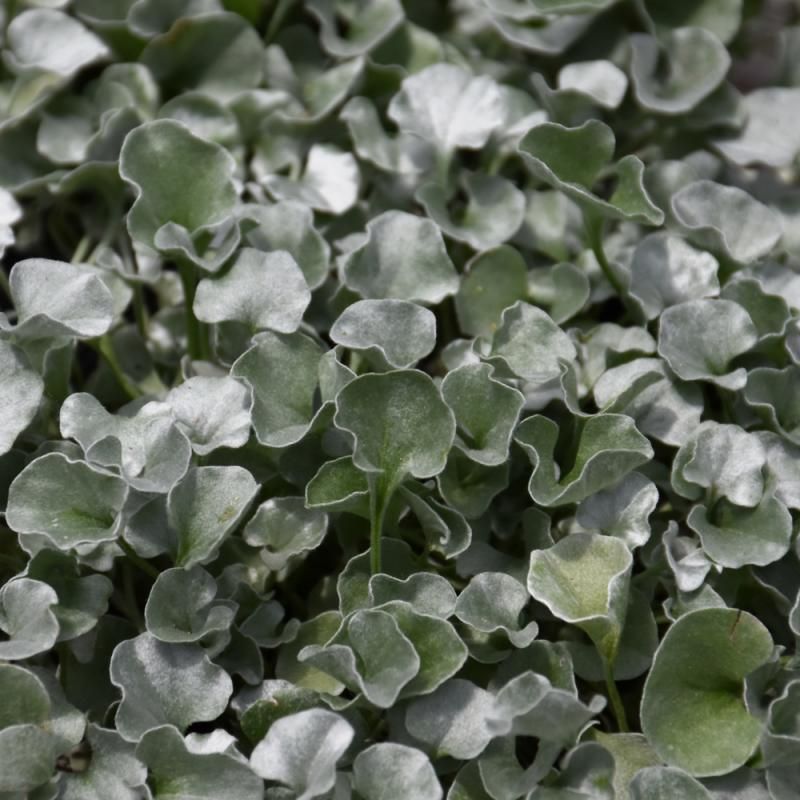
There is something genuinely eye-catching about a ground cover that reflects light rather than absorbs it, and Silver Ponyfoot, or Dichondra argentea, does exactly that.
The small, rounded leaves are covered in fine silver hairs that give the plant a shimmering quality in sunlight, which makes it stand out in dry, rocky, or exposed beds where most ground covers struggle.
It trails along the ground or spills gracefully over the edges of raised beds and garden borders.
Silver Ponyfoot grows natively across the Edwards Plateau and into West Texas, where it thrives in well-drained, often rocky soil with full sun exposure. It handles significant drought once established and does not appreciate consistently moist or poorly drained soil.
In the right spot, it forms a low, spreading mat that covers bare ground while adding a cool silvery texture that contrasts beautifully with darker foliage plants nearby.
During colder months, Silver Ponyfoot may thin out or go dormant depending on how severe the winter is. It tends to return reliably in spring across most of Central and West Texas.
Gardeners in heavier clay soils or shadier spots may find it less vigorous, so site selection matters considerably. For sunny, dry, rocky beds where pine straw blows away, this native trailer is a creative and visually distinct option.
7. Woolly Stemodia Covers Warm Well-Drained Areas
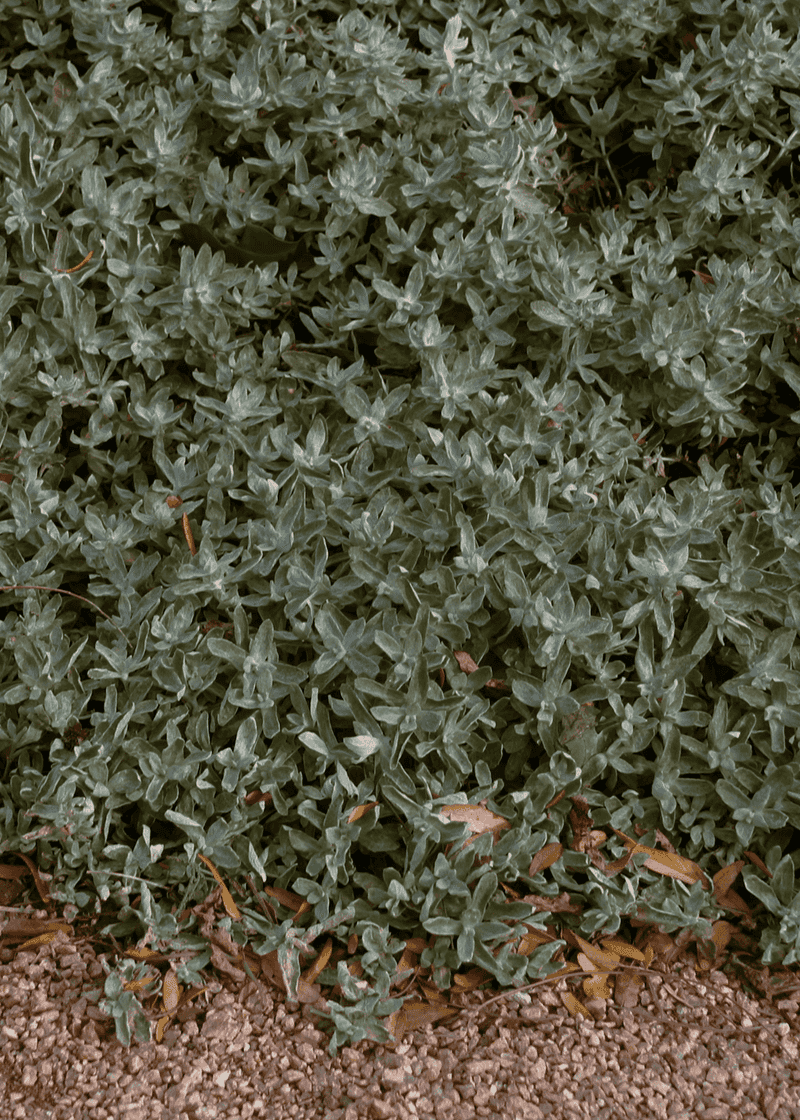
Rocky slopes and raised beds with fast-draining soil can be some of the hardest spots to keep looking full and finished through a Texas summer. Woolly Stemodia, or Stemodia lanata, is a low-growing, spreading native that handles those conditions with ease.
The soft, woolly gray-green leaves give it a tactile, almost fuzzy appearance that adds textural contrast to beds filled with smoother-leaved plants, and small purple flowers appear through the warm season.
This plant thrives in full sun and well-drained soil, making it well-suited to the rocky, alkaline conditions common across the Hill Country and West Texas.
It does not perform well in clay soils with poor drainage or in shaded spots, so it is important to match it to a site where water moves through quickly.
Once established, it handles dry stretches without much supplemental watering.
Woolly Stemodia stays relatively low, spreading outward rather than upward, which makes it useful as a front-of-bed plant or as a filler between larger native shrubs.
It may look sparse or retreat during hard winters but tends to return as temperatures warm back up.
For gardeners who have given up on pine straw blowing off a sunny, sloped bed, this native spreader offers a more permanent and visually interesting solution worth trying.
8. Snakeherb Fits Sunny Low-Water Spots
Not every Texas garden bed gets shade, and open, sun-baked spots with dry soil can feel impossible to plant without resorting to mulch year after year.
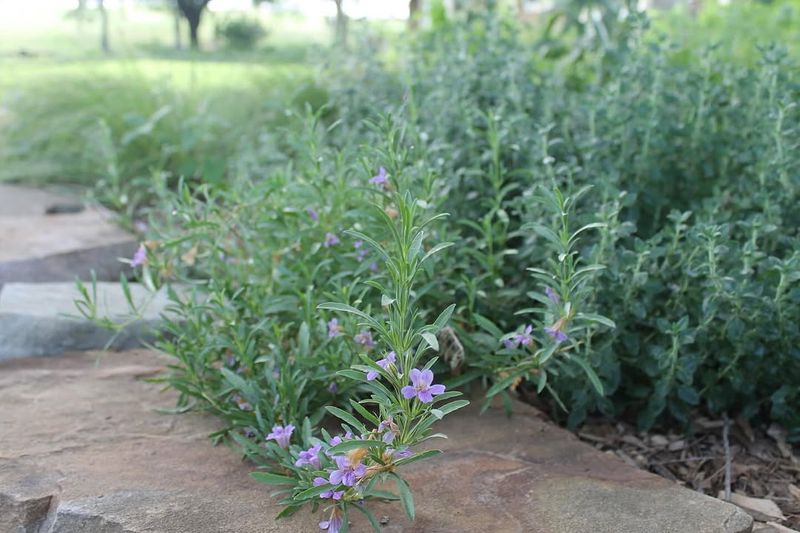
Snakeherb, or Dyschoriste linearis, is a low-growing native perennial that genuinely suits those challenging sunny conditions.
It forms a spreading mat of narrow, dark green leaves and produces small lavender-purple flowers through spring and into summer that attract native bees and small butterflies.
Snakeherb grows naturally in open grasslands, roadsides, and dry prairies across Central and South Texas, which tells you a lot about its tolerance for heat and low rainfall.
It handles full sun and well-drained soils without complaint and does not need regular fertilizing or heavy watering once it settles in.
The spreading habit helps it gradually cover bare ground between other native plants in a mixed bed.
One honest consideration is that Snakeherb may not form a completely solid mat the way some commercial ground covers do.
It tends to weave through a bed in a naturalistic way, which looks intentional in a native planting but may feel sparse if you are expecting dense coverage right away.
Patience is helpful, as it fills in more fully after the first full growing season. For low-water sunny beds, it offers a practical and blooming alternative to pine straw.
9. Gregg’s Dalea Handles Dry Rocky Beds
Rocky, dry beds in Central and West Texas can feel like one of the toughest design challenges around, especially when pine straw slides off slopes and bakes away in the summer sun.
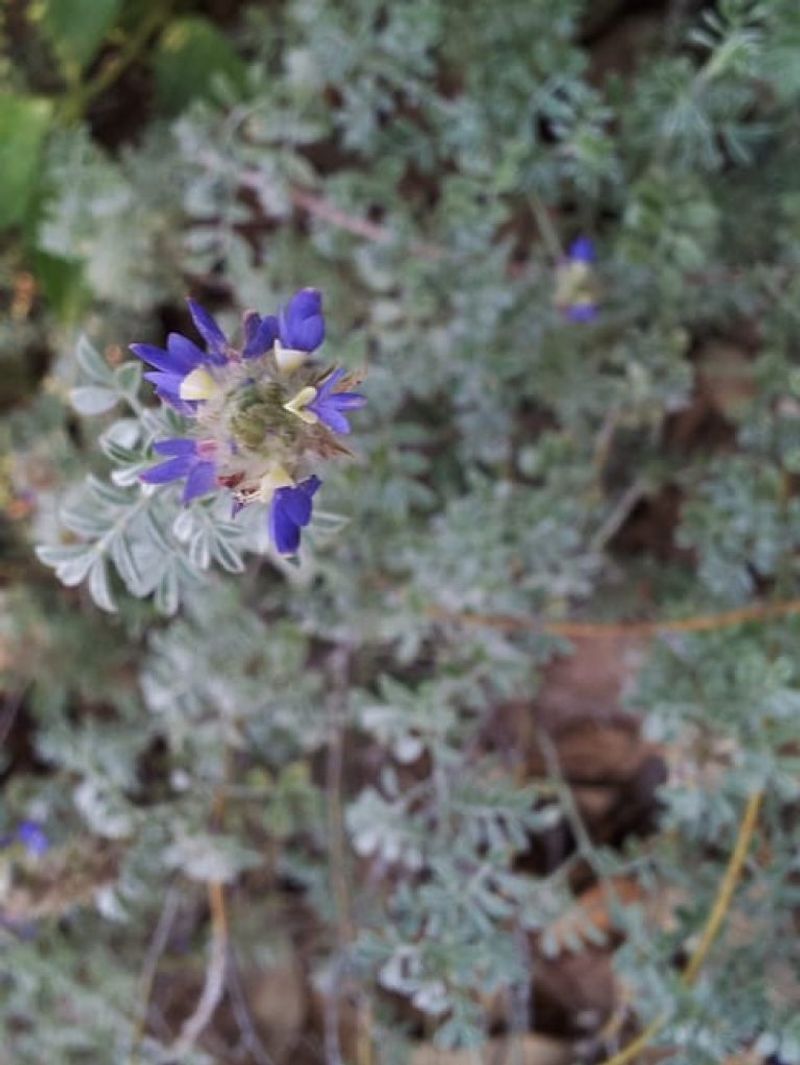
Gregg’s Dalea, or Dalea greggii, is a low-spreading native shrub that functions more like a ground cover than a traditional shrub, hugging the ground and spreading outward to fill dry, rocky, sun-exposed areas with attractive silver-green foliage.
Clusters of small purple flowers appear in spring and sometimes again in fall, drawing in native bees.
This plant is native to the Chihuahuan Desert and the rocky slopes of the Trans-Pecos and southern Hill Country regions of Texas, so it is genuinely built for tough, dry conditions.
It thrives in full sun and well-drained, even gravelly or rocky soil, and it handles extended dry periods once established.
In those specific conditions, it can spread to several feet wide, creating a soft, low-profile layer over bare ground.
Gregg’s Dalea is not the right choice for shady beds, clay soils, or areas with regular irrigation, where it may struggle with root issues. It is also more reliably suited to South and West Texas than to North or East Texas.
For gardeners in dry, rocky regions looking for a permanent, low-maintenance ground layer, it offers a genuinely tough and attractive option.
10. Cedar Sage Adds Color To Central Texas Shade
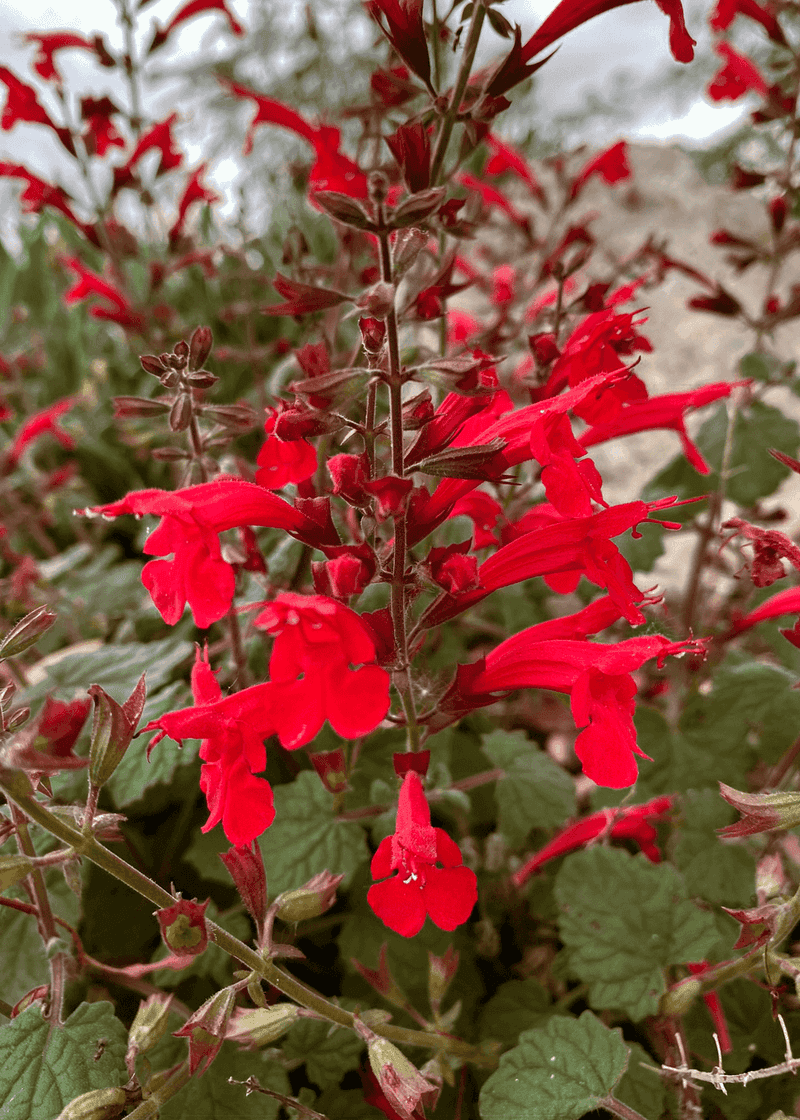
Hummingbirds have a way of showing up where Cedar Sage, or Salvia roemeriana, is in bloom, which makes this native plant one of the more rewarding choices for shaded beds in Central Texas.
The bright red tubular flowers rise on upright stems above a low rosette of soft, rounded leaves, creating a burst of color in spots where shade usually limits flowering options.
It blooms in spring and often again in fall when temperatures cool down.
Cedar Sage grows naturally beneath Ashe junipers and live oaks across the Edwards Plateau, which explains why it performs so reliably in dry, rocky, shaded conditions that challenge many other plants.
It handles the low-light environment under dense tree canopies and manages dry soil once established, making it a practical choice for beds where irrigation is limited and pine straw tends to be the default solution.
The plant stays relatively low between bloom cycles, with the foliage forming a soft green layer that covers bare ground beneath trees. It may go partially dormant during extreme summer heat or hard winter freezes but tends to return dependably in Central Texas.
Because it self-seeds modestly, a small planting can gradually expand over time. For gardeners in the Hill Country or surrounding areas, Cedar Sage brings genuine seasonal color to spots that are otherwise difficult to brighten.