10 Texas Native Perennials That Fill A Bare Bed In A Single Year
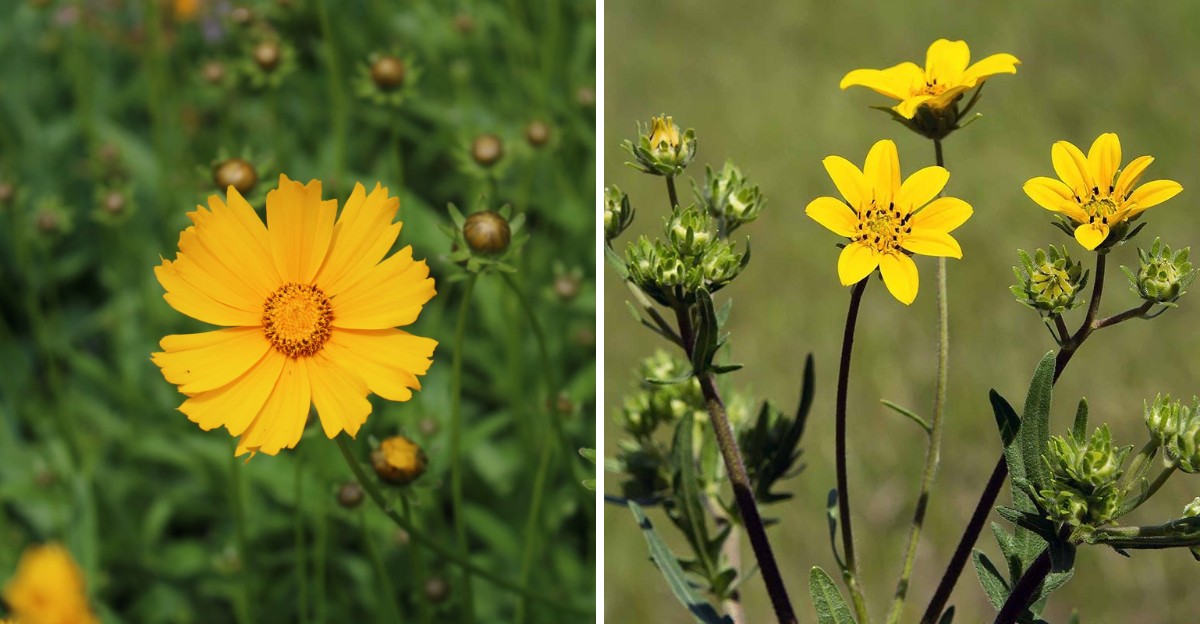
Some of the toughest flowers in my yard started life as weeds pulled from a busy sidewalk crack. Those same scrappy natives can stretch across a bare bed faster than most nursery shrubs ever manage.
Several native perennials in Texas quietly root right where their long creeping stems touch the ground. A few spread by underground runners or drop enough seed to double a planting by the very next spring.
I have to admit that empty mulch drives me a little crazy every single July afternoon. You probably know that look too, all brown chips and baking sun with a weed or two sneaking in.
Native plants shrug off the brutal heat and sticky clay that Texas summers happily dish out every year. Here are the ten fast growers that deserve that sad and empty spot in your yard before next season arrives.
1. Horseherb
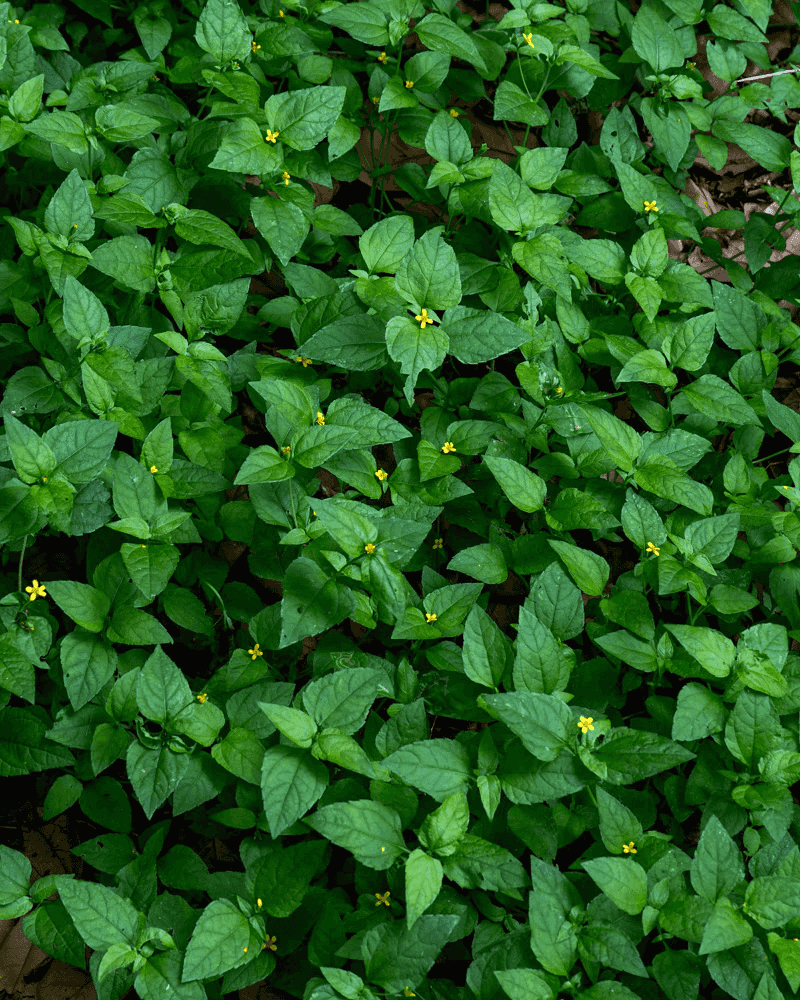
Plenty of folks yank this little groundcover out of their lawns, and I think they are missing a real treasure. Tiny yellow flowers barely bigger than a shirt button sparkle across its glossy green leaves for months.
Horseherb, known to botanists as Calyptocarpus vialis, sends out creeping stems that root wherever they touch bare soil. One small patch can knit together into a soft green carpet across a shady bed within one season.
What I love most is how happily it grows under trees where grass sulks and thins out. It handles full sun too, though it looks lusher and greener with a little afternoon shade.
You can mow it or walk across it, and it bounces right back after a few days. That makes it handy along stepping stones or in spots where kids and dogs run around constantly.
Small butterflies such as skippers and sulphurs visit the blooms, so your shady corner suddenly gets busy. I enjoy watching them flit low over the leaves on warm mornings while my coffee cools off.
A hard freeze can turn the foliage brown, but the roots usually push fresh growth when spring warms up. In milder winters along the coast, it often stays green right through the cooler months.
Start with a few plugs spaced about a foot apart and keep them watered for the first month. Once roots settle in, rain is mostly enough, and the spreading takes care of itself all summer.
2. Frogfruit
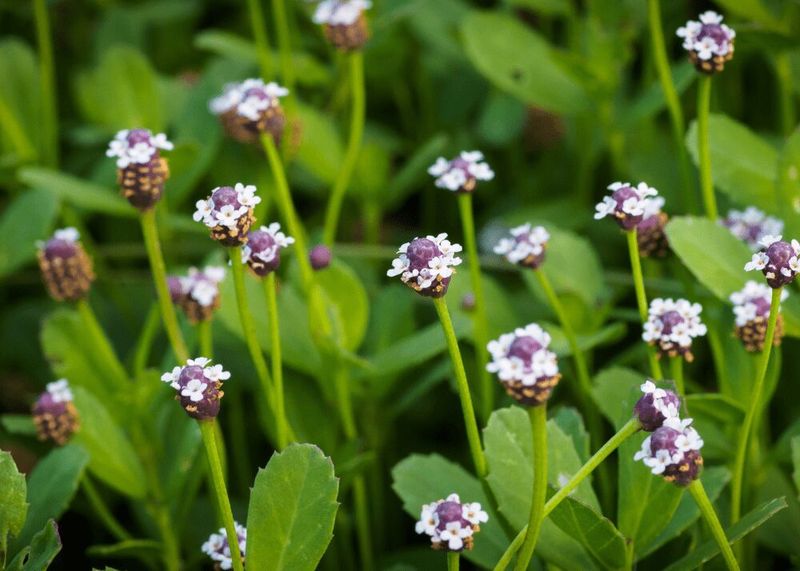
Those tiny flower heads look like miniature lollipops ringed in white and pale lavender petals. I still grin whenever a little butterfly lands on one and the whole bloom barely bends under it.
Frogfruit, or Phyla nodiflora, is a ground-hugging perennial that stays only a few inches tall. Its trailing stems root at the joints, so a single plant can spread several feet across a sunny bed.
You get a living mulch that shades the soil and crowds out many weeds trying to sneak in. I like tucking it between taller natives so the ground underneath them looks finished instead of patchy.
Butterfly fans should know it serves as a host plant for the Phaon crescent and the white peacock. Caterpillars nibble the leaves a little, but the mat recovers quickly and keeps on blooming through summer.
It tolerates light foot traffic, which makes it a clever pick between pavers or along a garden path. Full sun gives you the most flowers, though partial shade still keeps it green and spreading nicely.
Frogfruit handles clay, sand, and even soggy spots after heavy storms better than many groundcovers I have tried. During long dry spells, a deep soak every week or two keeps it looking fresh and lively.
Plant small pots in spring once frost has passed, roughly eighteen inches apart for quick coverage. By late summer, the gaps usually close up, and you will wonder why you waited so long.
3. Turk’s Cap
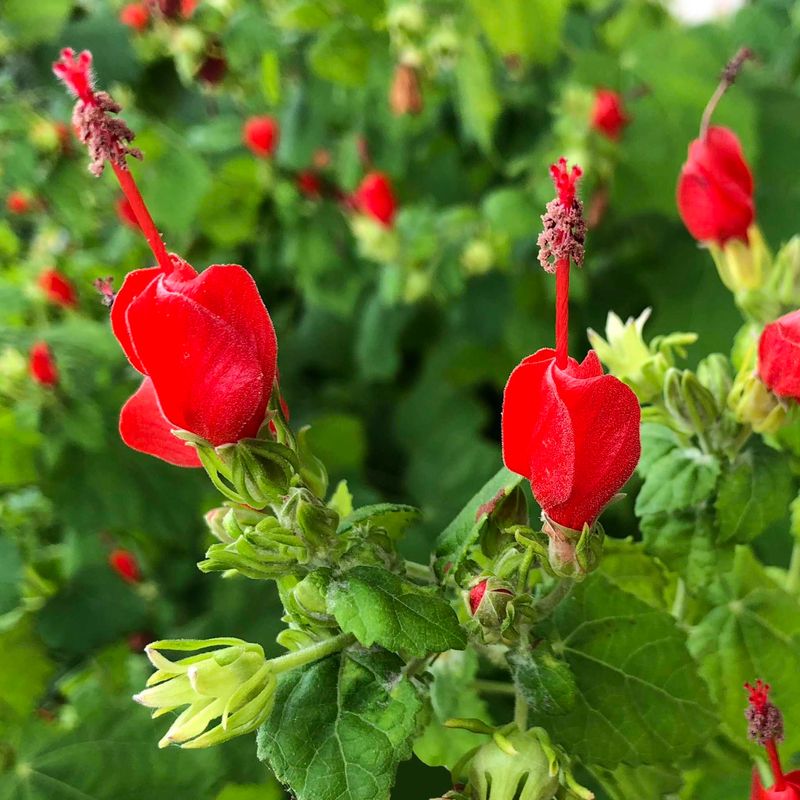
Its scarlet blossoms twist into little swirls that look like they forgot to finish opening. Hummingbirds do not care one bit, and they zip straight to those red spirals all summer long.
Turk’s Cap, Malvaviscus arboreus var. drummondii, grows into a leafy mound three to five feet tall. In one warm season, a single gallon plant can fill a surprisingly large shady corner with lush foliage.
Shade is where this plant really shines, and that is rare for something with such bright flowers. I planted mine under a pecan tree, and it filled that gloomy spot faster than I expected.
It also spreads slowly from the base, so a small clump becomes a thicker stand over time. If it wanders farther than you like, simply dig out extra shoots and share them with friends.
Small red fruits follow the flowers, and birds happily pick them off as summer turns to fall. People sometimes nibble them too, and they taste a bit like a mild, mealy apple.
Winter frost often browns the stems, but new shoots usually rise from the roots in spring. Cut the old growth down near the ground in late winter to keep the plant tidy and full.
Turk’s Cap tolerates clay, limestone, and sandy soil once its roots get established after the first season. Water weekly while it settles in, then mostly let nature handle things unless drought drags on.
4. Autumn Sage
Brush your hand across the leaves and you will catch a sharp, herbal scent that lingers on your fingers. I sometimes do it on purpose just walking past, because it smells like a fresh summer garden.
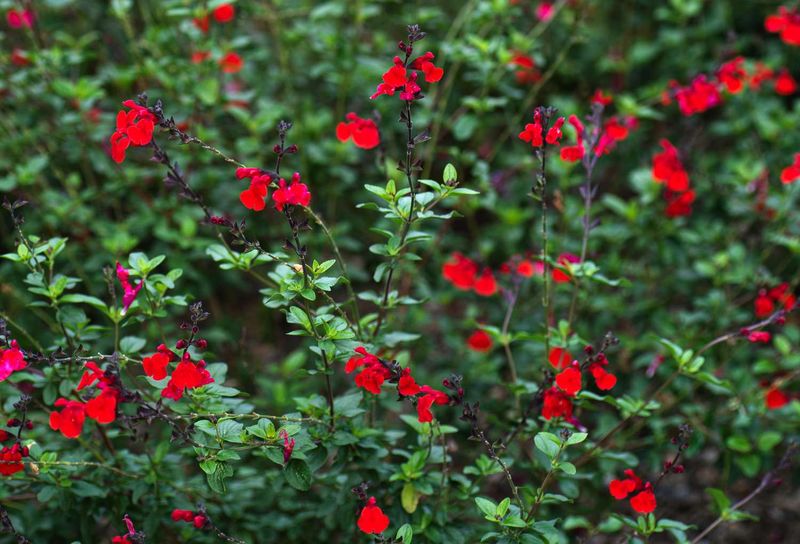
Autumn Sage, or Salvia greggii, grows into a rounded shrubby mound about two to three feet tall. Despite the name, it blooms from spring until frost, with the biggest flushes during cooler weather.
Flowers come in red, pink, coral, white, and purple, so you can match nearly any color scheme. My favorite is the classic cherry red, which seems to pull hummingbirds in from down the street.
A few plants spaced three feet apart will grow together and fill a sunny bed within one year. That speed makes it perfect for new homeowners staring at fresh dirt after a construction project.
Good drainage matters more than rich soil, so rocky or sandy spots suit it nicely. Heavy clay can work if you plant slightly high on a mound and skip the thick wet mulch.
Deer usually leave it alone thanks to those aromatic leaves, which is a huge relief in many neighborhoods. Bees and butterflies join the hummingbirds, so the bed stays lively from morning into early evening.
Give it a light trim in late winter to remove woody tips and encourage bushy new growth. A second quick shearing in midsummer often sparks a fresh round of blooms when temperatures ease up.
5. Lanceleaf Coreopsis
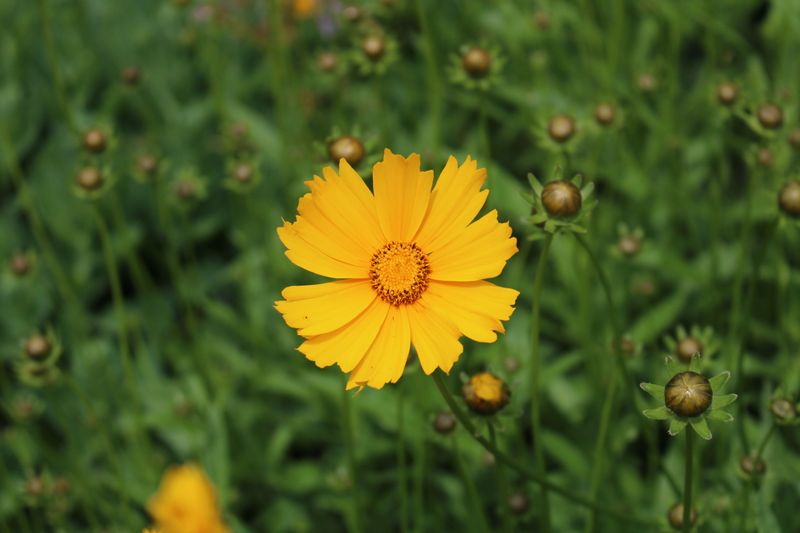
Golden yellow petals with neatly notched tips bob on slender stems at the slightest breeze. On a sunny spring morning, a patch of these looks like someone scattered sunshine across the ground.
Lanceleaf Coreopsis, Coreopsis lanceolata, earns its name from narrow leaves shaped like little spear tips. Plants form low clumps, then send up flower stems roughly one to two feet tall.
Poor soil does not slow it down, and I honestly think it blooms better without fussy fertilizing. Sandy, rocky, or lean ground suits it fine, as long as water drains away after storms.
Self-seeding is its secret weapon for filling a bed quickly and cheaply. Let a few flower heads ripen and drop seed, and you will spot new seedlings popping up nearby.
Snipping off faded blooms keeps fresh flowers coming longer into early summer. I like to snip most of them but leave a handful standing so the plants can reseed themselves.
Bees and butterflies stop by constantly, and goldfinches sometimes pick at the dry seed heads later. Deer tend to skip it, which helps if your garden backs up to open land or woods.
Sow seed in fall for blooms the following spring, or set out transplants in early spring for faster color. Space them about a foot apart, water during the first few weeks, and enjoy the show.
6. Black-Eyed Susan
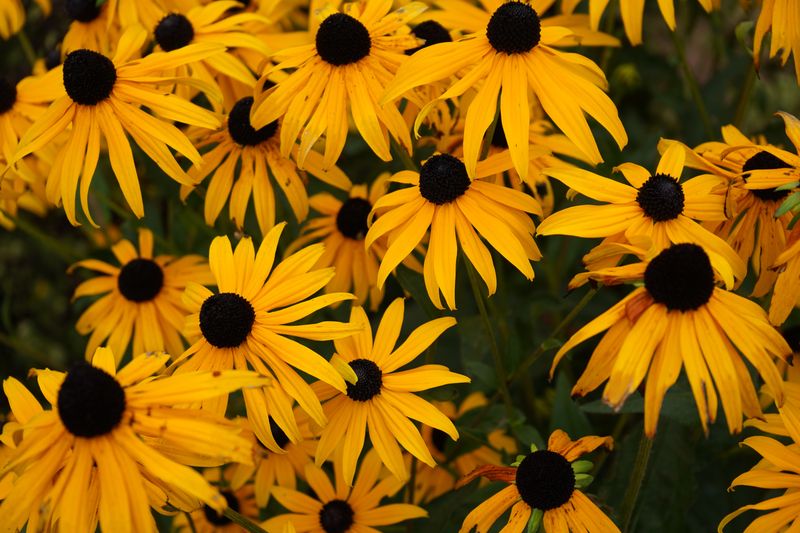
Few flowers feel as friendly as a bright yellow daisy with a chocolate brown button in the middle. I have yet to meet a kid who does not smile at a big bunch of these.
Black-Eyed Susan, Rudbeckia hirta, behaves as an annual or a short-lived perennial depending on conditions. Either way, it reseeds generously, so one planting tends to keep coming back for years.
Transplants usually bloom during their very first season, which makes them perfect for impatient gardeners like me. A flat of small plants can turn a bare strip into a golden ribbon within a few months.
Full sun keeps the stems sturdy and the flowers plentiful through the hottest stretch of summer. Average soil works fine, and once roots settle, plants handle dry spells better than many garden favorites.
Bees and butterflies drift from bloom to bloom, and the bordered patch butterfly is a frequent visitor. Later in the season, goldfinches and other small birds peck at the seed-filled cones.
Leave some flower heads standing into fall if you want more plants next year. Seedlings are easy to recognize by their fuzzy leaves, and extras transplant easily to fill any thin spots.
Mix them with lanceleaf coreopsis or autumn sage for a bed that blooms in overlapping waves. I like the way the dark centers add depth among lighter yellows and reds in a sunny border.
7. Wild Bergamot
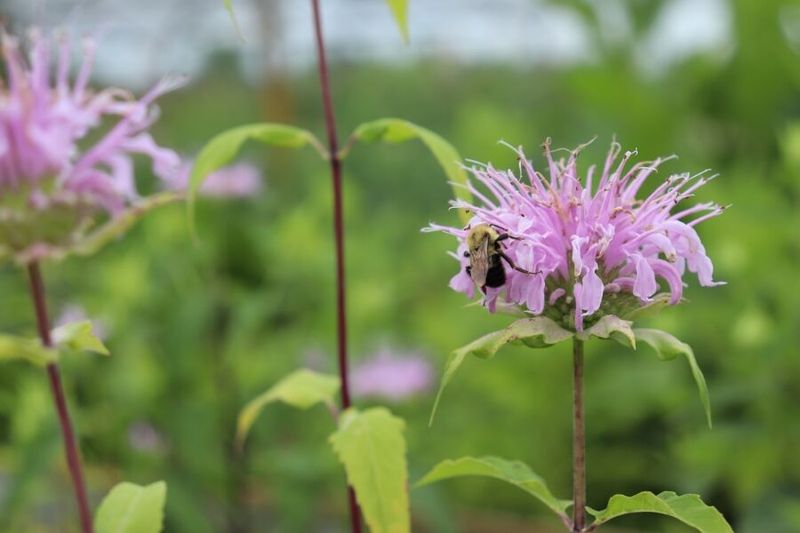
Crush a single leaf and a spicy, oregano-like fragrance fills the air around you. Those shaggy lavender pom-pom flowers look like they belong in a cartoon, and pollinators adore them.
Wild Bergamot, Monarda fistulosa, is a mint family member with square stems and that famously aromatic foliage. Clumps usually grow two to four feet tall, topped with fluffy flower heads in early summer.
Underground rhizomes help it spread outward, so a few plants quickly become a generous patch. I started with three small pots, and by the next summer they had linked arms across the bed.
Bees practically queue up at the blooms, while butterflies and hummingbirds take their turns too. Watching that busy traffic from a porch chair has become one of my favorite summer habits.
Plant it in full sun or light shade where air moves freely around the stems. Good airflow helps reduce powdery mildew, a dusty white coating that sometimes shows up in humid weather.
Deer and rabbits usually avoid the strong-smelling leaves, which feels like a small miracle in many yards. Once established, it tolerates dry spells, though a deep drink during long droughts keeps leaves looking better.
If clumps spread beyond their welcome, divide them in early spring with a sharp spade. Pass those extra divisions to neighbors, and soon the whole street can enjoy those purple puffs.
8. Engelmann’s Daisy
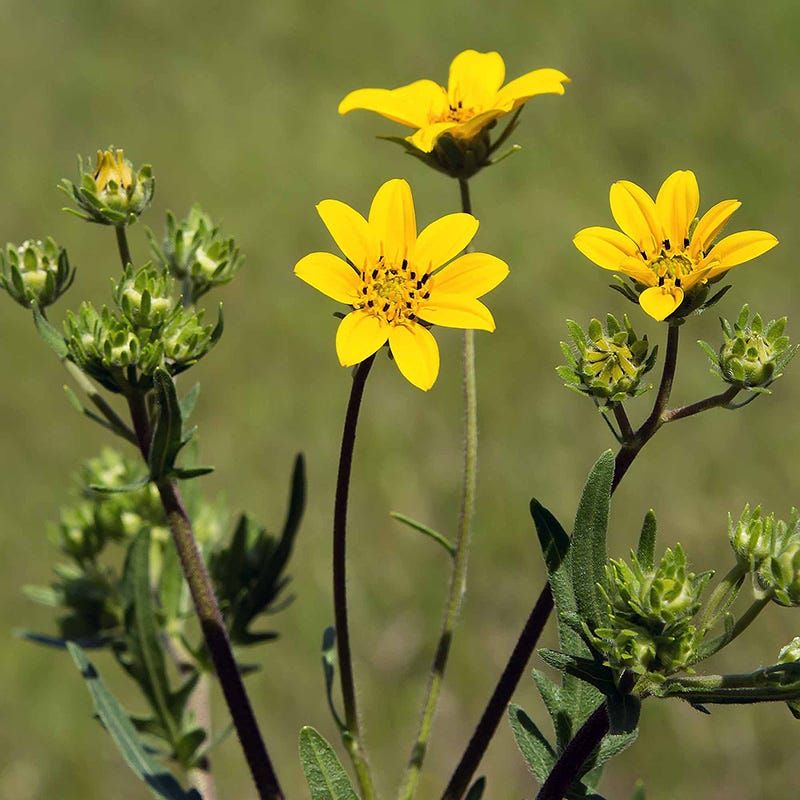
While most gardens look sleepy in winter, this daisy quietly builds a flat rosette of deeply lobed, hairy leaves. By spring, that humble rosette shoots up stems covered in cheerful yellow flowers.
Engelmann’s Daisy, Engelmannia peristenia, typically grows one to three feet tall with a bushy, branching habit. Each bloom usually carries about eight petals, and the flowers often close up a bit at night.
A long taproot digs deep into the ground, which explains its impressive toughness during hot summers. I have watched mine stay upright through dry spells that left thirstier plants slumping by the fence.
Calcareous soils, including the limestone clays common across much of Texas, suit it beautifully. Full sun keeps it compact and blooming, while too much shade makes the stems floppy and sparse.
Reseeding fills in a bed over time, and young plants pop up around the parent each fall. That deep taproot makes moving older plants tricky, so transplant seedlings while they are still small.
Bees and other pollinators enjoy the nectar, and the seeds feed birds once flowers fade. Deer like the leaves, though, so protect young plants if they visit your yard regularly.
Sow seed in fall to mimic its natural cycle and give roots time to grow through winter. Little care is needed afterward, and trimming tired stems after spring bloom keeps the planting looking neat.
9. Inland Sea Oats
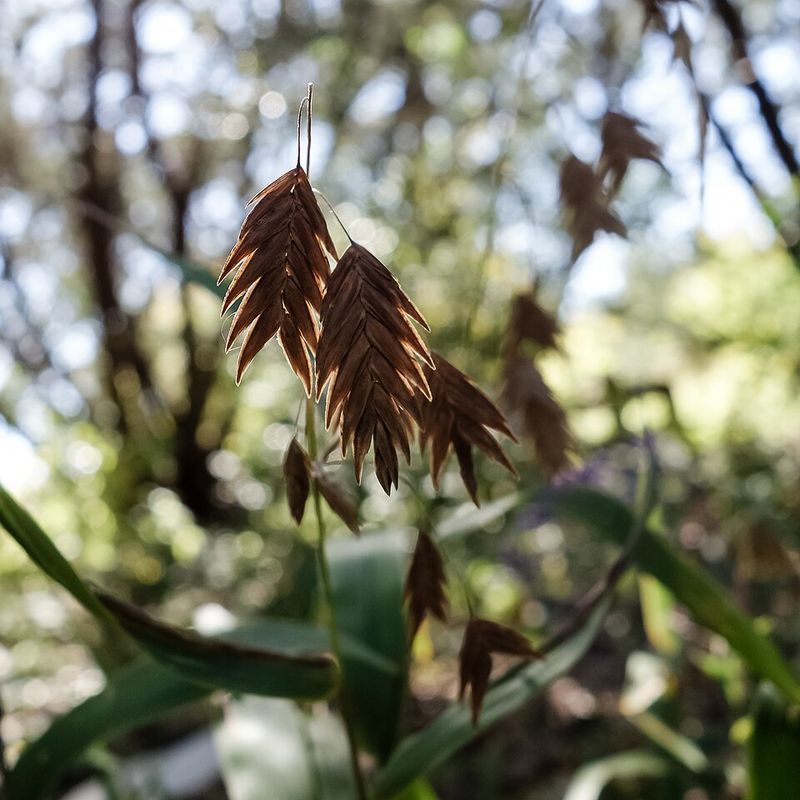
Those flat, dangling seed heads look like tiny fish hanging from a fishing line. When a breeze passes through, the whole clump rattles softly, and I find that sound oddly relaxing.
Inland Sea Oats, Chasmanthium latifolium, is a native grass that thrives in shade where many plants struggle. Its wide, bamboo-like leaves form arching clumps roughly two to four feet tall.
Speed is not a problem here, because it reseeds eagerly and spreads by short rhizomes. A few plants can carpet a shady bed within a year, and sometimes they get a little too enthusiastic.
I recommend snipping some seed heads before they shatter if you want to limit volunteers. They also look lovely in dried arrangements, so the trimming does double duty inside your home.
The seed heads start pale green, then fade to warm bronze and tan as fall arrives. They often hang on into winter, giving a bare yard some movement and texture during colder months.
Moist soil under trees or along a creek bank suits it best, though established clumps handle some dryness. More sun is fine with extra water, but the leaves may look paler in harsh afternoon light.
Several skipper butterflies use it as a host plant, and birds pick at the seeds. Cut clumps back in late winter before fresh green shoots appear, and they will refill the space quickly.
10. Gregg’s Mistflower
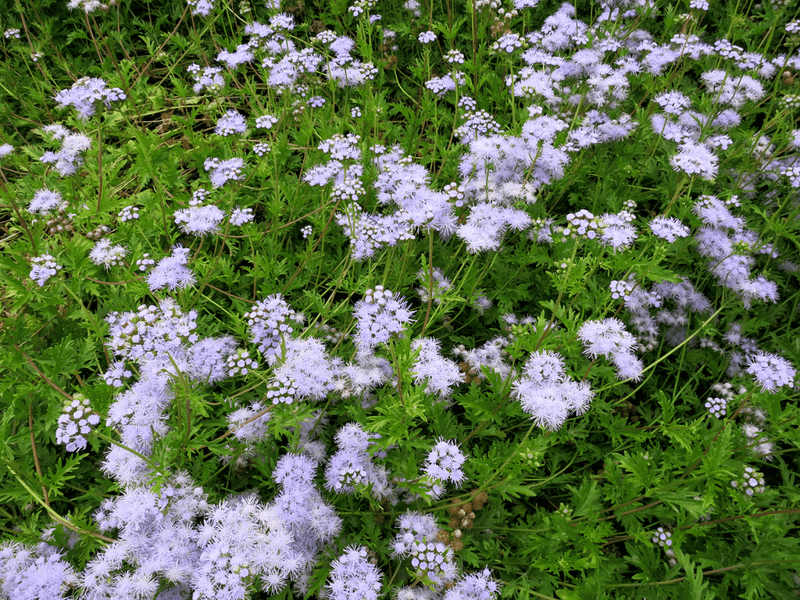
Plant this one in a sunny spot and you may soon see dozens of orange butterflies crowding every bloom. Queen butterflies love it so much that I have counted more than a dozen on a single patch.
Gregg’s Mistflower, Conoclinium greggii, produces fuzzy lavender-blue flower clusters that look like soft little powder puffs. Its lacy, finely cut leaves add a delicate texture that contrasts nicely with bolder garden plants.
Underground rhizomes help it spread steadily, so a couple of small pots can fill a sunny bed fast. Plants usually stay one to two feet tall, making them a handy choice for borders and front edges.
Blooms appear from spring into fall, with heavy flushes after rain and during cooler stretches of weather. Monarchs passing through during fall migration often stop for a sip, which feels like a special treat.
Full sun to light shade works, and well-drained soil keeps the roots healthy through wet spells. Once established in West and Central Texas gardens, it handles dry periods with only occasional deep watering.
Shearing the stems back by about half after a big bloom encourages a fresh round of flowers. In winter, frost may brown the tops, so trim them away once new growth starts in spring.
If it creeps where you do not want it, pull the extra runners easily from loose soil. Those pieces transplant well, so you can start new patches anywhere butterflies need a dependable meal.