That Ball Of Leaves High In Your Minnesota Tree Is Something Much Fuzzier
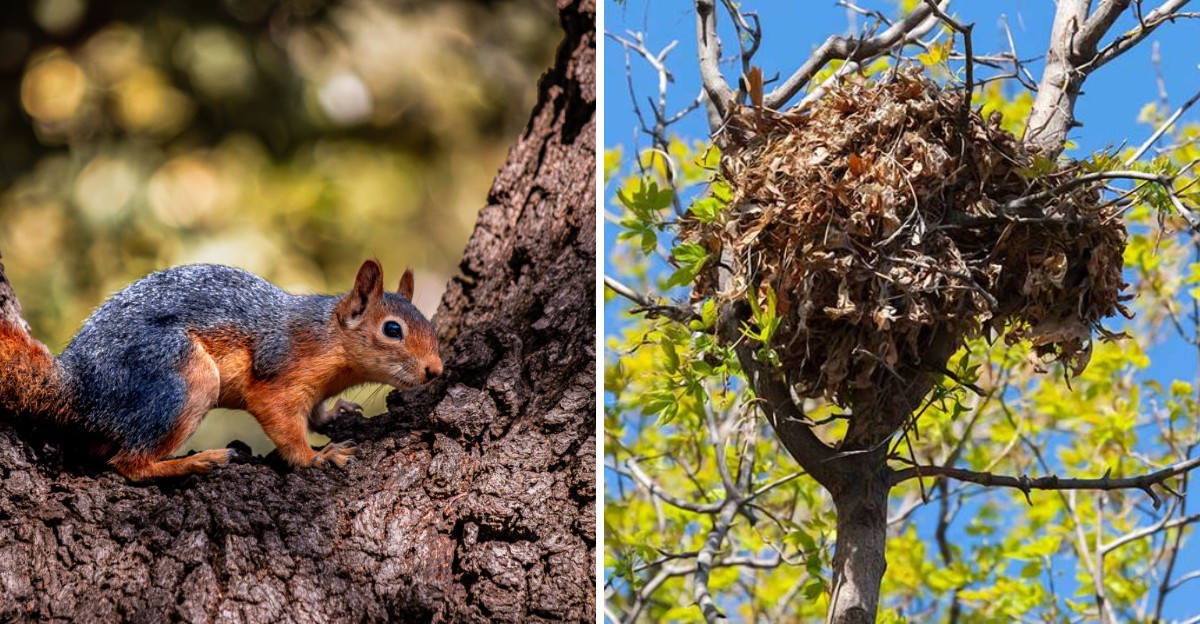
Some of the coziest homes in your yard are built from leaves still attached to the twigs they grew on.
They hang 30 feet up, they look like a mess, and they somehow stay warm through a Minnesota January. I walked past one in my own oak for years without a second thought.
You might notice them more right now, when bare branches across Minnesota leave nowhere to hide.
A lump of brown leaves wedged in a fork looks like storm debris or an old crow nest. After I watched one closely for a week, I spotted a tail poking out of the side.
A little evidence changed how I see every tree on my block. The builder is busy, picky about materials, and smarter about insulation than most of us. Who exactly is sleeping up there tonight?
That Leafy Lump in the Oak Has a Furry Owner
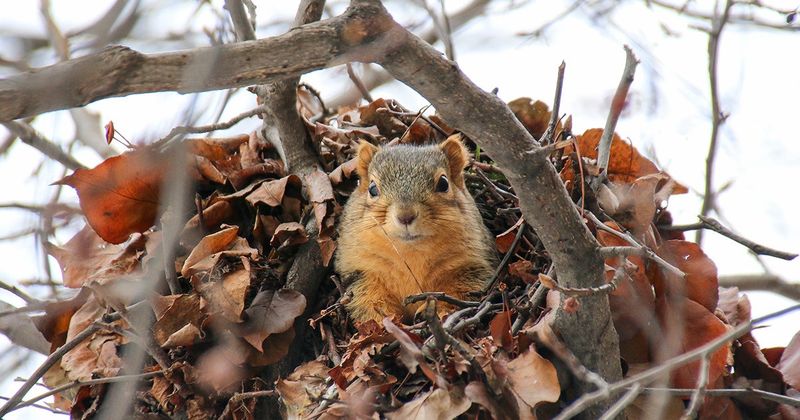
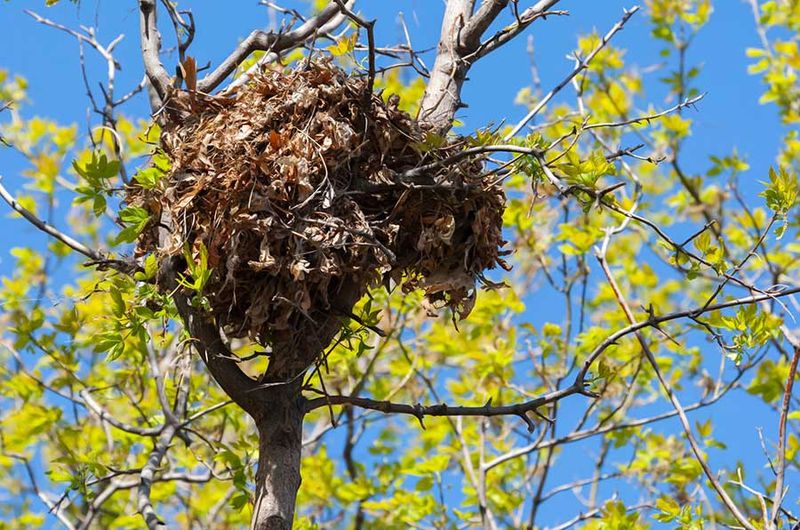
Mystery solved. That rough ball of leaves is a squirrel nest, and wildlife experts call it a drey.
Tree squirrels build dreys as shelters where they rest, hide from bad weather, and raise their young. In Minnesota, the main builders are eastern gray squirrels, fox squirrels, and red squirrels.
University of Minnesota Extension notes that gray and fox squirrels often use leaf nests when tree cavities are not available.
I used to guess these were hawk nests or tangles left by wind. Once you know what to look for, you will start seeing them in parks, along streets, and in nearly every big shade tree in town.
Dreys are not abandoned piles. A squirrel may use one for a season or longer, and many squirrels keep more than one nest. That way they have a backup if a predator shows up or a storm damages the main home.
So if you see a ball of leaves high in a maple or oak, give it a friendly nod. Somebody small and bushy-tailed probably calls it home, and it may be napping inside right now while you stand below wondering about it.
Inside a Squirrel Drey Is Softer Than You Would Guess
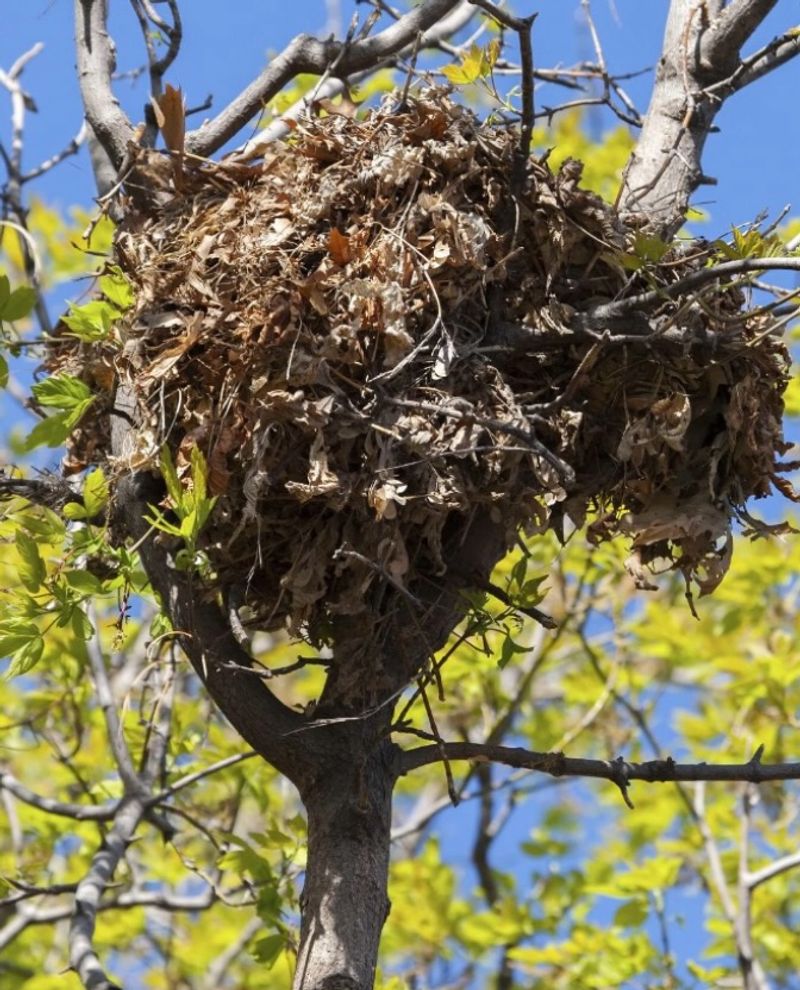
Picture-perfect it is not, at least from the outside. The real magic hides behind that scruffy shell.
A typical drey measures about 12 to 20 inches across, roughly the size of a football or small basketball. The outer frame is woven from twigs, often with leaves still attached. Squirrels pack those leaves tightly to shed rain and block wind.
Inside, things get fuzzy. The inner chamber is lined with soft stuff like shredded bark, moss, dry grass, pine needles, and sometimes fur.
That lining traps body heat the way a down jacket does. Here is a fun detail I love. Many squirrels cut green, leafy branches to build with. As those leaves dry, they curl and lock together, sealing gaps in the walls.
On a frigid morning, a squirrel tucked inside with its tail wrapped around its body stays surprisingly snug. Two or more squirrels sometimes share a nest in winter to pool their warmth.
Next time you see one, look closely with binoculars. You may spot a tidy entrance hole near the bottom or side, often facing the trunk. That small detail keeps rain out and gives the resident a quick escape route.
Bird Nests and Squirrel Dreys Look Different Up Close
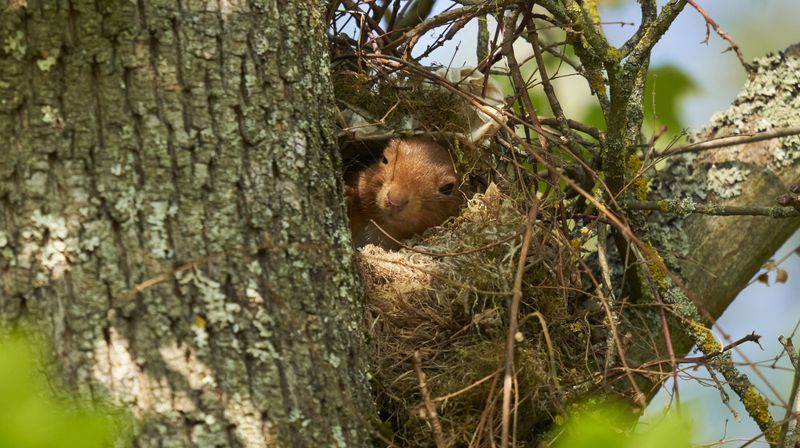
Plenty of folks mix these up, and I was one of them for a long time. A few clues make the difference easy to spot.
Most songbird nests are small cups, open at the top, and built for one job. Birds use them to hold eggs and raise chicks, then usually leave them behind after the season.
Squirrel dreys are bigger, rounder, and mostly enclosed. They are made largely of leaves, so they look like a brown, bulky ball rather than a neat cup.
Hawks, crows, and owls are the tricky ones. Their nests can be large and sit high in trees too. However, those nests tend to be flatter platforms of sticks, without the thick, leafy dome you see on a drey.
Watch for activity as well. Squirrels come and go all year, even in deep winter. A busy nest in January is a strong hint that you are looking at a squirrel home.
A quick checklist helps. Ask yourself whether it is round, leafy, enclosed, and used in cold months. If the answer is yes, you have almost certainly found a drey.
Gray, Fox and Red Squirrels Each Bring Their Own Style
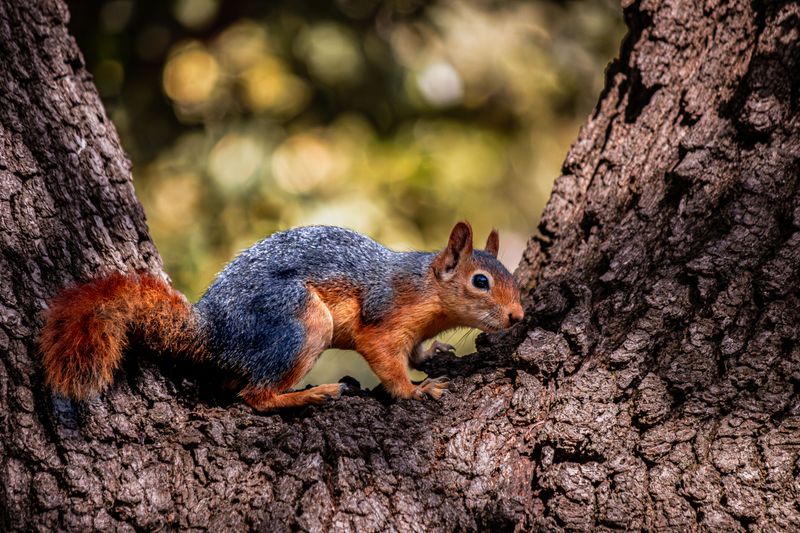
Meet the crew behind those leafy homes. Minnesota has several tree squirrels, and a few of them are skilled builders.
Eastern gray squirrels are the most familiar in towns and cities. They readily build dreys, especially where hollow trees are scarce. You may also see black-coated gray squirrels, which are the same species.
Fox squirrels are larger, with rusty orange bellies. They often favor open woodlands, farm groves, and parks with big oaks, and they build leaf nests too.
Red squirrels are small, chattery, and feisty. They are common in northern Minnesota conifer forests, though they live statewide. Red squirrels often use tree cavities or build nests in dense evergreens.
Flying squirrels live here as well, but they mostly prefer cavities. You probably will not see them, since they come out at night.
Watching the builders at work is half the fun. In late summer and early fall, look for a squirrel racing up a trunk with a mouthful of leafy twigs. That is construction in progress, and it can go on for days as the nest takes shape.
Bare Branches in Fall Reveal Hidden Squirrel Nests
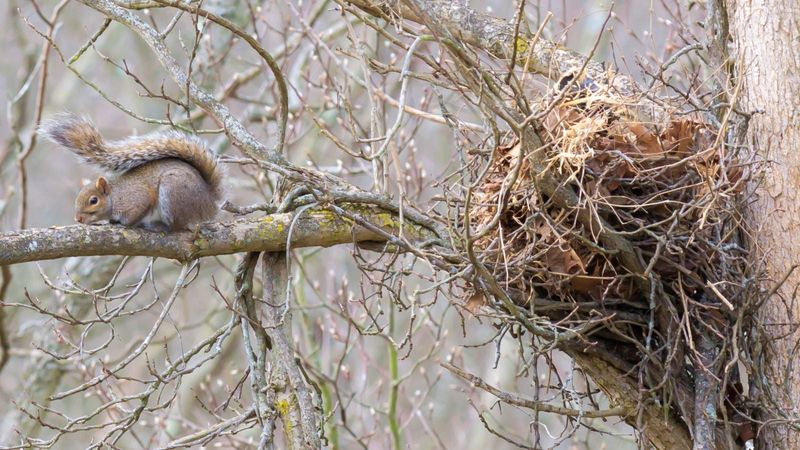
Funny thing about these nests: most of them were there all summer, hiding in plain sight. Thick green leaves cover dreys from May through September.
Once the canopy drops in October and November, those leafy balls suddenly stand out against the sky.
Squirrels also get busy in autumn. They repair older nests and build fresh ones before winter settles in, so the nests you notice now may be a mix of old favorites and brand new construction.
For the best viewing, scan large maples, oaks, elms, and basswoods. Dreys usually sit in a sturdy fork or where a branch meets the trunk, often 20 to 40 feet up, sometimes higher.
A sunny winter afternoon is my favorite time to look. Snow on the branches makes the brown nests pop, and squirrel tracks in the snow below can lead you right to the busiest trees.
Try counting them on a neighborhood walk. Bring binoculars to spot a tail, an ear, or a leaf-stuffed doorway. Tally each nest you find, then compare totals next month.
You might be surprised how many show up on a single block. Kids love this game, and it turns an ordinary stroll into a friendly wildlife survey.
Your Maple Is Usually Fine With a Drey Overhead
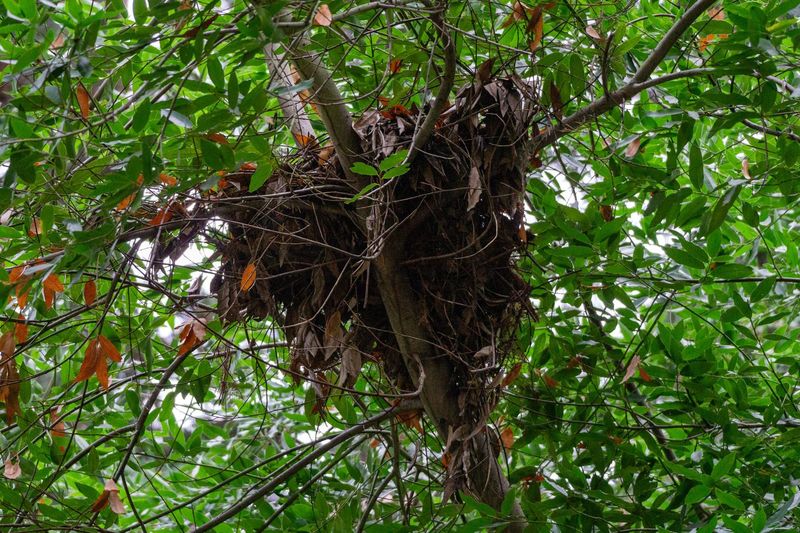
Relax, your tree is not in trouble. A squirrel nest sitting in the branches rarely harms a healthy tree.
Squirrels do clip some twigs to build with. That small amount of pruning is usually minor, and trees handle it well.
Squirrels can cause other problems, though. They sometimes chew bark on maples and other trees, especially in late winter and spring.
University of Minnesota Extension points out that bark stripping can occasionally damage branches.
If you notice heavy chewing on a young tree, a smooth metal collar around the trunk can help. It only works when no nearby branches or structures give squirrels another way up.
Bird lovers may grumble about raids on feeders. Squirrel baffles on poles are often the simplest fix.
From a wildlife view, dreys matter. They give squirrels a warm place to ride out cold snaps and raise young. Squirrels, in turn, bury acorns and nuts, and the ones they forget can sprout into new trees.
So that leafy ball overhead is part of a bigger cycle. Your oaks may owe a few of their neighbors to a forgetful squirrel.
Keep Squirrels in the Tree and Out of Your Attic
Enjoy the show from the window, and save your worry for the house. A drey in a tree is fine, but a squirrel in your attic is another story.
Fall is when squirrels look hardest for warm spots. Walk around your home and check soffits, roof vents, chimney gaps, and loose fascia boards.
Holes the size of a golf ball can be enough for a determined squirrel. Seal gaps with sturdy hardware cloth or metal flashing. Be careful not to trap an animal inside.
If you hear scratching, call a licensed wildlife professional before closing things up.
Trim branches that hang within several feet of your roof. That cuts off the easy highway from tree to shingles.
Please leave tree nests alone, especially in spring and late summer. Young squirrels may be inside, and removing a nest rarely solves anything. Squirrels just build another.
My favorite takeaway is simple. Grab binoculars, find a drey, and check on it through the seasons.
You will learn more about your backyard neighbors in one winter than in years of walking past that fuzzy ball of leaves.