That Bird Nest In Your Missouri Tree Might Be Something Else Entirely
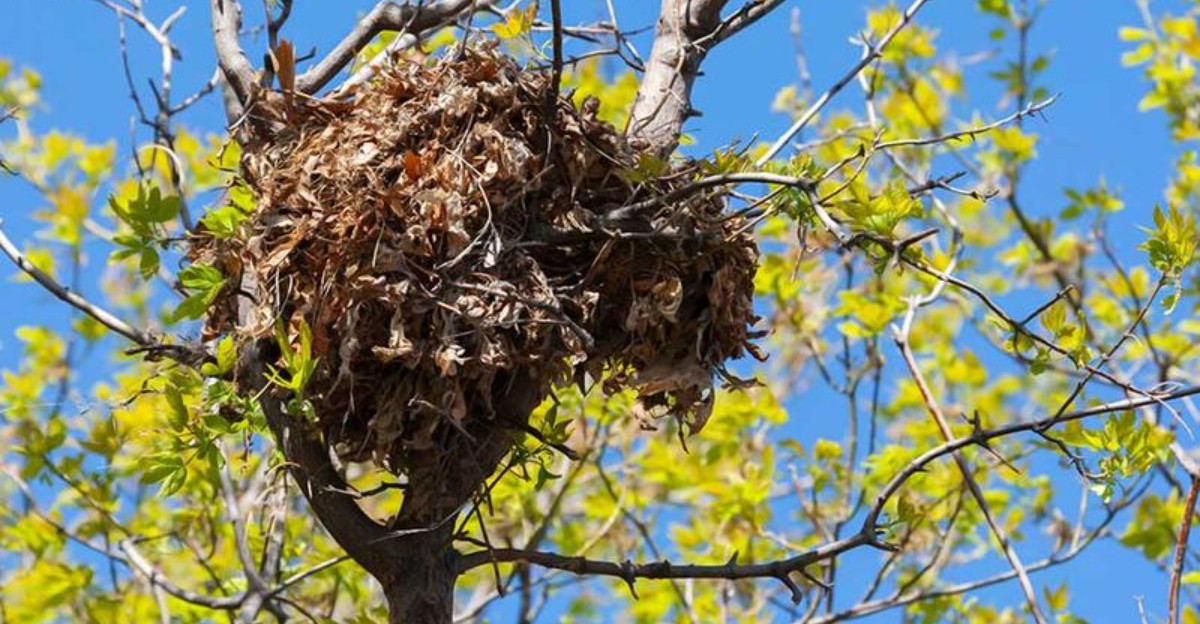
You glance up at a tall Missouri oak and spot a round bundle of leaves tucked high among the branches. Your first thought is probably a bird nest, maybe one a robin or crow left behind.
Look a little closer, though, and that tidy story might start to wobble like a loose porch railing. This bundle has no open top, no neat little cup, and not a single feather in sight.
Early fall is a sneaky time for this mystery, because thinning leaves reveal shapes that hid all summer. Suddenly the treetops look like a neighborhood of tiny leafy houses.
The builder is a familiar backyard resident that you have probably watched dash across the lawn many times. Its construction skills are far better than most people give it credit for.
Leafy Squirrel Shelters In The Branches
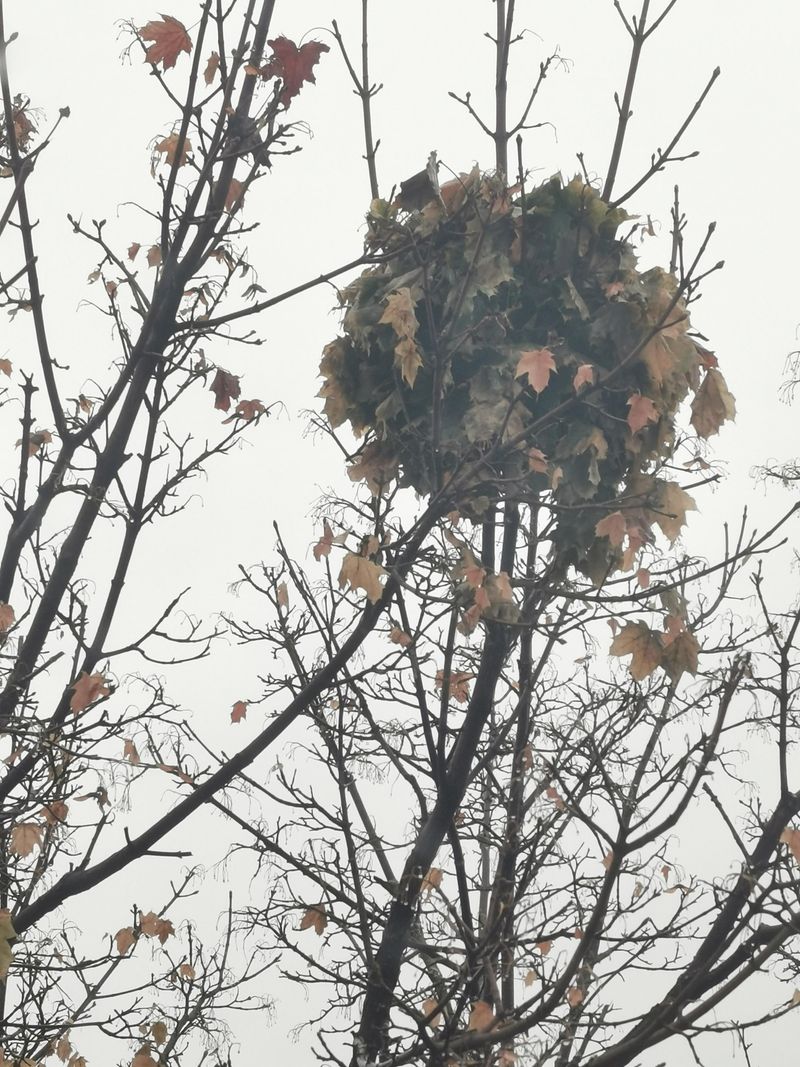
Picture a gray squirrel carrying a mouthful of oak leaves and racing up a trunk like a tiny furry mover. That busy critter is building a drey, the leafy home that people mistake for a giant bird nest.
Dreys usually sit in the fork of a branch, often thirty feet or more above the ground. From below, they look like a messy ball of brown leaves about the size of a basketball.
Bird nests are mostly built from twigs and grass, and they tend to be open on top. Squirrel dreys are rounded and covered, with a hidden side entrance and a soft lining of shredded bark.
In Missouri, both gray squirrels and fox squirrels build these shelters, and early fall is prime construction season. You may notice fresh green leaves woven into old dreys as squirrels prepare cozy winter quarters.
Fun fact: a squirrel’s bushy tail can double as a blanket on cold nights, wrapped around its body inside the drey. Think of it as owning a cabin, a beach house, and a backup apartment in the same neighborhood.
Dreys rarely harm trees, so there is usually no reason to remove them from your yard. If squirrels are chewing on your roof or bird feeders, trimming branches near the house can help.
Grab binoculars on a calm October morning and watch for tails flicking near those leafy bundles. Spotting a resident squirrel poking its head out is one of the easiest ways to confirm a drey.
Materials Packed Into Each Leafy Ball
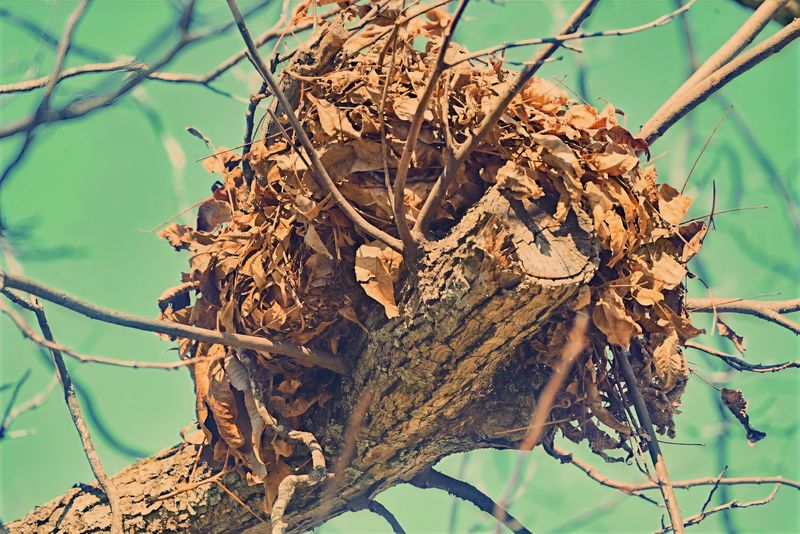
A drey starts with a rough frame of twigs, which a squirrel snaps off nearby branches and drags to the building site. Leafy twigs work especially well, because the attached leaves add bulk right away.
Over that frame goes a thick layer of leaves, woven tightly enough to shed light rain. Oak, maple, and hickory leaves are common choices in Missouri, since those trees are common across the state.
Inside the shell sits a small chamber, usually just big enough for one squirrel to curl up. Squirrels line it with shredded bark, dry grass, moss, and sometimes bits of paper or fabric picked up near houses.
The soft lining traps body heat, which helps on cold fall nights. A well-built drey can stay noticeably warmer than the air outside.
Your Missouri Garden Changes Every Week. Your Plan Should Too.
Gardening in Missouri changes quickly throughout the season. Every Friday you’ll receive a simple weekly plan showing exactly what to plant, prune, fertilize, harvest, and protect so you never miss the right timing.
Building can take several days of steady work. A squirrel makes dozens of trips, carrying material in its mouth and pressing it into place with its paws.
Fresh dreys look green and tidy, while older ones turn brown, flatten, and sag after months of wind and rain. That color difference helps you guess how recently someone moved in.
A drey can look rough from the ground, but the construction is sturdier than it appears. Strong winds during Missouri storms can tear some apart, and squirrels simply rebuild or move to another shelter.
Clues That Separate A Drey From A Bird Nest
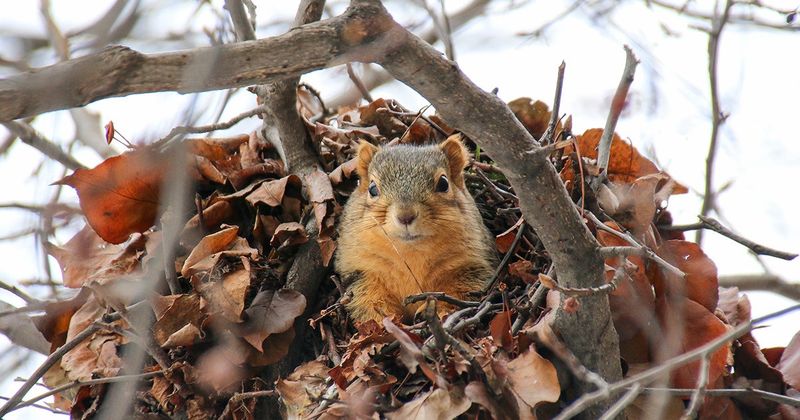
Shape is the quickest clue. Most songbird nests are small open cups, while a drey is a rounded ball with leaves sticking out in every direction.
Size helps too. A robin nest is roughly the size of a small bowl, and a drey is usually much larger, closer to a basketball or bigger.
Large stick platforms high in a tree are a different story. Crows and hawks build open nests of sticks, and those nests look flat on top instead of ball-shaped.
Materials also tell a story. Bird nests rely on grass, mud, and fine twigs, while dreys are packed with whole leaves, many of them still attached to small twigs.
Location is another hint. Dreys often sit snugly in a fork close to the trunk, where thick branches offer extra support.
Activity near the tree gives the best proof. Look for freshly clipped leafy twigs on the grass below, since squirrels drop many while collecting building material.
A squirrel scampering up with leaves in its mouth settles the question right away. Even experienced birders sometimes mistake a drey for a nest until they spot movement.
Winter sightings are easiest. After leaves fall, dreys stand out as dark clumps against the bare sky, so a quick walk around the yard in November may reveal several.
Timing Behind The Early Fall Building Boom
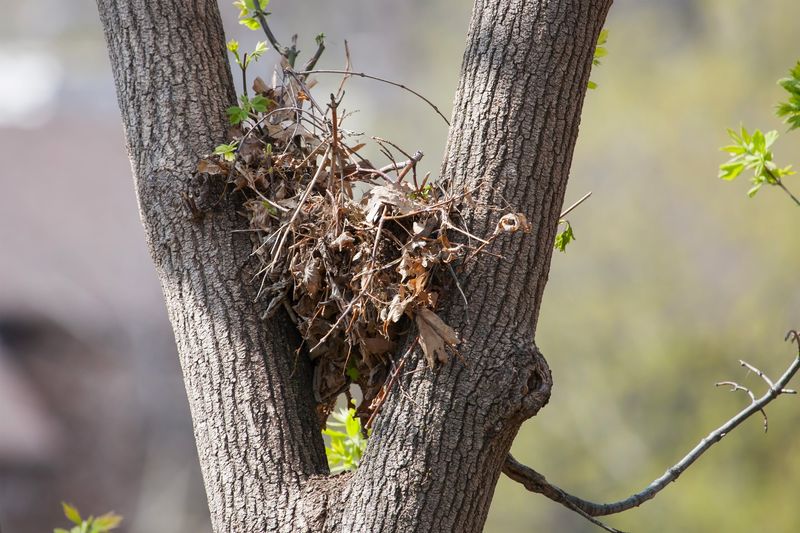
Early fall brings a burst of nest work, and the reason is simple. Squirrels want a warm, weatherproof shelter ready before cold nights arrive.
Autumn is also the season when food is plentiful. Acorns, hickory nuts, and walnuts drop across Missouri, giving squirrels plenty of energy for busy days of building and burying.
Fresh green leaves are easy to cut from branches at this time of year. Squirrels often add them on top of older material, which is why a drey may look half green and half brown.
Squirrels do not hibernate, so they stay active through winter. A solid nest gives them a place to wait out storms and rest between foraging trips.
Some use tree cavities in the coldest months, since hollow trunks hold heat well. Dreys still serve as backup shelters, and in cold weather several gray squirrels may share one to stay warm.
Breeding adds another reason. Gray squirrels usually raise young twice a year, in late winter and again in summer, and mothers often use dreys or cavities for the babies.
A tree that seemed empty in July may show several dreys by late October. Some of them are new, and others were simply hidden until falling leaves revealed them.
Missouri fall weather can swing from warm afternoons to frosty mornings, so squirrels tend to work while the days are mild.
Backup Homes Scattered Across The Neighborhood
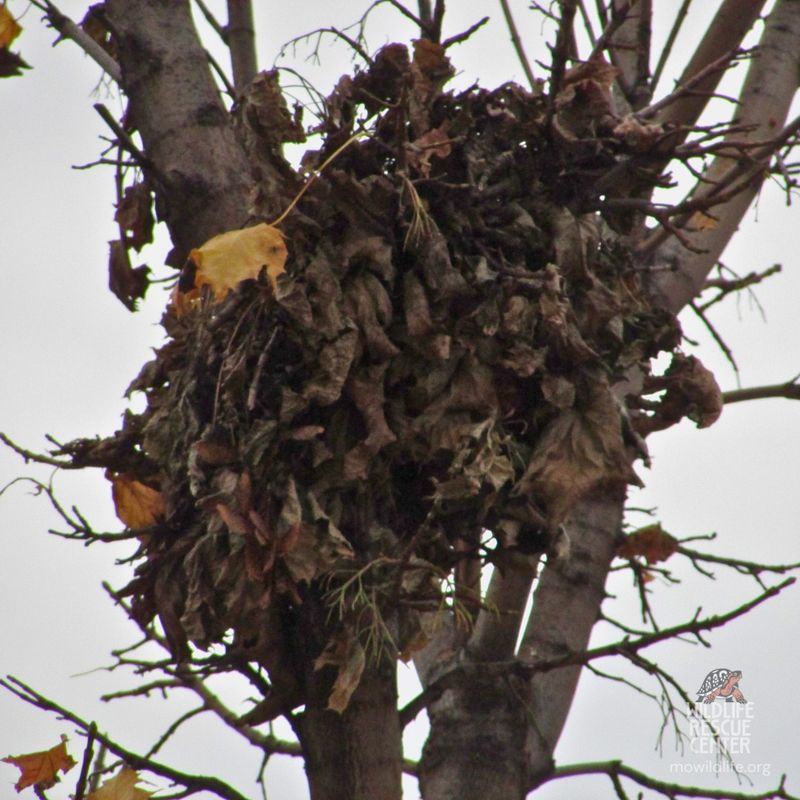
Few squirrels depend on a single nest. Most keep several shelters within their home range, and they rotate among them throughout the year.
Fleas and other parasites build up inside a used nest, so moving out gives the occupant a fresh start. Empty dreys also get a chance to air out in the sun and wind.
Predators are another reason to move. A hawk or a house cat that notices a nest can make that spot risky, and a spare drey nearby offers a quick exit.
Mother squirrels sometimes carry their babies to a new nest one at a time, gripping each youngster by the loose skin on its belly. This often happens when the first nest is disturbed.
Fox squirrels, the larger squirrels with reddish-orange bellies, also use hollow trees along with leafy nests. Both types of shelter can appear in the same territory.
Not every drey you see is occupied. Some sit empty for weeks, while others hold a resident on a cold morning.
Occupied dreys show clues. Fresh leaves, a tidy shape, and a squirrel frequently coming and going all suggest someone is home.
Dreys that look flattened, thin, or full of holes are probably abandoned. Other animals sometimes move in later, including birds and small mammals.
Simple Ways To Share The Yard With Squirrels
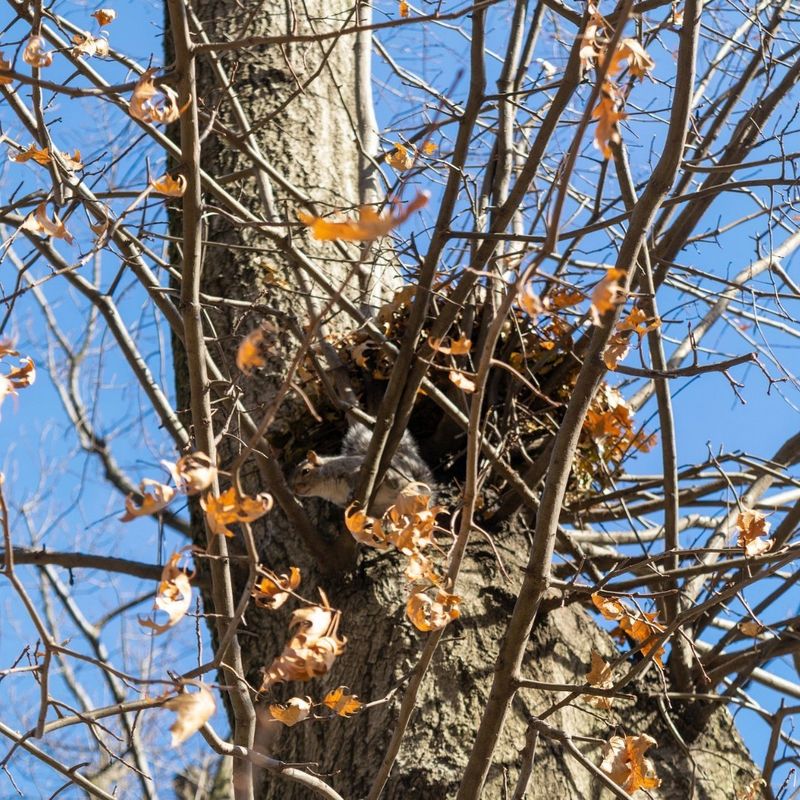
Most dreys can stay right where they are. They rarely harm the tree, and squirrels bury acorns and nuts that help oak and hickory forests regrow.
Spring and summer call for extra patience. Babies may be inside, and removing a drey during that time can separate a mother from her young.
Fall removal rarely solves a problem either, since squirrels often rebuild nearby. A fresh drey can appear within days.
If a nest sits close to your house, the real concern is access. Trim branches so that limbs stay about eight feet from the roofline, because squirrels can leap several feet from a branch.
Check the house for gaps near vents, soffits, and chimneys. Sturdy metal screens or caps keep squirrels out of attics, where they may chew wiring or insulation.
Bird feeders attract squirrels, too. A baffle on the pole and a feeder placed well away from branches usually reduce raids.
For persistent problems, a licensed wildlife control professional or the Missouri Department of Conservation can suggest legal options. Rules vary for trapping and relocation, so checking first matters.
Otherwise, enjoy the show. A calm walk under the oaks in October is a good time to watch tails flick and acorns fly.