That Fast Many-Legged Bug In Your Pennsylvania Basement Is Venomous But Helpful
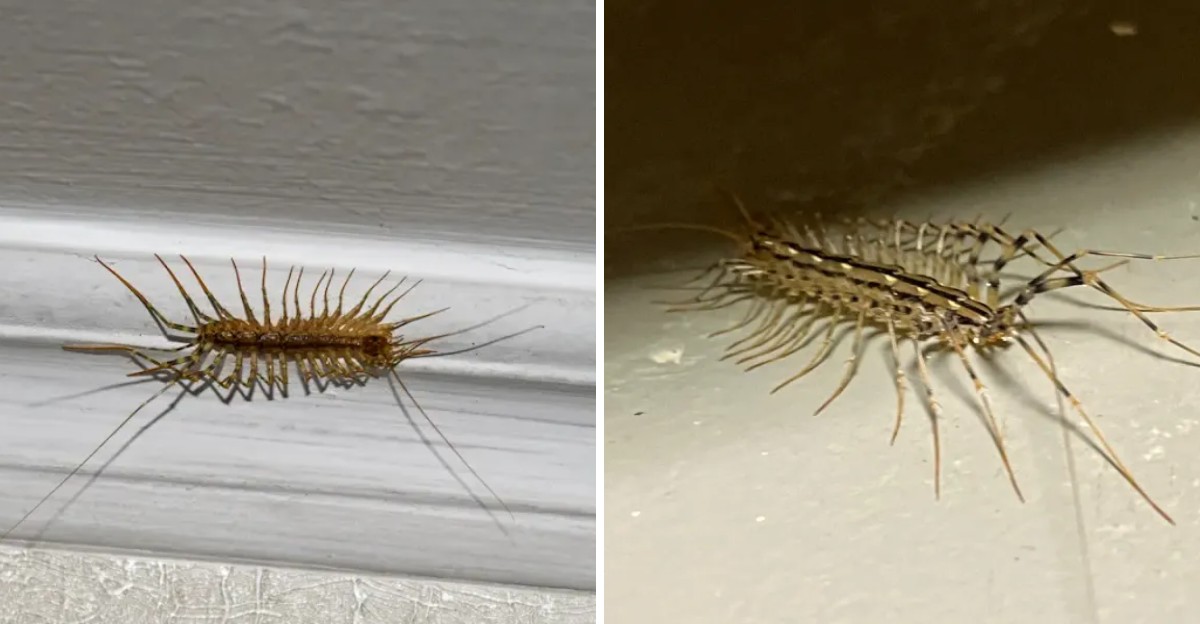
A bug with 30 legs can sprint across your basement floor at more than a foot per second. That speed is impressive for a creature smaller than your thumb.
I used to shriek and grab a shoe whenever one zipped past my laundry basket. Then I learned what it was hunting down there in the dark, and my whole attitude flipped.
Believe it or not, this leggy speedster carries venom. It also works the night shift in many Pennsylvania homes, quietly chasing down bugs you like even less. Nobody warned me that the scariest-looking guest in my house might be one of the most useful.
So who is this mystery runner, and should you really let it stay? Grab a flashlight and take a closer look before you reach for that shoe. The answer might change how you feel about your basement.
That Leggy Blur Zipping Across Your Basement Floor Has A Name
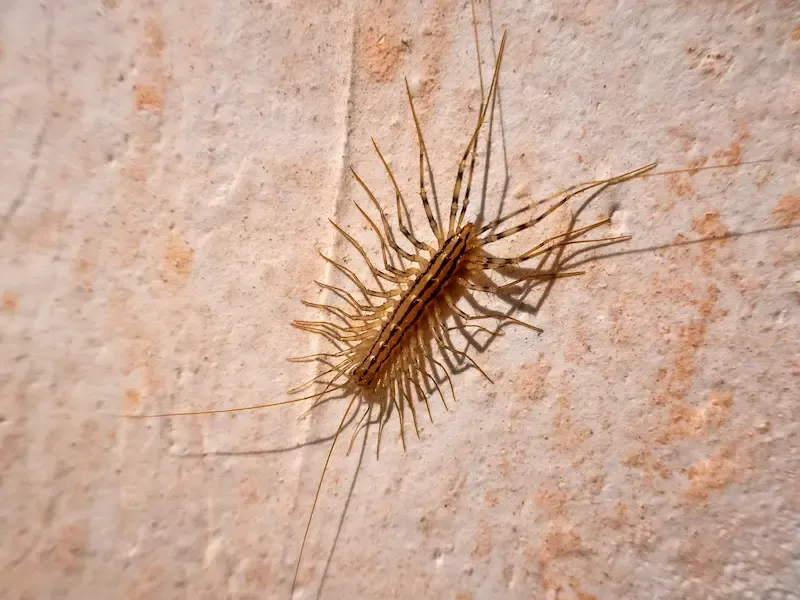
Flick on the basement light, and there it goes. A grayish-yellow streak with a fringe of long legs races along the wall and vanishes behind the water heater.
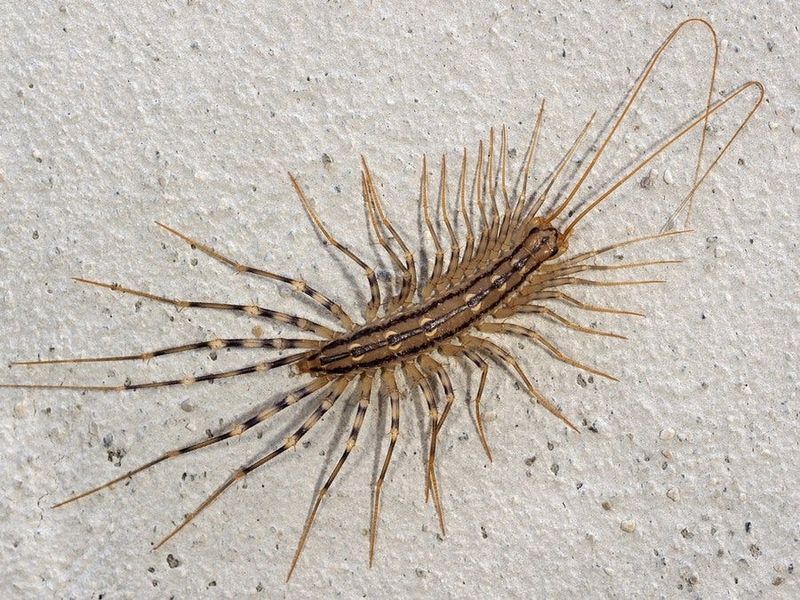
You just met the house centipede, known to scientists as Scutigera coleoptrata. Adults usually measure about 1 to 1.5 inches long, not counting their legs. They have 15 pairs of legs, and each leg looks striped with dark bands.
Those long antennae up front help it feel and smell its way through dark spaces. The back legs are extra long too, so the bug can look like it runs in both directions at once. Many people find that the creepiest part.
Fun fact time. The house centipede is not originally from here. Experts believe it came from the Mediterranean region and spread across North America, where it now lives in homes across the eastern states.
It also has compound eyes, which is unusual for a centipede. Most of its relatives see poorly, but this one can spot movement fairly well.
So the next time one sprints past, try pausing for a second. Notice the stripes and the long legs. Once you know what you are looking at, the shock fades a little.
Those Long Centipede Legs Are Built For Hunting Basement Pests
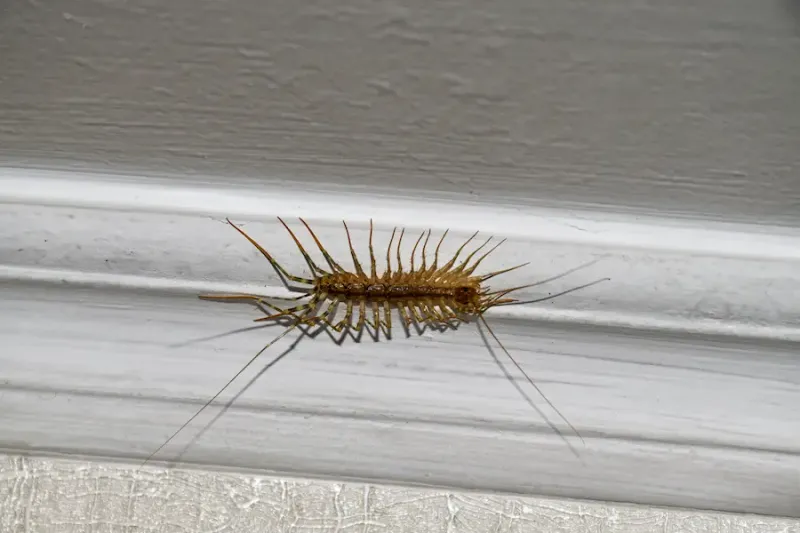
Here is my favorite reason to give this bug a break. It eats the pests you probably dislike even more.
House centipedes hunt silverfish, cockroaches, spiders, carpet beetle larvae, earwigs, crickets, and small flies.
Some reports say they eat bed bugs and termites too, though they will not solve a big infestation on their own. Think of them as a helpful bonus, not a full pest control plan.
Their hunting style is pretty wild. Instead of simply biting, a house centipede may leap onto its prey and wrap it up with its many legs. Some people call this lassoing, and it works well on fast-moving insects.
Speed matters here. These centipedes can travel around 1.3 feet per second, which helps them catch quick silverfish and roaches. They mostly hunt at night, so you rarely see the action.
Personally, I started noticing fewer silverfish in my bathroom once I stopped chasing the centipedes out. That is just my own experience, but it lines up with what Penn State Extension says about their diet.
If you can tolerate the look, you get a free, chemical-free bug patrol. Not a bad deal for a houseguest that never asks for rent.
A Centipede Bite Sounds Scary But Rarely Causes Real Trouble
Yes, the word venomous is true. House centipedes carry venom, but they mostly use it on tiny insects, not on people.
The venom comes from special front limbs called forcipules. These sit just behind the head and work like little fangs. When the centipede grabs a bug, the forcipules inject venom that quickly stops the prey from struggling.
Bites on humans are uncommon. These centipedes would much rather run away, and their fangs often struggle to pierce human skin.
Most bites happen when someone presses or traps one by accident, like grabbing it with bare hands or stepping on it barefoot.
If a bite does happen, it usually feels like a mild bee sting. You may notice some pain, redness, and swelling for a short time.
Wash the spot with soap and water and use a cold pack to ease swelling. Watch for signs of an allergic reaction, such as trouble breathing or spreading hives. Those cases are rare, but they need a doctor right away.
Pets usually do fine too, although a curious cat might get a little sting. Keep an eye on them, and call your vet if anything seems off.
Damp Basements And Laundry Rooms Feel Like Home To Centipedes
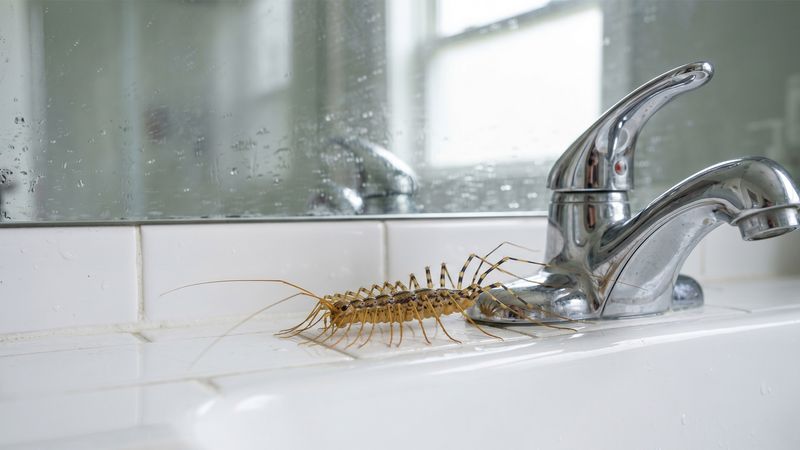
Moisture is the magic word. House centipedes need damp air to keep from drying out, so they gravitate to the wettest corners of your home.
In Pennsylvania houses, that usually means basements, crawl spaces, laundry rooms, and bathrooms. You might find them near floor drains, sump pits, under sinks, or behind boxes stacked against cool walls.
They are night owls too. During the day, they tuck into cracks, cardboard boxes, and clutter. After dark, they come out to hunt, which is why you often see them when you flip on a light late at night.
Outdoors, house centipedes live under mulch, rocks, logs, and leaf piles. In colder parts of their range, many settle inside heated buildings, where they can live and breed all year long.
A female can lay dozens of eggs, often around 60 or more, in damp hidden spots. Young centipedes start out with fewer legs and add more pairs as they molt.
Some of them live several years, which is surprisingly long for a household bug. So the one you saw last spring might still be hanging around this fall, quietly doing its job.
Seeing Lots Of House Centipedes Means Something Else Is Living There Too
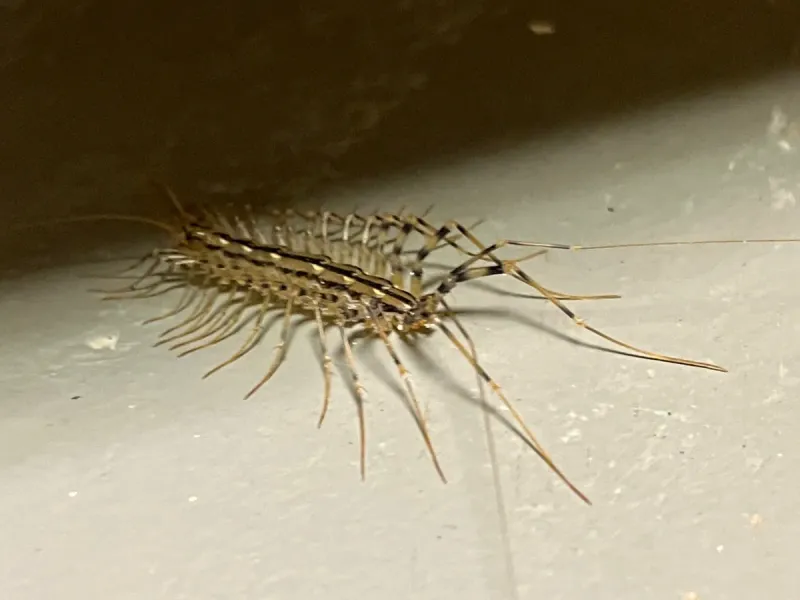
Spotting one centipede now and then is normal. Spotting several every week tells a different story.
House centipedes go where the food is. If your basement has plenty of them, it probably also has plenty of silverfish, spiders, roaches, or other small bugs. In a way, the centipedes are pointing a long leg at a bigger issue.
I like to treat a centipede sighting as a clue. Grab a flashlight and check the dark corners, boxes, and baseboards. Sticky traps placed along walls can show you which bugs are wandering around at night.
Look for signs of moisture too. Leaky pipes, a damp sump area, or a wet crawl space can attract the insects that centipedes love to eat.
If you find a large number of roaches or another serious pest, that problem deserves attention first. Fix the moisture, clean up clutter, and call a licensed pest professional if needed.
Once the food supply shrinks, the centipede population usually shrinks along with it. They are not breeding out of control for no reason.
They are simply following dinner, and when dinner leaves, many of them move on or decline in number.
A Dehumidifier And Some Caulk Keep Centipede Numbers In Check
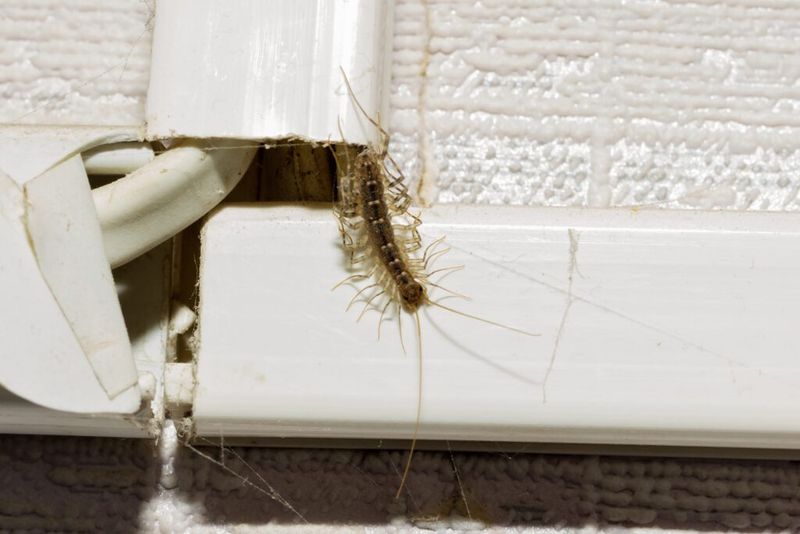
You do not have to choose between loving every centipede and spraying your whole basement. A few simple fixes keep things balanced.
Start with humidity. A dehumidifier set around 50 percent can make your basement much less comfortable for centipedes and the bugs they eat. Fans and good airflow help too, especially in laundry areas.
Next, fix leaks. Dripping pipes, sweaty walls, and poor gutter drainage all add moisture. Make sure downspouts send water away from your foundation.
Then grab a tube of caulk. Seal cracks in the foundation, gaps around pipes, and spaces under doors and windows. Weatherstripping on basement doors helps a lot.
Outside, pull mulch, leaf piles, firewood, and stones a little away from the house. These damp hiding spots draw centipedes and their prey right up to your walls.
Indoors, store items in plastic bins instead of cardboard boxes. Clutter on the floor gives bugs endless places to hide.
Penn State Extension notes that insecticides are rarely needed for house centipedes. Fixing moisture and food sources works better over time, and it keeps unnecessary chemicals out of your living space.
Let The Speedy Centipede Keep Patrolling If You Can Handle It
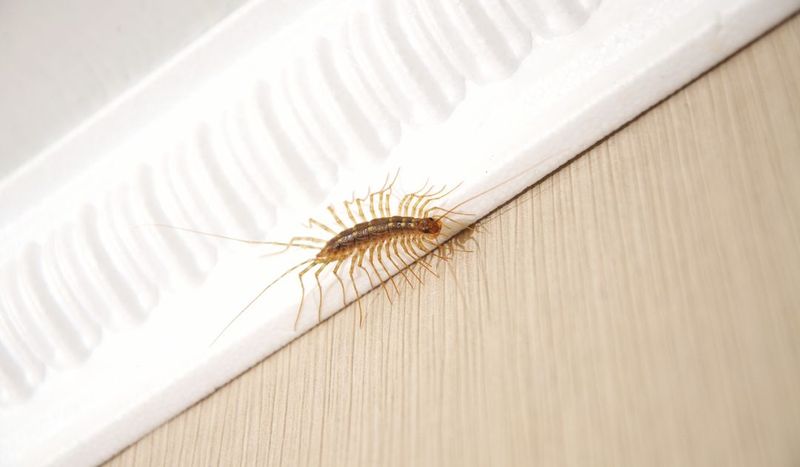
My advice is short and simple. If you can stand the sight of it, let it stay. A few house centipedes in the basement are a sign of a working little food chain.
They chase silverfish, roaches, and spiders, and they mostly keep out of your way. They do not damage wood, chew clothing, eat your food, or spread disease to people.
Still, I understand that not everyone wants one dashing past their pillow. If one wanders into a bedroom, try the jar trick. Place a clear cup over it, slide a stiff paper underneath, and carry it out.
Release it in a sheltered spot like a woodpile or garden mulch, ideally during warmer months.
In a Pennsylvania winter, an outdoor release is tough on it, so moving it to the basement may be kinder. Please skip the bare-hand grab. That is the most common way people get bitten.
Keep up with humidity control and sealing, and you will likely see fewer centipedes overall. The ones that remain are earning their keep. Once you see them as tiny night guards, that sudden sprint across the floor feels a lot less scary.