That Giant Spider In Your Georgia Garden May Actually Be A Native
Spotting a huge spider stretched across a garden web can make you assume you already know what you found. Size alone, however, can send you toward the wrong identification.
That matters because several impressive spiders can turn up around yards as summer gives way to fall.
One native species becomes especially noticeable when mature females reach their full size. In Georgia gardens, their bold appearance can easily attract attention from anyone walking past.
Before deciding what kind of spider you are seeing, slow down and check the details.
Color, markings, web placement, and body shape can tell a much clearer story than size alone. Learning those differences makes the next sighting easier to recognize.
That intimidating garden visitor may be a familiar native that has been here all along.
1. That Huge Spider May Not Be The Joro You Expected
Joro spiders get all the headlines, but they are not the only big orb weaver hanging around Southern yards.
The yellow garden spider, known to scientists as Argiope aurantia, is a true native of this region. It has been building webs across Georgia gardens since long before the Joro showed up in the state around 2014.
Both spiders are large, both sit in wheel-shaped webs, and both peak in late summer. That overlap explains most of the mix-ups.
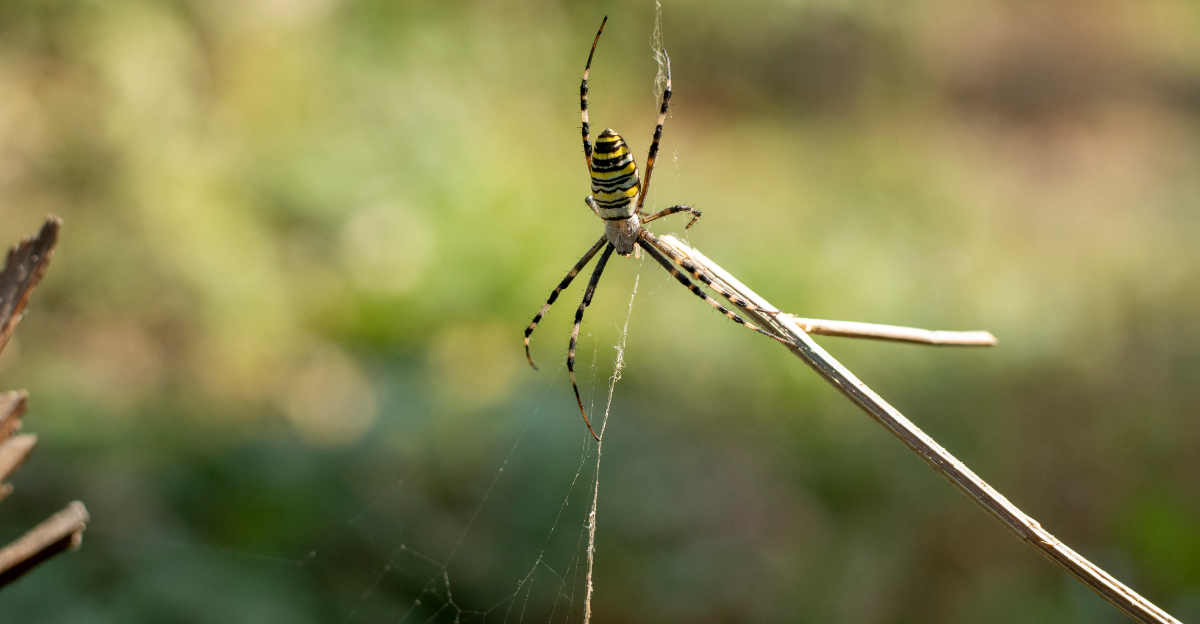
Color is where things separate quickly. Joro spiders carry a bright yellow and blue-gray banded body with red markings underneath, and their legs show clear yellow and black bands.
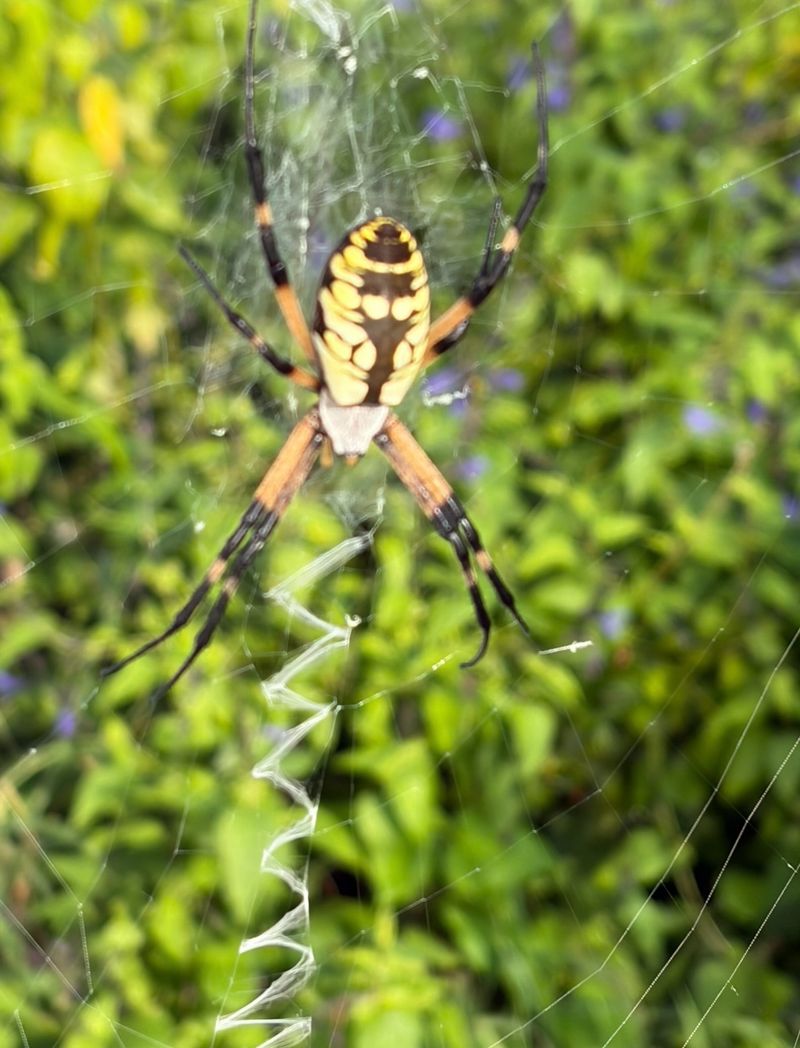
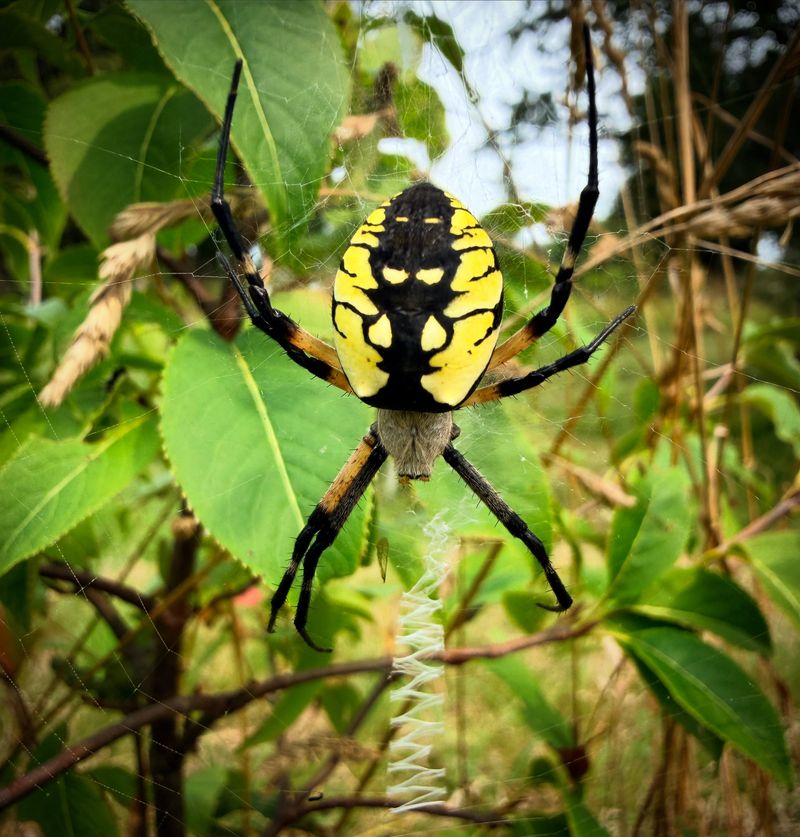
Our native wears solid black with bold yellow or cream patches, and its legs look mostly black with reddish or orange near the body.
Web color helps too, since Joro silk often has a faint golden tint in sunlight while the native spins plain white silk.
Location gives another hint. Joros frequently string enormous webs across eaves, power lines, and open space between trees, sometimes several feet deep.
Garden spiders usually stay lower, tucked among plants and shrubs at chest height or below.
Neither one is dangerous to people, so a misidentification is not an emergency. Still, knowing which spider you have makes it easier to decide whether to relocate the web or simply walk around it.
2. Black And Yellow Markings Make This Native Easy To Recognize
One good look at the abdomen usually settles the question.
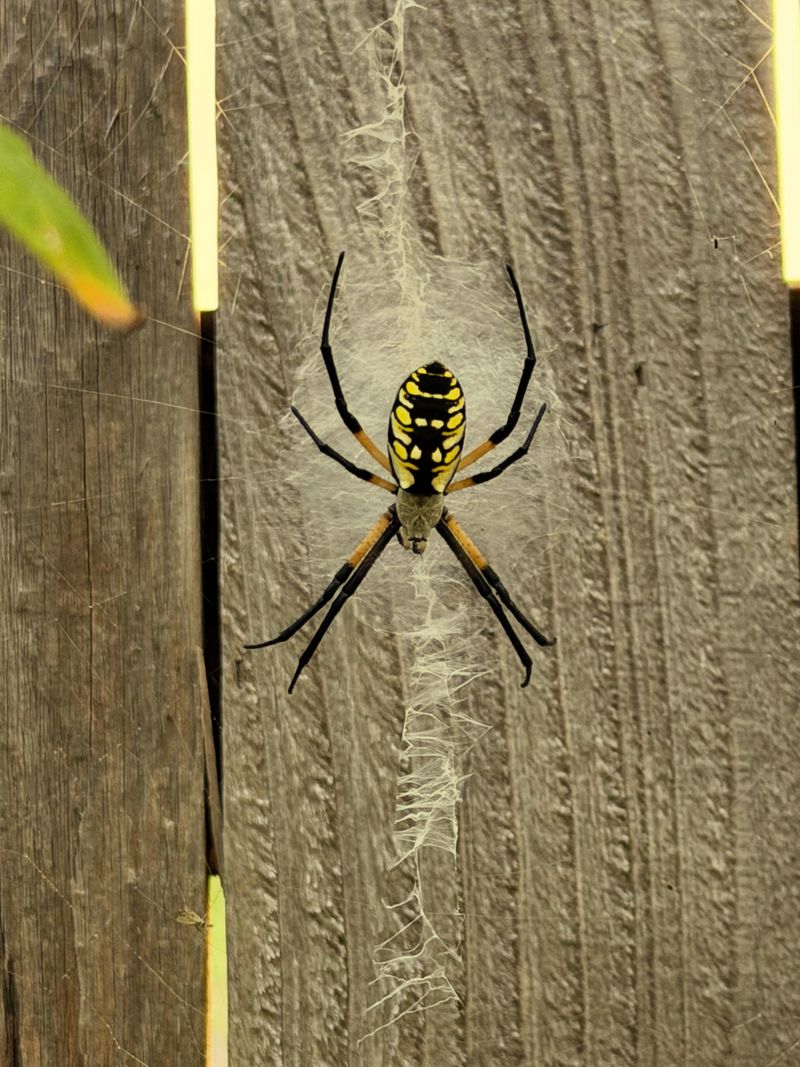
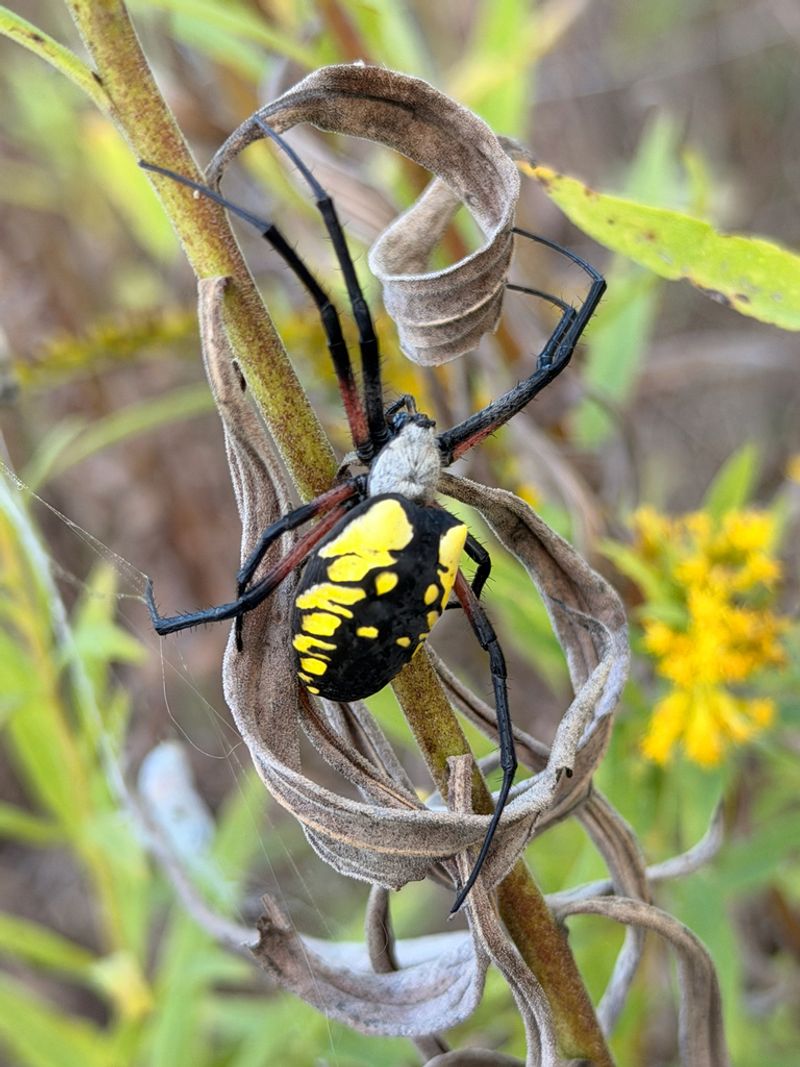
Females carry a shiny black egg-shaped abdomen splashed with irregular yellow patches, and no two individuals look exactly alike. Some show creamy white instead of yellow, especially on younger spiders.
The front section, called the cephalothorax, is covered in short silvery hairs that catch the light and almost look metallic.
Leg pattern is the other giveaway, since the legs are mostly glossy black with a rusty orange or reddish band near where they meet the body.
Size surprises people the most. A mature female can span roughly three inches with her legs extended, which is why so many gardeners around the Peach State reach for a camera before a broom.
Males look completely different and often go unnoticed. They run about a quarter of the female’s size, wear duller brown tones, and tend to build a small ragged web off to one side of hers.
Your Georgia Garden Changes Every Week. Your Plan Should Too.
Gardening in Georgia changes quickly throughout the season. Every Friday you’ll receive a simple weekly plan showing exactly what to plant, prune, fertilize, harvest, and protect so you never miss the right timing.
Common names pile up for this spider, including writing spider, corn spider, and banana spider, depending on which county you grew up in.
Old folk tales claimed the spider could write your name in its web, which is a fun story with no truth behind it.
Once the black and yellow pattern clicks in your memory, you will spot these spiders from across the yard without a second thought.
3. The Zigzag In Its Web Is Another Helpful Clue
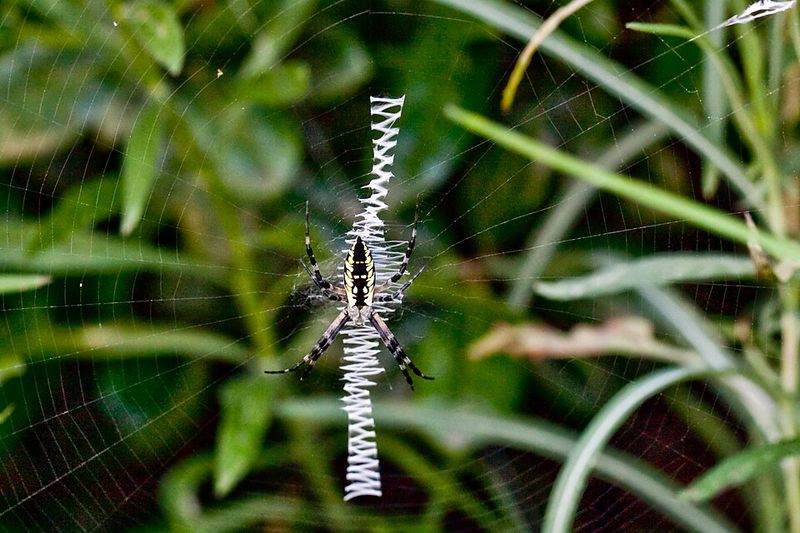
Look for the little white ladder running down the middle of the web.
That thick zigzag of silk is called a stabilimentum, and among Southern orb weavers it is close to a signature of the yellow garden spider. Joro webs do not include it.
The pattern usually runs vertically, forming a bold stripe of dense white silk right where the spider parks herself.
Scientists have argued about its purpose for over a century without landing on one answer.
Leading ideas include warning birds away so they do not crash through, attracting insects that respond to ultraviolet light, and making the spider look larger to predators.
All of those explanations have some support, and the real reason may be a mix.
Young spiders often build much heavier zigzags, sometimes a full disc of white silk, while older females may trim theirs down to a couple of short strokes.
Fresh webs appear early, since these spiders frequently rebuild the sticky spiral each morning before sunrise. Walk the yard at dawn and you may catch one eating the old silk and spinning a new one.
The whole web can reach two feet across, anchored by long support lines that stretch well beyond the visible circle.
If you see that white zigzag anywhere in Georgia, you are almost certainly looking at a native, not an import.
4. Gardens And Shrubs Are Some Of Its Favorite Spots
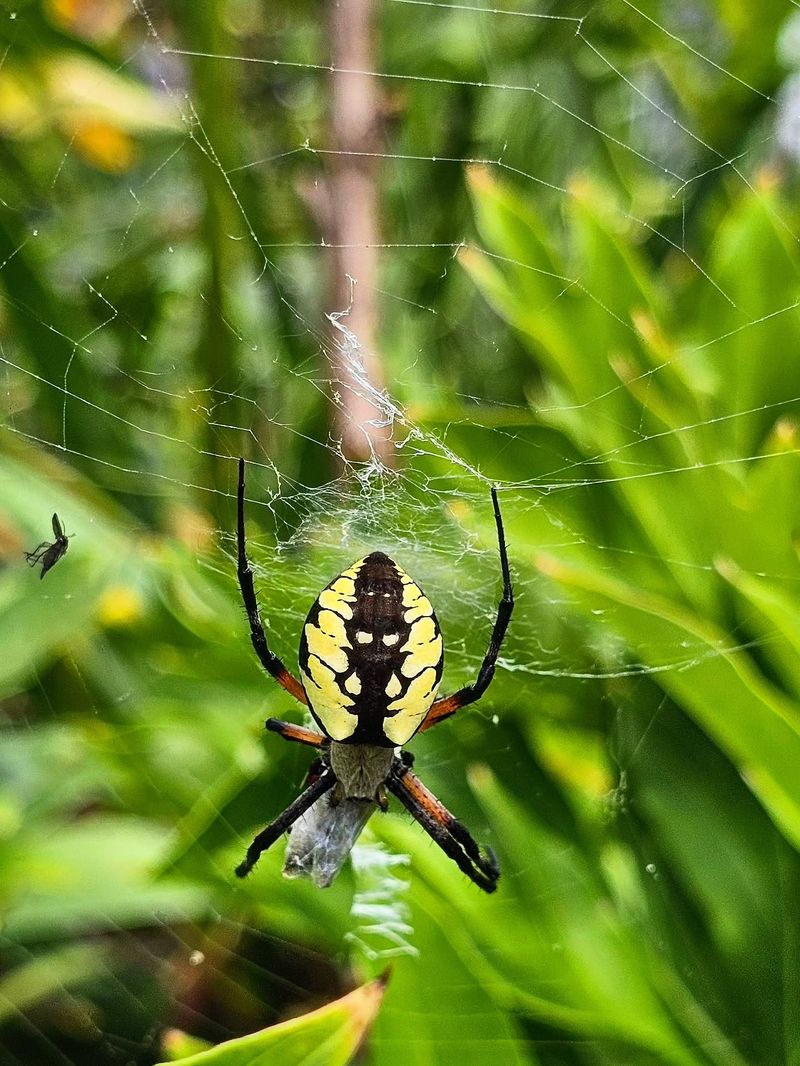
Sunny, still, and full of stems is exactly what these spiders want.
They pick spots with sturdy anchor points and steady insect traffic, which is why vegetable rows, hedges, and tall flower beds attract them so reliably. Okra, sunflowers, corn, and pole beans are classic web frames.
Open field edges, ditch banks, and roadside goldenrod work just as well outside the garden fence.
Height matters more than most people realize, since webs usually sit between one and six feet off the ground where flying insects cruise.
Wind is the enemy of a big orb web, so sheltered corners between a shed and a fence tend to get claimed first.
These spiders are not wanderers once they settle. A female often keeps the same general location for weeks, rebuilding in nearly the same frame each morning unless something disturbs her badly.
Porch railings, mailbox posts, and window frames get used too, which is where the human conflict usually starts.
Across north and south Georgia alike, the species turns up in backyards, community plots, and pasture fencelines without much fuss.
Gardeners who mulch heavily and skip broad-spectrum sprays tend to see more of them, simply because the insect supply holds up better.
If one sets up somewhere inconvenient, the whole web can be gently redirected rather than destroyed, which we will get to later.
5. Flying Garden Pests Often End Up In Its Web
Grasshoppers, wasps, flies, moths, mosquitoes, and stink bugs all show up on the menu.
An orb web strung across a vegetable row acts like a passive trap for anything that flies through at the wrong angle. The spider feels the vibration, rushes over, and wraps the catch in silk within seconds.
Prey gets bitten and wrapped, then stored or eaten depending on how hungry she is.
Appetite scales with size, and a full-grown female can handle insects nearly as big as she is, including grasshoppers that chew through bean leaves.
That said, the web is not selective. Bees and other pollinators occasionally get caught too, so this is not a targeted pest control tool.
Value still lands on the positive side for most gardeners. A resident orb weaver quietly reduces the flying insect load near your plants without any sprays, timers, or cost.
Nobody should expect miracles from one spider, since a single web only covers a small slice of a garden.
Several webs spread through a Georgia backyard add up more noticeably, especially in late summer when grasshopper numbers climb.
Insecticides work against you here, because knocking out the insect supply pushes the spiders elsewhere and removes free help.
Watching one wrap a June bug is honestly one of the better shows a backyard offers in August.
6. Females Become Much Easier To Notice By Early Fall
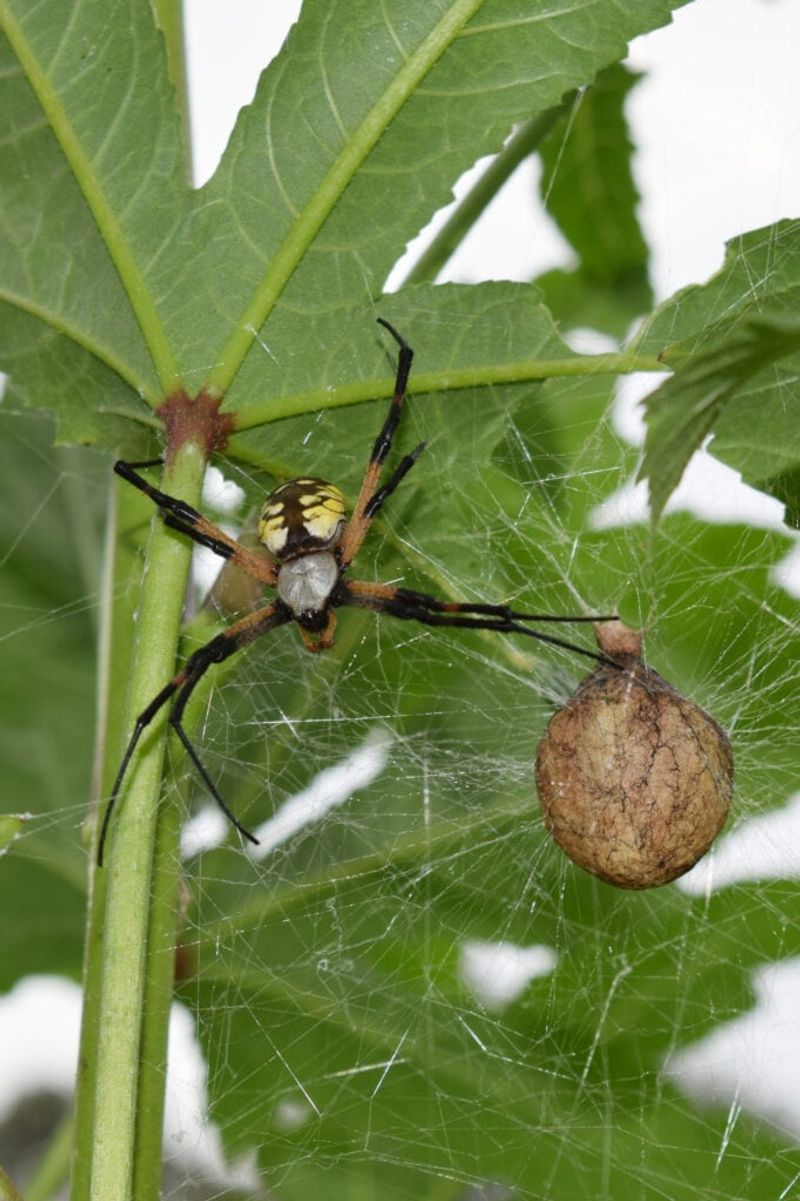
Late August through October is peak spider-spotting season around here.
Females hatch in spring but stay small and easy to miss for months, growing slowly through a series of molts. By the time humidity breaks and the first cool mornings arrive, they have reached full size.
Bigger bodies mean bigger webs, and suddenly a spider you never noticed seems to appear overnight.
Autumn also brings egg-laying, which changes their behavior in visible ways.
A female builds one or more brown papery egg sacs about the size of a marble or small grape, usually attached to nearby stems or under an eave. Each sac can hold several hundred eggs.
She often stays close by, guarding the sac as long as weather allows.
Cold weather ends the adult season, and in most of Georgia the first hard frost marks the finish line for the year’s females.
Spiderlings overwinter inside the sac and emerge in spring, floating away on strands of silk in a behavior called ballooning.
Leave the egg sacs alone if you want the next generation back in your beds.
Cleaning up garden debris in November is fine, but check stakes and fence rails first so you do not toss out next year’s helpers by accident.
7. Leaving This Garden Helper Alone Is Usually The Best Move
Bites from this species are rare and generally minor.
The spider would rather drop out of the web and hide than confront something a thousand times its size, and most bites happen only when one gets pressed against skin. Reactions are usually compared to a bee sting, with brief soreness and redness.
Anyone with unusual swelling or a known allergy history should contact a doctor, as with any bite.
Removal is rarely necessary. If a web blocks a doorway or walkway, wait until evening, then use a long stick to lift the anchor lines and shift the whole structure a few feet over.
She will rebuild in the new spot most of the time.
Sprays are a poor solution, since they harm the beneficial insects you actually want in a Georgia yard and do nothing about next season.
Marking the web with a bright ribbon on a nearby stake keeps family members from walking into it face-first.
Kids often get over the fear fast once they watch a spider wrap a fly, and it beats any nature documentary.
These spiders are not protected by law, but they are part of the local ecosystem and cost nothing to keep around.
Give the web a wide berth, water around it, and you have got a low-maintenance neighbor working the night shift.