Leave Those Hollow Stems Standing, Indiana Bees Are Counting On Them
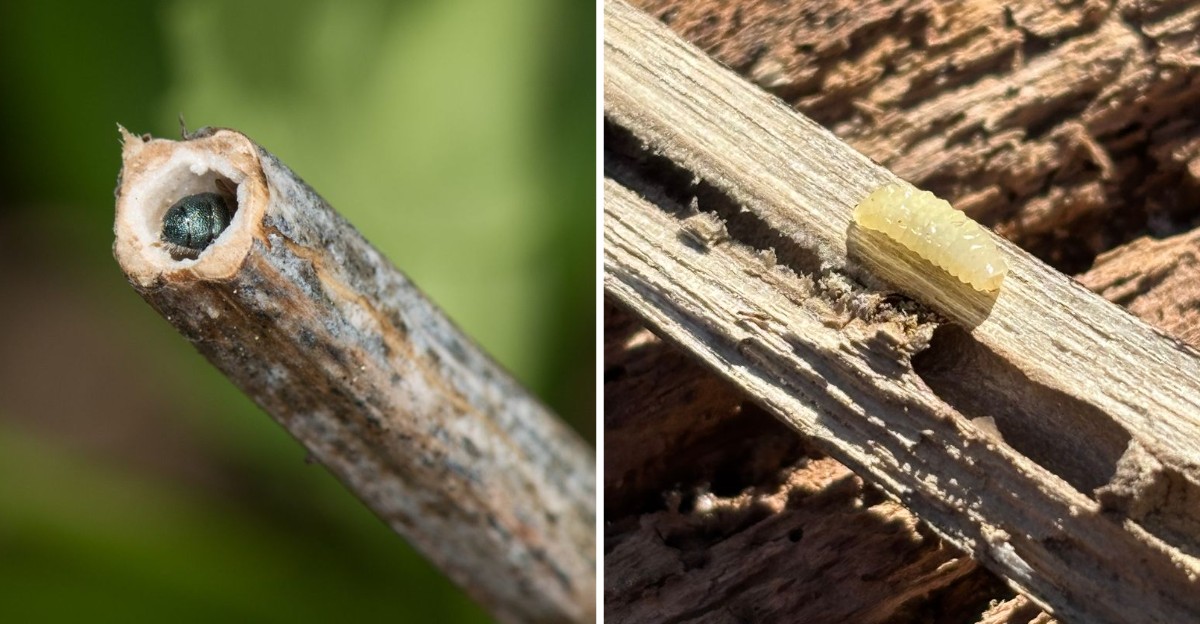
Some tiny bees in Indiana chew a tunnel down the soft center of a broken plant stalk to raise babies. Each room in that tunnel gets a ball of pollen, one egg, and a wall of chewed plant bits.
Those young insects stay inside the stalk through fall and winter, resting while snow piles up outside. Many of them do not chew their way out until late spring, when flowers open and warm days return.
I like how the best nesting stalks are often the brown ones most of us cut down in October. University extension experts and the Xerces Society suggest leaving some garden stems standing through winter for these helpers.
You need only a pair of pruners and a little patience to give a whole nursery a safe winter. Who knew that a messy Indiana flower bed could double as a bee nursery?
Tiny Nurseries Hidden Inside Your Garden Stalks
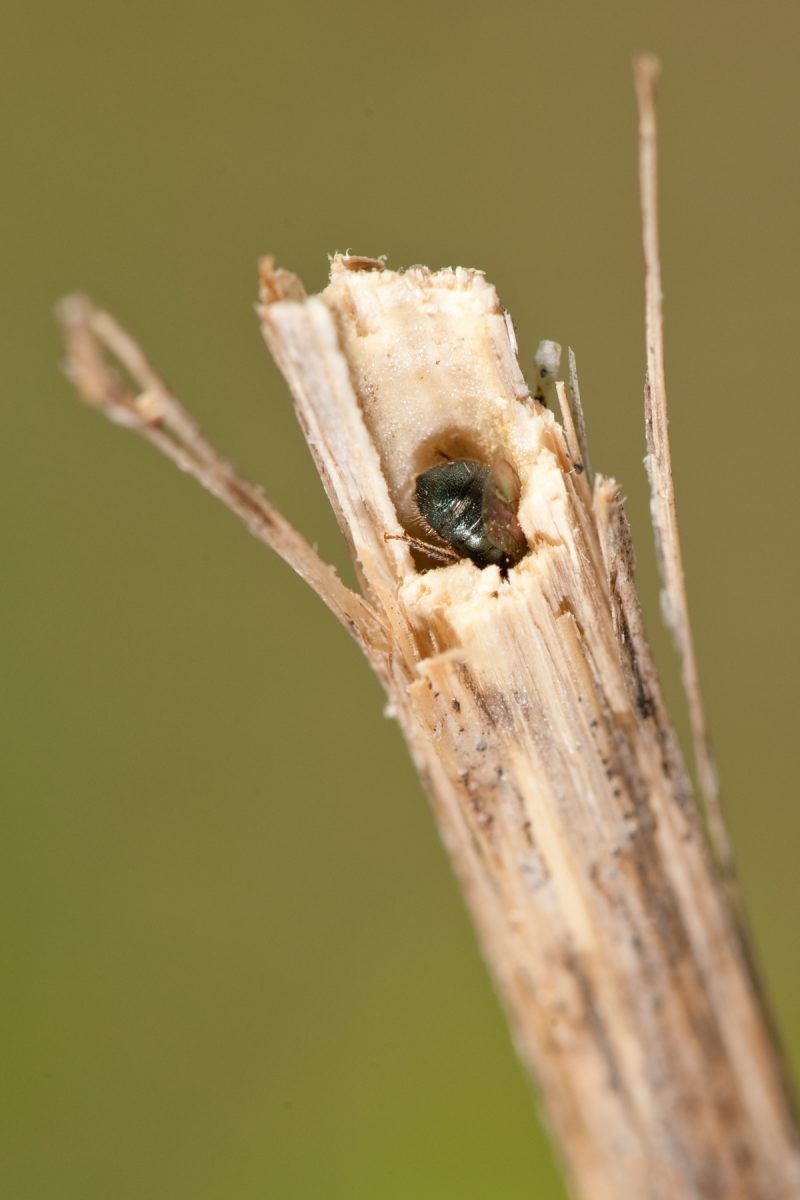
That brown, broken stalk of bee balm by your porch may hold a row of sleeping bees right now. Scientists call them stem-nesting bees, and they raise their young inside hollow or soft-centered plant stems.
So the full answer is simple, because standing stems give these bees a safe place to nest and overwinter. Cutting every stalk to the ground in fall can remove the homes, along with the young bees inside them.
A mother bee starts by finding a stem that has been snapped or cut, which opens the soft center. She then stocks a small chamber with pollen and nectar, lays one egg, and seals it with a wall.
She repeats the process several times, building a stack of chambers that looks like a tiny apartment building. Each young bee eats its pollen loaf, grows, and later chews out of the stem as an adult.
Most native bees in North America nest in the ground, but experts estimate about thirty percent use cavities. Plant stems, beetle holes in old wood, and hollow twigs all count as cavities for these small insects.
Many of these bees are about the size of a grain of rice, so you could walk past them daily. They still visit garden flowers and crops, and they help pollinate plants like asters, goldenrods, and berries.
Leaving a patch of stalks this October is one of the easiest ways you can support them at home. It costs nothing, saves you some work, and gives birds and other insects shelter during the cold months too.
Native Species That Raise Their Young In Stems
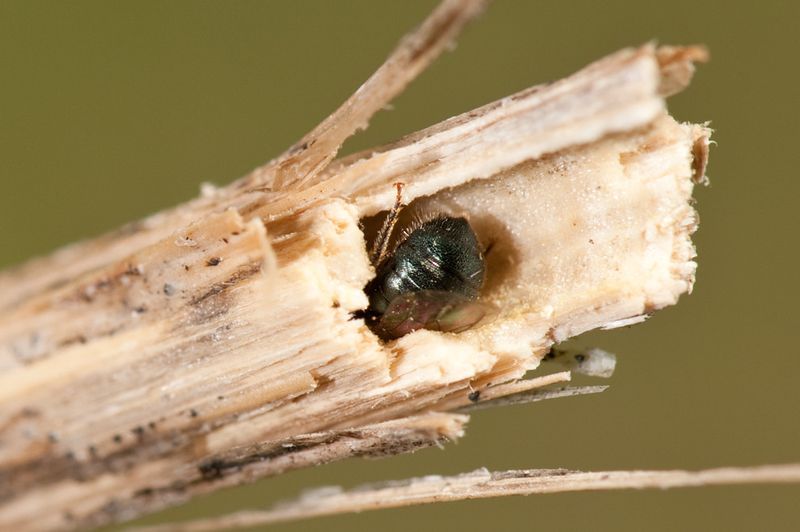
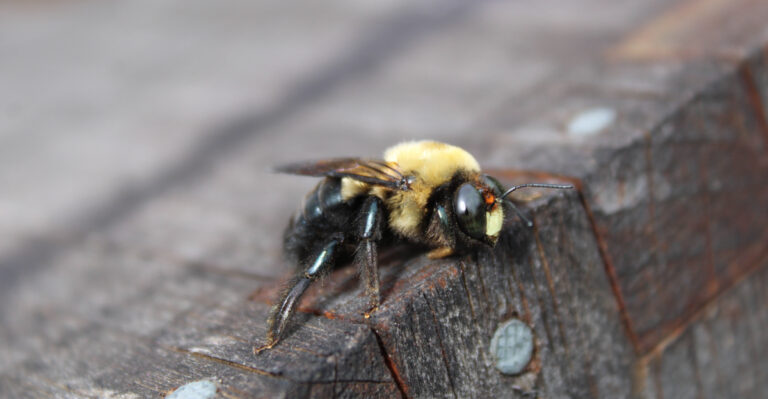
Small carpenter bees are the stars of the stem world, and Indiana has several species buzzing around gardens. These shiny, dark blue or greenish bees belong to the genus Ceratina and are much smaller than big carpenter bees.
Unlike their large cousins, they do not drill into your deck or porch rails to make a home. Instead, a female chews out the soft pith from a broken stem of sumac, raspberry, or elderberry.
Yellow-faced bees, from the genus Hylaeus, are another group that often moves into stems that are already hollow. They look a bit like tiny wasps, with small pale markings on the face and very little body hair.
Your Indiana Garden Changes Every Week. Your Plan Should Too.
Gardening in Indiana changes quickly throughout the season. Every Friday you’ll receive a simple weekly plan showing exactly what to plant, prune, fertilize, harvest, and protect so you never miss the right timing.
Some mason bees and leafcutter bees also nest in hollow stems, especially stems with openings about pencil width. Mason bees build walls with mud, while leafcutters line each chamber with neat circles cut from leaves.
Those perfect round notches you saw in rose or redbud leaves last summer were probably cut by leafcutter bees. Gardeners sometimes worry about the damage, but healthy plants usually recover from the minor leaf loss.
Researchers have recorded more than four hundred native bee species in Indiana, so stem nesters are one piece. Exact numbers for each nesting style are still being studied, but experts agree stems matter to many species.
You will rarely see them working, because they are quiet, tiny, and busy with flowers instead of people. These bees are small and gentle, and they rarely sting unless handled roughly.
Larvae Spend The Cold Months Tucked Inside
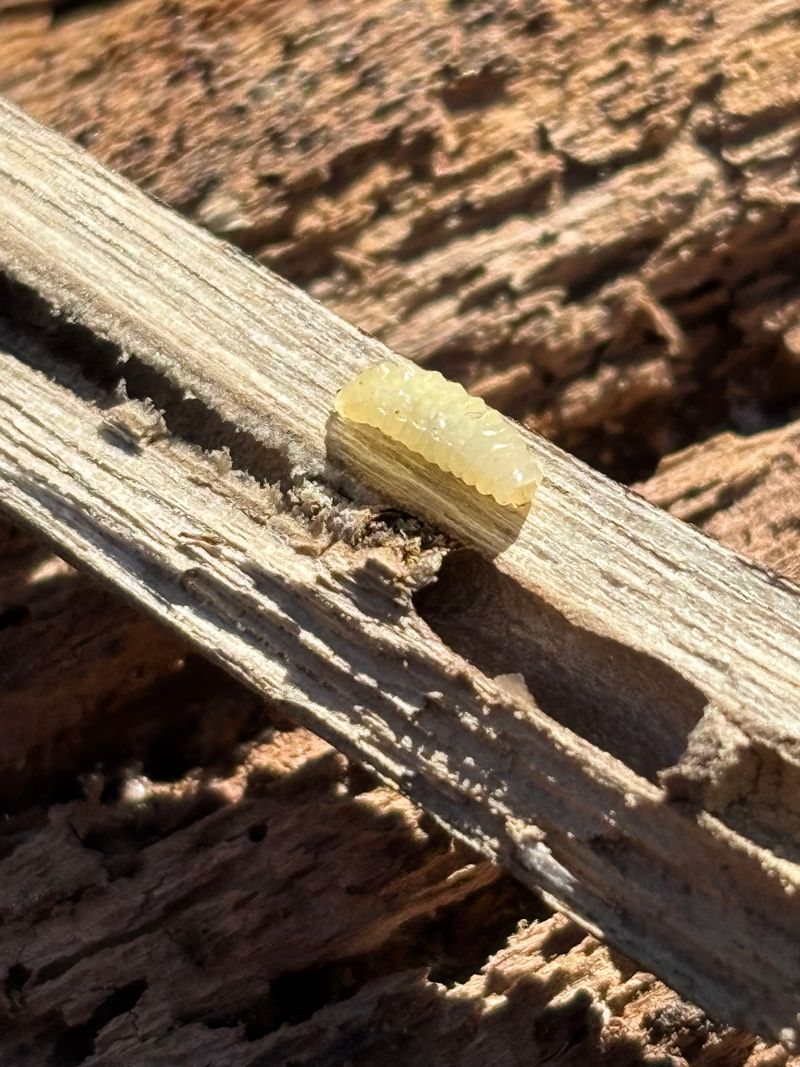
Right now, while you rake leaves and pull tomato cages, stem nests are quietly holding the next bee generation. The eggs laid during summer have already hatched, and most young bees have eaten their stored pollen by October.
Leafcutter bees usually spend winter as resting larvae, while mason bees often wait as adults inside cocoons. Small carpenter bees take a different path, since the adults themselves crawl into old stems to wait out winter.
Their bodies slow way down in this resting state, which scientists call diapause, a bit like hibernation. They do not eat or move much, so they rely on the stem wall to block wind and moisture.
Stems held off the soggy ground stay drier, which helps lower the chance of mold reaching the nest. That is one reason experts suggest leaving stalks standing instead of chopping them and piling them on soil.
Indiana winters swing between freezing nights and mild spells, but the bees are built to handle those changes. What puts them at risk is a mower, a chipper, or a trip to the yard waste pile.
A few species may stay inside for more than one winter, though scientists are still learning about this. That uncertainty is a good reason to leave old stems in place for a couple of years when possible.
Once spring warms up, the adults chew their way out and head straight for early flowers nearby. Your patience this fall pays off when those tiny pollinators show up on your spring blooms next year.
Your Fall Cleanup Can Remove A Whole Generation
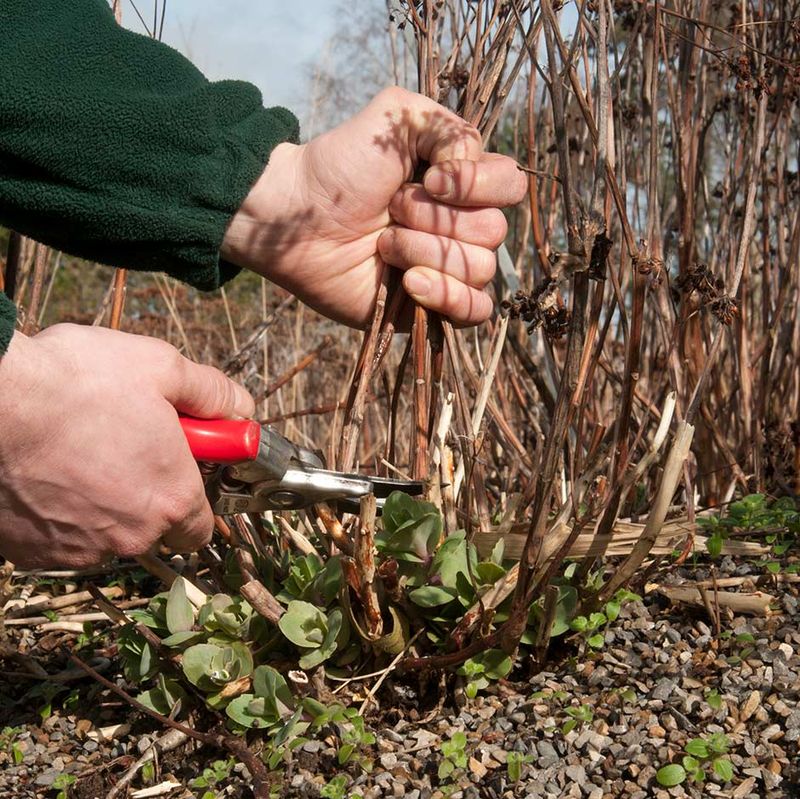
Plenty of us grew up thinking a tidy fall garden meant every stalk was cut flat by Halloween. I understand the habit, but that neat look can cost local bees a full season of young.
When stems are cut and hauled away, any nests inside go with them to the landfill or compost site. Hot compost piles and grinding machines leave little chance for a sealed bee chamber to stay whole.
You do not have to give up on a neat yard to help, though, because balance works well here. Try leaving stems standing in back borders or side beds, and tidy the front edges people see most.
A clean mowed strip or a short fence along the bed tells neighbors the wild look is on purpose. Some Indiana gardeners add a small pollinator habitat sign, which can spark friendly chats with people walking by.
Plants with disease problems are a fair exception, and extension experts often recommend removing those stems in fall. Peonies with leaf blotch or bee balm covered in heavy powdery mildew are common examples worth cleaning up.
Healthy stalks of coneflower, Joe-Pye weed, ironweed, and native grasses can stay right where they grew. Many of those seed heads also feed goldfinches and juncos during winter, which adds another reason to wait.
If a stem must go, lay it loosely in a brush pile at the back of the yard. Any bees tucked inside still have a decent chance to emerge in spring, even from a fallen stalk.
Pithy Stalks That Make The Best Homes
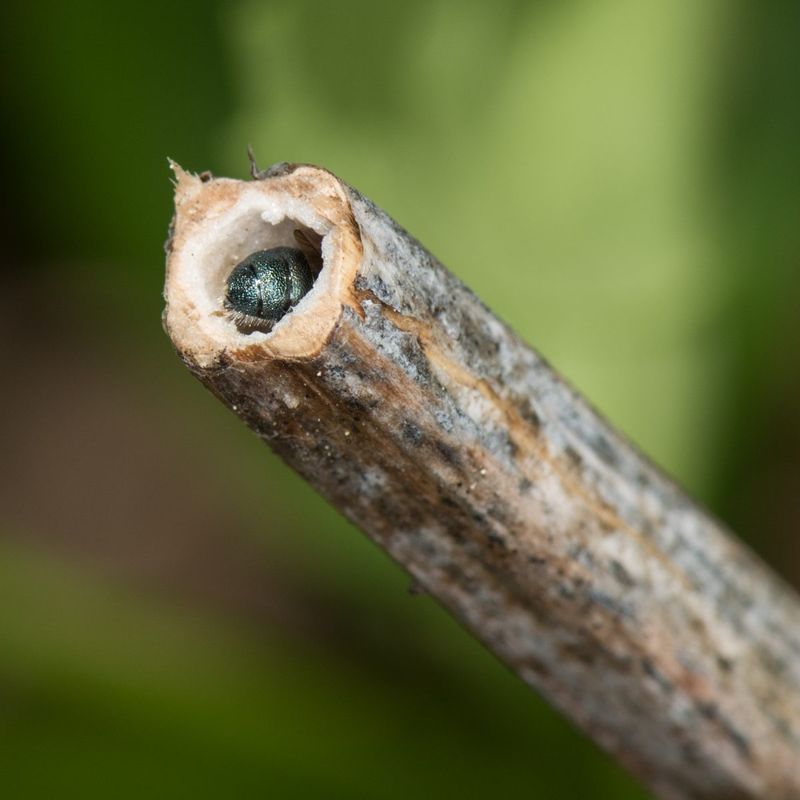
Snap a sumac twig in half and you will spot a soft, spongy core that looks like foam. That core is called pith, and small carpenter bees find it easy to scoop out with their jaws.
Shrubs like smooth sumac, elderberry, and wild raspberry are classic choices for these bees across much of Indiana. Native roses, blackberries, and Joe-Pye weed also show up on many extension lists of useful nesting plants.
Hollow stems work best for bees that cannot dig, like yellow-faced bees and some mason bees. Big bluestem, wild bergamot, and other native plants with hollow stems can provide those ready-made tubes for nesting.
Stem width matters too, since most stem-nesting bees prefer openings between about one eighth and one half inch. Very thin stems hold only the tiniest bees, while wider tubes suit larger species like leafcutters.
A mix of plants gives you a mix of stem sizes, which welcomes a wider variety of bees. October is a great month for planting many native perennials and shrubs in Indiana, since roots keep growing.
Purdue Extension and local native plant nurseries can help you choose species that fit your soil and sunlight. Fun fact, the elderberry pith was once used in science classrooms to show how static electricity can move objects.
Bees simply value pith because it is soft, so a broken sumac branch becomes a ready building site. Planting a few of these shrubs near your flower beds puts housing right next to a steady food supply.
Spring Trimming That Leaves Tall Stubble Behind
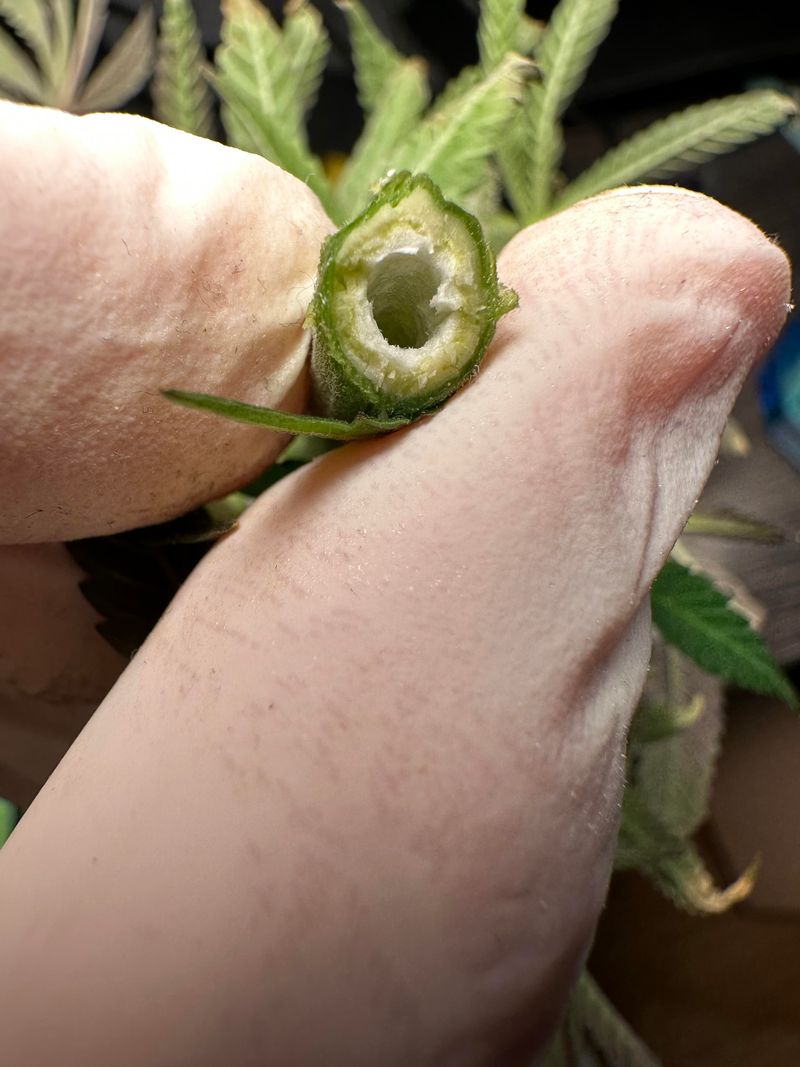
Come spring, you can finally reach for the pruners, but a little restraint helps the bees one more time. The Xerces Society suggests cutting old perennial stalks to a height of about eight to twenty-four inches.
That leftover stubble does two jobs, because it lets this year’s nests finish and creates fresh openings. Bees often move into these freshly cut stems during summer, raising another batch of young for next winter.
New green growth fills in quickly around the stubble, so the bed looks fresh by late spring anyway. Most people walking past will notice the new leaves and blooms long before the old brown stems.
Timing matters, and many experts suggest waiting until daytime temperatures stay above about fifty degrees for several days. In much of Indiana, that usually lands somewhere in April or May, depending on where you live.
Some guidance recommends leaving the old stubble in place for a full year or two before removing it. That extra time gives any slow-growing young bees a chance to finish and leave the nest safely.
For this fall, the plan is simple, and it mostly involves leaving your healthy stalks right where they stand. Make a quick note on your calendar for spring trimming, and jot down the stubble height to aim for.
Those small steps add up across an entire neighborhood when several gardeners choose to do the same thing. By next summer, your garden may be hosting a new crop of tiny bees that you helped raise.