That maple root is heaving your neighbor’s driveway — who pays for it under Oregon law?
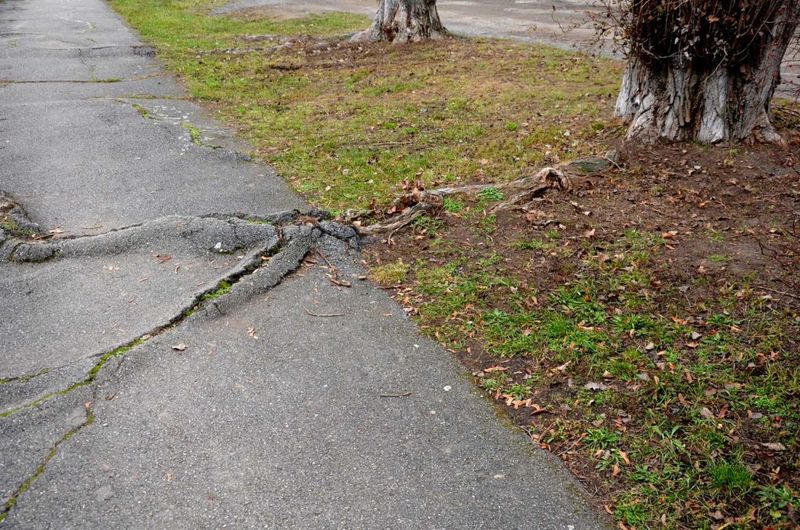
A big maple near the property line is a beautiful thing until cracks start appearing in the neighbor’s driveway. When pavement starts to heave, it is natural to point at the nearest tree, but figuring out who actually owes a repair bill under Oregon law is not that simple.
Neither neighbor automatically gets stuck with the cost just because a tree is growing on one side of the fence, and understanding why can save both of you a lot of frustration and money.
A possible maple-root problem does not automatically create a bill
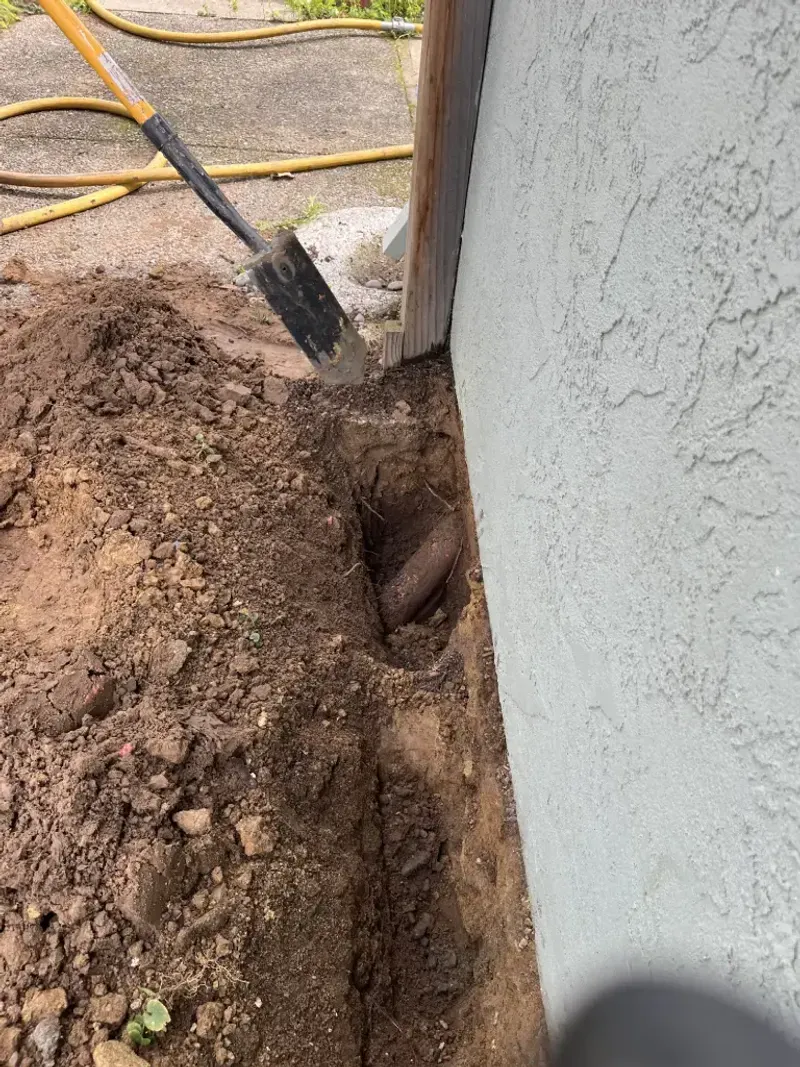
Pavement does not lie flat forever, and when a driveway starts to buckle near a property line, the big tree next door becomes an obvious suspect. The trouble is that suspicion is not proof.
Proximity to a maple does not, by itself, establish that roots caused the heaving, and Oregon law does not hand either neighbor an automatic repair bill simply because a tree grows on one side of the boundary.
The leading Oregon appellate decision on this question is Carvalho v. Wolfe, decided by the Oregon Court of Appeals in 2006.
That case involved damage to a home’s foundation, not a driveway, so applying its reasoning to pavement heaving is a legal analogy rather than a settled driveway rule. What the court made clear, though, is that a tree owner is not strictly liable simply because roots crossed a property line and something on the other side was damaged.
For a driveway owner to have a viable claim, the law generally requires more than a tree growing in the wrong direction. The driveway owner would need to show that the tree owner’s conduct, or failure to act, rose to the level of negligence, recklessness, intentional behavior, or involvement in an abnormally dangerous activity.
That is a meaningful legal bar, not a formality.
Oregon State University Extension’s guidance on landscape trees and the law reinforces this point: roots crossing a boundary do not automatically make the tree owner responsible for what happens on the other side. Before anyone starts talking about who writes the check, both neighbors should understand that the answer depends heavily on the specific facts of their situation.
Carvalho makes fault, not mere root migration, the dividing line

Oregon recognizes two separate legal theories a driveway owner might use against a tree owner: trespass and private nuisance. They sound similar, but they work differently, and the distinction matters a great deal when roots have simply spread underground rather than being deliberately directed toward a neighbor’s pavement.
Trespass, in property law, concerns an interference with a person’s exclusive possession of their land. Nuisance concerns an unreasonable interference with a person’s use and enjoyment of their property.
In Carvalho v. Wolfe, the Oregon Court of Appeals examined both theories and drew a line that is central to any root-damage dispute: an unintentional intrusion, meaning roots that spread naturally without any deliberate act by the tree owner, generally requires culpable conduct to support liability.
Your Oregon Garden Changes Every Week. Your Plan Should Too.
Gardening in Oregon changes quickly throughout the season. Every Friday you’ll receive a simple weekly plan showing exactly what to plant, prune, fertilize, harvest, and protect so you never miss the right timing.
The court rejected a strict-liability reading of the facts before it.
For a trespass claim involving unintentional root migration, the driveway owner would typically need to show negligence or that the tree owner was engaged in an ultrahazardous activity. For a private nuisance claim, the plaintiff must show that the tree owner’s conduct was intentional, negligent, reckless, or abnormally dangerous.
Ordinary tree ownership, without more, does not clear that bar.
What this means in a practical driveway scenario is that the question is not simply “whose roots are under my pavement?” The more useful question is: “Did the tree owner do something, or fail to do something reasonable, that contributed to the damage?” A tree owner who maintained the tree responsibly, had no reason to foresee a problem, and never received a complaint is in a very different position from one who ignored repeated warnings that the tree was causing ongoing damage to a neighbor’s property.
Carvalho involved foundation damage, and no Oregon appellate court has issued a decision specifically about driveway heaving caused by tree roots. That gap matters.
The legal principles translate, but the outcome in any specific driveway case will depend on its own facts.
Notice can strengthen a claim, but it does not shift every cost
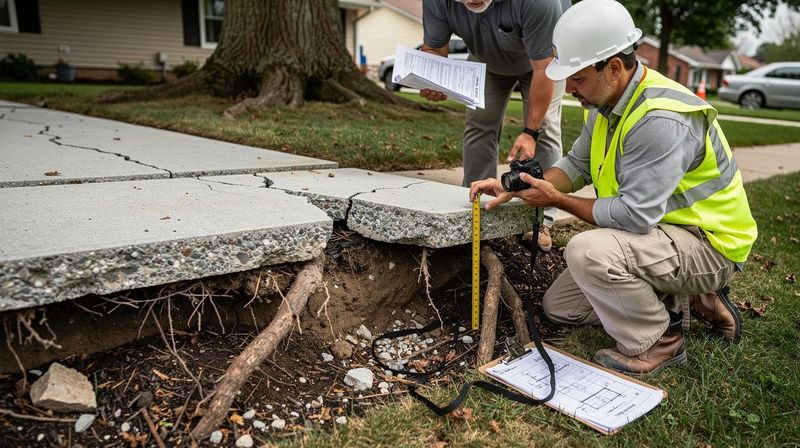
One of the most important facts in a root-damage dispute is whether the tree owner knew, or reasonably should have known, that the tree was causing a problem. Knowledge does not automatically transfer the repair bill, but it is a significant piece of evidence that can change the legal picture considerably.
Under the reasoning in Carvalho v. Wolfe, a tree owner who knew or should have known that the tree’s condition would result in root damage, and who failed to respond reasonably, is in a much harder position to defend.
That is the practical reason a written notice from the driveway owner can matter: it creates a record showing exactly when the tree owner learned about the problem and what they did, or did not do, in response.
A documented failure, meaning a driveway that is visibly cracked, displaced, and causing drainage problems right now, is a stronger foundation for a claim than a speculative worry that roots might eventually cause trouble. The stronger the proof of present damage, the clearer the notice, and the more unreasonable the tree owner’s response, the more credible the potential claim becomes.
That said, sending a letter is not a magic switch. Notice helps show knowledge, but the driveway owner still needs to establish that roots actually caused the heaving, that the tree owner acted with the required level of fault, and that the repair costs are real and documented.
A neighbor who receives a notice and promptly arranges a professional evaluation, communicates openly, and takes reasonable steps to address a confirmed problem is in a different legal position than one who ignores the concern entirely.
Both neighbors benefit from keeping the conversation in writing. A calm, factual note describing the visible damage and asking the tree owner to take a look is a reasonable starting point.
Declaring automatic liability in the opening message tends to make productive conversations harder without improving the legal position of either party.
Confirm ownership and causation before assigning blame
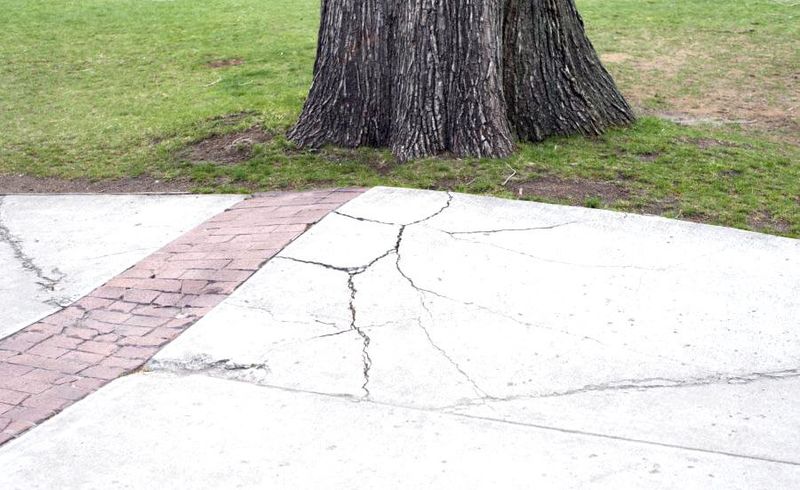
Before either neighbor commits to a position, two threshold questions need honest answers: whose tree is it, and did the roots actually cause the driveway problem? Skipping either question is a reliable way to spend money on the wrong solution.
Tree ownership in Oregon generally follows the location of the trunk. The person whose property contains the trunk is ordinarily the tree’s owner.
A tree whose trunk straddles the boundary line may raise shared-ownership questions that complicate the analysis. Oregon Extension’s guidance on landscape trees and the law notes that reliable boundary evidence matters for these determinations, and a survey may be helpful when the trunk’s location is genuinely unclear, though a formal survey is not always required.
Causation is the other piece that neighbors often assume rather than verify. A maple growing near a driveway does not prove that its roots heaved the pavement.
Driveway failures have multiple possible explanations: poor base preparation at installation, drainage problems, frost and thaw cycles, soil settlement, age, or a combination of factors. Any of those could produce the same cracking and displacement that looks like a root problem from the surface.
A qualified tree professional can evaluate the tree’s root structure, spread, and proximity to the pavement and offer a professional opinion about whether roots are likely contributing to the damage. When the pavement failure is substantial, a paving or structural professional may also be worth consulting to evaluate whether other causes played a role.
Keep in mind that professional opinions are evidence to be weighed, not legal rulings. Under the reasoning in Carvalho, causation must be established as part of any viable claim, and proximity alone does not satisfy that requirement.
Getting both questions answered early, before repairs start or accusations escalate, gives both neighbors a factual foundation for whatever conversation or negotiation comes next.
Root cutting can solve one problem while creating another
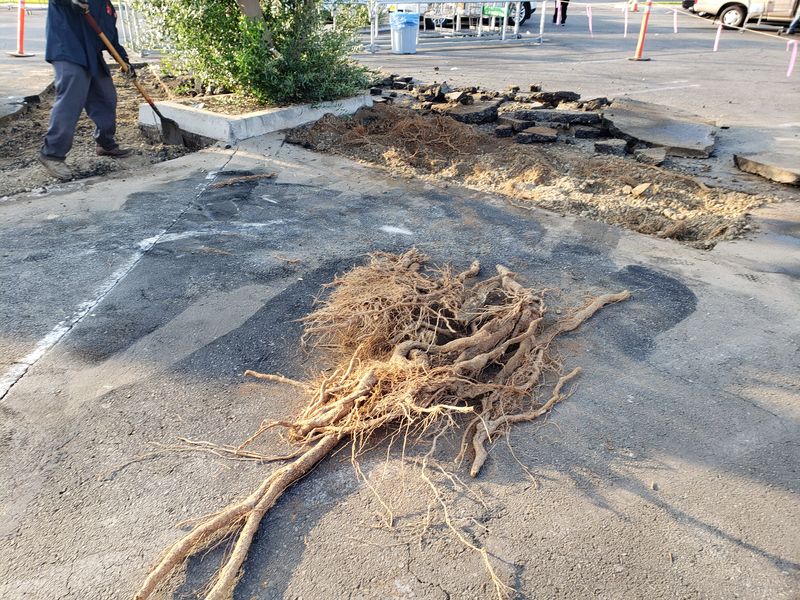
When a driveway owner discovers roots on their side of the property line, the instinct to simply cut them out is understandable. The pavement is damaged, the roots are on your property, and removal feels like an obvious fix.
The legal and practical reality is more complicated than that.
Oregon Extension’s legal guidance on landscape trees warns explicitly that root removal, root destruction, or adding substantial fill over a tree’s root zone may be treated as damage to the tree. If that damage injures or destabilizes the tree and the tree owner can link it to the neighbor’s root work, the person who cut the roots could face their own liability claim.
Solving a driveway problem by creating a tree-damage claim is not a good trade.
Root work should be handled by a properly licensed Oregon contractor. The Oregon Landscape Contractors Board notes that tree removal, pruning, guying, and stump removal require licensing through either the Landscape Contractors Board or the Construction Contractors Board.
Verifying the license before work begins protects both the homeowner and ensures the work meets professional standards.
Local rules add another layer. Portland, for example, requires permits for some private-tree removals depending on tree size, heritage status, plan district, overlay, or development activity, and it distinguishes private trees entirely from street trees, which require permits for all removals.
Portland’s tree-removal permit guidance explains the specific factors that trigger a permit requirement. Other Oregon cities and counties have their own rules, so checking with your local jurisdiction before any work begins is always the right move.
A licensed arborist can also advise on root-pruning techniques that minimize damage to the tree while addressing the encroachment. That kind of professional input is worth far more than a weekend project with a shovel.
Document the damage before either neighbor commits to repairs
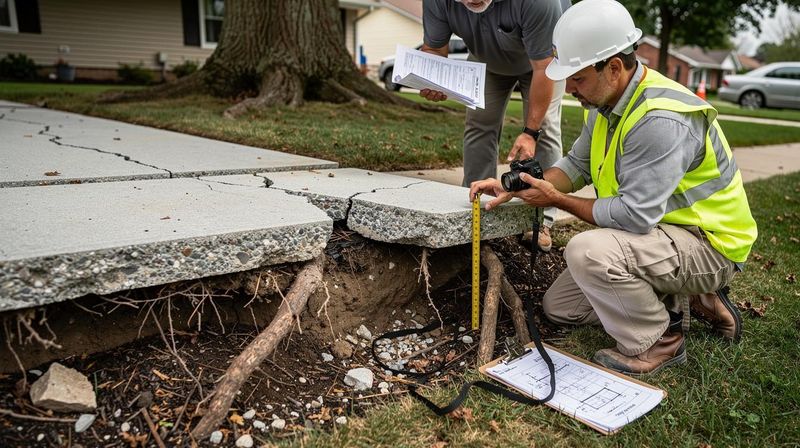
Good documentation is quiet protection for both neighbors. Before any repair work starts, before any tree work is scheduled, and before a single heated conversation happens, someone should be taking photographs and keeping records.
Once the pavement is repaired or the roots are cut, the physical evidence disappears.
The driveway owner should capture dated photographs of every crack, raised section, and drainage change. Measurements of pavement displacement are useful.
Notes about when the problem first appeared, any prior conversations with the tree owner, and copies of written communications all become relevant if a dispute escalates. Repair estimates from licensed contractors give the damage a dollar value that any future negotiation or claim will need.
The tree owner benefits from documentation too. A record showing that the tree was professionally maintained, that no prior complaints were received, or that a prompt evaluation was arranged after notice was given all speak to the reasonableness of the tree owner’s conduct, which matters under the fault-based framework described in Carvalho v.
Wolfe.
Notifying your own homeowners insurer is also a reasonable early step. Oregon’s Division of Financial Regulation notes that homeowners insurance may cover certain tree-related damage even when the tree is rooted on a neighbor’s property, while responsibility between insurers may depend on whether the neighbor was negligent.
Coverage for paved driveways specifically is policy-dependent. Standard policies may exclude settling, deterioration, earth movement, or damage to paved surfaces, and deductibles apply.
Reading your policy or calling your agent before assuming coverage is the safest approach.
Documentation does not require legal training. A phone camera, a measuring tape, a notebook, and a folder for emails and estimates are enough to build the factual record that any productive resolution, whether negotiated, mediated, or litigated, will eventually require.
Mediation may resolve the dispute before either neighbor files suit
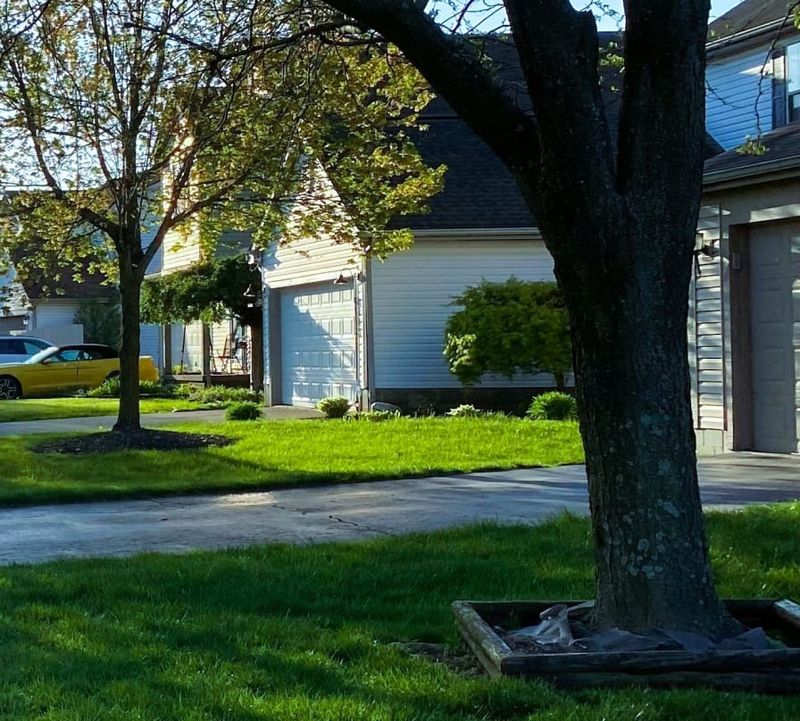
Most root-and-driveway disputes between neighbors do not need a courtroom. They need a structured conversation where both sides can talk through options, whether that means shared cost-sharing for repairs, a root barrier installation, selective pruning, driveway redesign, or simply an agreement to monitor the situation and revisit it in a year.
Mediation creates that space without the expense and stress of litigation.
Oregon courts recognize community dispute-resolution centers as a practical resource for neighbor conflicts. The Oregon Judicial Department’s mediation program information identifies free or low-cost options available in many areas of the state.
A trained mediator does not decide who is right; the mediator helps both parties reach an agreement they can live with, which is often more durable than a judgment one side feels was forced on them.
Small claims court is a different option worth understanding before choosing it. Oregon’s small claims jurisdiction generally covers money or property-damage claims up to $10,000.
For a driveway owner seeking reimbursement of a specific repair cost that falls within that ceiling, small claims may be a reasonable venue. However, small claims is primarily a money remedy.
A continuing problem, roots that keep growing, pavement that will keep heaving, may call for court-ordered abatement or an injunction, which small claims cannot provide.
Under ORS 105.505, a court may order abatement or injunctive relief after the elements of a private nuisance have been established, but that statute does not guarantee removal of the tree or any specific remedy. A continuing dispute that involves both money damages and future relief may require a different court and, almost certainly, an Oregon attorney.
When the damage is modest and both neighbors are willing to talk, starting with mediation is usually faster, cheaper, and kinder to the relationship than filing anything with a court.
Proof, not the tree’s address, should guide the next step
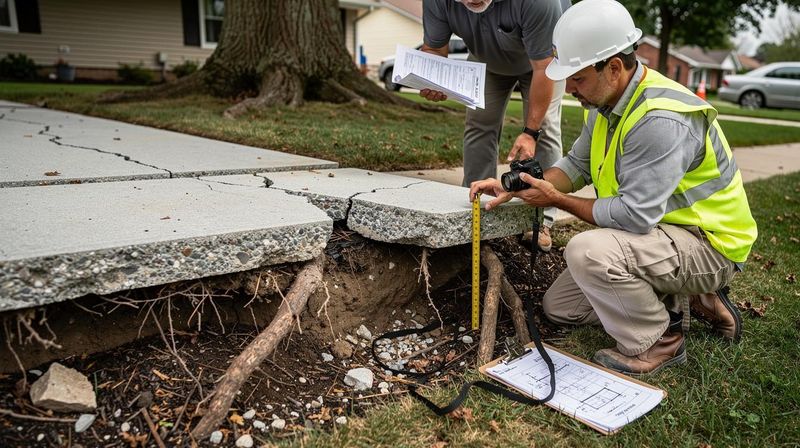
Working through a possible root-and-driveway problem follows a logical path: confirm whose tree it is by checking where the trunk sits relative to the boundary, get a professional evaluation of whether roots are actually contributing to the pavement failure, document the damage thoroughly before any work begins, and keep communications with your neighbor calm and in writing.
Avoid unauthorized root cutting or tree work. Check your homeowners policy for coverage and call your insurer early.
Look into local permit requirements before scheduling any tree work, and consider mediation before filing anything in court. If the dispute is substantial, continuing, or contested, consulting an Oregon attorney is the most reliable way to understand your specific options.
Oregon appellate authority and Oregon Extension’s practical guidance both point toward the same conclusion: Oregon law may support a claim when negligent or otherwise culpable conduct caused documented damage, but no authority automatically assigns the repair bill to either neighbor based on where the tree happens to be planted. The strongest position in this dispute belongs to whoever has the clearest facts.