That Walnut Tree Keeps Ruining Plants In Your Arizona Yard Long After It’s Gone, And Here’s Why
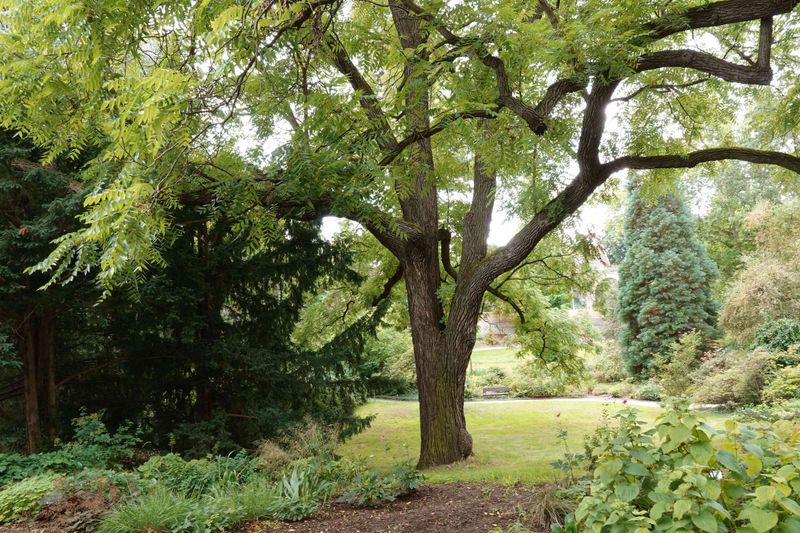
If plants near a walnut tree in your yard keep dying, it is tempting to blame the tree for poisoning the soil in every direction. The idea that a black walnut can contaminate soil 80 feet away and keep killing plants long after it is removed is widely repeated, but the full story is more complicated than that.
Understanding what walnut trees actually do, and what they do not do, can save you from pulling out a healthy tree or ignoring a fixable garden problem.
Start by identifying the walnut species
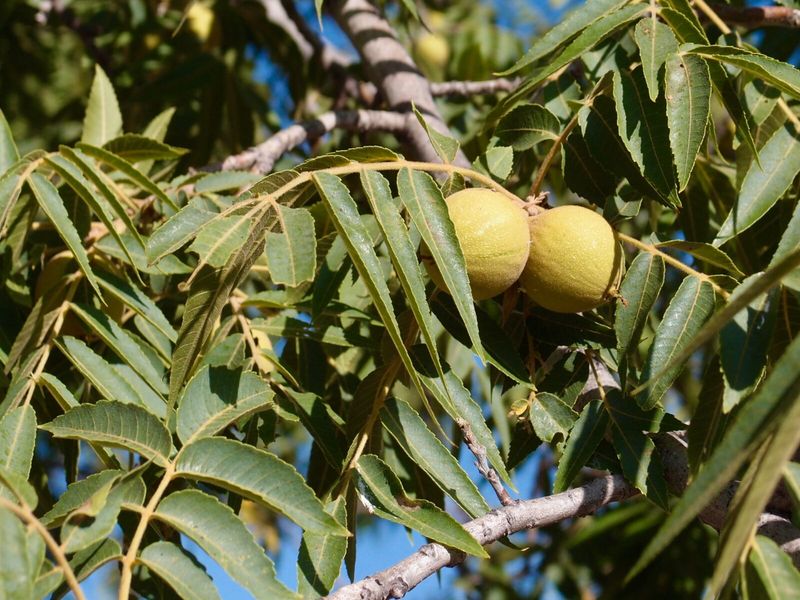
Knowing which walnut is growing in your yard matters more than most homeowners realize. Arizona is home to Juglans major, the Arizona walnut, a native riparian tree that grows naturally along canyon streams and washes across the state.
Eastern black walnut, Juglans nigra, is a different species native to the Midwest and eastern United States. Most of the alarming research and extension warnings about juglone toxicity were written with Juglans nigra in mind.
The two species are related, and both belong to the walnut family, which does produce juglone. However, the available evidence does not establish that Arizona walnut behaves identically to eastern black walnut in low-desert residential landscapes.
Applying distance rules or toxicity timelines developed for Juglans nigra in Illinois or Ohio to a Juglans major growing in a Phoenix backyard is a stretch that the research does not currently support.
To tell them apart, examine the leaves, fruit, bark, and overall tree form. Arizona walnut tends to have smaller leaflets, smaller rounder fruit, and rougher bark compared to eastern black walnut.
If you are uncertain after looking, contact your local cooperative extension office or consult a certified arborist before drawing any conclusions about juglone. Penn State Extension guidance on juglone-producing plants confirms that species identification is the necessary first step, because juglone production and its effects vary across the walnut family.
What juglone can do to sensitive plants
Juglone is a naturally occurring compound produced by walnut-family trees. Roots, buds, nut hulls, leaves, and stems all serve as sources, with the highest concentrations typically found in the roots and hull of the nut.
When juglone contacts the roots of a sensitive plant at sufficient concentration, it can interfere with normal cellular respiration and cause visible decline.
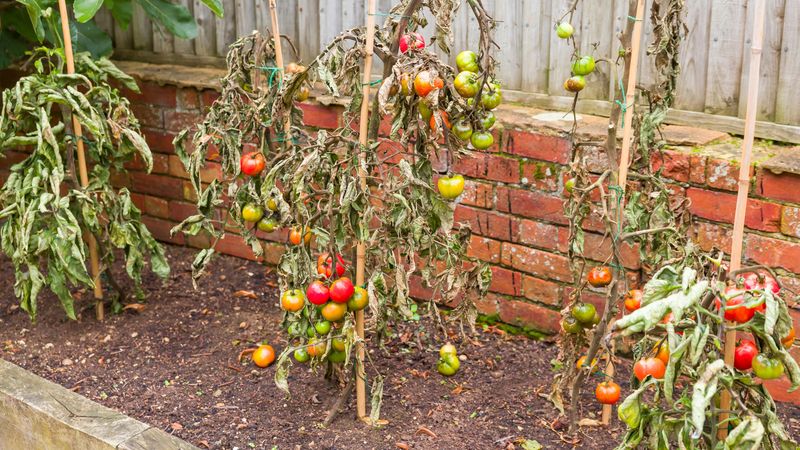
Certain plants are reported more often as sensitive to juglone. Tomatoes, peppers, eggplant, and potatoes are frequently cited vegetables.
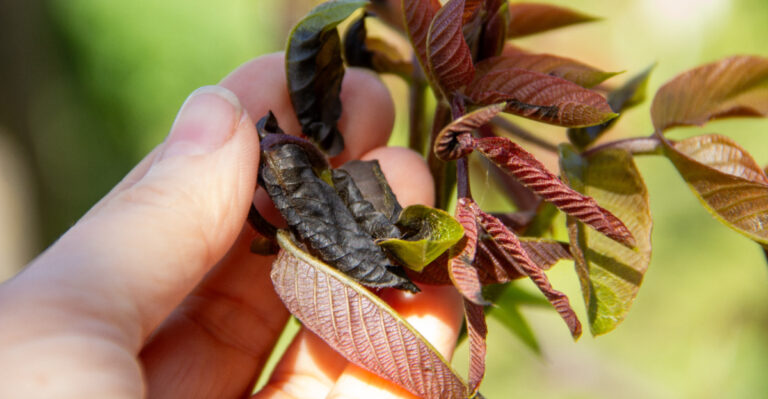
Apples, blueberries, lilacs, azaleas, rhododendrons, peonies, and some pines also appear on sensitivity lists from multiple extension sources. According to University of Wisconsin Horticulture, symptoms can include wilting, yellowing or browning leaves, stunted growth, twisted or distorted new growth, and eventual plant death.
These lists are not exhaustive or absolute, and sensitivity can shift depending on growing conditions, plant age, and how much root contact actually occurs.
The critical point for Arizona gardeners is that none of these symptoms are specific to juglone. Wilting and yellowing in a Phoenix or Tucson yard can just as easily point to intense summer heat, inconsistent irrigation, waterlogged roots, high soil salinity, compacted caliche, or a plant that was simply not suited to the low desert in the first place.
Your Arizona Garden Changes Every Week. Your Plan Should Too.
Gardening in Arizona changes quickly throughout the season. Every Friday you’ll receive a simple weekly plan showing exactly what to plant, prune, fertilize, harvest, and protect so you never miss the right timing.
Juglone is one possible explanation among many, and a symptom list alone cannot confirm it as the cause.
Why an 80-foot rainwater zone is not established
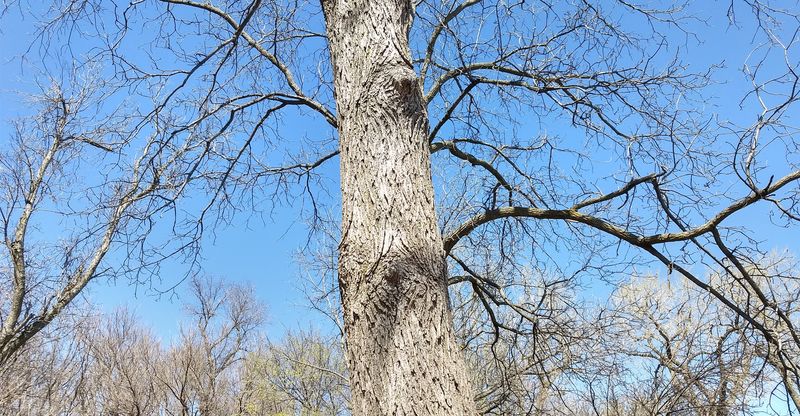
Walnut roots can grow well beyond the canopy edge, sometimes extending 50 feet or more from the trunk in favorable soil. That root spread creates real opportunities for root-to-root contact with nearby plants.
However, root spread and dissolved juglone movement through soil are two separate things, and they should not be treated as the same risk.
Juglone is poorly water-soluble. Clay particles and organic matter in soil can bind juglone and limit how far it moves.
Washington State University Extension notes that field evidence for allelopathic effects is limited and that soil chemistry and microbial degradation complicate simple cause-and-effect claims. Research measuring juglone in alley-cropping soils found that concentrations declined substantially as distance from walnut rows increased, rather than remaining uniform across a broad zone.
Some extension publications do mention a possible 50-to-80-foot risk zone for mature eastern black walnuts, and that range is worth knowing. But it was developed for Juglans nigra in Midwestern conditions, not for Arizona walnut in alkaline, hot, and sometimes caliche-layered desert soils.
Treating it as a universal boundary would mean blaming a walnut tree for problems in beds that have no root contact and no debris accumulation. The strongest and most consistent effects in field observations appear near the tree’s root zone, the dripline, and areas where leaves, hulls, and other debris collect.
A bed 80 feet from the trunk with no root intrusion and no walnut debris is a much weaker juglone candidate than a bed where roots have grown directly through the soil.
Why effects can linger after removal
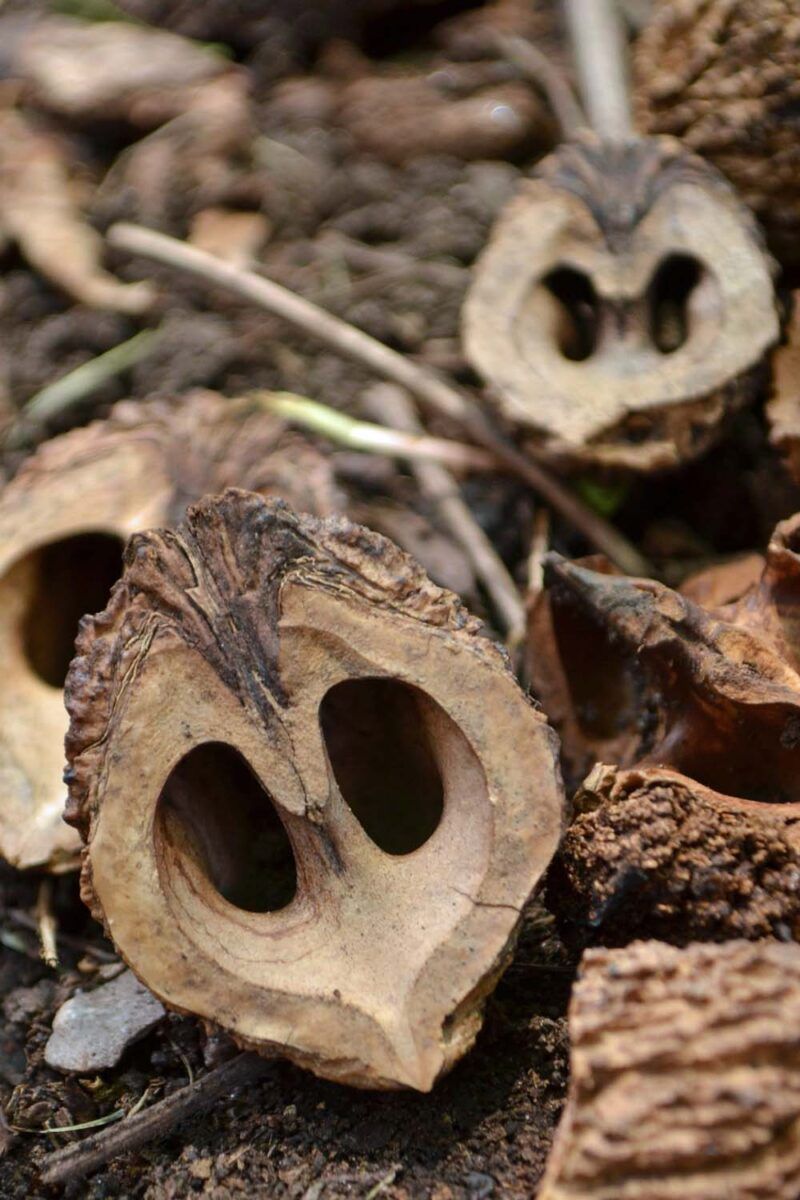
Cutting a walnut tree down does not immediately end juglone exposure in the surrounding soil. Decaying roots left in the ground continue releasing the compound as they break down.
Leaves, hulls, nuts, bark, sawdust, fresh wood chips, and other debris left on or mixed into planting beds can also keep releasing juglone for some time after the tree is gone.
How long that exposure continues is not fixed. According to
University of Illinois Extension, persistence depends on how much root and woody material remains, the texture of the soil, moisture levels, aeration, organic matter content, and the activity of soil microbes that break juglone down.One extension response notes that five years after removal, residual juglone should generally be well degraded in most situations, but that estimate assumes roots and debris have been removed or have substantially decayed and that soil conditions support active microbial breakdown.
In an Arizona yard, those conditions are not guaranteed. Hot, dry summers slow microbial activity.
Compacted or caliche-layered soils limit aeration. Large stumps or root masses left in place extend the breakdown timeline.
The honest answer is that post-removal effects may last months, or in some situations a few years, but the evidence does not support the idea of indefinite toxicity or a single waiting period that fits every yard. Removing remaining debris and improving soil conditions are more productive steps than waiting for a set number of years and assuming the problem has resolved on its own.
Rule out Arizona’s more common planting problems
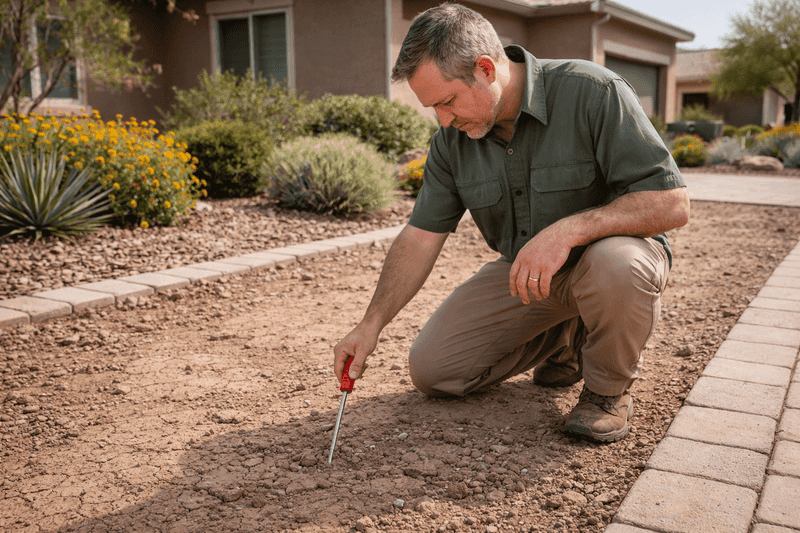
Before juglone becomes the working theory, a few other suspects deserve a harder look. Phoenix and Tucson gardens face stressors that can produce the exact same symptoms attributed to juglone, and those stressors are far more common than walnut toxicity in low-desert residential yards.
Start by comparing the failing bed with a similar planting in a different part of the yard that has no walnut exposure. If both areas show the same decline, the tree is unlikely to be the cause.
Then check irrigation coverage carefully, because uneven drip emitters and clogged lines are a frequent source of mysterious plant failure in Arizona. Look at drainage, because waterlogged roots in clay-heavy or caliche-blocked soil can cause wilting and browning that looks identical to chemical stress.
Test soil salinity and pH, since alkaline desert soils can lock out nutrients and push sensitive plants into decline. Inspect for root damage from prior digging, and check for common Arizona pests and fungal diseases that thrive during monsoon humidity.
Juglone becomes a more plausible explanation when sensitive plants are failing specifically in the area where walnut roots or debris are present, while comparable plants in unaffected parts of the yard remain healthy. Even that pattern does not prove causation on its own.
University of Maryland Extension guidance on walnut toxicity recommends treating juglone as one possible cause rather than a default diagnosis. Running a controlled trial with a known juglone-tolerant plant in the affected bed is a practical next step before considering any major decision about the tree.
Reduce exposure without cutting down the tree
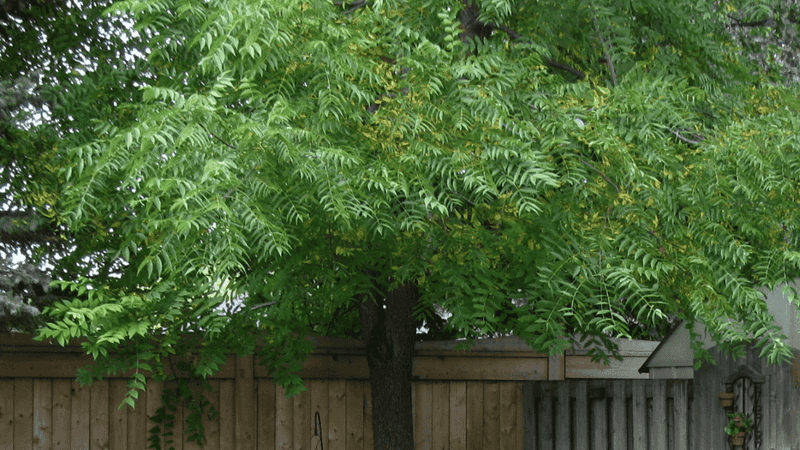
For homeowners who want to keep growing vegetables or sensitive ornamentals near a walnut tree, a few practical steps can meaningfully reduce the risk of juglone exposure without requiring tree removal.
Debris removal is the most direct action available. Fallen walnut leaves, hulls, nuts, bark, sawdust, and fresh wood chips should be cleared from beds containing sensitive plants on a regular basis.
Fresh walnut debris should never be used as mulch around plants that are known to be sensitive. Penn State Extension guidance on gardening near walnuts emphasizes that keeping walnut material out of the planting area is one of the most reliable ways to limit exposure.
Raised beds and containers can help, but only when they are genuinely isolated from walnut roots. A bed that adds a few inches of fresh soil on top of existing ground does not prevent roots from growing up into it over time.
For real isolation, the bed needs physical barriers, sufficient depth, and a fill of uncontaminated soil brought in from elsewhere. Shallow raised beds placed directly over root zones are not a reliable solution.
Improving soil drainage, aeration, and organic matter is also worthwhile. Microbial activity is one of the main forces that breaks juglone down in soil, and those microbes work better in well-aerated, biologically active ground than in compacted or waterlogged conditions.
Adding extra irrigation to flush juglone away is not supported by the evidence, and in a water-scarce Arizona yard, it is also an unnecessary expense. Focus on soil health and debris management instead.
Make the decision from evidence, not a distance number
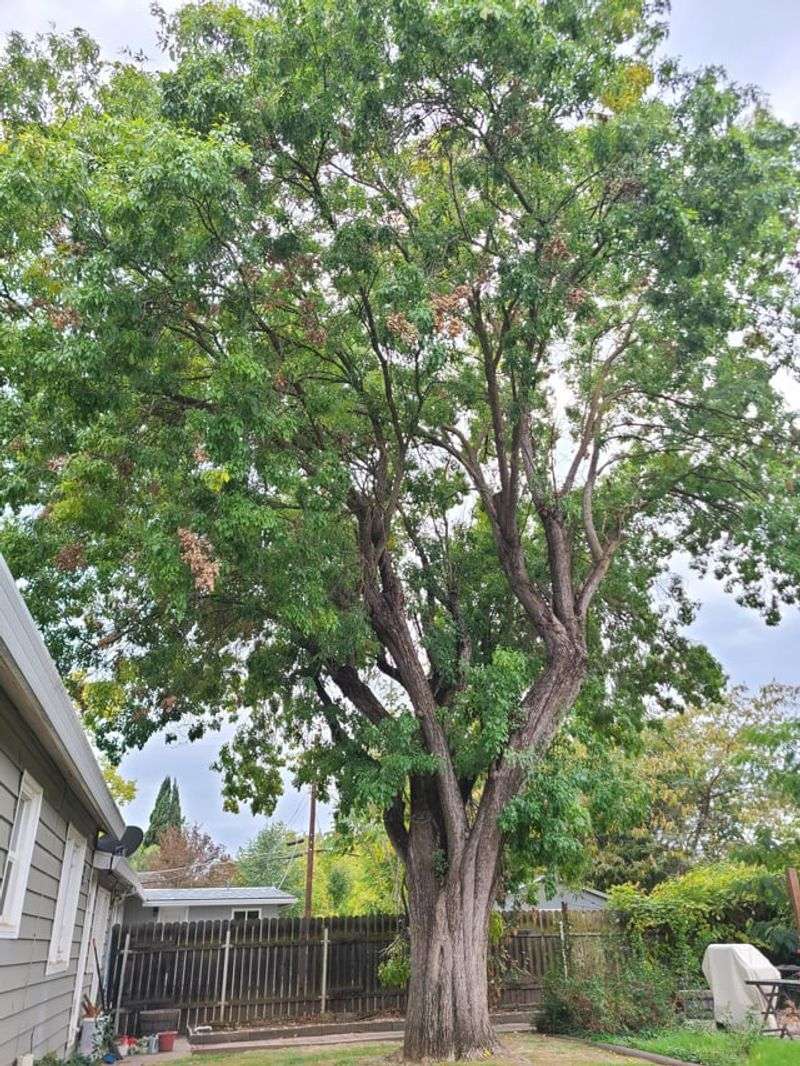
A walnut tree in your yard is a legitimate thing to investigate when nearby plants keep failing, especially if the affected plants are known to be sensitive and they are growing where roots or debris accumulate. Juglone is a real compound with real effects on certain plants under certain conditions.
That does not make every walnut tree a 80-foot poison zone, and it does not mean the tree should come down before the evidence warrants it.
Work through the problem in order. Identify the species first.
Inspect the area for root intrusion and debris contact. Rule out heat stress, irrigation gaps, drainage failures, soil salinity, caliche, and poor plant selection for the low desert.
Remove any walnut debris from the affected bed. If you want to trial a replacement planting, choose a species with documented juglone tolerance and use a properly isolated bed.
Test the soil if the pattern of failure remains unexplained after those steps.
Removing a mature tree is expensive, disruptive, and permanent. Extension guidance consistently advises treating juglone as one possible cause among many and confirming it before taking drastic action.
A tree that has grown in an Arizona yard for decades is doing more than possibly stressing a tomato bed. Make the call based on what the evidence actually shows, not on a distance number borrowed from a different region and a different species.