The Ankle-Twisting Spiky Balls All Over Virginia Yards, and the Tree Behind Them
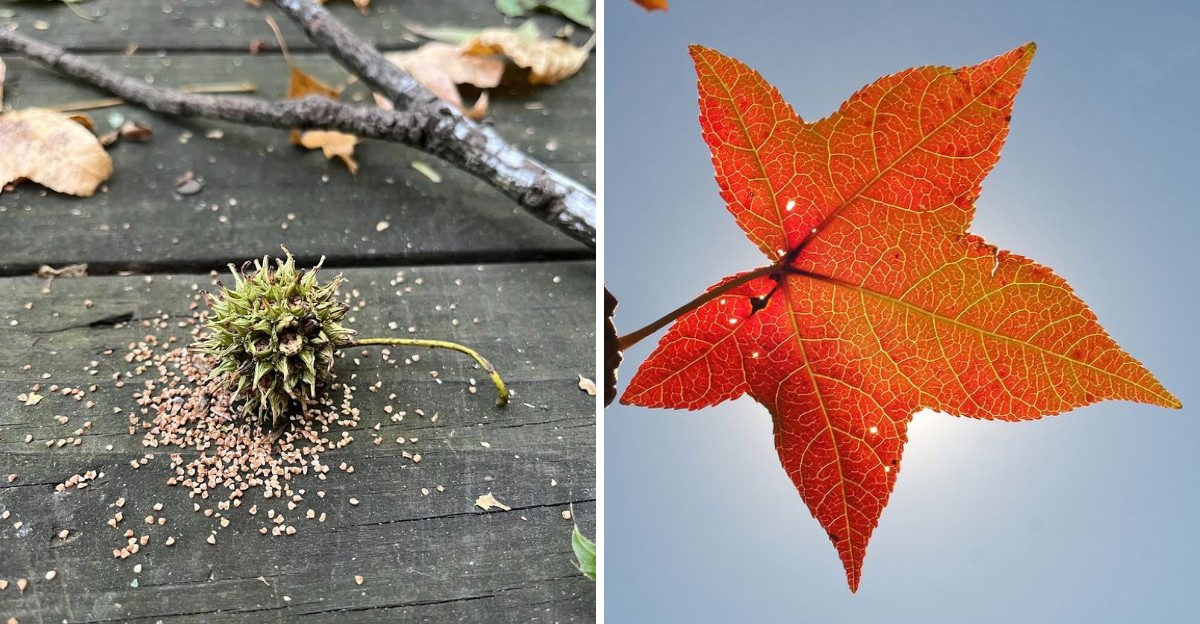
A single tree in my yard can drop thousands of spiky seed balls, and it keeps dropping them from fall right into spring. Each one is as hard as a marble and covered in tiny hooked points.
I learned this the hard way while carrying groceries across the lawn. One wrong step, one wobbly ankle, and a lot of words I will not repeat here.
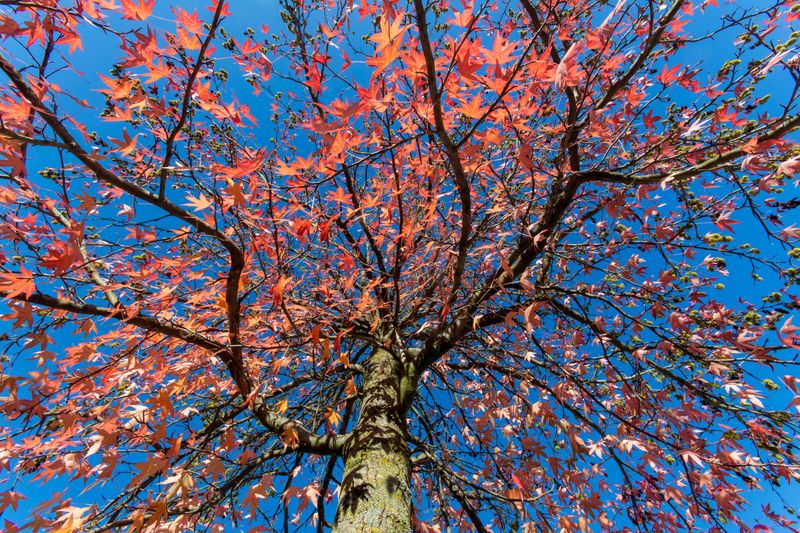
I blamed the squirrels at first. Then I looked up and saw star-shaped leaves glowing red and purple against the sky. That same tree grows wild across Virginia, from Tidewater swamps to Piedmont fencerows.
You have probably cursed these things too, maybe while mowing or chasing a toddler barefoot. Funny thing is, birds treat them like a snack bar, and some gardeners keep them on purpose.
So what kind of tree makes such a beautiful mess?
Those Spiky Brown Gumballs Are Hiding Something Inside
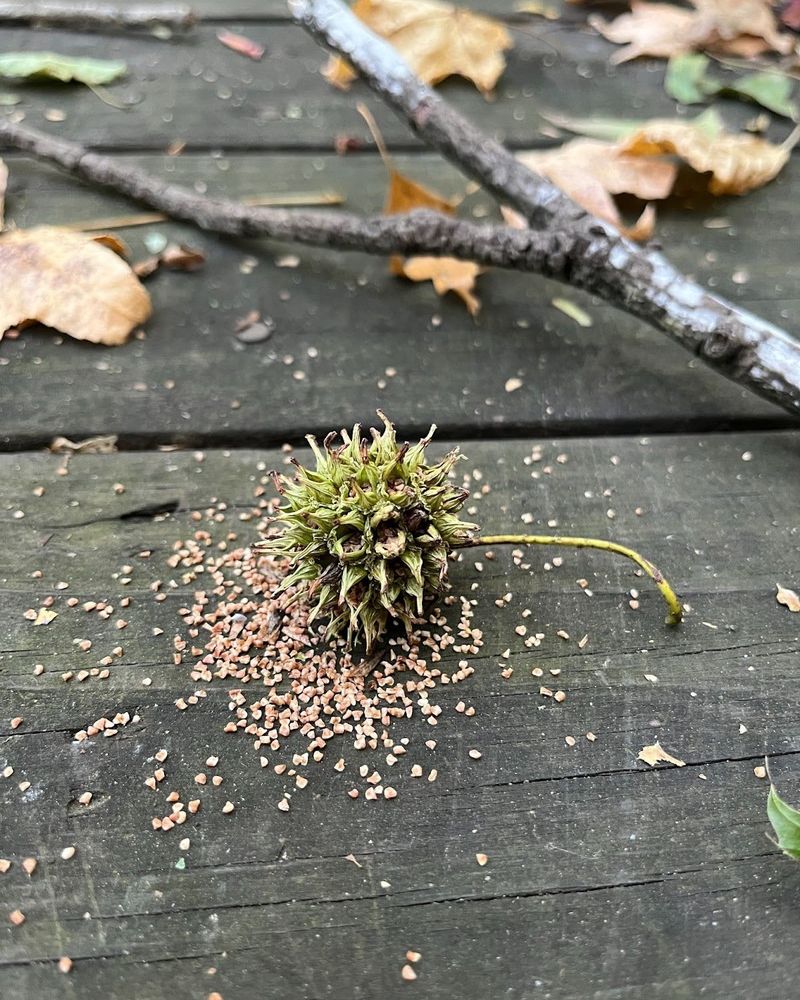
Grab one of those prickly balls and turn it over in your hand. You are holding a whole cluster of fruit, not just one seed.
Each gumball forms from dozens of tiny flowers that fused together in spring. Every little spike marks one of those flowers.
Look closely and you will see small holes between the points, where seed capsules once opened.
Inside each capsule sat one or two winged seeds, plus a lot of tiny chaff that looks like sawdust. The winged seeds fall out first, often in fall and early winter, and drift on the breeze.
By the time the ball hits your lawn, it is often mostly empty.
That explains why they feel so light yet so tough. The woody shell is built to hang on the branch for months while it slowly releases seeds.
Most gumballs measure about one to one and a half inches across. They start green and soft in summer, then turn brown and hard as fall arrives.
Here in Virginia, the drop rarely happens all at once. Some fall in autumn, more come down during winter storms, and stragglers keep landing into spring.
So if you cleaned up in November and found a fresh crop in March, you did nothing wrong. The tree simply runs on a very long schedule.
Star-Shaped Leaves Give the American Sweetgum Away
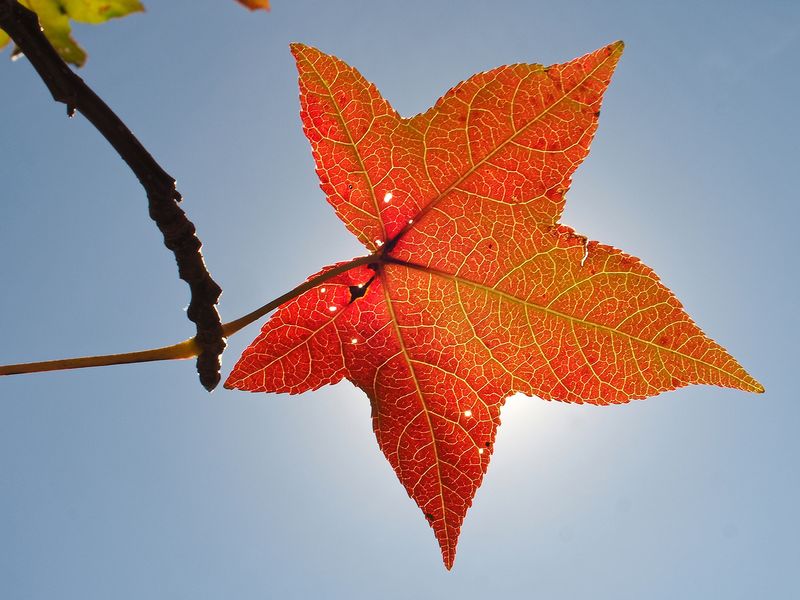
Meet the culprit by its leaves first. The American sweetgum, Liquidambar styraciflua, has glossy leaves shaped like five-pointed stars.
People sometimes mix it up with maples. The easy trick is to check how the leaves attach.
Sweetgum leaves grow alternately along the twig, while maple leaves grow in opposite pairs.
Crush a leaf and sniff it. You may catch a sweet, resin-like scent, which helped give the tree its name.
The bark can ooze a sticky gum that people once chewed.
Mature trees often reach 60 to 80 feet tall. Young ones grow in a neat pyramid shape, then spread wider with age.
Some twigs grow odd corky ridges, almost like little wings. Not every tree has them, but they are a fun clue in winter when the leaves are gone.
Fall is when the sweetgum shows off. One tree can wear yellow, orange, red, and deep purple all at the same time.
The species is native across much of the eastern United States, and it thrives across Virginia. You will find it in wet bottomlands, old fields, and plenty of neighborhood yards, where it often pops up on its own.
Once you know the leaf, you will spot sweetgums everywhere.
Rolling Gumballs Underfoot Are a Real Tripping Hazard
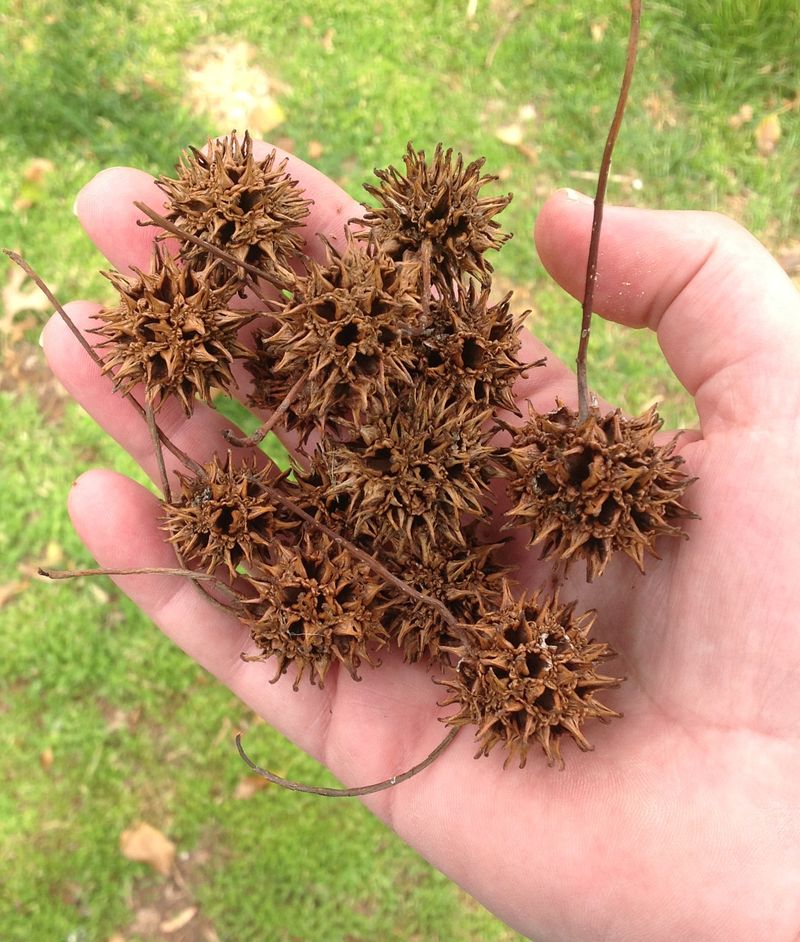
Let me save you a sore ankle. Gumballs act like ball bearings when they land on hard surfaces.
On a driveway, patio, or brick walkway, they roll the moment you put weight on them. That is how so many of us end up with twisted ankles or near falls.
Grass hides them well, which creates a second problem. You cannot see them until you are standing on one, and those points hurt through thin shoes.
Kids and pets feel this too. Dogs may limp after stepping on a spike, and little ones love to run barefoot on fall days.
Mowers do not love gumballs either. They can shoot out from the deck with surprising force, so wear eye protection and keep people away while you mow.
A few simple habits help a lot:
Sweep steps and walkways before guests arrive. Keep a stiff broom near the door during peak drop season.
Wear sturdy shoes in the yard, not slippers.
Older family members face the most risk. A quick sweep of the path to the mailbox or car can prevent a bad fall.
Wet gumballs get extra slick after rain. That is a good time for a quick cleanup, since soggy ones also clump together and sweep up easier.
A Rolling Nut Gatherer Makes Gumball Cleanup Easier
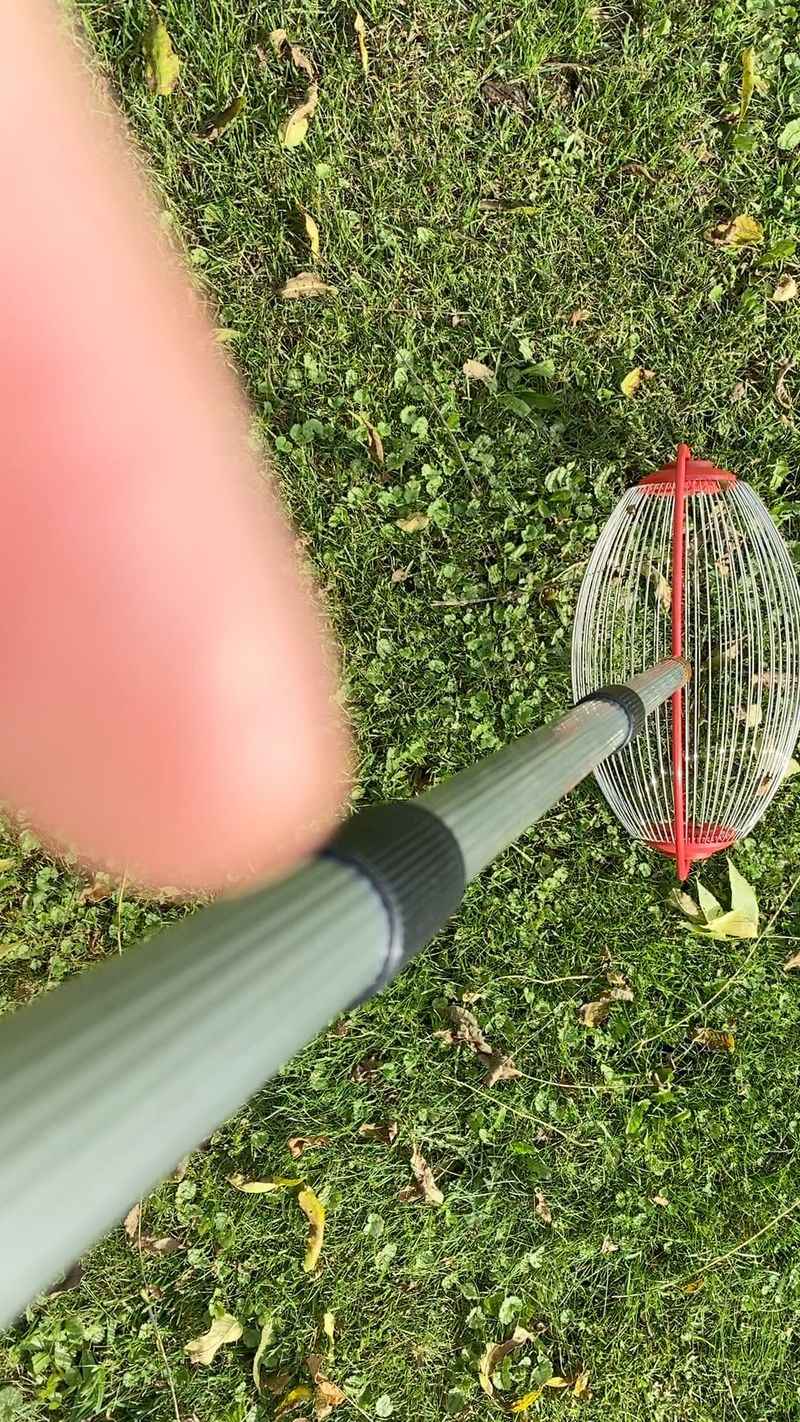
I tried it all, and my back still remembers the hand-picking phase. Smarter tools make a huge difference.
Rolling nut gatherers are my favorite. They look like a wire cage on a long handle.
You roll them across the lawn, and the gumballs pop inside the wires.
Empty the cage into a bucket by spreading the wires over the edge. It feels oddly satisfying once you get the rhythm.
For bigger yards, a lawn sweeper you pull behind a riding mower can grab gumballs and leaves together. A mower with a bagger also works, though gumballs can be rough on blades and dull them over time.
Leaf blowers help on hard surfaces. Blow the balls into a pile, then scoop them up with a dustpan or shovel.
Timing matters too. Do a few smaller cleanups through fall and winter instead of one giant job in spring.
Raking works, but gumballs slip through many leaf rakes. A metal bow rake or a rake with close tines grabs them better.
Focus your effort where people walk. You do not need a spotless lawn under the tree.
Leaving gumballs in mulched beds or wild corners is perfectly fine. Clean the paths, play areas, and driveway first, and let the rest stay put.
Fruitless Sweetgum Cultivars Skip the Spiky Mess
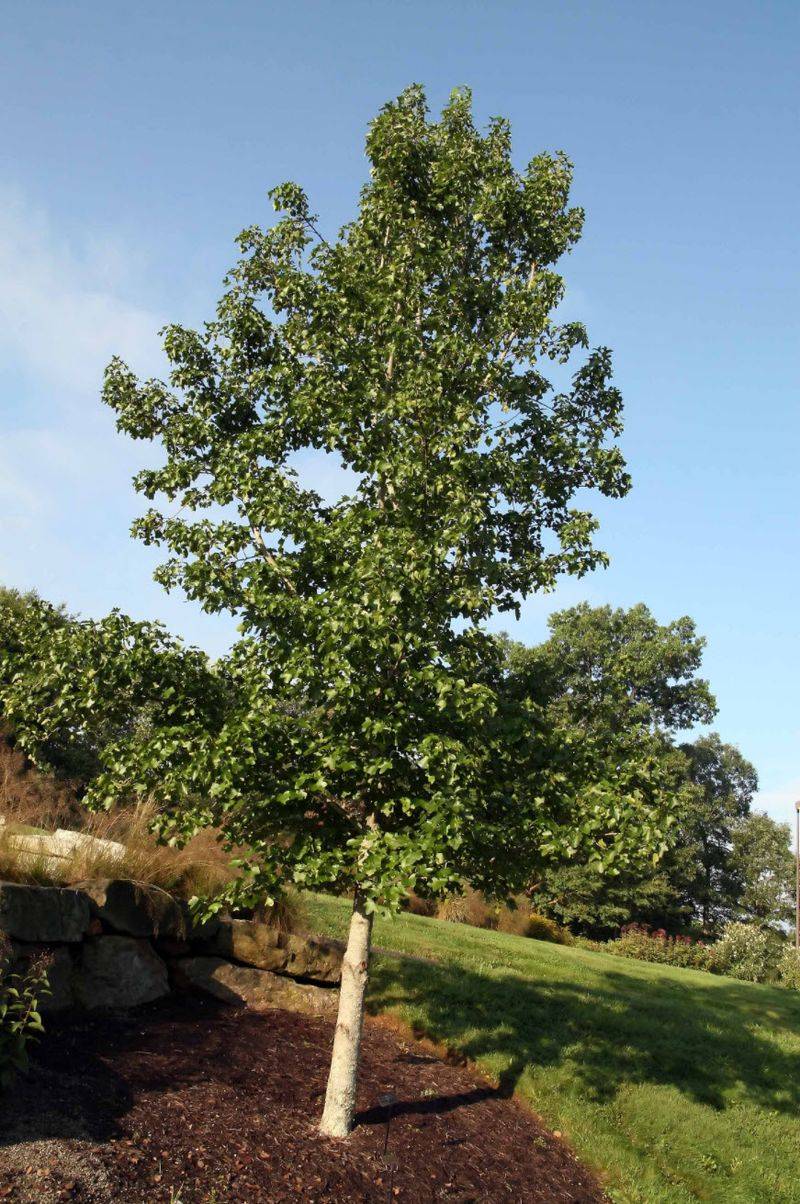
Planting a new tree? You can enjoy sweetgum color without the spiky carpet.
The cultivar Rotundiloba has rounded leaf lobes instead of sharp points. It produces few or no gumballs, which makes it popular near patios and walkways.
Look for it at nurseries, sometimes sold as a fruitless sweetgum.
Fair warning, a few owners report the odd gumball here and there. Still, the difference from a typical tree is dramatic.
What about the sweetgum you already have? Some arborists use growth regulator sprays, such as products containing ethephon, to reduce fruit set.
The catch is timing. The spray must go on during spring bloom, before the gumballs form, and results vary from year to year.
Big trees also need professional equipment.
Hire a certified arborist for this job. They know the label rules, the right timing, and how to protect nearby plants.
Removal is the last resort. A healthy mature sweetgum provides shade, wildlife value, and stunning fall color.
If you do remove one, expect sprouts from the roots, since sweetgums often sucker. Talk with an arborist about stump grinding and follow-up care.
For most of us, better cleanup tools and smart placement beat losing a big shade tree.
Goldfinches Pick Seeds Right Out of the Hanging Gumballs
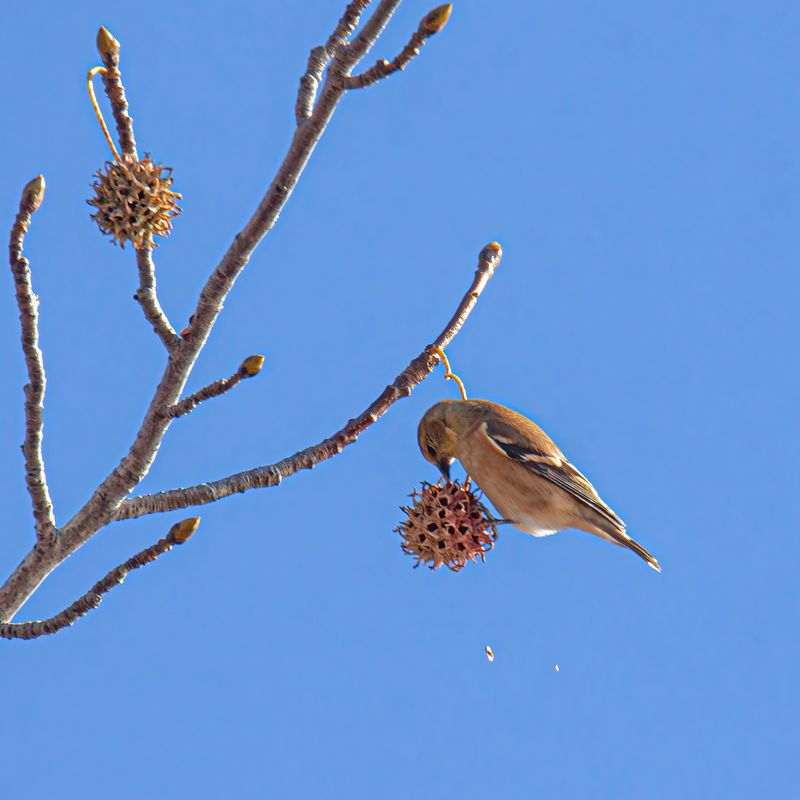
Watch a sweetgum on a cold winter morning. You may see small birds hanging upside down, picking at the balls like tiny acrobats.
American goldfinches are some of the biggest fans. They pry the little winged seeds from the gumball holes while the fruit still hangs on the branch.
Carolina chickadees, pine siskins, purple finches, and other seed eaters join in. Squirrels and chipmunks take their share too, and wild turkeys may peck through fallen seeds.
That food supply matters most in winter, when many other seeds are gone. A sweetgum can feed birds for months.
The tree helps insects too. Sweetgum serves as a host plant for a range of moth caterpillars, including the striking luna moth.
Those caterpillars become baby food for nesting songbirds in spring. So a single tree supports wildlife in more than one season.
In my own yard, I have noticed the goldfinches show up right when I feel most annoyed by the gumballs. It softens the grumbling a little.
If you love birdwatching, place a window feeder near your sweetgum. You will enjoy two dining spots in one view.
Leaving some gumballs in garden corners also gives ground-feeding birds a chance to find stray seeds.
Spare Gumballs Can Fill Pots, Beds, and Craft Baskets
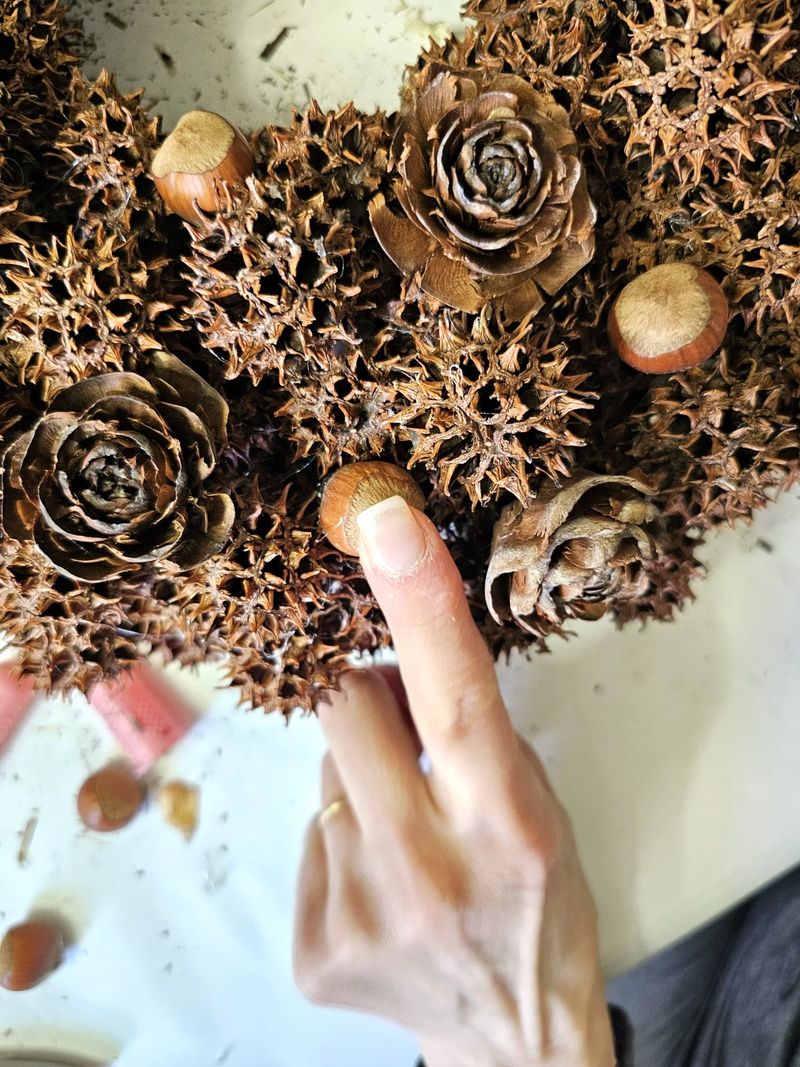
Funny thing is, the same balls that trip us up can be handy around the garden.
Some gardeners pour a layer into the bottom of large planters to take up space and lighten the pot. Use them under the soil, not instead of good drainage holes.
Others spread them in out-of-the-way beds as a rough mulch. They break down slowly, so they last longer than shredded leaves.
Some people say the spikes discourage digging pets or critters. Results vary, so treat that as a bonus, not a guarantee.
Avoid using gumballs on paths or anywhere people walk. They roll under feet just as easily there as on your driveway.
Composting works, though slowly. Crush them first by running a mower over a pile, or expect them to linger for a long time.
Crafters love gumballs. Spray paint them gold or silver for holiday wreaths, garlands, and ornaments.
Kids enjoy turning them into tiny creatures with googly eyes and pipe cleaners. It makes cleanup feel like a treasure hunt.
Some craft sellers even sell sweetgum balls online. If you have a big tree, you basically own a free supply.
Store dry gumballs in a paper bag so they do not get moldy before you use them.
Give Your Sweetgum Tree Plenty of Room to Spread Its Roots
Where a sweetgum grows matters more than almost anything else. Choose the spot wisely and most headaches shrink.
These trees like full sun and moist, slightly acidic soil. They handle the clay common in parts of Virginia better than many trees.
Their roots can spread wide and sit near the surface, especially in compacted or wet ground. That can lift sidewalks and make mowing bumpy.
Plant at least 15 to 20 feet from paving, foundations, and septic lines. Keep gumball drop in mind, and avoid placing a fruiting tree over a patio or driveway.
A wide mulch ring helps a lot. It protects surface roots from mower damage and turns the drop zone into a bed instead of lawn.
Watch the leaves in summer. Yellow leaves with green veins can signal iron chlorosis, which often shows up in soil with high pH.
A soil test through Virginia Cooperative Extension can confirm your pH before you add anything.
Sweetgums are generally sturdy, but stressed trees attract more pests. Water young trees during dry spells and avoid piling mulch against the trunk.
My garden taught me this. A well-placed sweetgum is a gift, while a poorly placed one feels like a chore.
Plan ahead, and enjoy the color.