These Rare Frost Flowers Bloom In Virginia Yards Only On Freezing Mornings
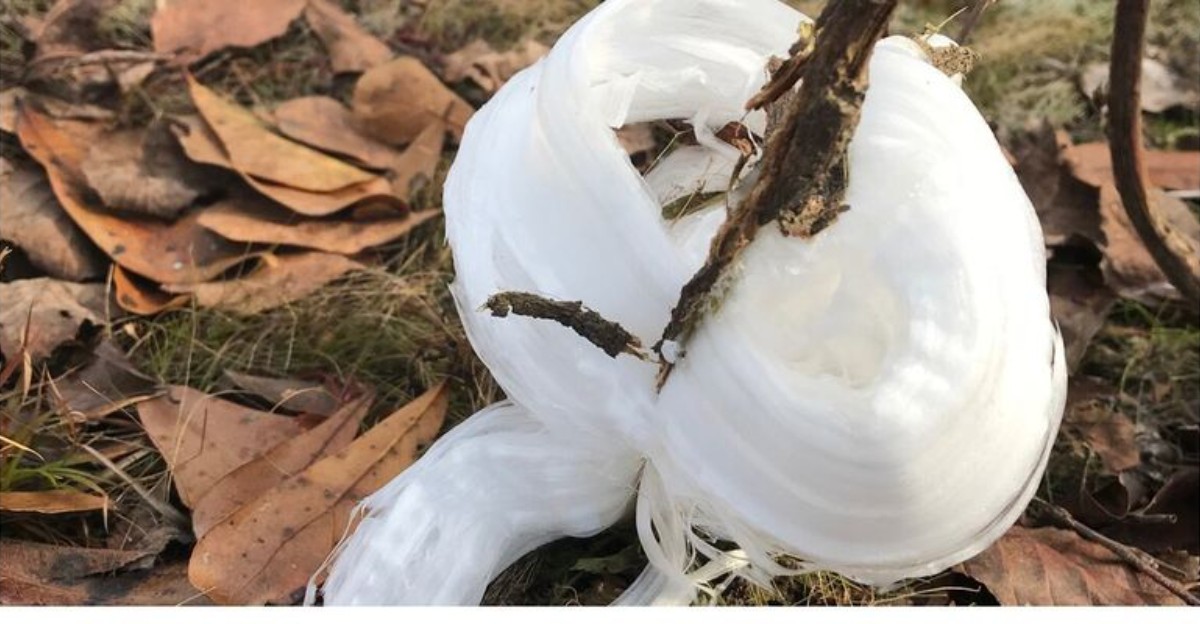
Step outside on a frosty morning, and you might find a curl of ice that looks like spun sugar. Nobody left cotton candy in the garden, though.
A few lucky Virginia yards sprout these icy ribbons when the weather turns sharp and cold. They’re called frost flowers, and they’re among the rarest winter sights you can spot at home.
A humble native plant does most of the work. Fittingly, one of the best producers is frostweed, whose scientific name honors Virginia itself.
Catching them takes good timing, a little patience, and a willingness to leave your coffee for a few minutes. Blink too long, and the show may vanish before breakfast.
These fragile beauties only appear under just the right conditions. Your next frosty morning could reveal one right in your own backyard.
Frost Flowers Are Made Of Ice, Not Petals
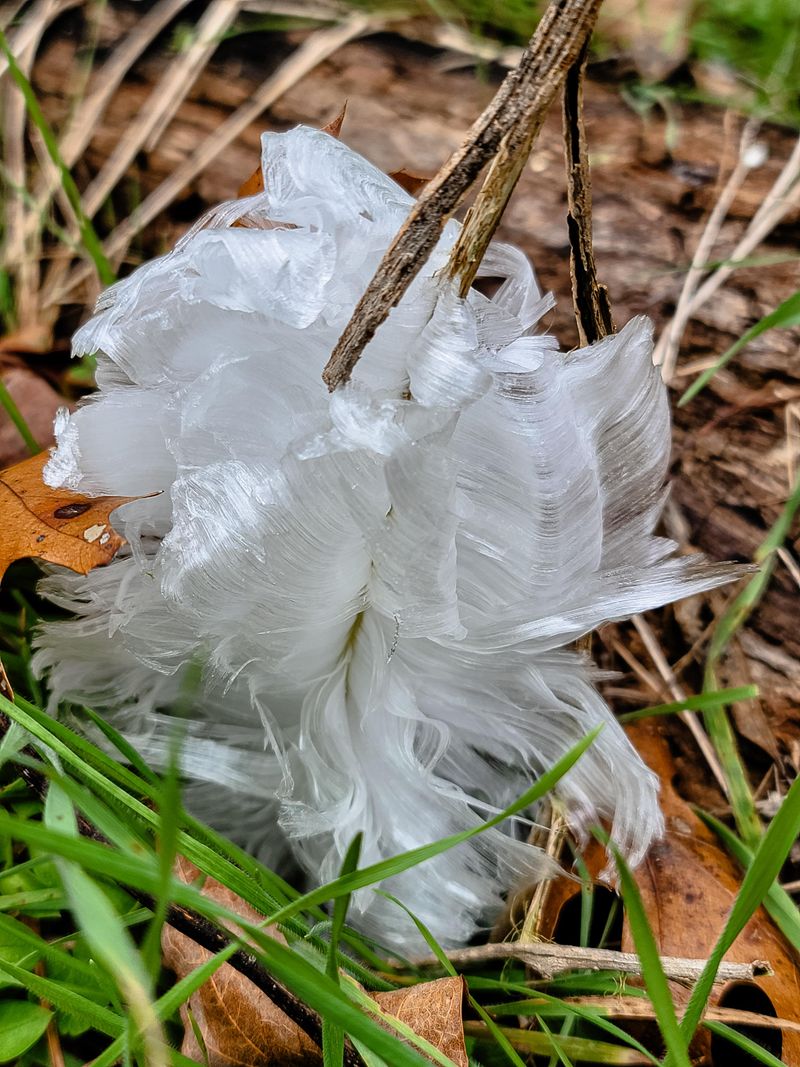
Imagine a flower so thin you can almost see through it. Frost flowers fit that picture, yet not a single petal is involved.
Each one is made entirely of ice. Thin sheets curl and fold into ribbons that look like ruffled paper or silky hair.
Scientists sometimes call them crystallofolia, a fancy word meaning ice leaves. Many folks also use simpler names like ice ribbons or ice fringes.
Some people say they resemble spun glass. Others think they look like cotton candy stuck to the bottom of a dried stem.
Up close, you might notice fine lines running through the ice. Those stripes form as fresh water keeps pushing out and freezing in layers.
No two frost flowers look exactly alike. Each shape depends on how the stem splits, so every one is a little different.
Here is a helpful tip for curious kids and adults alike. Look but avoid touching, since even warm breath can soften the edges.
A phone camera works great for capturing them. Get low to the ground and shoot with the light behind you for crisp detail.
Frost flowers are not the same as regular frost on grass. Ordinary frost forms from moisture in the air, while these grow from inside a plant.
Knowing that difference helps you spot the real thing. Hunt near stems, not across your lawn or car windshield.
Frostweed Is The Virginia Native Behind Them
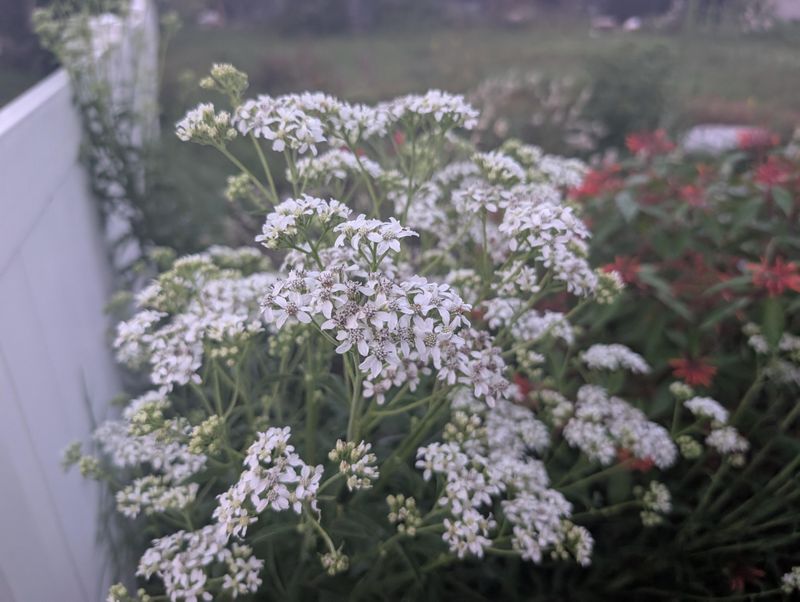
Meet the quiet hero of the frosty garden. Its scientific name is Verbesina virginica, and yes, the name points straight to Virginia.
Most people call it frostweed. You may also hear white crownbeard, Virginia crownbeard, or even iceplant in older guides.
During summer, the plant looks pretty ordinary. It stands tall with big, rough leaves and wing-like ridges running down the stem.
Late summer brings clusters of small white blooms. Bees, butterflies, and other insects flock to them for a sweet meal.
Fall is when frostweed gets famous. After the leaves fade, its stems stay upright and ready for icy magic.
Frostweed is a herbaceous perennial. Its top growth fades each winter, but the roots stay alive underground for years.
Those living roots are the secret. They keep pulling water upward even after the plant looks finished for the season.
Your Virginia Garden Changes Every Week. Your Plan Should Too.
Gardening in Virginia changes quickly throughout the season. Every Friday you’ll receive a simple weekly plan showing exactly what to plant, prune, fertilize, harvest, and protect so you never miss the right timing.
Frostweed is not the only plant that can pull off this trick. Yellow wingstem, a close cousin, sometimes makes frost flowers too.
Want to find frostweed on a walk? Check shady woodland edges, creek banks, and moist bottomlands where it loves to grow.
Here is a fun fact to share at school. Early settlers noticed the ice blooms so often that the plant earned its frosty nickname.
Spotting the plant in summer makes winter hunting easier. Mark its location so you know exactly where to return later.
Sap Freezes And Pushes Out Through Cracked Stems
Ever left a soda in the freezer too long? The can bulges or bursts, and frostweed stems go through something quite similar.
Everything starts underground. The soil stays warmer than the air, so the roots keep drawing water and sap upward.
Once that liquid reaches the cold stem, it begins to freeze. Water expands as it turns to ice, and the stem has nowhere to stretch.
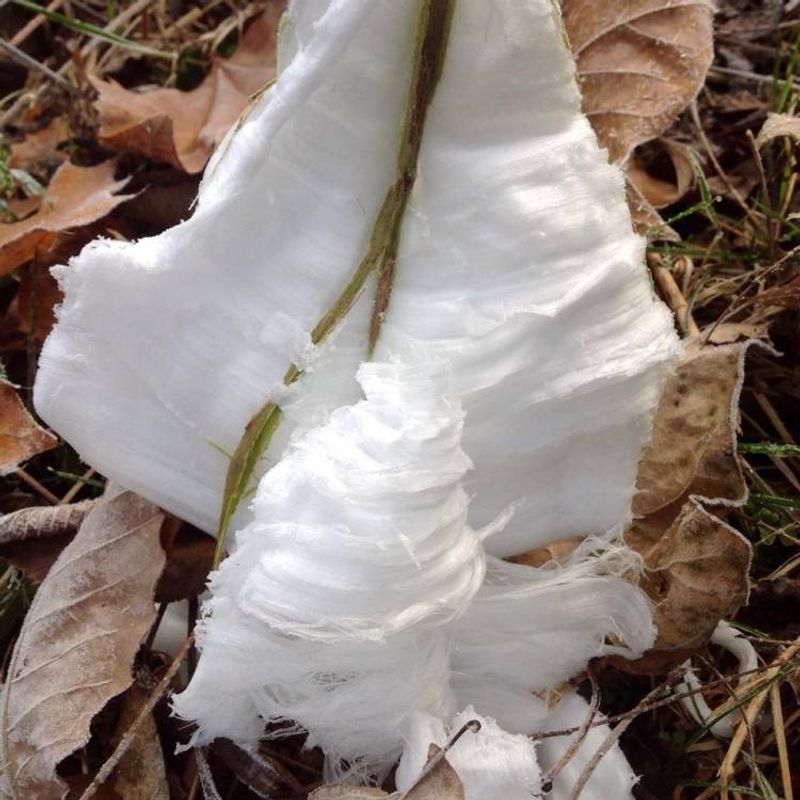
Thin cracks open along the sides. The frozen sap then squeezes out through those slits into the frigid air.
Meanwhile, the roots keep sending up more water. Each new push shoves the earlier ice outward, like toothpaste leaving a tube.
Layer by layer, the ribbons grow longer and curl. Some reach several inches, while others stay small and tight.
The shape depends on the cracks themselves. A long, straight split may form a flat sheet, while short splits make curly bundles.
Scientists still study the finer details. Even so, the basic recipe of warm soil, cold air, and living roots is well understood.
Here is an easy experiment for families. Note which stems crack and which stay smooth, then compare their thickness.
You may notice thicker stems often produce bigger blooms. Keep a simple notebook to track your findings each season.
Watching the process up close builds real science skills. Few backyard lessons are prettier than this one.
They Form Best After The First Hard Freezes
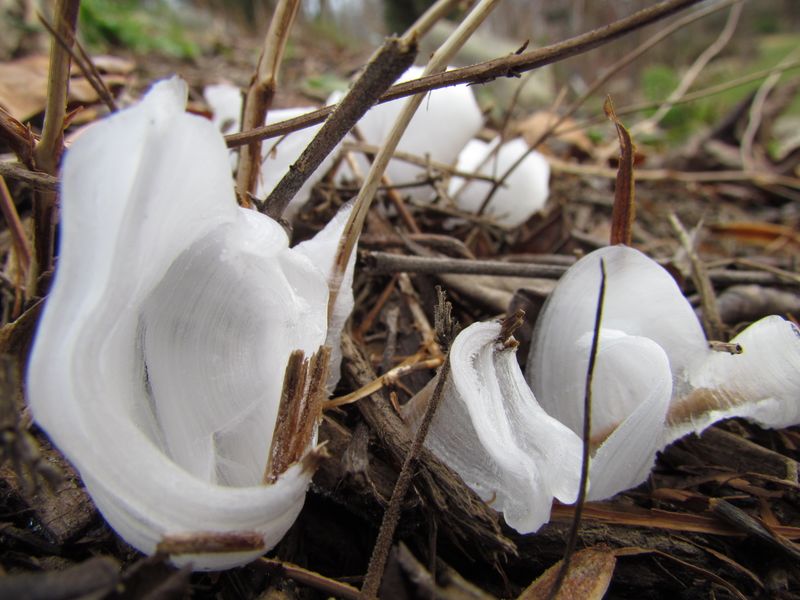
Timing is everything with frost flowers. Late fall, right after the first hard freezes, is usually the golden window.
A hard freeze means the air drops well below 32 degrees. Many observers say around 28 degrees seems to work especially well.
The ground matters just as much as the air. Moist soil that has not frozen yet keeps the roots busy pulling water.
Clear, calm nights help too. Without clouds acting like a blanket, temperatures can fall quickly after sunset.
Here is the tricky part. The stems usually need to be fresh, meaning they have not frozen solid before.
After a few deep freezes, the stems often split for good. Fewer and smaller flowers tend to appear as winter goes on.
In Virginia, this usually happens from late October into December. Mountain areas may see it earlier than coastal towns.
Want a practical trick? Check the forecast for the first night dipping into the twenties after a rainy stretch.
Set a reminder for the next morning. Rain-soaked soil plus a sudden chill gives you a strong chance of success.
Some years deliver plenty of blooms, while others offer only a few. Weather patterns change, so stay flexible and keep checking.
Patience pays off with this hobby. One good morning can make the whole season of waiting feel worth it.
Early Morning Is The Only Time To See Them
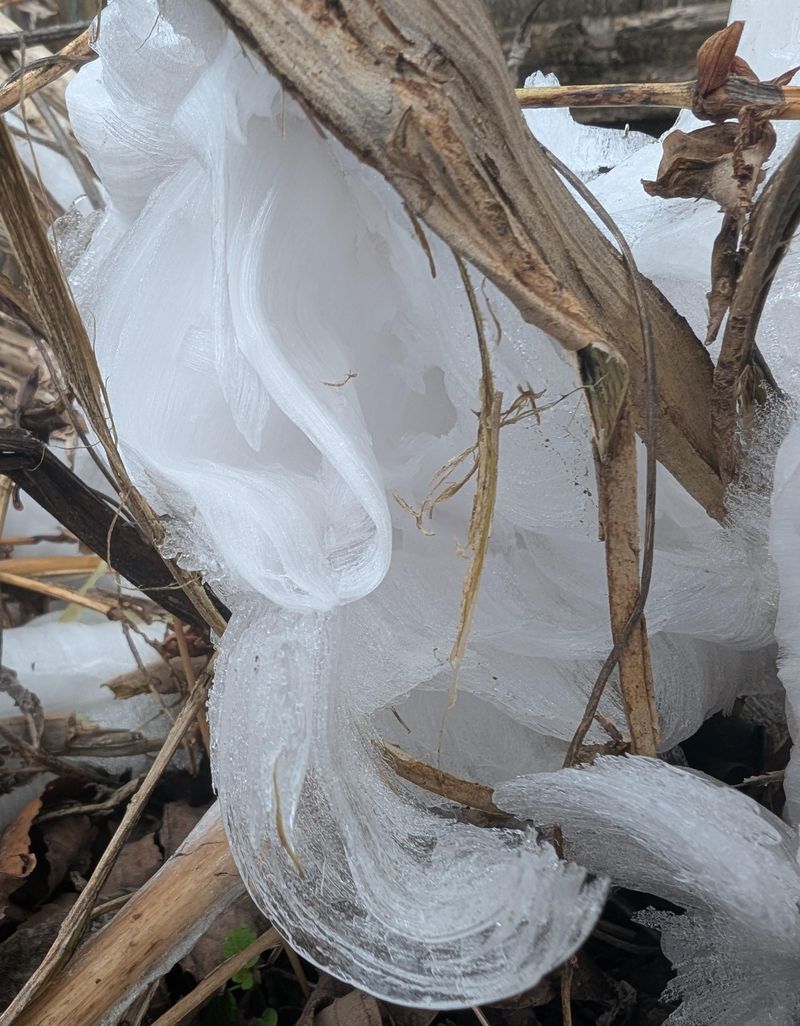
Night owls, this one is going to hurt a little. Frost flowers are a show for early risers only.
The ice forms overnight while temperatures sink. By dawn, the delicate ribbons are at their fullest and most dramatic.
Your viewing window is short. Most sightings happen before about 8 a.m., before direct sunlight reaches the stems.
Shade can buy you extra minutes. A north-facing corner or wooded edge in a Virginia yard may hold the ice a bit longer.
Plan ahead the night before. Lay out boots, gloves, and a flashlight so you can head outside without fumbling.
A flashlight is surprisingly handy. Its beam makes the ice sparkle, helping you spot small blooms hidden among leaves.
Walk slowly and watch your step. Frost flowers often hide near the ground, and a careless foot can crush them.
Bring the family along for a quick adventure. Kids love the treasure hunt feeling of searching in the chilly blue light.
Hot cocoa makes a nice reward afterward. It turns a cold errand into a cozy morning tradition.
Photos are a smart way to remember each find. Add the date and temperature so you can spot patterns over time.
Before long, you may know your yard’s best spots by heart. Early mornings start to feel less like a chore and more like a gift.
They Melt Within Hours Of Sunrise
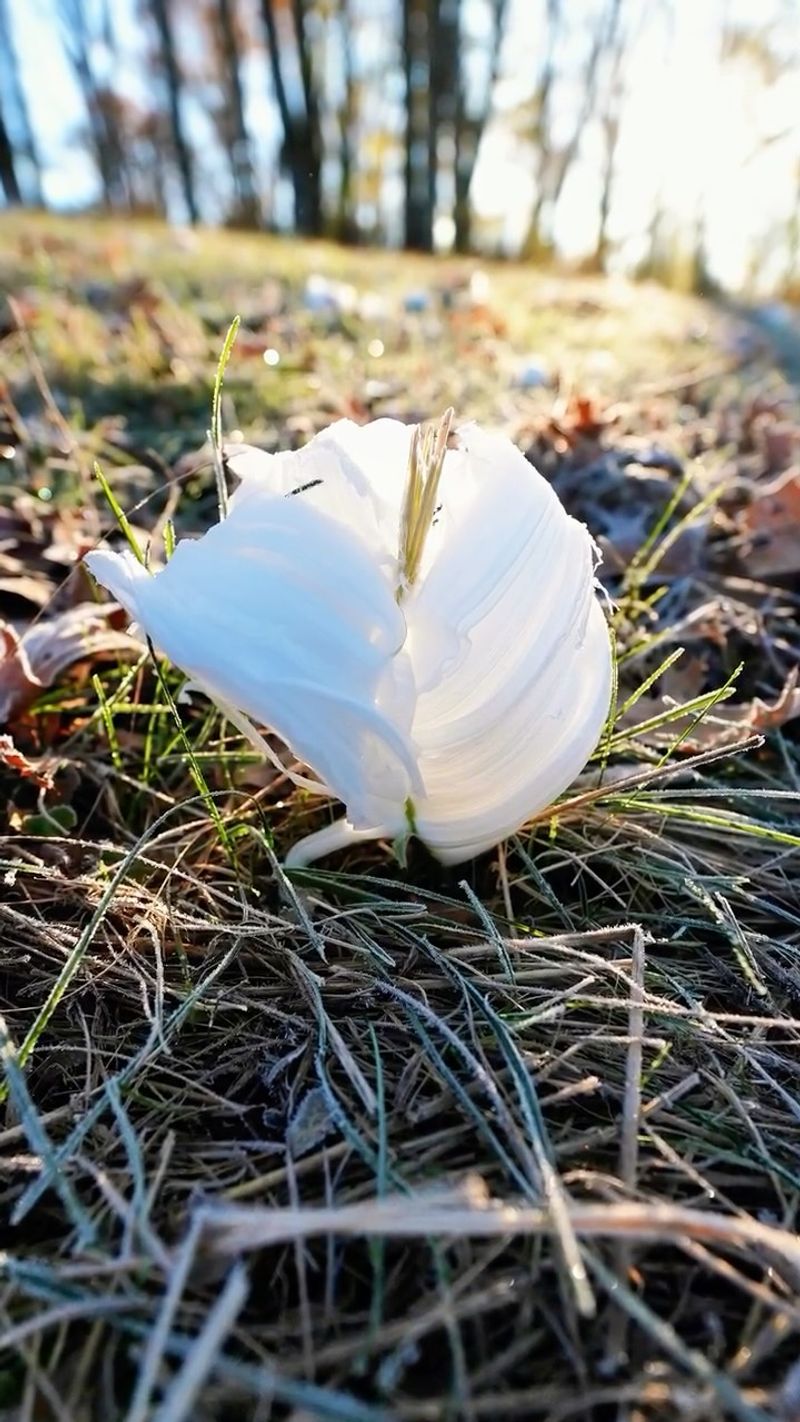
Here one moment, gone the next. Frost flowers might be the most fleeting decorations nature offers.
Once sunlight arrives, the countdown begins. Rising temperatures soften the thin ribbons almost right away.
Some of the ice melts into droplets. Other bits sublimate, which means the ice turns straight into vapor without becoming water first.
Even slight warmth can do the job. A mild breeze or a single sunbeam can shrink a bloom within minutes.
Most frost flowers vanish within a few hours of sunrise. On bright days, they may fade even faster than that.
Thin ribbons go first. Thicker sections near the stem often linger a little longer before giving up.
So what can you do about it? Take pictures early, then come back a bit later to watch the change.
Comparing before and after shots makes a neat science project. Kids can measure how long each bloom lasts.
Please resist bringing one indoors. Your warm house would turn it into a puddle before you could find a good spot for it.
Their short life is part of the charm. Knowing they will not stick around makes each sighting feel special.
Think of them as a surprise gift you open quickly. Enjoy the moment, snap a photo, and let the morning take them back.
Leaving Stems Standing Gives You A Better Chance
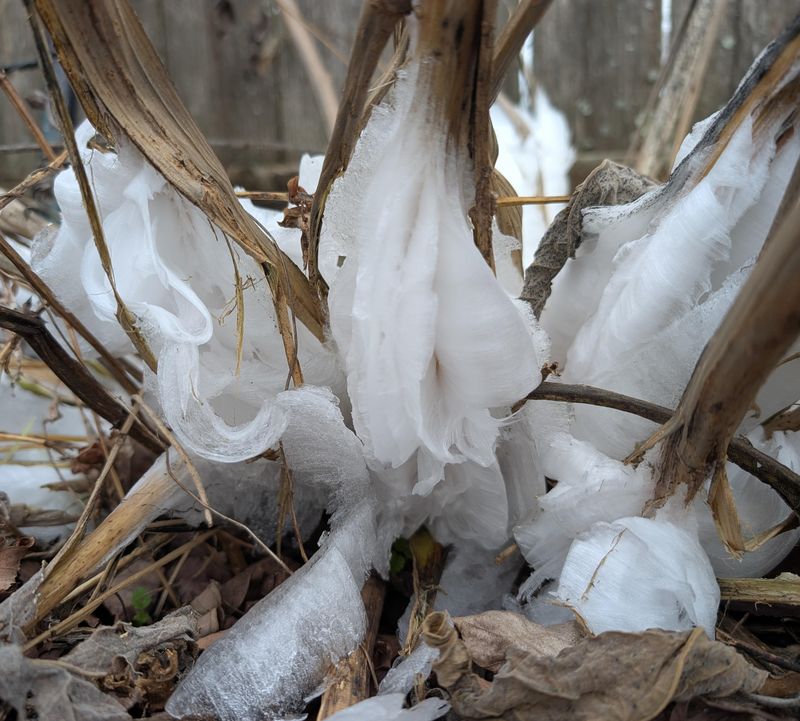
Tidy gardeners, brace yourselves for some good news. Doing a little less fall cleanup can actually reward you.
Frost flowers need upright, intact stems. Cut those stems down, and the ice has nowhere to form.
Trimming can also interrupt the flow of sap. Without a pathway from roots to stem, the whole process stalls.
Leave frostweed standing through late fall and early winter. Your Virginia yard keeps its best shot at a frosty show.
Dry stems may look messy to some neighbors. A small sign saying native plant habitat can explain your choice nicely.
Standing stems help wildlife too. Many native bees tuck themselves inside hollow plant stems over the winter.
Birds benefit as well. Seed heads offer a snack for finches and sparrows during chilly months.
When should you finally trim? Wait until late winter or early spring, once new green shoots start to appear.
Cut stems at different heights if you can. Leaving some taller pieces gives future insects a cozy place to nest.
Mowing near frostweed patches deserves care too. Set boundaries with stakes so nobody accidentally clears your ice garden.
A little patience turns a scruffy corner into a winter treasure spot. Fewer chores and prettier mornings sound like a fair trade.
You Can Grow Frostweed In Your Own Yard
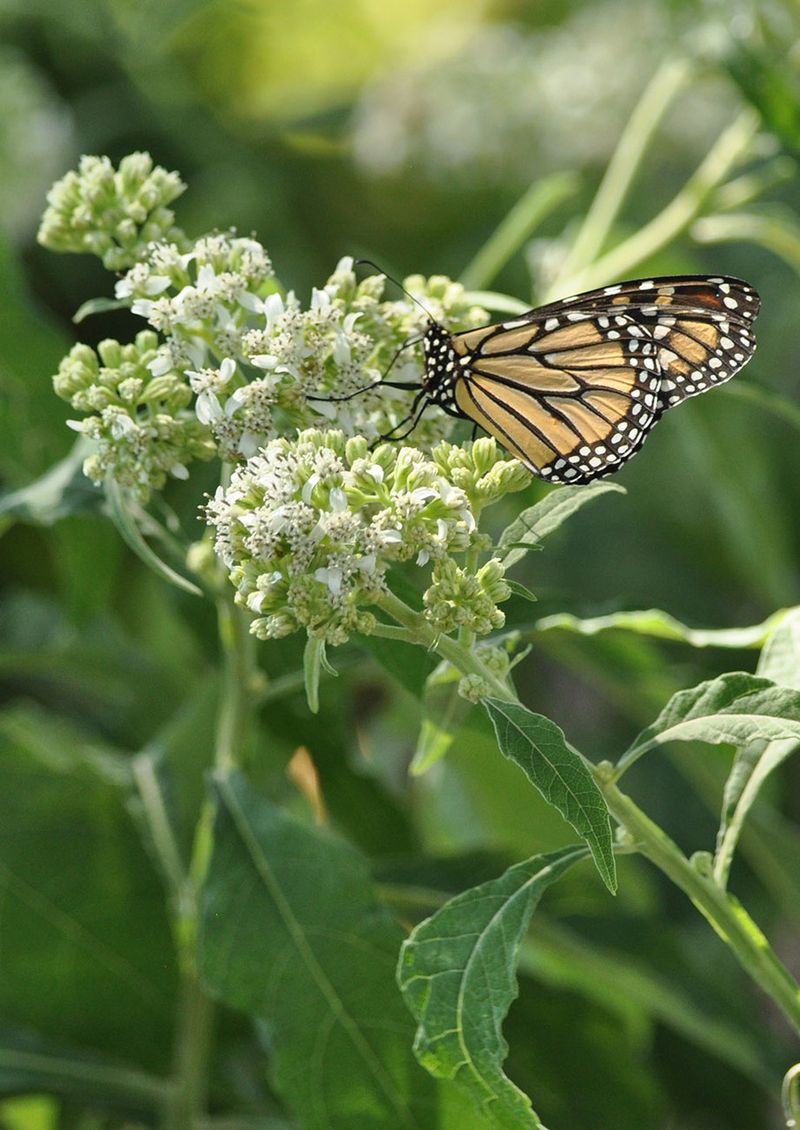
Good news for hopeful frost flower hunters. You do not need a forest to enjoy them, because frostweed grows happily in home gardens.
The plant is easygoing and tough. It thrives in full sun or partial shade with well-drained soil.
Frostweed can reach up to eight feet tall. Most plants stay shorter, especially in drier spots.
It is hardy in USDA zones 5 through 9. That range covers nearly all of Virginia, from the mountains to the coast.
Pollinators adore its late summer blooms. Monarch butterflies, bees, and many other insects stop by for nectar.
Deer usually leave it alone too. Gardeners tired of nibbled flowers will appreciate that bonus.
Starting frostweed is fairly simple. You can sow seeds outdoors in fall or divide roots during winter.
Fall sowing works well because seeds get a natural chill. They often sprout on their own once spring warms the soil.
Look for plants at native plant nurseries across Virginia. Local plant society sales are another great place to find them.
Give it room along a fence, woodland edge, or rain garden. Taller plants look tidy when grouped toward the back of a bed.
Plant this fall, and you could be hunting ice ribbons soon. Your own backyard might become the neighborhood’s favorite winter wonder.