The Arizona Trees to Plant Before Halloween for Shade by Next June
Fall is the secret planting season in the Arizona desert, and October is the sweet spot. Roots grow all winter while the air stays mild, so a tree planted now can be casting real shade by the time June hits 110 degrees.
Pick the right species and you also get lower cooling bills, less watering, and a yard that birds, bats, and bees actually want to visit. Here are eight trees that grow fast enough to make next summer feel different.
1. Desert Museum Palo Verde
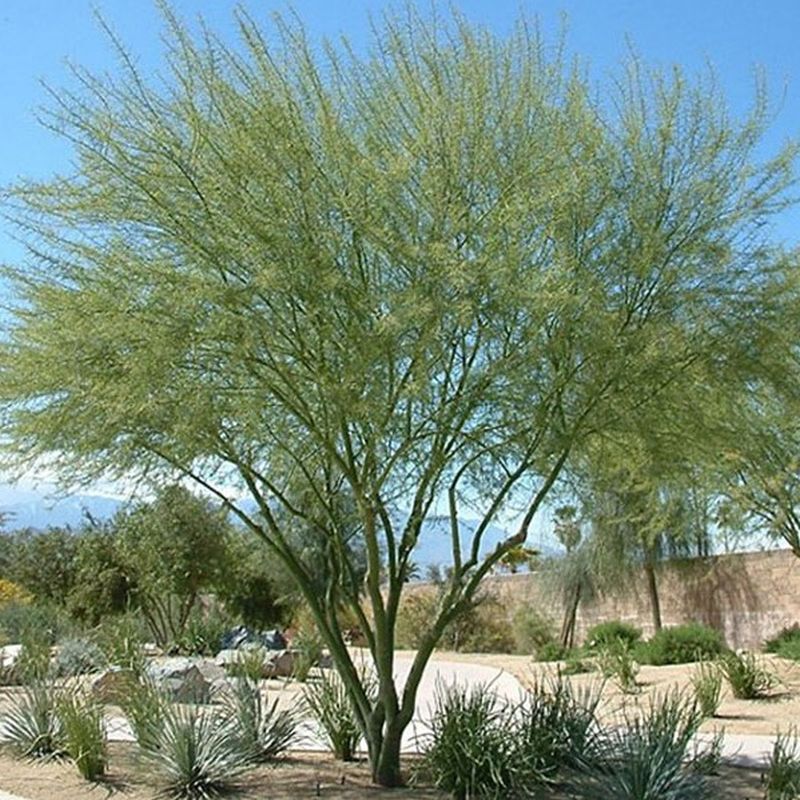
Bright green bark is the giveaway that something special is going on with this tree. The trunk and branches photosynthesize, which lets it keep growing even when leaves drop during dry spells.
Bred in Tucson as a thornless hybrid, it is friendly to kids, pets, and anyone pruning near a walkway.
Growth of 2 to 3 feet per year is common once roots settle in. A fall planting gives it a full cool season to anchor into caliche, so by June you can expect a wider umbrella of filtered shade over a patio or west window.
The light canopy lets enough sun through for desert groundcovers to thrive underneath.
Spring brings a wave of yellow blooms that native bees and other pollinators tend to swarm. Lizards and small birds often hang out in the branches, and those visitors may help keep insect numbers in check around the yard.
Water deeply every week or two through the first summer, then taper off. After two or three years, many established trees get by on rainfall plus an occasional summer soak.
Skip heavy fertilizer, since rich soil can push weak, floppy growth that breaks in monsoon winds.
2. Arizona Ash
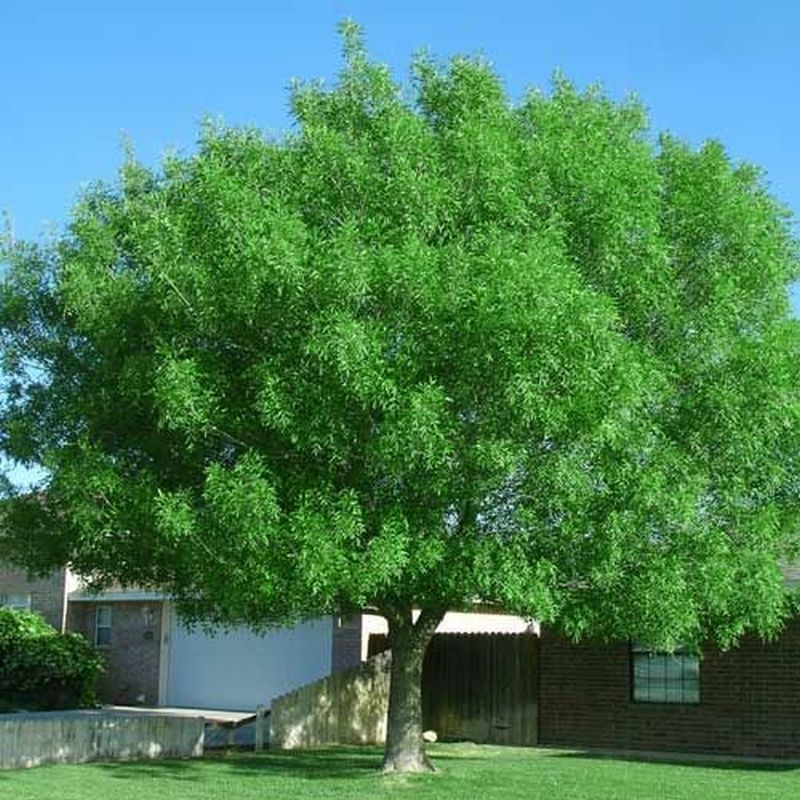
Ask an old-timer in Mesa which tree shaded their childhood porch, and odds are good you will hear about an ash. Fraxinus velutina is a true Arizona native, found naturally along canyon streams, and it brings that riparian lushness to the suburbs.
Of all the trees on this list, the ash delivers some of the densest shade. It can eventually reach 30 to 45 feet tall and just as wide, and it holds its leaves straight through the hottest months.
Planted on the south or west side of a house, it may noticeably cool walls and windows that bake every afternoon.
There is a trade-off, though. Because it comes from wetter canyon spots, it wants more water than the desert legumes, especially in summer.
Give it deep, slow irrigation that soaks 2 to 3 feet down instead of frequent shallow sprinkles, which encourage surface roots.
Songbirds love the thick canopy for nesting and cover, and those birds snack on plenty of caterpillars and beetles. Leaves drop in winter, letting warm sun reach your home when you actually want it.
Plant at least 15 feet from foundations and pools to give those roots room.
3. Tipu Tree
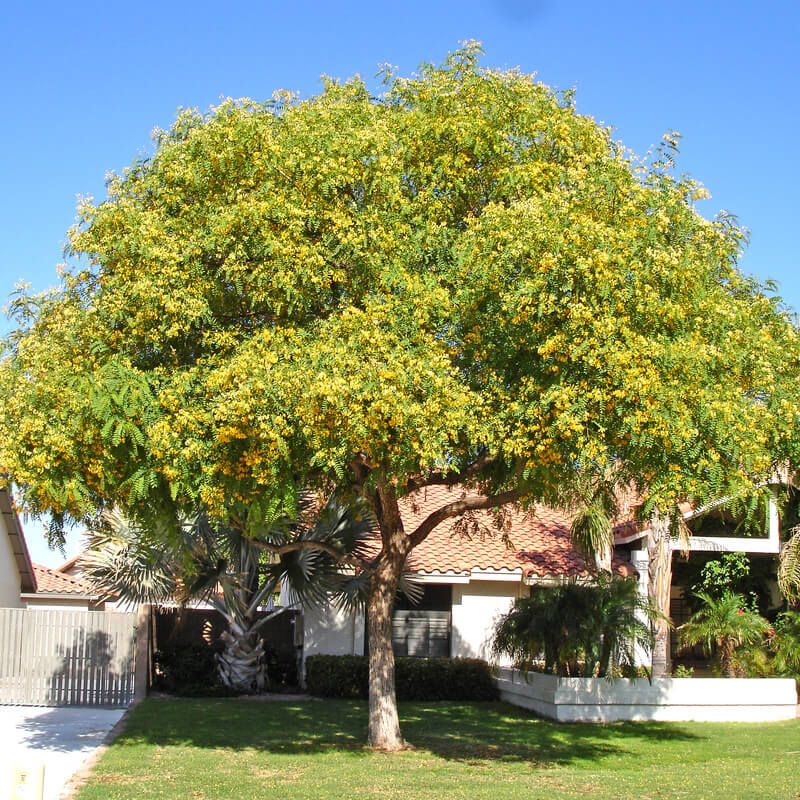
Imagine a shade tree that looks like it belongs in a tropical resort but shrugs off a Scottsdale summer. Native to South America, the Tipu has become a quiet favorite in Valley neighborhoods for exactly that reason.
Your Arizona Garden Changes Every Week. Your Plan Should Too.
Gardening in Arizona changes quickly throughout the season. Every Friday you’ll receive a simple weekly plan showing exactly what to plant, prune, fertilize, harvest, and protect so you never miss the right timing.
Speed is its headline feature. Young trees often put on several feet a season with regular water, and mature specimens can reach 40 to 50 feet with a wide, spreading crown.
That fine, ferny foliage creates a cool, dappled canopy that feels softer than the heavy shade of an ash.
Late spring brings clusters of apricot-yellow flowers, followed by winged seed pods that twirl down like helicopters. Bees and other pollinators visit the blooms, adding some buzz to the yard.
Being a non-native, the Tipu needs a bit more care than desert trees. Plan on steady deep watering through its first couple of summers, and protect it during rare hard freezes in its youth.
Give it space, since its roots and canopy both spread wide. Positioned to block afternoon sun on a back patio, it can turn an unusable concrete slab into the place everyone wants to sit by next June.
4. Chilean Mesquite
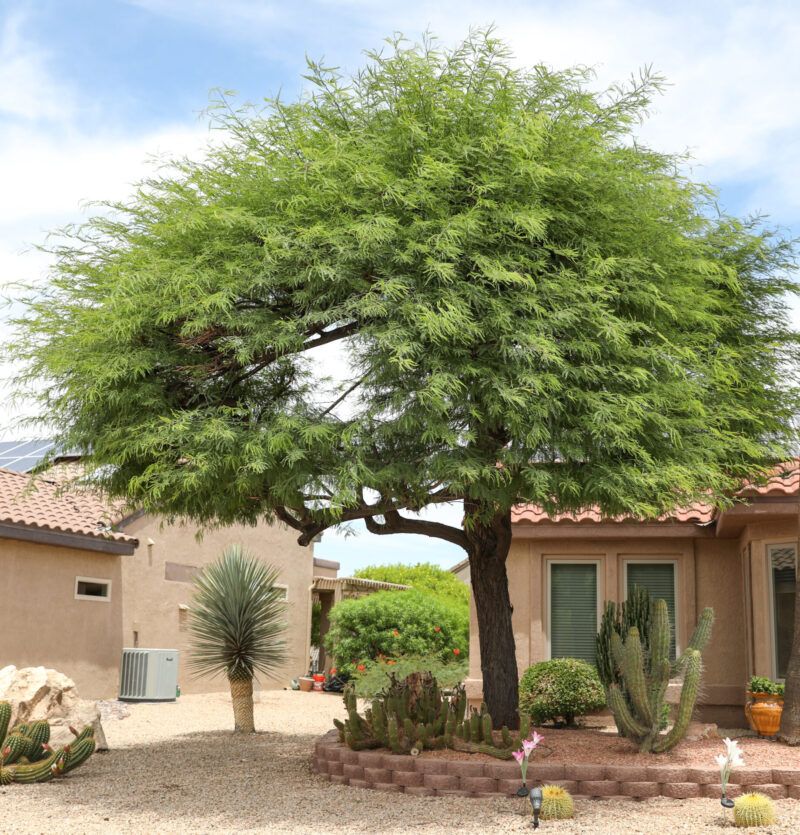
Few trees fill out an empty lot faster than a Chilean mesquite. Builders across the Valley lean on it for good reason: it can jump from nursery box to real canopy in a single season or two.
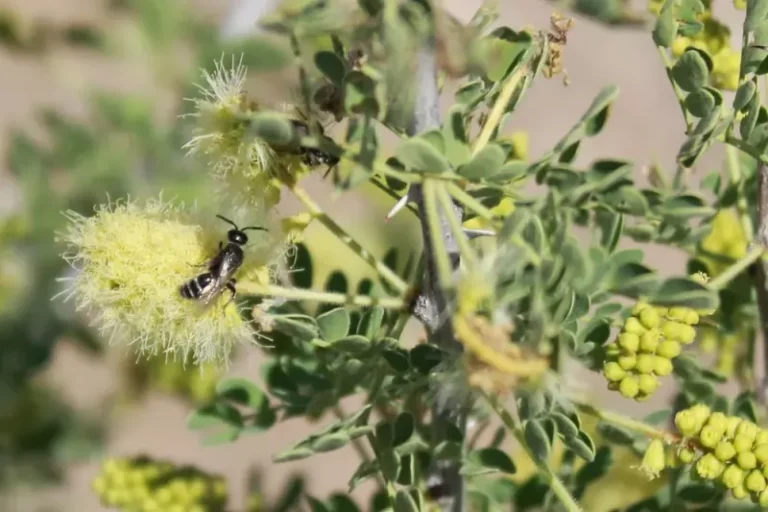
Feathery, bright green leaves form a broad crown that throws generous, airy shade. Like other mesquites, it is a legume, so its roots partner with soil microbes to pull nitrogen from the air.
That natural trick helps it grow well in poor, alkaline desert soils without much fertilizer.
Here is a quick tip from experienced Phoenix gardeners: water deeply but not too often. Shallow, frequent irrigation makes the tree grow fast on top and weak below, which can lead to toppling in monsoon storms.
Deep soaks build strong anchor roots, and regular thinning lets wind pass through the canopy.
Wildlife gets plenty out of this tree too. Mesquite flowers draw pollinators, the pods feed birds and small mammals, and quail often shelter underneath.
If you want something closer to home, the native velvet mesquite grows a bit slower but handles drought even better. Either way, a fall planting means visible shade before summer arrives.
5. Desert Willow
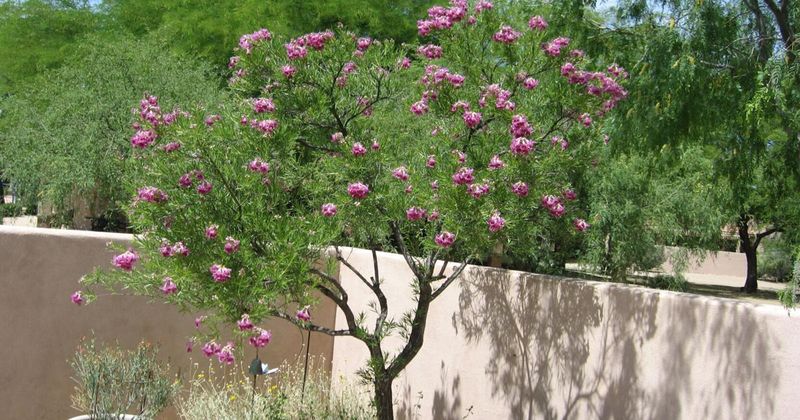
Hummingbirds seem to have a map with every desert willow in town marked on it. Pink, lavender, and purple trumpet flowers open from late spring through fall, and the tiny birds zip in for nectar again and again.
Despite the name, it is not a true willow at all. Chilopsis linearis is a native relative of catalpa, named for its long, narrow willow-like leaves.
It grows quickly to around 25 feet, which makes it perfect for smaller yards, side yards, or courtyards where a giant tree would crowd things.
Shade from a desert willow is light and lacy rather than deep. Plant two or three in a cluster, or prune one into a single-trunk form, to cover a bench or a kitchen window.
It handles caliche, sandy soil, and reflected heat from walls with little complaint.
Once established, it needs only occasional deep watering in summer and almost nothing in winter. Leaves drop in the cold months, so winter sunshine still warms your home.
Beyond hummingbirds, native bees and butterflies visit the blooms, and the open branches give songbirds a lookout spot for hunting insects near your patio.
6. Chinese Elm
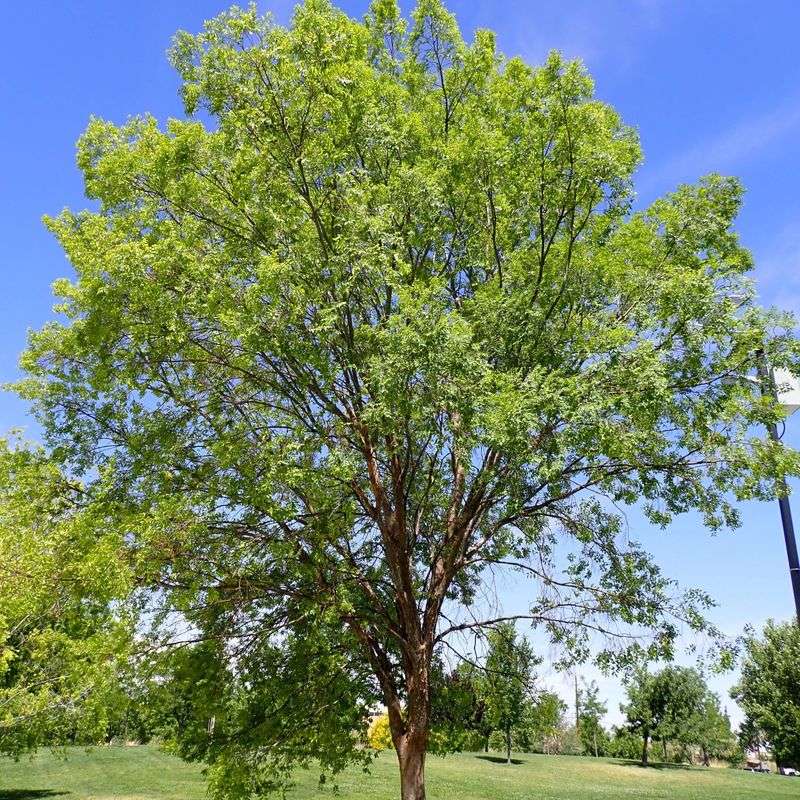
Peel back a little history and you find a tree that has quietly shaded Arizona streets for decades. The Chinese elm, also called lacebark or evergreen elm, earned that reputation by staying tough through blazing heat and dry spells.
Look closely at the trunk and you will see mottled bark in shades of gray, orange, and tan that flakes off in puzzle-piece patterns. It is one of the prettiest trunks in any Valley neighborhood, and it looks good year-round.
Growth is quick, and mature trees can reach 40 to 60 feet with a broad, gently weeping canopy. In the low desert, many keep most of their small, glossy leaves through mild winters, so you get nearly year-round green.
That makes it a solid pick for screening a neighbor or shading a driveway.
Plan on moderate water, especially during the first summer, and deep soaks rather than daily drips. Its canopy is dense enough that birds use it for nesting and cover.
Since it handles wind well, it is a smart choice for exposed lots on the edges of town where monsoon gusts hit hardest.
7. Red Push Pistache
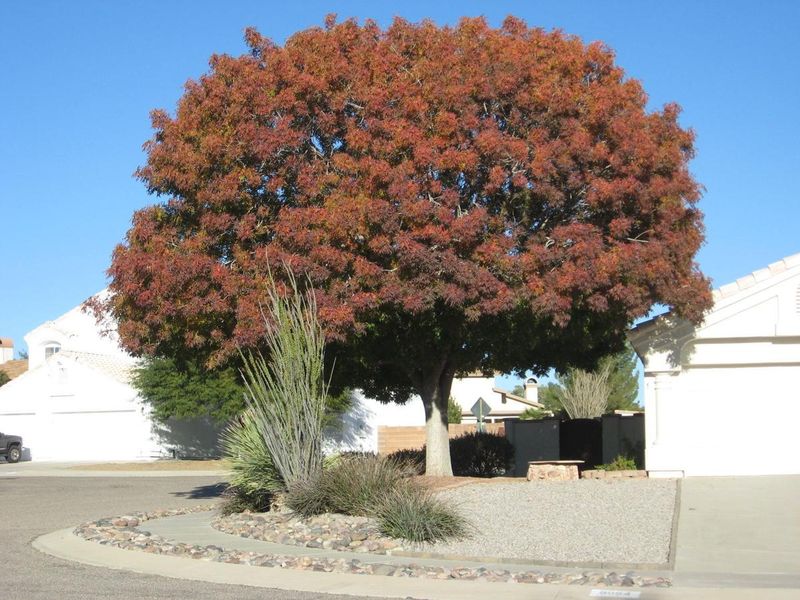
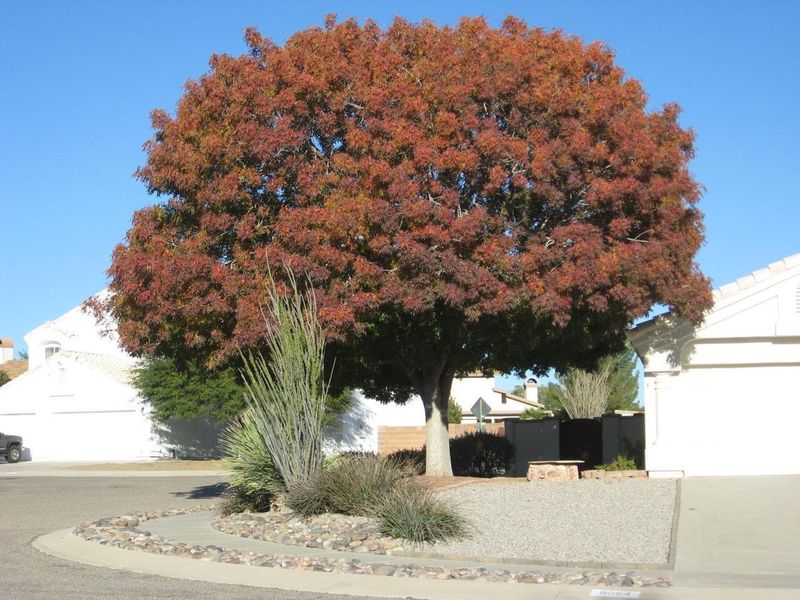
Most desert trees skip the fall color show, but Red Push did not get that memo. When November cools things down, its leaves can turn fiery red and orange, giving Phoenix a rare taste of autumn.
Color is not the only trick. New spring growth emerges in reddish-orange tones before settling into glossy green, so the tree stays interesting through every season.
A hybrid of Chinese pistache, it was selected for vigor, and it grows at a brisk pace without the brittle wood some fast trees are known for.
Once established, it handles drought well and needs little fuss. Heat bounce from stucco walls and block fences rarely bothers it, which makes it a great match for small backyards and patios.
The rounded canopy offers medium shade that cools seating areas without turning everything below into a dark cave.
Plant it in fall with a wide, shallow hole and backfill with native soil instead of rich amendments. Mulch the root zone to hold moisture, and water deeply about once a week through its first summer.
Leaves drop in winter, letting the sun warm your windows, and birds often perch in its sturdy branches.
8. Sissoo
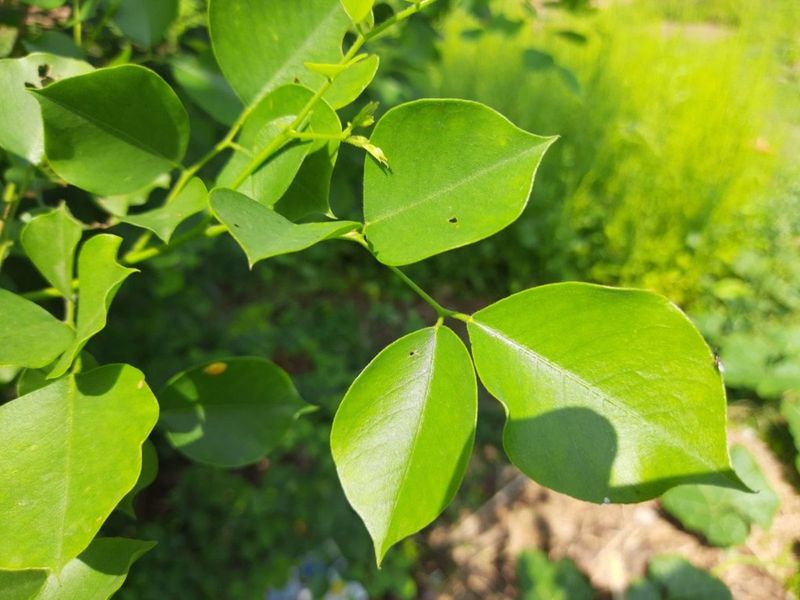
Want the fastest shade on the block and have plenty of room? The Sissoo, sometimes called Indian rosewood, is famous in the Valley for shooting up like it is in a hurry.
Round, bright green leaves flutter in the breeze much like an aspen, giving the yard a cheerful, moving canopy. It is semi-evergreen in the low desert, so it often keeps much of its foliage through winter.
Heat that would scorch many trees barely slows it down.
Now for the honest part. Sissoo roots are aggressive and can travel far, sometimes lifting sidewalks, cracking pool decks, or sending up suckers in lawns.
Plant it at least 20 to 30 feet from foundations, pools, and plumbing lines. A big lot, a pasture edge, or a back corner works best.
Hard freezes can damage young trees, so protect them during rare cold snaps in their first winter. Give it deep summer water, then ease back as it matures.
Birds use the dense canopy for cover and nesting, and the shade it casts by next June can cool a hot backyard fast. Think of it as the speed pick for those with space to spare.