The Best Marigold Varieties For Pest Control In California Gardens
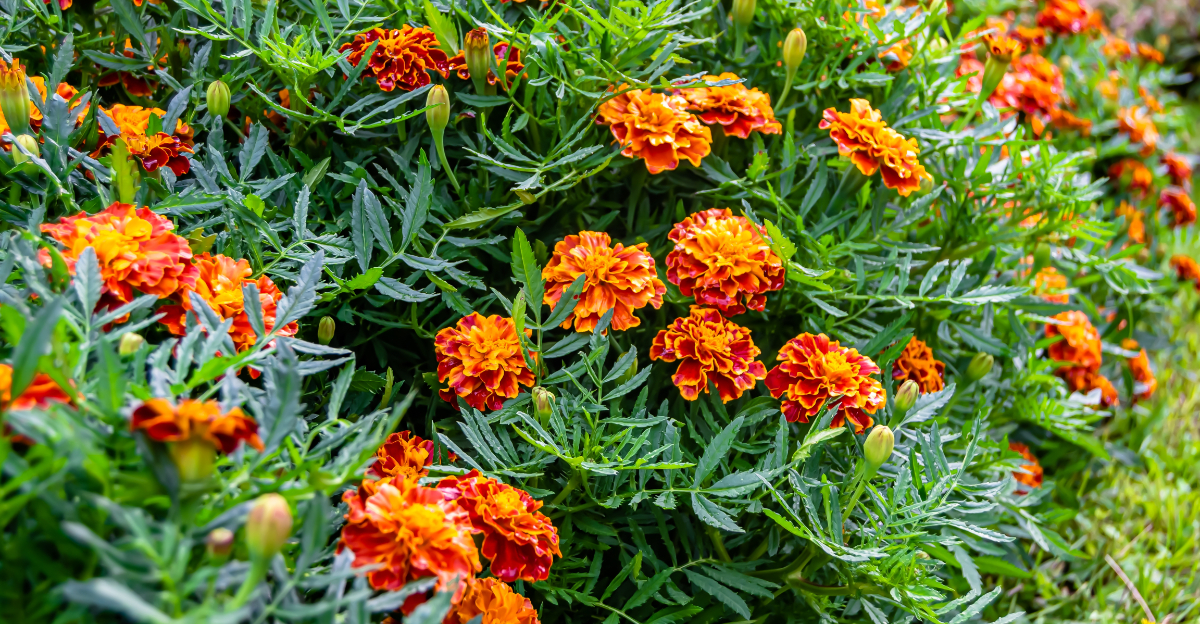
Marigolds have a bright, cheerful look, but California gardeners often plant them for more than color.
The right varieties can help make vegetable beds feel more balanced during the busy growing season.
Some marigolds are known for helping with soil pests when used the right way. Others draw helpful insects that patrol nearby plants.
That is where variety matters. A small bedding marigold may look pretty, but it may not offer the same support as a stronger, more useful type.
California heat can also change which ones perform best through summer. Choose well, and marigolds can become more than a border plant around tomatoes.
They can add color, fill gaps, and give your garden a little extra backup when pest pressure starts to build.
1. ‘Nema-Gone’ Is The Strongest Soil-Pest Pick
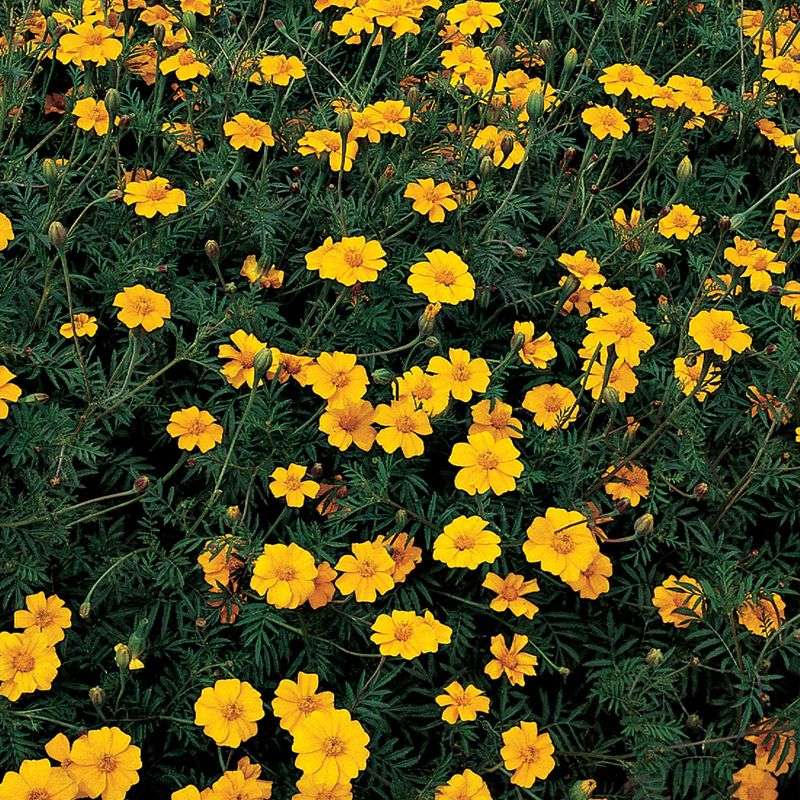
Few plants earn their name quite like ‘Nema-Gone.’ This French marigold variety was bred specifically to fight nematodes in the soil. Nematodes are microscopic worms that attack plant roots and cause serious damage to vegetables like tomatoes, peppers, and carrots.
‘Nema-Gone’ releases a natural chemical called alpha-terthienyl from its roots. This compound is toxic to nematodes but completely safe for your garden plants and soil.
Researchers have found it to be one of the most effective marigolds for soil pest suppression available to home gardeners today.
To get the best results, plant ‘Nema-Gone’ densely across the area you want to protect. Let it grow for a full season before planting your vegetables in that spot.
The longer the roots stay in the soil, the stronger the nematode-fighting effect becomes.
This variety grows to about 12 inches tall and produces cheerful orange and yellow blooms all season.
It thrives in full sun and handles warm summers well, making it a great fit for gardens in the Central Valley and other hot inland regions of California.
Water it regularly but avoid overwatering. It also grows well from seed, so it is budget-friendly for gardeners covering large areas.
Plant it in fall or spring for the best results in your vegetable beds.
2. ‘Ground Control’ Works Best As A Dense Cover
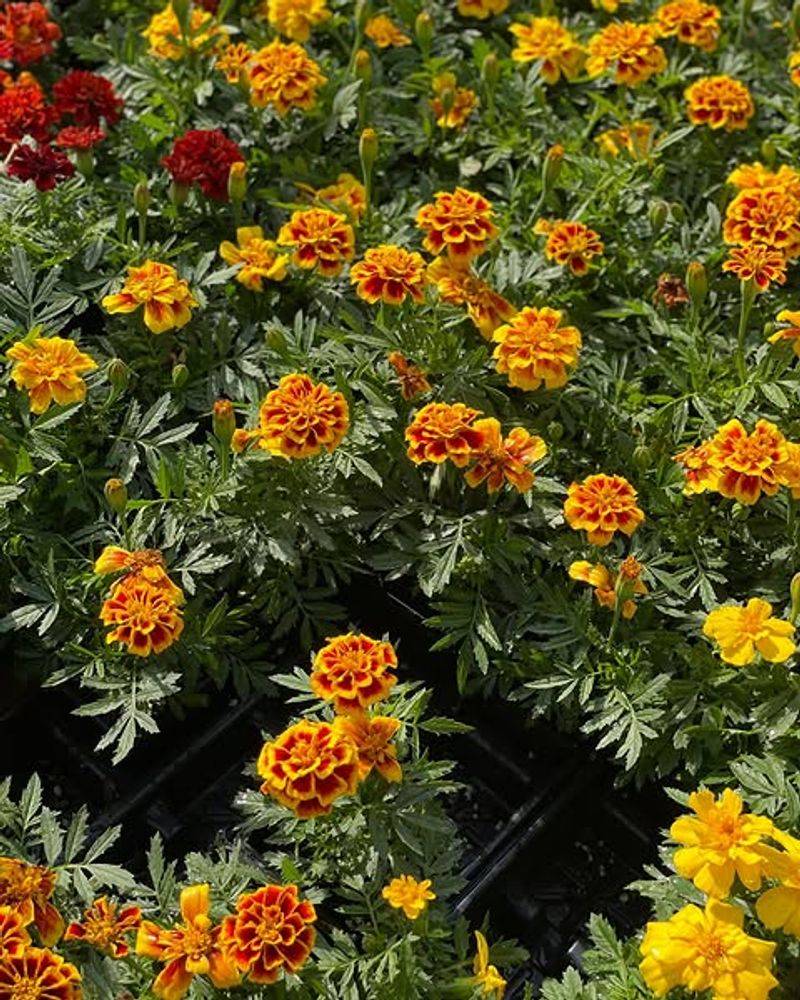
Spreading plants have a real advantage in the garden, and ‘Ground Control’ uses that advantage better than almost any other marigold.
This variety was developed to grow low and wide, covering large areas of soil quickly. That dense growth habit is exactly what makes it so useful for pest control.
When ‘Ground Control’ fills in a garden bed, it shades the soil and blocks many soil-dwelling insects from reaching your vegetable roots.
Its roots also release pest-fighting compounds that work against harmful nematodes underground.
The combination of physical coverage and chemical defense makes it a two-in-one solution.
Gardeners in coastal zones and mild-climate areas love this variety because it does not bolt or fade quickly in moderate temperatures. It stays full and green even when other marigolds start to thin out.
Plant it between rows of vegetables or along garden borders for the best coverage effect.
‘Ground Control’ grows to about 10 inches tall but spreads much wider than standard marigolds.
Your California Garden Changes Every Week. Your Plan Should Too.
Gardening in California changes quickly throughout the season. Every Friday you’ll receive a simple weekly plan showing exactly what to plant, prune, fertilize, harvest, and protect so you never miss the right timing.
It produces small but plentiful golden blooms that attract pollinators throughout the season.
Start seeds indoors about six weeks before your last frost date, then transplant after the soil warms up. Space plants about 10 inches apart to encourage spreading without crowding.
Regular deadheading keeps it blooming strong all season long.
3. ‘Single Gold’ Has Real Nematode Value
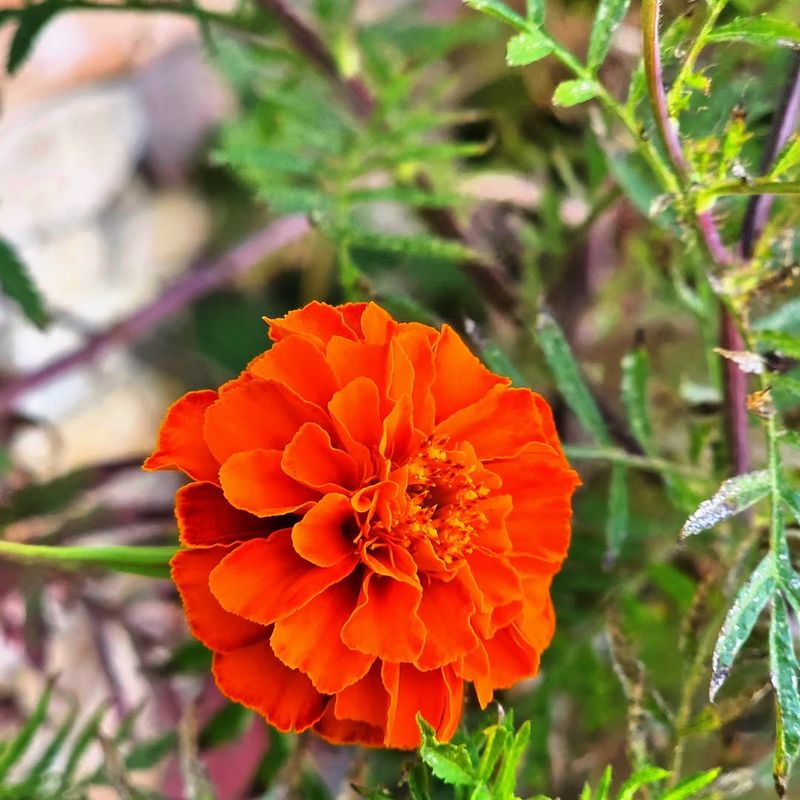
Single-petal marigolds often get overlooked in favor of the fluffy double varieties, but ‘Single Gold’ deserves serious attention.
Research from university extension programs has shown that single-flowered French marigolds are significantly more effective at fighting soil nematodes than double-flowered types.
The open flower shape also makes it much easier for beneficial insects to access pollen and nectar.
‘Single Gold’ produces bright yellow blooms with a bold orange center. The flowers are simple but eye-catching.
More importantly, the root system of this variety releases strong levels of nematode-suppressing compounds throughout the growing season.
For best results, plant ‘Single Gold’ thickly in beds where you previously had nematode problems. Leave it in place for at least 60 days before turning it into the soil.
This process, called green manure, adds organic matter while leaving behind nematode-fighting chemicals.
This variety grows quickly from seed and reaches about 12 to 14 inches tall. It performs well in full sun and handles the dry heat common in southern and inland parts California.
Water deeply but infrequently to encourage strong root growth. Pair it with tomatoes, eggplant, and beans for the best companion planting results.
‘Single Gold’ is often sold in bulk seed packets, making it an affordable option for gardeners working with larger vegetable plots and tight budgets.
4. ‘Tangerine’ Brightens Tomato Rows
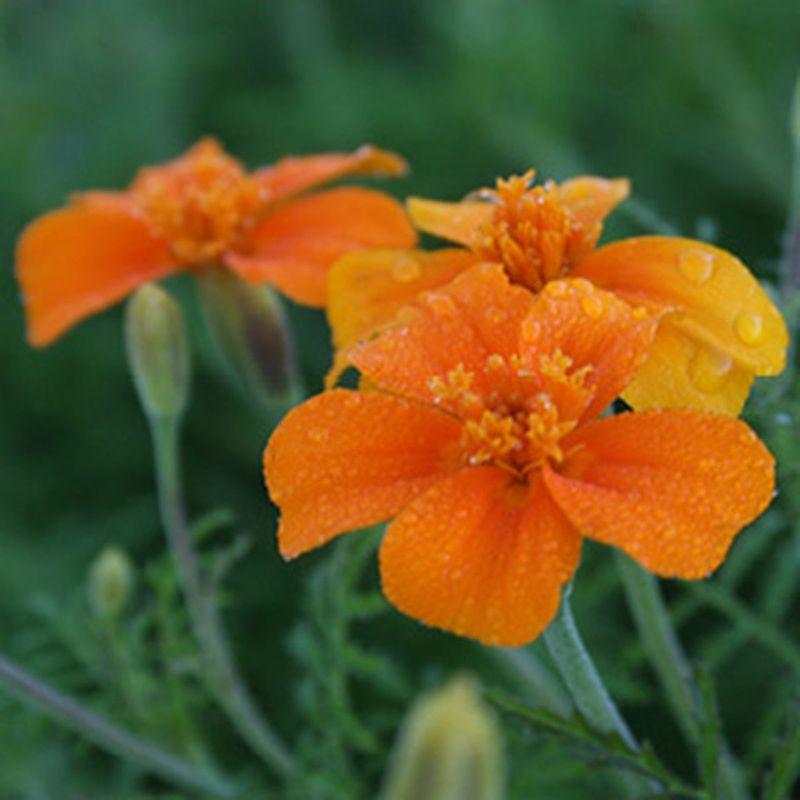
California tomato growers have a trusted ally in the ‘Tangerine’ marigold. Its deep orange color stands out in any vegetable bed, but its real value goes far beyond looks.
This variety is a known repellent for whiteflies, aphids, and spider mites, all of which love to attack tomato plants during warm summer months.
The strong scent released by ‘Tangerine’ marigold leaves confuses and deters many flying pests. Whiteflies, in particular, struggle to locate tomato plants when ‘Tangerine’ is planted nearby.
Some gardeners plant it as a border around their entire tomato section for maximum protection.
What makes ‘Tangerine’ especially useful is its height. It grows to about 18 inches tall, which puts it at a level where its scent can drift across tomato foliage effectively.
Shorter marigolds sometimes get lost below the canopy of tall tomato plants and lose some of their pest-repelling power.
Plant ‘Tangerine’ at the base of tomato cages or along the edges of raised beds. It thrives in full sun and handles the long, hot summers typical in our state’s Central Valley and desert-adjacent regions.
Water it consistently to keep blooms coming. Deadhead spent flowers weekly to encourage continuous blooming from late spring through early fall.
This variety is widely available at local nurseries and garden centers throughout California.
5. ‘Petite Gold’ Fits Raised Beds Easily
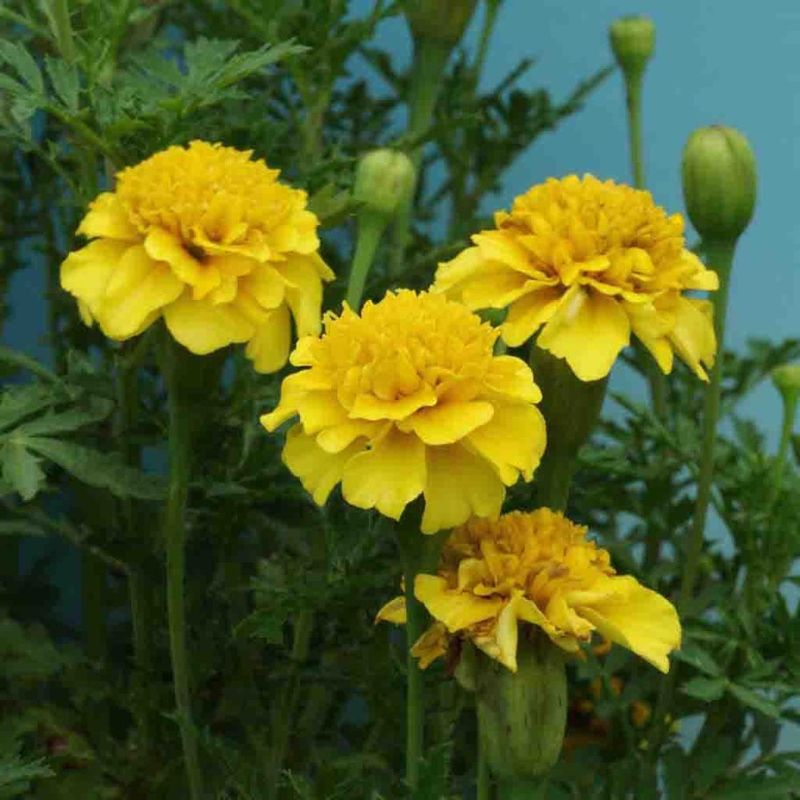
Raised bed gardeners know the struggle of fitting too many plants into a limited space. ‘Petite Gold’ solves that problem beautifully.
At just 6 to 8 inches tall, it is one of the most compact marigold varieties available. Despite its small size, it packs a serious pest-repelling punch.
Its tiny roots still release nematode-fighting compounds into the soil. Its scent also helps deter thrips, aphids, and other soft-bodied insects that commonly invade raised beds.
Because it stays so small, you can tuck it between pepper plants, lettuce, or herbs without blocking sunlight or airflow.
Urban California gardeners have embraced ‘Petite Gold’ for its versatility. It works in containers, window boxes, and narrow raised beds alike.
If you only have a small patio garden, this variety lets you enjoy the pest-fighting benefits of marigolds without sacrificing precious growing space.
‘Petite Gold’ blooms in cheerful golden yellow and produces flowers in clusters that last a long time. It grows quickly from transplant and starts blooming within a few weeks of being planted.
Full sun is best, but it tolerates partial shade better than many other marigold types. Water it moderately and feed with a balanced fertilizer every few weeks during the growing season.
It is a reliable, low-maintenance choice for beginner gardeners just starting to explore companion planting strategies in their raised beds.
6. ‘Bonanza Orange’ Draws Helpful Insects
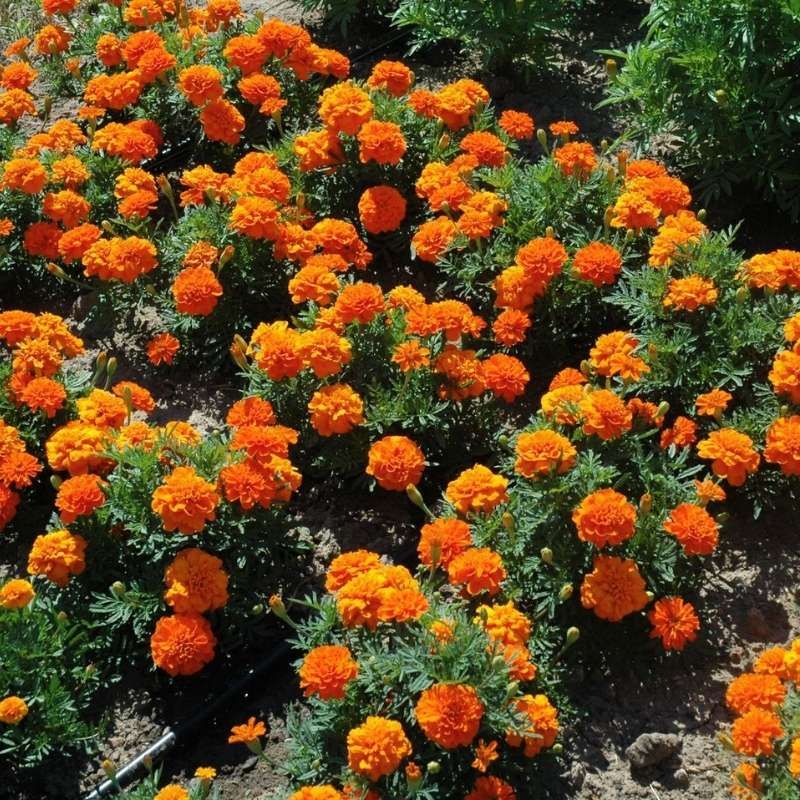
Not every pest-control strategy is about repelling insects. Sometimes, the smartest move is attracting the right bugs to do the work for you.
‘Bonanza Orange’ is a marigold that excels at drawing beneficial insects into the garden. Ladybugs, lacewings, and parasitic wasps all love this variety.
These helpful insects feed on common garden pests like aphids, whiteflies, and caterpillar eggs.
When you plant ‘Bonanza Orange’ near vegetables, you are essentially setting up a habitat for your garden’s own natural pest control team.
It is a strategy that professional organic farmers use regularly.
‘Bonanza Orange’ produces large, double blooms in a rich burnt-orange shade. The flowers are long-lasting and showy, making this variety popular for both vegetable beds and ornamental borders.
It grows to about 10 to 12 inches tall, making it easy to place in front of taller crops without blocking light.
This variety performs especially well in the mild coastal climates of California, where beneficial insects are already active throughout the growing season.
Plant it in clusters of five or more to create a visible and attractive landing zone for helpful bugs.
It thrives in full sun with moderate watering. Feed it monthly with a low-nitrogen fertilizer to keep blooms coming without pushing too much leafy growth.
‘Bonanza Orange’ is easy to find at most garden centers and is available as both seeds and transplants in spring.
7. ‘Durango’ Handles Hot Inland Gardens
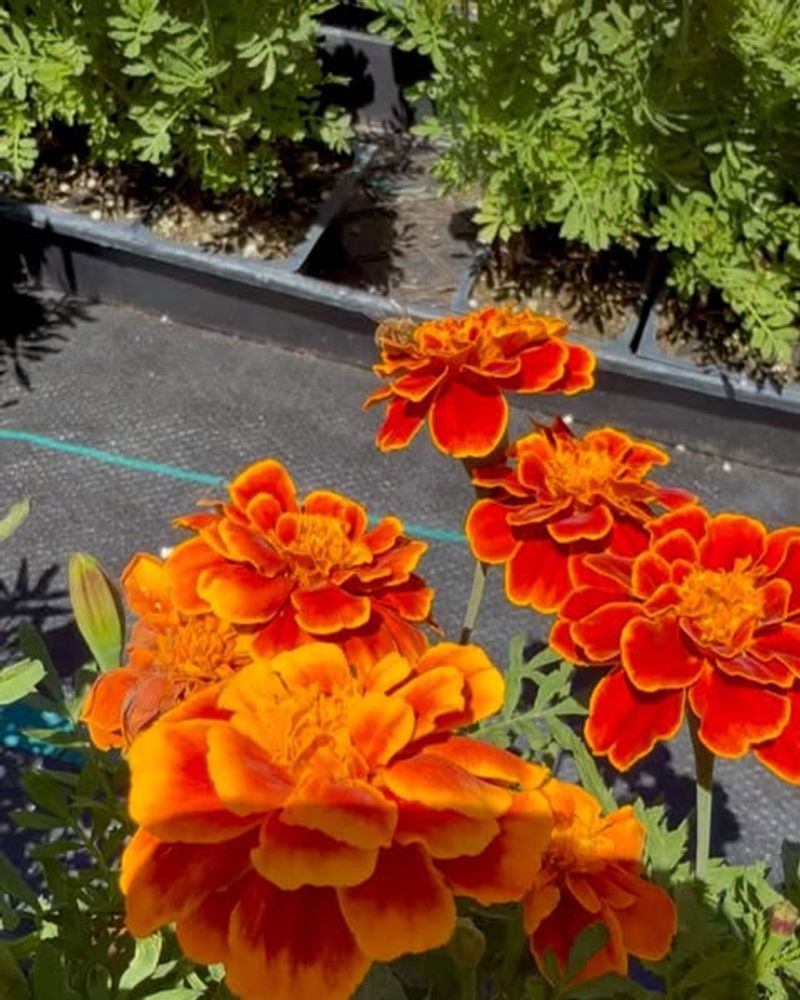
Gardening in the hot inland valleys comes with real challenges. Many plants struggle under intense summer heat, dry air, and water restrictions.
‘Durango’ marigolds were bred to handle exactly those conditions, and they do it without losing their pest-fighting abilities.
This variety is one of the most heat-tolerant marigolds available to home gardeners. It keeps blooming through triple-digit temperatures that would cause other marigolds to drop their flowers and go dormant.
That steady bloom production means it keeps releasing scent and drawing beneficial insects even during the hottest weeks of the year.
‘Durango’ comes in a range of colors, including red, orange, yellow, and bicolor options. The blooms are large and fully double, giving gardens a bold, colorful look.
Plants grow to about 12 to 14 inches tall and form a tidy, upright shape that works well in both raised beds and in-ground gardens.
Gardeners in areas like the Inland Empire, Sacramento Valley, and San Joaquin Valley will find ‘Durango’ especially useful. It resists spider mites, which are a serious problem in hot and dry conditions.
Plant it near squash, cucumbers, and beans to protect those crops from mite damage. Water deeply once or twice a week and mulch around the base to keep soil moisture consistent.
‘Durango’ is widely available at regional nurseries and big-box garden centers across California each spring season.
8. ‘Lemon Gem’ Feeds Tiny Beneficial Wasps
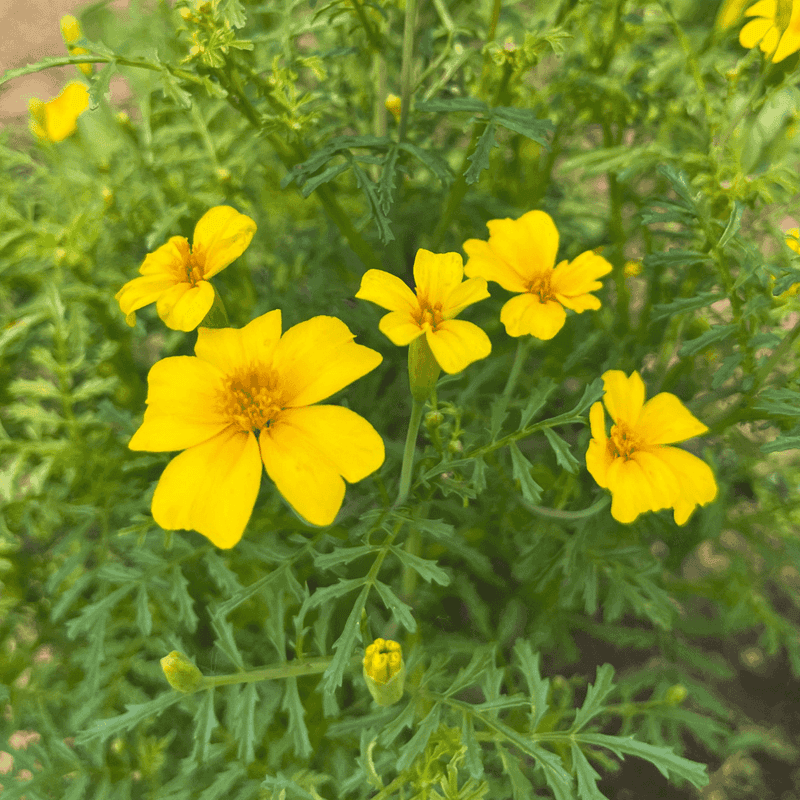
Most gardeners think of wasps as pests, but many tiny wasp species are actually among the garden’s best defenders.
Parasitic wasps are extremely small, do not sting humans, and spend their lives hunting down aphids, caterpillars, and other plant-damaging insects. ‘Lemon Gem’ marigold is one of their favorite food sources.
The small, open flowers of ‘Lemon Gem’ are perfectly sized for these tiny beneficial wasps to access nectar and pollen easily.
Larger, double-flowered marigolds often block these insects from reaching the flower’s center. ‘Lemon Gem’ keeps the path clear and the welcome mat out all season long.
Beyond its ecological value, ‘Lemon Gem’ has a wonderful citrus-like fragrance that comes from its feathery leaves.
Rubbing the foliage releases a fresh lemon scent that many common pests find deeply unpleasant.
Whiteflies, spider mites, and aphids tend to avoid areas where this signet marigold grows.
This variety grows to about 10 to 12 inches tall and wide, forming a soft, mounded shape that looks lovely along garden borders. It thrives in full sun but handles light afternoon shade in hotter regions.
The flowers and leaves are both edible, making it a fun addition to herb gardens and kitchen gardens alike.
Start from seed early indoors or direct sow after the last frost. ‘Lemon Gem’ is a standout performer in northern California regions where cool coastal breezes keep conditions mild.
9. ‘Tangerine Gem’ Belongs Near Herb Beds
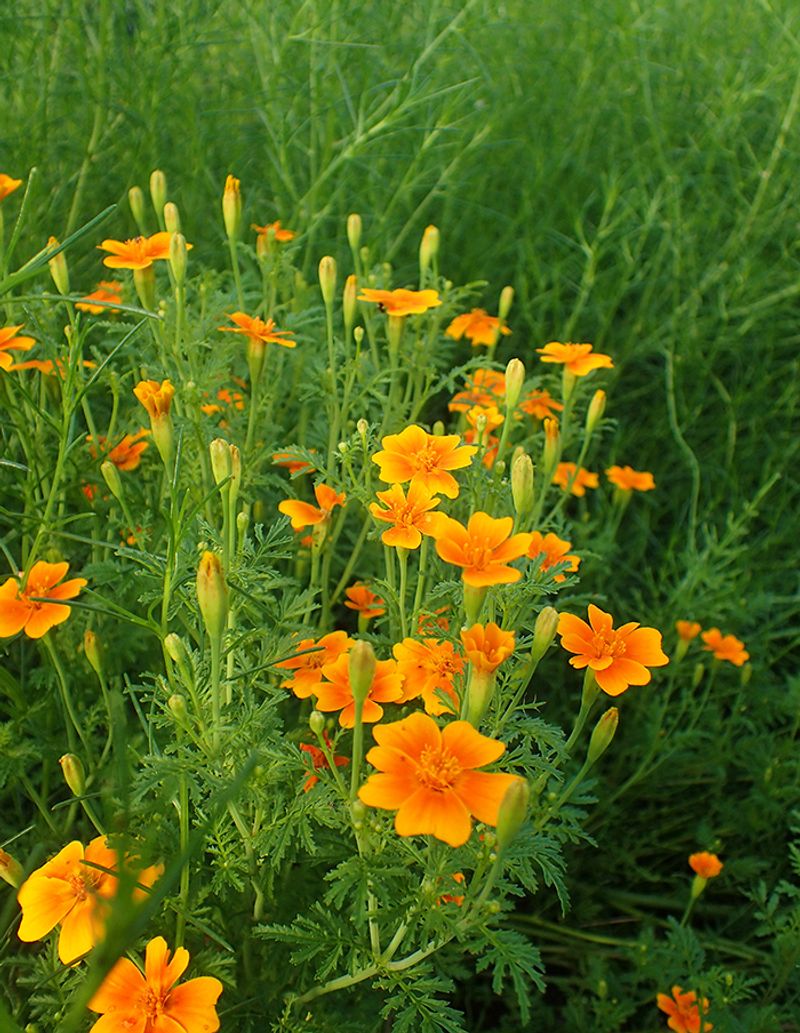
Herb gardens have a special kind of energy, and ‘Tangerine Gem’ fits right into that world. This signet marigold variety has a spicy-citrus scent that pairs naturally with the aromas of basil, parsley, oregano, and thyme.
More than just a pleasant neighbor, it actively protects those herbs from pests.
Fungus gnats are a common problem in herb beds, especially in containers and raised beds with rich, moist soil. The scent of ‘Tangerine Gem’ disrupts the ability of fungus gnats to locate host plants.
Planting it throughout a mixed herb bed can significantly reduce gnat populations over the course of a season.
Aphids also tend to avoid herb beds where ‘Tangerine Gem’ is present. The essential oils in its foliage create an environment that soft-bodied insects find uncomfortable.
As an added bonus, the flowers are fully edible and have a mild, peppery-citrus flavor that works well in salads and as garnishes on plates.
Plants grow to a tidy 10 inches tall and produce masses of small, vivid orange flowers from early summer through the first cold snap.
Full sun brings out the best in this variety, though it handles mild afternoon shade in warmer inland areas.
It grows easily from seed and does well in containers placed on patios or balconies.
Gardeners in the coastal regions and bay areas of California find ‘Tangerine Gem’ one of the most reliable and rewarding marigolds to grow each year.